The month and a half before your sub‑I will make or break that rotation. Most students waste it. You will not.
You are six weeks out. That is enough time to sharpen your clinical skills, rebuild rusty knowledge, and walk onto the floor looking like someone the team can trust. But you need structure, not vibes.
Below is a strict timeline: week‑by‑week, then day‑by‑day in the final stretch. Follow it, and you will feel very different on Day 1 of your sub‑I.
Big Picture: What Six Weeks Out Should Look Like
At this point you should stop thinking of yourself as “a student on break” and start behaving like an intern in training.
Your priorities for the next six weeks:
- Rebuild core clinical knowledge for your chosen service.
- Upgrade practical skills: presentations, notes, orders, sign‑out.
- Tighten basic procedures and exam skills you are expected to know.
- Fix efficiency problems: data gathering, EHR use, time management.
- Clean up professionalism details that attendings absolutely notice.
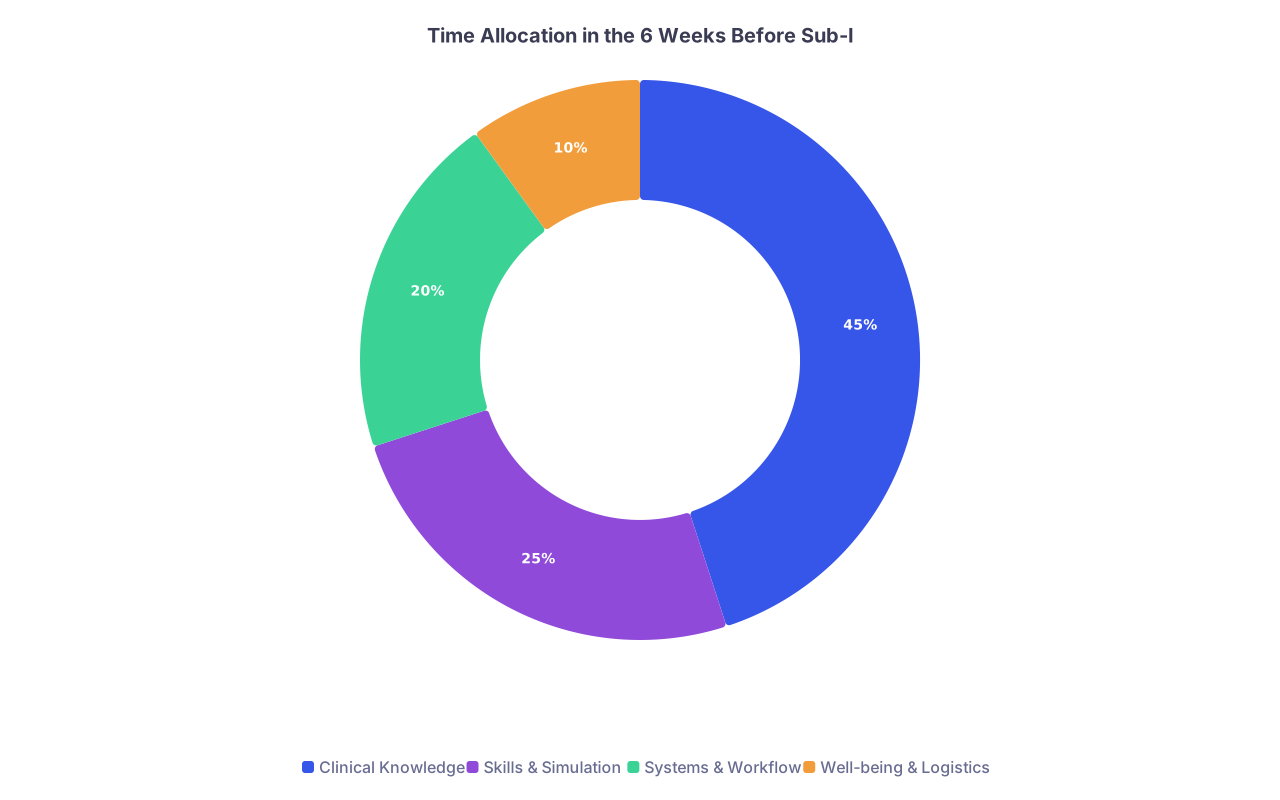
Here is how the time breaks down:
| Category | Value |
|---|---|
| Clinical Knowledge | 45 |
| Skills & Simulation | 25 |
| Systems & Workflow | 20 |
| Well-being & Logistics | 10 |
Roughly:
- 45%: targeted reading and questions.
- 25%: deliberate practice (oral presentations, notes, orders, simulation).
- 20%: learning your hospital’s systems and common workflows.
- 10%: sleep, exercise, logistics so you do not crash in week 1.
Weeks 6–5 Before Sub‑I: Reset and Foundations
At this point you should be shifting from vacation brain to clinician brain.
Step 1: Clarify the battlefield (Day 1–2 of Week 6)
You cannot prepare well if you do not know what the rotation actually expects.
- Confirm:
- Exact start date and time.
- Where to report on Day 1.
- Call schedule and weekend expectations.
- Ask prior students (not the coordinator; they sanitize everything):
- “What did residents actually expect day‑to‑day?”
- “What did people get praised or ripped apart for?”
- “Which resources helped the most for this service?”
- Identify common diagnoses and bread‑and‑butter problems for the rotation:
- Medicine: CHF, COPD, pneumonia, sepsis, AKI, DKA, cirrhosis, cellulitis.
- Surgery: post‑op care, SBO, appendicitis, cholecystitis, wound infections.
- OB: labor management, preeclampsia, postpartum hemorrhage.
- Peds: bronchiolitis, asthma, dehydration, neonatal jaundice.
Then, build a 6‑week micro‑curriculum. One page. No fluff.
- List 10–15 core conditions you must know cold.
- Assign 2–3 per week for deep review.
- Assign weekly skills focus (e.g., Week 6: presentations; Week 5: notes; Week 4: orders; etc.).
Step 2: Rebuild core knowledge (Weeks 6–5)
These two weeks are about controlled, daily reps. Not vague “studying.”
Weekly goals (for each of these two weeks):
- 5 days of 60–90 minutes of focused reading on rotation‑specific topics.
- 3 days of 30–45 minutes of practice questions.
- 2 sessions of oral presentation practice.
Content strategy:
- Use one primary resource:
- Internal medicine: Step‑Up to Medicine, MKSAP for Students, or Online MedEd.
- Surgery: Pestana, Surgical Recall (for practical stuff).
- OB/GYN: Blueprints or Case Files + APGO modules.
- Pediatrics: BRS Pediatrics or Case Files Peds.
- Supplement with:
- Your clerkship notes from MS3.
- UpToDate for 1–2 topics per week in more depth (but set a timer; don’t drown).
Week 6 example schedule (adjust for rotation):
- Mon: CHF (pathophys, diagnosis, inpatient management).
- Tue: COPD exacerbation + pneumonia.
- Wed: AKI + electrolyte disturbances.
- Thu: DKA + HHS.
- Fri: Cirrhosis complications.
Each topic:
- 20–30 min: read short, high‑yield sections.
- 15–20 min: write a one‑page summary or problem‑representation style note.
- 10–15 min: say out loud how you would present and manage a typical patient.
You are not cramming for a shelf. You are building mental templates:
- “If I see X, I ask Y, I check Z, I start these orders.”
Questions:
Aim for quality, not volume.
- 10–20 well‑reviewed questions per day (AMBOSS, UWorld, or your school’s bank).
- Focus on:
- Formulating differentials.
- Next best test vs next best management step.
- Pre‑rounding logic: what data actually matters.
Step 3: Fix your presentation fundamentals (ongoing, start Week 6)
Most sub‑I students get judged on two things in week 1:
- Can this person present succinctly?
- Can this person think through basic plans without hand‑holding?
So at this point you should be re‑training your presentation muscle.
- Pick 3–4 classic chief complaints:
- Medicine: shortness of breath, chest pain, abdominal pain, fever.
- Surgery: abdominal pain, trauma, post‑op fever.
- For each:
- Write a 1–2 minute focused H&P you could give on rounds.
- Practice saying it out loud. Time yourself.
- Use a strict structure:
- One‑liner.
- Relevant overnight events / new complaints.
- Focused subjective.
- Focused objective (vitals, key exam, key labs/imaging).
- Assessment + prioritized plan (by problem).
Record one or two on your phone. You will hear where you ramble or lose structure. Fix it now, not when the attending is glaring at you.
Week 4–3 Before Sub‑I: Systems, Workflow, and Practical Skills
By a month out, knowledge rebuilding should be on autopilot. Now you layer in real‑world function.
At this point you should be training for speed and realism.

Step 4: Learn your hospital’s playbook (Week 4)
Every hospital runs on protocols and hidden rules. The closer you are to those on Day 1, the better.
Spend this week:
- Reading:
- Admission order sets for common diagnoses for your service.
- Standard post‑op or disease‑specific pathways (e.g., CHF exacerbation, DKA, SBO).
- Asking:
- Residents: “What are the 3–4 orders that always get forgotten by students?”
- Nurses: “What makes a good order set vs a bad one from your perspective?”
If you have EHR access before starting:
- Log into the training or test environment.
- Practice:
- Writing an admission note using your school’s template.
- Placing a basic admission order set.
- Ordering daily labs, imaging, and consults.
- Writing a progress note and simple discharge summary.
If you do not have access yet, simulate on paper or in a Word document.
Step 5: Upgrade basic procedural and physical exam skills (Week 4–3)
No one expects you to be a procedural rockstar. But you should not look lost.
Make a list of likely skills for your service:
- Medicine:
- IV placement, drawing labs, ABGs (if allowed).
- Basic interpretation of CXR, EKG, and common labs.
- Surgery:
- Simple suturing, knot tying, dressing changes, drain management basics.
- OB:
- Cervical exam basics, fetal heart tracing basics, speculum exam technique.
- Peds:
- Pediatric dosing logic, pediatric exam nuances, immunization basics.
Then:
- Book 1–2 sessions in a sim lab or skills workshop if your school allows.
- If not, ask a resident or senior student to run through:
- Suturing on practice pads.
- Mock OB or neuro exam.
- “Show me how you actually do a good pre‑op exam on the floor.”
You want your hands to feel less clumsy and your exams to look intentional, not random.
Step 6: Tighten documentation skills (Week 3)
Your notes will be read. That alone raises the bar.
At this point you should not be writing rambling, third‑year style H&Ps.
For one full week:
- Write at least 1 mock:
- Admission H&P.
- Daily progress note.
- Discharge summary.
- Base them on:
- Real cases you have seen in past rotations.
- Question‑bank vignettes.
Key rules:
- One‑liner must include:
- Age, sex, key comorbidities, presenting problem, and why they are admitted now.
- Assessment & Plan:
- Problem‑based, not system‑based, unless your service specifically prefers otherwise.
- For each problem, include:
- Brief reasoning (“likely CHF exacerbation due to… differential includes…”).
- Diagnostic plan.
- Therapeutic plan.
- Monitoring / contingency plan.
Ask one resident or mentor to tear apart at least one of your notes. The harsher the better.
Week 2 Before Sub‑I: Simulation and Stress‑Test
This is where you shift to “dress rehearsal” mode.
At this point you should be stringing your skills together: data gathering → thinking → communicating → documenting.
| Period | Event |
|---|---|
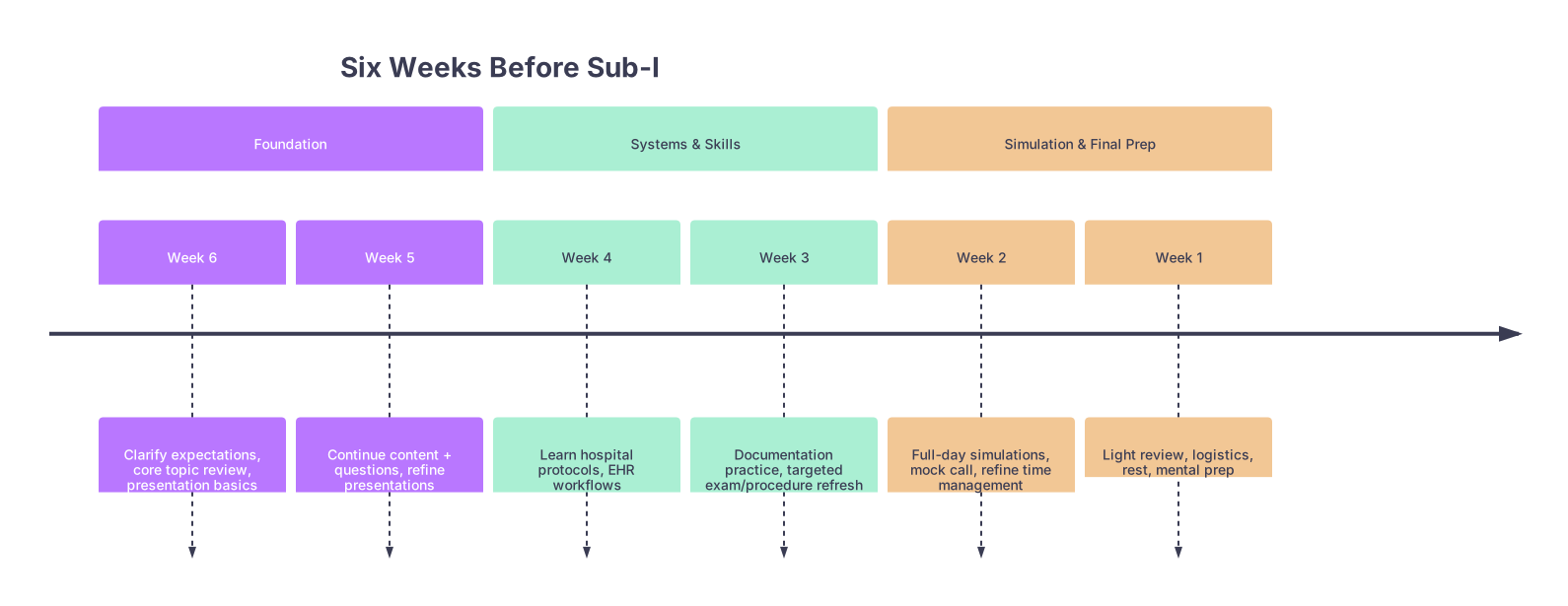
| Foundation - Week 6 | Clarify expectations, core topic review, presentation basics |
| Foundation - Week 5 | Continue content + questions, refine presentations |
| Systems & Skills - Week 4 | Learn hospital protocols, EHR workflows |
| Systems & Skills - Week 3 | Documentation practice, targeted exam/procedure refresh |
| Simulation & Final Prep - Week 2 | Full-day simulations, mock call, refine time management |
| Simulation & Final Prep - Week 1 | Light review, logistics, rest, mental prep |
Step 7: Do at least one “fake intern day” (early Week 2)
Pick a full day and simulate an intern schedule:
- 06:00–07:30:
- “Pre‑round” on 3–4 mock patients:
- Read vignettes or old notes.
- Write short preround notes with updated vitals/labs (made up is fine as long as it is realistic).
- “Pre‑round” on 3–4 mock patients:
- 08:00–11:00:
- “Rounds” with a friend, resident, or just by yourself out loud.
- Present each patient in 3 minutes or less.
- Verbally walk through your plan.
- 11:00–14:00:
- “Work on the list”:
- Place mock orders on paper.
- Call a “consult” (role‑played) and present succinct reason for consult.
- Write progress notes for the morning’s patients.
- “Work on the list”:
- 14:00–17:00:
- Question bank session: 20–30 questions.
- Quick topic review on any conditions you clearly fumbled.
You are not trying to be perfect. You are trying to identify where you crumble when you stack tasks.
Step 8: Practice sign‑out and cross‑cover thinking (Week 2)
Sub‑Is often get pulled into sign‑out or at least asked, “What should we watch tonight?”
At this point you should be able to:
- Identify:
- Which patients are “sick but stable.”
- Which patients you are actually worried about overnight.
- Communicate the “if‑then” plan:
- “If BP drops below X, do Y.”
- “If pain uncontrolled after X mg, page the team.”
Use 3–4 sample patients and write short sign‑out blurbs:
- Background (one line).
- Active issues.
- Overnight watch items.
- Explicit contingency plans.
Run these by a resident if you can. Residents know instantly if sign‑out is useful or garbage.

Week 1 Before Sub‑I: Final Polish and Mental Setup
You are one week out. The biggest mistake here is panicking and trying to relearn all of medicine. Do not.
At this point you should be consolidating, not cramming.
Step 9: Targeted refresh, not global panic (Days −7 to −4)
Focus your last content review on:
- Your top 10 diagnoses for the rotation.
- Red‑flag situations that get interns into trouble:
- Hypotension, chest pain, shortness of breath, acute neuro changes, low urine output, fevers in vulnerable patients (post‑op, neutropenic, etc.).
For each:
Build a 3–5 step mental algorithm. Example (medicine):
- Hypotension on the floor:
- Check vitals trend, confirm true hypotension, assess mental status.
- Look at HR, temp, SpO2, urine output.
- ABCs, rapid exam (lungs, heart, abdomen, extremities).
- Basic labs (CBC, BMP, lactate) / cultures as appropriate; bolus if indicated.
- Call senior with concise “this is what I see / did / think we should do.”
- Hypotension on the floor:
Do the same for your rotation’s specific emergencies.
Step 10: Logistics and professionalism checks (Days −7 to −3)
You will underestimate how much mental energy logistics drain if you do not handle them now.
Use a simple checklist:
- Appearance:
- Clean white coat, pockets not overflowing with useless junk.
- Two pens, small notebook, penlight, stethoscope that actually works.
- Comfortable shoes that have survived a 10‑hour day before.
- Access:
- EHR/logins tested.
- Badge works for key floors.
- Pager/communication app set and tested.
- Schedule:
- Know the call schedule, conference times, and any mandatory teaching.
- Block personal appointments that will conflict.
| Item Category | Examples to Confirm |
|---|---|
| Access | EHR login, badge, pager/app |
| Appearance | White coat, shoes, stethoscope |
| Tools | Pens, notebook, penlight |
| Commute | Route, parking, backup plan |
| Schedule | Start time, call schedule, required conferences |
If any of this fails on Day 1, you look unprepared before you ever open your mouth.
Step 11: Set realistic goals with your future self (Days −3 to −2)
Sub‑Is derail when students try to prove they are already interns. You are not. The rotation is where you close the gap.
Write down 3–5 goals:
- 1–2 clinical reasoning goals:
- “Consistently generate at least 3 relevant differentials for core complaints.”
- 1–2 workflow goals:
- “Pre‑round on all assigned patients and have plans ready by 7:30.”
- 1 professional goal:
- “Be someone residents trust for follow‑through on tasks.”
Keep them visible. These guide your feedback requests:
- “Can you tell me how I am doing with X?” is a much better question than “How am I doing?”
Step 12: Final 48 hours: taper and protect your brain
Last two days are not for heroics.
At this point you should be:
- Sleeping 7–8 hours.
- Doing only light review:
- Skim your one‑page summaries.
- Rehearse 1–2 oral presentations.
- Run through your emergency algorithms once.
- Packing your bag for Day 1:
- ID, pens, notebook, stethoscope, snacks, water, phone charger.
If you feel the urge to start a 300‑question block the night before your sub‑I, that is anxiety, not productivity. Ignore it.
Day 0 and Day 1: Execution
Evening before (Day 0):
- Check:
- Start time and location one more time.
- Name of the senior resident/attending you will meet.
- Set:
- Two alarms.
- Clothes and bag near the door.
Morning of Day 1:
At this point you should have one job: show the team you are prepared and coachable.
- Arrive 15–20 minutes early.
- Introduce yourself to everyone (nurses included) with:
- Name, role (sub‑I), and where you are in training.
- Tell the senior:
- “I would like to function as close to an intern as is safe. Please tell me if I am missing anything or overstepping.”
Then do what you have trained for:
- Take ownership of a small number of patients.
- Pre‑round thoroughly.
- Present clearly.
- Follow through relentlessly on tasks.
The previous six weeks were rehearsal. This is game time.
Core Takeaways
- Six weeks is enough to transform you from “rusty MS3.5” into a functional sub‑I—if you use a structured, time‑bound plan.
- Sequence your prep: first rebuild core knowledge, then add systems and workflow, then simulate real intern days and refine presentations, notes, and sign‑out.
- In the final week, stop cramming and stabilize: tighten algorithms for common problems, clean up logistics, and show up rested and ready to be coached.