Unlocking Your Path to Competitive Specialties: Residency Match Strategies That Work
Understanding Competitiveness in Medical Residency
Matching into a competitive medical specialty is more than aiming for a “prestige” field—it’s about navigating a high‑stakes, data‑driven process where every component of your residency application is scrutinized. Whether you’re drawn to dermatology, orthopedic surgery, plastic surgery, neurosurgery, ENT, radiology, or another highly sought‑after field, success requires early planning, strategic decision‑making, and consistent execution.
What Makes a Specialty “Competitive”?
According to the National Resident Matching Program (NRMP) and annual Match data, several factors drive competitiveness:
High applicant-to-position ratios
- Specialties like dermatology, plastic surgery, orthopedic surgery, neurosurgery, otolaryngology, and interventional radiology often receive far more applications than available positions.
- Even strong candidates may go unmatched simply due to volume.
High-performing applicant pool
- Applicants to these specialties frequently have:
- Above-average USMLE Step 2 CK scores
- Honors in core clerkships
- Multiple research products (posters, presentations, publications)
- Leadership, teaching, and volunteer experience
- You’re competing against peers who have been strategically preparing for years.
- Applicants to these specialties frequently have:
Length, intensity, and perceived prestige of training
- Longer, more rigorous training (e.g., neurosurgery, integrated plastic surgery) tends to attract highly driven applicants.
- The combination of intellectual challenge, procedural focus, lifestyle, and compensation also enhances demand.
Limited number of training programs
- Some specialties have fewer residency programs overall, especially in integrated formats (e.g., integrated vascular surgery, integrated plastic surgery), further tightening the bottleneck.
Understanding these dynamics helps you:
- Benchmark yourself realistically against successful applicants.
- Identify gaps early in your profile.
- Strategically use time and resources during preclinical and clinical years.
Building a Strong Academic and Clinical Foundation
For competitive specialties, your academic and clinical record is the core of your residency application. It’s the first signal to program directors that you can handle the demands of rigorous training.
Excelling Academically: Step Scores, Grades, and Beyond
Although USMLE Step 1 is now Pass/Fail for many applicants, standardized exams and clinical grades still carry significant weight.
Key academic pillars:
USMLE Step 2 CK
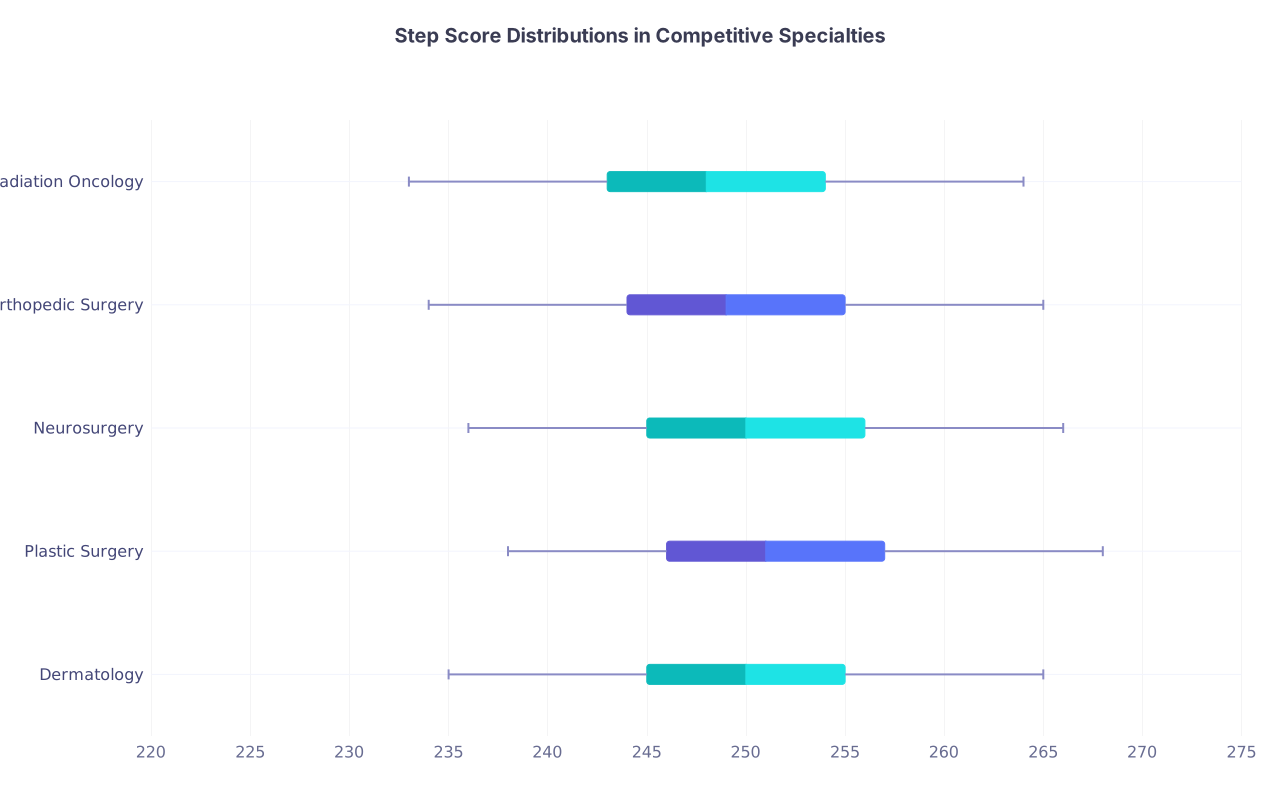
- For competitive specialties, aim to be at or above the ~75th–80th percentile for matched applicants in that field (check the most recent NRMP “Charting Outcomes in the Match” for current benchmarks).
- Strategies:
- Start dedicated prep early, ideally during your core clerkships.
- Use high‑yield resources and question banks (e.g., UWorld, NBME practice exams) and create a schedule with weekly score checkpoints.
- Address weak systems early (e.g., if OB/Gyn is a gap, focus on that before dedicated).
Clerkship performance and Honors
- Honors in core rotations—especially Surgery, Medicine, and Pediatrics—signal strong clinical reasoning and work ethic.
- For competitive surgical specialties, strong performance in Surgery and related subspecialties is particularly important.
- Action tips:
- Clarify evaluation criteria at the start of each rotation.
- Ask for mid‑rotation feedback and adjust quickly.
- Be reliable: show up early, volunteer for tasks, and follow up on your patients.
Dean’s Letter (MSPE) and class rank
- Even if your school doesn’t formally rank, the MSPE often includes comparative performance language.
- Sustained improvement (e.g., stronger grades in later years) is viewed favorably.
Developing Robust Clinical Skills and Professionalism
High scores alone are insufficient; competitive specialties want residents who:
- Are clinically competent and safe
- Communicate clearly with patients and teams
- Demonstrate professionalism and resilience
To strengthen your clinical foundation:
- Be proactive during rotations:
- Present concise, organized patient summaries.
- Anticipate next steps (labs, imaging, consults).
- Read about your patients’ conditions daily and bring that knowledge to rounds.
- Practice clinical reasoning out loud:
- When presenting, articulate your differential and rationale for management choices.
- Ask for specific feedback:
- “How can I improve my presentations?”
- “What could I do to function more like an intern?”
Clinical excellence not only improves evaluations but also creates impressionable moments that mentors and letter writers will remember and highlight.

Strategic Research and Scholarly Productivity
For many competitive specialties, research is not optional—it’s expected. Program directors look for evidence that you can think critically, contribute to the specialty’s knowledge base, and see projects through to completion.
Choosing High-Yield Research Opportunities
Align your research with your target specialty when possible:
- Specialty-aligned research examples
- Dermatology: clinical trials on psoriasis therapies, retrospective reviews of melanoma outcomes, basic science on immunodermatology.
- Orthopedic surgery: outcomes of joint replacements, sports medicine injuries, biomechanics research.
- Neurosurgery: neuro-oncology clinical outcomes, imaging studies, basic neuroanatomy or neurophysiology research.
If your home institution doesn’t have strong research presence in your field:
- Look for:
- Faculty in related disciplines (e.g., general surgery for plastic surgery; neurology or neuroradiology for neurosurgery).
- Multi‑institutional collaborations or national databases.
- Remote research opportunities (many academic groups accept motivated remote students).
Maximizing Output: From Data to CV Lines
Aim for tangible products:
- Abstracts and posters at regional or national conferences
- Oral presentations
- Peer‑reviewed publications (original research, case reports, reviews)
Actionable tips:
- Join projects early (M1–M2 if possible; early M3 at the latest for the most competitive fields).
- Clarify expectations with your mentor:
- Timeline for draft completion
- Your role in data collection, analysis, and writing
- Don’t underestimate case reports or small series:
- These can be more feasible and still show scholarly engagement.
- Keep a detailed log of your:
- Project titles
- Roles and contributions
- Submission and acceptance dates
Even if a project doesn’t reach publication by the time you apply, in-progress work still demonstrates initiative—just label it accurately (e.g., “Manuscript in preparation,” “Submitted,” or “Under review”).
Mentorship, Networking, and Letters of Recommendation
In competitive specialties, who knows you often matters as much as what you’ve done. Strong mentorship and advocacy can differentiate you among similarly qualified applicants.
Finding and Working with Effective Mentors
Ideal mentors:
- Are actively involved in your target specialty
- Have experience advising medical students through the Match
- Are willing to give honest feedback and advocate for you
How to find them:
- Attend specialty interest group meetings at your school.
- Identify faculty authors on specialty‑related publications and reach out with a concise email expressing your interest.
- Ask residents and fellows, “Who would you recommend as a good mentor for someone interested in [specialty]?”
How to be a good mentee:
- Come prepared to meetings with specific questions:
- “Here is my current CV—where are the gaps for [specialty]?”
- “What programs do you think might be realistic stretches vs. safeties?”
- Follow through on action items and update your mentor on progress.
- Be open to honest feedback about competitiveness and backup plans.
Crafting Powerful Letters of Recommendation (LORs)
For competitive specialties, letters can be pivotal.
Aim for:
- At least two strong letters from physicians in your chosen specialty (often more, depending on specialty norms).
- One letter from a core clerkship (e.g., Internal Medicine or Surgery) demonstrating broad clinical competence.
Qualities of a strong letter:
- Specific, detailed examples of:
- Work ethic
- Clinical reasoning
- Teamwork
- Integrity and professionalism
- Clear statements comparing you to your peers:
- “Among the top 5% of students I have worked with in the last five years.”
How to set up for strong LORs:
- Excel on rotations with letter‑writers; show consistency and reliability.
- Ask explicitly:
- “Would you feel comfortable writing a strong letter of recommendation for my application to [specialty]?”
- Provide:
- Your CV
- Personal statement draft (even if preliminary)
- A brief summary of cases or projects you worked on together
Clinical Exposure, Away Rotations, and Program Fit
Hands‑on experience within your specialty not only solidifies your interest but also serves as a month‑long interview when done as a sub‑internship or away rotation.
Core Rotations and Sub-Internships (Acting Internships)
During M3 and M4:
- Prioritize rotations in:
- Your target specialty (if available at your home institution)
- Related fields that build complementary skills (e.g., ICU for surgical fields, radiology for interventional specialties)
- In your 4th year, schedule sub‑internships (sub‑Is):
- Function as close to an intern as allowed.
- Take primary responsibility for your patients.
- Demonstrate initiative and reliability.
Sub‑Is matter because:
- Attendings and residents get multiple weeks to see how you perform under pressure.
- These are prime opportunities to earn strong, detailed letters.
- Program leadership often asks their teams, “Which students from this rotation would you want as residents?”
Away Rotations in Competitive Specialties
For many competitive specialties, away rotations are heavily weighted:
- They allow programs to:
- See you work in their specific environment.
- Assess interpersonal fit and professionalism.
- They allow you to:
- Showcase your skills directly to prospective programs.
- Evaluate culture, teaching style, and resident happiness.
Actionable planning:
- Research specialty norms:
- Some fields (e.g., orthopedic surgery, neurosurgery, dermatology) often expect 1–3 away rotations.
- Apply early through VSLO/VSAS, particularly for popular institutions and locations.
- Treat the away rotation as an extended interview:
- Be punctual, prepared, and consistently engaged.
- Avoid complaining, gossip, or comparing programs negatively.
- Ask thoughtful questions about curriculum, call schedule, and research.
Perfecting the Residency Application: ERAS, Personal Statement, and CV
Your written application is the first impression most programs will have. It must clearly and concisely communicate who you are, what you’ve done, and why you’re an excellent fit for that specialty.
Crafting a Compelling Personal Statement
Your personal statement should add depth beyond your CV, not simply repeat it.
High-yield structure:
- Opening narrative
- A brief, authentic story that illustrates:
- A defining moment in your path to the specialty
- A patient interaction that changed your perspective
- A brief, authentic story that illustrates:
- Development of interest
- How your interest evolved over time (courses, rotations, research, mentors).
- Demonstration of fit
- Highlight traits relevant to the specialty (e.g., attention to detail for dermatology, spatial reasoning and dexterity for surgery, calmness under pressure for emergency medicine).
- Future goals
- Outline your long‑term vision: academic medicine, community practice, research, leadership, global health, education, etc.
Pitfalls to avoid:
- Overused clichés (“I want to help people,” “I’ve always loved science”).
- Excessive drama or vague statements unconnected to concrete examples.
- Negativity about other specialties, programs, or individuals.
Ask multiple reviewers—especially at least one faculty member in your chosen field—to critique clarity, tone, and specialty fit.
Optimizing Your CV and Experiences Section
Your CV and ERAS activities list should:
- Be accurate, organized, and easy to scan.
- Highlight:
- Leadership (student orgs, committees, projects)
- Teaching (tutoring, TA roles, peer teaching)
- Service (clinics, community programs, advocacy)
- Research (clearly differentiating roles and outcomes)
Tips:
- Focus on impact and specifics:
- Instead of “Volunteered at free clinic,” write:
- “Coordinated weekly student-run free clinic, supervised triage workflow, and facilitated interdisciplinary care for ~30 uninsured patients per month.”
- Instead of “Volunteered at free clinic,” write:
- Use active verbs and quantify when possible.
- Don’t inflate titles or contributions; program directors can often tell.
Excelling in Residency Interviews for Competitive Specialties
Once you secure interviews, your goal shifts from “get noticed” to “demonstrate fit.” Interviews remain one of the most decisive factors in ranking decisions.
Preparing for Content and Style
Key preparation steps:
- Know your application intimately
- Be ready to discuss any research project, leadership role, or activity in detail.
- Understand the specialty’s current issues
- New technologies, guidelines, workforce trends, and controversies.
- Review each program
- Unique features (fellowships, research focus, patient population).
- Faculty or residents you’ve interacted with on away rotations or at conferences.
Practice common questions:
- “Why this specialty?”
- “Why our program?”
- “Tell me about a challenging clinical situation and how you handled it.”
- “Discuss a time you received critical feedback.”
- “How do you handle stress or heavy workload?”
Use mock interviews with:
- Your school’s career services
- Faculty mentors
- Peers (ideally applying to competitive specialties too)
Virtual and In-Person Interview Etiquette
If interviews are virtual:
- Test your camera, microphone, and internet in advance.
- Choose a neutral, well‑lit background with minimal distractions.
- Maintain eye contact by looking toward the camera, not your own video.
If interviews are in person:
- Be punctual and courteous to everyone—from program coordinators to residents.
- Avoid controversial topics and negativity.
- Be genuinely curious about resident life, culture, and educational opportunities.
Throughout all formats, show that you are:
- Professional and prepared
- Collegial and easy to work with
- Genuinely enthusiastic about learning and growing
Career Strategies, Backup Plans, and Resilience
Even high‑achieving applicants sometimes do not match into competitive specialties. Having a deliberate career strategy—including contingency planning—can protect your long‑term goals and emotional wellbeing.
Developing a Thoughtful Application Strategy
Components of a sound strategy:
Program list construction
- Apply broadly, especially in the most competitive specialties.
- Use NRMP and AAMC data as guides for how many programs to consider.
- Consider a mix of:
- Academic vs. community programs
- Geographic regions
- “Reach,” “target,” and “safer” programs based on your metrics.
Dual‑application strategies
- Some applicants apply to both:
- A highly competitive specialty and a less competitive but still aligned field (e.g., dermatology + internal medicine; neurosurgery + neurology).
- This approach has pros and cons:
- Pros: Increases chance of matching into something.
- Cons: Time‑intensive; risk of seeming less committed to primary specialty if not executed carefully.
- Discuss this plan with your mentors early.
- Some applicants apply to both:
Coping with Setbacks and Not Matching
If you do not match:
- Participate in the Supplemental Offer and Acceptance Program (SOAP) if eligible.
- Seek immediate feedback from:
- Program directors you know
- Trusted mentors
- Analyze your application critically:
- Board scores?
- Clinical grades or professionalism concerns?
- Limited or weak letters?
- Few interviews due to late or narrow applications?
Potential next steps:
- Pursue a research year in your target specialty:
- Many academic departments offer post-graduate research positions, which can increase your visibility and scholarly output.
- Strengthen gaps:
- Retake Step exams if allowed and beneficial.
- Gain more clinical exposure or new letters.
- Consider alternative specialties where your skills and interests could still lead to a fulfilling career.
Most importantly, protect your mental health:
- Lean on peers, family, mentors, or counseling services.
- Recognize that your value as a physician is not defined by a single Match outcome.

FAQs: Matching into Competitive Medical Specialties
1. Which medical specialties are currently the most competitive?
While competitiveness shifts slightly from year to year, specialties that consistently rank as highly competitive (based on NRMP data and applicant-to-position ratios) include:
- Dermatology
- Plastic surgery (integrated)
- Neurosurgery
- Orthopedic surgery
- Otolaryngology (ENT)
- Interventional radiology (integrated)
- Some subspecialty pathways such as vascular surgery (integrated) and urology (which matches outside the NRMP Main Match)
These fields typically attract applicants with high Step 2 CK scores, strong clinical evaluations, robust research portfolios, and multiple specialty‑specific letters of recommendation.
2. How important is research for matching into a competitive specialty?
Research is very important for most competitive specialties, though the weight varies by field and program:
- In dermatology, plastic surgery, neurosurgery, and orthopedic surgery, it is common for matched applicants to have several research experiences, abstracts, and publications.
- Research demonstrates:
- Intellectual curiosity
- Persistence and project management
- Commitment to the specialty’s academic or evidence-based foundations
If your school has limited research opportunities, you can still be competitive by:
- Seeking mentors at nearby institutions
- Joining multi‑institutional projects
- Contributing to systematic reviews, case series, or clinical outcomes studies
3. What are the most important parts of a residency application for competitive specialties?
Program directors often emphasize a combination of factors rather than a single element:
- USMLE Step 2 CK score and overall exam performance
- Core clerkship grades (especially Surgery and Medicine)
- Performance on specialty rotations and sub‑internships
- Strength and specificity of letters of recommendation
- Research and scholarly productivity
- Interview performance and perceived “fit” with the program
- Professionalism, teamwork, and communication skills
A relative weakness in one area can sometimes be offset by exceptional strength in another, especially with strong mentorship and advocacy.
4. How can I find a mentor in my desired specialty if my school has limited options?
If your institution has few faculty in your target specialty, consider:
- Contacting faculty in related specialties and asking if they can connect you with colleagues at other institutions.
- Attending national or regional specialty conferences (many have discounted student rates and mentoring sessions).
- Joining specialty‑specific professional organizations; many offer:
- Online mentorship programs
- Virtual interest groups
- Research collaboration boards
- Reaching out via professional platforms (e.g., LinkedIn) and academic email with a concise, respectful introduction and clear request (e.g., mentorship, research opportunities, advice).
5. What should I do if I’m unsure I’m competitive for my dream specialty?
If you’re uncertain about your competitiveness:
Get objective data
- Review NRMP “Charting Outcomes in the Match” for your specialty.
- Compare your metrics (Step 2 CK score, research, leadership) to matched applicants.
Seek honest feedback
- Ask at least two faculty mentors in or near your desired specialty.
- Request specific guidance: “Would you recommend applying solely to this specialty, or should I consider a parallel plan?”
Create a tiered strategy
- Decide whether to:
- Apply solely to your specialty with a broad, national program list, or
- Dual apply (primary specialty + a more attainable secondary specialty).
- Decide whether to:
Work intentionally on modifiable areas
- Improve clinical evaluations, strengthen your letters, expand research, or take on leadership roles.
Remember that many physicians find deeply satisfying careers via alternative paths or related specialties, even if they pivot from their original plan.
By combining strong academics, thoughtful career strategies, targeted research, and authentic mentorship, you can significantly enhance your chances of matching into a competitive specialty—and, more importantly, into a residency program where you’ll thrive as a future physician.