Introduction: Thriving in the Most Competitive Residency Matches
For many senior medical students, the Residency Match is the most high‑stakes milestone of medical education. The pressure intensifies if you are targeting competitive specialties—fields where there are far more qualified applicants than available positions. In these environments, small differences in preparation, strategy, and presentation can determine who matches and who is left scrambling.
This expanded guide builds on real insights from successful applicants who landed positions in some of the toughest residency matches. You’ll find:
- A clearer understanding of the current Residency Match landscape
- Specific applicant strategies that consistently stand out
- Practical examples and case studies from competitive specialties
- Actionable advice for career development and long‑term planning
- Guidance for what to do if things do not go as planned
Whether you are aiming for dermatology, orthopedic surgery, plastic surgery, radiology, neurology, or another highly sought‑after field, this article will help you move from uncertainty to a clear, strategic plan.
Understanding the Modern Residency Match Landscape
The Reality of Competitive Specialties
While competitiveness fluctuates slightly year to year, certain specialties consistently rank among the toughest in the Match. These specialties tend to have a combination of limited positions, high perceived prestige, strong earning potential, or attractive lifestyle factors.
Commonly cited highly competitive specialties include:
Dermatology
Extremely limited residency slots, strong lifestyle appeal, and high compensation make dermatology one of the most competitive specialties. Programs often expect exceptional board scores, substantial specialty‑specific research, and clear commitment to the field.Plastic Surgery (Integrated)
Integrated plastic surgery residencies are among the hardest positions to secure. Applicants typically present robust surgical exposure, strong letters from plastic surgeons, extensive research, and evidence of fine motor and technical aptitude.Orthopedic Surgery
With physically demanding work, high procedure volume, and excellent compensation, orthopedics draws many motivated, hands‑on applicants. Programs look for strong board scores, outstanding surgery rotations, and proof of teamwork and resilience.Radiology (especially Interventional Radiology–Integrated)
Radiology’s renewed popularity, technological sophistication, and lifestyle features have increased competition. Interventional radiology in particular demands strong imaging knowledge and procedural interest, often backed by research.Neurology and Related Subspecialties
As neurological disorders become more prevalent and treatment options more complex, neurology and certain subspecialties (e.g., neurocritical care, interventional neurology) have grown more competitive, especially at top academic centers.
Other fields that often trend competitive include otolaryngology (ENT), urology, emergency medicine at top programs, anesthesiology in desirable locations, and certain internal medicine subspecialty pathways at elite institutions.
Why Competition Is So Intense
Understanding why a field is competitive can help shape your applicant strategy:
Future Career Opportunities and Earning Potential
Many competitive specialties have strong compensation, robust private practice opportunities, and favorable job markets. Applicants often see these fields as offering long‑term financial stability and autonomy.Work–Life Balance and Lifestyle Perception
Specialties perceived to offer more predictable hours or outpatient‑focused practices (e.g., dermatology, radiology at some centers) are particularly attractive to applicants seeking sustainable careers.Prestige and Academic Opportunities
Residency programs with strong national reputations or specialties known for cutting‑edge research and innovation attract students interested in academic medicine and leadership roles.Personal Passion and Identity
Some students identify strongly with the patient population, procedural focus, or intellectual style of a specialty. Deep personal alignment with a field can drive applicants to compete intensively for limited positions.Geographic Desirability
Programs in major metropolitan areas, coastal cities, or regions close to applicants’ families often face additional competition, regardless of specialty.
Recognizing these drivers helps you tailor your narrative, anticipate the strengths of your peers, and differentiate your own career development story.

Core Strategies of Successful Applicants in Competitive Matches
Drawing from successful applicants’ experiences, several recurring themes emerge. These are the pillars of a strong application in any competitive specialty.
1. Building an Exceptional Academic Foundation
In the most competitive residency matches, your academic record is often the first screen.
Key elements include:
- Strong performance in pre‑clinical courses
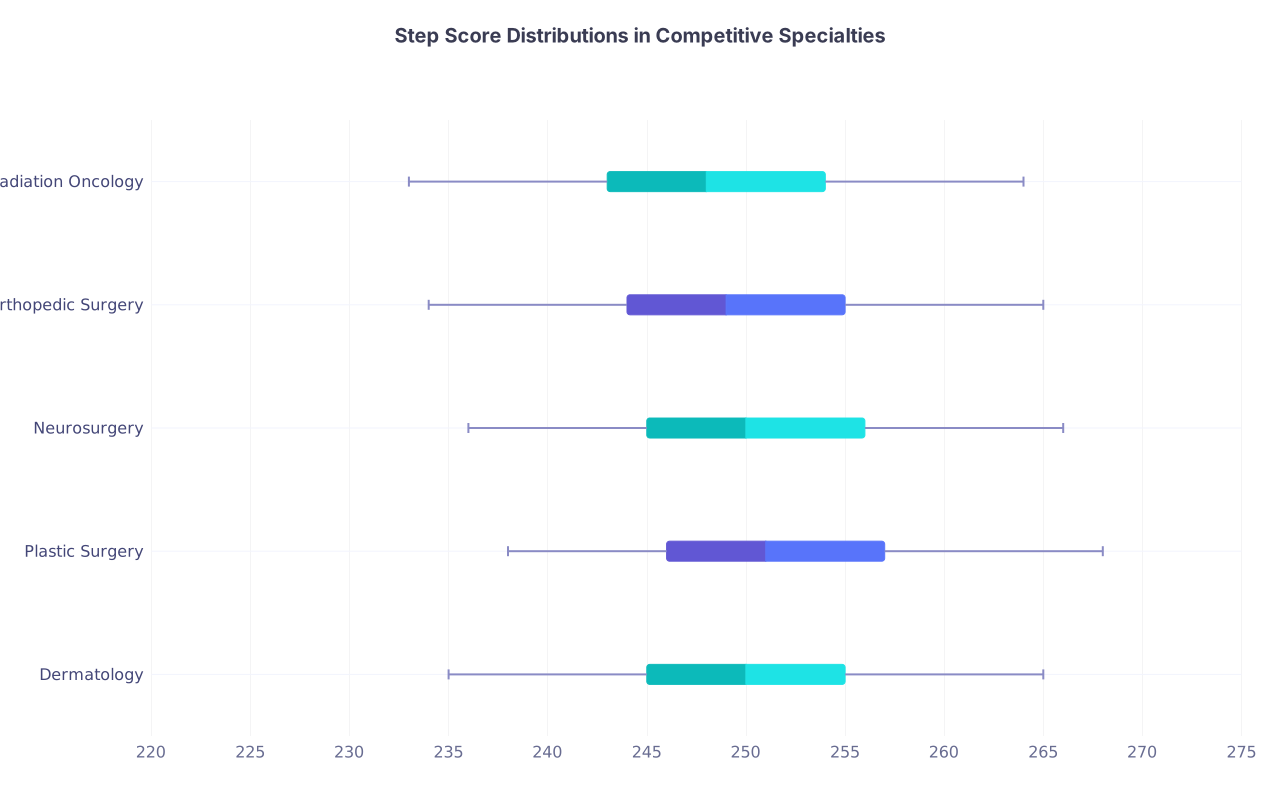
- Above‑average board exam scores (Step/COMLEX)
- Honors in core clinical clerkships, especially medicine and surgery
- Strong performance in specialty‑specific rotations
A successful dermatology applicant shared:
“I treated each exam like another building block toward my future in derm. I planned my study schedules one semester at a time and treated Step 1 and Step 2 as pivotal milestones. Being in the top percentile gave me both confidence and flexibility in where I applied.”
Actionable tips:
- Start early: Create a long‑term study plan by MS1 or early MS2.
- Use question banks strategically and consistently, not just in the final weeks before exams.
- After each exam or rotation, identify specific knowledge gaps and address them promptly.
- If a score or grade is weaker, be proactive about strengthening other areas (e.g., research, additional rotations, strong Step 2 performance).
2. Targeted Clinical Experiences That Demonstrate Commitment
Clinical exposure is where your career development narrative becomes real. For competitive specialties, breadth and depth in the field are crucial.
Successful applicants typically:
- Complete core rotations with excellence, demonstrating reliability and professionalism.
- Seek sub‑internships (sub‑Is) or acting internships in their chosen specialty, ideally at their home institution and, when strategic, at outside institutions.
- Pursue electives that complement their specialty interest (e.g., rheumatology for derm applicants, sports medicine for ortho hopefuls).
- Take on meaningful responsibilities—not just shadowing, but actively participating in patient care, presenting cases, and following through on tasks.
As one orthopedic surgery applicant described:
“During my third and fourth years, I did multiple ortho electives and made sure I was the first one in and last one out. I asked for feedback, scrubbed into every case I could, and showed up prepared with patient details and imaging already reviewed.”
Actionable tips:
- Plan your fourth‑year schedule early to secure key rotations in your specialty.
- Approach each rotation as a long‑term interview—your reputation will follow you.
- Read daily about your patients’ conditions and procedures; residents and attendings notice.
- Ask for mid‑rotation feedback so you can adjust and improve in real time.
3. Strategic Research and Scholarly Activity
In competitive specialties, research frequently serves as a major differentiator.
Research accomplishes multiple goals:
- Demonstrates intellectual curiosity and commitment to your field
- Helps you develop relationships with specialty‑specific faculty
- Provides content for your personal statement and interviews
- Can lead to publications, posters, and presentations that strengthen your CV
A successful radiology applicant explained:
“I joined a radiology research group early in second year. I didn’t start with advanced skills—just consistent effort. Over time, that led to two posters, one first‑author publication, and, most importantly, strong mentorship from faculty who later wrote my letters.”
Actionable tips:
- Start by joining an ongoing project—this is often easier than initiating your own.
- If your school lacks strong research in your specialty, look for multi‑institutional projects, virtual collaborations, or case reports with engaged faculty.
- Track your work: keep a spreadsheet of all abstracts, presentations, and manuscripts.
- Be prepared to discuss your research clearly and confidently in interviews—what you did, what you learned, and how it shaped your interest in the field.
4. Deliberate Relationship Building and Mentorship
Behind many successful Match outcomes is a network of mentors and advocates.
Strong relationships can:
- Lead to powerful, personalized letters of recommendation
- Provide honest feedback on your competitiveness and application strategy
- Open doors to research, leadership, or away rotation opportunities
- Help you understand the true culture and expectations of programs
One plastic surgery applicant reflected:
“I made it a point to know not just one but several faculty members and senior residents. I showed up consistently, asked for advice, and followed through. When it came time for letters, they could speak to my growth over time, not just one rotation.”
Actionable tips:
- Identify 1–2 faculty mentors in your specialty by early third year.
- Meet with them periodically with specific questions or updates, not just vague requests.
- Ask mentors to review your CV, personal statement, and program list.
- Cultivate peer mentors—students a year or two ahead of you who successfully matched in your field.
5. Mastering the Residency Interview as a Competitive Applicant
In competitive specialties, by the time you receive an interview, you’re usually academically qualified. The interview often determines your rank position.
Successful applicants emphasize:
- Preparation: Practicing responses to common questions, behavioral scenarios, and specialty‑specific topics.
- Self‑awareness: Understanding your own story—why this specialty, why this program, what you bring to the team.
- Connection: Demonstrating collegiality, humility, and the ability to function well within a team.
A neurology applicant described:
“I recorded my mock interviews on Zoom and watched them back, which was painful but incredibly helpful. I learned to pause instead of ramble and to give specific patient or rotation examples rather than generic answers.”
Actionable tips:
- Prepare 4–5 key stories that demonstrate your resilience, teamwork, leadership, and ethical reasoning.
- Research each program: know their strengths, patient population, and recent initiatives.
- Practice explaining red flags (gaps, lower scores, leaves of absence) honestly and succinctly.
- After each interview, jot down key impressions while they are fresh—it will help with rank list decisions later.
6. Actively Seeking and Using Feedback
Proactive feedback‑seeking is a hallmark of mature applicants.
One applicant noted:
“After every rotation and a few key interviews, I asked what I could improve. Not everyone replied in detail, but the ones who did gave me insights that completely changed how I presented myself and interacted on the wards.”
Actionable tips:
- During clinical rotations, ask residents or attendings mid‑way: “Is there one thing I could do differently to be more helpful to the team?”
- After mock interviews, request specific, behavior‑focused feedback instead of generic impressions.
- Be open, not defensive; demonstrate that you can integrate feedback quickly.
7. Persistence, Resilience, and Adapting After Setbacks
Not every strong applicant matches on the first try, especially in competitive specialties. Resilience is a key career development skill.
A reapplicant in dermatology shared:
“I didn’t match my first year. It was devastating. But once I processed that, I met with mentors, identified gaps in my application, and spent a dedicated year doing full‑time derm research and additional clinical work. The second time, I matched at a program that was actually a better fit for me.”
Actionable tips if you don’t match:
- Use your medical school, dean’s office, and specialty mentors as resources immediately.
- Consider a research year, a preliminary year in a related field, or additional clinical work that directly addresses deficits in your application.
- Reflect on whether your specialty choice, geographic focus, or program list strategy needs adjustment.
- Remember that many excellent physicians did not follow a perfectly linear path.
Case Studies: Real‑World Examples of Competitive Match Success
Case Study 1: Sarah – Dermatology
Background:
- GPA: 3.8 (top quartile)
- USMLE Step 1: 250; Step 2: 258
- Specialty: Dermatology
- Interests: Autoimmune skin diseases, medical education
Strategy:
- From early MS2, Sarah joined a dermatology research group, leading to multiple abstracts and one first‑author publication.
- She completed two dermatology electives at her home institution and one away rotation at a program she was particularly interested in.
- Sarah built strong relationships with three dermatology faculty members who later wrote personalized letters highlighting her curiosity, reliability, and patient rapport.
- In her personal statement and interviews, she discussed her own history with a chronic skin condition, connecting it to her desire to improve patients’ quality of life and long‑term follow‑up.
Outcome:
Sarah matched into her top‑choice dermatology residency. She credits her success to early planning, consistent research involvement, and genuine relationships with mentors.
Case Study 2: James – Orthopedic Surgery
Background:
- GPA: 3.5
- USMLE Step 1: 240; Step 2: 247
- Specialty: Orthopedic Surgery
- Interests: Sports medicine, community health
Strategy:
- James excelled on his surgical rotations and secured honors in his sub‑I in orthopedics.
- He engaged in community service related to youth sports injury prevention, which he later highlighted as a unique strength in his application.
- He sought mentorship from orthopedic surgeons and sports medicine physicians, who helped him secure research projects and guided his away rotation choices.
- In his interviews, James emphasized his teamwork, work ethic, and alignment with orthopedics’ physically demanding nature, drawing on experiences as a former collegiate athlete.
Outcome:
James matched into a competitive orthopedic surgery program. He attributes his success to targeted mentorship, genuine community involvement, and his ability to articulate how his background aligned with the specialty’s demands.
Case Study 3: Maya – Radiology with an Eye on Interventional
Background:
- GPA: 3.7
- USMLE Step 1: 238; Step 2: 246
- Specialty: Diagnostic Radiology (ultimately aiming for IR fellowship)
- Interests: Image‑guided procedures, oncology
Strategy:
- Maya joined radiology‑related quality improvement projects and contributed to a multi‑institutional study.
- She completed electives in radiology and vascular surgery, reinforcing her interest in procedural, imaging‑guided care.
- Knowing her board scores were solid but not exceptional, she applied broadly and emphasized her strong clinical evaluations, professionalism, and research productivity.
- In interviews, she clearly explained how she would use residency to build toward IR while keeping an open mind to other subspecialties.
Outcome:
Maya matched at a well‑respected academic radiology program. Her balanced, realistic approach and clear long‑term goals resonated strongly with interviewers.

Putting It All Together: A Strategic Roadmap for Competitive Matches
To navigate the toughest residency matches, integrate the following into a coherent plan:
Clarify Your Specialty Interest Early
- Shadow in MS1–MS2, talk to residents, and attend interest group sessions.
- Ask yourself what you enjoy: procedures, longitudinal care, acute crises, imaging, complex diagnostics, etc.
Map Out a Multi‑Year Strategy
- Plan when you’ll pursue research, which rotations to prioritize, and how to position yourself academically.
- Build time for board exam preparation, specialty electives, and away rotations if appropriate.
Develop a Cohesive Application Story
- Align your CV, personal statement, letters, and interview responses to tell a consistent story of genuine interest and readiness.
- Highlight longitudinal commitments (multi‑year projects, leadership roles, sustained volunteer work).
Use Data and Mentorship to Calibrate Expectations
- Review NRMP data on specialty competitiveness and applicant profiles.
- Have mentors honestly assess your competitiveness and help build a balanced program list (reach, target, and safety programs).
Care for Your Well‑Being
- High‑pressure applications can lead to burnout. Prioritize sleep, exercise, social support, and time away from studying.
- Seeking counseling or coaching is a sign of maturity, not weakness.
With deliberate planning and sustained effort, you can significantly increase your chances of success, even in the most crowded fields.
Frequently Asked Questions (FAQ)
Q1: Which specialties are currently the most competitive in the Residency Match?
While competitiveness changes slightly each year, the specialties commonly considered most competitive include:
- Dermatology
- Plastic Surgery (Integrated)
- Orthopedic Surgery
- Otolaryngology (ENT)
- Radiology (especially Interventional Radiology–Integrated)
- Certain programs in Neurology, Urology, and Emergency Medicine at top academic centers
Check the latest NRMP and specialty‑specific match data for the most up‑to‑date statistics.
Q2: How can I realistically assess my competitiveness for a specialty?
Consider these factors:
- Board scores and grades compared with published averages for matched applicants in your specialty
- Clerkship performance, especially in core rotations and your specialty of interest
- Number and quality of research products, particularly in your target field
- Strength of letters of recommendation, especially from specialty faculty
- Mentor feedback—ask honest, experienced faculty to evaluate your profile and help you identify reach, target, and safer options
Use this information, combined with NRMP and specialty organization data, to guide your strategy.
Q3: What are the most impactful ways to strengthen my application for a competitive specialty?
High-yield strategies include:
- Prioritizing academic excellence and strong Step/COMLEX performance
- Securing sub‑I and elective experiences in your target specialty
- Engaging in meaningful research with tangible output (presentations, publications)
- Building long‑term relationships with mentors who will advocate for you
- Crafting a compelling personal statement that reflects authentic interest and insight
- Practicing interview skills early and often
Focus on sustained effort over time rather than last‑minute fixes.
Q4: How important are away rotations for competitive specialties?
Away rotations (also called “audition rotations”) can be very important in some competitive fields, but their value varies:
- In specialties like orthopedic surgery, ENT, and plastic surgery, away rotations can significantly influence interviews and Match outcomes.
- For dermatology and radiology, specialty and program culture matter; some place strong emphasis on away rotations, others less so.
- Away rotations are most beneficial when you:
- Perform at a high level clinically
- Build strong relationships
- Are genuinely interested in that program or geographic area
Discuss away rotation strategy with mentors in your specialty before committing, as they require time, travel, and financial resources.
Q5: What should I do if I don’t match into my desired competitive specialty?
If you don’t match:
- Seek immediate guidance from your dean’s office and specialty mentors.
- Consider options such as:
- A dedicated research year in your target specialty
- A preliminary year (e.g., in surgery or medicine) while you strengthen your application
- Reassessing specialty choice and exploring related fields where your skills and interests fit
- Reflect honestly on your application’s weaknesses and create a concrete plan to address them.
- Recognize that many physicians have non‑linear paths to satisfying careers; your value as a clinician is not determined by a single Match outcome.
By combining sound strategy, early planning, and the lived insights of successful applicants, you can approach even the most competitive Residency Match processes with clarity and confidence. Your journey in medicine is a marathon, not a sprint—and each step you take now will shape the kind of physician you ultimately become.