Introduction: Why Some Medical Specialties Feel Impossible to Match Into
For many medical students, choosing a specialty is one of the most exciting—and most stressful—decisions in their career in medicine. The residency match adds another layer of pressure: some medical specialties consistently feel “out of reach” because of intense competition, limited positions, and high expectations.
If you’ve ever wondered why Dermatology, Plastic Surgery, or Orthopedic Surgery seem so hard to match into—or why competitiveness shifts over time—you’re not alone. Understanding the forces that drive competition can help you plan more strategically, set realistic expectations, and optimize your residency application.
This article unpacks why some specialties are so competitive, how healthcare trends and program behavior shape the residency match, and what concrete steps you can take to improve your odds, whether you’re aiming for a highly competitive field or still exploring.
Understanding the Residency Match: The Foundation of Competition
Before dissecting specialty-specific competition, it’s crucial to understand the mechanics of the residency match itself, particularly in the U.S. context.
How the NRMP Match Works
The National Resident Matching Program (NRMP) uses a computerized algorithm to pair applicants with training programs. The process typically follows this sequence:
Application Submission (ERAS)
- You submit applications via the Electronic Residency Application Service (ERAS).
- Your application usually includes:
- USMLE/COMLEX scores
- Medical school transcript and MSPE (Dean’s letter)
- Letters of recommendation (often specialty-specific)
- Personal statement
- CV with research, leadership, volunteering, and work experience
Program Review and Interviews
- Programs screen applicants using a mix of objective and subjective criteria:
- Exam scores and class rank
- Academic honors (e.g., AOA, Gold Humanism)
- Research productivity and publications
- Strength and specialty relevance of letters
- Clerkship grades and away rotation performance
- Selected applicants are invited for interviews (now often virtual or hybrid).
- Programs screen applicants using a mix of objective and subjective criteria:
Rank Order Lists (ROLs)
- You submit a rank order list of programs in order of preference.
- Programs create their own ranked list of applicants.
The Match Algorithm
- The NRMP algorithm is applicant-proposing—it favors applicant preferences when possible.
- However, when more students rank a specialty highly than there are available positions, competition intensifies. Stronger applicants crowd out weaker ones, and marginal candidates may go unmatched in that specialty.
Where Competition Comes From
Competition is not just about how “good” applicants are; it’s about supply and demand:
- Supply: Number of residency positions in a specialty.
- Demand: Number and strength of applicants who list that specialty highly.
When demand far exceeds supply—especially with many high-performing applicants—the specialty becomes “hard to match into.”
Core Drivers of Competitiveness Across Medical Specialties
Several recurring themes explain why certain medical specialties are harder to match into than others.

1. Limited Number of Residency Positions
The simplest and most powerful driver of competition is the number of available positions.
Some specialties have structural constraints:
- Fewer training sites with necessary equipment (e.g., Mohs labs, microsurgery facilities)
- Reliance on high-cost technology (e.g., advanced imaging, surgical robotics)
- Smaller faculty-to-resident ratios
Examples of Supply-Restricted Specialties
Dermatology
- Historically offers only around 500–600 categorical PGY-2 positions per year in the U.S.
- Thousands of applicants express interest, including many with stellar academic records and research portfolios.
- Result: Even very strong candidates may not match on the first attempt.
Integrated Plastic Surgery
- Among the lowest number of slots per applicant of any specialty.
- Programs are typically small (often 1–3 residents per year) and highly selective.
- Extensive case mix and prestige attract many highly competitive applicants.
Otolaryngology, Neurosurgery, and Orthopedic Surgery
- Similar pattern: fewer total positions, rigorous training requirements, and high procedural volume expectations.
- Programs are cautious about resident capacity due to call demands, operative case load, and faculty availability.
Bottom line: When the numerator (positions) is small and the denominator (applicants) is large, specialty competitiveness skyrockets—even if not every program is “elite.”
2. Prestige, Income, and Perceived Status
Certain specialties carry powerful reputational appeal within medicine and among the public. This prestige can drive competition, even if actual job markets later become saturated.
Financial Incentives
Many students are aware of compensation trends from surveys like Medscape or MGMA. High-earning specialties often fuel intense interest:
Orthopedic Surgery
- Consistently near the top of physician income surveys
- Heavy procedural focus and procedural reimbursement structure
Dermatology and Plastic Surgery
- Strong earning potential, especially when combining insurance-based and aesthetic/cash-pay services
- Opportunity for outpatient-focused practice with control over schedule
This combination of high income plus procedural work is a common hallmark of ultra-competitive specialties.
Social and Professional Status
Titles like “neurosurgeon,” “plastic surgeon,” or “cardiologist” reflect years of rigorous training and are often associated with:
- Cutting-edge technology and innovation
- High-acuity or life-saving interventions
- High visibility in hospital and media settings
For some students, the identity and recognition associated with these roles become major motivators, intensifying interest and competition in these fields.
3. Lifestyle, Flexibility, and Work–Life Balance
The perception that some specialties offer a better lifestyle has dramatically reshaped the residency landscape over the past 20–30 years.
Specialties Often Viewed as “Lifestyle-Friendly”
- Radiology
- Predictable daytime work in many settings
- Remote/tele-radiology opportunities
- Limited long-term patient management responsibilities
- Dermatology
- Outpatient-based, relatively few emergencies
- Regular hours and flexibility for part-time or group practice
- Anesthesiology (in some practice models)
- Shift-based work, ability to tailor call schedules depending on group
The promise of more control over time, fewer overnight calls, and better work–life balance makes these options highly appealing, particularly as physician burnout gains more visibility.
However, lifestyle is perceived as much as it is real. Applicants may chase a specialty for its reputation as “cush” or “controllable,” even when individual job markets and practice settings vary widely.
4. Shifting Healthcare Trends and Workforce Needs
Competitiveness is not static. It evolves with healthcare trends, policy changes, and workforce demands.
The Rise (and Plateau) of Emergency Medicine
- For years, Emergency Medicine (EM) was highly sought after:
- Varied pathology
- Shift-based work
- Broad procedural skills
- As more med students pursued EM and more programs opened, some regions began to see workforce saturation and job market tightening.
- This has led to fluctuations in competitiveness—in some cycles, EM is less competitive than it was a decade ago.
Growing Demand for Primary Care
- An aging population and chronic disease burden increase demand for:
- Family Medicine
- General Internal Medicine
- Geriatrics
- Despite strong workforce need, these fields often remain less competitive in the match because:
- Compensation is generally lower than procedural specialties.
- Perceptions of workload, burnout, and documentation burden deter some students.
Over time, policy efforts (e.g., loan repayment, incentives for rural practice, value-based care models) could shift the attractiveness and competitiveness of primary care specialties.
5. Length, Intensity, and Risk of Training
The duration and rigor of training can either deter or selectively attract applicants.
Neurosurgery as a Case Study
- Training duration often spans 7+ years, not including fellowships.
- High intensity, long hours, heavy call, and high-stakes surgeries.
- This discourages some applicants—but those who remain are often extremely committed and academically strong, preserving high competitiveness among a smaller pool.
Similarly, cardiothoracic surgery and some combined programs (e.g., vascular, integrated cardiothoracic) attract fewer, but highly motivated applicants who are prepared for long training timelines.
Interestingly, longer training doesn’t always reduce competition; it can serve as a self-selection filter, concentrating the most driven candidates in that specialty.
6. Applicant Characteristics and Self-Selection
The profile of applicants drawn to certain specialties magnifies competition.
Academic Metrics
- Specialties known to filter by USMLE Step scores and class rank naturally attract:
- High-achieving students who are confident in their metrics
- Students who focus early on building competitive portfolios
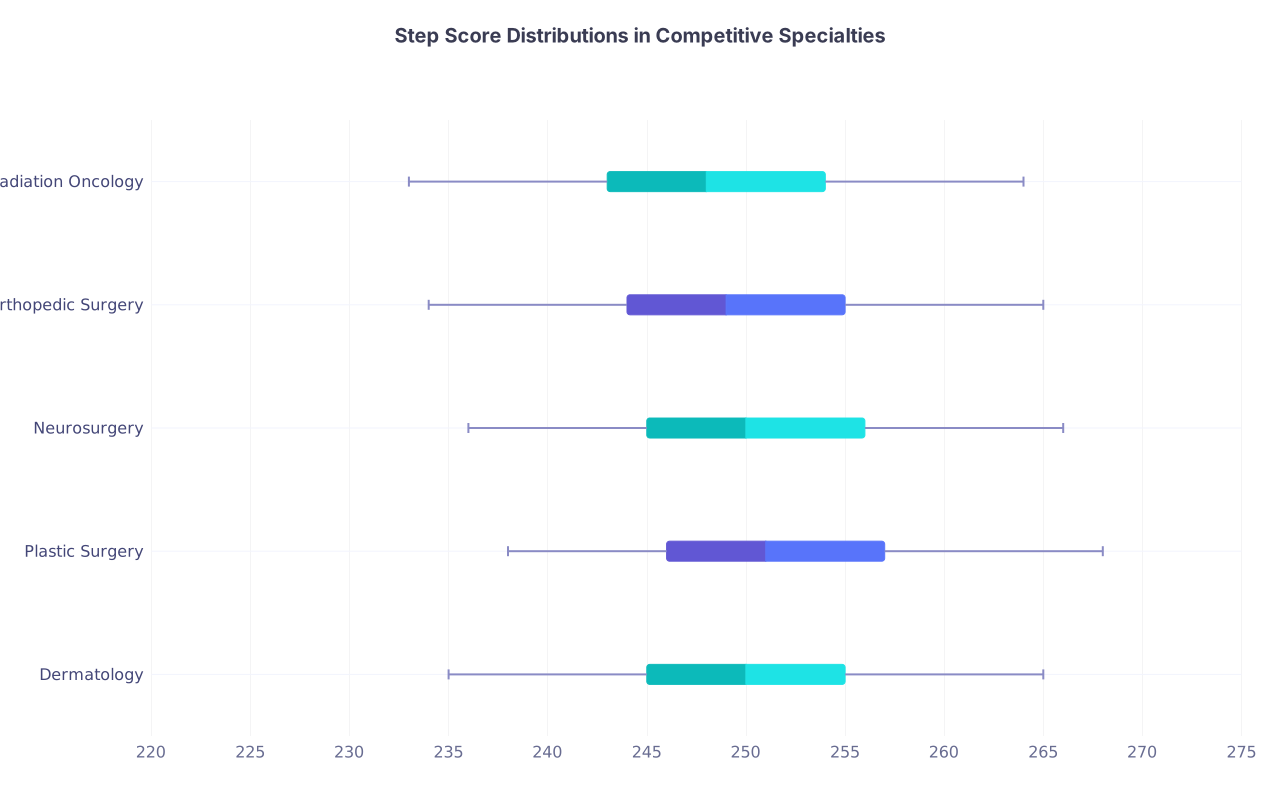
Historically, Derm, Plastics, ENT, Ortho, and Neurosurgery have had among the highest average Step scores. Even as scoring systems change (e.g., Step 1 pass/fail), these specialties continue to use other academic markers (honors, Step 2 CK, research) to differentiate applicants.
Research and Scholarly Productivity
Research-heavy specialties (e.g., Dermatology, Radiation Oncology, Academic Internal Medicine) often favor:
- Multiple specialty-related publications
- Conference presentations
- Year-long research fellowships or dedicated scholarly time
This creates a cycle: competitive fields attract research-focused students, which raises the bar for everyone else.
Connections and Mentorship
Applicants with:
- Strong specialty mentors
- Home programs with robust departments
- Family ties in a specialty
may have smoother pathways to strong letters, research, and away rotations. This doesn’t guarantee a match, but it can enhance competitiveness, especially in smaller fields where reputational networks matter.
How Applicant Preferences Shape the Competitiveness Landscape
Beyond structural factors, what applicants want plays a major role in the residency match ecosystem.
Passion, Fit, and Clinical Interests
Students often gravitate to fields based on:
- The type of patient interactions they enjoy (e.g., continuity vs. acute care)
- Preference for procedures vs. cognitive work
- Interest in specific diseases or organ systems
- Desire for inpatient vs. outpatient practice
For example:
- A student energized by high-acuity trauma, rapid decisions, and resuscitation may pursue Emergency Medicine or Surgery.
- Someone who values long-term relationships and chronic disease management may prefer Family Medicine or General Internal Medicine.
When many students share similar preferences (e.g., procedural, high-income, controllable lifestyle), pressure concentrates in the same specialties.
Influence of Mentors and Role Models
Mentorship significantly shapes perceived “cool factor” and feasibility:
- Strong departmental presence in a medical school often increases student interest in that specialty.
- Charismatic mentors in fields like Orthopedics, Radiology, or ENT can inspire waves of students to apply.
- Visible, supportive mentors in historically underrepresented specialties (e.g., PM&R, combined medicine-pediatrics, palliative care) can gradually increase interest and awareness.
Programs with active outreach (interest groups, shadowing, research opportunities) frequently see more applicants, impacting specialty competitiveness nationally.
Strategies to Compete Effectively for Competitive Specialties
Competition should not automatically discourage you from pursuing your dream specialty. It simply means you need a deliberate, well-structured strategy.

1. Start Early and Explore Intentionally
- Use pre-clinical and early clinical years to:
- Attend specialty interest group events
- Shadow in multiple fields (including less visible ones like PM&R or Pathology)
- Talk to residents and fellows about day-to-day realities
- Avoid choosing based solely on prestige or lifestyle reputation. Seek a genuine fit between your personality, values, and the specialty’s core work.
2. Build a Specialty-Focused Portfolio
Once you have a realistic target specialty:
Clinical Experience
- Do well in core clerkships, especially IM, Surgery, Pediatrics, and OB/GYN, as applicable.
- Seek sub-internships (sub-Is) or away rotations in your desired specialty.
- Perform reliably: show up early, be prepared, know your patients, and be a team player.
- Ask for feedback and act on it; programs notice growth.
Letters of Recommendation
- Strong letters often make or break applications in competitive fields.
- Aim for:
- 1–2 letters from faculty in your target specialty, ideally who have worked closely with you.
- Consider research mentors or department chairs if they can comment meaningfully on your work ethic and fit.
3. Engage in Targeted Research and Scholarly Work
- Join projects in your chosen specialty as early as possible:
- Case reports, chart reviews, quality improvement, clinical or basic science research.
- Present at:
- Local institutional research days
- Regional or national specialty conferences
- For ultra-competitive fields, consider:
- A dedicated research year if feasible and aligned with your goals.
- Multi-institutional collaboration to increase research output and networking.
4. Be Strategic With Program Selection and Backup Plans
- Use specialty-specific match data (NRMP Charting Outcomes, program fill statistics, and recent trends) to:
- Estimate competitiveness for your profile.
- Build a realistic program list, mixing reach, mid-range, and safer options.
- Consider dual-application strategies if:
- Your metrics are significantly below typical matched applicants in your dream specialty.
- You discover genuine interest in a closely related field (e.g., applying to both IM and Neurology, or EM and IM).
- Recognize that a satisfying career in medicine can be built in many specialties, not only the traditionally prestigious ones.
5. Master the Interview and Signaling Process
- Many specialties now use program signaling (tokens) and preference signaling strategies:
- Learn how signaling works in your field and use your limited signals wisely.
- Prepare thoroughly for interviews:
- Know your application deeply—especially your research.
- Be ready to explain clearly: “Why this specialty?” and “Why this program?”
- Practice behavioral questions and scenario-based questions relevant to the specialty.
6. Demonstrate Long-Term Commitment and Professionalism
- Competitive programs want residents who are:
- Genuinely interested in their specialty
- Resilient, collegial, and coachable
- Likely to finish the program and represent it well
You can demonstrate this by:
- Consistent involvement in relevant specialty activities over time
- Professional conduct on rotations (punctuality, integrity, responsibility)
- Thoughtful personal statements with a coherent narrative, not generic flattery
Conclusion: Competition Is Real, But So Are Your Options
Some medical specialties are undeniably hard to match into, driven by limited positions, high prestige, income potential, lifestyle appeal, and concentrated interest from top-tier applicants. Healthcare trends, changing workforce demands, and evolving perceptions of work–life balance continue to reshape which fields are “hot” in any given year.
Yet competitiveness doesn’t mean impossibility. With:
- Early exploration and honest self-assessment
- Targeted research and clinical experiences
- Strong mentorship and networking
- Strategic program selection and realistic backup planning
you can significantly improve your chances of a successful residency match, whether in a traditionally competitive specialty or one you discover later that fits you even better.
Ultimately, a fulfilling career in medicine is built less on the name of the specialty and more on how well it aligns with your strengths, values, and the kind of impact you want to have on patients and the healthcare system.

FAQ: Residency Competitiveness and Matching Into Competitive Specialties
Q1: What are currently the most competitive medical specialties in the residency match?
In recent match cycles, some of the most competitive specialties have included Dermatology, Integrated Plastic Surgery, Orthopedic Surgery, Otolaryngology (ENT), Neurosurgery, and some competitive subspecialty pathways in Internal Medicine (e.g., early pathways to cardiology or GI). These fields tend to have fewer positions, high applicant interest, strong financial incentives, and significant prestige, all of which increase competition.
Q2: How much do USMLE/COMLEX scores still matter for competitive specialties?
Even with changes like Step 1 becoming pass/fail, exam performance still matters, especially Step 2 CK and COMLEX Level 2. Competitive specialties often use:
- Step 2 CK scores
- Clerkship grades and honors
- Class rank or quartiles
as important filters. Strong scores won’t guarantee a match, but low scores can limit interview offers in very competitive fields. Programs also increasingly weigh research, letters, and clinical performance alongside exam metrics.
Q3: Can I still match into a competitive specialty if my metrics are average or below average?
Yes, it’s possible, but your strategy must be deliberate and realistic:
- Build strong specialty-specific experiences (research, electives, sub-Is).
- Obtain excellent, personalized letters from respected faculty in the field.
- Apply broadly, including programs in less popular locations.
- Consider dual-application to a second specialty you’d genuinely be happy in.
Many successful residents in competitive specialties do not have “perfect” scores but distinguish themselves through work ethic, clinical performance, and commitment to the field.
Q4: How important is networking and mentorship for competitive specialties?
Networking and mentorship are extremely important, especially in small or tight-knit fields:
- Mentors can connect you to research projects, recommend away rotations, and provide strong letters.
- Faculty who know your work well can advocate for you directly with program directors.
- Attending conferences, grand rounds, and departmental events can help you become a known quantity in the specialty.
While networking alone won’t overcome major academic gaps, it can maximize your existing strengths and open doors that purely anonymous applications cannot.
Q5: What should I do if I don’t match into my desired competitive specialty?
Not matching is difficult, but it’s not the end of your career in medicine. Options include:
- SOAP (Supplemental Offer and Acceptance Program) to secure a position in a different specialty or a preliminary/transitional year.
- Reapplying the following cycle after:
- Completing a research year
- Strengthening your portfolio (additional rotations, publications)
- Improving Step 2 CK (if not already taken when you applied)
- Exploring closely related specialties where your skills and interests still fit (e.g., PM&R instead of Ortho; IM with interventional career paths instead of Cardiology from the start).
Many physicians ultimately find great satisfaction in specialties they did not initially plan to enter, especially when they fully commit to making the most of the opportunities available to them.