It is August 1st. You are starting MS2. You have already decided: dermatology, plastics, neurosurgery, ortho, ENT, IR, radiation oncology, urology, or another tiny, brutal specialty is your target. One shot, ultra‑competitive. No backup story.
From this point until Match Day, you do not have “years of med school.” You have a sequence of very specific windows. Some you can use. Some, once gone, never come back.
I will walk you from early MS2 through MS4. Month by month, then zoom in when it matters. At each point: what you should be doing, what is optional, and what is a waste of time if you are serious about a single ultra‑competitive specialty.
Big Picture: Your 3‑Year Competitive Timeline
Before we get granular, you need the scaffold.
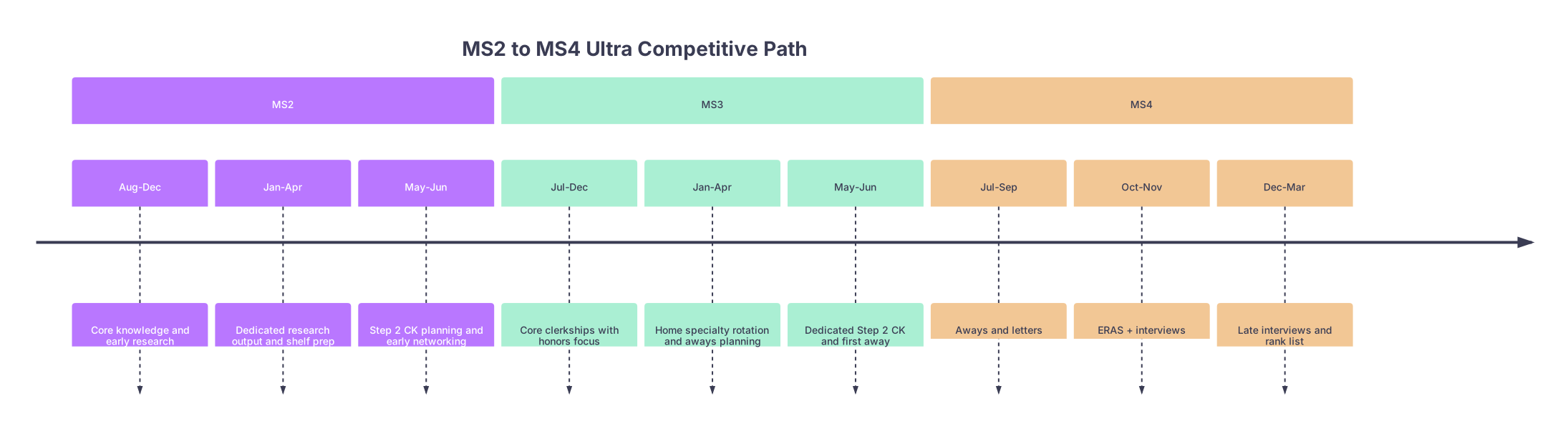
| Period | Event |
|---|---|
| MS2 - Aug-Dec | Core knowledge and early research |
| MS2 - Jan-Apr | Dedicated research output and shelf prep |
| MS2 - May-Jun | Step 2 CK planning and early networking |
| MS3 - Jul-Dec | Core clerkships with honors focus |
| MS3 - Jan-Apr | Home specialty rotation and aways planning |
| MS3 - May-Jun | Dedicated Step 2 CK and first away |
| MS4 - Jul-Sep | Aways and letters |
| MS4 - Oct-Nov | ERAS + interviews |
| MS4 - Dec-Mar | Late interviews and rank list |
Here is the core reality: for ultra‑competitive specialties, your application is essentially “locked in” by September of MS4. Most of the heavy lifting must occur between now (early MS2) and the end of MS3.
MS2: Foundation Year With Intent (Month‑by‑Month)
August–October (Early MS2): Build the Academic Floor
At this point you should:
- Lock in high‑yield class performance
- Attach yourself to one specialty mentor
- Get on at least one real research project in your target field
Concretely:
Academics (weekly)
- 10–15 hours / week of real study, not passive lecture-watching.
- Start building Step 2 CK‑relevant habits even if Step 1 is pass/fail now:
- UWorld or AMBOSS, 10–20 questions a day aligned with your systems.
- One day/week: straight question‑block review to train test endurance.
Research (by October 1)
- Identify your specialty: e.g., dermatology, neurosurgery, plastics. No more “maybe cards, maybe derm.” Pick.
- Email 5–10 faculty in that department with specific asks:
- “I read your paper on X. I am interested in [specific topic]. Do you have any ongoing projects where a motivated MS2 could help with data collection, chart review, or manuscript prep?”
Red flag I see too often: “Let me know if you have any projects.” That gets ignored.
Your goal before Halloween:
- 1 active project with clear deliverables
- A mentor who knows your name and sees you in person or on Zoom at least monthly
November–December (Late Fall MS2): Turn Research Real
At this point you should:
- Move your project from “idea” to “data / outline”
- Start building a slight specialty “identity”
Weekly structure:
- 1–2 meetings / month with your mentor
- 4–6 hours / week on research:
- IRB training, data abstraction, or literature review
- Still maintaining strong class performance (honors if your school uses it)
By December 31, aim for:
- A clear authorship plan: you know whether you are first author, middle, or just helping
- A working title for:
- One case report / series or
- A retrospective chart review or
- A systematic review in your niche
January–March MS2: Production Season
Now you move from “I’m on a project” to “I am generating output.”
At this point you should:
- Have tangible progress with a timeline to submission
- Start light exposure to your department clinically (if allowed)
Monthly goals:
- January:
- Draft introduction and methods (for chart review) or
- Draft case report write‑up
- February:
- Finish data collection for small projects
- Identify appropriate journals / conferences
- March:
- Full draft to your mentor
- Aim for at least one abstract submission by late spring / early summer
You also start reputation‑building:
- Attend your specialty’s weekly conference / tumor board / M&M
- Show up. Sit in the same place. Introduce yourself to residents.
By March 31:
- 1 submitted abstract or manuscript in progress
- Multiple faculty and residents recognize you by face and name
April–June MS2: Step Strategy and Early Networking
Even with Step 1 pass/fail, high Step 2 CK is non‑negotiable for these specialties.
At this point you should:
- Map your Step 2 CK and clerkship sequence
- Start specialty‑specific reading
April–May:
- Talk to:
- Your academic advisor
- A senior resident in your specialty
about optimal clerkship order. Ideal (not always possible) for competitiveness: - Medicine and surgery relatively early
- Your target specialty rotation during late MS3 / early MS4
- Ask explicitly:
- “Which rotations at our institution are grade‑heavy and important for my specialty?”
- “Which attendings are known to write strong letters?”
Specialty reading:
- 1–2 hours / week: review a standard text or review book in your target field.
- Example:
- Derm: Bolognia board review chapters
- Neurosurgery: Greenberg basics sections
- Ortho: Miller’s review questions
- Example:
By June 30:
- Solid research trajectory (ideally 1 submission, 1 in late draft, 1 new project)
- Clear plan for MS3 clerkship order
- You are not a stranger in your department
MS3: Core Clerkships Under Pressure (Quarter‑by‑Quarter)
Ultra‑competitive specialties care a lot about MS3 performance. Honors in core clerkships plus strong narrative comments.
July–September MS3: First 2 Core Clerkships
At this point you should:
- Be fully committed to excelling clinically
- Accept that research will temporarily slow
Rotation priorities:
- Aim for honors on at least:
- Internal Medicine
- Surgery
- Treat every rotation like an audition.
Weekly during a core clerkship:
- Pre‑round reading: 30–45 minutes each night on your patients’ conditions
- Question bank: 10–20 questions / day targeted to that shelf exam
- Professionalism: zero missed pages, late arrivals, or “low energy” comments
Research:
- 1–2 hours / week max. Mostly:
- Responding to coauthor edits
- Polishing a manuscript
- Submitting abstracts to upcoming meetings
By September 30:
- 2 core clerkships completed
- Shelf scores at or above your school’s honors cutoffs
- No professionalism issues. None. Those kill competitive apps quickly.
October–December MS3: Middle Core Block
At this point you should:
- Keep stacking honors
- Start planning home specialty rotation timing
You should now be thinking in concrete numbers:
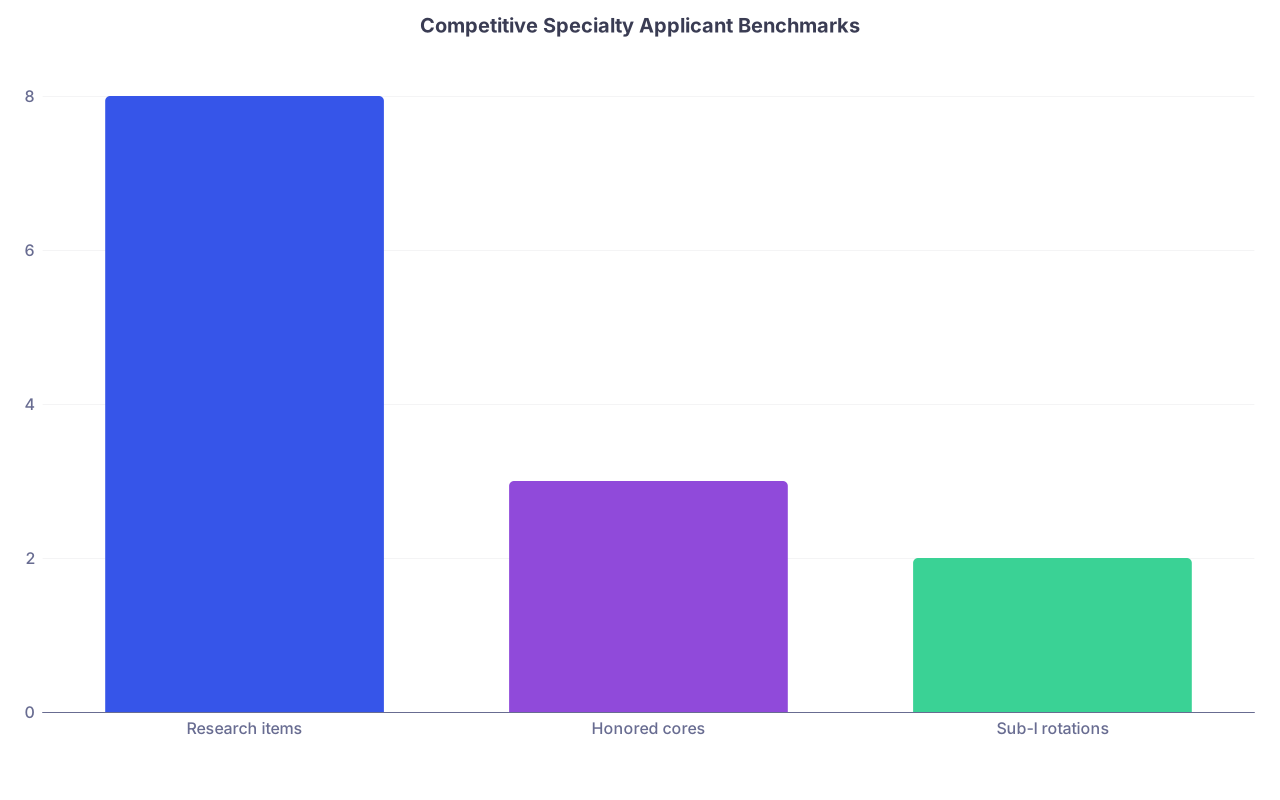
| Category | Value |
|---|---|
| Research items | 8 |
| Honored cores | 3 |
| Sub-I rotations | 2 |
In many ultra‑competitive fields, serious applicants often have:
- 8–12 “research items” (abstracts, posters, pubs)
- 3+ honors in core rotations
- 2–3 strong specialty rotations (home + aways)
During this period:
- Maintain clinical excellence
- Meet with:
- Your specialty mentor
- Department residency program director (or associate PD)
Ask directly:
- “When should I do my home specialty rotation for best letters?”
- “Which attendings are most involved with residency selection?”
- “Which away sites are realistic targets for me based on grades and research?”
By December 31:
- 4–5 core clerkships done, with mostly high marks
- Tentative schedule for:
- Home specialty rotation
- 1–2 away rotations in early MS4
January–March MS3: Application Skeleton Phase
This is when you covertly start building your ERAS skeleton.
At this point you should:
- Lock in away rotation months (they fill early)
- Ensure you have Step 2 CK timing planned
January:
- Work with your dean’s office to:
- Open VSLO/VLSO account timeline
- Confirm when you can start applying to aways (often spring)
- Build a list of 10–20 programs for potential away rotations:
- Mix of:
- Your home region
- Programs with strong fellowship placements
- A few “reach” and several “reasonable” options
- Mix of:
February–March:
- Reassess your metrics:
- Clerkship grades
- Shelf percentiles
- Research output status
- Meet with your mentor and a PD or associate PD:
- Ask bluntly: “Assuming I keep performing at this level, am I on track to be a viable applicant in [specialty]?”
Step 2 CK:
- Typically taken late MS3 or very early MS4. For ultra‑competitive specialties, you want a strong score in hand by application time.
- Work backward:
- If you plan to take Step 2 in June:
- Dedicated prep should start around April, lighter prep in March.
- If you plan to take Step 2 in June:
By March 31:
- Clear away rotation plan (months and target programs)
- Step 2 CK test date roughly scheduled
- Honest feedback from at least one faculty who sits on the selection committee
April–June MS3: Pre‑Application Crunch
This is the pivot.
At this point you should:
- Finish last core clerkships strong
- Submit away applications
- Start Step 2 CK serious prep
April:
- Submit VSLO/VLSO requests as soon as portals open. Same week.
- For each away, tailor:
- Brief statement of why that program
- Any existing research or regional ties
May–June:
- Dedicated Step 2 CK prep:
- 4–6 weeks of focused studying after your last core, if possible
- Daily:
- 2–3 UWorld blocks
- Review every question
- 2–3 NBME practice exams spaced weekly
By June 30:
- Several aways approved (at least 1, ideally 2)
- Step 2 CK taken or scheduled within a few weeks
- You are mentally shifting from “generic MS3” to “rising MS4 applicant”
MS4: Home Rotation, Aways, and Application Execution
This is where ultra‑competitive applicants separate themselves. Or quietly fail.
July–September MS4: Aways + Letters
At this point you should:
- Treat every day of each specialty rotation like a month‑long interview
- Collect your key letters of recommendation
Structure your rotations:
- Ideal pattern (varies by school):
- June/July: Home specialty rotation (sub‑I if available)
- July–September: 1–2 away rotations in your specialty
During each rotation:
Daily behavior:
- Be on time (that means early)
- Know patient details cold
- Read 30–60 minutes nightly on your cases or upcoming OR/patient issues
- Volunteer for notes, presentations, and follow‑ups
- Be coachable; never defensive
Mid‑rotation:
- Around week 2, ask a resident you trust:
- “How am I doing compared to other students aiming for this specialty?”
- “Anything that would keep an attending from writing me a strong letter?”
Letters:
- You want 3–4 strong letters, usually:
- 1 from home program chair or PD
- 1–2 from away rotation faculty
- 1 additional from a core IM/Surg attending who loved you
Ask for letters in the last week of each rotation:
- “I am applying to [specialty] this cycle. Would you feel comfortable writing a strong letter of recommendation for me?”
By September 15 (ERAS submission target):
- All letters requested (and ideally uploaded or in progress)
- Personal statement drafted and reviewed by:
- At least one faculty
- One senior resident in your specialty
ERAS Application and Interview Season
September–October MS4: ERAS and Program Signaling
At this point you should:
- Submit ERAS early, not fashionably on deadline day
- Use signaling (if your specialty has it) strategically
ERAS content:
Personal statement:
- Single, specialty‑focused narrative. No hedging about backups.
- Clear mention of:
- Why this specialty
- Your research focus
- Specific strengths you bring to residency
Experience section:
- Do not inflate. But do not undersell.
- Clearly separate:
- Peer‑reviewed publications
- Abstracts/posters
- Oral presentations
Program list:
- For ultra‑competitive specialties, it is common to apply broadly:
- 40–80 programs, depending on specialty
- Tier them privately:
- “Must apply,” “reasonable,” “safety-ish” (there are no true safeties)
October:
- First interview invitations start coming. For some specialties, they come fast and cluster on certain days.
You must:
- Respond to interview invitations promptly (same hour, same morning, not next day)
- Keep a detailed calendar or spreadsheet of:
- Date
- Format (virtual vs in‑person)
- Program details
- Residents / faculty you met
November–January MS4: Interviews and Late Adjustments
At this point you should:
- Be in performance mode
- Keep your story consistent but not robotic
Before each interview:
- Review:
- Program structure
- Research strengths
- Any residents you know there
- Prepare specific questions that show you understand their program.
After each interview:
- Short debrief: 5–10 bullet points on:
- Program vibe
- Strengths / concerns
- How you felt about fit
Continued work:
- Optional but useful:
- One light elective or research month in your specialty to keep your name active
- Do not accumulate new major red flags now. No professionalism issues. No social media disasters.
February–March MS4: Rank List and Match Day
At this point you should:
- Build a realistic rank list, not a fantasy one
- Accept that some outcomes are out of your control—and many were set back in MS2–3
Rank list steps:
- Tier programs by:
- Training quality
- Fit with your goals (academic vs private, fellowship interests)
- Geographic needs (if any)
- Within each tier, trust your gut. The day you spent there matters more than a generic reputation list you found online.
Do not:
- Play games trying to guess where you are ranked
- Change your list based on rumors
- Overweight short‑term impressions (one minor awkward interaction) over big structural strengths
Match Week:
- If you see “You did not match,” your options depend heavily on how tightly you targeted one specialty.
- Some ultra‑competitive specialties have very limited SOAP opportunity.
- Having a pre‑planned secondary specialty route, even if you never use it, is not weakness. It is risk management.
Mini‑Checklist by Phase
| Phase | Primary Goal | Concrete Output |
|---|---|---|
| Late MS2 | Research traction | 1 abstract / project |
| Early MS3 | Core performance | 1–2 honors, strong comments |
| Late MS3 | Application planning | Away rotation approvals |
| Early MS4 | Letters and visibility | 3–4 strong letters |
| Application Time | Full, polished ERAS | Early submission |

FAQs
1. What if I decide on an ultra‑competitive specialty “late,” around mid‑MS3?
You are behind, not dead.
At that point you should:
- Immediately get a meeting with:
- The program director (or associate PD)
- A research‑active faculty member in that specialty
- Be candid: “I realized recently I am serious about [specialty]. Here is my current record. Is a direct application realistic this year, or should I plan research time / a delayed application?”
Very often, the smart move is:
- A dedicated research year between MS3 and MS4 to:
- Accumulate publications
- Deepen departmental relationships
- Boost your Step 2 CK if needed
What I have seen go poorly is:
- Students with marginal metrics rushing into the same cycle with no time to build depth, then being surprised when they do not match. A one‑year delay with serious productivity beats a lifetime of regret in the wrong field.
2. How many research items do I really need for an ultra‑competitive specialty?
For most ultra‑competitive fields, a safe target is:
- 5–10+ total “scholarly items” by ERAS:
- 2–3 peer‑reviewed publications (even if not all first author)
- Several abstracts, posters, small case reports
More matters only if it reflects meaningful work, not padded fluff. A single high‑impact, first‑author clinical study with real responsibility often impresses more than a dozen low‑effort posters where you barely touched the data.
Your next step today:
Write down your current year (MS2 or MS3), your target specialty, and your last 4 weeks’ concrete actions toward that goal. Then ask yourself, honestly, if those actions match the intensity of what you just read. If not, pick one: email a potential mentor, open your research draft, or schedule a meeting with your advisor—and do it before you close this tab.