
It’s January of MS3. You just finished your core surgery clerkship, you’re riding the “I loved this” high, and now you’re staring at a calendar trying to jam away rotations, Step 2, your home sub‑I, and ERAS into about 6 usable months. Your dean is vague. Residents give conflicting advice. And you know this much: in ortho, neurosurgery, plastics, ENT, urology, CT — screw up the timing, and you quietly cut your own odds in half.
Let’s walk this chronologically. Month by month, then zoom into weeks. I’ll call out what I’ve seen tank otherwise strong applications: badly placed aways, too many, too late, or doing them before you’re ready.
We’re talking about:
- Orthopaedic surgery
- Neurosurgery
- Plastic surgery
- Otolaryngology (ENT)
- Urology
- Cardiothoracic surgery
Same core logic, slightly different calendars.
Big Picture: When Aways Actually Help You
Before we go month-by-month, anchor this:
Best window for aways in most surgical fields:
July–October of application year (MS4), with a strong preference for July–September.Goal of an away:
- Get a letter from someone who matters in that field
- Prove you can function like an intern on their turf
- Get on the rank list radar as “our student”
Fatal timing errors:
- First away before you’ve done a home sub‑I: you look lost.
- First away after ERAS submission with no prior home letter: weak application on upload day.
- Doing too many aways (3–4) in place of a strong home performance and Step 2.
Hold that in mind as we go chronologically.
MS3: January–June – Set the Board Before You Move Pieces
You’re not scheduling aways in a vacuum. You’re building around Step 2, your home sub‑I, and ERAS.
January–February (MS3) – Decision and Recon
At this point you should:
Commit to a lane.
If you’re trying to choose between, say, ortho vs EM vs anesthesia, you’re already late for a high-stakes surgical path. By February, you should be 80–90% sure.Talk to your department early.
- Meet with the program director or clerkship director in your chosen field.
- Ask directly:
- “How many aways do your matched students usually do?”
- “Which months do you recommend for aways vs home sub‑I?”
- “Which programs like our students / we have historic ties with?”
Pull hard data:
- Check VSLO/VLSO (or specialty-specific portals like SF Match for plastics or urology timelines) for when applications open.
- Look at last year’s away start dates — they don’t move much.
At this point, the calendar in your head should look like this (for most surgical specialties):
| Block | Priority Activity | Why It Matters |
|---|---|---|
| June | Home Sub-I (or early away) | Build skills, get home letters |
| July | Away #1 | Early letter, early impression |
| Aug | Away #2 | Prime time for offers |
| Sept | Away #3 or Home Sub-I | Last strong letter window |
| Oct | Optional away / interviews | Late but sometimes useful |
March–April (MS3) – Application Mechanics for Aways
This is where people lose weeks and then end up shoved into October aways.
At this point you should:
Lock your Step 2 window.
For most: take Step 2 between late June and early August. Earlier is better if Step 1 was weak or pass-only and you’re in a competitive surgical field.Start away rotation paperwork.
- Update your CV.
- Draft a standard 1‑page personal statement for aways.
- Request immunization records, titers, drug screen through student health (these delays kill people).
Ask for preliminary letters.
If you impressed someone on your core surgery or early elective, tell them:- “I’m applying in neurosurgery. I’ll need at least 3 letters, including one from here. Can I put you down as a future letter writer?”
It plants the seed.
- “I’m applying in neurosurgery. I’ll need at least 3 letters, including one from here. Can I put you down as a future letter writer?”
Calendar constraints by specialty (roughly):
| Specialty | Ideal Away Window | Last Useful Month |
|---|---|---|
| Ortho | Jul–Sep | Oct |
| Neurosurgery | Jul–Sep | Oct |
| Plastics (SF) | Jun–Aug | Sep |
| ENT | Jul–Sep | Oct |
| Urology (AUA) | Jul–Sep | Oct |
| CT Surgery | Jul–Oct | Nov (sometimes) |
Plastics and urology can be especially brutal because of SF Match / AUA timelines and earlier interview cycles. You want at least one strong away done by end of August there.
May–June (MS3) – Locking the Schedule
By now, VSLO should be open and programs are reviewing away applications.
At this point you should:
Submit away applications as soon as portals open.
In competitive fields, July and August blocks fill fast. Being 1–2 weeks late can push you into October.Aim for 2 aways, rarely 3.
- Most surgical applicants: 2 aways is the sweet spot.
- 3rd away = only if your home program is weak/small or in a different region than where you want to match.
Reserve a strong home sub‑I block.
Ideal patterns:- Pattern A: Home sub‑I in June, aways in July and August.
- Pattern B: Away July, home sub‑I August, away September.
- Pattern C (late decision): Home sub‑I July, aways August and September.
Coordinate Step 2 realistically.
You do not want to be taking Step 2 in the middle of a demanding away in neurosurgery or ortho. You’ll do poorly at both.
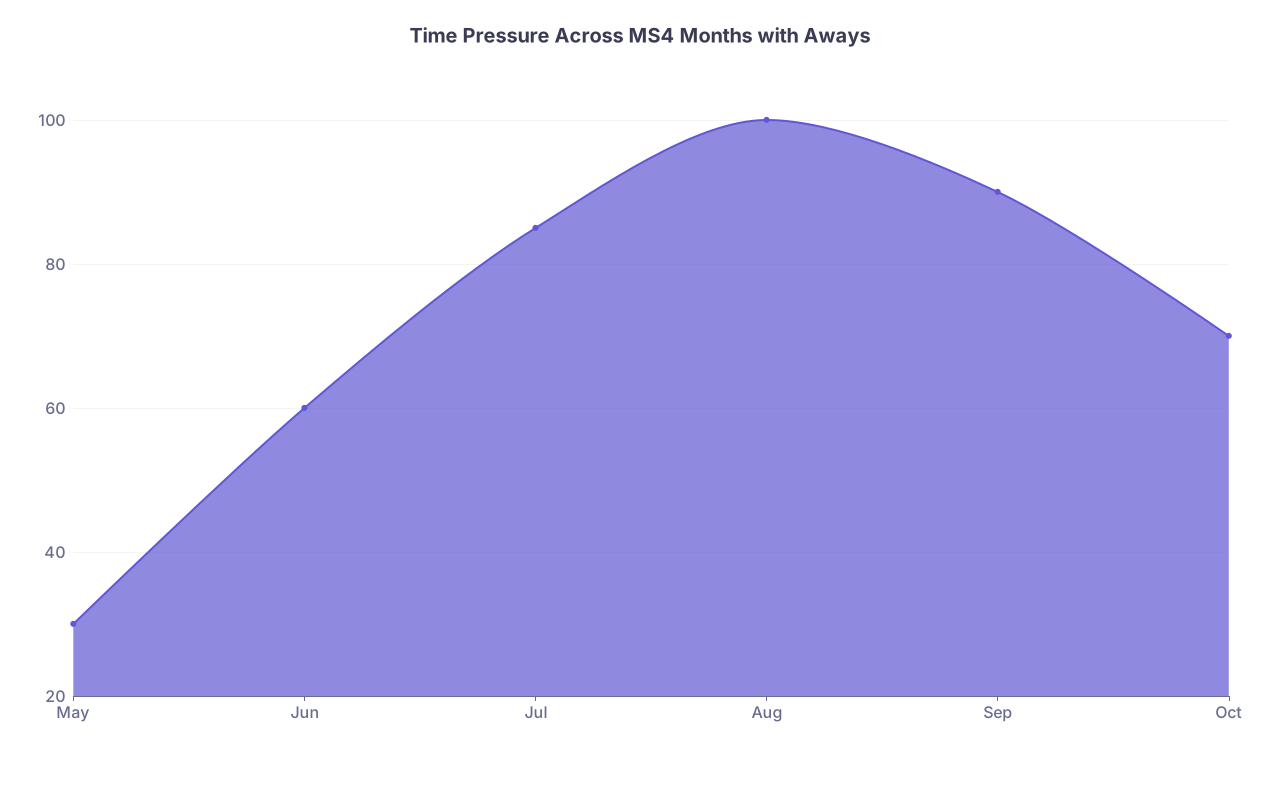
Here’s how the summer-fall workload balloons if you stack too much:
| Category | Value |
|---|---|
| May | 30 |
| Jun | 60 |
| Jul | 85 |
| Aug | 100 |
| Sep | 90 |
| Oct | 70 |
(Think of that as percent of your max sustainable load.)
MS4: Month-by-Month – Where Aways Actually Belong
June (MS4) – Get Good Before You Showcase
If your school allows, June is a fantastic month for a home sub‑I in your chosen surgical field.
At this point you should:
Push to do your home sub‑I before your first away if possible.
You learn:- How to preround efficiently.
- Basic OR etiquette, scrub, positioning, retracting without being told 3 times.
- How to own 2–4 patients on the list.
Secure at least one home letter.
- From the program director, a chair, or a respected faculty who saw you run a service.
- Ask halfway through the month, once they’ve seen you enough.
Finalize logistics for away #1.
- Housing
- EMR onboarding
- Parking / ID
Don’t show up on day 1 trying to figure out where to park your car.
If June has to be something else (required medicine sub‑I, etc.), then you accept that your first away may double as your first true sub‑I, and you better have your act together.
July (MS4) – Prime Time Away #1
July is one of the best months to be an away student in high-stakes surgical fields.
At this point you should:
Treat this as a 4‑week interview.
The resident gossip about aways is relentless. You are:- On time (translation: 15–20 minutes before sign‑out).
- Volunteering for cases.
- Reading about every case the night before.
Signal interest intentionally (not desperately).
- Week 1–2: work, be good, be normal.
- Week 3: schedule a quick meeting with PD or key faculty:
- “I’ve really enjoyed my time here and would be very excited to train here. I’ll be applying this cycle.”
Aim for a letter from away #1.
For ortho/ENT/uro/neurosurg, a strong away letter carries massive weight.
Ask near the end of the rotation:- “Would you feel comfortable writing me a strong letter for residency?”
ERAS prep in parallel.
- Personal statement draft
- CV tightened
- Program list rough draft
This is also your first real comparison point: are you performing at least as well as the other away students? If not, it might change how aggressively you chase more aways vs doubling down on your home program.
August (MS4) – Away #2 or High-Impact Home Block
August is your other A-tier month for aways.
At this point you should:
Do Away #2 if:
- You have a geographic preference (West Coast only, etc.)
- Your home program is small or not well-known.
- You need another big-name letter.
Do Home Sub‑I if:
- You couldn’t earlier.
- You already completed a June/July away and need to prove to your home department you’re committed.
Timing relative to ERAS:
- ERAS submission usually opens in September (date shifts year to year).
- That means:
- Letters from a July away will likely be uploaded in time for initial ERAS review.
- Letters from an August away are sometimes late but usually make it by mid- to late September. Still useful.
For urology, plastics, neurosurgery (early and brutal fields), I strongly prefer having at least one away done by the end of August. Programs in these specialties often start building interview lists early.
September (MS4) – ERAS Month and Your Last Strong Away Window
September is where people get cute and hurt themselves. You don’t want to be starting the process here.
At this point you should:
Have ERAS essentially ready by day 1 of September.
- CV – done
- Personal statement – done
- Letters requested – all 3–4 lined up
- Program list – at least 80–90% built
Use September for either:
- Away #2 or #3
- Or a critical home sub‑I if your department strongly prefers it
The subtlety: An away that starts in September will generate letters that:
- Often don’t arrive until October
- Might be too late to influence the first wave of interview offers in hypercompetitive fields
However, a September away can still:
- Put you on a rank list if you crush it
- Convert a borderline program into an interview
- Help with late season offers and post-interview ranking
So I consider September aways “tier B+”: still valuable, but I’d rather you already have one away letter and your home letter before this starts.
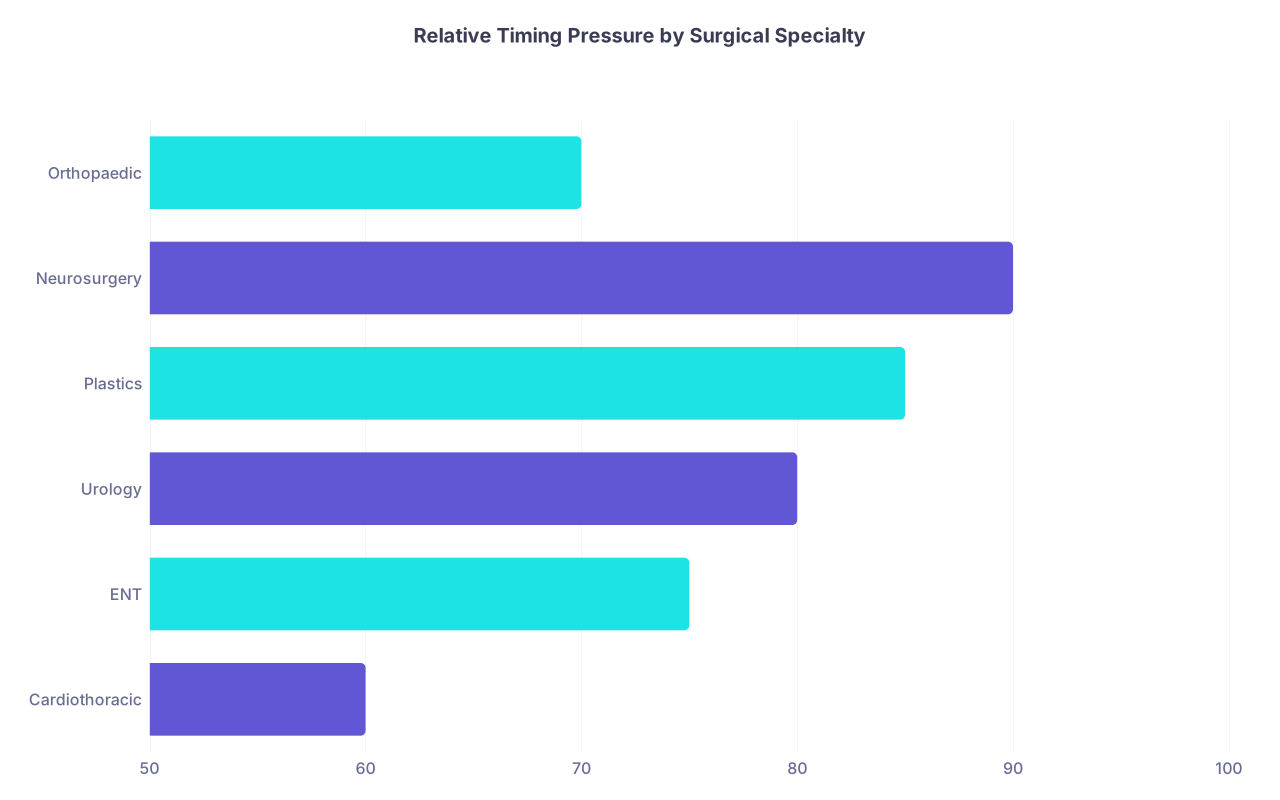
Here’s how specialty competitiveness pushes you earlier:
| Category | Value |
|---|---|
| Cardiothoracic | 60 |
| ENT | 75 |
| Urology | 80 |
| Plastics | 85 |
| Neurosurgery | 90 |
| Orthopaedic | 70 |
(Higher = more pressure to have aways and letters done early.)
October (MS4) – The “Emergency” Away or Late Showcase
By October, interviews are kicking off in some specialties. Using this month for an away is sometimes necessary but far from ideal.
At this point you should consider an October away if:
- You had delays getting VSLO approvals and every earlier block fell through.
- You decided late on a specialty but still want face-time somewhere.
- You’re reorienting to a slightly less competitive tier but still in surgery (e.g., from neurosurg to general surgery with focused interest in surg onc).
Pros of an October away:
- Can rescue a weak application if you blow people away and they advocate for a late interview.
- Useful if a program hasn’t finalized their interview list (varies widely).
Cons:
- Your ERAS is already submitted, possibly with fewer strong letters.
- Their interview slots may be mostly allocated before they’ve even met you.
I view October aways in high-stakes surgical specialties as:
- Strategic tie-breakers, not main pillars of your application.
Micro-Timeline: How to Operate During an Away Rotation
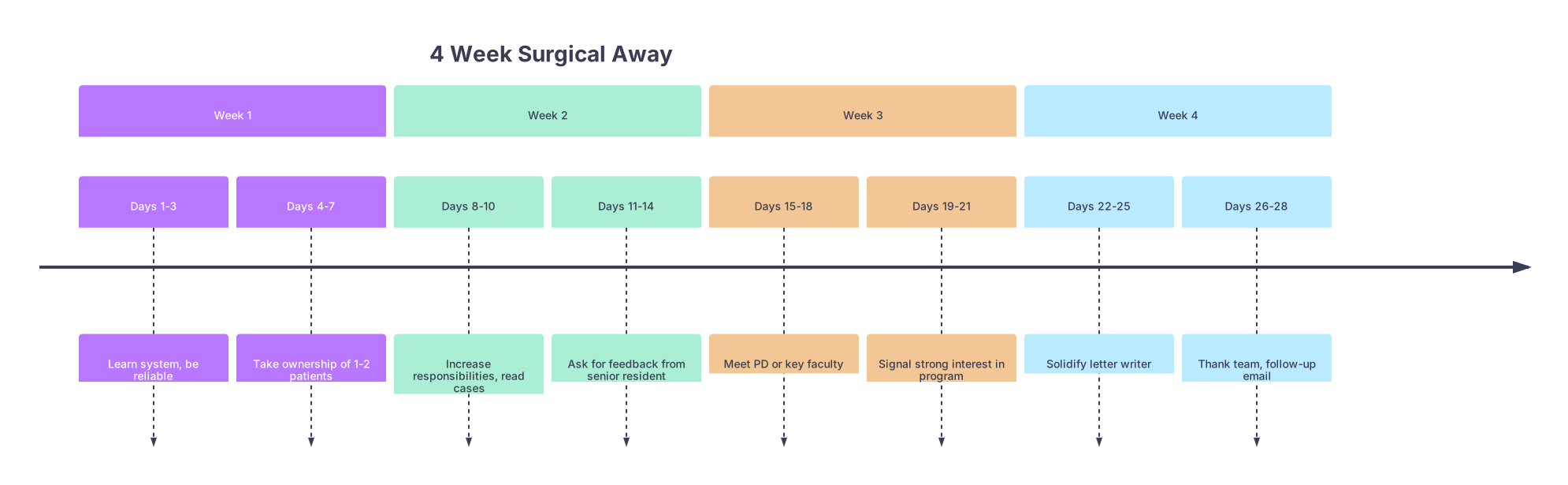
Zoom in. Here’s your week-by-week for a 4‑week away in ortho/ENT/neurosurg/plastics/etc.
| Period | Event |
|---|---|
| Week 1 - Days 1-3 | Learn system, be reliable |
| Week 1 - Days 4-7 | Take ownership of 1-2 patients |
| Week 2 - Days 8-10 | Increase responsibilities, read cases |
| Week 2 - Days 11-14 | Ask for feedback from senior resident |
| Week 3 - Days 15-18 | Meet PD or key faculty |
| Week 3 - Days 19-21 | Signal strong interest in program |
| Week 4 - Days 22-25 | Solidify letter writer |
| Week 4 - Days 26-28 | Thank team, follow-up email |
Week 1 – Prove You’re Safe and Not Annoying
At this point you should:
- Learn:
- How rounding works
- Where clinics/ORs are
- How to pre-chart and preround in their EMR
Your only job: be low‑maintenance and useful.
Week 2 – Own Patients, Own Prep
At this point you should:
- Take over 2–4 patients and know every detail.
- Prep cases the night before; read a chapter or a review article, not just an UpToDate paragraph.
- Ask a senior:
- “Anything else I can be doing to be more helpful to the team?”
You want the residents to start saying: “Yeah, this student’s solid.”
Week 3 – Go on the Radar
At this point you should:
Meet the PD or main faculty:
- 10–15 minute conversation is enough.
- Clearly state: “I see myself in a program like this — strong X, Y, Z — and would be very excited to match here.”
Confirm your letter plan:
- Pick the one or two faculty who know you best.
- Ask explicitly for a “strong letter of support.”
Week 4 – Lock the Letter and Leave a Clean Impression
At this point you should:
- Email or speak again to letter writers:
- Confirm ERAS info, deadlines, and how important their letter is for you.
- Thank the residents and staff:
- They do talk to faculty when it’s ranking time.
This micro-timing matters more than people think. I’ve watched stellar students tank letters by asking too late or never signaling real interest in the program.
Specialty-Specific Nuances (Timing Tweaks)
Some brief corrections by field:

Orthopaedic Surgery
- 2 aways is standard, often in July and August.
- Many ortho programs heavily weight performance at their own away.
- Try to have:
- Home ortho sub‑I by June or July
- Aways July–September
Neurosurgery
- Long training, small field, tight-knit.
- One really strong away at a program where you can realistically match is better than 3 superficial ones.
- Aim for:
- Home neurosurg time (sub‑I or equivalent) before first away.
- Away #1 in July or August.
Plastic Surgery (Integrated – SF Match)
- Uses SF Match, with deadlines/interviews often earlier than NRMP fields.
- Timing is aggressively early:
- You want a June/July away if possible.
- August is acceptable, September is borderline.
ENT (Otolaryngology)
- Similar to ortho: aways matter a lot.
- Programs look carefully at:
- Your awards/leadership
- Your fit with their culture on away
- July–September aways will carry the most weight for interview offers.
Urology
- Uses AUA Match with earlier timelines.
- You need:
- One strong early away (July/August)
- Home urology exposure before ERAS is submitted
- Do not rely on a September first away in urology. It’s late.
Cardiothoracic Surgery (Independent vs Integrated)
- For integrated CT (I‑6 paths):
- Treat like neurosurg/plastics: early, focused away(s).
- For independent CT (after general surgery residency): different world, different game. Ignore this if you’re still in med school.
Common Bad Plans and How to Fix Them

Bad Plan #1: All Aways After ERAS
- Home sub‑I: August
- Aways: September and October
- Step 2: July
Problem:
Your ERAS application on opening day has no away letters and only a partial picture of you in the specialty.
Fix:
- Try to swap: do home sub‑I in June or July.
- Pull one away into July or August.
Bad Plan #2: First-Ever Sub‑I as July Away in Neurosurgery
- You’ve never been a primary on a surgical service.
- First real sub‑I level role is an away in neurosurg in July.
Problem:
You look green. Residents compare you to students who already did 1–2 sub‑Is. You burn one of your most valuable rotations underprepared.
Fix:
- Get any sub‑I style rotation before: medicine, trauma, general surgery, etc.
- Or at minimum, spend a dedicated 2–3 weeks on your home neurosurg service early MS3/MS4.
Bad Plan #3: Three Aways, No Step 2
- Aways: June, July, August
- Home sub‑I: September
- Step 2: “Sometime in the fall”
Problem:
Your ERAS file may look incomplete (no Step 2) right when they’re deciding whom to interview, and you’re exhausted by the time you get to your home sub‑I where your most politically powerful letter should come from.
Fix:
- Limit to 2 aways.
- Take Step 2 before or between aways (late June/early July), even if it’s not fun.
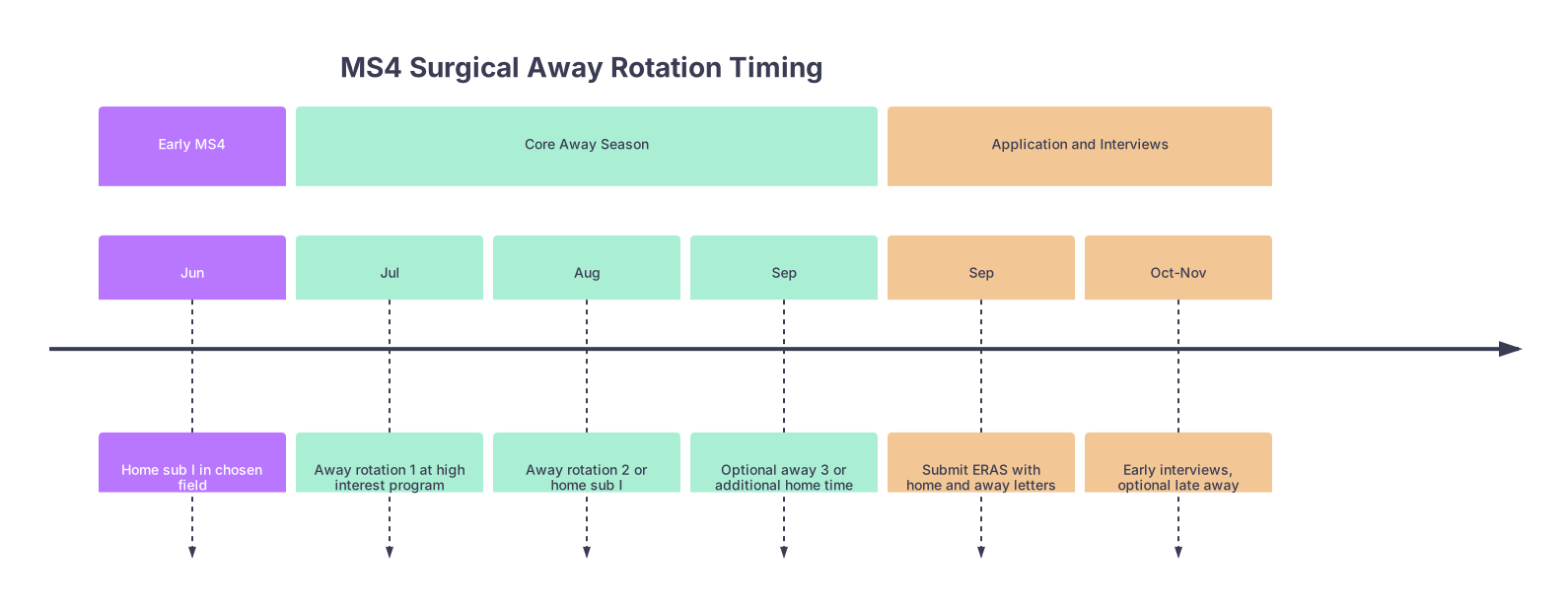
Quick Visual: Ideal Timeline for High-Stakes Surgical Aways
| Period | Event |
|---|---|
| Early MS4 - Jun | Home sub I in chosen field |
| Core Away Season - Jul | Away rotation 1 at high interest program |
| Core Away Season - Aug | Away rotation 2 or home sub I |
| Core Away Season - Sep | Optional away 3 or additional home time |
| Application and Interviews - Sep | Submit ERAS with home and away letters |
| Application and Interviews - Oct-Nov | Early interviews, optional late away |
Three Things to Walk Away With
Front-load your serious aways into July and August, with your home sub‑I no later than August if you want letters that actually matter on ERAS day.
Two well‑timed, high‑performance aways plus a strong home performance beat three scattered, late, or underprepared aways every single time in ortho, neurosurg, plastics, ENT, urology, and CT.
At each point in the year, ask yourself:
“Will this month give me a letter, a reputation, or a score that helps my application on the day ERAS opens?”
If the answer is no, you’re probably timing your away rotations wrong.