
It’s December. You’re on a brutal surgery rotation, cramming UWorld blocks between cases, and someone on rounds casually says, “Honestly, scores don’t even matter anymore. Step 1 is pass/fail. Holistic review.”
You nod. But you do not believe them.
Because you’ve seen the applicants going into derm, ortho, neurosurgery, plastics, ENT. The away rotations. The PhDs. The posters and podium talks. You know it’s still a blood sport. What you don’t know is how program directors are actually using Step scores now that Step 1 is pass/fail.
Let me tell you what really happens behind the committee doors.
What Changed – And What Did Not Change
Here’s the hard truth: the testing landscape changed; the competitiveness of the specialties did not.
Program directors in competitive fields used Step 1 as a fast triage tool. Too many applications, not enough time. That problem is worse now, not better. Applications volumes keep climbing. Faculty time keeps shrinking.
So what happens when you remove a sharp screening tool from overworked people who already resent how much time this process takes?
They find another sharp object.
For derm, ortho, neurosurgery, ENT, plastics, IR, urology, rad onc, even increasingly anesthesia and EM at top programs: standardized metrics are still heavily used. The label just moved:
- From Step 1 three-digit score
- To Step 2 CK three-digit score
- Plus a “pass early and cleanly” expectation for Step 1
You’ll hear “holistic review” on webinars. On Zoom open houses. In public-facing statements. Inside the actual selection meetings, the conversation sounds more like:
“We have 800 apps. Who are we realistically reading?”
“Filter by Step 2 above 245 and at least a pass on Step 1 before ERAS. Then sort by research.”
That is the reality at most high-demand programs.
How Program Directors Actually Look at Step Scores Now
Let’s separate what you think is happening from what is happening.
There are three distinct “buckets” now:
- Step 1 – Pass/Fail, timing, and pattern
- Step 2 CK – the new numerical weapon
- Step 3 – niche but surprisingly important for a few groups
Step 1: The “Silent Red Flag” Exam
You think Step 1 is dead. Faculty do not.
Here’s what they look for on Step 1 now:
- Did you pass on the first attempt?
- Did you pass before ERAS submission?
- Did you barely scrape by, or was it comfortable? (Yes, they infer this from your later performance.)
No one is ranking applicants by Step 1 anymore. But they are stratifying risk.
In closed-door meetings I’ve sat in, the language is blunt:
- “Fail on Step 1? They better have one hell of a story and Step 2 in the 260s.”
- “Still no Step 1 by September? Why? What went wrong?”
- “Late Step 1, late Step 2 – that’s a pattern.”
If you failed Step 1 in a competitive specialty, you are not doomed. But you are behind, and you have to overcompensate with Step 2, performance, and narrative. Most applicants will not. Programs know this.
Early, clean pass = silent advantage. No one praises you for it. They just do not worry about you.
Step 2 CK: The New Sorting Hat
This is the exam that matters now in competitive specialties. And yes, it does matter. A lot.
In a derm or ortho selection meeting, the Step 2 CK tab is now the first data column people sort by, not the second.
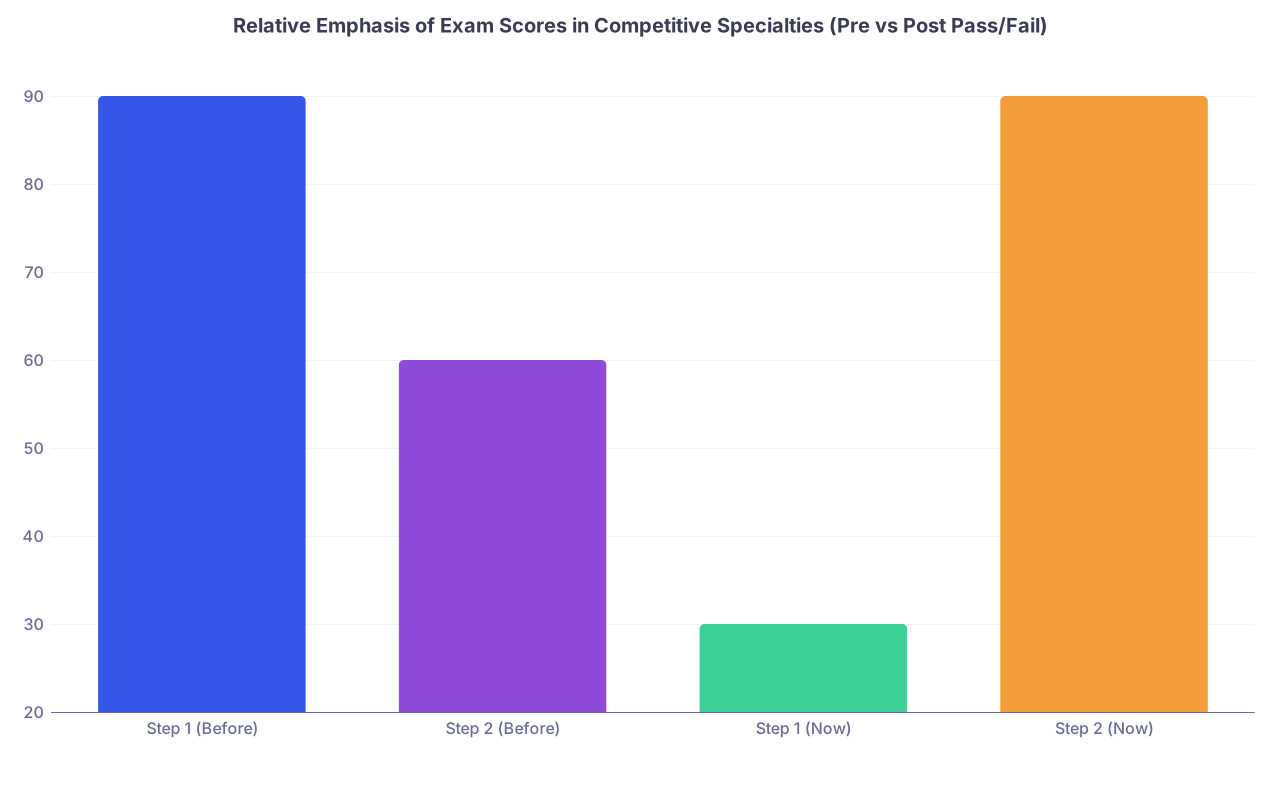
| Category | Value |
|---|---|
| Step 1 (Before) | 90 |
| Step 2 (Before) | 60 |
| Step 1 (Now) | 30 |
| Step 2 (Now) | 90 |
Rough translation of that chart: Step 2 CK is now carrying the weight Step 1 used to carry.
A few realities:
- Many top programs in derm/ortho/ENT/neurosurg/plastics are quietly using Step 2 cutoffs for initial screens.
- If they say “no cutoffs,” that just means they don’t publish them. The filters still get applied.
- High scores do not guarantee an interview. But low scores absolutely get you auto-filtered at some places.
I’ve literally watched coordinators run filters in real time on ERAS:
“Ok, filter out below 240 on Step 2. How many are left? 260. Ok, now let’s manually review.”
That’s not every program. But it is not rare.
Step 3: The Quiet Flex
Step 3 is still optional for most fourth-years. But for a non-traditional applicant, an IMG, or someone with a weak Step 1 or Step 2 – a solid Step 3 can be a quiet power move, especially in IM, anesthesia, EM, and some surgical prelim spots.
PD conversation snippet I remember from a big academic IM program:
“He’s an older grad, Step 1 pass-only, Step 2 is 234—eh. Oh, he already took Step 3 and got a 238. Ok, he can keep up. Fine, offer interview.”
Step 3 is rarely primary in competitive fields, but it can de-risk you in the eyes of a wary program director.
Different Specialties, Different Obsessions
Let’s stop pretending all specialties think the same. They don’t.
Here’s how different competitive fields are currently weighting Step scores relative to everything else – not what they say in public, but how decisions actually get made behind closed doors.
| Specialty | Step Score Weight* | What Scores Really Do Here |
|---|---|---|
| Dermatology | High | Screen + justify research star |
| Ortho | High | Screen + signal work ethic |
| Neurosurgery | Very High | Hard filter + intellect proxy |
| ENT | High | Filter then compare borderline apps |
| Plastics | High | Gatekeeper for interview |
| IR (Integrated) | Moderate–High | Secondary to pedigree/research |
*Weight = influence on interview selection, not final rank. Once you’re in the interview pool, personality and fit start to dominate.
Dermatology
Derm is still cut-throat. Programs are drowning in applicants with 10+ pubs, away rotations at brand-name places, and PhDs.
Step 2 CK does three things for derm PDs:
- Filters out people they’ll never read.
- Justifies picking you over an equally research-heavy competitor.
- Reassures them you won’t fail boards and destroy their pass rates.
Do not kid yourself: a 265 Step 2 in derm does not guarantee anything. But a 225 absolutely gets you silently dropped at many places.
Orthopedic Surgery
Ortho loves numbers and loves “grit narratives.” They still share Step scores with each other in the work room and talk about them like stats.
I’ve seen ortho programs say:
“Filter out <240. Among the rest, look for people with strong letters and high grit. If they’re 250+ and have great home letters, bump them on the list.”
Scores here are a proxy for:
- Raw test-taking ability
- Willingness to grind
Combine a strong Step 2 CK, a couple of serious away rotations, and real ortho letters, and you’re in the fight. Without the score? You’re placing bets on being the charming outlier. That works for a handful every year. Not most.
Neurosurgery
Neurosurgery is very transparent behind closed doors: they want monsters. Intellectually and work-ethic-wise.
Many neurosurgery PDs were already shifting toward Step 2 even before Step 1 went pass/fail. Now Step 2 is a primary weapon.
Common neurosurg behavior:
- Hard filter below 250 at many top programs.
- Lower-tier or newer programs may flex slightly, but only if research + letters are huge.
- They’ll tolerate some weirdness if you’re a research machine with glowing letters from big names.
If you want neurosurg and your Step 2 CK is <240, you’ll need extreme research, elite home support, and realistic expectations about which tier of program is plausible.
ENT & Plastics
Both of these fields behave like derm + ortho hybrids.
ENT: heavily values Step 2 but may bend more for strong home students and those with powerful faculty advocates.
Plastics (integrated): tiny number of spots, crazy applicant quality. Step scores act as non-negotiable gatekeepers at most places. They may not say “we won’t look below 245” but they barely have time to read the 260s. You see the problem.
What Scores Actually Do at Each Stage of Selection
People misunderstand where scores hit the hardest. It’s not on Match Day. It’s long before that.
Think of the process in three crude stages:
- Initial Screen – “Who even gets looked at?”
- Interview Offer – “Who do we want to meet?”
- Rank List – “Who do we want to work with for years?”

| Step | Description |
|---|---|
| Step 1 | Application Submitted |
| Step 2 | Initial Screen |
| Step 3 | Interview Pool |
| Step 4 | Interview Day |
| Step 5 | Rank List Meeting |
| Step 6 | Final Rank List |
Here’s where the pain really sits:
- Stage 1: Step scores are brutal gatekeepers. This is where most applicants lose.
- Stage 2: Scores still matter if you’re borderline. But other factors start to enter.
- Stage 3: Scores rarely move anyone significantly. Now it’s about behavior, judgment, teamwork, letters.
In committee meetings, here are the exact sorts of phrases you’ll hear:
Initial sort:
“We’ve got too many. Filter by Step 2 above 245 and at least one strong home letter. Then we’ll read.”Interview debate:
“Her Step 2 is 236, but her ENT mentor is raving and she’s published three papers with them. Invite.”
“He’s 255 with zero meaningful ENT exposure and generic letters. I don’t care about the score; I’m not wasting an interview.”Rank meeting:
“His 260 is nice, but everyone hated working with him on the away. Drop him.”
“She’s a 238 but absolutely crushed our rotation and the chief residents love her. Move her up.”
So if you’re obsessing over whether a 247 vs 253 will change your ranking at a place where you’ve already rotated and interviewed? That’s misplaced anxiety. The score probably mattered much more to whether you got there in the first place.
How Much Step 2 CK You Need (Realistic Ranges)
I’ll give ranges, not fake-precise cutoffs. Programs differ, but the patterns repeat.
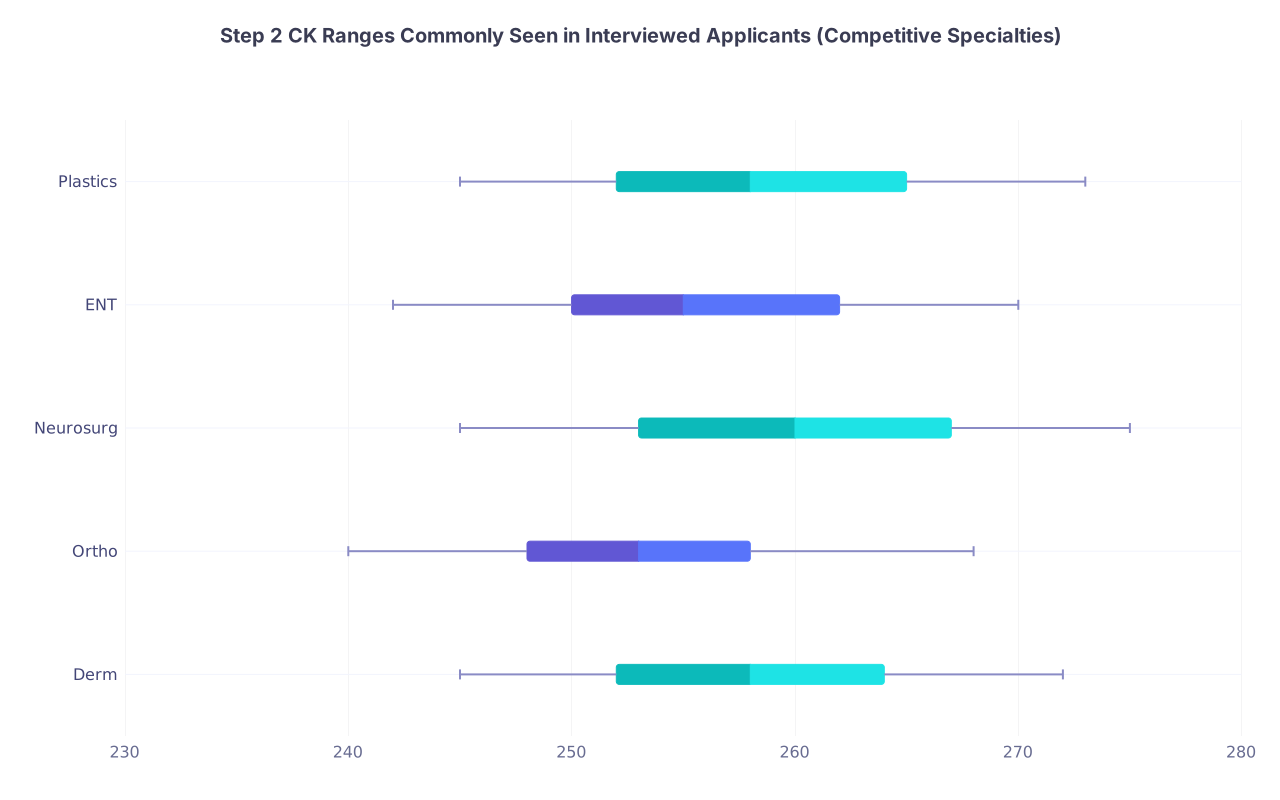
| Category | Min | Q1 | Median | Q3 | Max |
|---|---|---|---|---|---|
| Derm | 245 | 252 | 258 | 264 | 272 |
| Ortho | 240 | 248 | 253 | 258 | 268 |
| Neurosurg | 245 | 253 | 260 | 267 | 275 |
| ENT | 242 | 250 | 255 | 262 | 270 |
| Plastics | 245 | 252 | 258 | 265 | 273 |
Rough translation, for U.S. MDs at mid-to-upper tier programs:
- Above ~255: You’re competitive on score alone for most programs in these specialties. It does not guarantee anything, but it takes score off the worry list.
- 245–255: You’re fine for many programs. At the elites, now the rest of your app has to carry more weight.
- 235–245: Viable at some programs, especially if you have strong home support, research, and real specialty exposure. Some top programs will quietly screen you out.
- <235: You’re fighting upstream. You need heavy compensating strengths and realistic expectations about where you’re likely to land.
For DOs and IMGs in these fields, especially without a strong home program, you almost always need to be above the median of the U.S. MD pool to get similar consideration. That’s just how committees talk when the door is closed.
The “Package Deal” Reality: Scores Are Never Alone
This is the part most students miss: scores are never interpreted in isolation. Program directors look for coherence.
They ask: “Does this application story make sense?”
Let me walk you through how that sounds for a few archetypes.
The “Scores + Research Monster”
- Step 2 CK 264.
- 2–3 first-author pubs in the specialty.
- Multiple away rotations with solid comments.
- Letters from recognizable names.
In derm/ENT/neurosurg/plastics: this person gets read everywhere. People on the committee actually want to advocate for them. They’re easy to justify. Late weirdness or personality issues are what kill them, not metrics.
The “Scores-Strong, Specialty-Weak”
- Step 2 CK 260.
- Zero meaningful ortho/derm/ENT research.
- No away in the specialty.
- Generic letters (e.g., “Student X is excellent and will succeed in any field”).
PD reality:
“Nice score. I don’t want to be the one who takes a flier on the person who’s never shown me they actually want this field.”
At top programs, this dossier loses to the 248 with deep specialty commitment.
The “Scores-Moderate, Away Rockstar”
- Step 2 CK 238.
- Away rotation at the program with glowing narrative comments.
- Chiefs and PD say, “Top 5 student this year; works like a resident; patients loved them.”
Inside the room:
“I don’t care about the 238. I know exactly how they perform on our service. Rank them.”
At their home/away programs, these people often outrank higher scorers who were forgettable.
The “Scores-Low, Story-Unclear”
- Step 2 CK 228.
- No clear specialty story.
- Letters are “solid but vague.”
- No meaningful research, or research scattered across random fields.
This is the group that gets silently crushed in competitive specialties. Not because anyone hates them personally, but because there are 400 other applicants who are easier to justify in a 10-minute committee discussion.
If Your Scores Aren’t Where You Want Them: What Actually Works
Here’s the blunt version. If you’re below the typical range for your target specialty but still want to take a real shot, you have levers. They’re just not fun.
Crush Step 2 CK if you haven’t taken it yet. This is the single biggest “redemption” tool you have if Step 1 was shaky or your background is non-traditional.
Do aways at realistic-but-respectable programs. You’re probably not getting Stanford ENT or Harvard plastics with a 232. But you might get a solid mid-tier academic or strong community-based program where they actually need good, hard-working residents and care about aways.
Be unforgettable on rotations. Every committee has stories of “our Step 2 235 who was better than our 260.” Those people were off-the-charts good teammates. They showed up early, owned patients, never complained, and made residents’ lives easier.
Lock in letters that sound like this:
“I ranked her above our own residents in clinical performance. If I could take only one student this year, it would be her. I will be disappointed if she does not match into a top program.”
That kind of letter can override 10–15 points on a test in the right room.Aim your list strategically. Not every program in a competitive specialty is chasing the same metrics. Some are building niche research empires. Some are workhorse clinical shops. Know which is which. Apply accordingly.
Where “Holistic” Is Real – And Where It’s PR
I won’t pretend every PD is lying. Some are genuinely trying to broaden what they look for. But they’re fighting math.
They get too many applications. They’re evaluated by their board pass rates. They’re tired. They rely on quick filters.
Here’s the ground truth:
- Holistic review actually happens once you’re in the interview pool.
- Before that, your fate is usually decided by 3–4 crude knobs: Step 2 range, school type, research quantity, and whether someone on faculty recognizes your name.
So the strategy is simple:
Use your Step scores to get into the door of the “holistic” phase.
Then let the rest of your application – and your behavior in person – do the work.
What Comes Next For You
Right now, you’re probably focused on one of three things: salvaging a mediocre Step 1 with a monster Step 2, deciding whether a competitive specialty is realistically in play for you, or trying to understand why your interview season looks thin despite what felt like “good enough” scores.
The common thread: you’re guessing at how much weight scores really carry.
You don’t have to guess anymore. You know how committees actually use these numbers now. You know where they’re decisive and where they quietly fade into the background.
Your next step is not to obsess over a few points. It’s to map your actual profile – scores, school, research, letters, rotations – against the real behavior of the specialties you’re targeting, and then decide: do you double down, adjust your strategy, or pivot.
With that clarity, you’re ready to build an application plan that isn’t based on myths or promises of “holistic review,” but on the way decisions really get made. How you execute on that during your upcoming rotations and exam windows—that’s the next chapter.