The biggest lie about matching dermatology is that you can “decide third year and just work really hard.” By the time you’re starting MS3, the strongest derm applicants already have 2–3 years of work baked into their CV.
I’m going to walk you month-by-month from MS1 through early MS4 and tell you exactly what a derm-ready CV should look like and when you should be doing what.
Big Picture: What a Derm-Ready CV Actually Needs
Before we zoom into months, you need the target.
By MS4 application season, a competitive dermatology CV typically shows:
- Consistent academic strength (ideally top quartile, strong Step 2)
- Multiple dermatology-related research projects (poster/oral presentations, at least one manuscript is ideal)
- Persistent engagement with dermatology (interest group leadership, shadowing, clinic time)
- Strong clinical performance (honors in core clerkships, especially medicine; derm electives with great comments)
- Leadership roles that actually involve responsibility, not just “co-chair of nothing”
- Service that doesn’t look like a checkbox (sustained, 2+ years)
- Evidence you can work on a team and finish projects
Here’s what that looks like distributed over med school years:
| Year | Research | Leadership | Clinical | Other |
|---|---|---|---|---|
| MS1 | Join projects | Join interest group | Shadowing starts | Build habits |
| MS2 | Present/poster | Take small roles | Limited clinic | Step prep |
| MS3 | Manuscripts | Formal positions | Honors + evals | Away prep |
| MS4 | Final pubs | National presence | Strong electives | Application polish |
Now, let’s get chronological.
MS1: Laying Concrete, Not Decorating
August–October (MS1 Months 1–3): Foundation and Positioning
At this point you should not be signing up for five research projects and three leadership roles. You’ll drown.
Your priorities:
- Prove you can handle med school academics
- Quietly position yourself in derm circles
- Start one small research or scholarly activity
Concrete steps, month-by-month:
August (First Month)
At this point you should:
- Lock in your study system during the first 2–3 weeks. If you’re barely passing anatomy, no one cares that you “love derm.”
- Go to your school’s dermatology interest group kickoff. Put your name on every list.
- Identify one MS2 or MS3 who matched or is applying derm from your school. Ask for a 20‑minute Zoom to ask “What actually mattered on your CV here?”
September
Attend every derm interest group event. камеры on, questions ready.
Make a list of dermatology faculty at your institution. Star the ones:
- With titles like “Residency Program Director,” “Vice Chair,” “Director of Research”
- With lots of recent PubMed entries
Send 3–5 short emails to research-active dermatology faculty:
- 3–4 sentences total
- Who you are, that you’re MS1, interested in dermatology, willing to help with data collection/chart review/literature review, and available long-term
Your goal this month: get one meeting with a derm faculty member or senior resident about joining a project.
October
- Join one research effort. Even if it’s:
- Retrospective chart review
- Case series
- Quality improvement project with derm clinic
- Start 1–2 hours/week in that project. Nothing crazy yet.
- Begin low-key shadowing:
- 1 half-day in derm clinic this month
- Observe clinic flow, pathology, procedures; write down interesting cases and what you learned (you’ll use these stories later)
By the end of October, your CV should already show:
- “Dermatology Interest Group – Member”
- “Research Assistant – Department of Dermatology” (with a one-line description)
- One or two half-days of shadowing (log them in a personal spreadsheet)
November–March (MS1 Months 4–8): Slow, Steady Momentum
Here’s where most people either disappear or overcommit. Do neither.
November–December
At this point you should:
- Be touching your research project weekly:
- Data abstraction
- Literature searches
- Helping format tables/figures
- Ask your project mentor:
“What’s the realistic goal and timeline for this project? Are we aiming for a poster? A manuscript? By when?”
You want at least one presentable unit of work by end of MS2: a poster, abstract, or short paper.
- Continue shadowing once a month in derm clinic. Do not vanish.
January–March (Spring MS1)
This is a grind stretch: preclinical work is heavy, motivation dips.
At this point you should:
- Keep your derm research alive at 2–3 hours/week. That’s it.
- Ask to be included as an abstract co-author if a senior resident or fellow is presenting something you contributed to.
- Attend at least one regional/national derm conference virtually if possible (AAD, SID, or local dermatology society). Even if you’re not presenting:
- Add it to your CV under “Conferences Attended”
- Mention specific sessions you liked when networking
April–June (End of MS1): Preparing to Level Up
April
- Schedule a check-in with your derm faculty mentor:
- “I’m planning my MS2 year. How can I be most helpful on this project, and are there other projects I could get involved in?”
- If your first project is dead in the water (no movement in 3+ months), find a second mentor or project. One stagnant project is a trap.
May–June
At this point you should:
Have contributed meaningful work to at least one ongoing derm project.
Have a concrete plan:
- Abstract submission deadline
- Conference name
- Target journal if it’s a paper
Start building a CV template (Word or Google Docs):
- Education
- Research
- Presentations
- Leadership/Activities
- Volunteer/Service
- Honors/Awards
You’ll keep this updated every 2–3 months. No exceptions.
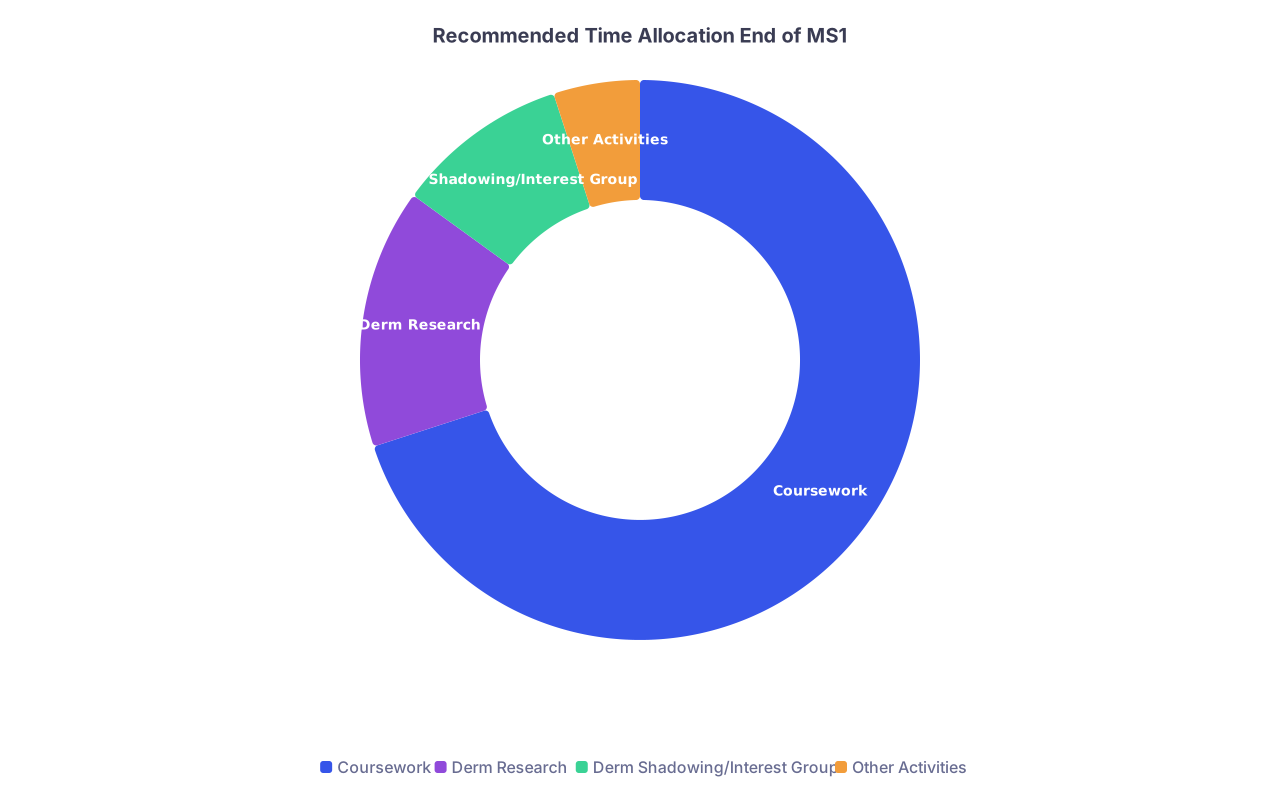
| Category | Value |
|---|---|
| Coursework | 70 |
| Derm Research | 15 |
| Derm Shadowing/Interest Group | 10 |
| Other Activities | 5 |
MS2: Converting Interest into Output
MS2 is when your CV either becomes “derm-interested” or “derm-serious.” The difference is output.
July–September (Start of MS2): Turn Work into Products
At this point you should:
- Identify every feasible abstract/poster opportunity from your work so far.
July
- Ask your mentor:
- “Are there conferences where we can submit an abstract from our current data?”
- “Is there a small part of this dataset that I could lead as first author on a case report or brief report?”
- If you don’t have a derm research project that can lead to a presentation by end of MS2, you’re behind. Fix that now.
August–September
- Write abstracts. Rough is fine; residents and faculty will edit.
- Target:
- 1 derm-related poster by end of MS2
- Stretch goal: 2+ total posters/abstracts (multi-center projects, QI, or case reports count)
You’re still doing preclinical coursework, so your weekly rhythm:
- 1–2 short research sessions during the week
- 1 longer 2–3 hour block on the weekend
October–December (Mid MS2): Leadership and Visibility
MS2 fall is prime time to claim visible roles.
At this point you should:
- Run for or accept leadership roles that:
- Last at least one year
- Have real responsibilities (organizing talks, coordinating free clinics, managing volunteers)
Good targets:
- Dermatology Interest Group: President, VP, Research Chair, Community Outreach Coordinator
- Free clinic roles with skin/primary care overlap
- Research committee roles in your school
Do not take five titles where you do nothing. Programs can tell when your leadership is fluff.
Concrete moves this quarter:
- Apply for leadership positions in the derm interest group for MS2–MS3.
- Organize at least one derm-related event:
- Resident Q&A about the match
- Panel on “non-cosmetic derm careers”
- Skin cancer screening awareness event
These go on your CV under leadership and community outreach.
January–April (Spring MS2): Step 1 + Finishing CV Units
If Step 1 is pass/fail for you, that doesn’t mean it’s irrelevant. Failing is lethal for derm. You can’t afford a retake.
At this point you should:
- Prioritize exams/Step 1 prep enough to avoid any red flags.
- Aim to finalize at least one abstract/poster:
- Submit to a spring/summer meeting
- Get your name on it as first or co-author
- Make progress on at least one manuscript:
- Draft intro and methods
- Help with references, tables, and IRB tasks
By the end of MS2, a competitive derm-ready trajectory looks like:
- 1–2 derm research projects ongoing
- At least 1 poster or abstract submitted (ideally accepted)
- Membership + some leadership in derm interest group
- Solid academic record with no failures, no remediation
- Established derm mentors who know your name and work ethic
If you’re not there, you’re not doomed, but your MS3 timeline must be tight and aggressive.
MS3: Clinical Performance + High-Yield Derm Work
This is where most applicants sabotage themselves. They chase too much research and tank their clinical evals.
Derm programs read your MS3 comments closely. “Pleasant but passive” is death.
July–September (Start of MS3): Crush Core Rotations
At this point you should:
- Put 80–90% of energy into:
- Medicine
- Surgery
- Pediatrics
- OB/GYN
- Keep derm research on life support, not life support withdrawal:
- 1–2 hours on a weekend to answer emails, revise abstracts/manuscripts, push things forward
Key goals for this quarter:
- Aim for honors in medicine and other key clerkships if your school uses grades.
- Build strong relationships with attendings who can later write general letters (internal medicine, surgery, etc.).
- Keep a running document of strong patient stories, feedback, and achievements. These later fuel your personal statement and ERAS experiences.
October–December (Mid MS3): Step 2 Strategy + Derm Hours
By now you should have a sense if you’re tracking near the top or middle of your class.
At this point you should:
- Start planning Step 2 CK timing (usually late spring/early summer MS3).
- Re-engage derm mentors and ask:
- “I want to apply derm. What gaps do you see in my CV right now?”
- “Which projects are most important to finish before ERAS submission?”
Also:
- Arrange a home program derm elective for late MS3 or early MS4.
- Make sure your leadership roles are still active and meaningful—organize at least one event this year.
January–April (Late MS3): The Derm Push
This is a critical window. While classmates coast, you tighten your CV.
At this point you should:
- Take your home derm elective if possible (often March–May):
- Treat it like a month-long interview.
- Show up early, pre-read cases/topics, volunteer to present at journal club.
- Secure at least one derm faculty letter writer:
- Ideally someone who has seen you clinically
- Second could be a research mentor who knows you well
Research-wise:
- Push manuscripts across the finish line:
- You want at least one accepted or submitted paper by ERAS season, and more under review is a plus.
- Present posters at regional/national meetings during this window if possible.
Step 2:
- Schedule Step 2 CK for late spring/early summer, leaving at least 4–6 weeks before ERAS opens so you can get your score back.
- For derm, a strong Step 2 helps compensate if you’re from a lower-ranked school or have any academic blemishes.
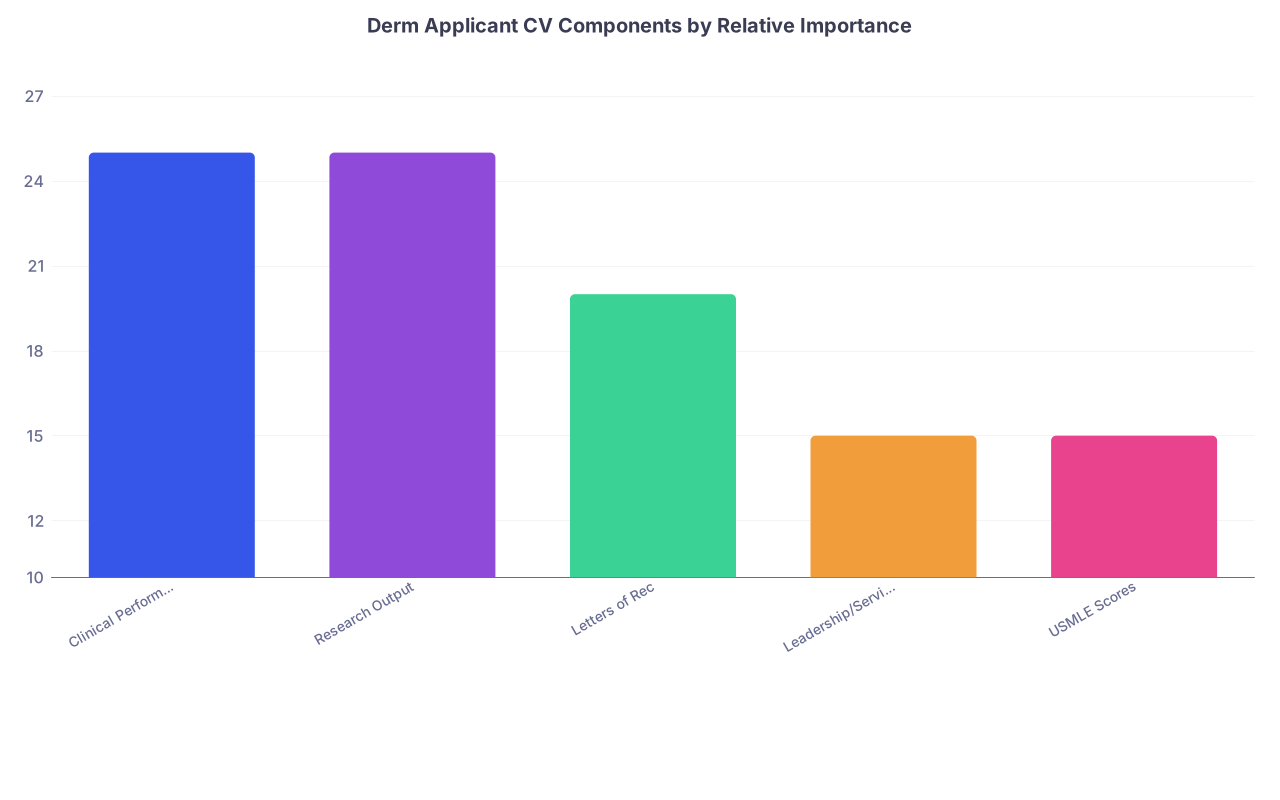
| Category | Value |
|---|---|
| Clinical Performance | 25 |
| Research Output | 25 |
| Letters of Rec | 20 |
| Leadership/Service | 15 |
| USMLE Scores | 15 |
Early MS4: Converting Work into a Derm-Ready Application
This is where you package everything. The CV is mostly built by now—your job is to present it strategically.
May–July (End of MS3 / Start of MS4): Away Rotation Season
At this point you should:
- Complete 1–2 away rotations in dermatology if you can secure them:
- Choose programs where you have a realistic shot (not only ultra-elite).
- Treat every day as an audition: punctual, prepared, kind to staff, proactive.
From a CV standpoint:
- These away rotations give you:
- Additional derm letters (often 1–2)
- Concrete experiences for ERAS descriptions and your personal statement
- Potential advocates in program meetings
Also during this period:
- Finalize all manuscripts/abstracts you can. Even “submitted” or “under review” looks much better than “in progress.”
- Clean and update your CV every 2–3 weeks. Small admin task, big payoff.
August–September (Application Submission): Final CV Polish
This is ERAS time.
At this point you should:
- Translate your CV into ERAS Experiences strategically:
- Group smaller roles under fewer, impact-focused entries.
- Use bullets that show outcomes: “Co-authored 2 abstracts accepted to [conference],” “Coordinated 30+ volunteers for monthly skin cancer screenings.”
- Make sure your CV tells a coherent story:
- Early interest in derm
- Increasing responsibility and productivity
- Evidence of follow-through and reliability
You want to be able to look at your CV and see a clear trajectory:
MS1 curiosity → MS2 productivity → MS3 clinical excellence + focused derm → MS4 polishing and showcasing.
Practical “At This Point You Should…” Checklist by Year
Sometimes it helps to see it in one place.

End of MS1 – You Should Have:
- Ongoing involvement in at least one derm research project
- 2–4 derm clinic shadowing sessions logged
- Attendance at derm interest group meetings, ideally helping a little with an event
- One or two mentors aware of your interest and reliability
- A working CV document started
End of MS2 – You Should Have:
- 1–2 derm-related posters/abstracts submitted or accepted
- Clear role in at least one ongoing project with potential for publication
- Leadership role in derm interest group or related organization
- Solid preclinical record, no red flags
- Updated CV with concrete, outcome-based bullets
End of MS3 – You Should Have:
- Strong clerkship performance, ideally with honors in medicine and other key rotations
- At least one home derm elective completed
- 1–2 derm faculty members committed to writing strong letters
- Research output:
- 1–3 posters/abstracts
- 0–2 publications (accepted or submitted), plus more in progress
- Clear Step 2 plan, with score expected back before ERAS opens
Early MS4 (Before ERAS Submission) – You Should Have:
- 1–2 away rotations completed or booked
- Finalized letters uploaded (home derm, away derm, medicine/surgery, research mentor if applicable)
- A polished CV and ERAS application with:
- Multiple derm research entries
- Leadership with responsibility
- Sustained derm involvement
- Strong clinical comments
Common CV Mistakes I See in Derm Hopefuls
You avoid these by sticking to the month-by-month plan.
- Random, late derm interest – No derm anything until late MS3, then frantic away rotations and one rushed project. Programs notice.
- Ten tiny, meaningless roles – “Co-chair,” “subcommittee assistant,” “liaison” with zero quantifiable outcomes. Shallow leadership impresses no one.
- Too much research, weak clinics – 8 posters, but mediocre clerkship comments and average Step 2. Derm is still a clinical specialty.
- No continuity – Research for 3 months then vanish. Interest group for one semester then gone. Programs value persistence more than volume.
- Not finishing projects – “In progress” graveyard. Better to have 3 finished things than 10 half-baked.

If You’re Starting Late
If you’re already MS2 or early MS3 reading this thinking “I’m behind,” then stop panicking and compress the phases:
- MS2 start: Do MS1 fall–spring in 6–9 months. Heavy research and mentorship priority.
- Early MS3: Aggressively schedule derm electives and join fast-moving projects. Focus on high-yield deliverables (case reports, QI with quick timelines).
- Late MS3: Maximize clinical performance and secure outstanding letters.
It’s harder, but not impossible. What you cannot do is waste another 6 months “thinking about derm” without concrete projects and mentors.

Your Move Today
Open a blank document and title it “Derm CV Roadmap.”
Write four headings: MS1, MS2, MS3, MS4. Under your current year, list three concrete actions you’ll complete in the next 30 days that match this timeline—email a derm mentor, join a project, schedule a clinic shadow, apply for a leadership role.
Then put a calendar reminder one month from today to update what you’ve actually done.