
The way most physicians handle CME in a renewal year is backwards. They cram, they panic, they overpay, and they end up doing low‑quality activities that barely count. You can do better—with a six‑month clock and a brutal, honest plan.
This is your month‑by‑month, then week‑by‑week, then day‑by‑day guide from six months before license expiration to the day you hit “Submit” on your renewal. Follow the sequence. Do the work on time. You will not scramble in the last week like half your colleagues.
6 Months Before Renewal: Full Audit and Reality Check
At this point you should stop guessing and get exact numbers.
Step 1: Confirm your exact requirements (week 1)
Do not trust your memory. Requirements change. Boards add DEI hours, opioid modules, human trafficking, implicit bias—quietly.
In the first week of the 6‑month window:
Log into three places:
- Your state medical board portal
- Your specialty board (if MOC/MOL applies)
- Your DEA registration account (if you prescribe controlled substances)
Write down, in hard numbers:
- Total CME hours required this cycle
- How many must be Category 1 (or equivalent)
- Any topic‑specific mandates (e.g., 3 hours opioid/pain, 2 hours ethics, 1 hour implicit bias, etc.)
- Whether they require live/interactive vs enduring/online
- The cycle dates: start and end (not just “every two years”)
Check for any quirks:
- Max CME that can be claimed for teaching, precepting, or QI projects
- Limits on industry‑sponsored CME
- Requirements tied to hospital privileges that piggyback on state CME
Put this into a one‑page summary. Tape it near your desk.
| Item | Requirement |
|---|---|
| Total hours / 2-year cycle | 50 |
| Category 1 minimum | 25 |
| Opioid/pain management | 3 hours Category 1 |
| Ethics/professionalism | 2 hours |
| Live/interactive minimum | 8 hours |
Step 2: Audit your current CME (week 2)
In the second week, you are doing nothing new. You are just counting.
Pull records from:
- CME tracking services (if you use one)
- Major providers (UpToDate, NEJM Knowledge+, specialty societies, hospital CME office)
- Email inbox for “CME certificate” or “credit statement”
- Printed certificates in your office drawer or file cabinet
Build a simple spreadsheet with:
- Date of activity
- Provider / course name
- Credit hours
- Category (1 vs 2 or equivalent)
- Topic (opioid, ethics, risk, etc.)
- Type (live vs online, enduring, journal, self‑assessment)
Reconcile:
- Total Category 1
- Total Category 2
- Total in each required topic
- Total live vs enduring
You may discover what I see constantly: “I have 70 hours total but only 18 hours Category 1 and 0.5 hours of mandated opioid content.” That is not “fine.” That is a trap.
Step 3: Identify your gap and risk (week 3)
Now, compute the deficit.
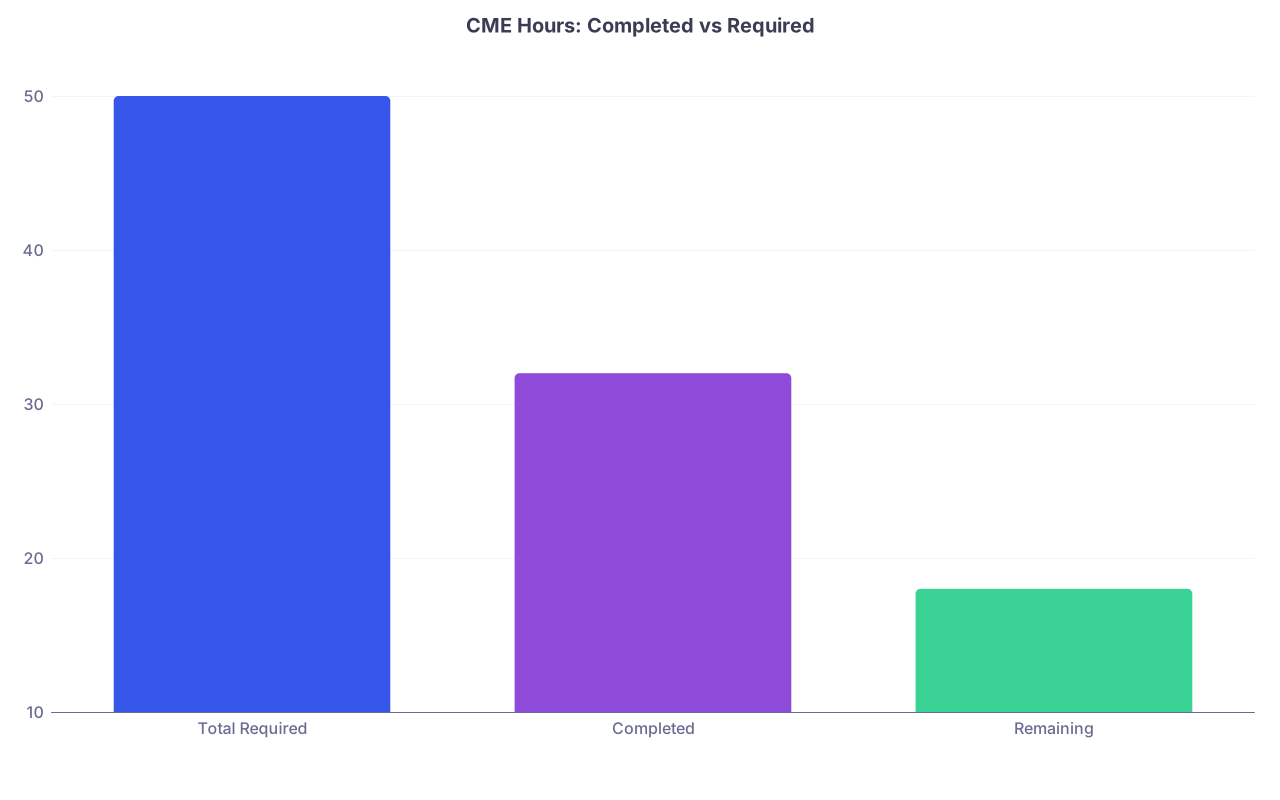
| Category | Value |
|---|---|
| Total Required | 50 |
| Completed | 32 |
| Remaining | 18 |
For each bucket:
- Total CME hours remaining
- Category 1 hours remaining
- Required “special topic” hours remaining
- Live hours remaining (if any minimum exists)
Then ask:
- How many weeks until your renewal deadline? (Roughly 26 at 6 months.)
- How many hours per week would you need if you started now vs if you procrastinate?
At this point you should set a rule: you will finish all CME at least 4 weeks before renewal. The last month is for paperwork, not scrambling for credits.
Step 4: Choose your strategy and providers (week 4)
Week four is planning.
Decide:
- Will you anchor your CME with:
- One major in‑person conference
- A board review course
- A subscription platform (e.g., audio CME, point‑of‑care tool with CME)
- How much you are willing to pay versus use free options
Pick 2–3 core sources and stop chasing everything else.

Build a rough allocation:
- X hours from a 3‑day live conference
- Y hours from online modules (including mandated topics)
- Z hours from reading + point‑of‑care CME integrated in your usual workflow
Now you have a map. Next you build the schedule.
5 Months Before Renewal: Design the Schedule and Lock in Big Blocks
At this point you should convert your gap into calendar time.
Week 1: Book your big anchors
If you are doing a live conference or workshop:
- Choose a date within the next 2–3 months, not closer to the deadline
- Confirm how many Category 1 hours it offers
- Confirm if it covers any special topics you still need
Block the entire event on your clinical schedule. No “I will see a few patients by telehealth during breaks.” That is how you miss talks and credits.
If you are not doing live events, your “anchor” might be a structured online board review with a defined timeline. Same rule: block time for it.
Week 2: Build a weekly CME quota
Take your remaining CME hours (with a 4‑week buffer) and convert to weekly targets.
Example:
- 5 months = ~21 weeks of “active” CME time (leaving 4 weeks buffer)
- Need 18 hours total, 10 of which must be Category 1
Target:
- 1 hour/week Category 1
- 0.5 hour/week of other CME
- Extra 2–3 hours reserved near your conference date
Then assign specific time slots:
- One evening per week: 45–60 minutes of online CME
- One weekend session per month: 2–3 hours, deeper modules
Week 3–4: Start knocking out high‑risk requirements
Now you begin doing CME, but in a very targeted order.
Priority order:
- Legally mandated topics (opioid, safe prescribing, human trafficking, implicit bias, etc.)
- Specialty board must‑do activities (MOC Part 2 SA, Part 4 QI projects, etc.)
- State‑specific oddities (pain clinic if you run one, pediatric abuse reporting, etc.)
By the end of month 5, you should have:
- All mandated topic hours either completed or scheduled with dates
- At least 25–50% of your total hour gap closed
4 Months Before Renewal: Build Momentum and Document Aggressively
At this point you should be past planning. Now you are executing and documenting.
Weeks 1–2: Standardize your documentation
Create a simple folder structure:
- Digital folder:
CME_Renewal_[Year]- Subfolders:
Certificates,Spreadsheets,Conference_Agendas,MOC_Proof
- Subfolders:
Update your spreadsheet with:
- Running totals by category and topic
- Verification that each entry has:
- Certificate or transcript saved
- Provider name
- Activity date
- Credits claimed
If your board or state requires attestation instead of uploading documents, assume you may still be audited. Save everything.

| Step | Description |
|---|---|
| Step 1 | Complete CME Activity |
| Step 2 | Download Certificate |
| Step 3 | Save to CME Folder |
| Step 4 | Log in Spreadsheet |
| Step 5 | Update Category Totals |
| Step 6 | Backup to Cloud or Drive |
Weeks 3–4: Integrate CME into your normal workflow
This is where you stop treating CME as a separate life.
Options that work:
- Use point‑of‑care CME built into tools like UpToDate, DynaMed, or your specialty society’s guidelines.
- When you look up a clinical question, claim the CME immediately. Do not tell yourself you will “batch this later.” You will not.
- Use audio CME during commute, then log/claim credits the same day.
By the end of month 4 you should:
- Have at least 60–70% of your total hour requirement completed
- Have all or most special topic hours done
- Have your documentation system fully implemented
If you are under 50% completed at this point, you are behind and need to increase weekly hours.
3 Months Before Renewal: Mid‑Cycle Checkpoint and Course Correction
At this point you should pause and re‑audit.
Week 1: Mid‑cycle audit
Update your spreadsheet and recount by category and topic.
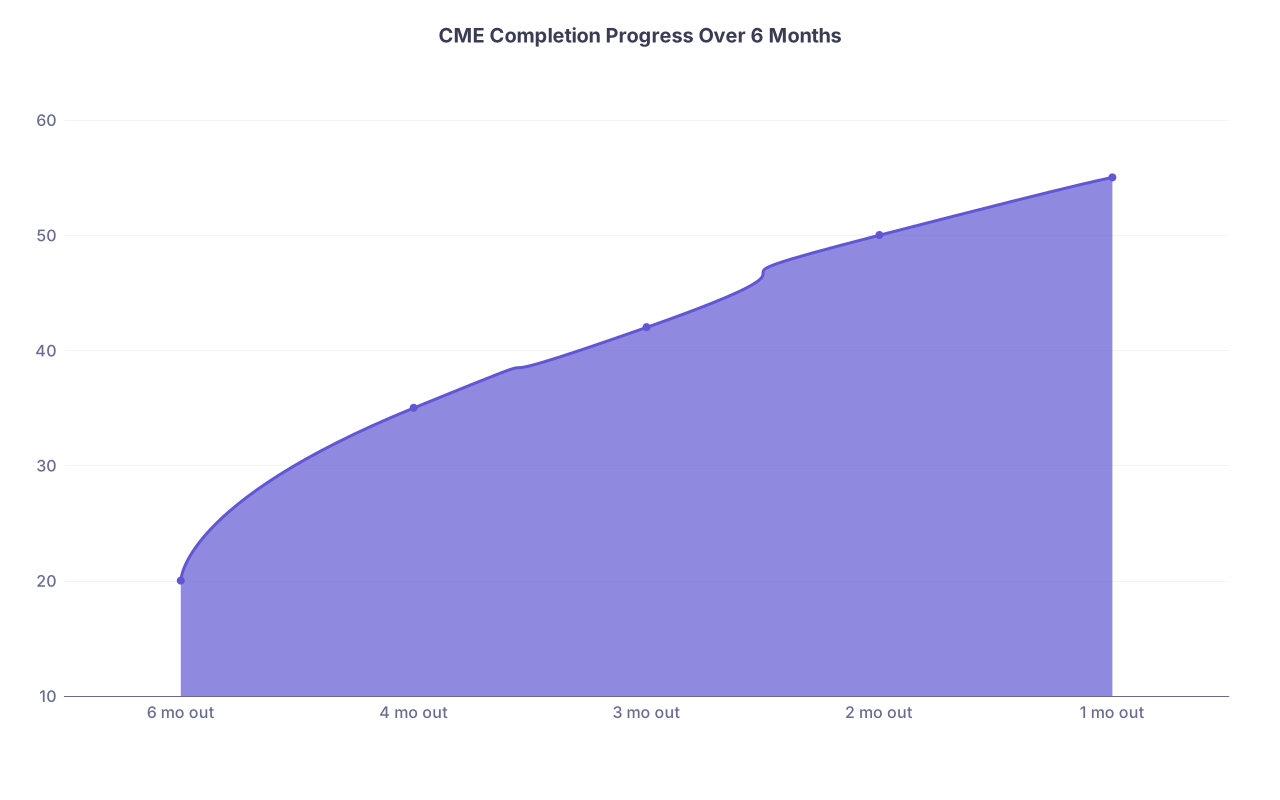
| Category | Value |
|---|---|
| 6 mo out | 20 |
| 4 mo out | 35 |
| 3 mo out | 42 |
| 2 mo out | 50 |
| 1 mo out | 55 |
Look specifically for:
- Any remaining mandated topic gaps
- Shortfall in Category 1
- Shortfall in live / interactive hours
If you discover, say, “I still need 2 hours of opioid CME and 4 live hours,” you fix that now, not in the last month.
Week 2–3: Patch remaining structural gaps
Targeted action:
- Find short, focused modules for remaining topics (usually 1–3 hour online CME offerings from reputable organizations).
- If you still need live hours:
- Register for webinars that qualify as live CME
- Ensure you know the time zone and can actually attend
- Put them into your work schedule like real appointments
Week 4: Confirm next 8 weeks of CME schedule
At this point you should front‑load what remains:
- Aim to complete all remaining CME hours in the next 6–8 weeks, leaving a 4‑week safety buffer before renewal
- Block one heavier CME weekend if your schedule has been light
By end of month 3 before renewal, you should be comfortably on track, not in denial.
2 Months Before Renewal: Finish the Hours
This is the push phase. You are not planning now. You are finishing.
Weeks 1–4: Execute the remaining hours
Weekly pattern:
- One focused evening: 1–2 hours of online modules
- Optional second short session: 30–60 minutes on lighter content (journal CME, audio, etc.)
Prioritize:
- Big‑chunk activities (3–5 hour modules, board review segments)
- Remaining live webinars or conferences
- Clean up small deficits (0.5–1 hour gaps)
At this point you should:
- Check your totals weekly
- Confirm when each certificate is received (some providers delay posting credits by a few days to weeks)
If you are still more than 10 hours short with two months to go, increase intensity: add one weekend half‑day to catch up.

1 Month Before Renewal: Paperwork, Not Panic
If you followed the plan, by this point you should already be at or above your required CME hours.
Week 1: Final CME tally
Perform a full reconciliation:
Confirm all:
- Total CME hours
- Category 1 hours
- Special topic hours
- Live hours (if required)
Cross‑check:
- Your spreadsheet totals
- Provider transcripts (many platforms let you generate a cycle summary report)
Fix any discrepancies now, not three days before submission.
Week 2: Prepare for possible audit
Organize:
One master CME summary sheet with:
- Total hours by category
- List of activities with dates and providers
- Specific line items for mandated topics (clearly labeled)
Ensure every row has:
- A matching certificate / transcript file
- Clear indication of Category 1 vs 2
Back up the entire CME folder:
- Cloud storage
- External drive or hospital server
If your state board accepts file uploads with renewal, pre‑pack PDF bundles (e.g., “Opioid CME Certificates,” “Ethics CME Certificates”).
Week 3: Review board and state instructions again
Requirements sometimes change mid‑cycle. I have seen boards add a one‑time training requirement during a renewal year.
So:
- Re‑visit the state board website
- Check for:
- New required courses
- Change in hours for specific topics
- New attestation language
If there is a new, sudden requirement:
- Knock it out immediately with a short, approved online module
- Document clearly which course satisfied the new rule
Week 4: Dry‑run the renewal application (without submitting)
If your board uses an online portal:
- Log in and click through the renewal screens until just before the payment/submit step
- Note exactly what they ask:
- Do they ask for exact CME hours by category?
- Do they require course titles for certain topics?
- Is there any upload requirement?
Update your summary sheet to mirror how the application asks for information. This will make actual submission a 15–20 minute task instead of an hour of hunting.
Final 2 Weeks: Submission Window
Now it is about execution, not accumulation.
Day‑by‑day in the last 10–14 days
Day 14–10 before deadline
At this point you should:
- Stop doing new CME unless:
- You truly did find a gap
- You enjoy it and do not mind going over the requirement
Focus on:
- Verifying account access to:
- State board portal
- Specialty board (if anything is integrated)
- DEA registration if renewing around the same time
Day 9–7
- Re‑review your summary sheet
- Confirm:
- No missing certificates
- No duplicated entries counted twice
- If you can, submit early:
- Many boards open renewal 30–60 days before expiration
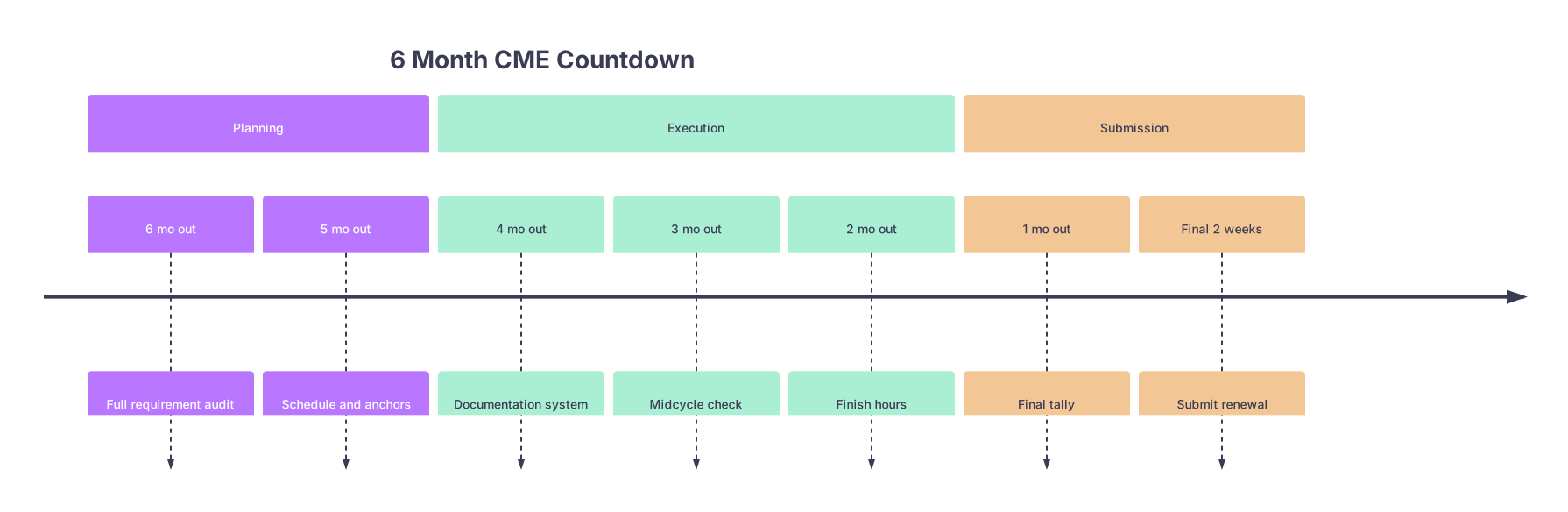
| Period | Event |
|---|---|
| Planning - 6 mo out | Full requirement audit |
| Planning - 5 mo out | Schedule and anchors |
| Execution - 4 mo out | Documentation system |
| Execution - 3 mo out | Midcycle check |
| Execution - 2 mo out | Finish hours |
| Submission - 1 mo out | Final tally |
| Submission - Final 2 weeks | Submit renewal |
Day 6–3
This is your target window to actually submit.
Steps:
Log into the board portal during business hours (so you can call if needed).
Complete all application fields slowly, with your CME summary sheet open.
When asked to attest to CME:
- Enter accurate totals
- Be precise for any mandated topic lines
Pay the fee.
Take screenshots or save confirmation PDFs for:
- Submission confirmation
- Payment receipt
- Any “pending review” status page
Day 2–0
You should already have submitted by now. These days are pure buffer for:
- Payment issues
- Portal glitches
- Last‑minute “we need clarification” emails from the board
If, against this entire plan, you are still short CME in the final 48 hours:
- Find short, high‑yield online CME that issues instant certificates
- Focus on general Category 1 unless you clearly need a specific topic
- Do not misrepresent your hours. The risk is not worth it.

After Submission: Set Up the Next Cycle (In 30 Minutes)
While everything is fresh:
Update your spreadsheet with:
- “Cycle complete” date
- Final hours reported
Create a new tab for the next CME cycle:
- Copy the requirement summary
- Reset totals to zero
Decide on one standing habit for the next 2–3 years:
- 30 minutes of CME every other week
- Automatically claiming point‑of‑care CME
- Annual conference each year instead of one mega‑conference at the end
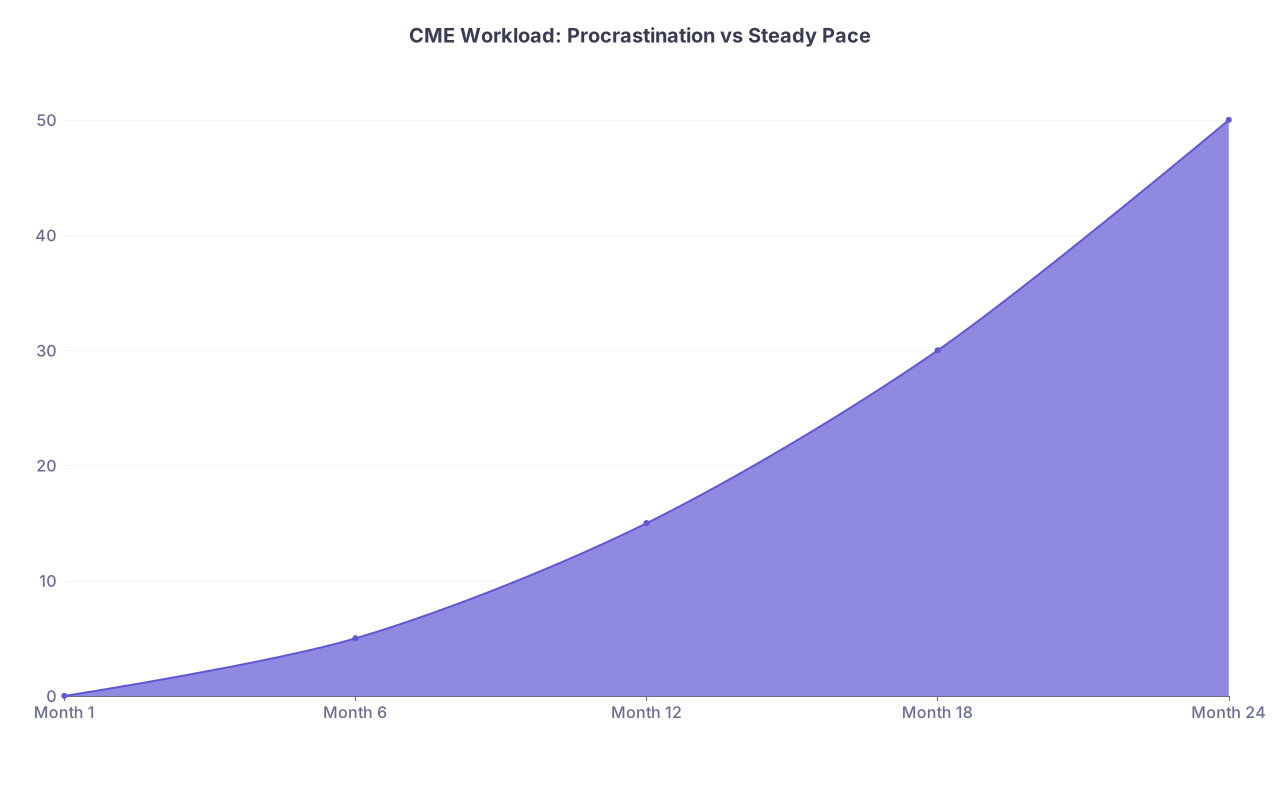
| Category | Value |
|---|---|
| Month 1 | 0 |
| Month 6 | 5 |
| Month 12 | 15 |
| Month 18 | 30 |
| Month 24 | 50 |
The worst CME cycles are the ones where you start thinking about credits five months before expiration. You just avoided that. Now keep the system.
The 3 Things That Actually Matter
Audit early and precisely. Six months out, you must know exact requirements and your exact deficit by category and topic. Guessing is how people end up non‑compliant.
Schedule CME like clinic. Put it on the calendar, protect the time, and front‑load mandated topics and live hours. If it is not scheduled, it will not happen.
Document as you go. One organized spreadsheet, certificates saved in one place, and a final tally a month before renewal turn license renewal from a crisis into a formality.