
It’s January 5th. You’re back from the holidays, inbox is a war zone, the clinic schedule is packed, and a reminder pops up: “CME credits due by December 31.” You vaguely remember swearing last year that you wouldn’t cram 20 hours of online CME into the last two weeks of December again.
Yet here you are. Again.
Let’s fix that.
This is your quarter‑by‑quarter, month‑by‑month CME strategy so that by the time you hit Q4, you’re not panic‑clicking through low‑value modules at midnight. At each point in the year, you’ll know exactly what you should be doing, roughly how many credits you should have banked, and which tasks to ignore.
Big Picture: Your Annual CME Blueprint
First, orient yourself. One clean framework that works for most busy clinicians:
- Target: 50 credits/year (adjust to your actual state/board requirements)
- Core split:
- 25–30 credits: low‑friction online activities (enduring materials, point‑of‑care, journal CME)
- 15–20 credits: one major live or virtual conference
- 5–10 credits: quality improvement, M&M, teaching, or institutional CME
By quarter, your cumulative progress should look roughly like this:
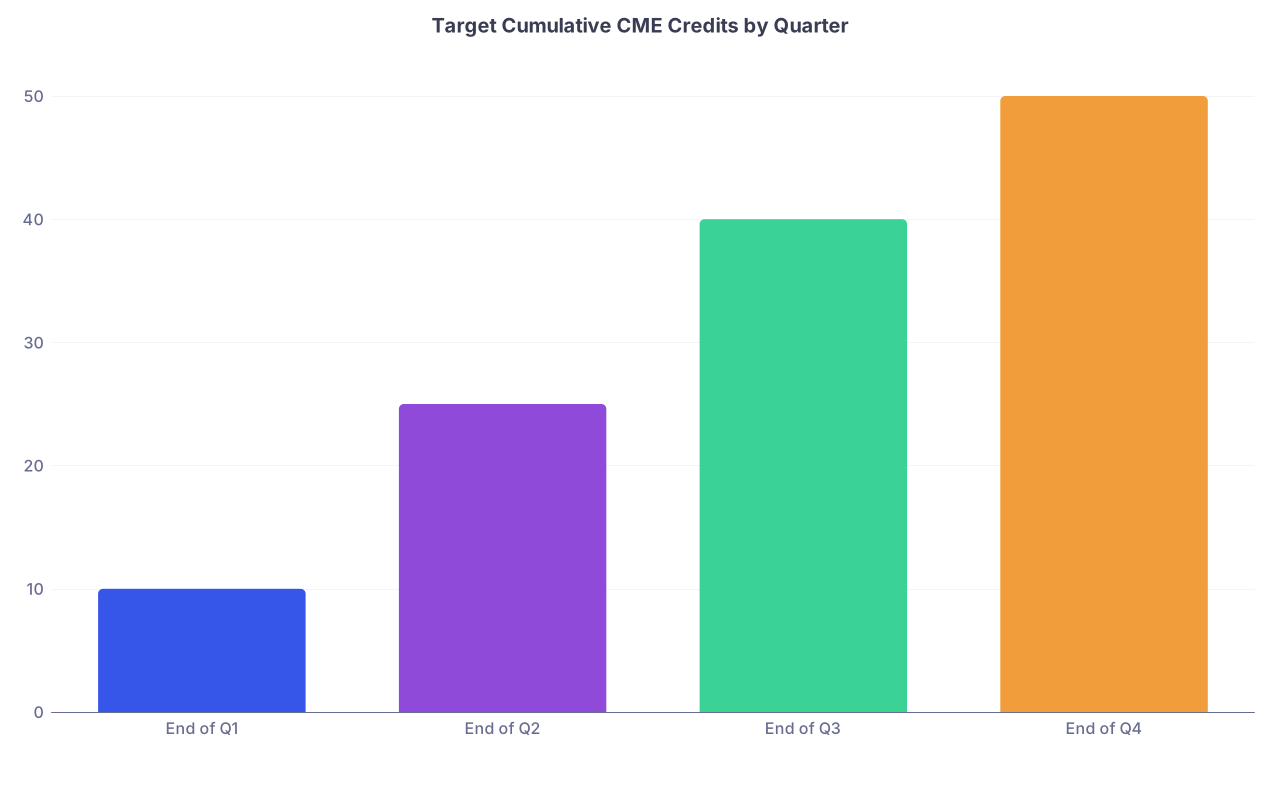
| Category | Value |
|---|---|
| End of Q1 | 10 |
| End of Q2 | 25 |
| End of Q3 | 40 |
| End of Q4 | 50 |
If your actual requirement is 25 or 100, scale the numbers, but keep the shape: early foundation, mid‑year push, light Q4 clean‑up.
Q1 (Jan–Mar): Audit, Plan, and Lock in the Big Rocks
This is where you stop reacting and start running an actual CME plan.
Week 1–2 of January: The Reality Check
By mid‑January, you should:
Confirm your requirements
- State license (e.g., 50 CME every 2 years, with opioid/pain credits or domestic violence, etc.)
- Board certification cycle (some boards want MOC/SA, patient safety, QI, etc.)
- Hospital or system mandates (HIPAA refreshers, compliance modules)
Log in and verify
- AMA Ed Hub or relevant specialty society transcript
- State license portal or board MOC dashboard
- Any hospital CME tracking system (often hidden under some terrible intranet tab)
You’re looking for:
- Credits already completed this cycle
- Topic‑specific requirements you still owe (like 3 hours opioid, 2 hours ethics)
- Cycle end dates (license vs board vs hospital often don’t match — annoying, but real)
- Set your annual CME target
- Take your requirement for the current cycle and divide by years.
Example: State wants 100 credits every 2 years → 50/year target. - Add a 10–15% buffer. Systems lose things. Conferences misreport. It happens.
- Take your requirement for the current cycle and divide by years.
Mid–Late January: Choose Your Anchor Conference
Your “anchor” is a 2–4 day event that gives you a large block of credits in one shot.
By January 31, you should have:
- Selected at least one major conference or course
- Chosen:
- Month
- Format (live vs virtual)
- Location (if live)
- Put it on your calendar and requested time off

You’re aiming for:
- 12–20 CME credits from this conference, depending on length
- Ideally scheduled in Q2 or Q3 so you’re not front‑loading or back‑loading everything
February: Build the Monthly CME Routine
Now you translate all this into a low‑effort habit.
By the end of February:
Choose your go‑to CME platforms
- One general (e.g., UpToDate CME, AudioDigest, NEJM Knowledge+, board‑specific portals)
- One specialty‑specific (e.g., ACC, ASCO, AAP, ACEP, SCCM, etc.)
Set a default weekly CME slot
- Example:
- 30–45 minutes Friday afternoon between last patient and notes
- 1 commute per week with audio CME
- Protect it like a meeting. Because if it’s “I’ll squeeze it in,” it won’t happen.
- Example:
Define your Q1 credit goal: 8–10 credits
- Rough breakdown:
- 1–2 credits from one longer webinar
- 6–8 credits from short modules, journal CME, or point‑of‑care CME
- Rough breakdown:
March: Knock Out Topic‑Specific Requirements
March is for annoying boxes that always get procrastinated.
By March 31, you should:
- Identify and complete:
- Opioid prescribing/pain management credits (often 2–4 hours)
- Ethics/professionalism/implicit bias requirements
- Human trafficking, domestic violence, or state‑specific mandated topics
Do them now.
Those are exactly the ones you’ll be cursing about in December if you leave them.
Q2 (Apr–Jun): Build Momentum and Front‑Load Credits
Now you start stacking real numbers.
April: Clinical CME Embedded in Your Work
By the end of April, aim to add 5–7 more credits, mainly via:
- Point‑of‑care CME:
- Enable CME on your primary tools (e.g., UpToDate, DynaMed, ClinicalKey)
- Get in the habit: if you’re looking up a question anyway, click the CME box
- Journal CME:
- Pick one journal you actually read
- Do the CME quiz on 1–2 key articles per issue
This is where the “I’m too busy” excuse dies. You’re already doing the work. You’re just not documenting it.
May: Conference Prep and Registration
If your anchor conference is in Q3, May is logistics month.
By May 31:
- Confirm:
- Registration (early‑bird if possible)
- Hotel/travel (if in‑person)
- Coverage/schedule swaps
- Scan the agenda:
- Circle must‑attend sessions
- Note any sessions with special credit types (e.g., ethics, QI, patient safety)
Also, May is a good time to:
- Add another 3–5 credits from:
- A half‑day virtual course
- A specialty board review webinar
- Hospital grand rounds sessions that offer CME

June: Mid‑Year Checkpoint
By June 30, you should have at least 20–25 credits logged if your yearly goal is 50.
Do a 30‑minute review:
- Log in to your main transcript(s)
- Check:
- Total credits this year
- Topic‑specific categories met/not met
- Which activities were actually high value vs painful
If you’re under 15 credits by end of June, you’re behind. Not fatal. But you can’t coast through summer.
Q3 (Jul–Sep): Harvest Season – Bank the Bulk of Your Credits
This is usually where the big numbers happen.
July–August: Your Anchor Conference
Whenever your conference hits in Q3, your only job for that week:
- Attend with intention
- Capture the credits correctly
During the conference:
- Check in daily with the CME desk/app to make sure your attendance is tracking
- Do the evaluation forms before you leave (I’ve watched too many people lose credits here)
- Screenshot or download:
- Attendance summaries
- Provisional certificates if available
After the conference (within 1 week):
- Save PDF certificates to a cloud folder named something like:
CME_2026 / 2026-07_ACP_Internal_Medicine_Conference_20_CME.pdf - Confirm the credits appear on:
- Conference provider transcript
- AMA or specialty society master transcript (if applicable)
Your credit total should jump by 12–20 credits with this one event.

August: QI, Teaching, and Institutional CME
August is a good time to convert work you’re already doing into CME.
By August 31, you should:
- Identify at least one:
- Quality improvement project
- Morbidity and mortality series
- Protocol development effort
- Teaching activity (lectures to residents, simulation sessions, etc.)
Ask your CME office:
- Can this be structured for CME or MOC Part IV credit?
- Can prior work this year be retrospectively credited if documentation is adequate?
This can easily add 3–8 credits with minimal extra effort.
September: Precision Top‑Off
By the end of Q3, your goal is minimum 35–40 credits if your target is 50.
September is for precision:
- Log in to state/board portals
- Look specifically for:
- Gaps in mandated categories (e.g., still missing 1 hour of ethics)
- MOC SA or KSA modules you still need
- Knock out:
- One focused 3–5 credit online course in a known gap area
- Any board‑mandated self‑assessment modules
If you play Q3 correctly, Q4 becomes optional polishing instead of desperation.
Q4 (Oct–Dec): Gap‑Fill, Document, and Lock the Door Behind You
Now you move from “earning credits” to “closing loops.”
October: Final Gap Analysis
By October 31, you should:
Run a clean inventory:
- Total credits this year
- Credits this cycle (if you’re in year 1 vs year 2 of a 2‑year cycle, track both)
- Topic‑specific tallies (ethics, opioid, patient safety, etc.)
- Board/MOC requirements: SA, QI, exam prep modules
Use a simple table to spot gaps quickly:
| Requirement Type | Required | Completed | Remaining |
|---|---|---|---|
| Total CME Credits | 50 | 42 | 8 |
| Opioid/Pain Management | 3 | 3 | 0 |
| Ethics/Professionalism | 2 | 1 | 1 |
| Patient Safety | 5 | 4 | 1 |
| Board MOC SA Modules | 2 | 1 | 1 |
You want this table mostly green by Halloween. If it’s not, you still have time, but you need to be deliberate.
November: Clean‑Up Month (Not Panic Month)
Plan to finish everything by the Sunday after Thanksgiving. That’s the line in the sand.
In November you should:
- Finish any:
- Board SA/KSA modules
- Remaining specific‑topic credits (ethics, patient safety, etc.)
- Grab 5–8 low‑stress credits:
- A weekend virtual mini‑symposium
- A short series of on‑demand video modules while you’re doing admin work
This is also the time to:
- Cross‑check:
- Your saved certificates vs what appears on your transcripts
- Spelling of your name and license number on major CME profiles (yes, this matters when state boards audit)
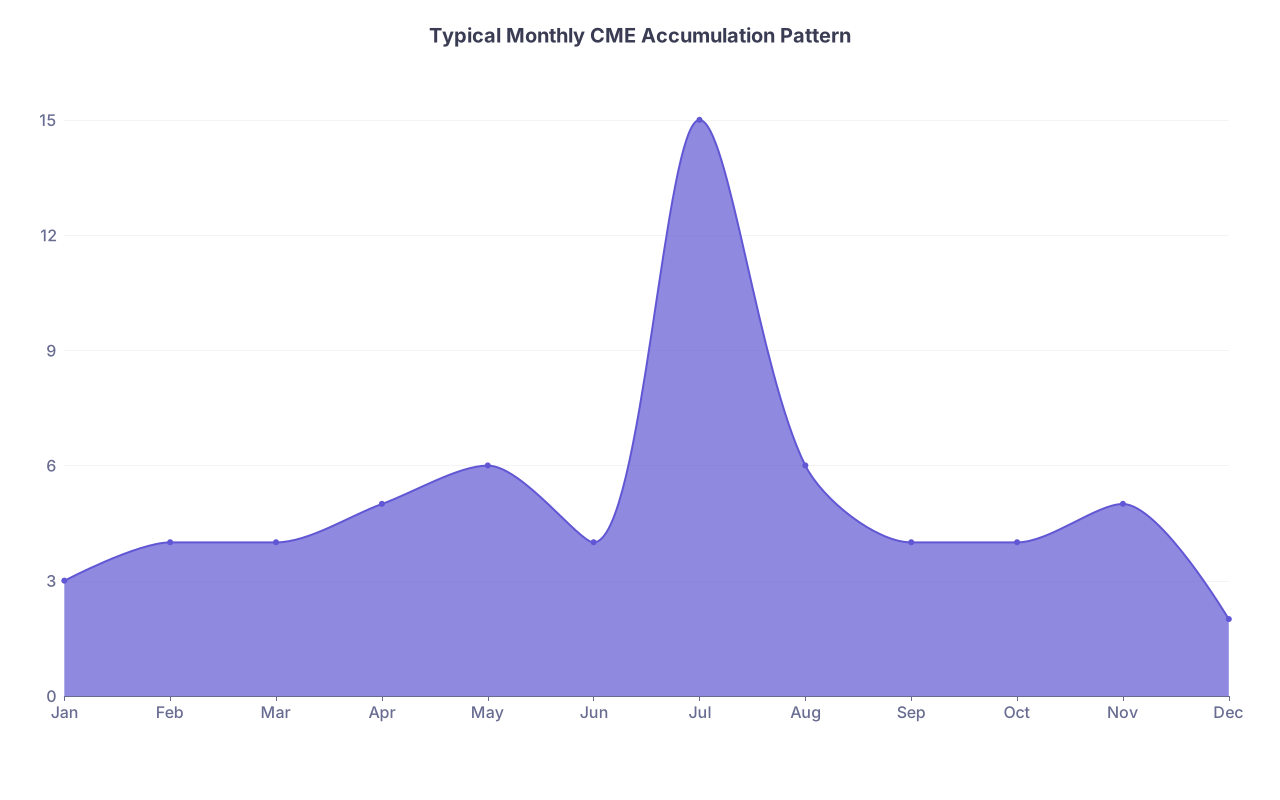
| Category | Value |
|---|---|
| Jan | 3 |
| Feb | 4 |
| Mar | 4 |
| Apr | 5 |
| May | 6 |
| Jun | 4 |
| Jul | 15 |
| Aug | 6 |
| Sep | 4 |
| Oct | 4 |
| Nov | 5 |
| Dec | 2 |
You see the spike in July (conference) and the mini‑push in May and November. That’s normal. You’re aiming to keep the rest of the months modest but consistent.
December: Lock‑In and Fail‑Safe
If you’ve done the previous steps, December should be quiet.
By December 15, you should have:
- All credits completed for the year
- Certificates:
- Downloaded and backed up (cloud + local)
- Organized by year
- Documentation:
- Updated CV with major CME events (especially conferences, QI projects, teaching with CME)
- Personal spreadsheet or tracker reflecting:
- Date
- Provider
- Title of activity
- Credits earned
- Category (ethics, opioid, etc.)

The last 2 weeks of December are your buffer:
- If something didn’t post correctly, you still have time to chase it.
- If you miscounted ethics credits, you can do a 1–2 hour targeted module.
But you’re not spending your holiday week binge‑watching bland webinars.
Practical Weekly and Monthly Micro‑Routine
If you want the bare minimum operational plan:
Weekly (15–45 minutes):
- 1–2 point‑of‑care CME entries (5–10 minutes total)
- 1 short online module or 1 journal CME quiz
Monthly (30–60 minutes):
- Log in to main CME tracker, add:
- New activities
- Certificates you haven’t uploaded
- Quick count:
- Total credits this year
- Any specific‑topic gaps
Do that, and the quarter‑by‑quarter plan almost takes care of itself.
FAQs
1. How many CME credits should I realistically aim for per year?
Match your actual requirement per cycle, then add 10–15% buffer. If your state wants 100 credits every 2 years and your board expects “ongoing CME,” a target of 50–60 credits per year is sane. Anything less and you’re setting yourself up for a crunch in the second year of your cycle.
2. Is one big conference enough to meet my annual CME needs?
No. A single 4‑day conference might give you 20–25 credits if you attend every possible session. Most clinicians still need an additional 20–30 credits from online, point‑of‑care, and institutional CME. Conferences are anchors, not the whole structure.
3. What’s the best way to avoid losing track of CME certificates?
Stop scattering them. Use a single master folder per year (e.g., CME_2026) in a cloud drive, name every file with date + provider + credits, and log them into a simple spreadsheet or whatever tracking tool your institution or board offers. Five minutes of discipline after each activity is cheaper than a panic audit response later.
4. How do I prioritize CME topics when I’m already overloaded clinically?
Use a simple filter:
- First: Non‑negotiable topics your state or board mandates (opioids, ethics, etc.).
- Second: Topics that directly hit your biggest recurring clinical headaches (e.g., diabetes management, heart failure readmissions, sepsis updates).
- Third: Career leverage topics (leadership, QI, teaching skills) that help you say yes to better roles and no to thankless committees.
Key points:
- Treat CME as a year‑long project, not a December emergency — anchor it with one major conference plus a weekly micro‑routine.
- Front‑load mandated topics and mid‑year auditing, so Q4 is for clean‑up, not chaos.
- Document as you go — one organized folder, one running log, and you’re audit‑proof with almost no extra effort.