

The blunt truth: If you’re in established practice, you should usually prioritize specialty-specific CME—but you’re probably underestimating how much general medicine you still need. The trick is not “either/or.” It’s “how much of each, and when?”
Here’s how to think about it like a grown-up clinician, not a checkbox-chaser.
Step 1: Get Clear on What Your Board and State Actually Require
Before debating priorities, you need to know your non‑negotiables. Most physicians guess; few actually read the rules.
There are three overlapping layers:
- State licensure CME
- Specialty board maintenance of certification (MOC) or continuing certification
- Hospital/health system or payer-specific requirements (opioids, safety, etc.)
| Source | What They Usually Require |
|---|---|
| State Medical Board | Total CME hours + topic mandates |
| ABMS/Board (MOC) | Specialty-focused + self-assessment |
| DEA/State Rx Rules | Opioid/pain management hours |
| Hospital/Health Sys | Safety, compliance, QI modules |
Many states do not care if your hours are specialty-specific. They just want “Category 1” and some mandated topics (opioids, ethics, cultural competence, etc.). Your specialty board, however, usually expects your CME to be “relevant to your scope of practice,” which in real life means: mostly specialty-focused.
Quick reality check:
If you are, say, a board-certified cardiologist logging 90% of your CME in dermatology, you’re gaming the system. And boards know it.
So baseline rule:
- Meet state topic mandates exactly as required. No more, no less.
- Make sure the majority of your “free choice” CME aligns with your actual clinical work.
That’s the floor. Now we talk about smart prioritizing.
Step 2: Understand What Each Type of CME Actually Does for You
Think in terms of return on investment: clinical safety, cognitive sharpness, and career flexibility.
Specialty-Specific CME: High Impact Where You Live Every Day
Specialty-specific CME should be the backbone of your learning once you’re out of training. Why? Because this is where your clinical risk and value sit.
Specialty-focused CME helps you:
- Stay current on fast-moving evidence (oncology, cardiology, critical care, EM, ID…)
- Refine procedural skills and decision pathways
- Align with specialty guidelines that med‑legal experts will cite if you’re ever challenged
- Maintain credibility with colleagues and trainees
The risk of neglecting it? You start “practicing the way I was trained,” which is code for “I’m quietly outdated and hoping no one notices.”
General Medical CME: Protection Against Clinical Blind Spots
General medical CME gets unfairly dismissed as “primary care stuff.” That’s naïve. Unless you’re in an ultra-narrow niche (e.g., pathologist reading only kidney biopsies), general medicine still touches your practice more than you think.
General CME is critical for:
- Cross-coverage and night/weekend call
- Comorbidities that directly impact your specialty decisions (diabetes, CKD, anticoagulation, geriatrics)
- Systems topics: safety, quality, communication, and team-based care
- Broad issues like polypharmacy, multimorbidity, and diagnostic reasoning
I’ve watched surgeons fumble basic anticoagulation management because “that’s medicine’s job,” while simultaneously signing orders that clearly require understanding of DOACs and renal dosing. That’s dangerous.
So you need both:
- Specialty CME to keep your core sharp
- General CME to avoid embarrassing and potentially harmful blind spots
Step 3: A Practical Ratio: How Much Specialty vs General?
Here’s the answer most people want: numbers.
For a typical practicing physician, a reasonable annual CME mix looks like this:
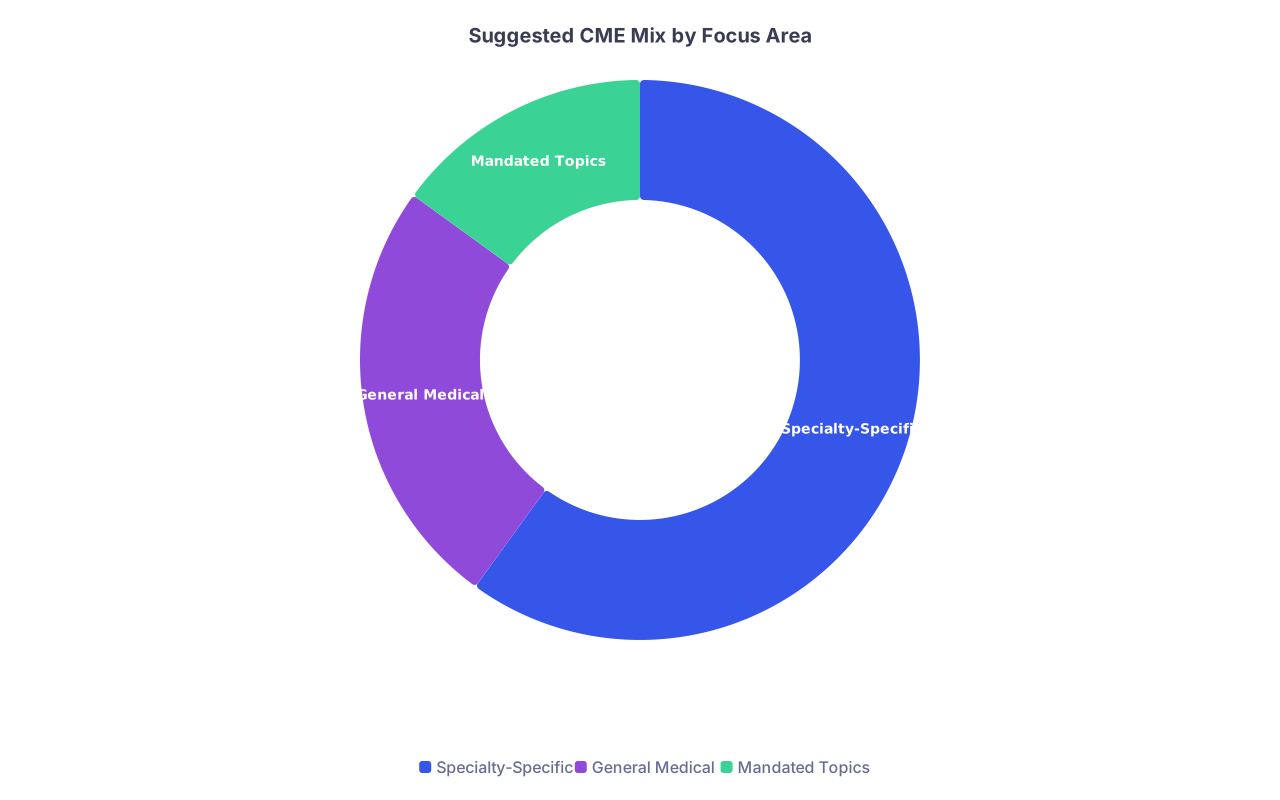
| Category | Value |
|---|---|
| Specialty-Specific | 60 |
| General Medical | 25 |
| Mandated Topics | 15 |
Baseline recommendation (adjust per career stage, see below):
- 60–70% specialty-specific
- 20–30% general medical topics
- 10–20% mandated/regulatory topics (opioids, ethics, risk management, etc.)
That’s a default, not a law. Shift it based on where you are:
- Early attending: lean more heavily specialty (70–80%) while still deliberately touching general topics
- Mid-career: balance out—your blind spots are more dangerous now because you’re supervising and setting standards
- Late-career: add more general and systems CME to stay safe, relevant, and adaptable as guidelines and technology change
If you’re doing 100% specialty CME year after year, you’re missing something. If you’re doing 50% random general content with little relevance, you’re wasting time.
Step 4: Tie CME Priorities to Your Actual Clinical Risks
Stop choosing CME by what’s easy to stream while you answer emails. Choose it based on where you are most likely to harm someone—or get burned.
Here’s a quick way to map your risk and align CME:
List 5–10 common or high-risk scenarios in your practice
- Example for a hospitalist: sepsis, anticoagulation in AF, AKI on CKD, delirium, goals-of-care in advanced cancer
For each, ask: Is my main gap specialty-specific or general?
- Sepsis bundle nuances and latest trials → more specialty/internal medicine
- Communicating prognosis and code status → more general communication/palliative/general medicine skills
Build your CME plan to hit the highest-risk intersections first.

| Step | Description |
|---|---|
| Step 1 | List high risk scenarios |
| Step 2 | Identify main knowledge gap |
| Step 3 | Choose specialty CME |
| Step 4 | Choose general CME |
| Step 5 | Reassess outcomes |
| Step 6 | Specialty gap? |
If it doesn’t change how you handle those real scenarios, it’s probably not high‑value CME—no matter how slick the platform looks.
Step 5: Consider Your Practice Setting—This Changes the Answer
The correct balance is heavily influenced by where and how you work.
Outpatient Primary Care (FM, IM, Pediatrics)
You live in general medicine. Your “specialty” is breadth.
You should still do specialty-specific CME (e.g., family medicine board reviews, chronic disease updates), but the line between “specialty” and “general” blurs here. Your priority:
- Adult/peds preventive care and screening
- Chronic disease management (diabetes, hypertension, COPD, mood disorders)
- Polypharmacy, geriatrics, women’s health, adolescent health
- Behavioral health integration
For you, “general medical topics” are not optional fluff. They are your core.
Hospitalists, Intensivists, ED Physicians
You think your world is all specialty, but it actually sits at the intersection of multiple domains.
Specialty CME matters a ton: ventilator management, vasopressors, resuscitation updates, sepsis, PE, etc. But you also need:
- General internal medicine updates (heart failure, renal disease, infectious disease basics)
- Geriatrics, delirium, goals-of-care
- Transitions of care and post-acute planning
I’d still keep 60–70% of your CME specialty-ish (critical care, EM, hospital medicine), but choose general-med CME that directly supports those patients: antibiotics, anticoagulants, pain management, complex comorbidities.
Procedural and Surgical Specialties
For most proceduralists (ortho, ENT, general surgery, GI, IR, etc.), your highest immediate risk is in your specialty: technique, devices, perioperative management, recognition of complications. So yes, specialty CME deserves strong priority.
But general topics still matter:
- Perioperative medicine
- Anticoagulation and antiplatelet management
- Pain/opioid stewardship
- Infection prophylaxis, VTE prevention
- Cardiac and pulmonary risk stratification
If you’re delegating all of that mentally to “medicine will handle it,” but still writing orders and consent forms, you’re exposed. Allocate a predictable chunk of your CME each year to these general areas.
Very Narrow Subspecialists
If you’re a bone marrow transplant doc, pediatric epileptologist, or interventional cardiologist doing only structural work, your specialization justifies heavy specialty CME—maybe 70–80%.
Still, carve out at least 15–20% for broader issues:
- Common comorbidities in your population (renal, hepatic, endocrine)
- Systems, quality, safety, and team communication
- Transition of care and survivorship issues
You never want to be the technically brilliant subspecialist who’s clueless about basic cross-cutting issues like frailty, polypharmacy, or high-risk medications.
Step 6: Use CME to Protect Your Future, Not Just Your Present
Another angle most folks ignore: your future self.
If there’s any chance you will:
- Change practice settings (academic → community, inpatient → outpatient)
- Shift scope (add urgent care shifts, telemedicine, or wound care)
- Step into leadership, QI, or education roles
…then your general medical base matters. A lot.
I’ve seen cardiologists move into hospital leadership and suddenly realize they haven’t thought seriously about pneumonia guidelines, VTE prophylaxis, or stroke pathways in years. They’re fine clinically in their niche, but thin outside it. That’s a problem once you’re setting policy.
Use 10–20% of your ongoing CME load to keep yourself broadly literate:
- Major guideline updates outside your specialty (e.g., diabetes, hypertension, lipid management, depression)
- Health systems science and quality improvement
- Communication, teaching, and leadership
You don’t need to be a generalist again. You do need to not be helpless outside your lane.
Step 7: How to Choose Specific CME Activities (Without Wasting Time)
You’re not just deciding “specialty vs general.” You’re choosing actual activities.
Filter options using three questions:
- Will this change my behavior with at least 5–10 patients I see every week?
- Does this fill a real gap I’ve recently felt dumb or uncertain about?
- Is this aligned with a requirement (state, board, hospital) I must meet anyway?
If it hits two of the three, it’s probably a good use of hours. If it hits none, it’s probably a shiny distraction.

Then structure your year roughly like this:
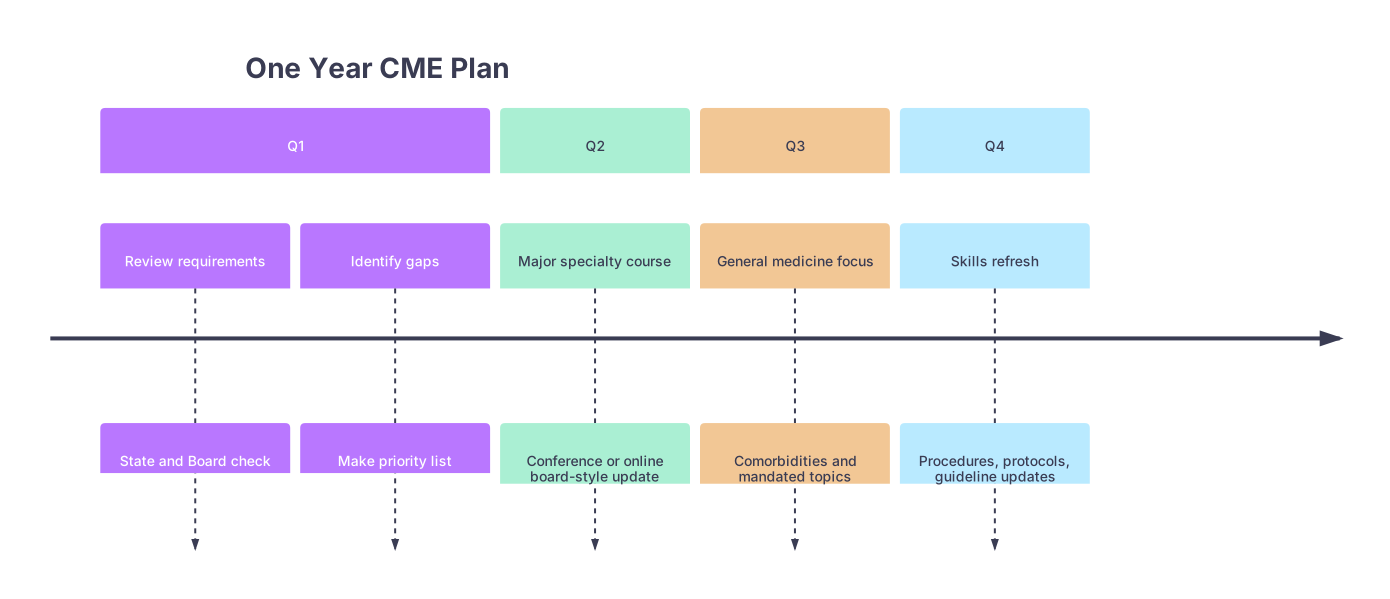
| Period | Event |
|---|---|
| Q1 - Review requirements | State and Board check |
| Q1 - Identify gaps | Make priority list |
| Q2 - Major specialty course | Conference or online board-style update |
| Q3 - General medicine focus | Comorbidities and mandated topics |
| Q4 - Skills refresh | Procedures, protocols, guideline updates |
You don’t need to obsess, but you do need to be intentional once a year.
Quick Example Mixes by Specialty
To make this concrete, here’s what a reasonable annual CME profile might look like:
| Role | Specialty-Focused | General Medical | Mandated/Other |
|---|---|---|---|
| Outpatient IM | 50% | 35% | 15% |
| Hospitalist | 60% | 25% | 15% |
| General Surgeon | 65% | 20% | 15% |
| Intensivist | 70% | 15% | 15% |
| Family Medicine | 45% | 40% | 15% |
Notice: nobody is at 0% general. And nobody serious is at 0% specialty.
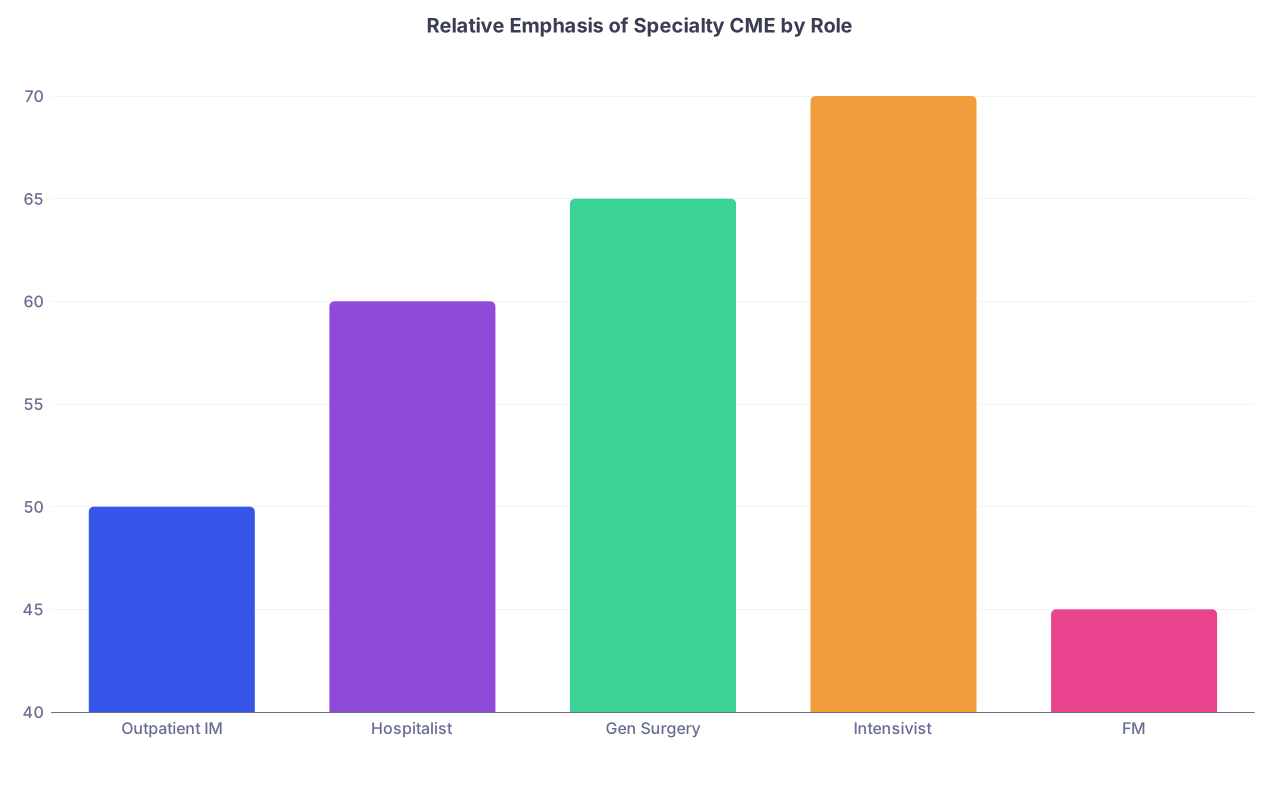
| Category | Value |
|---|---|
| Outpatient IM | 50 |
| Hospitalist | 60 |
| Gen Surgery | 65 |
| Intensivist | 70 |
| FM | 45 |
Bottom Line: How to Answer Your Own Question
So, should you prioritize specialty-specific CME over general medical topics?
Here’s the straight answer:
- Yes, specialty-specific CME should usually be your primary focus, especially in the first 10–15 years of practice, because that’s where your highest-impact decisions and your liability live.
- No, you absolutely should not ignore general medical CME, because comorbidities, cross-coverage, and systems issues will hurt you more than you think if your knowledge gets stale.
- The smart move is a planned mix: roughly 60–70% specialty, 20–30% general, and 10–20% mandated topics—adjusted to your role, practice setting, and career stage.
If your current CME portfolio is “whatever’s easiest to click when a reminder email shows up,” you’re doing it wrong. Take one afternoon, map your real risks, and build your CME around that. It pays you back every single clinic, call shift, and OR day.
FAQ (Exactly 5 Questions)
1. Will my board get upset if some of my CME isn’t directly specialty-specific?
Unlikely, as long as the majority clearly relates to your scope of practice and you’re not abusing the system. Boards expect some proportion of general or systems-focused CME. Problems arise only if your activity list is obviously unrelated to what you do (e.g., a cardiologist logging mostly dermatology and ophthalmology).
2. If I’m dual-certified (e.g., IM and ID), how should I split my CME?
Anchor your CME to your actual clinical work. If you practice 80% ID and 20% general IM, let your CME reflect that—maybe 60–70% ID-focused, 20–25% general IM, and 10–15% mandated topics. When in doubt, choose content that’s clearly relevant to both certifications (e.g., antibiotic stewardship, sepsis, HIV in primary care).
3. Are general “board review” style courses a good way to cover both types of CME?
Sometimes. Internal medicine or family medicine board reviews can be excellent for broad refreshers—especially early in your career. But they can also be overkill and too diffuse if you’re a mature subspecialist. If you use them, treat them as your general-med slice and make sure you still do targeted specialty updates.
4. How often should I deliberately seek out non-specialty topics?
At least once a year, set aside a block of CME time (a course, mini-series, or focused modules) for general topics tied to your practice: anticoagulation, perioperative medicine, geriatric principles, communication, or QI. Think of it as maintenance on the parts of your knowledge you don’t use every day but really cannot afford to lose.
5. What’s a red flag that I’m overdoing specialty-specific CME and neglecting general medicine?
Three signs:
- You regularly say “that’s not my problem” about common comorbidities, yet your orders clearly affect them.
- You feel uneasy managing common non-specialty issues on call or in cross-coverage.
- Your CME log is 100% niche content year after year with nothing on comorbidities, general diagnostics, or system-level care. If that’s you, intentionally bump your general-med CME up by 10–20% next year.


