
The idea that you “cannot really change your CV” during a single sub-I is wrong. You can move the needle fast—if you treat those 4 weeks like a targeted campaign, not just another rotation.
This is about leverage. One month. One service. One faculty group. Your job is to turn that into:
- Concrete bullet points on your clinical CV
- Named people willing to vouch for you
- At least 1–2 real, trackable academic or leadership outputs
You are not going to write an R01 during your sub-I. But you can absolutely leave with:
- A pending abstract or case report
- A defined QI/education project with your name on it
- Stronger clinical bullets that sound like a resident, not a student
- One serious LOR writer who has concrete things to say
Let me lay out the playbook, week by week, and then break down specific CV sections: clinical work, research/QI, teaching, leadership, and scholarly products.
Step 1: Set Your Sub-I Strategy Before Day 1
If you walk in on Day 1 “just trying to do well,” you are already behind. You need an explicit CV plan.
A. Define what you want to leave with
Pick 2–3 concrete outcomes from this list. Not all. Two or three you will actually push over the finish line.
- 1 case report drafted and sent to a mentor
- 1 QI project with data collected and abstract drafted
- 1 education project (teaching session, resource, or guide) with a plan to present or publish internally
- 1 committed letter writer who can speak to your sub-I performance
- 3–5 high-yield clinical CV bullets that show responsibility at near-intern level
Write them down. Tape them inside your notebook.
B. Identify your allies early
On most sub-Is, there are 3 groups you can leverage:
- Faculty – potential LOR writers, project sponsors
- Chiefs / senior residents – gatekeepers to ongoing QI, posters, local conferences
- Program leadership – sometimes involved in structured QI or educational initiatives
Before you start:
- Skim the department’s website for faculty who publish QI, education, or case reports.
- Note 1–2 names on your service who publish regularly.
- Arrive with 1–2 sentences prepared:
“I am very interested in [X: QI/education/case reports] and would like to contribute to an ongoing project while I am here. Is there anything I could realistically help with during a 4-week sub-I?”
That exact line works. I have heard it. It stands out because almost nobody asks that directly.
Step 2: Maximize Clinical CV Value From Normal Daily Work
You are already seeing patients, writing notes, calling consults. Most students just let that evaporate at the end of the month. You are going to convert it into CV language.
A. Think in “CV bullets,” not tasks
You do not put “wrote progress notes” on your CV. You write:
- “Managed 4–6 inpatients daily as acting intern on general medicine service, including admissions, cross-cover, and multidisciplinary communication under resident supervision.”
To get there, track what you actually do.
During week 1–2, keep a simple log:
- Average patient load
- Whether you pre-rounded independently
- How often you called consults
- Any procedures you assisted with
- Family meeting involvement
- Night float / call exposure
At the end of each week, distill into 1–2 bullets.
Examples you can realistically earn during a strong sub-I:
- “Functioned at acting intern level on [service], independently formulating daily assessment and plans for 4–8 patients, with attending-level review.”
- “Coordinated care for complex patients requiring multidisciplinary input from cardiology, nephrology, and palliative care, serving as first-call student for pages under resident supervision.”
- “Performed initial evaluation and workup for [X] new admissions per call night, presenting concise plans for attending review.”
If you want those bullets, you need to actually:
- Take responsibility for a decent patient load (ask for more if you are coasting)
- Volunteer to be the one calling consults, drafting discharge summaries, or leading updates
B. Ask for “acting intern” responsibilities explicitly
Some residents will never think to offer this. You ask:
“If you are comfortable with it, I would like to function as close to an intern as possible. Could I have my own small list and call consults or write discharge summaries with your supervision?”
On most good teams, that gets a positive response.
You want to be able to say—honestly—that you:
- Independently pre-rounded
- Wrote full notes that were used in the chart
- Acted as primary point of contact for a few patients
Those details transform vague “sub-I” into concrete, impressive clinical bullets.
Step 3: Build a Fast, Real QI or Research Output
You are not starting a randomized trial in 4 weeks. You are aiming for:
- Case report
- Small QI project
- Chart review sub-analysis that you help advance
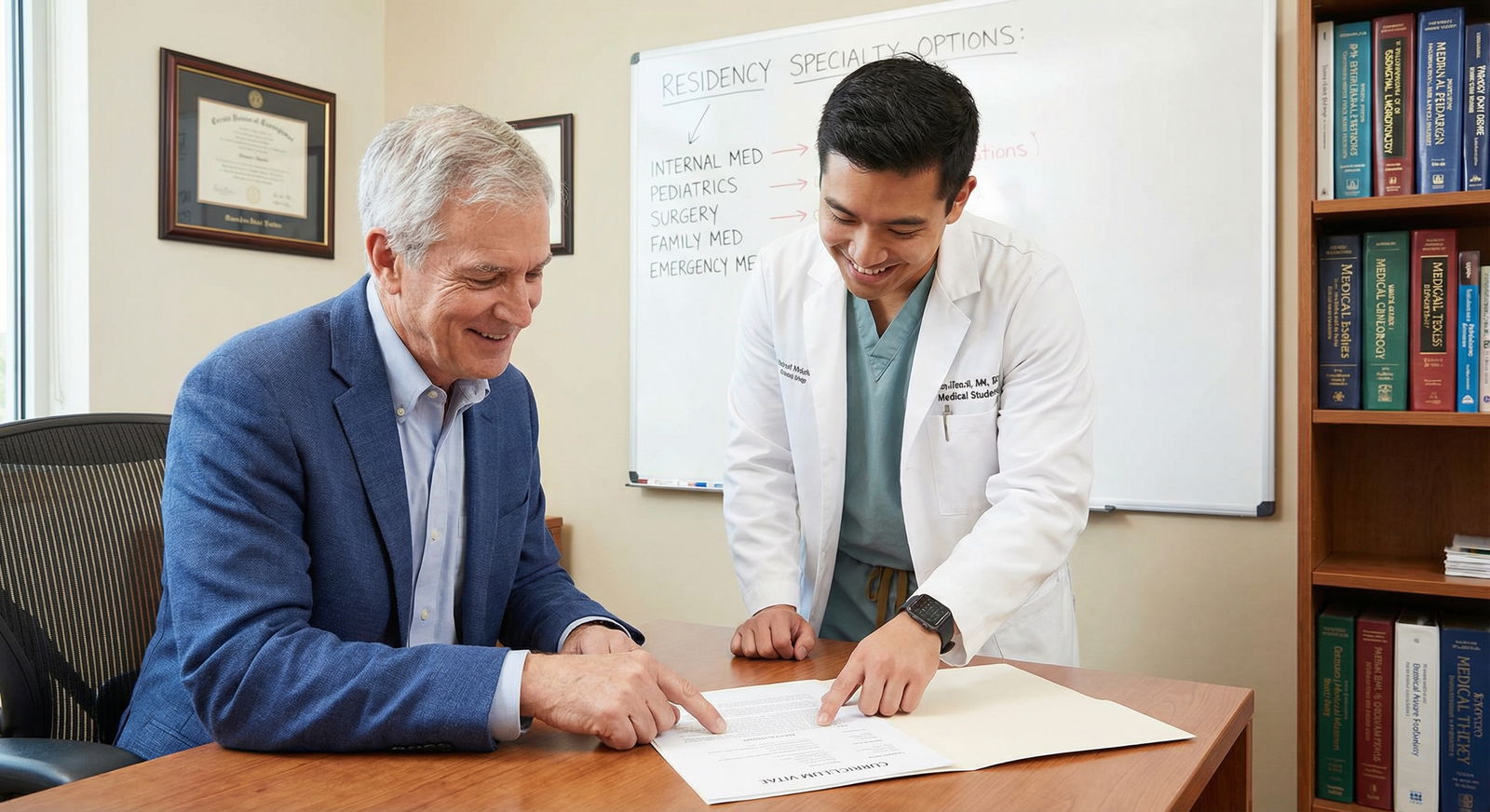
A. Case reports: the fastest academic win
Case reports are the lowest-hanging fruit during a sub-I, especially in IM, neuro, EM, and surgery.
Protocol:
Tell your team early:
“If we see any unusual or interesting cases, I would be very interested in helping write up a case report while I am here.”When a weird or striking case appears (it will), say directly to the attending:
“Would you consider this publishable as a case report? If so, I would be happy to do the initial literature review and first draft.”If they say yes:
- Start a running notes file with:
- Timeline
- Key labs/imaging
- Interventions
- Outcome
- Do a quick PubMed search that night:
- 10–15 recent papers
- Identify what is rare/novel
- Draft:
- Introduction (what is known, what is rare)
- Case description (timeline, objective data)
- Discussion (why this matters, how it differs from prior reports)
- Start a running notes file with:
Your goal by the end of week 3:
- A complete draft emailed to the attending.
You then get a CV line like:
“Co-author, case report on [condition] in [patient type], submitted to [journal], under review.”
You do not wait for acceptance to list it. You label status clearly (submitted, in preparation).
B. QI project: plug into something already running
Starting a brand-new QI project from zero in 4 weeks is usually too slow. Plugging into an existing one is realistic.
Ask your senior or chief in week 1:
“Are there any ongoing QI projects that need data collection, chart review, or help preparing an abstract or poster? I am here for a month and would really like to contribute.”
Common sub-I-friendly QI work:
- Data extraction from charts
- Organizing run charts / basic stats with Excel or R
- Drafting an abstract or poster for a local meeting
- Writing up an implementation protocol or checklist
Aim for:
- By end of week 2: Specific role and dataset defined
- By end of week 4: Data chunk collected + abstract or draft poster started
CV wording:
- “Contributor, quality improvement project to reduce [X] on [service], responsible for [data collection / preliminary analysis / drafting abstract]; abstract in preparation for [local/regional national] meeting.”
Not hypothetical. I have seen students leave a single month with their name on a QI poster purely from doing painful but important data work no one else wanted to do.
C. Chart review / retrospective: know your role
Retrospective studies span months. You are not finishing one in 4 weeks. But you can:
- Join an existing chart review
- Complete a defined subset (e.g., extract data for 30–50 patients)
- Help clean data and assist with initial descriptive statistics
Your ask:
“Is there any chart review or database project where I can own a defined piece—like extracting structured data for a subset of patients—during this month?”
If you do that and you are reliable, it often turns into authorship later, especially on local/regional presentations.
Put on your CV (after confirming with PI):
- “Contributed to retrospective analysis of [topic] at [institution], performing structured chart review for [N] patients and cleaning dataset for analysis; manuscript in progress.”
Step 4: Turn Teaching Moments into CV-Worthy Education Work
Sub-I students often quietly teach juniors. Then never document it. Mistake.
You can create one solid education bullet during a single month.
A. Micro-teaching: log it and upgrade it
Any of the following can become a CV line if you:
- Plan it
- Get brief feedback
- Summarize it
Examples:
- 10–15 minute chalk talk for M3s on your service
- Short teaching on “how to present an admission” for new students
- Bedside teaching checklist you design and actually use with a junior
Protocol:
Identify an educational gap in week 1:
- M3s struggle with antibiotic choices
- People are confused about insulin regimens
- No one knows how to present CHF patients succinctly
Ask your resident/attending:
“Would it be helpful if I put together a short, 10-minute teaching session for the students on [topic] later this week?”
Create:
- 1-page handout or 3–5 slide deck
- Focus on practical, high-yield points
Deliver it:
- Ask attending to be present if possible
- Ask them for quick feedback afterward
Keep your materials. Save the date and audience.
CV wording:
- “Developed and delivered a 10-minute teaching session on [topic] for third-year medical students during sub-internship on [service]; created accompanying 1-page resource shared with team.”
If you repeat the session later (another team, another rotation), you can strengthen this into:
- “Designed and repeatedly delivered an interactive teaching module on [topic] for third-year clerks across [X] clinical rotations, with [approximate N] learners.”
B. Educational resources: simple but powerful
Alternative: design a quick, practical tool:
- Checklist for night cross-cover on your service
- One-page algorithm for common consult questions
- Pocket guide for common orders on that ward
Ask senior:
“Is there a one-page checklist or pocket guide your interns use? If not, I would be happy to draft one for [topic] and run it by you.”
If they review and your team actually uses it, list:
- “Created a one-page pocket guide for [topic] used by interns on [service], including stepwise diagnostic and treatment approach based on institutional protocols.”
Small effort. Big CV optics.
Step 5: Convert Relationships into Strong Letters and Endorsements
Your sub-I is the single best opportunity to earn powerful, specific LORs. That indirectly boosts your entire application.
But again—this needs structure, not hope.
| Role | When to Approach | Primary Ask |
|---|---|---|
| Attending 1 | Week 2–3 | Letter of recommendation |
| Senior resident | Week 1–2 | Feedback + QI or project involvement |
| Program director | Week 3–4 | Brief meeting, interest in program |
A. Make it easy for attendings to write you a good letter
You cannot control whether they like you. You can control how much material they have.
During the month, make yourself memorable for:
- Reliability (never late, anticipates needs)
- Ownership (knows everything about your patients)
- Initiative (asks for added responsibility and feedback)
By week 3, if things feel positive, say:
“I have really appreciated working with you this month. I am very interested in [specialty/program]. If you feel you know my clinical work well enough, I would be honored to request a letter of recommendation.”
If they agree, follow up with:
- Your CV (updated with the stuff you are doing on this sub-I)
- A short “brag sheet” with:
- Specific patients you managed
- Projects you joined
- Teaching you did
This is where those weekly logs become gold. You give them concrete stories to cite.
B. Residents: your behind-the-scenes advocates
Program directors listen carefully to resident impressions.
Use seniors for:
- Real-time performance feedback
- Gateway to QI/research
- Unofficial “references” when committees ask, “How was this student on the wards?”
Ask your senior in week 2:
“Could I get 5 minutes of honest feedback about how I am doing and what I could do better for the rest of the month?”
Then fix what they tell you. Fast. That creates a story: “He asked for feedback, and then he changed.” PDs love that.
Step 6: Time-Box Your Month – A Simple Execution Timeline
You do not have unlimited bandwidth. You are cross-covering nights, you are tired, and you are still human. So you time-box.
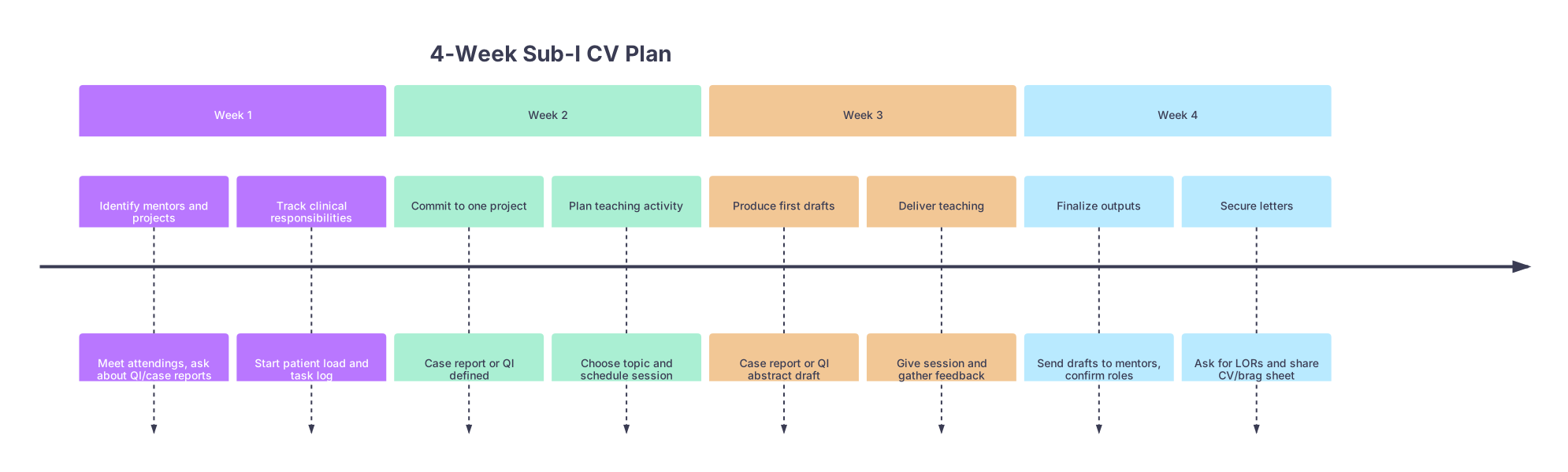
| Period | Event |
|---|---|
| Week 1 - Identify mentors and projects | Meet attendings, ask about QI/case reports |
| Week 1 - Track clinical responsibilities | Start patient load and task log |
| Week 2 - Commit to one project | Case report or QI defined |
| Week 2 - Plan teaching activity | Choose topic and schedule session |
| Week 3 - Produce first drafts | Case report or QI abstract draft |
| Week 3 - Deliver teaching | Give session and gather feedback |
| Week 4 - Finalize outputs | Send drafts to mentors, confirm roles |
| Week 4 - Secure letters | Ask for LORs and share CV/brag sheet |
Week 1: Setup and reconnaissance
- Identify 1–2 attendings as potential mentors / letter writers.
- Ask about ongoing QI or research. Attach yourself to something.
- Start logging your clinical responsibilities and cases that might be publishable.
- Offer to function at acting-intern level.
Week 2: Commit and start producing
- Lock in: 1 project (case report or QI). Not three. One.
- Outline and start drafting: background and case timeline, or QI problem and aims.
- Choose and schedule a mini teaching session for M3s or juniors.
- Ask senior for feedback to adjust your clinical performance.
Week 3: Draft and deliver
- Complete full first draft of your case report OR abstract.
- Deliver your teaching session; save materials and date.
- Check in with project mentor: ask explicitly about authorship expectations and next steps.
- Start thinking about letters—who has seen you enough?
Week 4: Lock in outputs
- Polish and send your draft(s) to mentors with a clear subject line and summary.
- Confirm your ongoing role (data collection, revisions after you leave).
- Ask for letters directly if performance has been strong.
- Update your CV immediately with:
- Clinical bullets
- Projects (mark as “in preparation” or “submitted”)
- Teaching session(s)
Step 7: Translate Sub-I Work into Strong CV Language
You can do all this work and still ruin it with weak, vague bullets. Do not.
Here is how to turn your month into clear CV lines.
A. Clinical experience bullets – upgrade the level
Weak:
- “Completed sub-internship in internal medicine.”
Strong:
- “Acting intern, Internal Medicine, [Hospital Name]; managed 5–7 inpatients daily with independent pre-rounding, assessment and plan formulation, and interdisciplinary coordination under resident supervision.”
Weak:
- “Participated in daily rounds and wrote notes.”
Strong:
- “Authored daily progress notes and discharge summaries used in the medical record for complex medical inpatients, presenting concise updates and plans on rounds.”
B. Research / QI / case report bullets – use status labels
You must be explicit about stage. That is not a weakness. It is honest and expected.
Use verbs and status:
- “Co-author, case report on [topic]; manuscript drafted and submitted to [journal], under review.”
- “Contributor, QI project to reduce [X]; collected and curated data for [N] patients, co-authored abstract in preparation for [Conference].”
- “Member, retrospective analysis of [topic]; performed structured chart review for [N] patients, assisted with database cleaning and descriptive statistics.”
C. Teaching/education bullets – include audience and frequency
Vague:
- “Taught medical students.”
Better:
- “Developed and delivered a 10-minute teaching session on [topic] for third-year medical students during sub-internship, with emphasis on practical diagnostic and management frameworks.”
If repeated:
- “Repeatedly delivered a structured teaching session on [topic] to groups of 3–6 third-year medical students across inpatient rotations at [institution].”
Step 8: Avoid the Common Sub-I CV Mistakes
I have watched multiple students waste their sub-I potential in predictable ways.
Do not:
Wait until week 4 to ask about projects
By then, nobody has the energy to onboard you.Chase 4 different half-baked ideas
One completed draft > four “we talked about maybe doing a case series someday.”List things you barely touched
If you only attended one meeting and did not contribute work, you are not “co-investigator” on that study.Over-inflate your role
People at your own institution can cross-check. CV credibility is binary. Once they doubt one line, they doubt all of it.Ignore email follow-up
Sending the draft is your job. Nudging gently a week later if no response is your job. Most residents and attendings are drowning; polite reminders help, not hurt.
Step 9: A Quick Reality Check – What You Can Actually Achieve
To keep this grounded, here is a realistic “good month” output for a motivated sub-I on a busy service:
- Clinical:
- 3–5 strong bullets describing acting-intern level responsibility
- Research/QI:
- 1 case report draft sent to attending (status: in preparation or submitted)
- OR 1 QI project contribution with abstract started
- Teaching:
- 1 short teaching session delivered to juniors, with slides or handout saved
- Letters:
- 1 serious LOR commitment from an attending who directly supervised you
- Relationships:
- 1 resident or fellow who knows your work and will advocate for you informally
Ambitious but absolutely doable. I have seen students do more. I have also seen smart students leave with nothing but “completed sub-internship” because they treated it passively.
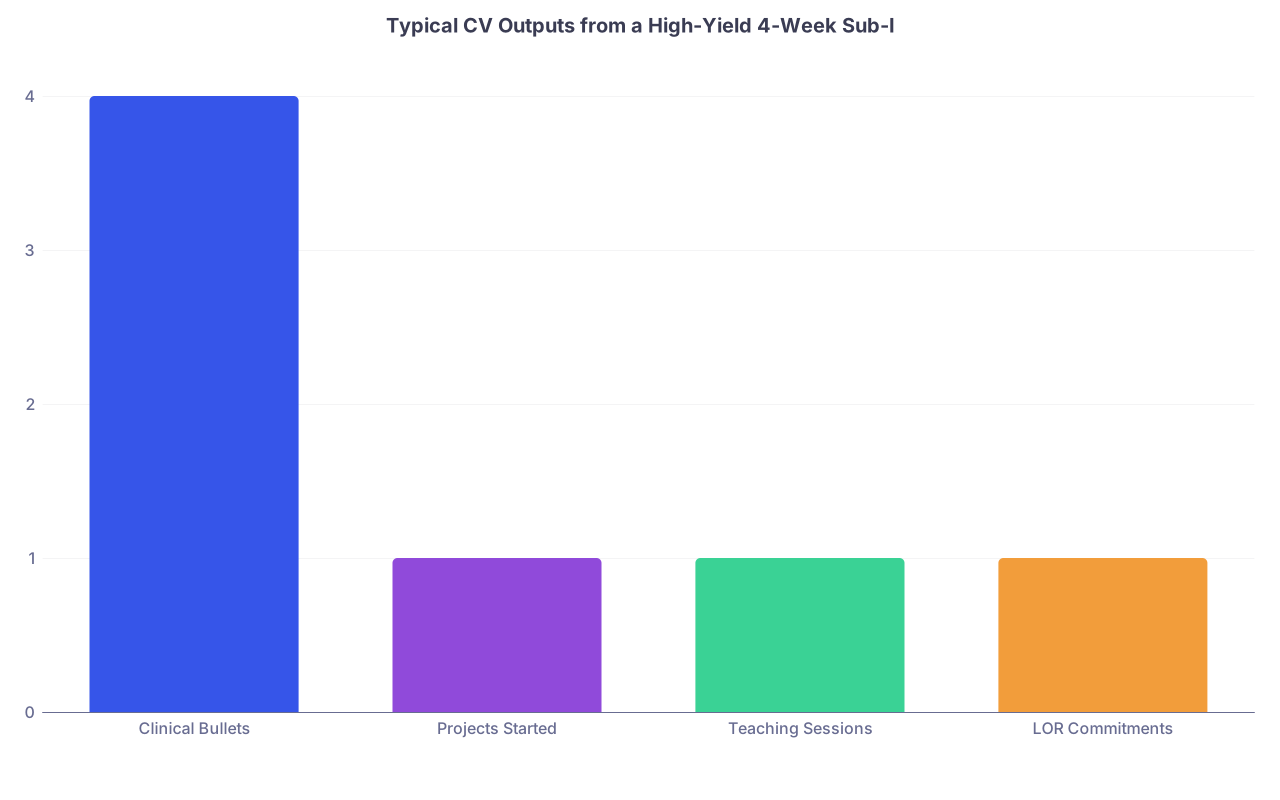
| Category | Value |
|---|---|
| Clinical Bullets | 4 |
| Projects Started | 1 |
| Teaching Sessions | 1 |
| LOR Commitments | 1 |
Final Tight Summary
Three points you should not forget:
Treat your sub-I like a focused CV campaign. Decide in week 1 that you will leave with specific outputs: one project, one teaching piece, one strong letter, and upgraded clinical bullets.
Attach yourself to existing structures. Join an ongoing QI or chart review, write up a real case you actually saw, and deliver a short teaching session. Doable in 4 weeks if you start early and commit to one main academic product.
Translate the work into precise CV language immediately. Log your responsibilities, draft bullets before the rotation ends, label project status honestly, and give potential letter writers concrete material to use.
Execute this once, on a single sub-I, and your clinical CV will look noticeably stronger by the time you submit your residency application.