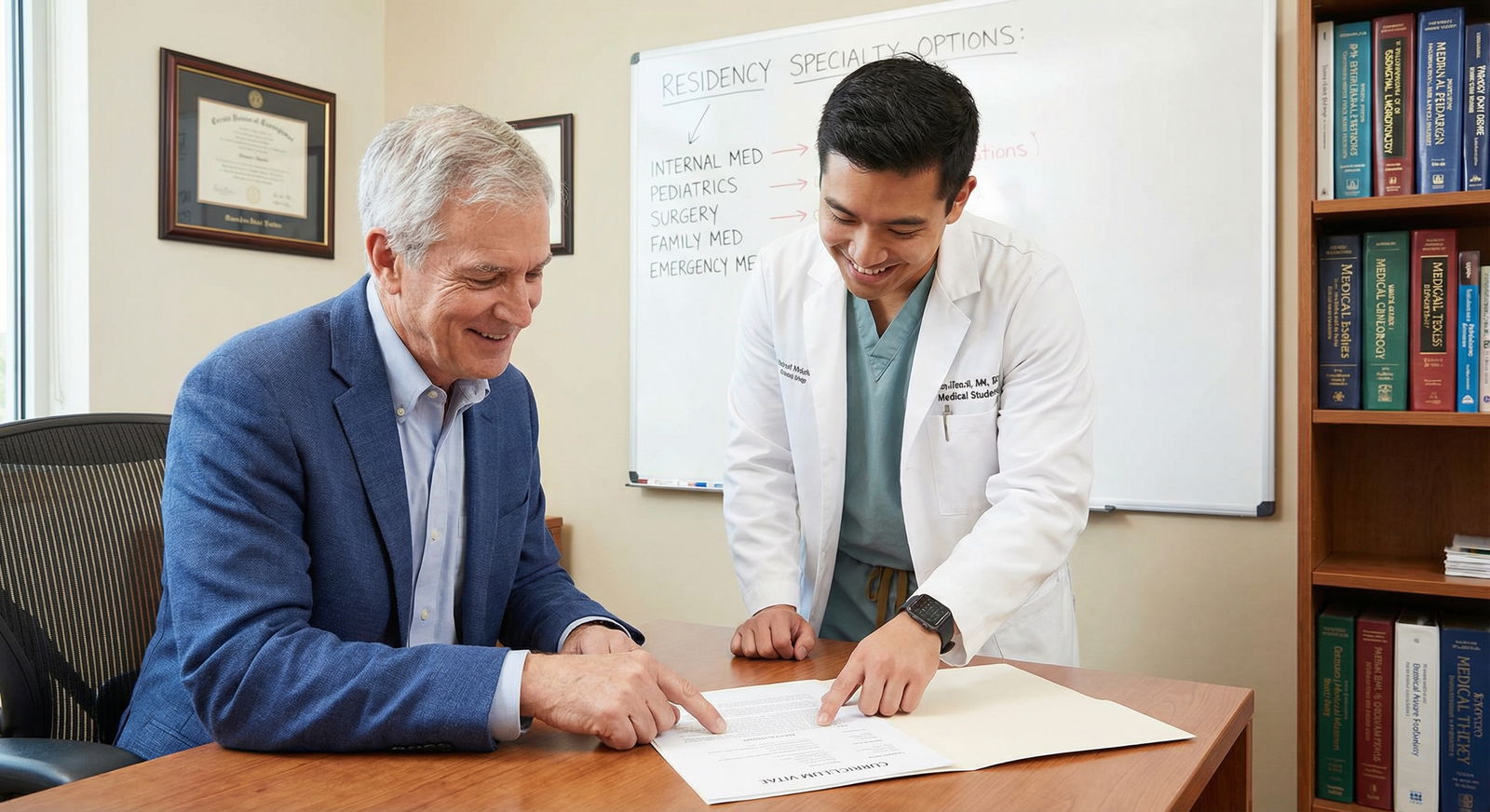
It’s July 5th. You just finished your first real week on the wards as an MS3. Your badge finally opens doors that used to be “staff only.” You’re exhausted, slightly terrified, and everyone keeps telling you, “This is the year that matters for residency.”
Here’s the part no one explains clearly: MS3 is not just about not looking clueless on rounds. It’s the year where your future CV is being quietly written—day by day, month by month—while you’re running to the ED, fumbling through your first notes, and trying not to get yelled at by the surgical intern.
This is your timeline. At each point, I’ll tell you exactly:
- What you should be doing for your CV
- What’s realistic given rotation chaos
- What’s a waste of time that feels productive but isn’t
We’ll go from July of MS3 through the summer before ERAS, with explicit to-dos.
Global Strategy: Before Month 1 Starts
If you’re already in the middle of MS3, fine—start here anyway and compress what you can.
At this point you should:
Set your CV “pillars” You need 2–3 themes your eventual residency CV will clearly reflect. Example combinations:
- “Medical education + underserved care”
- “Clinical research + quality improvement”
- “Advocacy + leadership” If your CV ends up as random one-off items in eight different directions, it reads as unfocused.
Create a living CV document Non‑negotiable. Residency CVs that look strong have detail. You won’t remember those details 6 months later on nights.
- Make a running document (Google Docs, Notion, whatever)
- Sections:
- Education
- Clinical experiences (core rotations + any sub-I/acting intern)
- Research and QI
- Presentations & posters
- Leadership & teaching
- Service / community work
- Honors & awards
- Add a “Scratchpad” section at the bottom: exact project names, mentors, dates, patient presentations, etc.
Know what PDs actually care about For most core specialties (IM, FM, Peds, Psych, Neuro, OB/Gyn, Surgery), program directors consistently care about:
- Clinical performance / MS3 evaluations & honors
- Step 2 score
- Commitment to the specialty (consistent story, not random last-minute decision)
- Some combination of:
- Research/QI,
- Teaching,
- Leadership/service A CV that shouts “I’ve cared about this specialty and I do more than just show up” wins.
Months 1–2: Get Oriented and Capture Everything
You’re just starting clinicals. You’re mostly trying not to drown.
At this point you should optimize your learning curve and quietly set up future CV items.
On the rotation
Your main jobs:
- Show up early, be prepared, be teachable.
- Watch residents who are good with students and think: “Could this person be a future mentor?”
- Notice problems that repeat:
- Bad discharge instructions
- Clunky handoff process
- Confusing patient education for diabetics
These are QI project gold.
Monthly CV moves
1. Start a weekly “CV log” ritual (15–20 minutes, non-negotiable)
Once a week, same time (Sunday evening is common):
- Write down:
- Rotations & dates
- Attending names
- Residents who were supportive
- Interesting patients and any mini-projects
- Any teaching you did (even informal: “taught M2 about CHF on rounds”)
- Capture potential future bullets:
- “Standardized discharge checklist for COPD patients on medicine ward”
- “Shadowed endocrine consults for complex DKA cases”
You’re not polishing yet. Just hoarding raw material.
2. Identify 1–2 realistic mentors
You don’t need an official mentor committee. You need:
- One attending who:
- Knows your name
- Has seen you work
- Is even mildly interested in teaching or improvement work
- One resident or fellow who:
- Is approachable
- Seems involved in research or leadership
End of each early rotation, ask one of them something like:
“I’m just starting my clinical year and I’m trying to build experiences that will matter for residency. Would you be open to me checking in a couple times this year about potential small projects or ways to get involved?”
You’re not asking for a letter yet. Just opening the door.
Months 3–4: Turn Clinical Work into Small Projects
By now, you’re not completely lost on the wards. Good. Time to start building concrete CV items.
At this point you should be converting daily work into defined projects.
Target: 1 project idea per rotation
Not 10. One.
Examples that actually fit into a crazy MS3 schedule:
- A small QI project:
- Track readmissions for heart failure and help implement a new discharge checklist
- Create a standardized “new diabetic” counseling sheet and test it with residents
- An educational project:
- Short teaching handout for the team on a high-yield topic (e.g., hyponatremia workup)
- Build a 10-slide teaching session for M2s on physical exam in your current specialty
- A case report / case series:
- Weird rheum case on medicine
- Unusual psych presentation
- Rare OB complication you followed
How to move from idea to CV line:
Week 1–2 of rotation:
- Notice a recurring issue or interesting case.
- Ask an attending or chief resident:
“I’m trying to build some scholarly work during MS3. I noticed X keeps coming up. Would a small QI project / case report on this be feasible while I’m on this service?”
Week 3:
- Pin down:
- A specific question
- A mentor
- A light plan that can be continued after the rotation
Week 4:
- Get concrete:
- A draft abstract
- Baseline data
- A completed handout
- A structured outline for a case report
Then log it in your CV file with:
- Title (even if working)
- Team members
- Dates
- Your role
Month 5–6: Align With a Specialty (Even if You’re Unsure)
You don’t have to commit yet. But residency programs can smell indecision a mile away.
At this point you should start leaning toward 1–2 specialties and adjust your CV building in that direction.
Practical moves
Rank the specialties you’ve done so far
- Gut-level ranking, not final commitment.
- Ask yourself:
- Who did I like working with?
- Could I handle more of this, not just “I survived four weeks”?
Pick a “probable” and a “backup” specialty Example:
- Probable: Internal Medicine
- Backup: Family Medicine Or:
- Probable: General Surgery
- Backup: Anesthesia
Line up at least 1 project connected to your probable specialty
- If you liked IM:
- Join a resident’s ongoing QI project on sepsis bundle compliance.
- Start collecting cases for a small case series with that cardiology attending who liked you.
- If you liked Psych:
- Work on a chart review about ED psych consults.
- Help build a short curriculum for M2s on mental status exam.
- If you liked IM:
This does not need to be first-author NEJM-level research. Programs mostly want to see: “This person picked a lane and actually did something in it.”
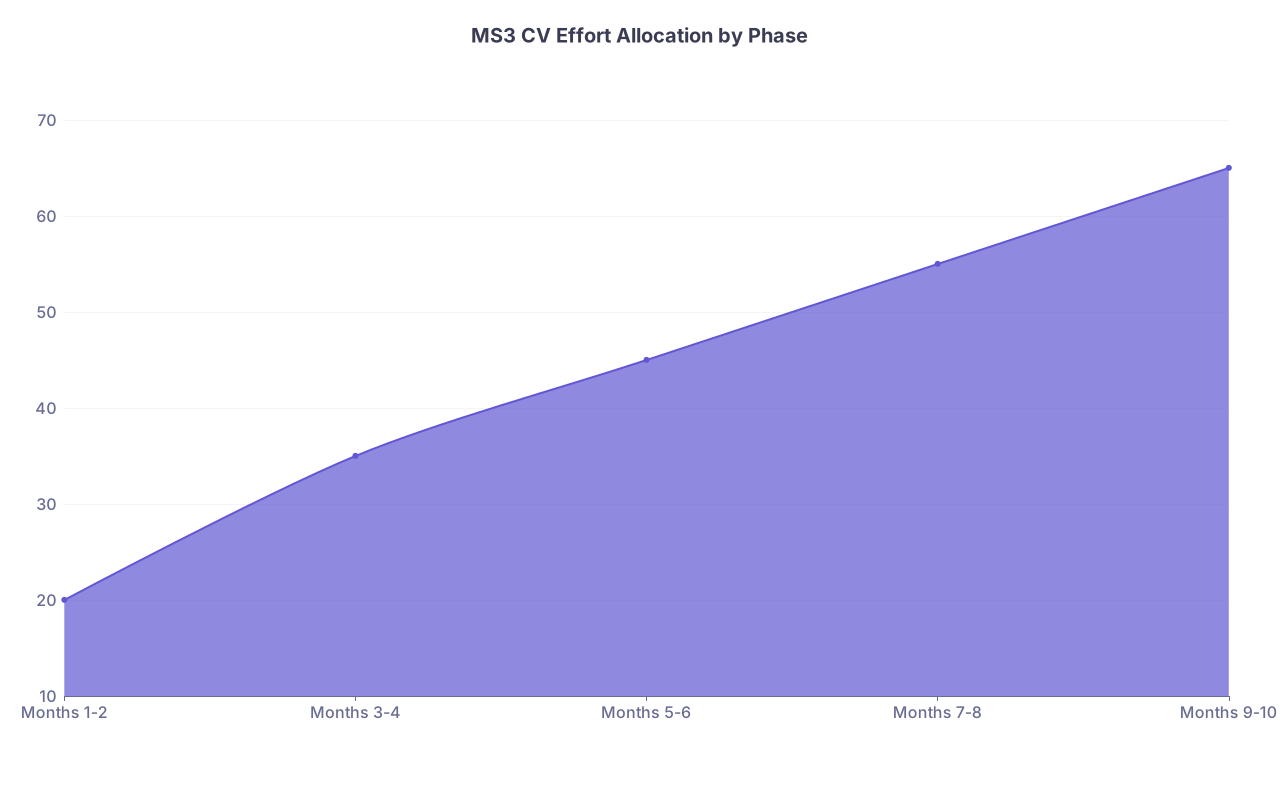
| Category | Value |
|---|---|
| Months 1-2 | 20 |
| Months 3-4 | 35 |
| Months 5-6 | 45 |
| Months 7-8 | 55 |
| Months 9-10 | 65 |
Month 7–8: Build Teaching and Leadership Into Your Normal Rotation Life
This is where a lot of students drop the ball. They grind clinically but don’t build depth. Easy fix.
At this point you should formalize teaching and leadership into your routine.
Teaching: make it visible and repeatable
Programs love teaching. But “I like to teach” is useless. You want specific roles.
Moves:
- On rotations with M2s:
- Offer:
“I’d be happy to run a 15-minute chalk talk on acid-base/psych meds/pediatric fever for the students once a week if that’s helpful.”
- Pick 1–2 topics.
- Repeat them. Improve them.
- Offer:
- Ask chiefs or clerkship directors:
“Do you need MS3s to help with OSCE prep / skills sessions / question reviews for the M1/M2 classes?”
Every time you:
- Develop a short session
- Run a recurring review
- Help with a structured teaching event
Log it. This becomes:
- “Small group facilitator for M2 cardiovascular pathophysiology review sessions, 4 sessions per block”
- “Developed and delivered 3 recurring chalk talks for MS2s on inpatient psychiatry topics”
Leadership: micro-leadership is still leadership
You do not need to be class president.
Look for:
- Clerkship liaison roles
- Student-run clinic coordinator
- Rotation-specific roles:
- “Student coordinator for sign-out teaching sessions”
- “Led weekly student case presentation series on surgery”
If the role doesn’t exist? Create a tiny one:
“I’ve noticed we keep scrambling to figure out which student is presenting on which patient during rounds. Would you mind if I organized a simple shared list and updated it daily? Happy to own that.”
That becomes:
- “Implemented and maintained a structured student presentation schedule for inpatient medicine team, improving clarity of roles and feedback opportunities.”
Yes, that goes on your CV—if it was sustained and beneficial.
Month 9–10: Turn Work Into Outputs (Abstracts, Posters, Presentations)
By now, you should have:
- 1–3 small projects in motion
- Some teaching/leadership experiences
- A clearer sense of specialty interest
At this point you should push projects toward public output.
Concrete moves
- Convert at least 1 project into an abstract
Timeline for a small project:
- Week 1: Confirm mentor and target conference (local, regional, national)
- Week 2–3: Finish data collection or case writeup
- Week 4: Draft abstract, get mentor edits, submit
Look for:
- Local hospital QI day
- Regional specialty chapter meetings (ACP, APA, AAFP, etc.)
- Student research days
- If nothing’s moving? Join something already in progress
Ask residents/fellows:
“Do you have a project that’s close to abstract or manuscript stage where you could use help with data collection, literature review, or figure making? I’m aiming to get 1–2 concrete outputs this year.”
Late entry into a project is still a CV line if you do real work and are listed as an author or presenter.
- Ask to present locally Examples:
- Present your QI project at:
- Team meeting
- Noon conference
- Resident teaching conference
- Ask clerkship director:
“I’ve been working on a small project on X during this rotation. Would there be an opportunity to give a short 10–15 minute presentation at a resident or student conference?”
You’re aiming for CV lines like:
- “Oral presentation, Department of Medicine Resident Conference, [Hospital]”
- “Poster presentation, [Medical School] Research Day”
Month 11–12: Clean Up, Consolidate, and Fill Gaps Before ERAS Season
You’re heading into late MS3 / early MS4 territory now. The ERAS clock is real.
At this point you should make your CV presentable and strategically fill holes.
Step 1: Audit your current CV
Go through your living CV doc and ask:
- Clinical:
- Do I have my core rotations listed with dates and any honors?
- Which attendings might write strong letters? Mark them.
- Research/QI:
- Do I have at least 1–2 entries connected to my target specialty?
- Are there clear “in progress” vs “submitted” vs “presented” statuses?
- Teaching:
- Do I have any recurring teaching roles, or just one-offs? (recurring is better)
- Leadership/service:
- Do I have roles that lasted at least several months?
Step 2: Decide on 1–2 “gap fills” you can realistically do
Common gaps and realistic fixes:
- Gap: No teaching experience
- Fix: Before MS4 starts, volunteer to:
- Run 2–3 board review sessions for M2s.
- Help with incoming MS3 orientation workshops.
- Fix: Before MS4 starts, volunteer to:
- Gap: Nothing clearly tied to your specialty
- Fix: Ask your chosen department:
“I’m applying into [specialty] and would like to get involved in something I can realistically complete or present before ERAS. Are there small ongoing projects that need a motivated student?”
- Fix: Ask your chosen department:
- Gap: Zero presentations or posters
- Fix:
- Push one existing project to a local research or QI day.
- Ask mentor if they’d let you present interim data as a “work in progress” poster.
- Fix:
Step 3: Tidy structure and language
Your CV should, by now, be in something like this structure:
| Section | Priority by End of MS3 |
|---|---|
| Education | Required |
| Clinical Rotations | Required |
| Research / QI | High |
| Teaching | High |
| Leadership / Service | Medium–High |
| Presentations / Posters | High |
Clean formatting matters. Sloppy CVs suggest sloppy residents.
Week-by-Week Template for a Busy Rotation
Let’s zoom in. You’re on a 4-week core rotation. How do you fit CV-building into that?
Week 1
At this point you should:
- Learn the system and not be a chaos agent.
- Identify:
- 1–2 attendings who teach well
- 1 resident who looks project-involved
- End of week:
- Ask one potential mentor a small question about possible projects:
“If I wanted to work on a small project while I’m on this service, what would you recommend?”
- Ask one potential mentor a small question about possible projects:
Week 2
At this point you should:
- Commit to one small idea:
- QI, case report, or teaching activity.
- Block 1–2 hours (total, not weekly) to:
- Pull 5–10 key papers if it’s research/QI.
- Draft outline if it’s a handout/teaching session.
Week 3
At this point you should:
- Move it forward:
- Collect preliminary data
- Draft the case report intro
- Build a draft of your teaching slides/handout
- Get feedback:
- 5-minute quick check with mentor: “Am I on the right track?”
Week 4
At this point you should:
- Get one concrete product:
- A complete draft abstract
- A working case report
- A ready-to-use teaching resource you’ve actually used once
- Log everything:
- Title, dates, mentor
- Your role
- Status (in progress / submitted / presented)
Then repeat next rotation. This is how you end MS3 with multiple real CV lines without losing your mind.
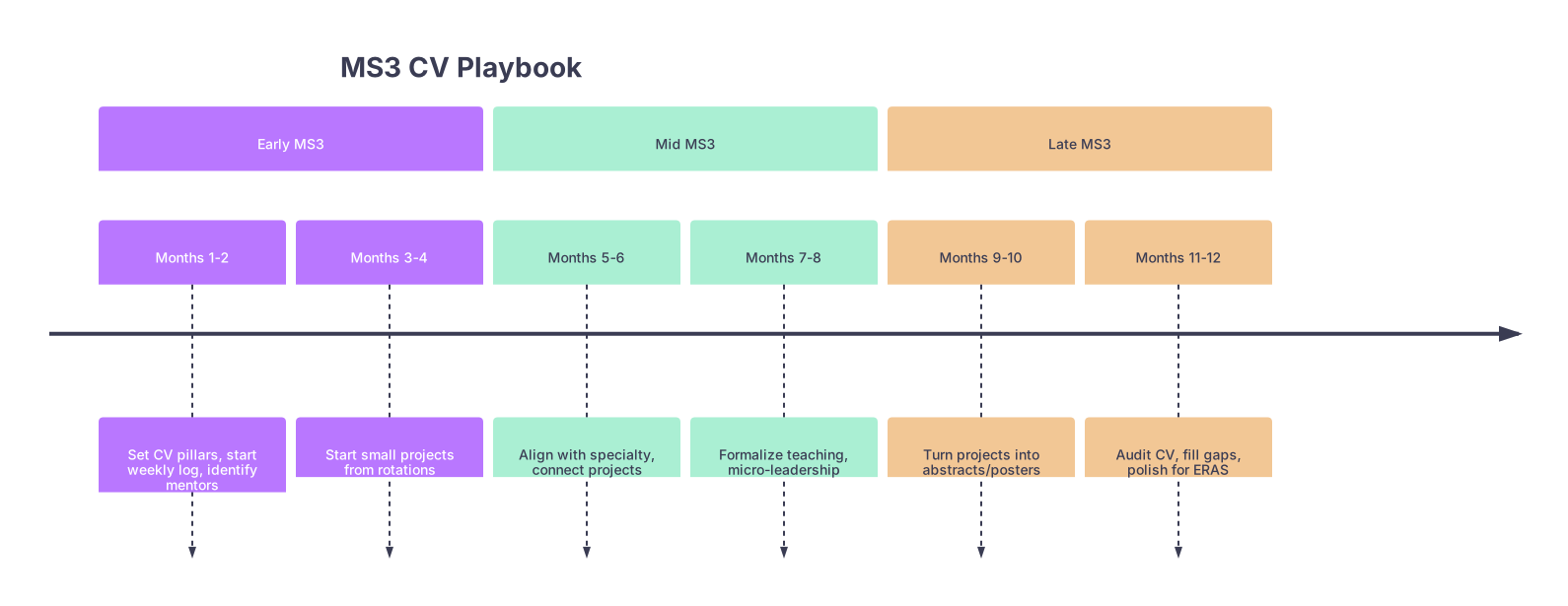
| Period | Event |
|---|---|
| Early MS3 - Months 1-2 | Set CV pillars, start weekly log, identify mentors |
| Early MS3 - Months 3-4 | Start small projects from rotations |
| Mid MS3 - Months 5-6 | Align with specialty, connect projects |
| Mid MS3 - Months 7-8 | Formalize teaching, micro-leadership |
| Late MS3 - Months 9-10 | Turn projects into abstracts/posters |
| Late MS3 - Months 11-12 | Audit CV, fill gaps, polish for ERAS |
Summer Before ERAS: Final CV Moves That Actually Matter
You’re approaching ERAS season. Panic is common. Don’t.
At this point you should convert your messy reality into a clean application story.
1. Lock in your specialty story
Your CV should now read like:
- “This person has:
- Strong clinical performance,
- Demonstrated consistent interest in [specialty],
- Contributed with research/QI or education,
- Shown up as a decent team member.”
If it doesn’t:
- Add a focused elective/sub-I in your chosen specialty.
- Ask for a role (even small) in a departmental committee, clinic, or teaching activity during early MS4.
2. Translate bullets into impact
Weak bullet:
- “Participated in QI project about discharge instructions.”
Strong bullet:
- “Collaborated with interdisciplinary team to design and pilot a standardized COPD discharge checklist, used in 40+ discharges during pilot phase.”
Weak bullet:
- “Helped teach medical students.”
Strong bullet:
- “Developed and delivered three 20-minute chalk talks on inpatient psych topics for rotating MS2 students, incorporating pre/post-question assessments.”
Use your weekly logs to remind yourself of scale, numbers, and outcomes.
3. Sync your CV with ERAS entries
When ERAS opens, you’re not starting from scratch:
- Your CV document becomes:
- Direct copy-paste for “Experiences” section
- Source of dates, roles, descriptions
- Choose your “Most meaningful” experiences:
- 2–3 that match your specialty
- 1–2 that show leadership/teaching/service
Final Takeaways
- MS3 is when your CV is built—slowly, in the margins of rotations. If you wait until ERAS opens to “work on your CV,” you’re already behind.
- One solid, completed thing per rotation beats 10 vague intentions. A case report, a QI pilot, a recurring teaching session—those are the backbone of a strong application.
- Your weekly log is your secret weapon. The students who write forgettable ERAS entries are the ones who relied on memory. The ones who log details write applications that sound real, specific, and convincing.