
The biggest mistake in your pre-clinical years is not “doing too little.” It is doing the right things at the wrong time.
You do not need research, leadership, and service all at once in MS1 September. In fact, if you stack them too early, your grades and sanity crack first. The students who match well are not the ones who collect the most lines on their CV. They are the ones who layer those lines in a deliberate sequence.
Here is the timeline I would give any M1 on day one.
Global Overview: What Each Year Is For
At this point you should see the pre-clinical years as a two-phase build:
- MS1 = Foundation + Low-Risk Exploration
- MS2 = Focused Execution + Strategic Visibility
You are not “behind” if you have zero research by the end of M1 fall. You are behind if you still have no direction by the end of MS1 spring.
Use this high-level map first, then we will go month-by-month.
| Semester | Primary Priority | Secondary Priority | Tertiary (Optional) |
|---|---|---|---|
| MS1 Fall | Academics, Adjustment | Light service | Shadowing |
| MS1 Spring | Academics | Explore research | Small leadership roles |
| MS1 Summer | Research or service | Shadowing | Test-run leadership |
| MS2 Fall | Academics + Step prep | Ongoing research | Sustained leadership |
| MS2 Spring | Step prep | Wrap research/projects | Visible leadership impact |
MS1 Fall (August–December): Do Less Than You Want To
At this point you should be doing three things: learning how to study, passing your classes comfortably, and watching.
August–September: Protect Your Bandwidth
This is where people blow it. They join five interest groups, sign up for three research projects, and volunteer every Saturday. By October, they are failing cardio and ghosting their PI.
During MS1 August–September:
- Academics:
- Lock down your study system first 4–6 weeks.
- Aim for “above-average, not perfect.” You can adjust later.
- Research:
- Do not commit to real research yet.
- Instead, identify 2–3 departments you might care about (IM, surgery, peds, EM, etc.).
- Leadership:
- Attend interest group meetings. Say little, listen a lot.
- Do not run for anything yet; you do not even know which orgs function well.
- Service:
- Pick one recurring opportunity you might like (student-run clinic, tutoring, pipeline programs). Try it once or twice.
Your checklist by the end of September:
- You know which courses are high-yield and how you will study them.
- You have a shortlist of 2–3 attendings or departments whose work you find interesting.
- You are attending 1–2 interest groups consistently (not six).
- You piloted exactly one service activity.
If you are drowning academically, the correct number of research projects is zero.
October–December: Quietly Set Up Future Opportunities
Now that you understand your workload, you can start lining up work for spring and summer.
During MS1 October–December:
Research – Exploration phase
- Start scanning:
- Department websites for faculty with ongoing projects.
- Your school’s research bulletin / listserv.
- Older students’ advice: ask M3s/M4s “Who actually publishes with students?”
- Send 3–5 targeted emails to potential mentors by mid-November. Very short, specific, and respectful of their time.
- Ask about:
- Observational projects
- Chart reviews
- Case reports
- Educational research
You want something that can ramp up slowly in spring and intensify in the summer.
Leadership – Positioning phase
- Look for:
- Class committee roles (curriculum, wellness, diversity).
- Low-commitment roles in interest groups (secretary, outreach, first-year rep).
- You are not trying to be president yet. You are trying to get into the room where decisions are made and see how the machine works.
Service – Consistent but modest
- Lock in one recurring shift:
- Clinic 2x/month, or
- Tutoring 2–4 hours/month, or
- Food bank / outreach with a health angle
- Consistency > variety. A 2-year story at one clinic beats 7 random one-offs.
By December, you should:
- Have at least one research conversation scheduled or completed.
- Hold or be about to start exactly one small leadership role.
- Be doing 2–4 hours/month of consistent service.
MS1 Spring (January–May): Light Research & Real Responsibilities
At this point you should have survived exams and holidays and know your limits. Now you layer in actual CV-building items—slowly.
January–February: Commit to Your First Research Project
During MS1 January–February:
Research – Start small but real
You should:
- Commit to one primary project.
- Clarify expectations with your mentor:
- Hours per week (common sweet spot: 3–5 during coursework).
- Timeline: what can realistically be done by end of summer?
- Authorship: be blunt but polite—“If I hit these milestones, would I qualify for authorship on an abstract or manuscript?”
Good starter projects for pre-clinical students:
- Retrospective chart reviews with clear, bounded data.
- Case reports / small series where you can take the lead on writing.
- QI projects embedded in clinics that already have data or infrastructure.
Bad ideas for MS1:
- Complex bench projects needing full-time lab work.
- Massive meta-analyses where you are one of ten anonymous data extractors, with no writing.
Leadership – Step up slightly
If elections for next year are early (some schools do this in spring):
- Run for:
- Interest group officer with real duties (events, education, clinic coordination).
- Class officer roles where you can influence curriculum or wellness.
- Avoid “title-only” roles where you do nothing but show up for pictures.
Service – Stabilize
- Set a recurring schedule that you can maintain even during exam weeks.
- Start exploring deeper involvement:
- Can you help coordinate volunteers?
- Can you join a committee that improves the service itself?
By end of February:
- You should be fully onboarded to one research project.
- You should know which leadership roles you will hold in MS2 (or are running for).
- Your service work should feel routine, not chaotic.
March–May: Build Momentum for the Summer
During MS1 March–May:
Research
- Increase hours slightly after heavy exam blocks pass.
- Push for concrete outputs:
- Dataset nearly complete by May.
- Abstract draft in progress.
- IRB submission under review if starting a new project.
- If your current project is clearly going nowhere (PI never replies, no clear path to output), you must decide by April whether to:
- Push harder and ask directly about a timeline, or
- Pivot to a more productive mentor for the summer.
Leadership
- Transition planning:
- If you are taking on a larger role for MS2, shadow the current officer now.
- Attend planning meetings for next year’s events or initiatives.
- Your goal: hit July already understanding the playbook, not reinventing it.
Service
- Consider taking on one small extra responsibility:
- Train new volunteers.
- Improve an intake form.
- Start tracking simple outcomes that might later become a QI project or poster.
By end of MS1:
- You have at least one research project with clear summer goals.
- You have locked in your MS2 leadership role(s).
- You have 6–9 months of continuous service in at least one setting.
MS1 Summer (June–August): Go Deep, Not Wide
This is the most underused block of time. At this point you should stop scattering and go deep.
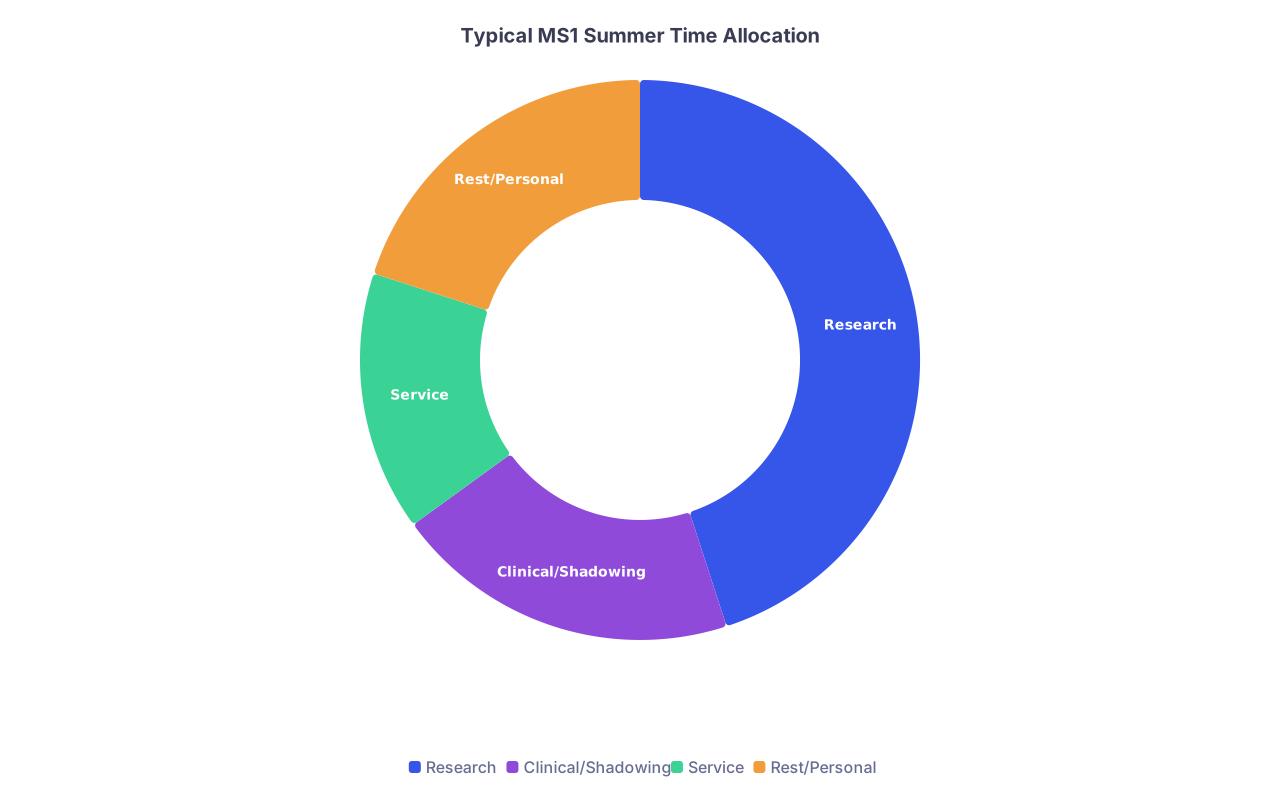
| Category | Value |
|---|---|
| Research | 45 |
| Clinical/Shadowing | 20 |
| Service | 15 |
| Rest/Personal | 20 |
June–July: Treat It Like a Full-Time Job
Ideal structure:
- 30–40 hours/week total “professional” time.
- 20–30 hours research.
- 5–10 hours clinical/shadowing.
- 2–5 hours service.
Research – Main event
Your objectives for the summer:
- One of:
- Abstract submitted (local/regional/national).
- Manuscript draft completed.
- Poster presented at a local departmental or student research day.
Daily, that means:
- You are not just “collecting data.” You are:
- Cleaning it.
- Running basic analyses (with help if needed).
- Writing methods and results as you go.
If by mid-July you have no concrete product, you are behind. Not doomed, but behind. Talk to your mentor. Ask for a realistic target before classes resume.
Leadership – Low-intensity maintenance
- Prepare for your MS2 role:
- Build a simple calendar of events for the year.
- Draft emails, sign-up forms, or protocols so you are not scrambling in September.
- Do not overload summer with meetings. 2–4 hours/week is enough.
Service – Sustain or slightly increase
- Continue your existing commitment.
- If needed, this is where you can add a short, defined project:
- Health education sessions.
- Screening event.
- A small, targeted initiative you can later describe as “designed and implemented X.”
August: Wind-Down and Pre-Launch
By early August:
- Lock in your outputs:
- Submit abstracts where possible.
- Schedule any poster presentations (even internal ones).
- Document everything:
- Keep a list of titles, roles (first author, second author), and mentors’ names.
- Track dates and venues for any submissions.
At this point you should be able to describe at least one project in your future residency application with:
- Your specific contribution.
- A clear outcome (submitted, accepted, presented, or in-progress with target date).
MS2 Fall (August–December): Academics + Step + Sustain Projects
This is a sharper balancing act. MS2 is where many students either solidify a strong CV or watch their early work fizzle.
August–September: Recalibrate Your Load
During MS2 August–September:
Academics + Step
- You should be studying with Step-style questions embedded in your coursework.
- If your school still uses Step 1 numerical scores, your priority is obvious: protect that score.
Research – Maintenance mode with targeted pushes
- Reduce weekly hours to 3–5 but keep regular check-ins:
- Monthly meeting with your PI.
- Weekly or bi-weekly work sessions to move the project.
- Push for:
- Manuscript submission this semester if the data are mature.
- At least one conference abstract if you did not get one over the summer.
Leadership – Visible but efficient
- Focus on 1–2 roles where you can create tangible impact:
- Organize a well-run conference, workshop series, or community event.
- Improve an existing process (e.g., clinic flow, study resources, tutoring pipeline).
- Avoid taking on brand new, heavy initiatives that eat your Step study time.
Service – Maintain, do not expand
- Keep 2–4 hours/month at your core site.
- If you need to drop anything, drop the extra side volunteering, not your main longitudinal site.
By end of September:
- You should have a clear plan for Step prep.
- You should know which research outputs are realistic by the end of MS2.
- Your leadership and service roles should feel integrated into your routine, not bolted on.
October–December: Harvest Season for Outputs
During MS2 October–December:
Research
This is where you push work across the finish line.
- Manuscripts:
- Aim to submit at least one manuscript or be in the revision stage.
- If you are not first author, make sure you can clearly articulate your contribution.
- Abstracts/posters:
- Submit to at least one meeting (regional society, school research day, specialty conference).
- If your main project died:
- Pick up a small, fast project (e.g., case report, brief review) that can realistically be completed in 3–4 months.
Leadership
- Run at least one visible initiative that you can quantify:
- “Organized a skills workshop attended by 80+ students.”
- “Led expansion of clinic hours by 20% with stable no-show rates.”
- Get feedback from faculty or advisors; these people may write your letters later.
Service
- Keep showing up. Longitudinal involvement looks much better than intense bursts.
At this point you should:
- Have at least one concrete scholarly product (submitted or accepted).
- Have leadership roles with measurable outcomes, not just titles.
- Be known by name at your primary service site.
MS2 Spring (January–June): Step First, Then Close the Loop
This is where priorities compress. Do not get cute here.
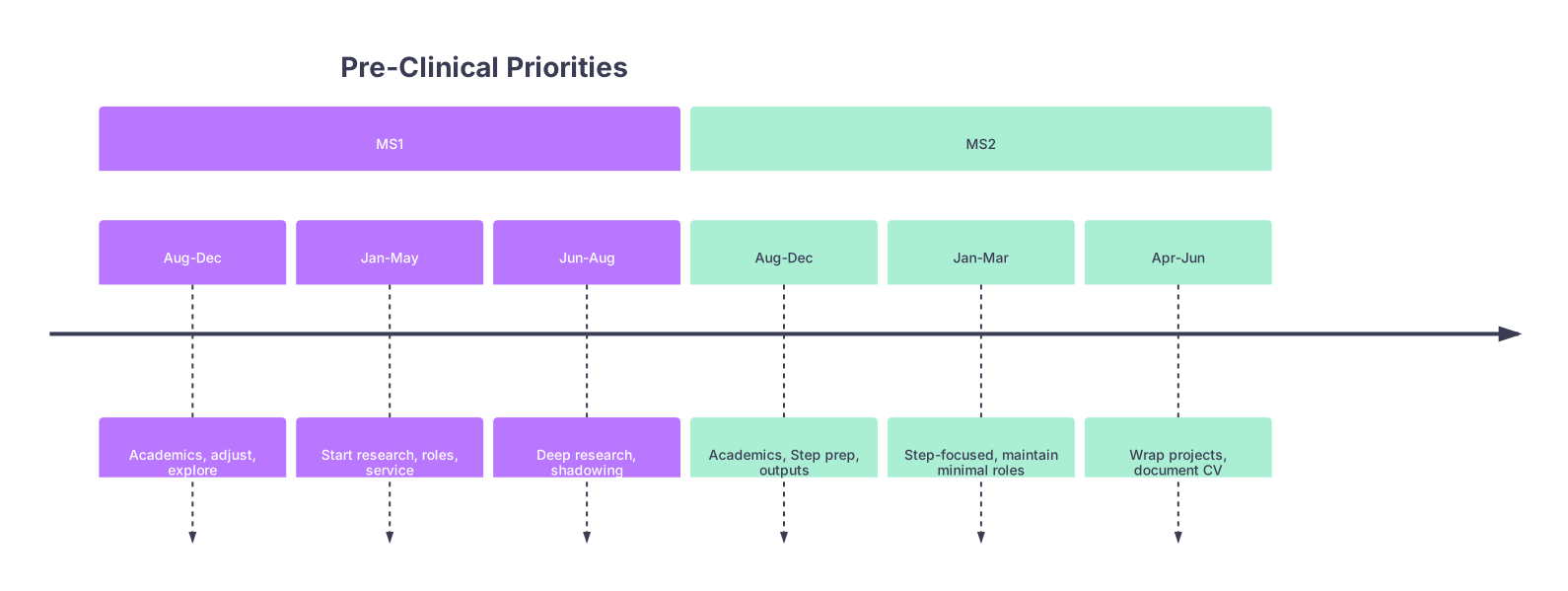
| Period | Event |
|---|---|
| MS1 - Aug-Dec | Academics, adjust, explore |
| MS1 - Jan-May | Start research, roles, service |
| MS1 - Jun-Aug | Deep research, shadowing |
| MS2 - Aug-Dec | Academics, Step prep, outputs |
| MS2 - Jan-Mar | Step-focused, maintain minimal roles |
| MS2 - Apr-Jun | Wrap projects, document CV |
January–Step Exam Date: Ruthlessly Protect Step Time
Step prep is the main event. PDs still care how you perform on high-stakes exams, even with pass/fail for Step 1 in many places—because Step 2 exists, and your school exams matter.
From MS2 January until your exam:
- Research:
- Minimum maintenance:
- Respond to co-author emails.
- Complete quick revisions when needed.
- No new major commitments.
- Minimum maintenance:
- Leadership:
- Delegate aggressively.
- Do only what only you can do. Let junior officers run events.
- Service:
- It is acceptable to taper temporarily.
- If needed, communicate clearly with your site and plan to ramp back up after the exam.
If your research mentor is pushing hard during this period, be honest: “I am in my intensive Step study period until [month]. I can handle light revisions but not major new analyses.”
Post-Step (2–3 Months Before Clinicals): Consolidate and Package
Once your exam is done, you have a short, high-yield window.
During the 2–3 months between Step and starting clerkships:
Research – Final push
- Finish any loose ends:
- Respond to final reviewer comments.
- Submit remaining manuscripts or abstracts.
- Start one small, realistic project if your CV is still thin:
- Case report with a resident.
- Short educational project with a course director.
Leadership – Transition and Legacy
- Document your impact:
- Numbers, outcomes, improvements.
- Recruit and train successors:
- Programs look favorably on continuity you helped build.
Service – Close the loop
- If you are shifting sites for clinicals, say a real goodbye:
- Thank supervisors.
- Ask if they are comfortable being listed as contacts or even future letter writers.
By the time you start clinical rotations, your pre-clinical CV should show:
- Sustained research involvement with at least one tangible product.
- Leadership roles with clear, quantifiable accomplishments.
- Longitudinal service in one or two communities, not scattered one-offs.
Putting It All Together: A Sample Week at Different Stages
| Phase | Research hrs | Leadership hrs | Service hrs | Notes |
|---|---|---|---|---|
| MS1 Fall | 0–1 | 1–2 | 2–3 | Exploration only |
| MS1 Spring | 3–5 | 2–3 | 2–4 | Start real commitments |
| MS1 Summer | 20–30 | 2–4 | 2–5 | Deep dive, main outputs |
| MS2 Fall | 3–5 | 2–4 | 2–3 | Maintain, push outputs |
| MS2 Pre-Step Spring | 1–2 | 1–2 | 0–2 | Step-focused |
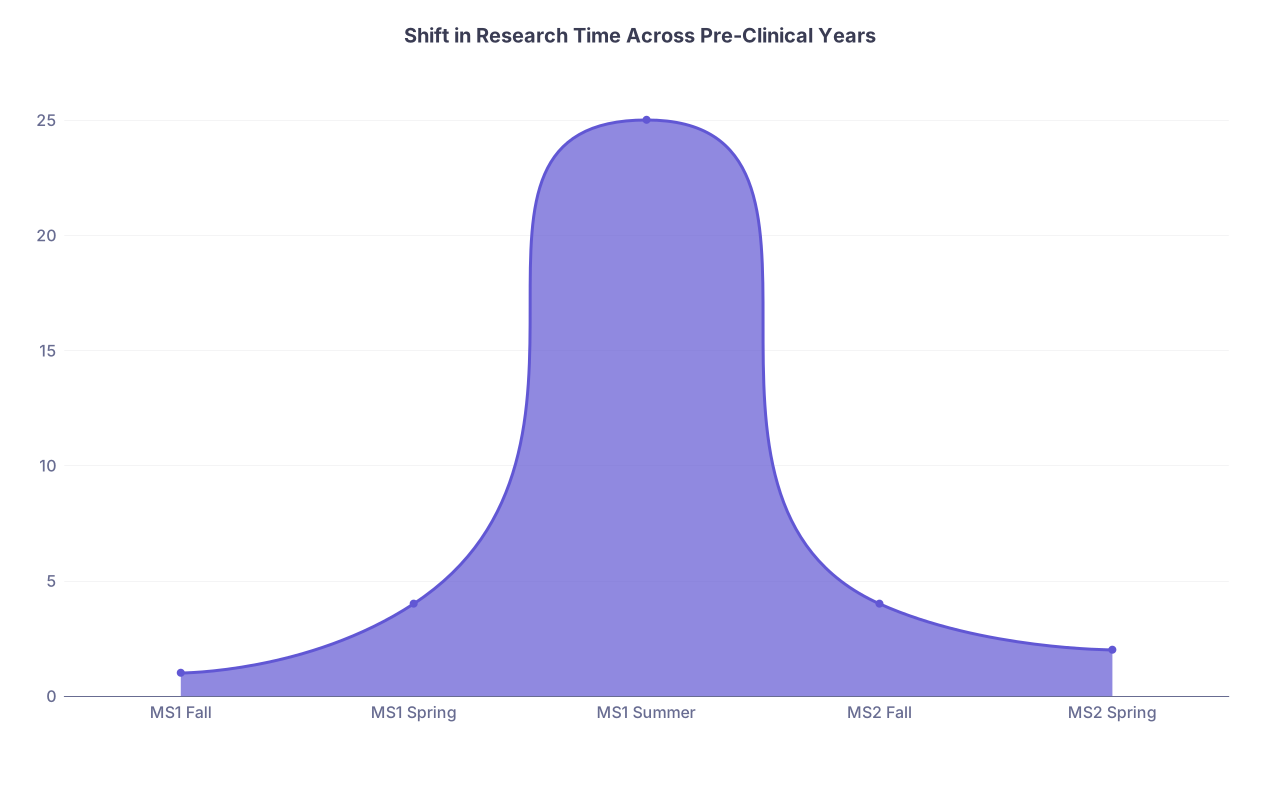
| Category | Value |
|---|---|
| MS1 Fall | 1 |
| MS1 Spring | 4 |
| MS1 Summer | 25 |
| MS2 Fall | 4 |
| MS2 Spring | 2 |
You will notice the pattern: exploration → commitment → deep dive → maintenance → consolidation.
Final Reality Check: Specialty Competitiveness vs. Timeline
If you are leaning toward a highly competitive specialty (derm, ortho, plastics, neurosurgery), you must shift this whole research curve earlier and steeper. That means:
- Serious research conversations by MS1 October–November.
- A high-yield project committed by MS1 January.
- Aiming for multiple abstracts/posters by end of MS2 rather than just one.
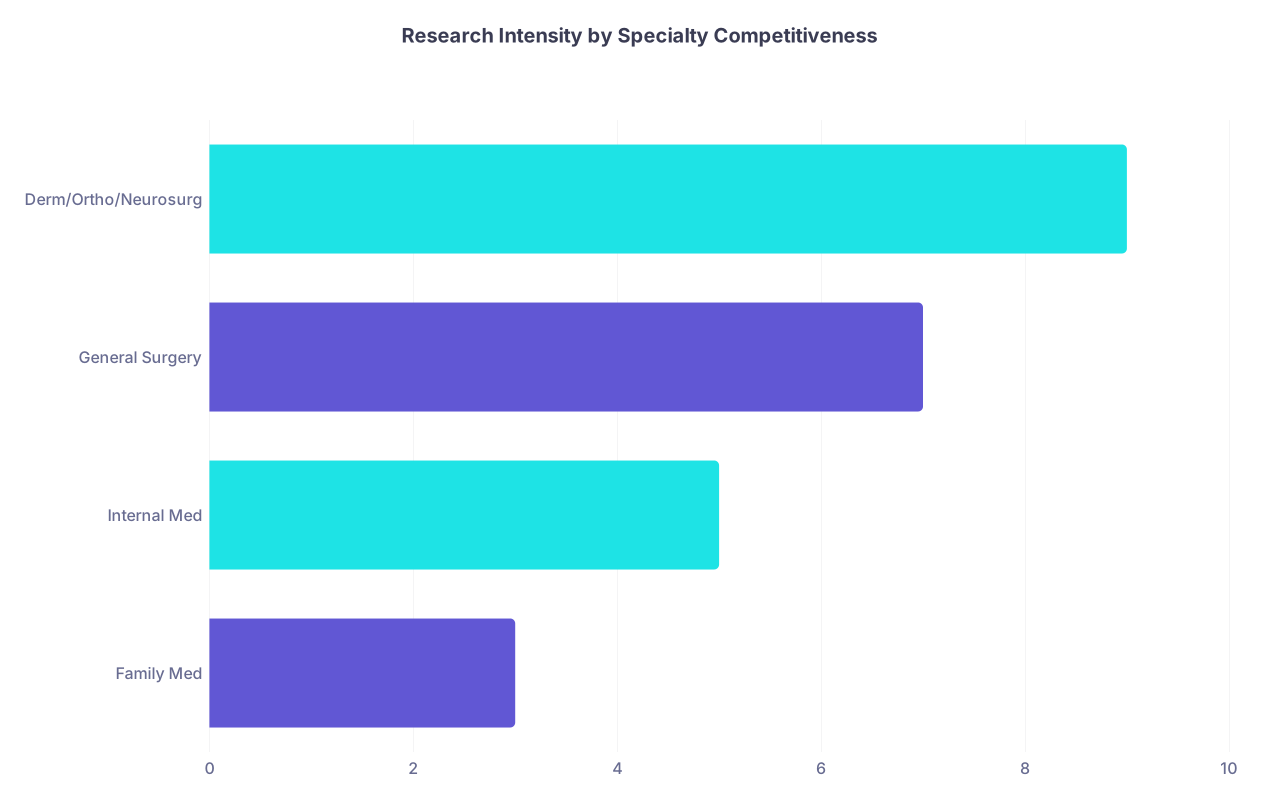
| Category | Value |
|---|---|
| Family Med | 3 |
| Internal Med | 5 |
| General Surgery | 7 |
| Derm/Ortho/Neurosurg | 9 |
For less competitive fields, the timeline above is more than adequate if you execute consistently and keep your Step performance strong.
Open your calendar right now and block the next 12 months into phases: exploration, commitment, deep dive, maintenance, consolidation. Then, under each block, write down exactly one research goal, one leadership goal, and one service goal. If you have more than one of each, you are already trying to do too much.