
The Myth of the Single ‘Spike’: Why Balanced CVs Often Outperform Stars
Why do some classmates with one jaw‑dropping achievement still end up unmatched, while quieter, more “average” applicants sign contracts at strong programs?
Let me be blunt: the worship of the single “spike” — the one ridiculous research line, the 280 Step score, the national leadership position — is one of the most persistent and harmful myths in residency applications.
You’ve probably heard the script:
“Just get one huge thing on your CV. Be the research person. Or the Step monster. Or the global health guru. Program directors will overlook everything else.”
That’s not how real selection meetings sound.
Behind closed doors, the conversation is usually:
“Scores are good… any red flags?”
“Do they show up? Team player?”
“Will they pass boards? Will they be painful to work with at 2 a.m.?”
“Anything that worries you?”
Notice what’s missing? No one says: “They have one Nobel‑Prize‑adjacent paper, so let’s ignore the rest.”
Let’s dismantle this spike fantasy and talk about what actually moves your application from the “maybe” pile to “ranked to match.”
What Program Directors Actually Care About (Not Your Favorite Flex)
The data is not subtle on this.
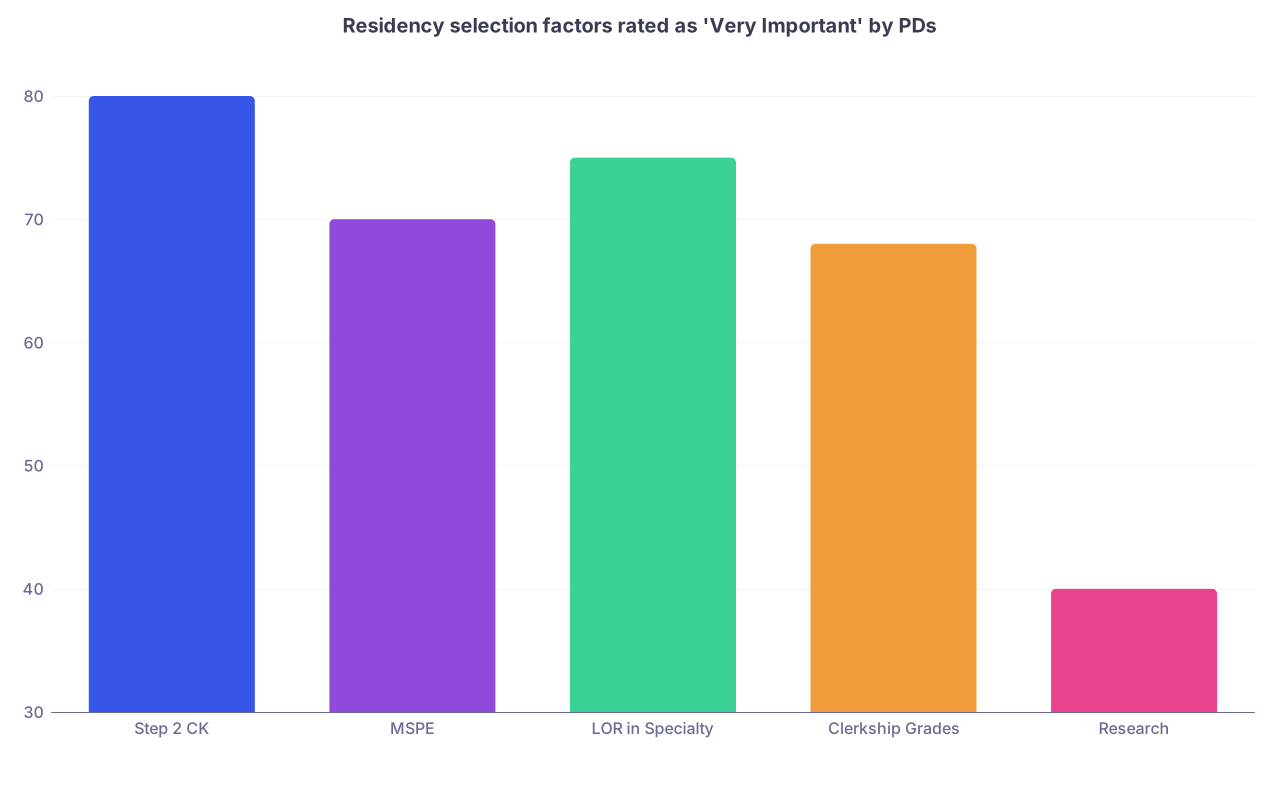
The NRMP’s Program Director Survey lays out what PDs say they use to decide who gets interviews and who gets ranked. The top items almost every cycle are:
- USMLE Step 2 CK / COMLEX Level 2 CE
- MSPE (Dean’s Letter)
- Clinical grades
- Letters of recommendation in the specialty
- Perceived professionalism / interpersonal skills
- Evidence you’ll pass boards and function on day one
Research? Leadership? Volunteer hours? They matter. But they’re supporting actors, not the lead role, in most specialties.
| Category | Value |
|---|---|
| Step 2 CK | 80 |
| MSPE | 70 |
| LOR in Specialty | 75 |
| Clerkship Grades | 68 |
| Research | 40 |
Do those numbers vary by specialty? Yes. But the pattern holds: programs care a lot more about not getting burned than about finding the next scientific celebrity.
They want:
- A safe bet to pass boards
- Someone who will not blow up their call schedule
- A resident who won’t poison team dynamics
One sharp spike doesn’t offset major doubts in those categories. In fact, a huge spike with glaring holes elsewhere often raises suspicion.
I’ve literally heard:
“Why is someone with this research pedigree failing rotations?”
“Why are their comments about teamwork so lukewarm?”
That’s not “overlooked because of the spike.” That’s “quietly moved down the rank list.”
How the “Spike” Myth Actually Hurts You
The spike story is seductive because it promises a shortcut. Be amazing at one thing, stop worrying about the rest.
Here’s how that blows up in practice:
Neglecting core performance.
You say, “I’m going all‑in on research,” and then your clerkship comments read like: “mediocre effort,” “does the minimum,” “struggles with time management.” Panels see that and think: “High maintenance. Pass.”Unbalanced letters.
You get one glowing letter from your superstar PI, but the clinical letters are generic or subtly negative. That is a massive red flag. Programs care much more about the people who’ve seen you with patients than the person who saw you with p‑values.Dangerous Step psychology.
“I’ll just crush Step and everything else will sort itself out.” Then you score well, but your application looks like an empty shell: thin experiences, no pattern of reliability, few people who can vouch for you. High score + low signal of reliability = risk.Misaligned story.
Applicants build a “research spike” and then… apply to extremely clinical, low‑research community programs and wonder why no one bites. The spike is irrelevant there. They want workhorses with solid clinical tracks.
Balanced applicants don’t have this problem. They’re not perfect; they’re coherent. Their CV says:
- “I show up for patients.”
- “I can handle exams.”
- “I get along with teams.”
- “I’m curious enough to contribute academically or in QI.”
That’s what “safe and solid” looks like. And safe and solid gets ranked higher than “brilliant but maybe a disaster” more often than most students realize.
The “Superstar” That Didn’t Match vs. The Boring Applicant Who Did
Let me give you the kind of contrast I’ve watched play out at real programs.
Applicant A – The Supposed Star
- Step 2 CK: 268
- First‑author paper in JAMA Network Open
- Two national conference presentations
- Leadership title in a big student org
But also:
- Multiple “below expectations” comments in core clerkships about professionalism and follow‑through
- One LOR that subtly says: “intellectually strong but struggles taking feedback”
- No longitudinal clinical involvement, just short bursts around research blocks
Applicant B – The Boring Balanced One
- Step 2 CK: 244
- One poster at a regional meeting, one small QI project
- Longitudinal free clinic for 2 years, with steadily increasing responsibility
- All clerkships: “hard‑working,” “team asset,” “consistently dependable,” “patients like them”
- Letters emphasize: “I would be happy to have them as my resident.”
Guess who gets ranked higher at a solid mid‑tier academic IM program?
B does. Consistently.
I’ve seen committees say, nearly word for word:
“I’d rather have three of B than one A and two problem residents.”
The superstar’s spike is obvious on paper. But their risk is just as obvious.
Balanced applicants do not look flashy on a single line. They look strong when you scan across the whole page.
What “Balanced” Actually Means on a Residency CV
Balanced doesn’t mean mediocre. It means nothing is on fire, and a few things are clearly above average.
Think about four main pillars:
Academic / Testing
- Step 2 CK or COMLEX Level 2: strong enough for your specialty tier
- Evidence you’ll pass boards: no terrifying failures with no explanation
Clinical Performance
- Solid to strong clerkship comments, especially in your chosen specialty
- No pattern of “disorganized,” “late,” “poor teamwork”
- At least one attending in your specialty willing to go to bat for you
Professionalism & Teamwork
- MSPE free of professionalism concerns
- Longitudinal activities that show you actually stick with things
- LOR language about work ethic, collegiality, growth
Engagement Beyond Minimum
- Some mix of: research, QI, teaching, leadership, advocacy, global health, etc.
- Doesn’t have to be groundbreaking. Just real and sustained.
| Feature | Single Spike Profile | Balanced Profile |
|---|---|---|
| Step 2 CK | 260+ | 235–255 (specialty‑appropriate) |
| Research | 3–5 pubs, national talks | 0–2 modest projects |
| Clerkship comments | Mixed, some concerns | Consistently solid |
| LOR strength | 1 phenomenal, others weak | 3–4 all strong, aligned |
| Longitudinal activities | Minimal | 1–2 sustained commitments |
Which one would you choose to be in the call room with at 4 a.m. on a bad trauma night? That instinct is exactly what committees follow.
Where Spikes Do Matter (But Still Don’t Save a Broken Application)
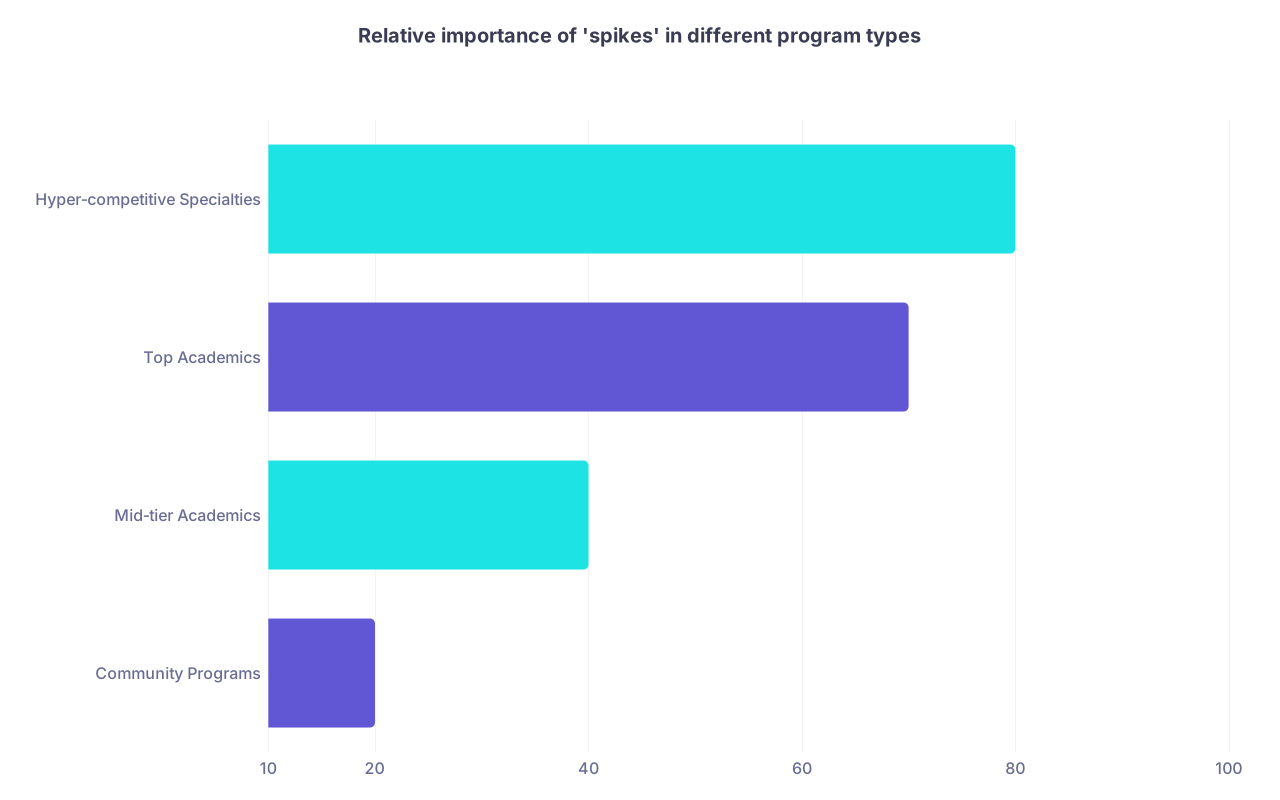
Now, I’m not saying spikes are useless. They absolutely help — if the foundation is already solid.
Here’s where a spike actually changes your trajectory:
Hyper‑competitive specialties (Derm, Ortho, Plastics, ENT, Neurosurg):
Everyone has decent scores. Programs use research or special achievements to separate the good from the great. But they still screen out people with professionalism smoke.Top‑tier academic programs:
If you want UCSF neurology or MGH medicine, a strong research profile helps a lot. But again — LORs and clinical comments will kill your shot if they don’t match the paper signal.Career‑shaping opportunities:
Unique spikes (year at the NIH, major policy fellowship, MD‑PhD level output) can lead to mentorship and letters from heavy hitters that open doors. Provided you’re not medically or professionally radioactive.
| Category | Value |
|---|---|
| Community Programs | 20 |
| Mid‑tier Academics | 40 |
| Top Academics | 70 |
| Hyper‑competitive Specialties | 80 |
The key point: a spike amplifies a good application. It does not rescue a structurally weak one.
If your MSPE has professionalism dings and your specialty letters are lukewarm, your third first‑author paper is not the solution. Fixing your reliability and getting someone to genuinely vouch for you is.
How To Build a CV That Actually Performs in the Match
Let’s get practical. If you’re early MS3 to early MS4, here’s how to stop chasing the mythical spike and start building something match‑proof.
1. Stop Thinking “Brand,” Start Thinking “Risk Reduction”
Programs ask: “If we take this person, what are the odds we regret it?”
Your job is to decrease apparent risk across the board:
- Clean up any professionalism baggage. If something happened, get ahead of it, show remediation, have an advisor who can speak to your growth.
- Be relentlessly dependable on rotations. Show up early, stay a bit late, own your patients.
- Get at least two attendings in your specialty who can honestly say, “I would trust them with my patients.”
This matters more than getting on one more abstract.
2. Decide on One or Two Axes To Be “Above Average,” Then Support Them
You don’t need six spikes. You need a couple of things you’re clearly strong in, built on a stable base.
Common combos that work:
- Solid scores + strong clinical + a couple of meaningful projects
- Good scores + consistent clinical + long‑term service / advocacy with leadership
- Good enough scores + excellent clinical comments + teaching / mentoring track record

Notice these aren’t glamorous. They read like: “This person will be a very solid resident, and maybe more.”
That’s gold.
3. Use Research Strategically, Not as a Reflex
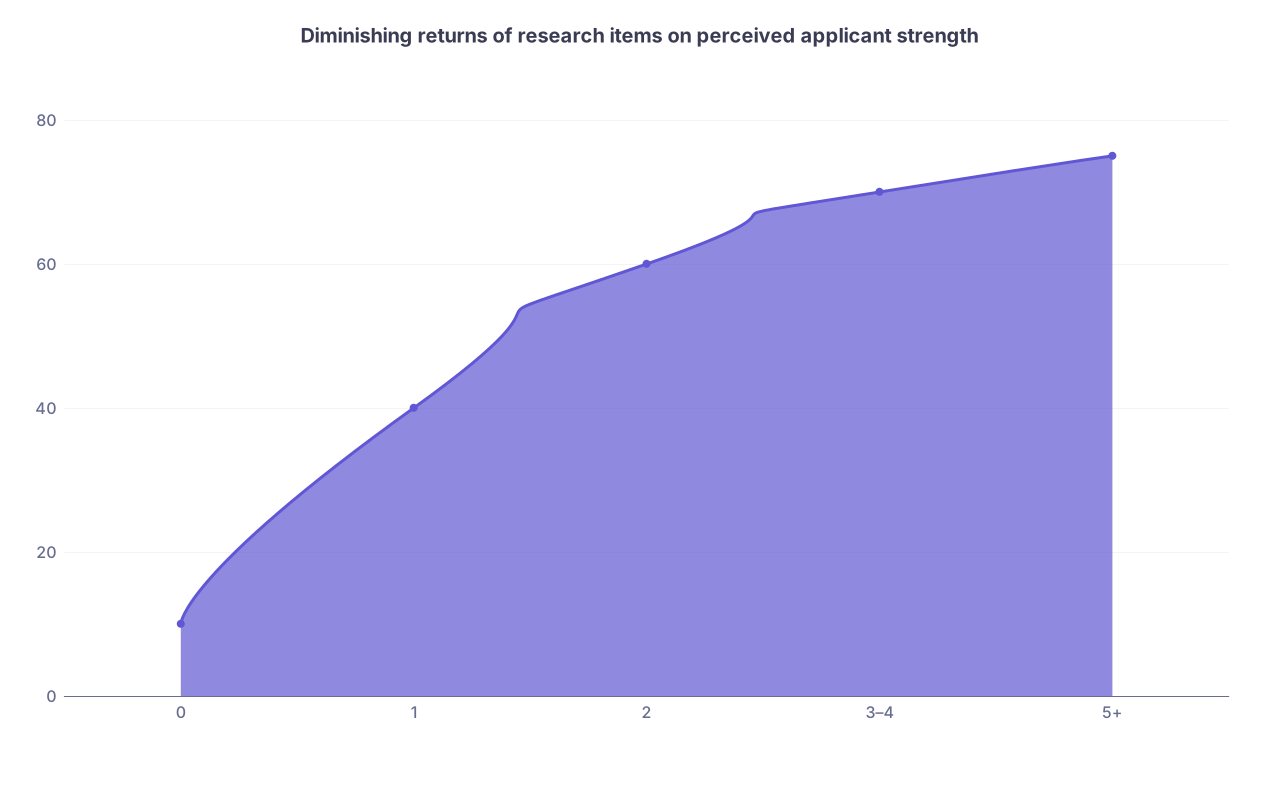
For most non‑research‑heavy programs, the difference between 0 and 1–2 real projects is big. The difference between 2 and 7? Much smaller.
If you already have:
- One poster
- One small paper or QI outcome
- A mentor who knows you and will write a good letter
You’re probably past the diminishing returns point for many programs.
| Category | Value |
|---|---|
| 0 | 10 |
| 1 | 40 |
| 2 | 60 |
| 3–4 | 70 |
| 5+ | 75 |
Past that, your time is usually better spent:
- Improving clinical performance
- Building relationships for stronger letters
- Doing something longitudinal you actually care about
I’ve seen lots of students chase a third or fourth low‑impact abstract when what they really needed was one killer specialty letter and less “quiet on rounds” feedback.
4. Make Your Longitudinal Story Obvious on the CV
One thing balanced applicants do well: they make it painfully clear they commit.
Programs like trajectories. They scan for:
- 1–2 activities spanning 1–3 years
- Increasing responsibility (member → coordinator → leader)
- Concrete outcomes (clinic expanded hours, new teaching module, protocol change)

You want a PD to glance at your ERAS and mutter: “They actually stick with things.” That line, more than your fourth case report, moves you up the rank list.
5. Be Honest About Your Specialty and Program Targets
The spike myth really falls apart when people aim blind.
- If you’re applying to mostly community IM, FM, psych, peds programs: a balanced, human, clinically strong application beats a lopsided research god 9 times out of 10.
- If you’re gunning for top 10 derm, plastics, or neurosurg: yes, you probably need both balance and a serious spike. But again — that’s and, not instead of.

The problem is not that spikes are useless. The problem is people copying the strategy of the top 1% of applicants and then applying to 99% of programs that don’t value that trade‑off in the same way.
What To Do If You Already Built a Lopsided Spike
If you’re reading this and thinking, “That’s me. Great research, shaky everything else,” here’s the move:
Stabilize the weak areas fast.
Use sub‑I’s and away rotations to generate clean, strong clinical letters. Be the most prepared, most teachable person on the team.Stop expanding the spike.
You don’t need three more manuscripts this year. You need people who can write: “I would trust them with my sickest patients.”Align your program list with your actual profile.
A massive research spike + average or below clinical evals often fits better at mid‑tier academic programs that value productivity but still filter for reliability. Do not build a list that assumes they’ll ignore your weaknesses because of your CV flex.Own your narrative.
Use your personal statement and interviews to show growth. Not excuses.
“I realized I was over‑focused on projects and under‑focused on day‑to‑day team work. Over the last year I’ve…” — and then back it with real examples.

Committees forgive a lot when the story is: “They learned, adjusted, and multiple attendings say they’re now great to work with.”
They do not forgive: “Still acts like the rules no longer apply because they’re special.”
The Bottom Line
Three takeaways and we’re done:
One huge spike rarely compensates for weak fundamentals. Programs rank safer, balanced applicants above volatile “stars” far more often than students think.
Balanced means solid across the board with a couple of genuine strengths. Scores good enough, clinical solid, professionalism clean, plus 1–2 areas where you clearly did more than the minimum.
Use spikes to amplify, not rescue. A research, leadership, or Step spike helps only when the rest of your CV says: “reliable, teachable, safe bet.” Build that foundation first.
You’re not trying to impress a magazine editor. You’re trying to convince a group of overworked attendings that you won’t make them regret putting your name on the call schedule. Build your CV for that reality, and you’ll quietly outperform a lot of supposed stars.