Essential ACGME Residency Tips: A DO’s Roadmap to Success
Embarking on the transition from medical school to residency is one of the most pivotal steps in your training. For Doctors of Osteopathic Medicine navigating ACGME Residency programs, the stakes can feel especially high: you’re competing in a unified national system, translating an osteopathic identity into an environment historically dominated by allopathic training.
This roadmap is designed specifically for DO students and graduates, offering concrete residency tips, strategies, and examples to help you stand out in ACGME-accredited programs—from choosing where to apply, to interviewing effectively, to thriving once you match.
Understanding the Modern ACGME Residency Landscape for DOs
The ACGME (Accreditation Council for Graduate Medical Education) accredits residency and fellowship programs across all major specialties in the United States. Since the transition to a single accreditation system, both MD and DO graduates now train side by side in ACGME Residency programs.
For DOs, this has created powerful opportunities—but also new expectations.
The Single Accreditation System: What It Means for DOs
The unified ACGME system means:
- DOs and MDs apply through the same pathways (primarily ERAS and the NRMP Match).
- Osteopathic recognition now exists within many ACGME programs, formally acknowledging osteopathic-focused curricula and OMT/OMM integration.
- USMLE and COMLEX may both be considered; however, individual programs differ in what they require or prefer.
Key implications for DO to Residency applicants:
- You are fully eligible for ACGME Residency programs in all specialties.
- You may still encounter variability in how familiar programs are with osteopathic training, especially in historically competitive or academic specialties.
- You must be prepared to articulate your osteopathic training and value-add clearly, confidently, and succinctly.
The ACGME’s Commitment to Osteopathic Physicians
The ACGME has explicitly acknowledged the role of Doctors of Osteopathic Medicine in graduate medical education. Features of this commitment include:
- Osteopathic Recognition (OR): Some residency programs carry an OR designation, signifying a structured osteopathic curriculum and regular use of OMT.
- Inclusion of COMLEX-USA: Many programs accept COMLEX-USA scores; some still require or prefer USMLE. Policies are evolving and must be checked program by program.
- Competency-based training framework: ACGME milestones apply to all residents, DO or MD. This common standard underscores that once matched, you are evaluated as a physician-in-training, not by degree type.
Knowing Your Options: Strategic Program Exploration
Before you open ERAS, you should have a sense of what “fit” looks like for you. Consider:
- Specialty choice: Some specialties are more DO-friendly or have a longer history of osteopathic participation (e.g., family medicine, internal medicine, PM&R, emergency medicine); others may require stronger board scores or research (e.g., dermatology, orthopedic surgery, radiology).
- Program type and setting:
- Community vs. university-based vs. hybrid
- Size of program (small vs. large)
- Presence of osteopathic faculty or DO leadership
- Availability of Osteopathic Recognition
- Geographic and lifestyle factors:
- Proximity to family/support
- Cost of living and call schedules
- Patient population and pathology exposure
Tools to help you map your options:
- FREIDA (AMA)
- ACGME’s public program search and Osteopathic Recognition listings
- Program websites and social media (Twitter/X, Instagram, LinkedIn)
- Specialty-specific DO organizations (e.g., ACOFP, ACOI, ACOEP)
Preparing a Competitive ACGME Residency Application as a DO
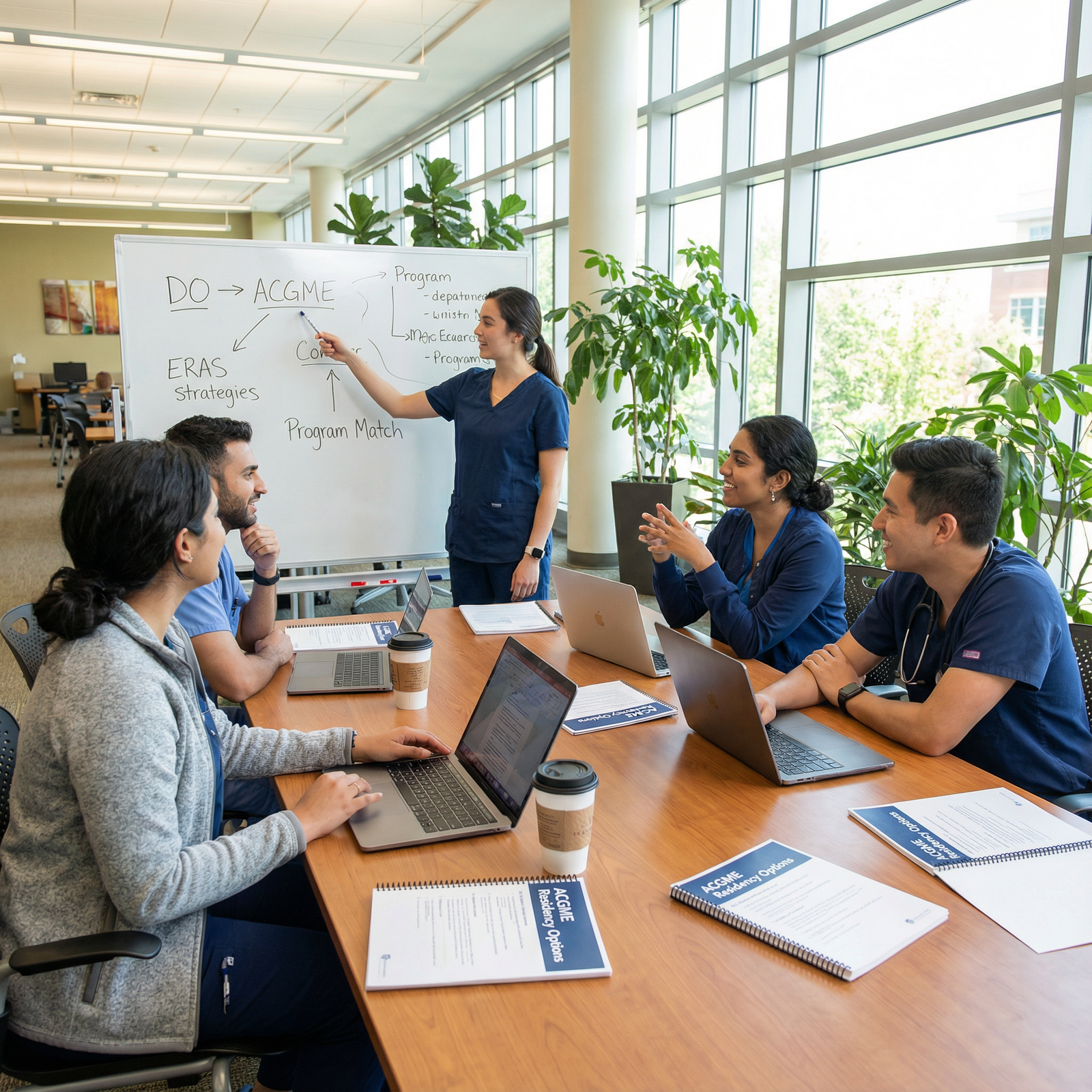
Success in the Match starts months—often years—before you actually apply. Strong Medical Education strategy and deliberate preparation can significantly expand your opportunities.
Start Early: Building Your Residency Profile from Day One
The earlier you align your activities with residency goals, the more coherent and competitive your application will look.
1. Academic and Board Exam Strategy
- Know your specialty’s expectations: Competitive specialties often expect higher board scores and stronger research. Primary care specialties may weigh clinical performance, letters, and mission fit more heavily.
- COMLEX vs. USMLE:
- If applying to certain academic or competitive ACGME Residency programs, consider taking USMLE Step 1 and Step 2 in addition to COMLEX-USA.
- Check each program’s stated policy: some accept COMLEX only; others require USMLE. Don’t assume—verify.
- Remediation and red flags:
- If you’ve had exam failures, leaves of absence, or professionalism concerns, work closely with your advisor to create a plan and consistent narrative.
- Demonstrate growth through improved performance, meaningful reflection, and strong clinical evaluations.
2. Clinical Rotations and Audition Electives
Clinical performance is often the best predictor of residency success.
- Core clerkships: Aim for honors or strong pass evaluations, especially in rotations aligned with your target specialty.
- Sub-internships (sub-Is):
- Prioritize sub-Is in your intended specialty and, if feasible, at institutions where you plan to apply.
- For competitive specialties, away rotations (“audition rotations”) can be critical to demonstrate your abilities and secure strong letters.
- Show your osteopathic strengths:
- Thoughtful, patient-centered communication
- Holistic understanding of biopsychosocial factors
- OMT use where appropriate, especially in OR-designated programs
3. Research, Leadership, and Service
Not all applicants need extensive research, but most benefit from some scholarly or leadership involvement.
- Research:
- Especially important for academic and competitive specialties.
- Quality beats quantity: a couple of meaningful projects (case reports, QI projects, chart reviews) with your name on a poster or publication is valuable.
- Leadership roles:
- Class officer, club leadership (e.g., specialty interest groups, SOMA, SGA), community clinic coordination.
- Show progressive responsibility and impact instead of a long list of minor roles.
- Community service and advocacy:
- Align with your specialty interests: e.g., free clinics for family medicine; EMS or disaster response for EM; rehab-related volunteering for PM&R.
- Highlight continuity and depth rather than one-off events.
Tailor Your Application Materials: Presenting Your Best DO Self
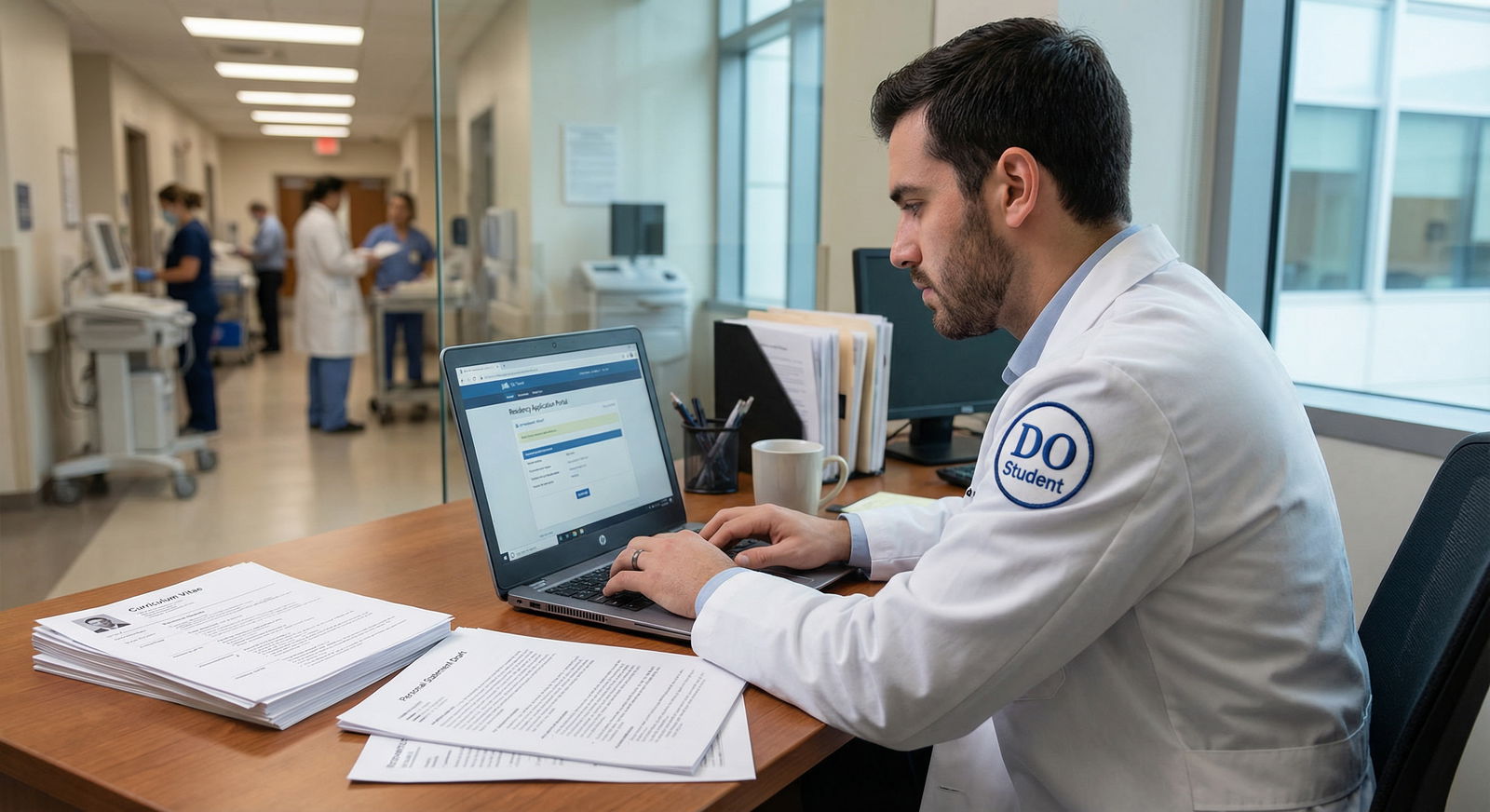
Your ERAS application, CV, and personal statement should align into a coherent story: who you are, what you’ve done, and where you’re going.
Personal Statement: Show Your Osteopathic Identity with Purpose
Your personal statement should:
- Connect your story to your specialty:
- Why this field specifically?
- What moments solidified your interest?
- Integrate your osteopathic background:
- How has OMT/OMM or the osteopathic philosophy (body-mind-spirit, structure-function relationships, preventive medicine) shaped your approach?
- Provide specific patient stories or experiences, not generic platitudes.
- Demonstrate understanding of ACGME Residency training:
- Show awareness of systems-based practice, interprofessional collaboration, and continuous improvement.
- Briefly reflect on how you perceive your role in team-based care and quality improvement.
Avoid:
- Overly grandiose statements about “always wanting to be a doctor”
- Repetitive definitions of osteopathy (programs already know this)
- Excessive jargon or cliché “I just want to help people” lines
Instead, focus on clear, genuine experiences and reflections that only you could write.
CV and ERAS Experiences: Make Every Entry Count
When documenting experiences:
- Use concise, active language (“Led,” “Developed,” “Implemented,” “Analyzed”).
- Quantify impact when possible (“Coordinated a team of 12 volunteers,” “Improved clinic no-show rate by 15%”).
- Highlight:
- OMT/OMM teaching or workshops you led
- Osteopathic-related QI or education projects
- Community outreach aligned with osteopathic principles (prevention, holistic care)
Group short activities logically so your application looks focused, not scattered.
Letters of Recommendation (LoRs): Strategic Selection for DOs
Letters can significantly influence how programs perceive you.
- Whom to ask:
- Faculty in your chosen specialty who know you well.
- At least one letter from an ACGME environment (if possible).
- A DO who can speak to your osteopathic training is valuable—especially for Osteopathic Recognition programs—but strong content always trumps degree matching.
- Timing:
- Ask at the end of a strong rotation, when your performance is fresh.
- Clearly communicate deadlines and provide an updated CV and personal statement draft.
- What to request:
- Politely ask if they can write a “strong, positive letter of recommendation”—this wording gives them an opening to decline if they can’t fully support you.
Excelling in Residency Interviews as a DO Applicant
Once you land interviews, your task shifts from “getting noticed” to “showing fit.” This is where your DO identity, communication skills, and preparation can shine.
Understanding the ACGME Residency Interview Landscape
Residency interviews may be:
- In-person, virtual, or hybrid
- Structured, semi-structured, or conversational
- Individual or panel-based
- Include residents, faculty, program director, and possibly chief residents or coordinators
As a DO, you should be prepared to:
- Briefly and confidently explain your choice of osteopathic school and training.
- Address your board exam pathway (COMLEX only vs. COMLEX + USMLE) without defensiveness.
- Highlight how your background complements the program’s mission and patient population.
Common Interview Themes and How DOs Can Respond
Prepare thoughtful responses to:
- “Tell me about yourself.”
- A 1–2 minute narrative linking your background, DO training, and interest in the specialty.
- “Why this specialty?”
- Use rotations, specific patient encounters, and mentors as anchors.
- “Why our program?”
- Reference program features you’ve researched: patient population, curriculum, Osteopathic Recognition, fellowship opportunities, location, or resident culture.
- “How has your osteopathic training influenced your practice?”
- Share a concrete example of using OMT or a holistic assessment to improve patient outcomes or satisfaction.
- “Explain your board exams/grades/red flags.”
- Be honest, concise, and focused on what you learned and how you improved.
Practical Interview Preparation Tips
- Mock interviews:
- Practice with faculty, mentors, or career advisors—especially those familiar with ACGME Residency interviews.
- Virtual interview logistics:
- Professional attire, neutral background, reliable internet, and proper lighting.
- Test audio/video beforehand; know how to screen-share or navigate platforms if needed.
- Questions you should ask:
- Ask residents about workload, wellness, mentorship, and OMT use (if applicable).
- Ask faculty/program directors about curriculum structure, changes planned, and how DOs have historically performed in the program.
Always send brief, genuine thank-you notes after your interview, emphasizing a couple of specifics from your conversation.
Navigating ERAS, NRMP, and The Match as a DO
The formal mechanics of the DO to Residency transition happen through ERAS and the NRMP (or other specialty matches where applicable, e.g., SF Match for ophtho).
ERAS: Submitting a Strong, Timely Application
- Submit early and complete:
- Aim to have your application ready for the earliest submission date. Early, complete applications often get reviewed first.
- Program list strategy:
- Use data (NRMP Charting Outcomes, specialty organizations) to calibrate your list.
- For more competitive specialties, many DO applicants apply to a higher number of programs to offset potential bias or unfamiliarity.
- Signal interest (if applicable):
- Some specialties have signaling mechanisms (e.g., preference signals) through ERAS. Use them wisely on truly top-choice programs.
NRMP Rank List: Balancing Ambition and Realism
Your rank list should reflect your true preferences, not what you think programs think of you.
- Rank all programs where you would be willing to train.
- Don’t “game the algorithm”:
- The Match favors the applicant’s preferences. Rank in order of where you genuinely want to go.
- Consider fit and well-being:
- Program culture
- Geographic support systems
- Mission alignment (e.g., community service, underserved populations, academic focus)
- Presence of DO-friendly environment and osteopathic mentors
Staying Current on ACGME and Match Policies
Policies evolve—especially regarding:
- Acceptance of COMLEX-only applicants
- Virtual vs. in-person interviews
- Caps on applications or interviews (in some specialties)
- Evolving competency and milestone expectations
To stay informed:
- Regularly review:
- ACGME and NRMP websites
- Specialty-specific professional societies (e.g., ACOI, ACOFP, ACEP)
- Meet with:
- Your school’s Dean’s office or career advising services
- Specialty mentors and recent graduates who just matched
Thriving in ACGME Residency as a Doctor of Osteopathic Medicine
Matching is not the finish line—just the start of a new phase of your Medical Education. Your DO background can be a powerful asset in your day-to-day patient care and professional growth.
Embrace and Integrate Your Osteopathic Identity
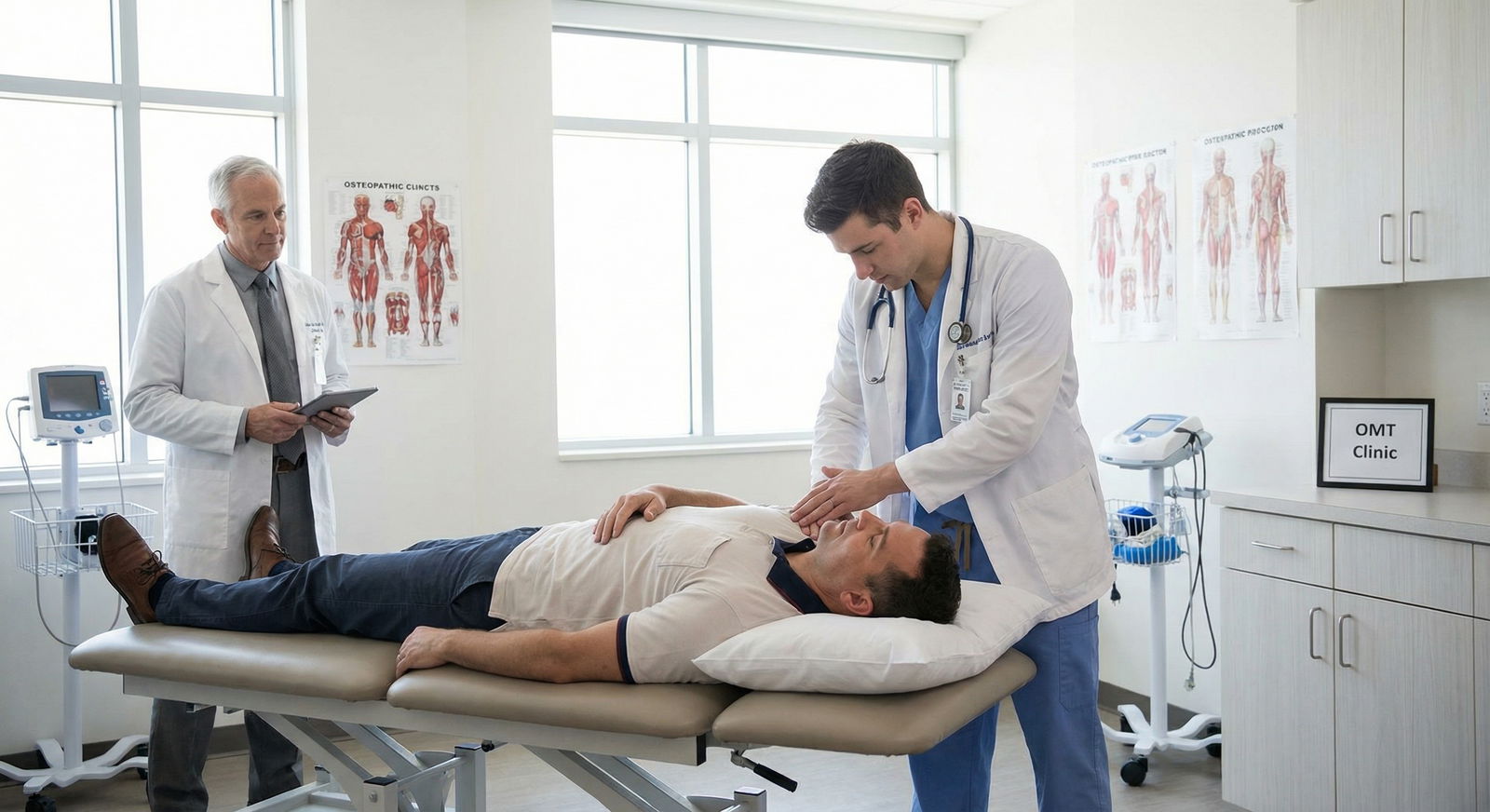
Your osteopathic training provides tools that can distinguish your care:
- OMT/OMM in clinical practice:
- Use OMT appropriately for musculoskeletal complaints, headaches, postpartum pain, and selected inpatients where feasible.
- Offer to teach fellow residents or students basic techniques, if your program is receptive.
- Holistic, patient-centered approach:
- Consider social determinants of health, mental wellness, family dynamics, and patient goals.
- Incorporate prevention, lifestyle counseling, and empathy into routine encounters—this often enhances patient satisfaction and outcomes.
Even in programs without Osteopathic Recognition, you can:
- Volunteer to present brief talks on osteopathic principles.
- Collaborate on QI or research projects that incorporate OMT or holistic care models.
- Serve as a resource for medical students interested in osteopathy.
Building Strong Networks and Mentorship in the ACGME Environment
Residency is not a solo endeavor.
- Mentorship:
- Identify DO and MD mentors early: faculty, chiefs, senior residents.
- Seek guidance on research, career planning (including fellowship options), and professional development.
- Peer support:
- Engage with your co-residents; they will be your core support system on tough days.
- Join resident committees, wellness councils, or educational taskforces.
- Professional organizations:
- Maintain membership in osteopathic organizations (e.g., AOA, specialty-specific osteopathic colleges).
- Join relevant allopathic societies for your specialty to broaden your professional network.
Prioritizing Wellness and Sustainability in Residency
ACGME Residency training is intensive. Long-term success demands attention to your own well-being.
- Work–life integration:
- Protect small, non-negotiable anchors: exercise, time with family/friends, hobbies.
- Use days off to genuinely rest, not just catch up on work.
- Mental health resources:
- Most programs provide confidential counseling or wellness services.
- Normalize seeking help; burnout, anxiety, and depression are common and treatable.
- Boundaries and advocacy:
- Learn work-hour policies and resident support structures.
- If you are struggling with workload or learning environment issues, speak to your chief residents, program leadership, or GME office.
Your goal is not just to survive residency—it’s to emerge as a confident, compassionate, and competent osteopathic physician ready for independent practice or fellowship.
FAQs: DOs Applying to ACGME Residency Programs
1. Do I need to take USMLE in addition to COMLEX to match into an ACGME Residency?
Not always, but it can help. Many primary care and DO-friendly programs accept COMLEX-only applicants. However, some academic and competitive specialties, and certain institutions, prefer or require USMLE scores to directly compare applicants.
If you are targeting competitive fields (e.g., dermatology, orthopedic surgery, radiology, anesthesiology) or highly academic programs, taking at least USMLE Step 2 in addition to COMLEX can broaden your options. Always verify each program’s policy on their website or via direct contact.
2. How can I tell if a residency program is DO-friendly?
Look for:
- A significant proportion of current or past residents who are DOs (check the website or FREIDA).
- Leadership (program director, APDs, core faculty) who are DOs.
- Osteopathic Recognition or explicit mention of osteopathic education in the curriculum.
- Statements in their mission or FAQ noting that they welcome COMLEX-only applicants.
You can also ask current residents during interviews how DOs have historically fared in the program.
3. How should I highlight my osteopathic training in my application without overdoing it?
Weave osteopathic principles naturally into your narrative:
- In your personal statement, describe specific patient encounters where OMT or a holistic approach changed management or improved outcomes.
- On your CV, highlight OMT workshops, teaching sessions, or osteopathic-related research.
- During interviews, discuss osteopathy as an integrated part of your clinical style rather than a separate identity.
Avoid repeatedly defining osteopathy; focus instead on what you do differently because of your training.
4. What can I do if I receive few or no interviews as a DO applicant?
First, meet with your advisor or Dean’s office to review your application critically. Potential next steps include:
- Broadening your specialty or geographic target list.
- Enhancing your application for a reapply cycle: additional research, a strong transitional or preliminary year, or improved Step/Level 2 scores.
- Participating in the SOAP (Supplemental Offer and Acceptance Program) if eligible, while planning long-term improvements.
- Seeking mentorship from DOs who successfully matched after a setback.
Many residents ultimately match on a second attempt with a more strategic, strengthened application.
5. How can I stay updated on evolving ACGME Residency and Match policies that affect DOs?
Use multiple sources:
- Official websites: ACGME, NRMP, ERAS, and your specialty boards.
- Professional organizations: AOA, specialty-specific osteopathic colleges and societies, and national specialty organizations.
- Your medical school: Dean’s office, GME advisors, and residency preparation workshops.
- Recent graduates: DO residents a year or two ahead of you who can provide real-time insights on what programs are currently valuing.
Regularly checking these resources ensures your strategy aligns with the latest requirements and trends in Medical Education and residency selection.
For deeper dives on related topics like optimizing your application strategy and understanding program policies, explore resources on AMCAS and ACGME Residency regulations through your institution’s advising office or trusted online educational platforms. Your osteopathic training is a strength—when combined with thoughtful planning and persistence, it can pave a highly successful path through ACGME Residency and beyond.