Introduction: A New Era for Osteopathic Applicants in ACGME Residency
The unified ACGME Residency system has changed the landscape for every Doctor of Osteopathic Medicine (DO) pursuing graduate medical education in the United States. With the single accreditation system, DO and MD graduates now apply through the same pathways, are evaluated by the same standards, and often compete for the same spots.
For osteopathic students, this shift brings both opportunity and pressure. You now have broader access to programs across the country—but you must also be strategic and intentional to stand out.
This guide is designed specifically for DO students and recent graduates navigating ACGME Residency applications. It will walk you through DO success strategies, medical application tips tailored to osteopathic applicants, and practical advice for excelling in residency interviews and beyond. The goal: help you present yourself as a strong, confident, and competitive candidate while preserving and highlighting the strengths of your osteopathic training.
Understanding the ACGME Residency Landscape as a DO
The Single Accreditation System: What It Means for DOs
Historically, MD and DO graduates moved through separate postgraduate training systems:
- MDs primarily trained in ACGME-accredited programs
- DOs had access to both ACGME and AOA-accredited programs
With the transition to a single ACGME accreditation system, all residency and fellowship programs now fall under the ACGME umbrella. For DOs, this means:
- You apply to the same pool of programs as MD applicants
- Your osteopathic degree is fully recognized in ACGME training
- Many programs now explicitly state they “accept and welcome DO applicants”
- Osteopathic recognition tracks and osteopathic-focused training experiences are increasingly integrated within ACGME programs
However, this also means increased visibility and scrutiny. Program directors are comparing DO and MD applications side-by-side, focusing heavily on metrics (board scores, clinical grades) and fit (personal statement, letters, interviews).
Key Systems and Services: ERAS, NRMP, and Beyond
To move smoothly through the process, you must master the tools that govern ACGME applications:
ERAS (Electronic Residency Application Service)
- Central portal to submit your application, CV, personal statement, LORs, and transcripts
- Allows you to apply to multiple programs and specialties efficiently
- Opens in the late spring/summer prior to your application cycle—deadlines are strict
NRMP (National Resident Matching Program)
- Handles the Match algorithm
- You rank programs, they rank applicants, and the algorithm attempts to optimize outcomes
- Includes the Main Residency Match and, if needed, the SOAP (Supplemental Offer and Acceptance Program)
Osteopathic Recognition Programs
- Some ACGME programs have Osteopathic Recognition—indicating they deliberately include osteopathic principles, OMM/OMT training, and faculty with osteopathic backgrounds
- These can be excellent targets for DOs looking to maintain strong osteopathic identity while training alongside MD peers
Understanding these systems early—preferably by the beginning of your third year—lets you plan your rotations, board exams, and application strategy in a deliberate, efficient way.

Building a Competitive ACGME Application as a DO
Your ACGME residency application is more than a packet of documents—it’s your professional story. For DOs, the challenge is twofold: meet the same competitiveness thresholds as MD applicants while also showcasing the unique value of osteopathic medicine.
Academic Foundation: Board Exams, Clerkships, and Specialty Choice
While the original article focused more on narrative pieces, a strong DO strategy must begin with objective metrics:
Board Exams: COMLEX, USMLE, and Program Expectations
- COMLEX-USA is required for DO licensure and is accepted by all ACGME programs.
- Some programs, however, strongly prefer or require USMLE scores, especially in competitive specialties (e.g., dermatology, radiology, orthopedics, some academic internal medicine programs).
Actionable tips:
- Research your target specialty and region on program websites and FREIDA to determine:
- If USMLE is recommended or required
- Typical score ranges for matched applicants
- If aiming for highly competitive specialties or academic centers, strongly consider taking USMLE Step 1 and Step 2 CK in addition to COMLEX:
- Prepare intentionally: use question banks that map to both exams
- Time your exams so scores are available before ERAS submission (usually by late summer of application year)
Clinical Rotations and Sub-Internships
Your third- and fourth-year rotations are crucial for:
- Securing strong clinical evaluations and letters
- Demonstrating readiness for residency-level responsibilities
- Showing early commitment to a specialty
For DO applicants:
- Prioritize audition/sub-internship rotations at ACGME programs that:
- Historically accept DOs
- Offer Osteopathic Recognition
- Are realistic “reach” and “target” options given your metrics
- Use these rotations to:
- Build relationships with attendings and residents
- Demonstrate reliability, curiosity, and teachability
- Secure at least one strong specialty-specific letter from an ACGME or academic institution, when possible
Crafting High-Impact Written Components: Personal Statement, LORs, and CV
Writing a Personal Statement that Highlights Osteopathic Medicine
Your personal statement is your chance to connect your osteopathic training, clinical experiences, and long-term career goals into a singular, coherent story.
Key elements to include:
A Clear, Focused Narrative
- Start with a specific moment (a patient encounter, OMT experience, or clinical challenge) that illustrates:
- Your values in patient care
- Your interest in your chosen specialty
- How your osteopathic lens shapes your approach
- Start with a specific moment (a patient encounter, OMT experience, or clinical challenge) that illustrates:
Osteopathic Philosophy and ACGME Competencies
- Tie osteopathic principles directly to competencies program directors care about:
- Holistic care → systems-based practice, patient-centered care
- Hands-on exam skills → diagnostic acumen, professionalism
- Focus on structure-function relationships → clinical reasoning in complex cases
Example:
“Using OMT for a patient with chronic low back pain taught me to see beyond imaging findings and center the patient’s function and quality of life. This mindset now informs how I approach complex internal medicine patients with overlapping medical, social, and functional needs.”
- Tie osteopathic principles directly to competencies program directors care about:
Specialty-Specific Motivation
- Explain why this specialty, not just medicine in general.
- Show depth: mention specific patient populations, pathologies, or practice environments you are drawn to.
Evidence of Growth and Resilience
- Briefly acknowledge challenges (academic setbacks, personal adversity) only if you can show:
- Concrete steps you took to improve
- Lasting changes in your habits or perspective
- Briefly acknowledge challenges (academic setbacks, personal adversity) only if you can show:
Forward-Looking Vision
- End with where you see yourself in 5–10 years:
- Academic vs. community practice
- Interest in teaching, research, leadership
- Ongoing integration of osteopathic principles and OMM
- End with where you see yourself in 5–10 years:
Letters of Recommendation (LOR): Strategy for DO Candidates
Letters of recommendation can strongly influence how programs perceive your readiness and fit, especially as a DO applicant.
Who Should Write Your Letters?
Aim for:
- 2–3 specialty-specific letters:
- At least one from an ACGME-affiliated attending in your chosen specialty
- Ideally from a site where you did a sub-internship or audition rotation
- 1 additional letter (if allowed):
- Could be from a DO faculty member, research mentor, or a core clinical supervisor who knows you well
If possible, include:
- A mix of DO and MD letter writers to demonstrate your adaptability in both osteopathic and allopathic environments.
Making It Easy for Faculty to Write Strong Letters
Provide each letter writer with:
- Your CV
- A draft of your personal statement
- A summary of:
- Rotations/experiences you had with them
- Cases or projects where you feel you excelled
- Your target specialty and programs
Politely ask:
- If they can write you a “strong, supportive letter for [specialty] residency”
- For letters to be submitted well before ERAS deadlines
Crafting a Professional, Targeted Medical CV
Your CV should be clean, well-organized, and easy to scan—program directors often review hundreds.
Recommended sections:
- Education (with anticipated graduation date)
- Board exams (COMLEX/USMLE with dates and scores if you choose)
- Clinical rotations (highlight sub-internships and away rotations)
- Research and scholarly activity
- Presentations and posters
- Leadership roles and teaching
- Volunteer/service work
- Honors and awards
- Professional memberships (e.g., AOA, specialty societies)
For DO applicants:
- Highlight osteopathic-related achievements, such as:
- OMM teaching assistant roles
- OMT clinics or community service
- Osteopathic-related research or presentations
- Tailor the order of sections:
- For research-heavy specialties: move “Research” higher
- For primary care: emphasize longitudinal community service and continuity clinic experiences
Excelling in Residency Interviews as a DO Applicant
Residency interviews are where your application comes alive. As a DO, you have the added opportunity—and responsibility—to articulate how your osteopathic background enriches the program.
Anticipating Common Residency Interview Questions
Prepare concise, specific responses to core questions:
- “Why did you choose this specialty?”
- “Why are you interested in our program specifically?”
- “How has your osteopathic training influenced your approach to patient care?”
- “Tell me about a challenging clinical case and what you learned.”
- “Describe a time you received critical feedback and how you responded.”
Include osteopathic elements naturally:
- When discussing cases, mention when you used OMM or a holistic assessment
- When discussing communication, note how your training emphasized listening to the “whole patient”
Using Behavioral Interview Techniques (STAR)
Many ACGME programs use behavioral questions to assess how you think and act:
- Situation – What was going on?
- Task – What was your role or responsibility?
- Action – What did you do?
- Result – What happened, and what did you learn?
Prepare 6–8 STAR stories ahead of time that demonstrate:
- Teamwork and communication
- Professionalism and ethics
- Leadership or initiative
- Resilience in the face of stress or failure
- Empathy and patient-centered care
You can adapt these stories to many different questions under pressure.
Mock Interviews and Feedback
Practice is essential:
- Schedule mock interviews through:
- Your school’s career or residency advising office
- Specialty interest groups or mentors
- Online or virtual mock interviews if in-person is limited
Ask for feedback on:
- Clarity and conciseness
- Nonverbal communication (eye contact, body language)
- How effectively you integrate your osteopathic identity without over-relying on buzzwords
Record yourself if possible to identify nervous habits or rambling answers.
Leveraging Your Osteopathic Identity as a Strength
As a DO applicant in the ACGME system, your unique training is a feature, not a flaw—if you know how to present it.
Showcasing Osteopathic Skills and OMM/OMT
Many ACGME program directors genuinely value:
- Strong physical examination skills
- Manual medicine as an adjunct tool
- A holistic, biopsychosocial perspective
Ways to highlight this:
- Share a patient vignette where OMM clearly added value:
- E.g., improved function, reduced pain, avoided unnecessary imaging or medications
- Explain how osteopathic principles shape:
- Your approach to complex, multi-system disease
- Your communication with patients
- Your focus on function and quality of life
If you’re applying to a non-OMM-heavy specialty (e.g., radiology, pathology):
- Emphasize transferrable osteopathic principles:
- Integrative thinking
- Attention to detail in exam and history
- Systems-based understanding of disease
Contribution to Diversity, Equity, and Inclusion
Programs increasingly value applicants who bring diverse perspectives and experiences to their residency classes.
As a DO, you might:
- Have cared for underserved communities in osteopathic clinics
- Be first-generation in higher education or medicine
- Come from a non-traditional background, career, or region
Show this by:
- Highlighting community service or outreach work
- Discussing your interest in serving specific populations (rural, urban underserved, veterans, etc.)
- Connecting your background to your motivation to practice patient-centered, equitable care
Strategic Post-Application Moves: Networking, Ranking, and Future Planning
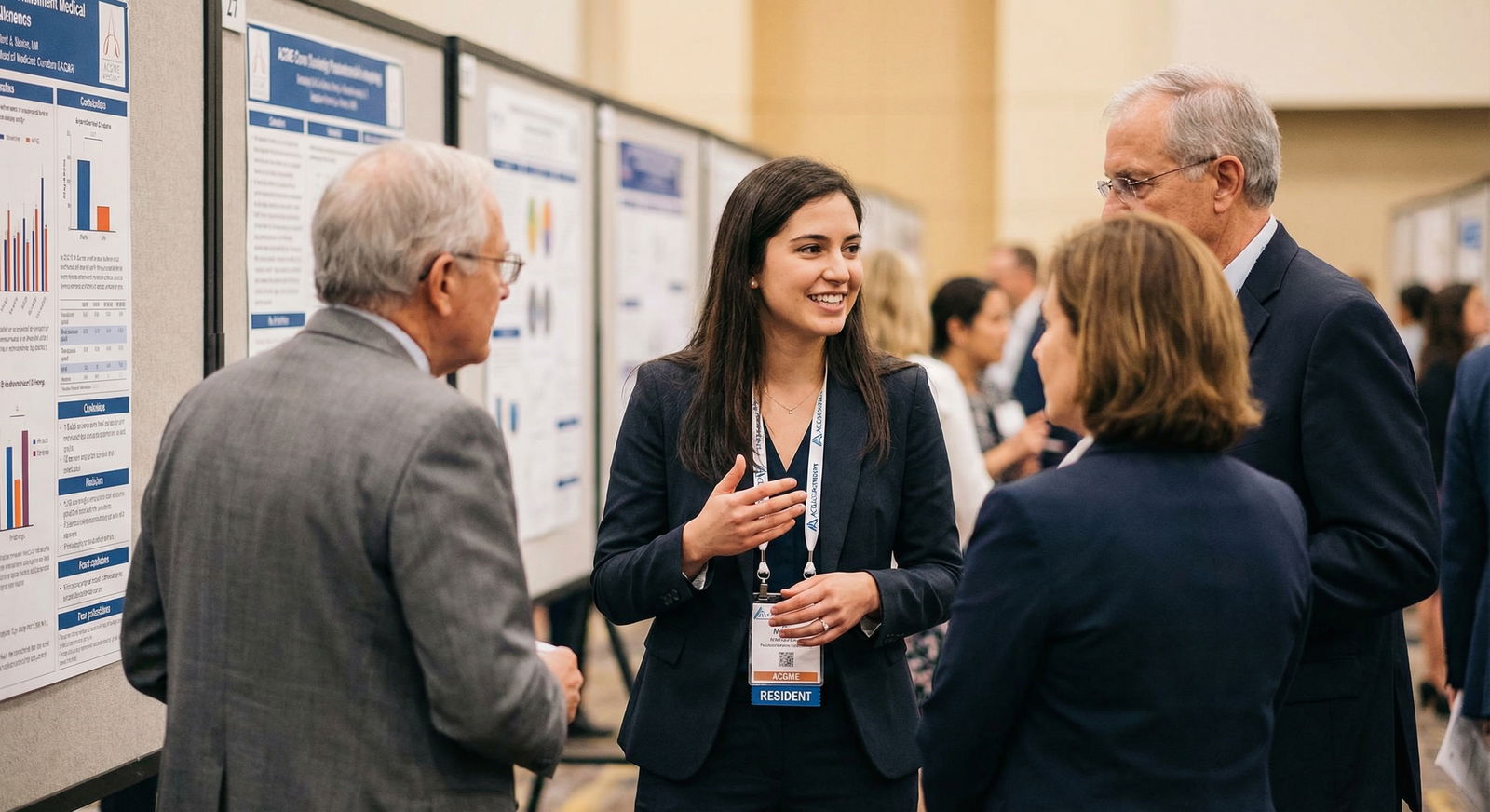
Smart Networking in the ACGME Environment
Networking is not about favoritism; it’s about visibility and fit.
Effective avenues:
- Specialty conferences and regional meetings
- Virtual open houses and program information sessions
- Social media (especially X/Twitter and LinkedIn) where many programs and faculty are active
Practical tips:
- Engage meaningfully (ask questions, share relevant articles, comment professionally)
- Follow up with brief, polite emails after meeting faculty or residents
- If you complete an away rotation:
- Thank your attendings and residents
- Keep them updated when you apply and if you receive an interview invite
Creating a Thoughtful Rank List
When it’s time to rank programs in NRMP:
Consider:
- Program culture and resident well-being
- DO-friendliness and historical DO match data
- Presence of osteopathic recognition or OMM faculty (if important to you)
- Geographic preferences (support system, cost of living)
- Fellowship opportunities and graduate outcomes
Rank in the true order of your preference, not where you “think you’ll match”—the algorithm favors the applicant’s choices.
Planning Beyond Match: Fellowships and Long-Term Goals
Many DOs match into:
- Primary care specialties (FM, IM, pediatrics, OB/GYN)
- Surgical and subspecialty fields (depending on metrics and strategy)
During residency:
- Seek mentors early—both DO and MD
- Get involved in:
- Quality improvement (QI) projects
- Research if aiming for fellowship or academic careers
- Teaching roles (medical students, junior residents)
If considering fellowship:
- Research fellowship requirements early in residency
- Build a portfolio that includes:
- Scholarly work
- Leadership roles
- Strong evaluations in core rotations
FAQ: DO-Specific Questions About ACGME Residency Applications
1. Do I need to take the USMLE in addition to COMLEX to be competitive?
Not always—but it can significantly broaden your options.
- For less competitive specialties and programs with a strong DO history, COMLEX alone may be sufficient.
- For competitive specialties (e.g., dermatology, radiology, orthopedic surgery) or highly academic programs, a strong USMLE Step 1 and Step 2 CK can:
- Make it easier for programs to compare you to MD applicants
- Prevent your application from being filtered out when programs use automated score cutoffs
Check each program’s website and FREIDA profile; if multiple top-choice programs “strongly prefer” or “require” USMLE, strongly consider taking it.
2. How should I address my osteopathic background if an interviewer seems unfamiliar with DO training?
Stay confident and informative, not defensive. You might say:
- “As a DO, my training emphasized a holistic approach and hands-on diagnosis and treatment through OMM. That background has sharpened my physical exam skills and taught me to consider the interplay between structure and function in every patient encounter.”
Briefly explain:
- The similarity in core medical training to MD curricula
- The additional OMM training as an added skill set
- How this has positively impacted patient care in your experience
3. Can I apply to both osteopathic recognition and non-osteopathic programs in the same specialty?
Yes, and many DOs do.
- Osteopathic Recognition programs can be an excellent fit if you want structured OMM training and a strong osteopathic community during residency.
- Non-OR programs may still be DO-friendly and supportive, even without formal recognition.
In your application:
- Emphasize osteopathic identity more prominently for OR programs
- For non-OR programs, still highlight how osteopathic principles shape your practice, but tailor your message to that program’s priorities (research, underserved populations, procedural volume, etc.).
4. How can I strengthen my application if my board scores are lower than average?
You still have options, especially in primary care and DO-friendly specialties, if you act strategically:
- Maximize clinical evaluations and sub-internships:
- Aim for outstanding comments and strong letters of recommendation
- Target programs known to value holistic review:
- Community-based or smaller programs
- Programs with a track record of matching DOs
- Strengthen the rest of your application:
- Clear, compelling personal statement
- Evidence of growth: improved performance on later exams (e.g., COMLEX Level 2, USMLE Step 2 CK)
- Longitudinal community service or leadership roles
- Apply broadly and realistically:
- Include a mix of reach, target, and safety programs
5. How important is research for DO applicants in the ACGME system?
It depends on your target specialty and career goals:
- For highly competitive specialties and academic careers:
- Research, especially first- or second-author publications, is a significant asset
- Try to get involved in projects early in medical school
- For primary care and many community-based programs:
- Research is helpful but not mandatory
- Quality improvement (QI), case reports, and presentations can still add value
Regardless of specialty, research and scholarly work demonstrate:
- Intellectual curiosity
- Ability to complete long-term projects
- Comfort with evidence-based practice
By understanding the ACGME Residency system, intentionally showcasing your osteopathic training, and executing a strategic, well-organized application plan, you can not only navigate but excel in this new environment as a DO. Your osteopathic perspective—holistic, hands-on, and patient-centered—is a powerful asset. When paired with strong preparation and clear communication, it positions you to thrive in residency and beyond.