The Ultimate Guide for DOs: Applying to ACGME Residencies with Confidence
The transition from osteopathic medical school to residency is one of the most pivotal steps in your medical career. For DO medical students targeting ACGME residencies, this phase can feel both exciting and overwhelming. With the single accreditation system now fully implemented, DOs have unprecedented access to ACGME-accredited training programs—but also face intense competition and nuanced expectations.
This expanded Residency Application Guide is designed specifically for DO students aspiring to ACGME residencies. It will help you:
- Understand the current ACGME landscape and what it means for osteopathic graduates
- Strategically prepare your application components (academics, clinical, research, and more)
- Navigate ERAS, NRMP, and SOAP with clarity
- Highlight your osteopathic training as a strength in the broader world of healthcare careers
By approaching the process early, methodically, and with a clear strategy, you can present yourself as a confident, competitive applicant in any ACGME specialty.
Understanding the ACGME Landscape for DO Applicants
What Are ACGME Residencies and Why They Matter
The Accreditation Council for Graduate Medical Education (ACGME) accredits residency and fellowship programs that lead to board certification across virtually all medical specialties. Completing an ACGME residency:
- Is required for board certification in most specialties
- Provides structured, standardized training recognized nationwide
- Opens doors to academic medicine, subspecialty fellowships, and leadership roles
Historically, DOs and MDs trained in parallel systems. Today, however, ACGME residencies are the primary pathway for both degrees in the United States. Most programs explicitly consider DOs, and many welcome osteopathic physicians for their holistic, patient-centered training.
DO vs MD in the ACGME System: What Actually Differs?
While DO and MD applicants now largely use the same processes, there are still some important nuances for osteopathic students.
Educational Background and Philosophy
- DO Curriculum:
- Emphasizes osteopathic principles and practice (OPP), including osteopathic manipulative treatment (OMT)
- Focuses on holistic care, preventative medicine, and the interrelationship of structure and function
- MD Curriculum:
- Typically emphasizes allopathic approaches without formal OMT training
For residency programs, this means DOs bring a slightly different lens to patient care—something you can and should highlight in your application materials.
Board Examinations: COMLEX and USMLE
Main distinctions:
- DOs are required to take COMLEX-USA Level 1, 2-CE, and 2-PE (when active) / Level 3
- Some ACGME programs prefer or require USMLE Step 1 and Step 2 CK scores in addition to COMLEX
Many programs increasingly accept COMLEX alone, but competitive and research-heavy programs (e.g., some university Internal Medicine, Dermatology, Orthopedics, Radiology) may strongly favor applicants with USMLE scores. If you are considering these specialties or highly competitive academic centers, taking USMLE may be advantageous.
Application Pathways Under the Single Accreditation System
Previously, DOs applied via the AOA Match and MDs via the NRMP Match. Now:
- All ACGME programs participate in the NRMP Main Residency Match
- DOs apply through ERAS (the same as MDs)
- Your DO degree is fully recognized and evaluated alongside MD peers
The unification means more clarity and standardization, but also more direct comparison with MD applicants.
Benefits of ACGME Residencies for DO Medical Students
Choosing an ACGME program offers several strategic advantages for DOs pursuing diverse healthcare careers:
Greater Program Variety and Geographic Reach
- Access to thousands of programs across all specialties and regions
- Options to tailor your training to academic, community, rural, or urban settings
Stronger Visibility and Integration
- Training in systems historically dominated by MDs helps normalize osteopathic training
- Facilitates future moves between states and institutions, especially for academic careers
Expanded Research and Fellowship Opportunities
- Academic ACGME programs often have:
- NIH-funded research
- Robust scholarly activity requirements
- Established fellowship pipelines
- Academic ACGME programs often have:
For DOs interested in subspecialties (e.g., cardiology, GI, critical care, sports medicine), training in an ACGME academic environment can be particularly advantageous.
Common ACGME Specialties Where DOs Frequently Match
DOs successfully match into nearly all specialties, but some particularly common and welcoming fields include:
- Family Medicine – Strongly aligned with osteopathic holistic care
- Internal Medicine – Broad gateway to many subspecialties
- Psychiatry – Growing field with significant DO representation
- Pediatrics – Emphasis on prevention and family-centered care
- Emergency Medicine – Historically DO-friendly; procedural and fast-paced
- Obstetrics and Gynecology – Increasing DO presence in both community and academic settings
- Anesthesiology – Strong DO representation and fellowship potential
- General Surgery – Competitive but increasingly open to DO graduates
Your individual competitiveness will depend on exam scores, clinical evaluations, research, and fit with specific program missions.

Preparing for the ACGME Residency Application Process
1. Strategic Planning and Building a Realistic Timeline
Successful DO applicants rarely “wing it.” They map out the process early and adjust as needed.
Third-Year: Laying the Foundation
Early in MS3 (or equivalent):
- Explore several specialties on core rotations
- Honestly assess your strengths/preferences (procedural vs cognitive, inpatient vs outpatient, acuity level)
- Begin informal mentorship conversations with attendings and residents
Mid–Third-Year:
- Narrow down to 1–2 realistic specialty choices
- Research competitiveness using NRMP data, specialty-specific organizations, and your school’s match history
- Discuss feasibility with an advisor or Dean’s office
Late Third-Year to Early Fourth-Year
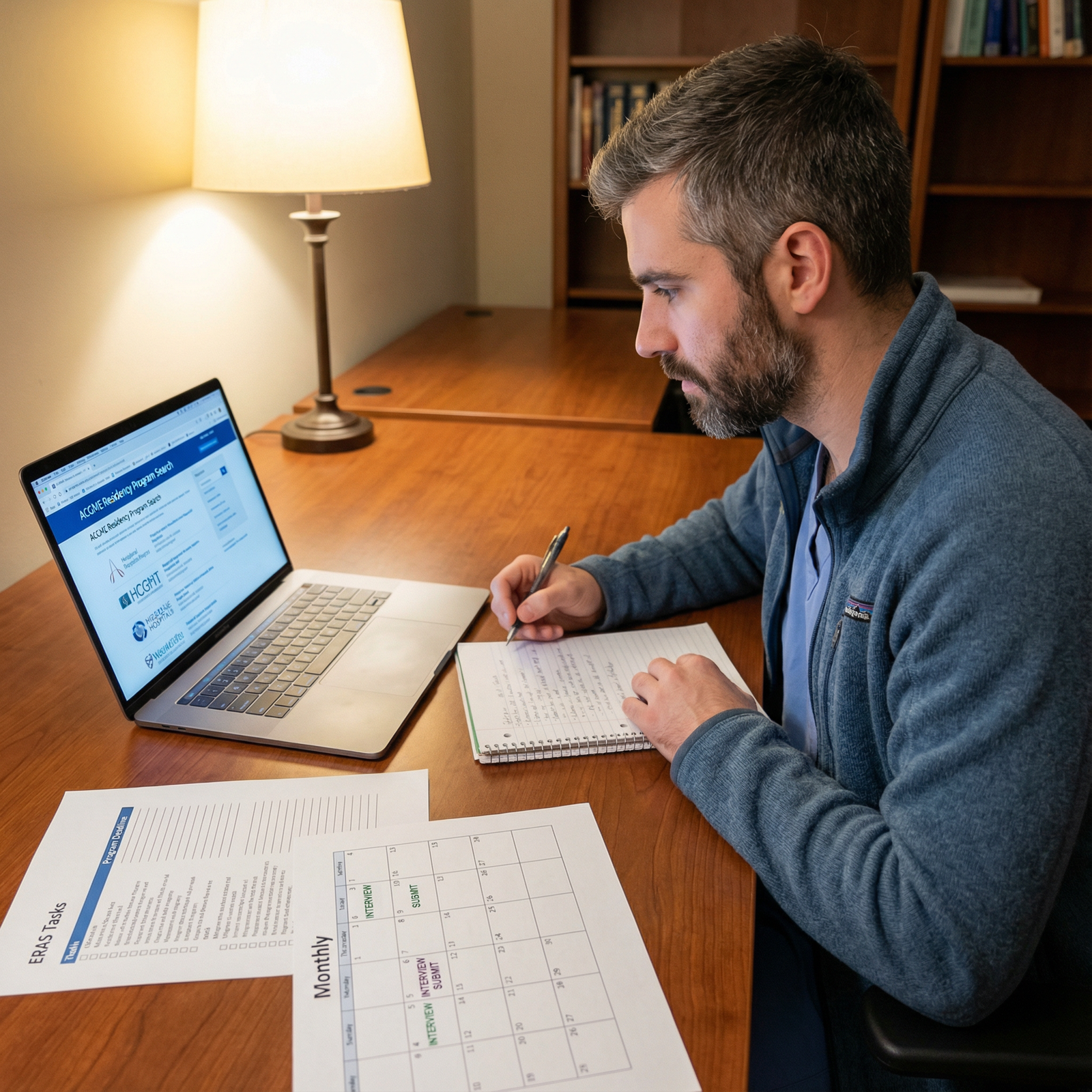
- Create a detailed application calendar with:
- COMLEX / USMLE exam dates and result release times
- ERAS application opening and submission target date
- MSPE (Dean’s Letter) release date
- Program-specific deadlines for letters, supplemental ERAS, and secondary forms
- Interview season (usually October–January)
- NRMP rank list certification deadline
Staying ahead of deadlines is especially important for DO students applying broadly to ACGME residencies, where early applications can impact interview offers.
2. Strengthening Your Academic and Clinical Profile
Academic Performance: COMLEX and USMLE Strategy
Your exam performance is one of the most objective parts of your application.
- If you take only COMLEX:
- Target scores at or above your specialty’s typical DO match range
- Use COMQUEST, COMBANK, and NBOME practice exams, along with high-yield texts
- If you take both COMLEX and USMLE:
- Plan board study in an integrated fashion
- Use UWorld, AMBOSS, and NBME forms extensively
- Schedule Step 1 and COMLEX Level 1 relatively close together to maximize efficiency
Consider specialty expectations:
- Highly competitive specialties and top academic programs are more likely to prefer or require USMLE scores
- Many community-based and primary care programs are highly comfortable with COMLEX-only applicants
Clerkships and Clinical Evaluations
Strong clinical performance is particularly important for DOs, as it showcases your readiness to thrive in any ACGME environment.
- Aim for honors or high evaluations in core rotations related to your desired specialty
- Ask for feedback mid-rotation so you can improve in real time
- Demonstrate:
- Reliability and work ethic
- Team communication
- Clinical reasoning and presentation skills
- Compassion and professionalism
These elements often appear in your MSPE and LORs, which heavily influence interview decisions.
3. Clinical Experiences That Strengthen Your Candidacy
Audition Rotations / Sub-Internships (“Sub-Is”)
For many specialties (especially EM, Surgery, IM, OB/GYN):
- Complete at least one sub-internship at an ACGME program in your chosen specialty
- Ideal timing: early in fourth-year (July–September)
- Goals:
- Demonstrate your clinical ability and work ethic
- Learn the program culture
- Secure strong letters of recommendation
As a DO applicant, audition rotations at MD-heavy ACGME programs can also help dispel unfounded biases and allow you to stand out in person.
Externships and Away Rotations
If your home institution lacks your target specialty or you’re pursuing a very competitive field:
- Consider additional away rotations at institutions where you would seriously consider matching
- Use VSLO (Visiting Student Learning Opportunities) or contact programs directly
- Be very intentional: choose locations where:
- DOs have historically matched
- Your interests align with their mission (rural care, research focus, underserved populations, etc.)
4. Research, Quality Improvement, and Scholarly Activity
Research is not mandatory for every specialty, but it can significantly strengthen your application, particularly in academic Internal Medicine, Pediatrics, Psychiatry, and competitive fields.
Options include:
- Clinical research projects in your chosen specialty
- Case reports or series from interesting patients you encounter
- Quality Improvement (QI) projects that show engagement with systems-based practice
- Presentations at local, regional, or national conferences
For DO students: involvement in osteopathic-focused research (e.g., OMT efficacy, holistic care models) can also highlight your unique training—just be sure to emphasize its relevance to your intended field.
Crafting an Outstanding ERAS Application as a DO
Personal Statement: Highlighting Your Osteopathic Identity with Purpose
Your personal statement should do more than simply state that you are a DO. It should show how osteopathic medicine shapes your clinical approach and career goals.
Key elements to include:
- A clear narrative arc
- A brief origin story (why this specialty, why medicine)
- A couple of specific patient or rotation experiences that changed or solidified your path
- Osteopathic philosophy in action
- Describe how you use holistic, patient-centered thinking in real clinical scenarios
- If you use OMT, share a patient example (without identifiers) where it made a difference
- Fit with the specialty and type of program
- For example: interest in academic vs community medicine, underserved care, rural vs urban practice
- Future goals in healthcare careers
- Leadership, teaching, research, advocacy, or subspecialization
Avoid clichés (“I want to help people”) and generic statements that could apply to any applicant. Make your DO identity specific, concrete, and relevant.
Letters of Recommendation (LORs): Strategic Choices for DO Applicants
For ACGME residencies, strong, specialty-specific letters are essential.
Aim for:
- At least 3–4 total letters (ERAS allows up to 4 per program)
- 2 or more from your chosen specialty – ideally from ACGME faculty
- One may be from:
- A research mentor (if you have significant scholarly work)
- A subspecialist relevant to your interest
- A department chair (if your school has a standard chair letter)
For DO students, it is particularly valuable to have:
- At least one letter from an MD or DO faculty at an ACGME program who can attest to your ability to thrive in that environment
- Letters that explicitly mention:
- Clinical reasoning and work ethic
- Ability to integrate into the team
- Professionalism and communication
Ask for letters early—ideally near the end of the rotation when your performance is fresh—and provide your CV, personal statement draft, and a brief summary of your goals.
ERAS Application Details: Getting the Fundamentals Right
Your ERAS application is the core of your Residency Application Guide in action.
Be meticulous about:
- Experience descriptions:
- Use action verbs and quantify impact when possible
- Show longitudinal commitment (e.g., “2 years of free clinic volunteering”)
- Awards and leadership roles:
- Include osteopathic organizations (e.g., SOMA, specialty DO societies)
- Highlight any leadership demonstrating initiative and responsibility
- Program signaling (where applicable):
- Some specialties use preference-signaling; use these strategically to express strong interest in specific programs
Check for consistency across all components—your personal statement, ERAS entries, and letters should tell a unified story about your interests and strengths.
Navigating the NRMP Match and SOAP as a DO
Understanding the NRMP Match as a DO Applicant
The NRMP (National Resident Matching Program) is the algorithm-based system that pairs applicants with programs based on ranked preferences.
Key steps:
- Register with NRMP and pay the appropriate fees
- Interview season (typically October–January)
- Create your Rank Order List (ROL) of programs in true preference order
- Match Week:
- Monday: You find out if you matched
- Friday: You find out where you matched
The algorithm favors the applicant’s preferences, so never rank programs in order of where you “think” you’ll match. Rank based on where you genuinely want to train, assuming they would accept you.
SOAP (Supplemental Offer and Acceptance Program) for Unmatched DOs
If you do not match on Monday of Match Week, you may be eligible for SOAP, a structured process matching applicants into unfilled ACGME residency positions.
To prepare:
- Before Match Week, identify backup specialties or geographic areas you are willing to consider
- Keep an updated CV and generic personal statement ready
- Work closely with your Dean’s office, advisors, and mentors if SOAP becomes necessary
DOs historically perform well in SOAP, especially when flexible regarding specialty and location. If you SOAP into a different specialty than originally planned, remember there can still be pathways to align your career with your broader interests (e.g., hospitalist work with procedure-heavy practice, or later fellowships).
Reconsidering Application Volume: How Many Programs Should DOs Apply To?
The original suggestion of 5–15 programs is generally too low in today’s competitive environment, especially for ACGME residencies.
Approximate ranges for many DO students (may vary by specialty and academic profile):
- Highly competitive specialties (Derm, Ortho, ENT, Radiology, etc.): 60–80+ programs
- Moderately competitive (EM, Anesthesia, OB/GYN, some IM programs): 40–60 programs
- Primary care (Family Med, many IM programs, Psych, Pediatrics): 20–40+ programs
Discuss the exact numbers with an advisor who knows your transcript, exam scores, and specialty interest. Apply broadly, but still thoughtfully—do not mass-apply without considering program fit and DO-friendliness.
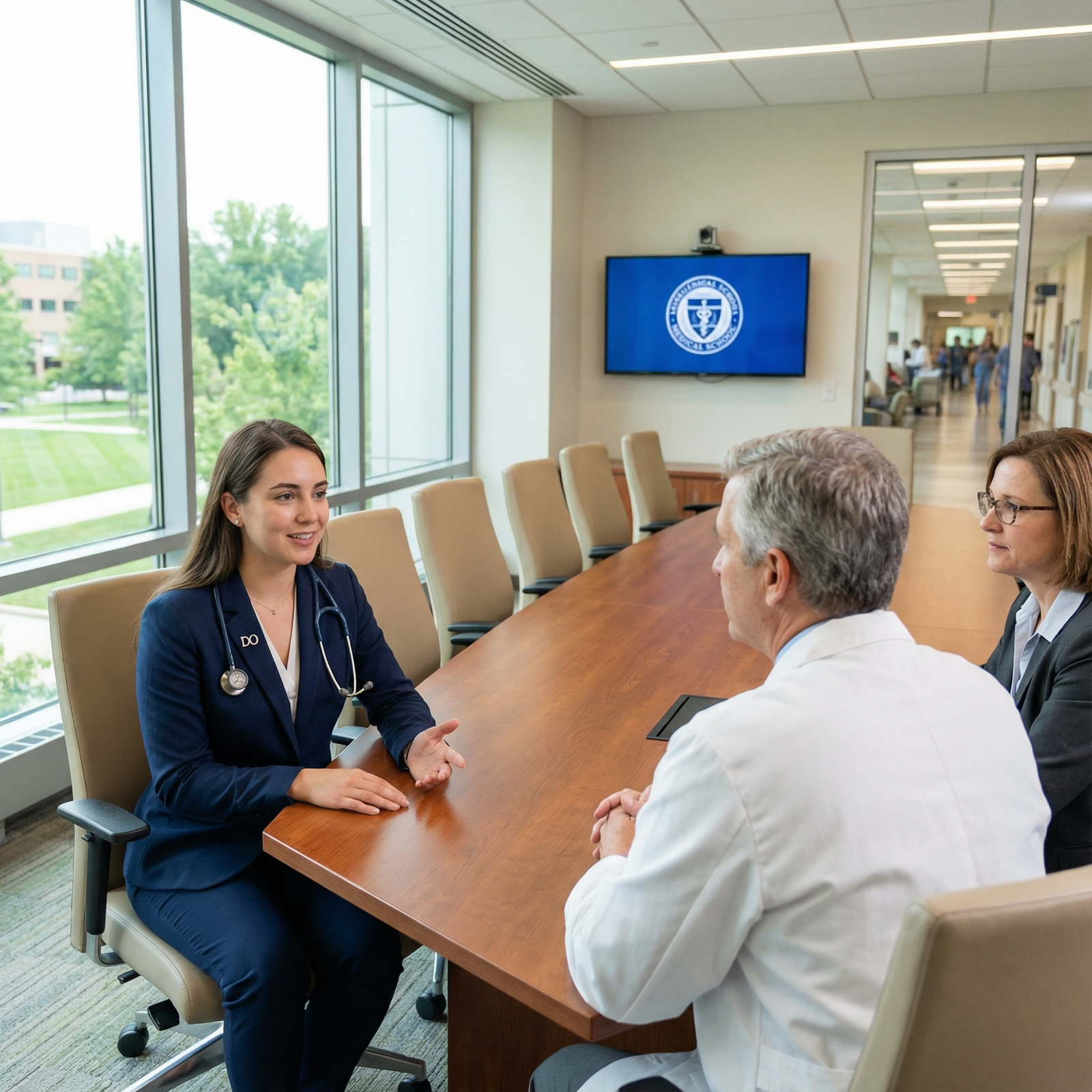
Interviewing and Presenting Yourself as a Competitive DO Applicant
Preparing for Residency Interviews
Residency interviews are your opportunity to humanize your file and address any questions about your osteopathic background.
Preparation strategies:
- Practice common questions:
- “Why this specialty?”
- “Why our program?”
- “Tell me about a challenging clinical situation.”
- “How does being a DO influence your patient care?”
- Prepare concise talking points around:
- Your most meaningful clinical experiences
- Research or QI projects
- Leadership and community involvement
For virtual interviews:
- Ensure a quiet, professional background and reliable internet
- Test your camera, microphone, and platform in advance
- Practice eye contact by looking at the camera, not just the screen
Addressing DO-Specific Questions or Bias
Most programs are familiar with DO training, but you may occasionally encounter:
- Curiosity about your osteopathic education
- Questions around COMLEX vs USMLE
- Requests for explanation of OMT
Respond confidently:
- Frame osteopathic medicine as an added dimension, not a limitation
- Emphasize your ability to work effectively with interprofessional teams
- If you practice OMT, explain how you integrate it appropriately within evidence-based care
If a program seems overtly biased, remember that fit is mutual. You deserve a training environment that values your background.
Frequently Asked Questions: DOs and ACGME Residency Applications
Q1: Can DOs apply directly to ACGME residencies, and are they at a disadvantage compared to MDs?
Yes, DOs apply directly to ACGME residencies through ERAS and NRMP just like MDs. Under the single accreditation system, DOs and MDs are evaluated within the same general framework. Some highly competitive programs may still be more familiar with MD applicants, but many ACGME residencies are actively seeking DOs for their holistic training and strong clinical skills. Your competitiveness depends more on your exam scores, clinical evaluations, research, and letters than on the initials after your name.
Q2: How should DOs decide whether to take USMLE in addition to COMLEX?
This depends on your specialty and target programs. If you’re pursuing a highly competitive specialty (Dermatology, Orthopedic Surgery, Radiology, ENT, some academic IM programs), taking at least USMLE Step 1 and Step 2 CK often broadens your options and allows direct comparison with MD applicants. For primary care and many community-based programs, strong COMLEX scores alone are frequently sufficient. Review program requirements and speak with advisors and recent DO graduates in your chosen specialty before deciding.
Q3: What are the most common specialties for DOs to match into through ACGME residencies?
DOs commonly match into Family Medicine, Internal Medicine, Psychiatry, Pediatrics, and Emergency Medicine, but also successfully enter Anesthesiology, OB/GYN, General Surgery, Physical Medicine & Rehabilitation, and many other fields. Your best strategy is to match your interests and strengths with realistic specialty expectations, then build a tailored, strong application.
Q4: How can I improve my chances of securing ACGME residency interviews as a DO?
Focus on controllable factors:
- Aim for strong COMLEX (and USMLE if taken) scores
- Excel in clinical rotations, especially in your specialty of interest
- Complete at least one audition/sub-internship at an ACGME program
- Obtain strong, specialty-specific letters of recommendation
- Engage in research or QI projects where feasible
- Apply broadly to programs known to be DO-friendly, and submit early in the application season
Q5: What should I emphasize in my personal statement as a DO applicant?
Highlight how osteopathic principles shape your approach to patient care—holistic assessment, prevention, structure-function relationships, and patient education. Use concrete patient or rotation experiences to demonstrate these principles in action. Connect your DO identity to your chosen specialty and long-term goals in healthcare careers, and make clear why you are a strong fit for the type of ACGME programs you are applying to.
By understanding the modern ACGME landscape, planning early, and intentionally showcasing the strengths of your osteopathic training, you can approach the residency application process with genuine confidence. Your DO background is not a hurdle to overcome—it is a distinctive asset that, when presented thoughtfully, can help you stand out in a crowded field and build a rewarding, impactful medical career.