
The idea that “more comprehensive” Q-banks are always better is wrong.
For a lot of med students, subject-specific Q-banks beat giant all-in-one banks at key moments in your prep. But not always. The trick is knowing when each type makes sense and how to combine them without wasting time, money, or mental energy.
Let’s cut through the noise and get practical.
The Core Answer: Which Is Better?
If you want the quick verdict:
For board-style exam prep overall (NBME, Shelf, Step 1/2, COMLEX):
A high‑quality comprehensive Q-bank should be your main workhorse.For fixing weak areas, courses, and shelves:
Subject‑specific Q-banks are often more efficient, higher-yield, and sanity-saving.
So the right question isn’t “which is better overall?”
The right question is: “For this phase of my prep, which tool solves my exact problem?”
Think of it like this:
- Comprehensive Q-banks = your full training camp
- Subject-specific Q-banks = targeted clinics and coaching sessions
You usually need both over the course of med school. You just don’t need both all the time.
What Each Type Actually Does Well (And Poorly)
Let’s get concrete about what you’re choosing between.
Comprehensive Q-Banks
Examples: UWorld, AMBOSS Q-bank, Kaplan, USMLE‑Rx, TrueLearn (for COMLEX)
What they’re good at:
- Simulating the actual exam: style, length, difficulty, fatigue, timing
- Integrating multiple systems in one question (classic boards pattern)
- Teaching test-taking strategy through repetition of patterns
- Giving a realistic sense of your current level across topics
- Building endurance with long, mixed blocks
What they’re bad at:
- Focusing deeply on one narrow topic when you’re truly weak
- Being aligned 1:1 with your school’s course sequence
- Giving you quick, confidence-building wins in a specific class
- Avoiding overkill – sometimes you’re hit with way more detail than you need for, say, a basic path exam
You use comprehensive banks when you’re:
- In dedicated Step/Level prep
- Doing mixed review during pre‑clinicals
- On clinical rotations prepping for shelves/Step 2 with mixed blocks
Subject-Specific Q-Banks
Examples:
- B&B Q-banks by topic
- Anki-style question banks per subject within platforms
- Shelf-specific sets (e.g., OnlineMedEd Qs, AMBOSS shelf modules)
- Pathoma questions, Rosh Review for EM, Divine Intervention question sets, etc.
What they’re good at:
- Crushing a single topic: renal phys, biostats, heme/onc, OB intrapartum, etc.
- Lining up with course exams: cardio block, neuro block, micro block
- Cleaning up weak spots efficiently
- Being mentally easier to start and sustain: “20 GI phys questions” feels doable
- Giving focused practice right after you learn something in lecture
What they’re bad at:
- Preparing you for integration (e.g., a question that has cardio, renal, and pharm in one stem)
- Training test endurance and pacing across long blocks
- Replacing a main comprehensive Q-bank for Step/Level prep
- Showing your overall readiness
You use subject‑specific banks when you’re:
- In an organ system block and have a unit exam soon
- Pre-dedicated and building foundations topic by topic
- Trying to fix a glaring weakness (e.g., biostats is killing you)
- Studying for a single shelf and want OB only, or Psych only, etc.
When Subject-Specific Q-Banks Are Clearly Better
There are specific scenarios where I’d tell you flat out: stop grinding mixed UWorld and go subject‑specific.
1. Early Pre‑Clinicals: Learning, Not Just Testing
If you’re in MS1 or early MS2 and your school is systems-based (cardio, pulm, renal, etc.):
- Your first job is understanding the physiology, pathology, and basic pharm
- Doing mixed Step‑level blocks when you barely know what the kidney does is a waste
Here, a subject-specific bank shines:
- Cardiovascular phys questions right after your cardio lectures
- Micro questions only about gram positives during that week
- Path-only questions from Pathoma/B&B for that organ
You’re building deep grooves in one system at a time. Mixed comprehensive banks are just noise if your foundation is weak.
2. Right Before a Block Exam
Scenario you’ve lived:
Cardio block exam on Friday. You’ve got 3 days. You open a big Q-bank and it throws you derm, endocrine, and random ethics.
That’s dumb.
For block-exam crunch time, you want:
- 50–150 targeted questions specifically on that block’s content
- Fast feedback on “Do I actually know this material?”
- Confidence that you won’t get blindsided on exam day
Subject-based banks or your platform’s topic filters are perfect here.
, Fixing weak topics](https://cdn.residencyadvisor.com/images/articles_svg/chart-best-use-cases-subject-specific-vs-comprehensive-q-9958.svg "Best Use-Cases: Subject-Specific vs Comprehensive Q-Banks")
| Category | Value |
|---|---|
| Early pre-clinicals | 90 |
| Block exams | 85 |
| Dedicated Step/Level prep | 20 |
| [Shelf exams](https://residencyadvisor.com/resources/exam-prep-resources/do-i-really-need-separate-resources-for-shelf-exams-and-boards) | 60 |
| Fixing weak topics | 95 |
(Higher value = subject-specific Q-banks tend to be better suited)
3. Fixing a Known Weakness
You bomb renal questions. Or OB questions. Or biostats.
Doing more mixed comprehensive questions just:
- Hurts your ego
- Eats time
- Gives you maybe 10–15% of questions on your weak topic per block
Subject-specific Q-banks let you:
- Do 50–100 only on that weak area
- See the same patterns again and again
- Build repetition until the topic feels boring (that’s the goal)
Example plan:
- 3 days where you do 20–30 renal-only questions daily
- Review explanations aggressively, write 1–2 line takeaways
- Then go back to mixed blocks and watch your renal performance jump
4. Shelf Exams with Very Biased Content
Some shelves (OB/GYN, Peds, Psych) have:
- Very specific patterns
- Very specific “favorite” diseases and management strategies
If you try to rely purely on mixed Step 2 Q-banks, you’ll:
- See those high-yield patterns too infrequently
- Miss subtle but testable details
- Feel like you’re always catching up
Using a good specialty-specific Q-bank (e.g., OB-only sets from a trusted resource) right before the shelf fills that gap.
When Comprehensive Q-Banks Are Clearly Better
Subject-specific is not the hero in every story. There are moments where you should stop tinkering with tiny topic banks and go big.
1. Dedicated Step 1 / Step 2 / COMLEX Prep
This one’s non-negotiable:
For any big licensing exam, you need at least one major comprehensive Q-bank done seriously.
Why:
- The real exam is integrated – you won’t get “renal day,” you’ll get “everything day”
- You need stamina: 40+ question blocks, back-to-back mental hits
- You must learn test-taking skills, not just content recall
This is where UWorld, AMBOSS, or similar banks earn their price tag. Subject-specific Q-banks are add-ons, not replacements, here.
Typical pattern:
- 1–2 passes of a major comprehensive Q-bank
- Optional: targeted subject-based sets to patch weak areas in the last 2–3 weeks
2. Later MS2: Transition to Boards Thinking
Once you’ve done most of your systems, it’s time to:
- Stop thinking “cardio, renal, neuro”
- Start thinking “patient with SOB, what’s next?” (integrated reasoning)
Mixed blocks force you to:
- Switch gears quickly
- Recognize cross-system patterns
- Practice time management
Subject-specific questions don’t train that exam muscle.
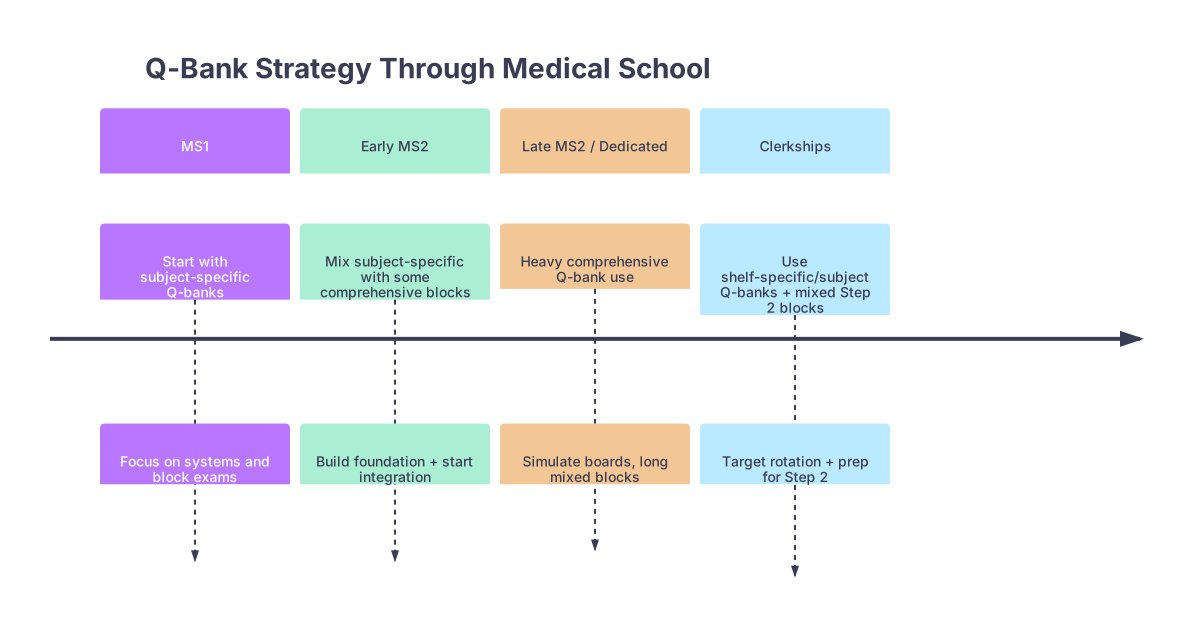
| Period | Event |
|---|---|
| MS1 - Start with subject-specific Q-banks | Focus on systems and block exams |
| Early MS2 - Mix subject-specific with some comprehensive blocks | Build foundation + start integration |
| Late MS2 / Dedicated - Heavy comprehensive Q-bank use | Simulate boards, long mixed blocks |
| Clerkships - Use shelf-specific/subject Q-banks + mixed Step 2 blocks | Target rotation + prep for Step 2 |
How to Combine Them Without Burning Out
Here’s a sane way to structure this so you don’t drown.
Pre‑Clinical Years (MS1–Early MS2)
Main goals:
- Master systems
- Pass school exams comfortably
- Start building Step-level thinking, slowly
A reasonable approach:
- 70–80% subject-specific questions aligned with your current block
- 20–30% mixed comprehensive (maybe 1–2 short blocks per week) once you’ve covered some systems
Example week in cardio block:
- Mon–Thu: 15–30 cardio-only questions each day (from subject-based bank or filtered UWorld/AMBOSS)
- Fri or Sat: One 20–40 question mixed block from a comprehensive bank at untimed or timed‑tutor mode
Dedicated Step 1 / Step 2 / COMLEX
Now you flip the ratio.
Main goals:
- Simulate exam conditions
- Crush your main comprehensive Q-bank
- Patch gaps surgically
Approach:
- 80–90% comprehensive bank, done in exam-like conditions (timed, mixed, full-length blocks)
- 10–20% subject-specific for:
- Bio/Biostats if your NBMEs show weakness
- Super weak topics (renal, neuro, OB, etc.)
- Last 1–2 weeks as targeted review
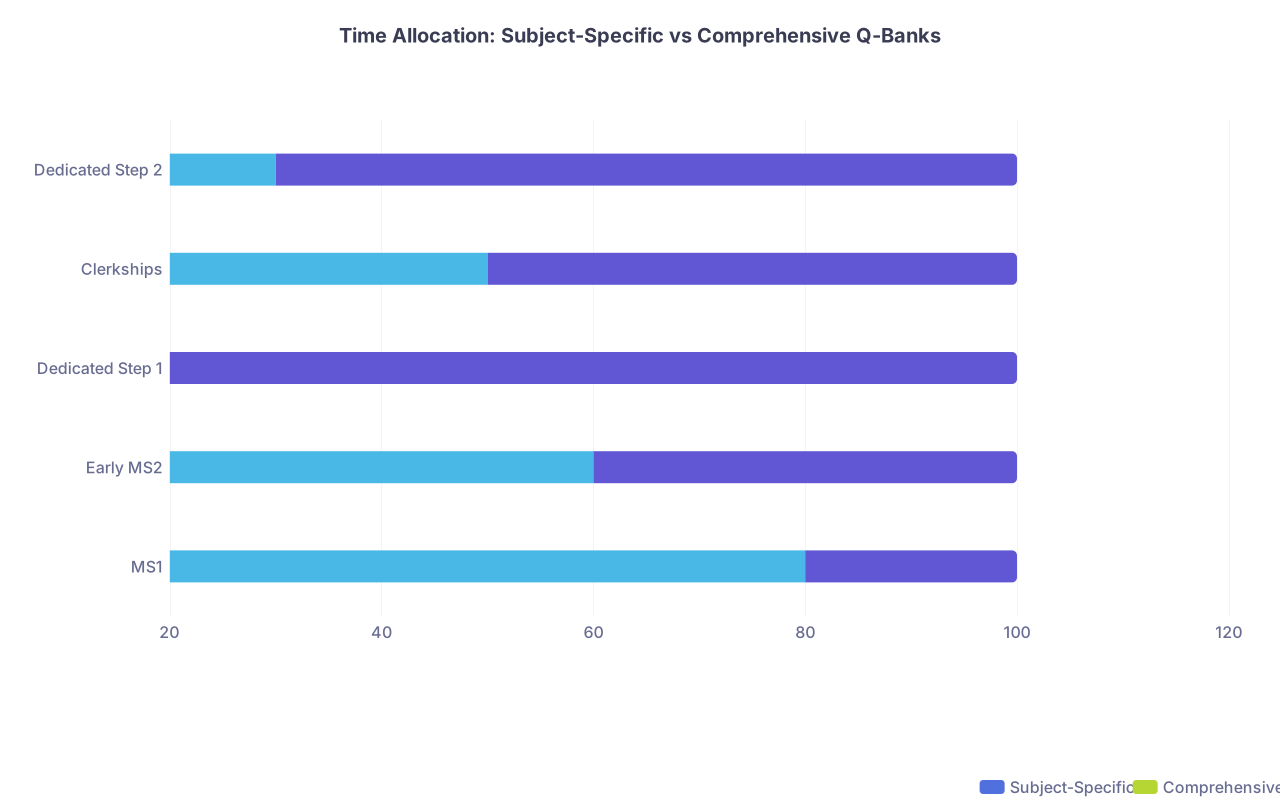
| Category | Subject-Specific | Comprehensive |
|---|---|---|
| MS1 | 80 | 20 |
| Early MS2 | 60 | 40 |
| Dedicated Step 1 | 20 | 80 |
| Clerkships | 50 | 50 |
| Dedicated Step 2 | 30 | 70 |
Clerkships & Shelf Exams
Here it’s truly half and half.
Goals:
- Honor the rotation
- Pass the shelf
- Quietly build Step 2 skills
Approach per rotation (e.g., IM, Surgery, OB, Peds):
- Early in rotation:
- Subject-specific Qs tied to what you’re seeing on the wards
- Mid–late rotation:
- 50% shelf-specific questions (subject-based)
- 50% mixed Step 2 Q-bank blocks
You’re training both:
- Rotation success (recognizing classic shelf presentations)
- Long-term Step 2 readiness
How to Judge If a Subject-Specific Q-Bank Is Worth It
Not all subject-specific banks are created equal. Some are just lazy repackaged stuff.
Use this quick filter:
| Criterion | What You Want |
|---|---|
| Question style | Clearly board-like, not trivia or nonsense |
| Explanations | Short, clear, with why-wrong for options |
| Integration | Includes some cross-topic reasoning |
| Difficulty | Slightly above your school exam level |
| Volume | Enough Qs to matter, not just 20–30 per topic |
If it fails 2+ of these, skip it. Just filter a major Q-bank by topic instead.
Common Mistakes Students Make With Q-Banks
I’ve watched a lot of people sabotage themselves here.
Using only subject-specific Q-banks for Step
They show up to Step 1/2 having never done long mixed blocks. They get wrecked not by content, but by stamina and integration.Starting a big comprehensive bank way too early
MS1, first semester, barely done with anatomy, and they’re already doing hard UWorld blocks. It just makes them feel dumb and wastes good questions.Buying five different Q-banks and finishing none
A half‑done collection of resources is worse than one main bank done really well.Never switching strategy as they move through med school
The ratio should shift. If you’re still only doing subject-specific banks in late MS2, you’re behind.
A Simple Decision Guide
Here’s a blunt rule set you can actually use.
If:
- You have a block exam in ≤ 2 weeks → Prioritize subject-specific (or filtered) questions for that block.
If:
- You’re ≥ 3 months from Step 1/2 and still in systems →
- Majority subject-specific
- One mixed block weekly from a comprehensive bank
If:
- You’re in dedicated Step/Level season →
- Main focus: one big comprehensive Q-bank
- Use subject-specific only for targeted gap-filling
If:
- You’re on a clerkship with a shelf →
- Half shelf/subject-specific
- Half mixed Step 2 comprehensive




FAQs
1. Should I finish one comprehensive Q-bank before touching any subject-specific ones?
No. During pre‑clinicals, you’re usually better off blending them. Use subject-specific for your current system and sprinkle in a small amount of mixed comprehensive questions once you’ve got a few systems under your belt. During dedicated, yes—your priority is finishing your main comprehensive bank.
2. If I can only afford one resource, should I get a comprehensive or subject-specific Q-bank?
Get a comprehensive Q-bank. You can usually filter it by subject to mimic a subject-specific bank. That gives you both targeted and mixed options in one place. A subject-specific-only setup won’t prepare you properly for Step/Level or shelves.
3. Are school-provided question banks enough, or should I still get a big commercial one?
School banks are hit-or-miss. If they’re clearly written in board style, with good explanations and decent volume, they’re fine for block exams. They almost never replace a strong commercial comprehensive Q-bank for Step/Level. For boards, I’d still invest in something like UWorld, AMBOSS, or a similarly respected bank.
4. How many Q-banks do I realistically need for Step 1 or Step 2?
One primary comprehensive Q-bank is non-negotiable. A second one is optional but can help if you start early and don’t rush. Subject-specific Q-banks are add-ons, not core requirements. If you’re short on time, it’s better to master one big bank than half-finish two.
5. I feel behind—should I spam subject-specific questions to catch up?
No. Panicking and grinding only one topic usually backfires. Do this instead:
- Spend 3–5 days hitting your worst topic hard with subject-specific questions,
- Then go back to regular mixed blocks so you don’t skew your prep.
Use subject-specific as a scalpel, not a lifestyle.
Key takeaways:
- Subject-specific Q-banks are better for blocks, weaknesses, and shelves; comprehensive Q-banks are better for boards and long-term readiness.
- Your Q-bank mix should change over time—heavy subject-based early, heavy comprehensive during dedicated, balanced during clerkships.
- One strong comprehensive Q-bank done well beats a pile of half-finished resources.