
The biggest mistake international grads make with US Q-banks is trying to use them the same way they studied back home. That approach will crush your confidence and waste your time.
You’re not just learning questions. You’re learning a new exam culture.
Let’s treat it like what it really is: moving into a different testing ecosystem with its own language, logic, and traps. If you’re an international graduate entering (or aiming for) US residency and suddenly drowning in UWorld/AMBOSS/NBME blocks, this is how you adapt without burning out or losing your mind.
1. Understand What’s Actually Different About US Q‑Banks
You already know medicine. The issue is format and expectations, not your intelligence.
Here’s what hits most IMGs in the face the first week:
- Questions feel insanely long.
- The answer options are all technically “plausible.”
- They keep asking “most appropriate next step” when you could argue for three.
- Explanations assume you know the US system: outpatient follow-up norms, malpractice culture, screening guidelines, insurance/logistics.
You’re not crazy. The style really is different.
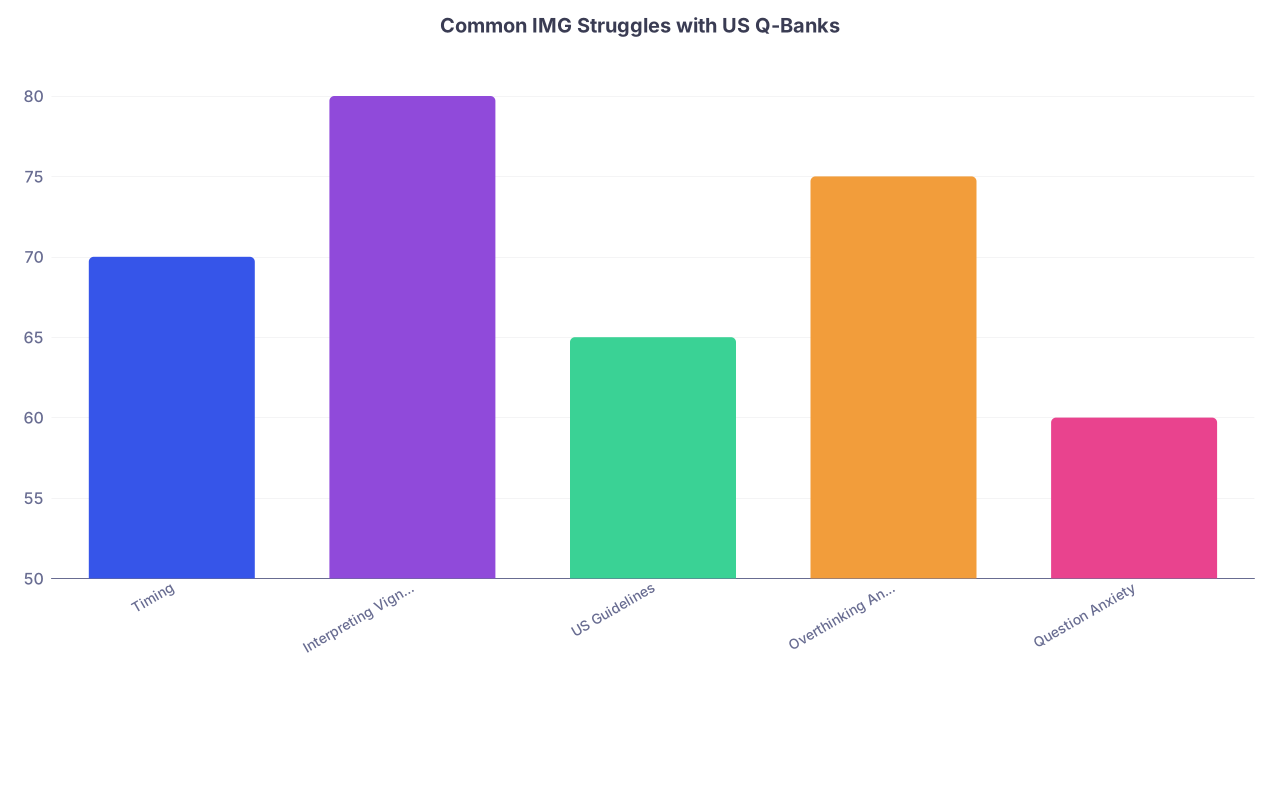
| Category | Value |
|---|---|
| Timing | 70 |
| Interpreting Vignettes | 80 |
| US Guidelines | 65 |
| Overthinking Answers | 75 |
| Question Anxiety | 60 |
Here’s the mindset shift you need:
- US Q-banks test pattern recognition + priority thinking, not just factual recall.
- Questions are written from a “US system” lens: malpractice risk, resource use, patient expectations.
- The goal is not to argue what could be done. The goal is to find what the US exam writer thinks should be done first.
So when you feel, “But where I trained, we would do X,” that’s exactly the adaptation point. You’re not wrong clinically. You’re just not answering in “US Exam Language” yet.
Your job for the first 4–6 weeks is not primarily “getting high percentages.” It’s building fluency in this new language of questions.
2. Stop Copying American Students’ Q‑Bank Habits
I’ve watched this happen every year:
An IMG joins a USMLE/Step prep group. Sees a US med student bragging: “Doing 6 blocks/day, all timed, all random, 76% average.” The IMG thinks: “If that’s what it takes, I’ll do that too.”
Three days later: they’re exhausted, confused, and sitting at 38%.
You’re in a different starting position. You cannot copy-paste their strategy.
Let’s break this down by phase of your adaptation.

| Step | Description |
|---|---|
| Step 1 | Phase 1 Acclimatization |
| Step 2 | Phase 2 Stabilization |
| Step 3 | Phase 3 Performance |
Phase 1 (First 2–3 weeks): Acclimatization, Not Performance
Your goals:
- Learn US question style.
- Learn how explanations are structured.
- Learn which topics keep showing up.
What to actually do:
- 20–30 questions/day, tutor mode, system-based (e.g., only cardiology).
- Take as much time as you need per question; ignore the clock.
- For each block, spend at least 2–3x the question time on reviewing explanations.
What not to do:
- No “timed random” yet.
- No obsessing over percentage scores.
- No comparing your stats to US grads in Telegram/WhatsApp groups.
In this phase, your brain is doing heavy translation: “How do these clues map to what I know?” That cognitive overhead is real. Respect it.
3. Build a Q‑Bank Routine That Works for an IMG Schedule
You might be:
- Working part‑time
- Doing research
- Caring for family
- Adjusting to a new country/time zone
You can’t pretend you’re a 23‑year‑old second-year med student living 5 minutes from campus.
Design your Q‑bank routine around sustainability.
| Scenario | Q-Bank Blocks | Review Time |
|---|---|---|
| Full-time research, 9–5 | 1 block (20) | 1.5–2 hrs |
| Part-time work (4–6 hrs/day) | 1–2 blocks | 2–3 hrs |
| Full-time studying, no job | 2 blocks (40) | 3–4 hrs |
| Exam in < 4 weeks | 2–3 blocks | 4–5 hrs |
Practical structure that actually works
Example for a typical IMG with a day job:
- 6:30–7:30 AM – One 20-question block (tutor, system-based early on; timed random later).
- Evening (1.5–2.5 hours) – Deep review of those 20 questions.
- Weekend – Add 1–2 extra blocks/day, plus reviewing weak topics.
Non-negotiables:
- Never do blocks you don’t have time to review properly.
- No “saving” questions just to feel like you have more later. Use them. Learn from them.
- At least 5 days/week with some contact with questions, even if it’s just 10–15.
If you have to choose, always prioritize quality review over doing more questions.
4. How to Review Q‑Bank Questions Like a Professional, Not a Tourist
Most people “review” questions like this:
- They look at the correct answer.
- Skim the explanation.
- Tell themselves, “Yeah, yeah, I knew that.”
- Move on.
That’s not review. That’s anesthesia.
Here’s how you, as an IMG, should be reviewing in this new system.
For every question you miss (or guessed)
Ask yourself these five things – and write them down, briefly:
- What did the question want? (Diagnosis? Next step? Management? Pathophys?)
- What were the 2–3 critical clues that I ignored or mis-weighted?
- Where exactly did my thinking branch in the wrong direction?
- Which wrong option was I close to picking, and why was it wrong?
- What rule or pattern can I extract from this, so next time I see something similar I’m faster?
Do not write a paragraph summary of the entire topic. That’s how you end up with 200 pages of “notes” you’ll never read again.
You want:
- Patterns
- Rules
- Triggers
- Red flags
- Short “If you see X + Y → think Z”
Example:
Question: 45‑year‑old with chest pain, normal ECG, risk factors, negative troponins at 0 and 3 hours, asking about next step.
Bad note: “Unstable angina is chest pain at rest; NSTEMI has elevated troponin; management includes MONA, beta-blockers, heparin…”
Good note: “Middle-aged + risk factors + chest pain + negative serial trops + normal ECG → do exercise stress test, not send home. Outpatient f/u alone is wrong for this risk level.”
Short. Specific. Actionable.
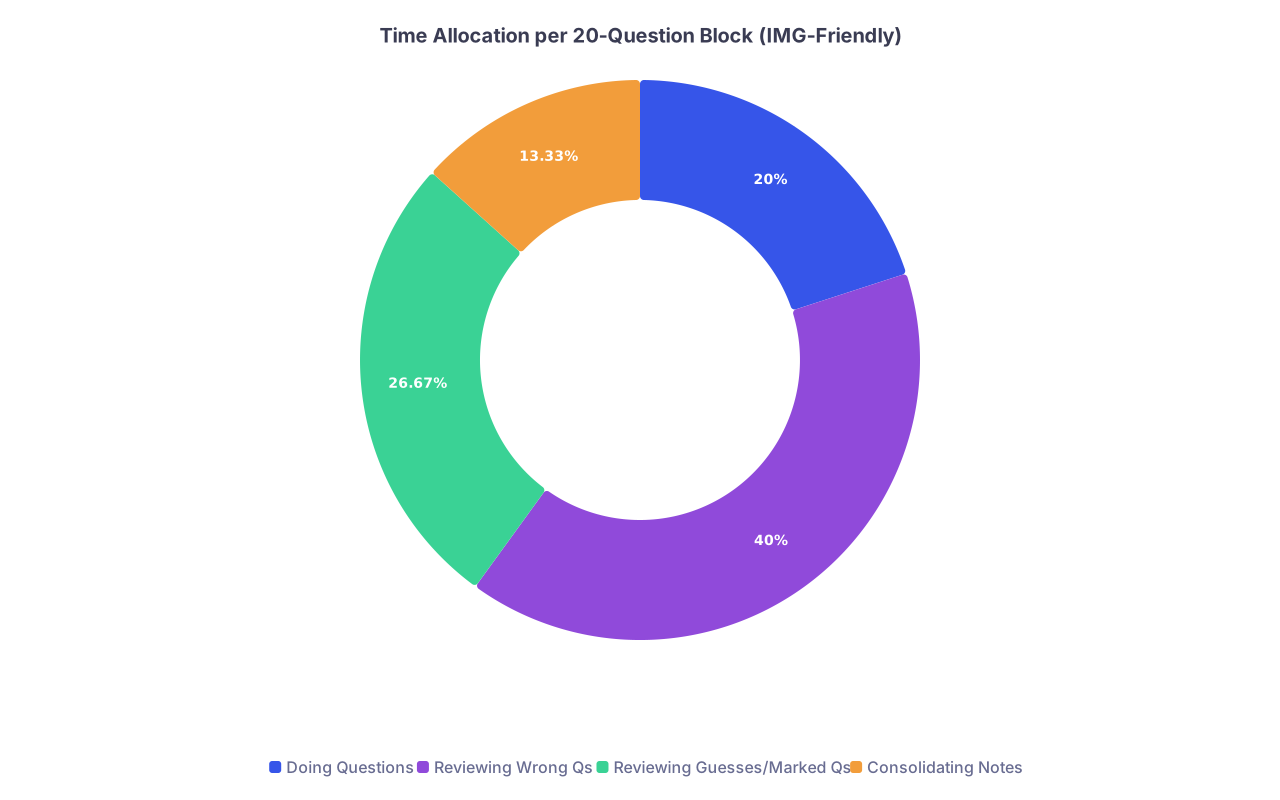
| Category | Value |
|---|---|
| Doing Questions | 30 |
| Reviewing Wrong Qs | 60 |
| Reviewing Guesses/Marked Qs | 40 |
| Consolidating Notes | 20 |
5. Adapting to US‑Style Clinical Reasoning: The “Single Best Answer” Game
US Q‑banks love ambiguity. Two or three options may all sound acceptable. You’re forced to decide which is the most correct in US exam culture.
Here’s the hierarchy you need in your head when you choose between options:
Life-saving and time-sensitive > everything else
(Stabilize airway, treat STEMI, manage sepsis. Exams punish you hard for missing this.)Evidence-based guideline > cool but unnecessary test
(Colon cancer screening age/intervals, statin indications, vaccine schedules.)Non-invasive, cheaper, safer > invasive unless there’s a clear indication
(Ultrasound → CT → invasive, not the other way around for no reason.)Address the biggest risk first, not the most dramatic symptom
(New A-fib with RVR + hypotension? Synchronized cardioversion, not just beta-blockers.)Respect US legal/ethical norms
(Autonomy, informed consent, child protection; US exams lean heavily into this.)
As an IMG, you may be thinking: “In our hospital we don’t even have that test” or “We usually admit everyone like this.” Fine. But in the exam world, you’re playing with their resources, not yours.
When you review questions, literally ask:
- What principle are they testing here?
- What “US priority rule” did I break with my answer?
Write that down, not just the drug dosage.
6. Choosing and Using Q‑Banks Strategically as an IMG
You don’t need every resource people mention on Reddit. You need a clear primary and maybe one backup.
For Step-style or in-training exam-style prep:
Primary:
Usually UWorld or AMBOSS. UWorld is the classic; AMBOSS is slightly more text-heavy but very teaching-oriented.Secondary (optional, after you’ve used the primary well):
- USMLE-Rx, Kaplan, or BoardVitals (varies by exam and specialty; some are better for groundwork, some for extra reps).

Here’s how I’d structure usage for someone 3–4 months from an exam:
Month 1:
400–600 questions total, tutor mode, by system. Use explanations as your main teacher.Month 2:
600–800 questions, start mixing in timed blocks, still 50–70% system-based, 30–50% random.Month 3:
800–1,000 questions, mostly timed and random. Focus on mixed blocks. Start doing NBME or in-training practice exams if available.
If you haven’t built a strong Q‑bank foundation, don’t waste money buying a second big Q‑bank just to say you “finished more questions.” Finish one properly. Then decide.
7. Handling Timing When English Isn’t Your First Language
This is a real issue for a lot of IMGs. Not a character flaw. A planning problem.
US Q‑bank vignettes are long. You read more slowly in English. Then you panic about the clock. Then your accuracy tanks.
Fix it stepwise:
- First 2–3 weeks: Ignore time. Read carefully. Build pattern recognition.
- Week 3–5: Start doing one timed block every 2–3 days. Keep the rest tutor mode.
- After that: At least half your blocks timed. But review remains slow and methodical.
When reading:
- Read first and last sentences of the stem, then the question, then fill in the middle. You want to know: “What is this about?” before you drown in detail.
- Underline or note (mentally, or on scrap paper on exam day) age, sex, key risk factors, and the “trigger phrase” (e.g., “worst headache,” “painless jaundice,” “tea-colored urine”).
If you consistently run out of time:
- Start with 10-question timed blocks.
- Aim to finish in 15 minutes.
- Once you can do that comfortably with decent accuracy, go to 20 in 30 minutes.
- Then full blocks.
It’s a muscle. You train it, you don’t wish for it.
8. Emotional Landmines for IMGs—and How to Defuse Them
The mental side of this process is where a lot of good candidates fall apart.
You’ll probably recognize at least one of these:
- “My percentage is low, maybe I’m not smart enough for this system.”
- “Everyone else is already at 70% on UWorld.”
- “I’m older, I finished med school years ago, I’m too far behind.”
- “I can’t afford to fail; my visa/residency chances depend on this.”
This pressure quietly wrecks your Q‑bank performance because every block becomes a referendum on your worth.
Here’s the brutal truth:
Q‑bank percentages are diagnostic, not moral.
If you’re in the 40s or 50s early on, that doesn’t mean you’re doomed. It means:
- You’re in Phase 1 or 2 of adaptation.
- You’re still translating between systems.
- You’re still learning exam language.
The only percentages that matter:
- Your trend over 4–6 weeks, not 2–3 days.
- Your performance on official practice tests or in-training exams.
Set rules like:
- No checking cumulative percentage more than once a week.
- No comparing stats with others unless you’re changing your strategy with that information.
And if you hit a bad block (we all do):
- Step away for 10 minutes.
- Skim the explanations for high-yield teaching.
- Identify 2–3 patterns you learned.
- Then move on. Don’t spiral.
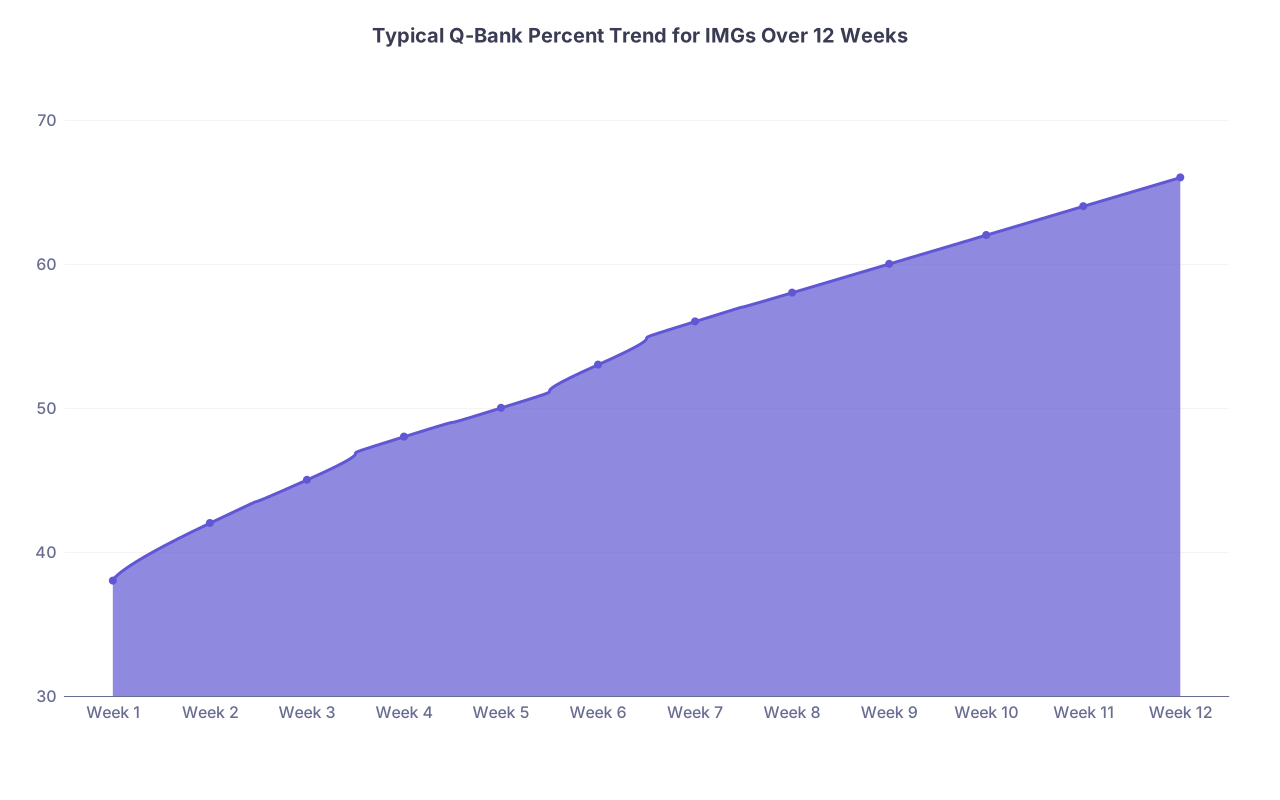
| Category | Value |
|---|---|
| Week 1 | 38 |
| Week 2 | 42 |
| Week 3 | 45 |
| Week 4 | 48 |
| Week 5 | 50 |
| Week 6 | 53 |
| Week 7 | 56 |
| Week 8 | 58 |
| Week 9 | 60 |
| Week 10 | 62 |
| Week 11 | 64 |
| Week 12 | 66 |
See that? Slow climb. That’s what realistic progress looks like.
9. Linking Q‑Banks to Real US Residency Life
You’re not doing this for fun. You’re doing it so you can walk into internship and not get destroyed on day one.
- You recognize classic presentations fast.
- You know guideline-based “first steps.”
- You’re comfortable with US-style management flows.
Good Q‑bank usage prepares you for morning rounds questions:
- “What’s the next best step?”
- “Why not this imaging first?”
- “What guideline supports that choice?”
As you get closer to starting residency:
- Shift your focus toward questions that feel like real ward decisions.
- For IMGs already matched and starting soon, in your last month before residency, lean into questions on:
- Sepsis
- Chest pain
- Shortness of breath
- Common ICU issues
- Antibiotics and hospital-acquired infections
You want your Q‑bank work to translate into fewer “I’m lost” moments on call.

10. A 2‑Week “Reset Plan” If You’re Already Struggling with Q‑Banks
If you’re reading this after weeks of frustration, here’s a direct intervention plan.
For the next 14 days:
Day 1–3
- 15–20 questions/day, tutor mode, single system you’re weak in.
- Spend heavy time on explanations. Write rules, not essays.
Day 4–7
- 20–25 questions/day.
- One 10-question timed block every 2 days.
- Keep reviewing in detail.
Day 8–10
- 30 questions/day.
- At least one timed block of 20 in there.
- Start mixing systems.
Day 11–14
- 40 questions/day total (can be 2 x 20).
- One full timed block daily.
- Strict review structure.
Non-negotiable:
- No starting new resources during this reset.
- No more than 1 hour/day in Reddit, forums, or group chats about scores and Q‑banks.
- Sleep 6–8 hours or your performance data is garbage.
By the end of 2 weeks, you won’t become a genius. But your brain will finally understand “how these questions work.” That’s the turning point.
Open your Q‑bank dashboard today and change one thing: switch your next block from “timed, random, 40” to “tutor, 20–25, focused system,” then commit to spending at least double the block time on review—writing down 3 concrete decision rules you can use in the next block. That’s how adaptation starts.