
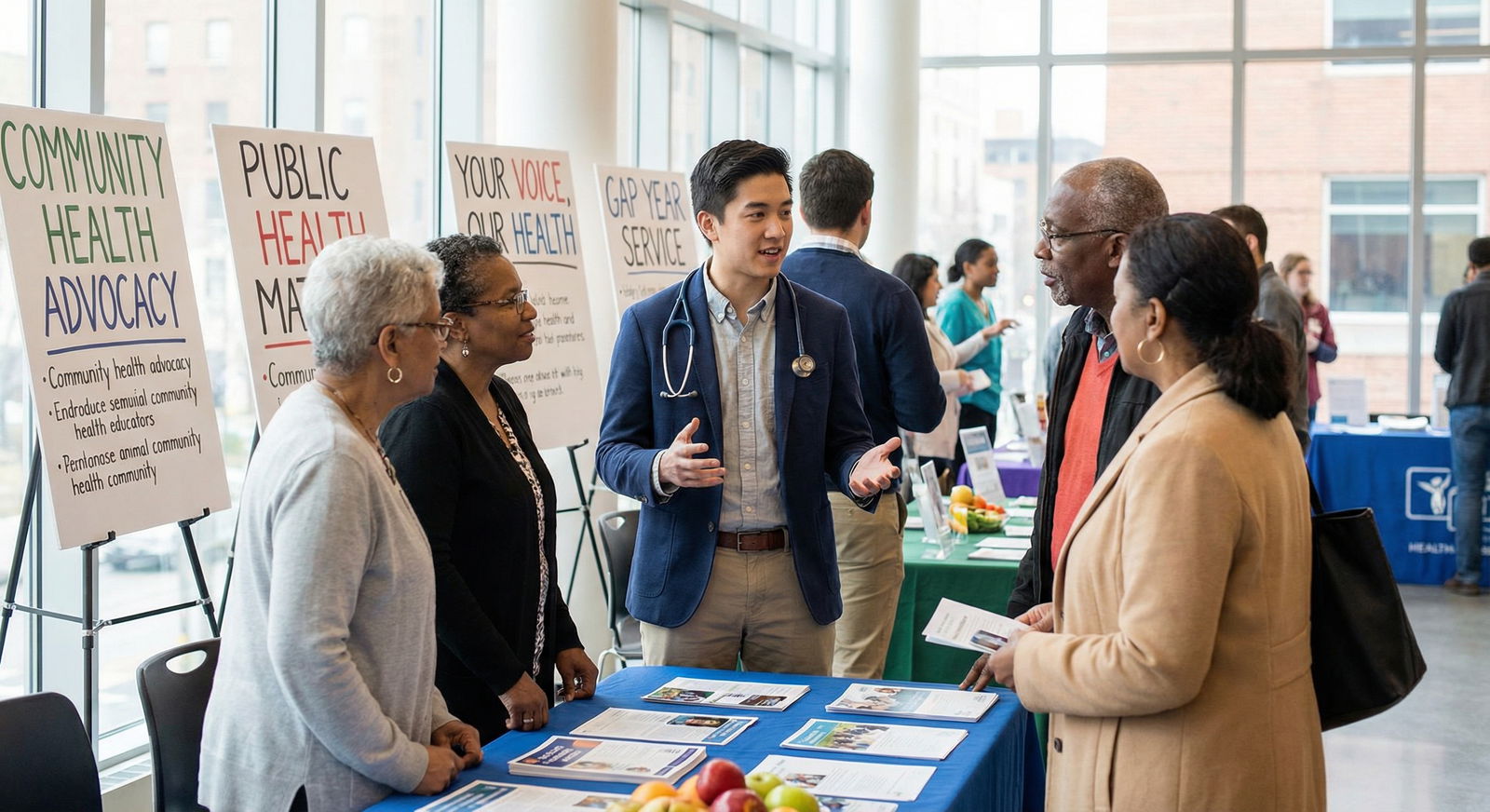
Creating a Longitudinal Community Project in a Single Gap Year Timeline
It is June. You just submitted your last residency application document, or maybe you just got the email: “Unfortunately, you did not match.” Either way, you are staring at a 10–12 month stretch before the next ERAS cycle, and you are thinking:
“I need something that is more than just a random job. I need a narrative. I need a longitudinal project that actually matters to a community and looks serious on my next application.”
Good. Because a one-year, well-structured community project can be the difference between another generic application and one that program directors remember.
Let me break this down specifically: how to design, launch, run, and package a longitudinal community project within a single gap year timeline, without lying about impact and without getting buried in chaos.
We are going to treat this like you would treat an actual quality-improvement project or a small implementation study. Clear aim. Tight scope. Aggressive timeline. Output that matters.
Step 1: Choose the Right Type of Project for a 12-Month Window
The biggest mistake I see: people dream up 3–5 year interventions and then try to cram them into 10 months. That is how you end up with “designed a program that will someday improve community health” on your CV. Which is code for “wrote a proposal and then time ran out.”
You need something that:
- Has visible, trackable activity across the entire year
- Can show concrete outcomes or at least convincing process metrics by month 8–10
- Generates product: presentations, posters, manuscripts, or at minimum well-documented data
Think in three buckets that fit well into a single gap year.
A. Education-Focused Projects
These are the easiest to operationalize quickly.
Examples:
- Longitudinal hypertension self-management classes in a free clinic
- A series-based diabetes group visit program (monthly or bimonthly)
- A teen sexual health curriculum in a school or community center
- Immigrant/refugee health orientation workshops
Why they work:
- Short development timeline (4–6 weeks)
- Clear “dose” (sessions) and attendance metrics
- Easy to collect pre/post knowledge or confidence scores
B. Access / Navigation Projects
These are about helping people get into or move through the health system.
Examples:
- Medication assistance navigation for uninsured patients
- Transportation coordination for clinic visits (vouchers, rideshare workflows)
- Insurance enrollment support integrated into a community clinic intake
- Creating a “care navigation” workflow for a specific population (e.g., recently incarcerated patients)
Why they work:
- You can show concrete outputs: number of patients served, number of enrollments, no-show reduction
- Often clinics are desperate for this help and will say yes quickly
C. Data + Quality Improvement Projects with a Community Twist
These look more “academic” to PDs if you execute them correctly.
Examples:
- Implementing and tracking depression screening in a community clinic
- Building a registry and follow-up process for uncontrolled diabetics (A1c > 9)
- Implementing a smoking cessation referral protocol in a FQHC
Why they work:
- Fits neatly into QI frameworks (PDSA cycles, run charts)
- Easy to convert into a poster or manuscript
What you should not pick for a single gap year:
- Projects requiring policy change at city/state level
- Multi-part interventions across unrelated organizations
- Anything where IRB plus contract plus MOUs will take >4 months (unless they are mostly done already)
If you need a litmus test: if you cannot describe the core intervention in one single sentence, it is probably too sprawling for one year.
Step 2: Map the Year Before You Do Anything Else
You get maybe 10–11 usable months. Match Day is mid-March. ERAS opens in early September. Interviews run October to January. Your project must be mature enough by August that you can describe it as real and active, and ideally have at least preliminary data or visible outputs.
Let us structure the year as a project timeline.
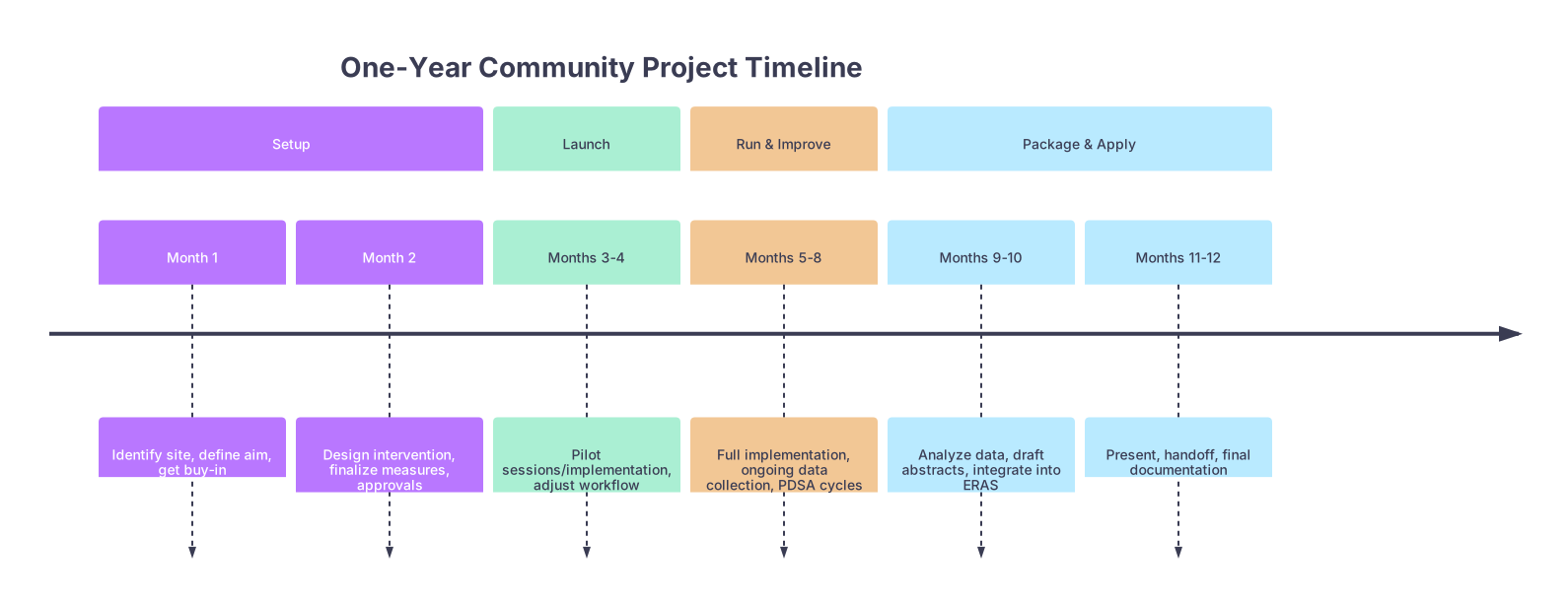
| Period | Event |
|---|---|
| Setup - Month 1 | Identify site, define aim, get buy-in |
| Setup - Month 2 | Design intervention, finalize measures, approvals |
| Launch - Months 3-4 | Pilot sessions/implementation, adjust workflow |
| Run & Improve - Months 5-8 | Full implementation, ongoing data collection, PDSA cycles |
| Package & Apply - Months 9-10 | Analyze data, draft abstracts, integrate into ERAS |
| Package & Apply - Months 11-12 | Present, handoff, final documentation |
Now let us break this into real tasks you can track.
| Month | Primary Focus |
|---|---|
| 1 | Site selection, aim statement, key partners |
| 2 | Project design, metrics, approvals, logistics |
| 3–4 | Pilot phase, workflow ironing, first data |
| 5–6 | Full implementation, consistent operations |
| 7–8 | Optimization, deeper data, narrative building |
| 9–10 | Analysis, abstracts, ERAS content, letters |
| 11–12 | Presentations, manuscripts, formal handoff |
If you do not front-load the setup, you will end up “starting” in month 4 and having nothing solid by September. I have seen that story dozens of times. It reads terribly in a PS: “I am in the process of developing…” which every PD translates as “did not actually do it.”
Step 3: Secure a Real Community Partner (Not Just a Logo)
You need a home base. A physical or virtual place where this project lives. Without that, your “community engagement” will look abstract and self-directed.
Typical partners that work:
- Federally Qualified Health Centers (FQHCs)
- Student-run free clinics associated with your med school
- Hospital-based community health departments
- Local non-profits focused on health (diabetes associations, refugee orgs, LGBTQ+ centers)
- School-based health clinics
You are not walking in saying “I want to boost my application.” You are walking in with a clear offer: “I have a year to reliably work on X problem that you care about, with Y hours per week, and I will take on the grunt work most people here do not have time for.”
What you say in the email or first meeting should be tight:
- One-sentence description of your background (grad year, intended specialty)
- One-sentence description of your time availability
- Two to three potential project ideas tailored to them
- Offer to adapt entirely to their priorities if they have something pressing
If you write, “I am interested in getting involved in any community work you are doing,” you will be ignored. That is a generic volunteer line, not a gap-year, longitudinal-project line.
Step 4: Write a Real Aim Statement and Keep It Small
Do not skip this. An aim statement is not fluff. It forces you to commit.
Example of a weak aim:
- “To improve diabetes education in the community.”
Example of a workable aim:
- “By March 1, 2026, increase the proportion of adult patients with diabetes at [clinic name] who attend at least one group education session every 3 months from 0% to 40%.”
Notice:
- Time-bound (within your gap year)
- Specific population (adult patients with diabetes at X clinic)
- Concrete measure (attendance in group session)
You will track 2–4 key measures:
- A primary outcome (attendance, A1c improvement, depression scores, etc.)
- 1–2 process measures (e.g., number of referrals, number of calls made, completion rate)
- Maybe 1 balancing measure (e.g., no increase in visit length, no added no-shows)
Do not try to track 10 things. You will not. And your spreadsheet will die.
Step 5: Design the Intervention Like a Mini-Clinical Pathway
You have an aim. Now you build the actual workflow. Step by step. No abstractions.
Let me show you what this looks like for an example: longitudinal hypertension education classes in an FQHC.
Example: Monthly Hypertension Education Series
Key questions you must answer:
Who identifies eligible patients?
- MA at intake? Provider during visit? RN calling list?
How are they invited?
- Verbal invite + printed flyer? Automated text message? Phone calls?
Who runs the actual session?
- You alone? You + RN? Guest speakers?
- What happens if you are sick or interviewing?
Where and when?
- Same day/time each month? After clinic? Weekend?
How is attendance recorded and linked to the chart?
- Sign-in sheet + manual entry? Register in EMR?
How will you follow up?
- Reminder texts? Phone calls? Care manager involvement?
You literally draw a flowchart.

| Step | Description |
|---|---|
| Step 1 | Clinic visit completed |
| Step 2 | MA flags HTN patients |
| Step 3 | Provider offers class |
| Step 4 | Add to class roster |
| Step 5 | Document declined |
| Step 6 | Text reminder 3 days before |
| Step 7 | Patient attends class |
| Step 8 | Collect pre/post BP knowledge + BP reading |
| Step 9 | Enter data into registry |
| Step 10 | Patient agrees? |
If you cannot sketch out something like that for your project, it is not designed, it is still a wish.
Step 6: Decide on Your Data Strategy Early (Month 1–2)
You want your project to be “longitudinal”? Then you need longitudinal data. That means:
- A consistent data structure from day one
- Limited manual entry
- Clear identifiers for follow-up
Two main options:
Clinic-based data pulled from EMR
- Cleaner, but requires IT access and possibly IRB/QI approval
- Stronger if you want a publication later
Project-specific registry (spreadsheet or REDCap)
- Much easier to start
- Make sure you handle PHI correctly (clinic policies, secure storage)
At minimum:
Columns in your registry should include:
- Unique ID (not MRN in your personal files; use a study ID tied to a secure linking file at the clinic)
- Demographics that matter for your story (age, sex, language, maybe race/ethnicity if appropriate and justified)
- Baseline value(s) (BP, A1c, PHQ-9, etc.)
- Dates of each encounter or session
- Outcome values at each time point
- A status field (active, completed, lost to follow-up, declined)
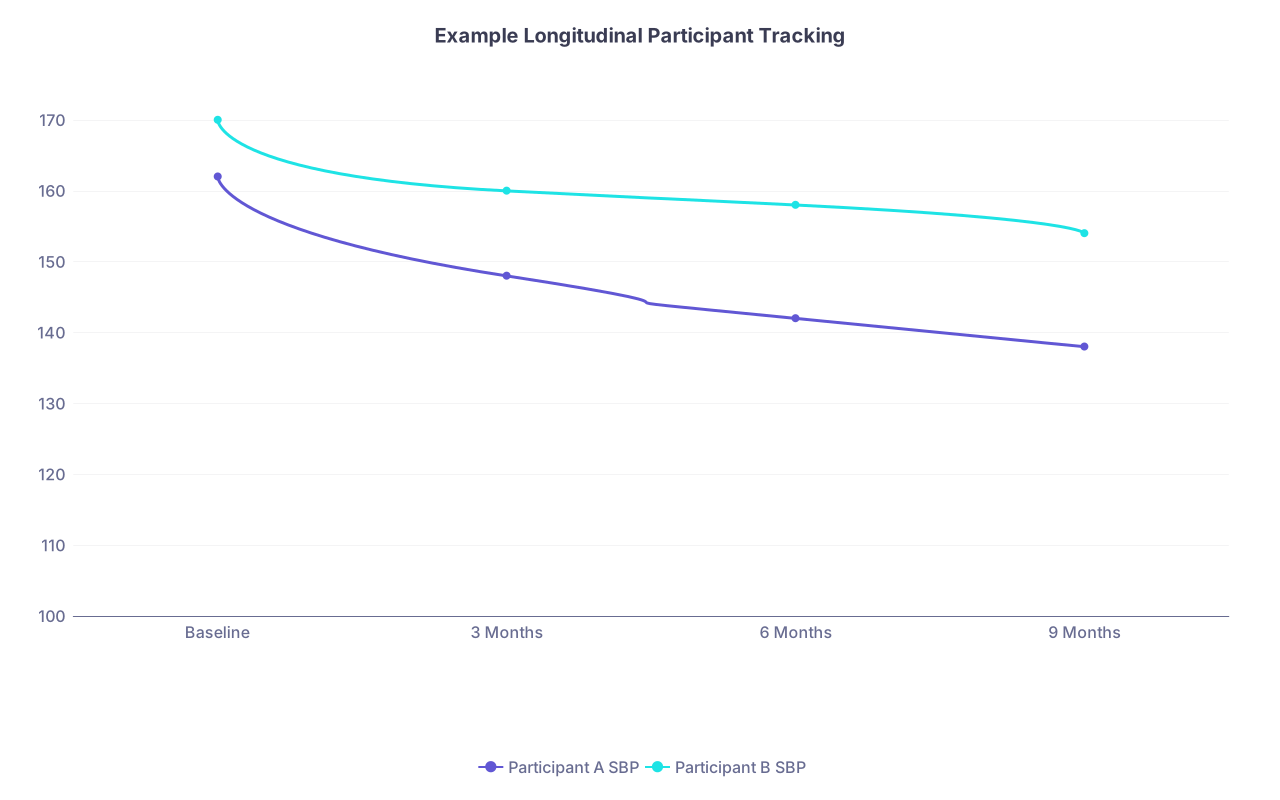
| Category | Participant A SBP | Participant B SBP |
|---|---|---|
| Baseline | 162 | 170 |
| 3 Months | 148 | 160 |
| 6 Months | 142 | 158 |
| 9 Months | 138 | 154 |
You do not need perfect biostatistics. But you do need clean enough data that you can later say:
“Among 42 participating patients, mean systolic BP decreased from 162 to 147 mmHg over 6 months.”
That is the kind of sentence PDs respect. Specific, quantitative, believable.
Step 7: Build a Weekly Cadence You Can Actually Sustain
Longitudinal means consistent, not sporadic brilliance. If you burn out in month 3 because you tried to run three different programs at two sites while also working full-time as a scribe, that is on you.
Decide how many hours per week are realistically sustainable across the entire year. Then design the project to fit inside that envelope.
Let us be concrete. Say you have:
- 20 hours/week available for the project (common for people also doing research or part-time work)
- Goal: 1 monthly group session + ongoing patient outreach + data entry
A plausible weekly breakdown:
- 4–5 hours: patient outreach (calls/texts, scheduling, reminder work)
- 2–3 hours: direct contact (group session or 1:1s depending on the week)
- 2 hours: data entry + cleaning
- 1–2 hours: meeting with clinic partner / troubleshooting
- 1–2 hours: reading, curriculum refinement, writing
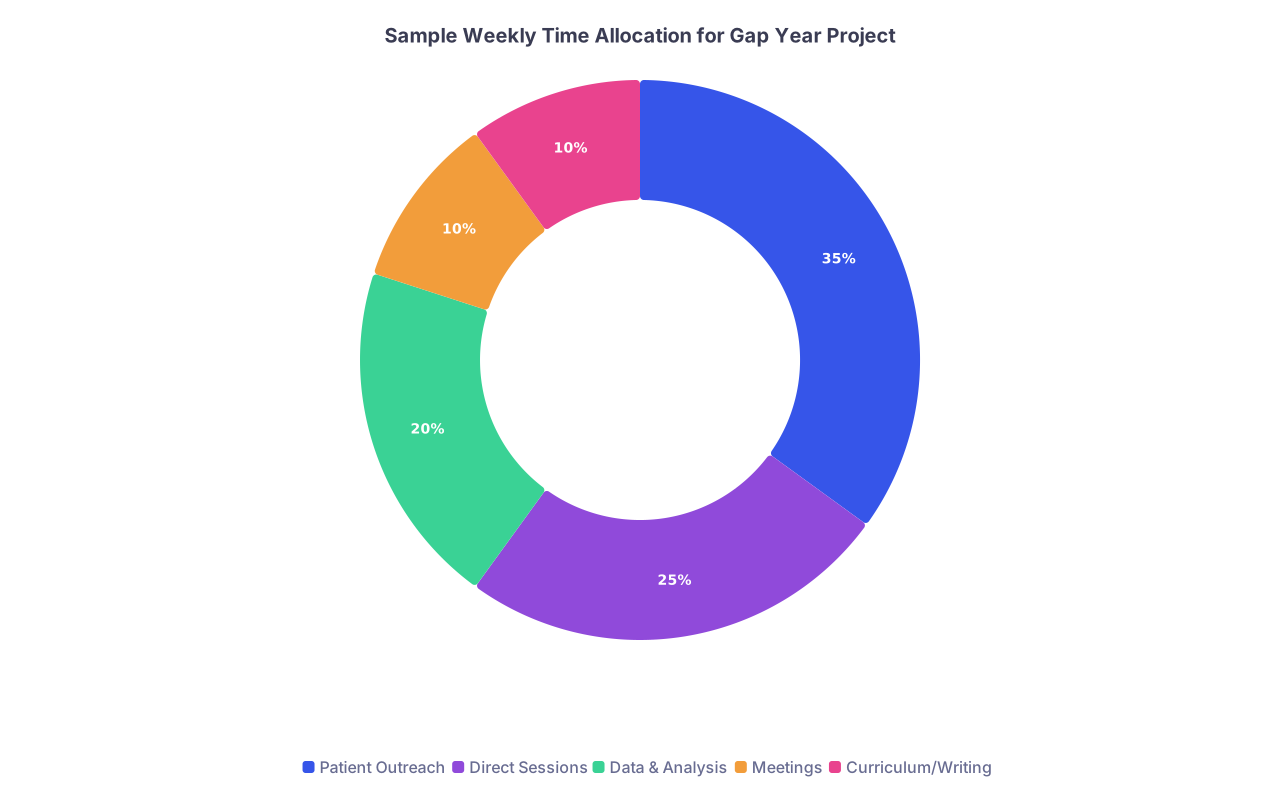
| Category | Value |
|---|---|
| Patient Outreach | 35 |
| Direct Sessions | 25 |
| Data & Analysis | 20 |
| Meetings | 10 |
| Curriculum/Writing | 10 |
If you cannot articulate how your project fits into a weekly schedule, you are daydreaming, not planning.
Step 8: Treat It as a QI Project, Even If You Call It “Community Work”
Residency programs understand QI language instinctively. Use that to your advantage.
Four PDSA cycles across the year is perfect:
Cycle 1 (Months 3–4): Pilot the basic workflow
- Question: Will patients actually attend if we recruit in clinic?
- Change: Add a text reminder 3 days ahead vs no reminder.
Cycle 2 (Months 5–6): Improve recruitment
- Question: Are we recruiting enough Spanish-speaking patients?
- Change: Bilingual invitation script, Spanish-language flyers, interpreter involvement.
Cycle 3 (Months 7–8): Optimize content or follow-up
- Question: Are patients actually changing behavior after sessions?
- Change: Add take-home goals sheet + 2-week follow-up call.
Cycle 4 (Months 9–10): Prepare for sustainability post-gap year
- Question: Can the clinic sustain this after I leave?
- Change: Train an MA or CHW to run parts of the workflow, simplify documentation.
You document each cycle in a simple one-page template: Plan, Do, Study, Act, with 1–2 figures per cycle. Those become your poster figures later, by the way.
Step 9: Make the Project Interview-Ready by Early ERAS Season
Here is the mistake I see year after year: people do solid work, then fail to package it. PDs are reading a snapshot. They need the story in 30 seconds.
By August–September, you should have:
A polished one-paragraph summary (for ERAS Experiences):
- Context: 1–2 sentences about the population and problem
- Your role: specific verbs (designed, implemented, analyzed, led, coordinated)
- Scope: number of sessions, patients, months
- Outcomes: at least preliminary numbers
At least one abstract or poster submitted or in preparation
- Local: community health fair, hospital QI day, departmental conference
- Regional/national: ACP, SGIM, specialty-specific meetings
- Do not obsess over high-impact journals; traction matters more than prestige here.
A letter-writer who can verify and praise your work
- Ideally the community site supervisor (clinic director, program manager, attending physician)
- They should be able to say:
“This person showed up every week, led X, and we are continuing this project because of them.”
Make it easy for that person. Give them:
- Your aim statement
- A 1-page summary of what you did and achieved
- 2–3 bullet points of “things you saw me do” (not scripted compliments, just reminders)
Step 10: Examples of One-Year-Feasible Longitudinal Community Projects
To make this even more concrete, here are a few designs I have actually seen pulled off successfully in a single gap year.
1. Depression Screening + Navigation in a Free Clinic
- Setting: Urban free clinic with volunteer physicians
- Aim: Increase depression screening completion from 5% to 80% in adult patients within 9 months
- Intervention:
- Built PHQ-9 into intake paperwork
- Trained MAs to score and flag positive screens
- Created a simple referral pathway to on-site counseling or tele-psych
- Data:
- N = ~300 patients, tracking screening rates and attendance at first counseling visit
- Output:
- Local QI day poster
- ERAS entry with specific numbers and leadership language
2. Diabetes Group Visits in a Community Center
- Setting: Community center partnered with FQHC
- Aim: Improve self-reported diabetes self-management confidence scores by 20% over 6 months
- Intervention:
- Monthly 90-minute group visits led by you + dietitian
- Pre/post surveys each session
- Optional 10-minute 1:1 check-ins afterwards
- Data:
- N = 40–50 participants with at least 3 sessions attended
- Combined A1c and self-efficacy scores over time
- Output:
- Regional primary care conference abstract
- Strong narrative of continuity and relationship with patients
3. Refugee Health Orientation Series
- Setting: Refugee resettlement agency
- Aim: Deliver a 5-session health literacy curriculum to 3–4 cohorts of new arrivals over 9–10 months
- Intervention:
- Co-designed sessions on primary care, emergencies, medications, mental health, women’s health
- Interpretation through caseworkers
- Handouts tailored by language/culture
- Data:
- Attendance and pre/post knowledge by topic
- Qualitative feedback on usefulness/satisfaction
- Output:
- Local community poster
- ERAS story emphasizing cultural humility, systems navigation, and collaboration
You will see these have three things in common:
- Clear population
- Narrow, realistic aims
- Measurable activity and outcomes within 6–9 months
Step 11: Document Sustainability Before You Walk Away
PDs are rightly skeptical of “parachute projects” that vanish when the pre-resident leaves. You can blunt that criticism by being explicit about handoff and sustainability.
In the last 2–3 months:
Write a 2–3 page “operations manual”
- Step-by-step workflow
- Templates (scripts, flyers, forms)
- Data collection process
- Contact list for key people
Train at least one person to carry on parts of the project
- MA, RN, CHW, social worker, volunteer coordinator
Have a final meeting with leadership
- Review what worked, what did not
- Agree on what will realistically continue (do not pretend everything will)
You can honestly say in interviews:
“I designed the project with sustainability in mind. Before leaving I trained X staff and left Y materials. The clinic has continued Z components after my departure.”
That is the kind of maturity PDs latch onto.
Step 12: How This Actually Lands with Residency Programs
Let us be blunt: a community project is not going to magically erase a 205 Step 1 or 2 failed attempts. But it can move you from “generic reapplicant” to “someone who did something serious with their year.”
Programs care about three main things here:
Reliability and follow-through
- Did you show up every week for months?
- Can someone vouch that you were not flaky?
Leadership and systems thinking
- Did you create or improve a system, not just shadow or “help”?
- Could you understand and change workflows, not just see patients?
Alignment with your chosen specialty
- For FM/IM/Peds: chronic disease, health literacy, access, mental health
- For EM: triage, access, high-utilizer outreach, overdose prevention
- For OB/GYN: prenatal education, contraception access, postpartum follow-up
- For Psych: screening, psychoeducation, care navigation, stigma reduction
You want your project to clearly speak to one or more of those. On your CV. In your personal statement. In your interview answers.
Step 13: Red Flags and Common Failure Patterns
I will call these out because I have seen them sink otherwise promising gap years.
“I have three different community projects going on.”
Translation: none of them are deep or longitudinal. Pick one main project and maybe one minor side activity.“We are still in the planning phase” by month 5.
That means you are not going to have anything mature by ERAS. You need some form of implementation by month 3–4, even if imperfect.“We did not collect much data, but people seemed to like it.”
That is not going to carry weight. Even basic counts and pre/post Likert scales are better than vibes.“I helped with a clinic’s community outreach.”
This is vague. If I cannot tell what you specifically did, I assume you did not lead much. Use concrete numbers, actions, and your role.
Step 14: Pulling It Together Into a Coherent Narrative
By the time you hit interview season, you want to be able to tell a clean, chronological story:
- Why you had a gap year (honestly)
- Why you chose this specific community and problem
- How you designed and led the project
- What you learned about systems, patients, and yourself
- How that maps directly onto being a better intern in your chosen specialty
One simple structure you can use when answering “Tell me about your gap year project”:
- One line: context and problem
- One line: your specific aim
- Two to three lines: what you actually did (verbs, workflow)
- Two lines: data/outcomes (numbers)
- One to two lines: what changed in how you think or act
If you can do that without rambling, your project has done its job for the Match.
You are standing in front of a 10–12 month window. You can let it dissolve into random jobs, half-baked side projects, and vague “community engagement.” Or you can treat it like a focused, one-year fellowship in real-world health systems for underserved populations.
If you define a sharp aim, secure a real partner, build a believable workflow, collect disciplined data, and package the work intelligently, that single gap year community project will not just fill a line on your CV. It will give you a story, a skill set, and a reputation you bring with you into residency.
With those foundations in place, you are positioned for the next step: turning that project into tangible scholarly output and using it strategically across your personal statement, experiences section, and interview answers. That is the next phase of the journey—but now you have something real to talk about.


