
It’s January. You just certified your rank list, or you’re about to submit ERAS, and your reality is different from your single classmates. You’re not just thinking: “Will I match?”
You’re thinking:
- Where will my spouse work?
- Can we afford childcare on PGY‑1 salary?
- What visa do we even use so my family can come?
- What if the program is in a tiny town with no support system?
You’re not planning a move. You’re moving a life system. With dependents attached.
Let’s walk through what to do, step by step, so you do not end up matched in the middle of nowhere, with no childcare, spouse unable to work, and your savings burning in 3 months.
1. First Reality Check: Your Priorities Are Different
If you’re an IMG with a spouse, kids, or parents depending on you, you do not play the same game as a single IMG chasing “reputation.”
You’re balancing at least five competing demands:
- Visa type and family status
- Cost of living
- Spouse/partner work options
- Childcare/schools
- Program schedule and support culture
Those are not “nice to consider.” Those are make-or-break. I’ve watched people match “name-brand” programs and then drown because their spouse wasn’t allowed to work and daycare cost more than their PGY‑1 salary.
So first, stop pretending you’re choosing only by prestige or fellowship potential. You’re choosing a life setup.
Make a simple, ruthless ranking of what matters most for your situation.
| Priority Rank | Factor |
|---|---|
| 1 | Visa & family status |
| 2 | Cost of living |
| 3 | Spouse work options |
| 4 | Childcare/schools |
| 5 | Program reputation |
If your honest list puts “top‑10 name” above “spouse allowed to work” and “safe housing for kids,” you’re lying to yourself.
Write your top 3 non‑negotiables on paper right now. Those will guide the rest.
2. Visa Strategy When You Have Dependents
This is where many IMGs with families either win early…or set themselves up for pain for years.
J‑1 vs H‑1B vs Green Card: Family Lens, Not Just Career Lens
Forget the theoretical discussion. Here’s how it plays out with dependents.
| Visa Type | Spouse Work? | Kids Study? | Big Family Constraints |
|---|---|---|---|
| J-1 | Yes (J-2 EAD) | Yes | 2-year home requirement, waiver issue |
| H-1B | No (H-4, no EAD commonly) | Yes | Spouse often cannot work, tied to employer |
| Green Card | Yes | Yes | Lengthy process, not common pre‑residency |
Now in practical terms:
J‑1
- Spouse gets J‑2 and can work (with EAD) – huge plus if you need two incomes.
- You owe the 2‑year home residency later or need a waiver. With kids in U.S. schools, that can get messy.
- If your career absolutely requires a competitive fellowship in the U.S., J‑1 is very workable but needs planning.
H‑1B
- Spouse is H‑4. In most IMG situations, they cannot work. There are exceptions (H‑4 EAD) but they’re not guaranteed and usually tied to you having an approved I‑140, which you won’t have in residency.
- No 2‑year home rule. Easier long-term if you want to stay in the U.S.
- For some families this is a financial chokehold: one income, kids, high rent.
Green card early
- Rare for most IMGs unless you already have another route (marriage to U.S. citizen, diversity lottery, prior job, etc.).
- If you do have it: congratulations, your planning problem just got easier.
What To Do Before You Apply
Make a visa decision tree with your family in mind, not ego.
- If your spouse must work for you to survive: you probably lean J‑1.
- If you have strong savings and long‑term U.S. stay is priority: H‑1B may make sense.
- If you have any path to permanent residency, accelerate that.
Filter programs by visa support honestly.
Do not waste time on programs that:
- Only support J‑1 when you absolutely need H‑1B, or
- Only support H‑1B when your spouse is unemployed and you have no savings.
Email programs early (pre‑application or pre‑ranking) with specific visa questions.
Something like:
“I’m an IMG applying to your Internal Medicine program. I’m married with two dependents and will require [J-1/H-1B]. Could you confirm whether your institution sponsors this visa category consistently for residents, and whether there are any recent changes in policy?”
Programs that give vague answers: red flag. Programs that answer clearly and specifically: keep.
3. Building a Shortlist That Actually Works for a Family
Most people build a list based on: “Where can I possibly match?” You need: “Where can I match and not destroy my family in the process?”
Core Filters For an IMG With Dependents
Use these filters when selecting where to apply:
Location type
- Mega‑cities: easier for spouse jobs, higher cost, higher childcare.
- Medium cities: usually the sweet spot. Work options + manageable costs.
- Tiny towns: cheap, but can be brutal for spouses’ jobs and social support.
Cost of living vs salary
A PGY‑1 salary of $65k in NYC is not the same as $60k in the Midwest. At all.Support structure
- Do you have relatives/friends within driving distance?
- Is there a visible immigrant community from your region?
Program culture (this matters more than prestige)
Listen for phrases during interviews like:- “We’re a family-friendly program.” Maybe. Ask for examples.
- “We’ve had several residents with kids recently.” Good sign.
- “We expect full devotion to the program.” Translation: your personal life is a nuisance.
How to Research Without Wasting Days
Use a simple grid to keep yourself sane.
| Program | City Type | Visa | Cost of Living | Childcare Options |
|---|---|---|---|---|
| Program A | Large city | J-1/H-1B | High | Many, expensive |
| Program B | Mid-size city | J-1 | Medium | Moderate, available |
| Program C | Small town | H-1B only | Low | Limited |
Then you can combine that with school ratings, crime data, and housing searches.
4. Money: Do the Ugly Math Now, Not After Match
You need a very unromantic, spreadsheet-level view of your first year. Especially if you’re bringing dependents.
Typical PGY‑1 Finances With Family
- Income: around $60–70k gross (varies by location)
- Taxes: roughly 20–30% all in
- Take-home: maybe $3,500–4,500/month
Now look at the burn:
- Rent in major city: $2,000–3,000+ for 2‑bedroom
- Childcare: $800–2,000 per child (often more in big cities)
- Health insurance premiums/coinsurance
- Car + insurance (often necessary in smaller cities)
- Food, utilities, phones, internet
You can see the issue.
What You Do Before Match
Build two realistic budgets.
- High cost city scenario
- Mid/low cost city scenario
Use real rental listings and daycare prices, not fantasy.
Set a minimum savings target.
Ideally, arrive with at least 3–4 months of bare‑bones family expenses saved. If that means working more before residency or delaying start by a year to earn and save, that’s not “weak.” That’s smart.
Consider this brutally: can you survive on one income?
- If no: weigh J‑1 heavily so spouse can work.
- If yes but tight: be extremely picky with cost of living.
Have a pre‑move expenses estimate.
You will spend a chunk before your first paycheck:- Visa fees (for you + dependents)
- Flights
- First month + security deposit
- Furnishing (even minimally)
- License exams / ECFMG / step fees if still pending
Many IMGs bleed out here and start residency in panic mode.
5. Spouse/Partner: Work, Adjustment, and Sanity
Your spouse or partner is not a “tag‑along.” If they’re miserable, your life will be miserable. Full stop.
Work Options by Setup
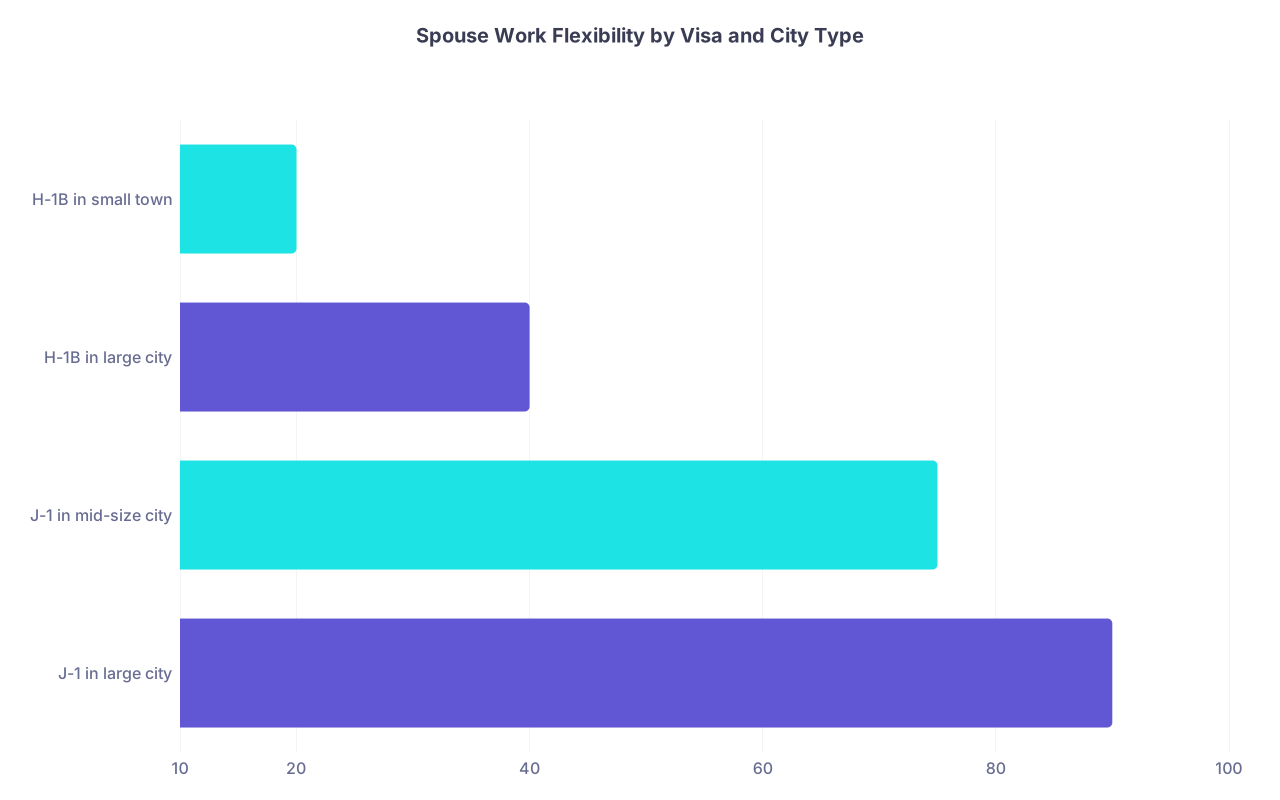
| Category | Value |
|---|---|
| J-1 in large city | 90 |
| J-1 in mid-size city | 75 |
| H-1B in large city | 40 |
| H-1B in small town | 20 |
(Think of those numbers as “likelihood spouse finds decent work in first 12 months,” not exact stats.)
Concrete moves:
If spouse can work (e.g., J‑2 EAD):
- Start credential evaluations early if they’re in a regulated field (teaching, nursing, etc.).
- Build a basic U.S. resume before you move.
- Look at entry jobs that don’t require perfect English or U.S. certifications: hospital support, admin, retail, daycare aid, etc.
If spouse probably cannot work (H‑4 during residency):
- Do not pretend that “they’ll just be fine at home” without talking about it. That isolation + cultural shock breaks people.
- Plan voluntary activities: community college classes, volunteering, community centers, language courses, religious groups.
- Budget for occasional babysitting/time for them to have their own life.
Emotional Ground Rules
Have this conversation before you match:
- What if we end up in a small town?
- What if you cannot work for the first 1–2 years?
- How will we share childcare and house work when I’m on nights?
- What support do you need from me and from the community?
A lot of resentment in IMG families starts because nobody said these things out loud early.
6. Kids, Schools, and Childcare: Plan Like a General, Not a Tourist
If you have kids, your move is a military operation.
Childcare
Here’s the part nobody tells you: residency schedules and typical daycare hours do not match well. Daycare might be 7 am–6 pm. Your shift might be 5:30 am–7:30 pm. And nights.
You need at least one of:
- A spouse/relative with flexible hours
- A trustworthy babysitter/nanny who can cover the early/late gaps
- A program that genuinely works with parents (again, verify with residents)
Schools
For school-age kids:
Use real data, not myths.
- Check local school ratings, but also look at parent comments.
- Talk to residents in the program who have kids: “Where do people actually send their children?”
Consider commute vs school tradeoff.
A 45‑minute commute each way in residency is not cute. It’s lost sleep.Don’t chase the “perfect” U.S. school. Your kid’s stability and time with you matter more than moving across town for a slightly higher rating.
7. How to Handle Match Day and the 3–4 Month Scramble
Match Day hits. You either matched or you’re in SOAP/future cycle. Let’s assume you matched with dependents. You have maybe 3–4 months to execute.
Your 48-Hour Checklist After Match
Contact program coordinator. Ask about:
- Start date
- Visa processing steps and timelines for dependents
- Typical move‑in timing for incoming residents
Start visa paperwork immediately for everyone:
- Confirm what’s needed for spouse/children
- Watch expiration dates on passports
- Gather marriage/birth certificates and get translations + apostilles if needed
Rough housing search:
- Decide temporary housing vs signing lease from abroad.
- Many IMGs opt for 1–2 months Airbnb/extended stay, then sign something once on the ground. That costs more short-term but saves you from locking into a bad area for a year.
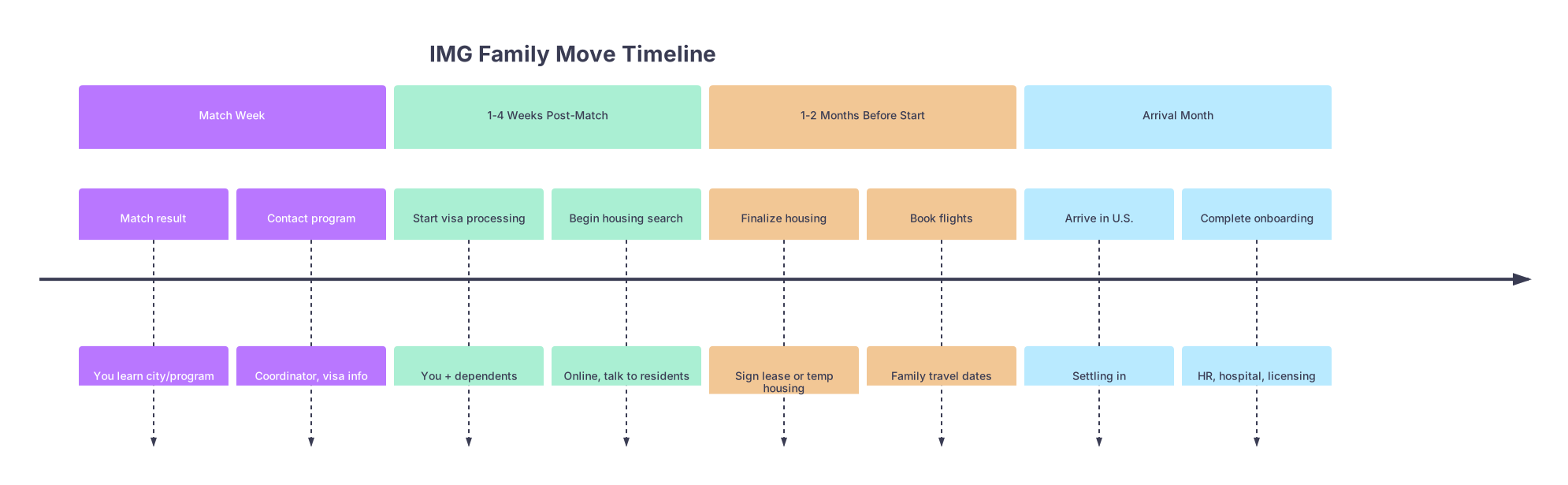
| Period | Event |
|---|---|
| Match Week - Match result | You learn city/program |
| Match Week - Contact program | Coordinator, visa info |
| 1-4 Weeks Post-Match - Start visa processing | You + dependents |
| 1-4 Weeks Post-Match - Begin housing search | Online, talk to residents |
| 1-2 Months Before Start - Finalize housing | Sign lease or temp housing |
| 1-2 Months Before Start - Book flights | Family travel dates |
| Arrival Month - Arrive in U.S. | Settling in |
| Arrival Month - Complete onboarding | HR, hospital, licensing |
One Month Before Move
- Confirm visa documents are on track.
- Secure at least temporary housing.
- If you have kids: email local schools/daycares to hold spots or understand registration steps.
- Confirm health insurance start dates through GME (for you and dependents) and fill the gap with travel insurance if needed.
8. Program Communication: Use Your Voice Early
Many family problems during residency could have been partly avoided if the resident had spoken up before they were drowning.
You’re not asking for special favors. You’re giving your program the information to help you be functional.
Things to communicate, ideally before July 1:
- That you’re arriving with spouse and kids (or parents with health issues).
- Any hard constraints:
- “My spouse will not be driving initially; I’ll be the only one with a car.”
- “We expect our childcare to start in late July; earlier days may be rough.”
You can say something like:
“I wanted to share that I’ll be relocating with my spouse and two young children. We’re arranging childcare and housing now. If there are any resident parents in the program you recommend I connect with, I’d be grateful—that would help us settle faster and let me be fully focused at work.”
That’s reasonable. Professional. It flags you as someone planning ahead, not asking for special treatment.
9. Contingency Plans: What If Things Go Sideways?
Two common disasters:
- Visa delays for spouse/children
- Money running out faster than expected
If Family Visa Is Delayed
- Confirm with program if you can start alone and have family join later. Most will understand.
- Arrange short-term, lower-cost shared housing with co‑residents or hospital housing if available.
- Keep your kids/spouse plugged into routine in home country temporarily (school, relatives) rather than floating in limbo.
If Finances Get Tight
Talk to GME about:
- Moving loans
- Payday timing
- Any institutional support/relocation assistance
Consider side income only if it’s compliant with your visa and contract. (Most visas restrict outside work. Do not risk your status.)
Reassess expenses aggressively:
- Smaller apartment
- Cheaper childcare setup (shared nanny, subsidized programs)
- Cut back on expensive calls, subscriptions, etc.
FAQ (Exactly 4 Questions)
1. Should I avoid all small-town programs if I have a family as an IMG?
No, but you need to be blunt about tradeoffs. Small towns often give you cheaper rent, shorter commutes, and sometimes friendlier community vibes. But your spouse may struggle to find work, and kids may have fewer activity options. If your spouse is okay not working and you value quiet + low costs, small towns can work well. If you absolutely need dual income or cultural diversity, be very cautious.
2. Is it a bad idea to choose J‑1 just so my spouse can work?
Not automatically. For many IMG families, J‑1 is the only reason they stay financially and emotionally afloat. The 2‑year home rule is a serious commitment, but many residents get J‑1 waivers through underserved jobs later. If your priority is survival in residency with kids and no savings, choosing J‑1 for spouse work is rational, not “short‑sighted.” Just understand the later consequences and start thinking about waiver options early in residency.
3. How early should I bring my family to the U.S.—with me or later?
If your budget is thin and housing/childcare are unknown, it’s often smarter to arrive 4–8 weeks alone, stabilize housing and logistics, then bring your family. Emotionally, that month can be tough. But practically, it saves them from living in chaos while you’re onboarding, on orientation, and working 70+ hours. If you already have solid housing, family in the area, or excellent program support, arriving together can work fine.
4. What’s the single biggest mistake IMGs with dependents make in planning?
Chasing “best program” without running the numbers and logistics. They match into high‑cost cities on one income, or into H‑1B with a spouse who can’t work, or into a town where there’s zero support for families. Then they spend PGY‑1 drowning in money stress and guilt instead of training. Your “best” program is the one where you can train well and keep your family intact and stable. Anything else is a bad bargain.
Open a blank page (or spreadsheet) right now and list: 1) your visa realities, 2) your non‑negotiable family needs, and 3) your realistic minimum monthly budget. Then look at your current program list and cross out every option that obviously fails those three. Start planning from what your family actually needs, not from what sounds good in a forum post.