Introduction: Why Choosing the Right International Medical School Matters
Pursuing a medical degree abroad has become an increasingly attractive option for aspiring physicians. International Medical Schools offer alternative pathways for students who may face competitive admission landscapes at home, are seeking global exposure, or wish to train in a specific healthcare system or language.
Yet the decision to leave your home country for medical education is high-stakes. Your choice of school can affect:
- Your eligibility for licensure exams (e.g., USMLE, MCCQE, PLAB)
- Your chances of matching into competitive residency programs
- The quality of your clinical training and Medical Education
- Your long-term mobility to work in different countries
- Your financial stability and well-being during training
To make a truly informed choice, you need to look beyond glossy brochures and match rates. Three pillars should guide your evaluation:
- Accreditation – Is the school recognized and regulated at a level that supports your career goals?
- Curriculum – How, what, and where will you be taught medicine?
- School Culture – Will you be supported, challenged appropriately, and able to thrive personally and professionally?
This guide breaks down each of these elements in detail, specifically for students considering international medical schools, and provides a practical, step-by-step framework to choose a program aligned with your goals.
Understanding Accreditation: The Foundation of Your Medical Career
Accreditation is not just a box to check. For international graduates, it can make the difference between being able to practice in your desired country—or not.
What Is Accreditation in Medical Education?
Accreditation is a formal evaluation process through which an independent authority reviews an institution or program to ensure it meets defined educational standards. In Medical Education, accrediting bodies assess:
- Curriculum quality and structure
- Faculty qualifications and teaching effectiveness
- Student support services and outcomes
- Clinical training sites and supervision
- Governance, resources, and quality improvement systems
For international schools, this process is often performed by a national accreditation authority, which may or may not be recognized globally. Understanding both national and international dimensions of accreditation is essential.
Why Accreditation Matters for International Medical Students
Accreditation affects you at multiple points in your career:
Licensure and Exam Eligibility
- Many countries require that your medical school be accredited by a recognized authority to sit for licensing exams.
- For example, to be ECFMG-certified (a requirement to enter US residency), by 2024/2025 your school’s accrediting agency must be recognized by the World Federation for Medical Education (WFME).
- In Canada, the MD degree must be from a school listed in recognized directories and accredited by approved bodies.
Residency and Postgraduate Training
- Hospitals and residency programs often screen applicants based on the accreditation status and reputation of their school.
- Some countries or specialties restrict entry to graduates of specific accredited schools.
Mobility Between Countries
- If you plan to keep your options open (e.g., study in the Caribbean, practice in the US or UK), accreditation recognized across multiple jurisdictions is crucial.
Quality Assurance and Student Protection
- Proper accreditation indicates that the school is regularly evaluated, addresses deficiencies, and maintains standards for student safety, ethics, and educational quality.
Types of Accreditation: What to Look For
When researching international medical schools, pay attention to several layers of recognition:
1. National Accreditation
This is the baseline. The school should be accredited or officially recognized by the relevant national ministry of education or health and a national medical education accrediting body.
Examples:
- United States: Liaison Committee on Medical Education (LCME) for MD programs
- Canada: Committee on Accreditation of Canadian Medical Schools (CACMS)
- Caribbean and Latin America: Various national councils, some with WFME recognition
- Europe: National agencies aligned with EU standards (e.g., GMC recognition in the UK, ANECA in Spain, etc.)
Your checklist:
- Is the school legally authorized to grant a medical degree in its country?
- Is the program duration and structure aligned with that country’s regular medical training?
2. WFME Recognition and ECFMG Requirements
The World Federation for Medical Education (WFME) does not accredit schools directly. Instead, it recognizes accrediting agencies that meet its standards. This matters because:
- ECFMG (Educational Commission for Foreign Medical Graduates) requires your school’s accrediting agency to be WFME-recognized for you to be eligible for ECFMG certification and US residency.
- This policy affects most students aiming to practice in the United States.
Action step:
- Look up your school’s accrediting body on the WFME recognized agencies list.
- Confirm on the ECFMG website that graduates from this school will remain eligible under current and upcoming rules.
3. Listings and International Directories
Historically, the World Directory of Medical Schools (WDMS) has listed recognized schools. While listing alone does not guarantee quality, it is often a minimum requirement for exam eligibility.
Confirm:
- Is the school listed in the WDMS?
- Are there any annotations (e.g., restrictions, dates, or special notes)?
Key Questions to Ask About Accreditation
When evaluating a prospective international medical school, seek written confirmation of:
- Is your medical school accredited by a national agency recognized by WFME?
- Will graduates be eligible to:
- Take USMLE and apply for ECFMG certification?
- Apply for Canadian, UK, EU, or your home country licensure?
- Has there ever been a loss, probation, or suspension of accreditation? If so, what happened?
- How long is the current accreditation valid?
Do not rely solely on marketing claims. Cross-check information on:
- Official accreditation agency websites
- ECFMG, WFME, and national medical council websites
- Independent forums—but verify all claims with official sources
Evaluating Curriculum: How You Will Learn Medicine
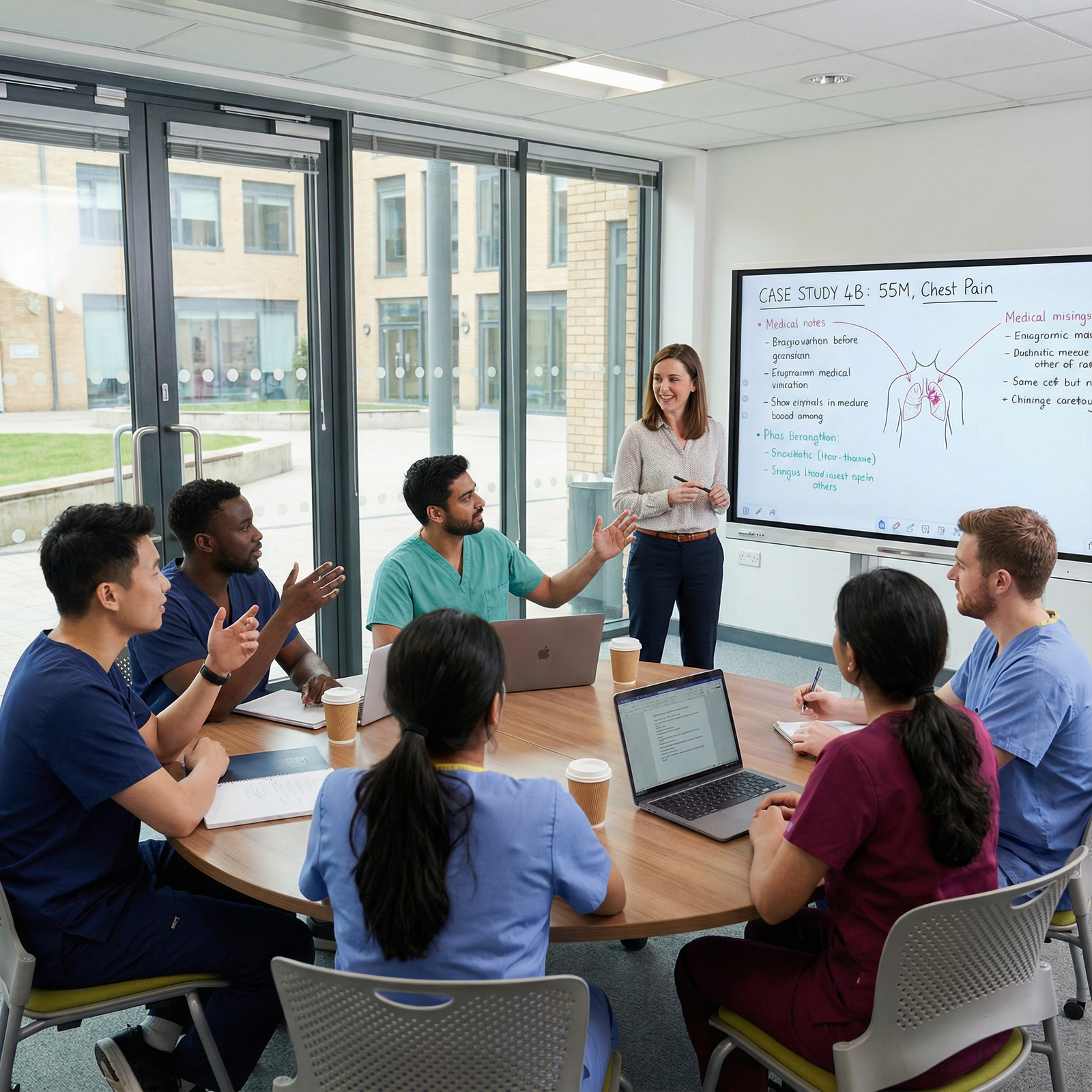
Once you confirm that a school is properly accredited, your next focus should be the curriculum. Curriculum determines not only what you learn, but how you learn—and how prepared you will be for clinical practice and licensing exams.
Core Elements of a Strong Medical Curriculum
A high-quality international medical curriculum typically includes:
- Structured pre-clinical training (basic sciences, anatomy, physiology, pathology, pharmacology)
- Robust clinical training in core specialties (internal medicine, surgery, pediatrics, OB/GYN, psychiatry, family medicine)
- Assessment system with frequent, meaningful feedback
- Early clinical exposure or patient interaction
- Training in communication, professionalism, and ethics
- Evidence-based medicine and research skills
- Preparation for licensing exams (USMLE, PLAB, etc., if applicable)
Major Curriculum Models in International Medical Schools
1. Problem-Based Learning (PBL)
PBL emphasizes small-group learning centered on clinical cases. You work through patient scenarios, identify learning objectives, research them, and then reconvene to discuss.
Pros:
- Develops critical thinking and clinical reasoning
- Encourages active learning and teamwork
- More engaging than pure lectures for many students
Cons:
- Requires high self-discipline and self-directed study
- May feel less structured for students who prefer clear outlines
- Quality depends heavily on tutor training and case design
Best for:
- Students who enjoy collaboration, discussion, and independent research
- Those planning to practice in systems that emphasize problem-solving and patient-centered care
2. Traditional Lecture-Based Curriculum
In this model, the first 1–2 years (or more) are dominated by lectures and lab-based instruction in basic science disciplines, followed by clinical years.
Pros:
- Clear structure and content organization
- May align more closely with some standardized exams
- Familiar to students from more traditional education systems
Cons:
- Risk of passive learning if not supplemented with active learning strategies
- Delayed patient exposure in some programs
Best for:
- Students who prefer clear, content-heavy teaching with defined syllabi
- Those confident in independent review and memorization
3. Integrated Curriculum
Integrated curricula blend basic and clinical sciences across the program, often by organ systems (e.g., cardiovascular block includes anatomy, physiology, pathology, pharmacology, and clinical cases).
Pros:
- Helps you see how different disciplines connect in real patients
- Often includes early clinical exposure
- Reflects modern medical education trends worldwide
Cons:
- Can feel fast-paced and intense
- Requires good organization and time management
Best for:
- Students who like clinically oriented learning and making connections across disciplines
- Those targeting countries where integrated curricula are the norm
Clinical Exposure: The Heart of Your Training
Clinical training is where you become a physician—not just a test-taker. For international schools, it is critical to scrutinize where and how you will do your rotations.
Key factors to investigate:
Location and Quality of Clinical Sites
- Are clinical rotations in the same country as the basic sciences, or in different countries (e.g., Caribbean basic sciences + US clinical rotations)?
- Are hospitals teaching hospitals with residency programs?
- What is the patient volume and case diversity?
Supervision and Teaching
- Are you supervised by qualified physicians with teaching responsibilities?
- Is there a clear structure: ward rounds, case presentations, bedside teaching, skills labs?
Consistency and Reliability
- Are rotations guaranteed for all students, or must students arrange some on their own?
- Are there complaints from alumni about last-minute changes or cancellations?
Alignment with Your Career Goals
- If you aim for US or UK residency, are there affiliated hospitals in those countries?
- Does the school support electives abroad or observerships in your target country?
Curriculum and Exam Preparation
If your goal is to return to the US, Canada, or another specific country, ask:
- Does the school provide structured USMLE (or other exam) preparation?
- What are the average and first-time pass rates for these exams?
- Are there dedicated review courses, NBME-style assessments, or faculty advisors?
Key Questions to Ask About Curriculum
- Which curriculum model do you follow—PBL, traditional, integrated, or a hybrid?
- How early do students get patient contact?
- How are students assessed (exams, OSCEs, clinical evaluations, research projects)?
- Where exactly do clinical rotations take place, and are they guaranteed?
- What proportion of students pass major licensing exams on their first attempt?
School Culture: The Hidden Factor That Shapes Your Experience
Even at an accredited school with a strong curriculum, you may struggle if the school culture is toxic, unsupported, or mismatched with your values. Culture affects your mental health, resilience, and overall success.
What Do We Mean by School Culture?
School culture includes the values, attitudes, and daily practices that define the learning environment, such as:
- How students treat each other
- How faculty treat students
- Tolerance for diversity and differences
- Attitudes toward wellness and work-life balance
- Response to student feedback and concerns
For international students, factors like cultural adaptation, language barriers, and social support are especially important.
Key Components of a Healthy School Culture
1. Diversity, Inclusion, and International Support
In an international medical school, your peers may come from dozens of countries. Consider:
- Does the school have a truly inclusive environment where different backgrounds are respected?
- Are there orientation programs to help international students adapt (housing, banking, visas, local customs)?
- Are there language support services if the primary language of instruction is not your first language?
Signs of strong inclusion:
- Active student groups for various nationalities or cultural backgrounds
- Faculty and leadership that are diverse
- Policies addressing discrimination and harassment
2. Student Support and Well-Being
Medical training is stressful everywhere. In a foreign country, you may also face:
- Homesickness and isolation
- Financial pressure
- Adjusting to a different healthcare system
Evaluate:
- Mental health services: Are counselors or psychologists available?
- Academic support: Are there tutoring, remediation, or advising services?
- Career guidance: Are there advisors knowledgeable about residency and licensing pathways in multiple countries?
Ask current students:
- Do you feel supported when you struggle academically or personally?
- How does the school respond to students in distress?
3. Faculty–Student Relationships
A supportive faculty can transform your experience.
Consider:
- Are faculty approachable and willing to mentor?
- Are there formal mentoring programs (e.g., faculty advisors assigned to each student)?
- How do students describe feedback from teachers—constructive or punitive?
4. Extracurricular and Professional Development Opportunities
Well-rounded medical education includes more than classes and clinics:
- Student organizations (interest groups, specialty societies, global health clubs)
- Community outreach and service projects
- Research opportunities
- Conferences, workshops, and leadership roles
These activities help you:
- Build your CV for residency
- Develop teamwork, leadership, and communication skills
- Stay motivated and connected
Learning About School Culture: Practical Steps
Do not rely solely on official websites. Instead:
- Contact current students and recent alumni via:
- Official student ambassadors
- Social media groups
- Online forums
- Ask specific questions:
- How competitive vs. collaborative is the environment?
- How does the school handle student complaints?
- Are there issues with bullying, favoritism, or lack of transparency?
- If possible, visit the campus or attend virtual open houses:
- Observe how students interact with each other and with faculty
- Ask about on-campus housing, safety, and local community

Making an Informed Decision: A Step-by-Step Framework
To translate all this information into a concrete choice, follow a structured process.
Step 1: Clarify Your Long-Term Goals
Before comparing schools, define your objectives:
- In which country (or countries) do you ultimately want to practice?
- Are you aiming for primary care or competitive specialties (e.g., surgery, dermatology)?
- How important are factors like:
- Proximity to family
- Language of instruction
- Urban vs. island or rural setting
- Cost and ability to work part-time (where allowed)
Your career goals will drive your priorities for Accreditation, Curriculum, and School Culture.
Step 2: Create a Shortlist of International Medical Schools
Use:
- Official directories (e.g., World Directory of Medical Schools)
- National ministry or medical council websites
- Recommendations from advisors and physicians who have worked with international graduates
Filter by:
- Accreditation status and recognitions that align with your desired practice country
- Language of instruction
- Program length and start dates (some international schools have multiple intakes per year)
Step 3: Deep-Dive into Accreditation and Outcomes
For each shortlisted school:
- Verify:
- National accreditation and WFME recognition (if relevant)
- Listing in the World Directory of Medical Schools
- Request or research:
- USMLE/PLAB/MCCQE pass rates, if applicable
- Residency match lists by specialty and country
- Any history of accreditation problems
If schools are hesitant or vague about outcomes, consider that a red flag.
Step 4: Analyze Curriculum and Clinical Training
Compare:
- Curriculum structure (PBL vs. traditional vs. integrated)
- Timing and extent of clinical exposure
- Locations and quality of clinical sites
- Exam preparation support (especially if targeting US/UK/Canada)
If you have a particular learning style (e.g., you thrive in structured lecture environments or prefer interactive case-based learning), rank schools by how well they fit you.
Step 5: Evaluate School Culture and Support
Gather qualitative data:
- Speak directly with current students or recent graduates
- Read student testimonials, but cross-check with independent sources
- Attend virtual Q&A sessions or open houses
Score each school on:
- Student support and mental health resources
- Inclusivity and international student support
- Faculty accessibility and mentorship
- Extracurricular and research opportunities
Step 6: Consider Financial Realities
Studying medicine abroad can be expensive. Carefully evaluate:
- Tuition and fees (including any increases over time)
- Cost of living (housing, food, transport, health insurance, visas)
- Financial aid and scholarships:
- Are local or international loans available?
- Can you access loans from your home country (e.g., US federal loans for certain foreign schools)?
- Potential hidden costs:
- Exam fees (USMLE, PLAB, etc.)
- Travel for clinical rotations or electives
- Immigration and visa-related expenses
Run a realistic budget for the entire duration of study, not just the first year.
Step 7: Final Comparison and Decision
Create a comparison table with columns such as:
- Accreditation and licensure pathways
- Curriculum and clinical training quality
- Exam and residency outcomes
- School culture and support
- Cost and financial feasibility
- Personal fit (location, language, lifestyle)
Rank your options and, if possible, speak with a trusted mentor or physician who can provide perspective on your top choices.
FAQ: Choosing the Right International Medical School
1. How can I independently verify a medical school’s accreditation?
- Check the school’s claims against:
- The website of the national accrediting agency or ministry of education/health
- The World Directory of Medical Schools
- The WFME recognized accrediting agencies list
- ECFMG or the relevant licensing authority’s list of acceptable schools
- If you cannot confirm accreditation in official sources, contact the accrediting agency directly by email and ask for written confirmation.
2. How do I know if an international medical school will be accepted in the United States or Canada?
- For the United States:
- Confirm that your school’s accrediting agency is WFME-recognized (for ECFMG eligibility).
- Verify that the school is listed in the World Directory of Medical Schools with an ECFMG-eligible note.
- For Canada:
- Check the Medical Council of Canada and provincial colleges’ requirements.
- Review whether graduates from that school have historically matched into Canadian residency programs.
- In both cases, look at USMLE/MCCQE pass rates and recent residency match lists.
3. What are practical ways to assess the cultural fit of an international medical school?
- Arrange conversations with current students and alumni from your home country or similar background.
- Ask about:
- How competitive or collaborative the environment feels
- Availability and responsiveness of mental health and academic support
- Experiences of discrimination or inclusivity
- Attend virtual tours or open houses and observe how faculty and administrators talk about students and support.
4. What curriculum features are especially important for international students aiming for US or UK residency?
- Strong alignment with USMLE or PLAB content (ask about pass rates and dedicated prep)
- Early and robust clinical exposure with structured teaching
- Opportunities for clinical rotations, electives, or observerships in the US or UK
- Clear, transparent assessment system (including OSCEs and NBME-style exams)
- Advising on residency application strategies, including personal statements, letters of recommendation, and interview prep
5. Can I get financial aid or scholarships to study at an international medical school?
- Many international medical schools offer:
- Merit- or need-based scholarships
- Payment plans or institutional loans
- Some schools are eligible for:
- US federal loans (for US citizens)
- Private international student loans with a co-signer
- Always:
- Confirm the total cost of attendance
- Ask for a breakdown of fees and anticipated annual increases
- Avoid relying solely on future income to manage very high debt without realistic projections of your training and earning timeline
Choosing an international medical school is one of the most consequential decisions of your career. By systematically evaluating Accreditation, Curriculum, and School Culture, and by aligning those factors with your long-term goals and financial reality, you can position yourself not only to earn a degree—but to thrive in medical training and beyond.