

The worst thing you can do with a gap year before a foreign medical school is “see what happens.”
You are about to step into a system where the margin for error—especially for international grads—is thin. That gap year can either become a clear asset in your file or a long, fuzzy blank that program directors quietly hold against you later. Your choice.
This guide will walk you through a time-anchored plan: month-by-month, then week-by-week, then day-level habits. The assumption: you have roughly 12 months between finishing undergrad and starting an international medical program (Caribbean, Ireland, Eastern Europe, wherever).
If your timeline is shorter, compress it. If it is longer, extend the phases. But keep the structure.
12–9 Months Before Matriculation: Foundation and Direction
At this point you should stop thinking “gap year” and start thinking “pre-med internship in my own life.” You are not drifting. You are running a 12‑month project.
Month 12: Decide Your Primary Objective
First 2 weeks after graduation (or after deciding on the gap year):
- Define your main outcome:
- Strengthen academic profile (post-bacc classes, MCAT retake).
- Build clinical exposure, especially in your future destination country or similar system.
- Earn and save money to fund school and travel.
- Clarify specialty and long‑term plan (US, Canada, UK residency? Stay abroad?).
You choose one primary and one or two secondary goals. Not five.
Now anchor them to your year.
| Primary Focus | Secondary Focus | Typical Profile |
|---|---|---|
| Clinical Work | Savings | Stats OK, needs real-world exposure |
| Academics | Research | Weak GPA, aiming for stronger profile |
| Earnings | Clinical Volunteering | Heavy debt, must save aggressively |
| Research | US Clinical Shadowing | Aiming for competitive specialties |
End of Month 12, you should:
- Know your medical school start date window (or application timeline if still applying).
- Have a rough budget: how much you need to save vs. how much free time you can afford.
- Have a short list of 3–5 gap year roles you are willing to pursue (scribe, MA, hospital assistant, lab tech, etc.).
Month 11: Lock In Work or Study Commitments
This month is about commitments, not brainstorming.
Weeks 1–2
- Apply aggressively to:
- Clinical jobs: medical scribe, EMT, patient care tech, MA, phlebotomist (if trained).
- Non‑clinical but health-adjacent roles: research coordinator, public health assistant.
- If you are retaking MCAT or doing coursework:
- Register for exam dates or enrollment now.
- Map out when intense study periods will be.
Weeks 3–4
- Accept the best offer that fits:
- 20–40 hours/week.
- Reasonable commute.
- Some connection to medicine or patient care.
- If no offer yet, widen the net:
- Community clinics.
- Nursing homes.
- Rehab centers.
- Hospice.
By the end of Month 11, you should know what your typical week will look like for the next 6–9 months.
9–6 Months Before Matriculation: Build the Story You Will Tell Later
At this point you should stop collecting random experiences and start building a coherent narrative: “What did you do in your year before medical school, and what did you learn?”
Month 9: Structure Your Week
You likely now have a job, a volunteer role, or a course load. Time to formalize your schedule.
Sample Week (Working + Preparing for Foreign Med School)
- 32 hours/week clinical job (e.g., scribe):
- Mon–Thu: 8 hours/day.
- 8–10 hours/week:
- Foreign med prep (researching country’s system, licensing pathway).
- Language study if relevant (Polish, Spanish, etc.).
- Admin: documents, vaccines, passport/visa.
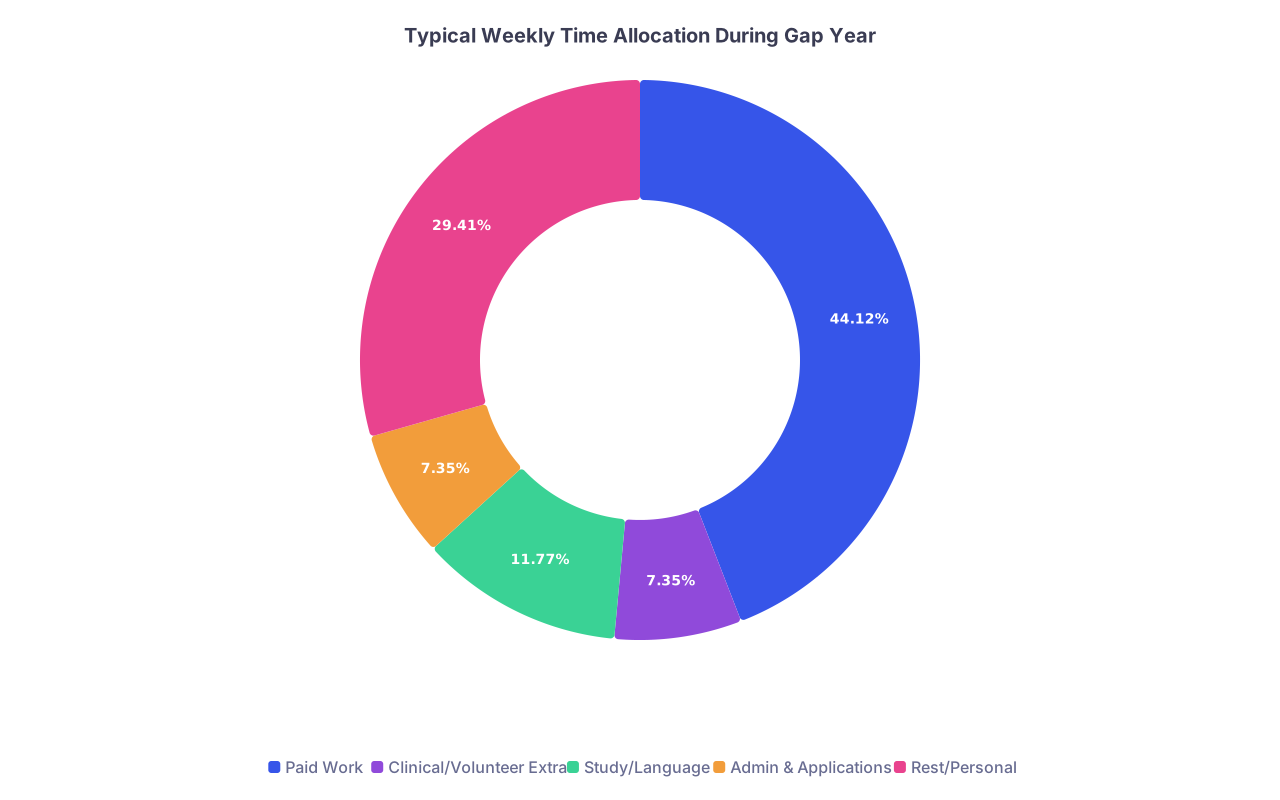
| Category | Value |
|---|---|
| Paid Work | 30 |
| Clinical/Volunteer Extra | 5 |
| Study/Language | 8 |
| Admin & Applications | 5 |
| Rest/Personal | 20 |
Weekly checklist at this stage:
- 3–5 hours: reading about your target country’s:
- Healthcare system.
- Residency options back home if you return as an IMG.
- Living costs and housing options.
- 2–3 hours: language basics (Duolingo is not enough; add a structured course or tutor).
- 1–2 hours: journaling key cases or experiences at work for future essays and interviews.
Month 8: Start the Paper Trail
Foreign schools and future residency programs care about documentation. Loose memories do not count.
This month, you should:
- Ask supervisors for:
- Formal job descriptions.
- Confirmation letters with dates, responsibilities.
- Keep a running log:
- Number of hours worked.
- Types of patients or duties.
- Begin building a “Gap Year Portfolio” folder:
- PDFs of certificates, trainings, evaluations.
- Summary of roles and achievements.
If you might later apply for US or Canadian residency, this gap year will appear on ERAS or CaRMS. You want clean, verifiable entries, not “various jobs and some travel.”
Month 7: Prep for the Move Abroad
If your foreign school is already chosen or likely, at this point you should start moving from “I might go abroad” to “I am onboarding into another country’s system.”
Focus areas:
- Logistics:
- Passport renewal (if needed).
- Immunization records and extra vaccines.
- Start exploring visa requirements and documents.
- Financial planning:
- Open or research international banking options.
- Estimate cost of living in your future city (rent, food, transport).
- Academic prep:
- Get syllabi or sample schedules from your school if possible.
- Ask current students (Facebook groups, Reddit, school forums) what they wish they knew before MS1 there.
This is when I often see students realize: “Oh, the curriculum is accelerated and I am weak in biochemistry.” Good. That gives you months to shore up.
6–3 Months Before Matriculation: Intensify Preparation
This is the critical phase. At this point you should shift from broad development to targeted prep for the specific school and pathway you chose.
Month 6: Align with Licensing Realities
If you have any intention of training back in the US, Canada, or UK, Month 6 is where you stop lying to yourself. You must know what being an IMG actually means for that system.

| Step | Description |
|---|---|
| Step 1 | Foreign Med School Start |
| Step 2 | Preclinical Years |
| Step 3 | USMLE Step 1 |
| Step 4 | Clinical Rotations |
| Step 5 | US Clinical Experience |
| Step 6 | USMLE Step 2 CK |
| Step 7 | Residency Applications as IMG |
Your tasks this month:
- Research:
- USMLE/UKMLA/MCCQE expectations for your school’s graduates.
- Match rates for your specific school to your target country.
- Talk to:
- At least 2–3 current or recent grads from your school who matched to your target system.
- Ask: “What should I be doing before year 1 to not be behind?”
Then adjust your plan:
- If USMLE is in your future:
- Start light but consistent review of basic sciences: physiology, biochem, micro.
- If you will stay and practice in that foreign country:
- Double down on language skills.
- Learn basics of their clinical culture and documentation.
Month 5: Tighten Up Academics and Habits
This month you should stress-test your discipline. Foreign med schools, especially accelerated or Caribbean programs, do not reward procrastinators.
Weekly structure example:
- 30–40 hours: job.
- 5–7 hours: science refresh (e.g., BRS Physiology, Sketchy Micro basics, Kaplan overview).
- 3–4 hours: language practice (live conversation if applicable).
- 1–2 hours: logistics (housing search, visa papers, financial planning).
Build habits now that will carry into MS1:
- Fixed study blocks (same time daily).
- No-phone study sessions (45–60 minutes).
- Weekly review/preview ritual (Sunday night: what did I learn, what is next).
Month 4: Commit to Departure Timeline and Logistics
By Month 4, at this point you should have your move date on a calendar.
Focus on:
- Travel:
- Book flights (if visas and admissions are confirmed).
- Create a packing list tailored to med school (stethoscope, laptop, printer, reference books, etc.).
- Housing:
- Decide: student housing vs. private rental.
- Lock in at least temporary accommodations for the first 1–3 months.
- Documentation:
- Certified copies of degrees and transcripts.
- Notarized documents if your school/country requires them.
- Health insurance arrangements.

3–1 Months Before Matriculation: Transition and Tapering
Now you move from “building profile” to “protecting your starting position.” You want to arrive at med school not burned out, not broke, and not academically rusty.
Month 3: Begin Tapering Work
At this point you should tell your employer your end date.
- Give at least 6–8 weeks notice.
- Secure any final:
- Letters of recommendation (on letterhead, with dates and specific duties).
- Evaluation forms.
- Reference contacts.
Shift your weekly ratio:
- 20–30 hours: work.
- 10–12 hours: academic prep (focused on your weak subjects).
- 3–4 hours: language or system-specific research.
This is also when you:
- Confirm registration and orientation details with your school.
- Clarify what technology you need (tablet vs. laptop, required software, proctoring systems).
Month 2: Simulate Med School Weeks
At this point you should run a “practice month.” Treat it like MS1 lite.
Design 4 weeks where you:
- Have:
- 20 hours/week of something structured (work, volunteering).
- 20–25 hours/week of deliberate study: anatomy, physiology, or whatever your program starts with.
- Practice:
- Note-taking system (OneNote, Notion, handwritten, whatever you actually will use).
- Spaced repetition (Anki, or at least some flashcard system).
- Daily review of new content + weekly cumulative review.
The goal: test your stamina and systems, not to “learn everything in advance.” You want to start medical school already knowing how you study.
Month 1: Wind Down and Prepare to Move
Last month at home. Do not cram it with last-minute jobs and chaos.
Weeks 4–3 (counting down):
- Finalize:
- Housing and roommates.
- Health insurance coverage dates.
- Banking and access to funds abroad.
- Check:
- All required vaccines and health forms submitted to the school.
- Emergency contact and medical documents scanned and backed up.
Weeks 2–1:
- Pack in layers:
- Academic: laptop, chargers, backup drive, USB.
- Clinical: white coat (if required), basic equipment.
- Personal: medications (with documentation), glasses/contacts, copies of prescriptions.
- Spend time with family and friends. You will not get this back soon.
Last 5–7 days:
- Sleep schedule aligned to destination time zone (at least partially).
- Light academic review only.
- Mental reset: reflect on your gap year—what you learned, where you grew, and what story you will tell when attendings ask, “So what did you do before med school?”
Weekly Rhythm Throughout the Gap Year
Independent of the month, your best gap year has a consistent weekly backbone.
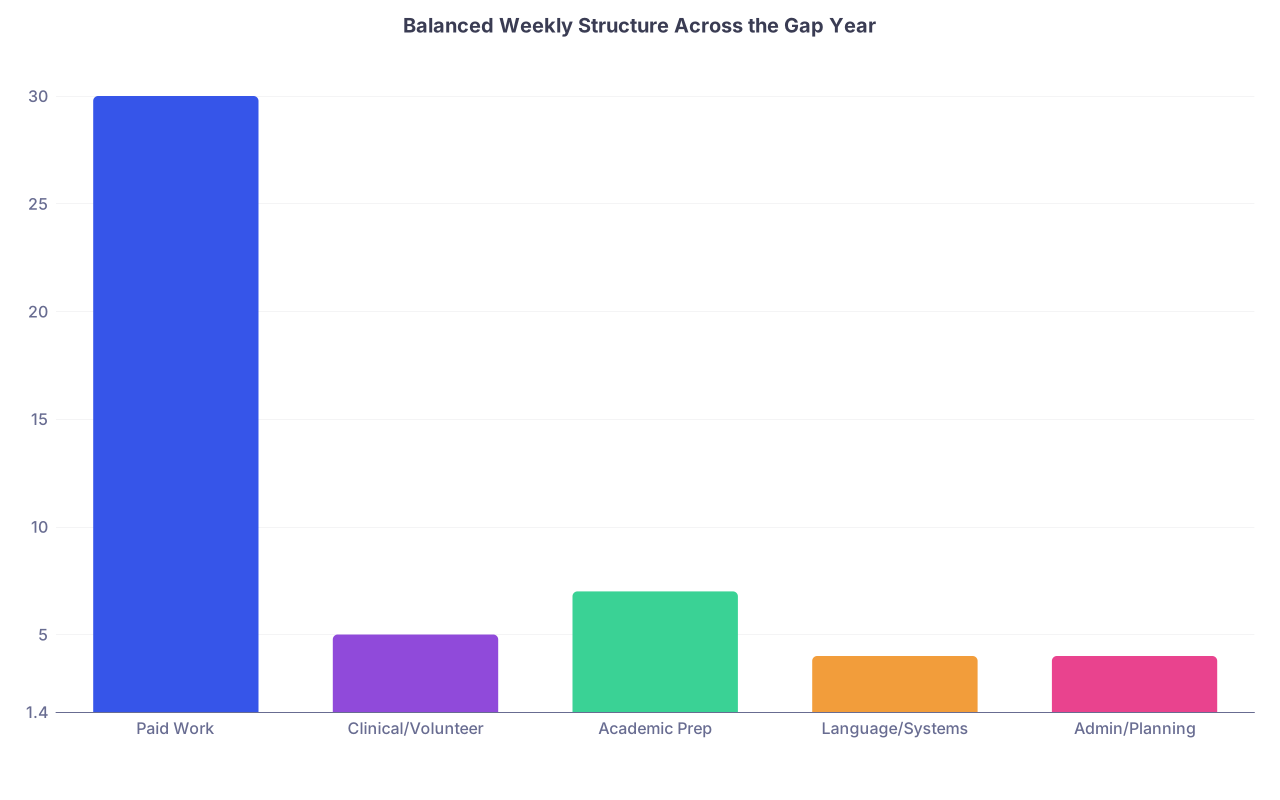
| Category | Value |
|---|---|
| Paid Work | 30 |
| Clinical/Volunteer | 5 |
| Academic Prep | 7 |
| Language/Systems | 4 |
| Admin/Planning | 4 |
Your target structure, most of the year:
Anchor: 25–40 hours/week of something serious
- Job with responsibility and accountability.
- Research position.
- Intensive coursework.
- This shows maturity and reliability.
Clinical exposure: 3–5 hours/week minimum
- Direct patient interaction preferred.
- If your job already covers this (scribe, tech), you are set.
Academic muscle: 5–10 hours/week
- Science review if your foundation is shaky.
- Or health policy / global health reading if your sciences are fine.
Admin / future planning: 2–4 hours/week
- Updating CV and log of activities.
- Reading about target country’s system.
- Handling paperwork piece by piece instead of all at once.
Recovery and life
- At least one full unplugged evening and half a day per week where you are not thinking about medicine.
Daily Habits That Turn a Gap Year into an Asset
Daily rhythm matters more than you think. Admissions committees and future program directors care that you can sustain effort over time, not that you had a heroic two-month sprint.
At this point (any point in the year, honestly), your ideal day roughly looks like:
Morning (1–2 hours before work/class)
- 25–45 minutes of high-focus study: reviewing a chapter or doing Anki cards.
- 10 minutes: quick planned review of the day’s logistics.
Day (job / volunteering / coursework)
- Show up on time, every time.
- Collect stories: de‑identify patient situations, note what you learned.
Evening (60–90 minutes)
- 30–45 minutes: academic or language work.
- 10–15 minutes: log activities and reflections.
- Light reading related to your target healthcare system.

You are training yourself to be the kind of person who can handle heavy structured days without falling apart. Medical school abroad will demand exactly that.
Strategic Things Not To Do With Your Gap Year
I have watched gap years ruin people. Not because they were lazy, but because they were vague.
Common mistakes by month:
- Months 12–9:
- “Travel and figure things out” with no plan, then panic when money and time vanish.
- Months 9–6:
- Random short-term gigs, zero continuity. Looks disorganized later.
- Months 6–3:
- Ignoring licensing pathways and language needs until it is too late to build a base.
- Months 3–1:
- Working full-time up to the flight and arriving exhausted and administrative chaos.

Final Compression: If You Only Remember Three Things
- Treat your gap year as a structured, 12‑month project with clear phases, not a vague pause.
- Anchor each phase with specific time commitments: real work, real clinical exposure, and deliberate prep for the country and system you are entering.
- Arrive at your foreign medical school rested, organized, and academically warmed up—not burned out, broke, or rusty.


