

The biggest mistake international final‑year students make with ERAS is starting when ERAS opens. That’s already late.
You’re competing in a US system that assumes you’ve known this game for years. You cannot “wing it” from abroad. So let’s lay out your final year month‑by‑month: what to do, in what order, and what absolutely cannot slip.
I’ll assume:
- You’re in a 6‑year or 5‑year international program
- You’re in your final clinical year
- You’re targeting the Match that happens right after graduation (e.g., final year 2025 → Match March 2026 → start residency July 2026)
If your school calendar is shifted, adjust months by season (early clinical year vs late). The logic stays the same.
Big Picture: Your ERAS Year at a Glance
At this point you should stop thinking “I’m a student” and start thinking “I’m an applicant running a year‑long project.”
Here’s the backbone:
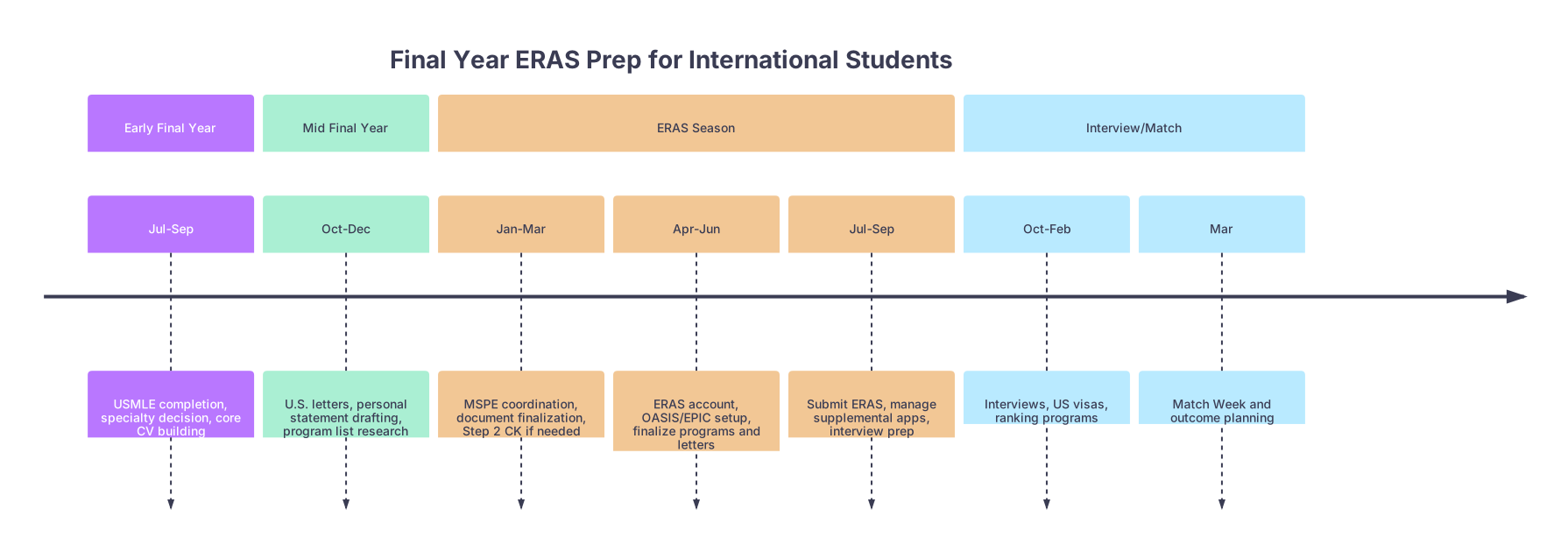
| Period | Event |
|---|---|
| Early Final Year - Jul-Sep | USMLE completion, specialty decision, core CV building |
| Mid Final Year - Oct-Dec | U.S. letters, personal statement drafting, program list research |
| ERAS Season - Jan-Mar | MSPE coordination, document finalization, Step 2 CK if needed |
| ERAS Season - Apr-Jun | ERAS account, OASIS/EPIC setup, finalize programs and letters |
| ERAS Season - Jul-Sep | Submit ERAS, manage supplemental apps, interview prep |
| Interview/Match - Oct-Feb | Interviews, US visas, ranking programs |
| Interview/Match - Mar | Match Week and outcome planning |
Now we break it down month‑by‑month, with “at this point you should…” checkpoints.
July–August: Lock in Exams and Direction
At this point you should be past “thinking about” and into executing.
Core goals in July–August
- Finish or schedule USMLEs
- Decide a realistic specialty strategy
- Start building your U.S.-facing profile
1. USMLE Status Check
By early July, you should know exactly where you stand:
Step 1:
- Ideally already done and passed (even if Pass/Fail, fails kill chances)
- If not yet taken → you’re already in a crunch. Move heaven and earth to schedule and pass on first attempt
-
- Extremely important for IMGs. This is your main numeric filter
- Target: exam done by November–December latest, with score back before main ERAS screening
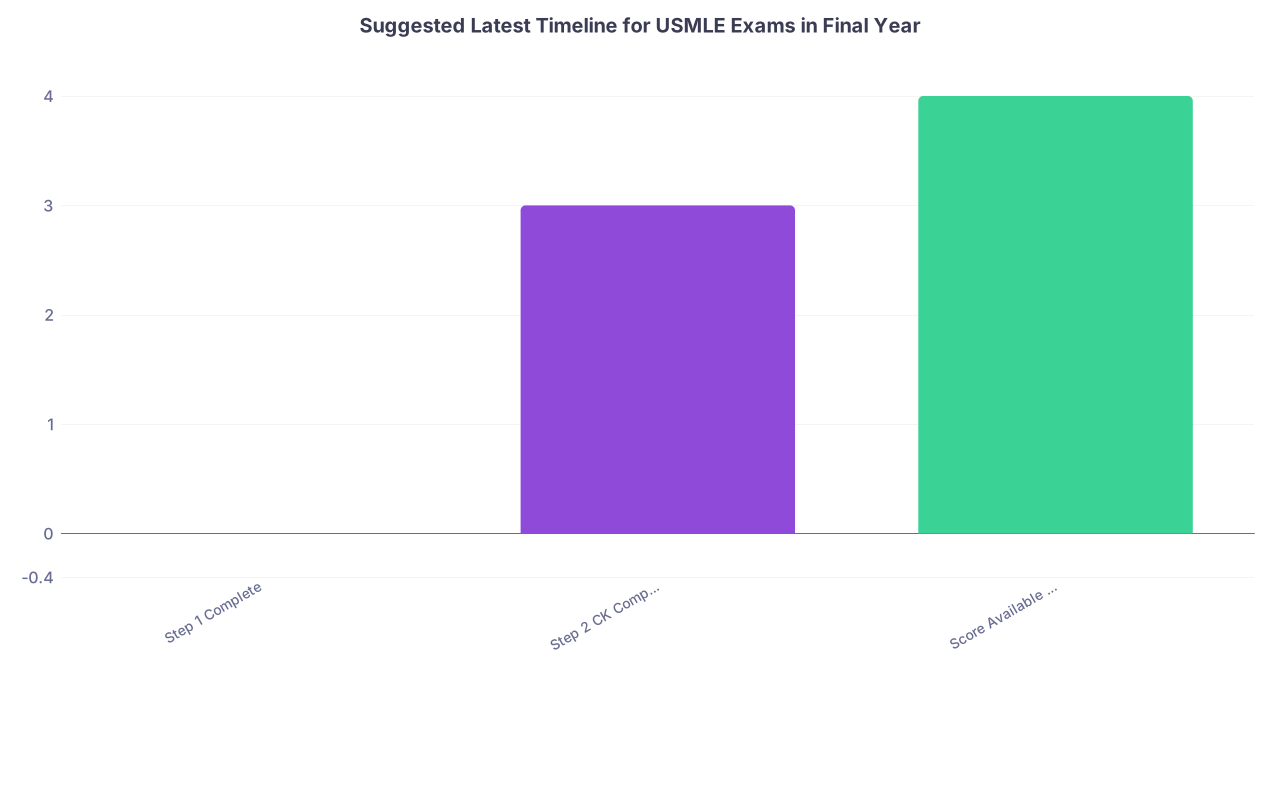
| Category | Value |
|---|---|
| Step 1 Complete | 0 |
| Step 2 CK Complete | 3 |
| Score Available Before ERAS Screening | 4 |
(Values represent months before ERAS September submission; the earlier above zero, the better. Zero = cutting it too close.)
By late August, you should:
- Have Step 1 passed
- Have a Step 2 CK date set (ideally Sept–Nov), or already be done
2. Specialty Strategy (Yes, Already)
Too many IMGs delay this until they “see their scores.” That’s backwards.
By August you should:
Narrow to:
- 1 primary specialty (e.g., Internal Medicine, Family, Psych)
- 1 backup (less competitive, more IMG‑friendly) OR a strategy of multiple tracks within one field (e.g., community vs university IM)
Be brutally realistic:
- If you’re targeting Derm, Ortho, Plastics as an IMG without insane research and connections, you’re not strategic.
- Primary care‑oriented and hospital medicine specialties are your higher‑yield targets.
At this point you should also:
- Start a simple spreadsheet:
- Column tabs: “Programs,” “Requirements,” “IMG Friendly,” “USMLE cutoffs,” “ECFMG notes,” “Visa”
- You’ll fill this over months, not in one sitting
3. CV & Experience Baseline
By end of August, you should:
- Have a draft CV in US style (reverse chronological, focus on impact, not duties)
- List out:
- Clinical rotations (with dates, locations, any US electives/observerships)
- Research (even poster abstracts and case reports)
- Teaching, leadership, volunteer work
- Awards, scholarships, exam distinctions
You’re building the skeleton ERAS will later flesh out.
September–October: U.S. Exposure and Letters
At this point you should shift hard into letter‑generation mode.
If you can get U.S.-based clinical experience (elective, observership, externship), this is where you squeeze the most value out of it.
If you’re in the U.S. for rotations
Your priorities in September–October:
- Show up early. Know your patients cold. Present clearly.
- Tell attendings you’re planning to apply to US residency next cycle and would be honored to earn a strong letter if you perform well.
- Near the end of the rotation, when feedback is positive:
- Ask explicitly: “Would you feel comfortable writing me a strong letter of recommendation for residency?”
- If they hesitate, don’t use them.
Target:
- 3–4 strong letters total
- Ideally 2–3 U.S. clinical letters in your chosen specialty
- 1 can be a research or non‑US clinical letter if needed
If you’re NOT in the U.S.
You’re not doomed. You just have to be sharper:
- Identify the most US‑connected faculty at your school (those who trained/worked in the US)
- Seek out rotations with them early in final year
- Do the same “earn the strong letter” approach
By late October, you should:
- Have at least 2 confirmed letter writers who have agreed
- Know where they’ll upload (ERAS letter portal via ECFMG OASIS/EPIC)
November–December: Scores, Personal Statement, Program Strategy
At this point you should be turning raw materials into application components.
1. Step 2 CK and Score Timing
By mid‑November:
- You should either:
- Already have taken Step 2 CK
- Or be within 4–6 weeks of your test date, solidly on track with NBME practice scores
By late December:
- Ideal: you have your Step 2 CK score already
- Minimum: your exam date is no later than early January so the score hits before programs make deep decisions
2. Personal Statement – Ugly First Draft
Do not wait until ERAS opens. That is how you get the cliché, bland essay.
November:
- Block off 2–3 sessions and write the bad version:
- Why this specialty, specifically?
- What have you actually seen or done in that field?
- How does being an international grad add value, not just create obstacles?
- Where do you see yourself practicing long‑term?
By end of November, you should:
- Have one main personal statement draft for your primary specialty
- A rough outline for either:
- A second statement for your backup specialty, or
- A modified version tailored to certain program types (e.g., community‑heavy)
December:
- Get targeted feedback:
- A U.S. resident in your field if possible
- Or career office staff familiar with US applications
- Revise 2–3 times, not 12. Over‑editing makes you sound generic.
3. Program Research: Start Building the Real List
By December you should:
- Start filling in that spreadsheet with real program data:
- Look at program websites, FREIDA, NRMP’s Charting Outcomes, and residency forums (with skepticism)
- Track:
- Minimum scores
- Years since graduation limits
- Visa sponsorship (J‑1, H‑1B or none)
- How many IMGs they typically take
You’re not finalizing the list yet. You’re mapping the terrain.
January–February: MSPE, Documents, and Reality Check
At this point you should move from “planning” to document control.
1. Dean’s Letter / MSPE (Yes, as an IMG)
Many IMGs screw this up by ignoring it.
January:
- Contact your dean’s office or academic affairs:
- Ask them who handles MSPE
- Confirm they’re familiar with ECFMG/ERAS process
- Provide:
- Your draft CV
- Any awards or distinctions they might miss
- A bullet list of key rotations and strengths they should highlight
No, you don’t write your own MSPE. But if you provide good info early, your MSPE won’t read like a generic template.
By end of February, you should:
- Have confirmation the MSPE will be ready by ERAS season
- Know the exact internal deadline for your school
2. Transcript and ECFMG Documentation
January–February checklist:
- Request official transcript and understand:
- How long it takes to process
- How it gets to ECFMG/ERAS (often through your school, not you personally)
- Confirm:
- Your ECFMG account is created
- You know how to use OASIS/EPIC for uploading documents
- Your name, graduation date, and other data match exactly across all documents
3. Reality Check on Competitiveness
By late February, you should:
- Have:
- Step 1 status
- Step 2 CK score or realistic projected range
- A decent sense of your competition level
Then:
- Adjust your specialty strategy if needed:
- If scores are weaker: lean toward more IMG‑friendly programs, higher application volume, and more community‑based hospitals
- If stronger: you can still apply broadly, but prioritize programs where IMGs actually match, not just your dream branding
March–April: Tightening the Application Components
At this point you should be moving every piece closer to “upload‑ready.”
1. Personal Statement & CV – Final Passes
By end of March:
- Your personal statement(s) should be:
- Clear
- Specific to your specialty
- Free of melodramatic “ever since I was a child” intros
- Your CV should:
- Match your ERAS entries structure (you’ll copy/paste later)
- Be checked for dates, spelling, and consistency
2. Letters of Recommendation – Herding Cats
March:
- Politely follow up with letter writers if you asked earlier in the year:
- “I’m starting to prepare my ERAS application for this year’s Match. I wanted to confirm you’re still comfortable writing a strong letter on my behalf and to provide any additional information you may need.”
- Provide:
- Your CV
- Personal statement
- Bullet points of rotations or projects you did with them
By end of April, you should:
- Have at least 2 letters already uploaded or clearly in progress
- Know exactly which writers are covering which specialty (don’t use your Psychiatry letter for Surgery unless it’s unavoidable)
May–June: Program List and ERAS Structure
At this point you should treat ERAS like a form you already know by heart.
1. Create/Access ERAS (When It Opens)
For IMGs, this is via ECFMG token:
- Watch for ECFMG announcements about token availability
- Once available (typically late spring/early summer):
- Buy your token
- Create your ERAS account
- Familiarize yourself with every section:
- Personal info
- Education history
- Experiences
- Publications
- Licensure (usually “none” as a student)
2. Program List: From Rough to Real
By June, your spreadsheet should move from research to selection:
- Decide:
- How many programs you’re targeting (most IMGs are in the 80–150+ range for primary care fields; less if extremely strong on paper, more if weaker)
- Which ones absolutely require:
- U.S. clinical experience
- No visa sponsorship issues
- Score thresholds higher than yours (cross them off)
| Filter Type | Keep Program If… |
|---|---|
| Score Cutoff | Your Step 2 CK ≥ their posted |
| Visa | J-1 or H-1B sponsored |
| IMG Friendliness | ≥1-2 IMGs per year recently |
| USCE Required | You meet minimum months |
| YOG Limit | Within their years-since-grad |
By end of June, you should:
- Have a draft program list that’s 80–90% of what you’ll apply to
- Flag stretch programs vs safety programs
July: ERAS Data Entry and Polish
At this point you should stop “thinking about ERAS” and actually fill it out.
1. Enter All Core Data
By mid‑July:
- Log in and:
- Enter personal info, education, exams, etc.
- Copy your experiences from CV into ERAS format
- Enter publications, abstracts, conference posters
Spend real time on Experience Descriptions:
- Focus on:
- What you did
- What changed because you were involved
- Any leadership, teaching, systems improvement
Not: “Responsible for patient care” (everyone was).
2. Upload Documents
By late July, you should:
- Upload:
- Personal statement(s)
- Photo (professional, simple background, business‑casual or suit)
- Make sure:
- Transcript and MSPE status is either uploaded or pending with clear timelines
- Letters are designated correctly in ERAS once they appear in the system
This is also the time to:
- Triple‑check name spellings
- Confirm contact info that programs will use for interview invites
August: Final Checks, Supplemental Apps, and Contingency Planning
At this point you should act as if your application must be ready to submit on ERAS opening day in September.
1. Final Review
Early August:
- Print your entire ERAS PDF preview (or save as PDF)
- Read it as if you’re a program director:
- Are there unexplained gaps?
- Do dates overlap incorrectly?
- Are there obvious spelling/grammar errors?
Mid‑August:
- Fix everything now. Not later.
2. Supplemental Application & Signaling (if applicable)
If ERAS continues using supplemental apps and preference signaling (varies by year/specialty):
- Read the instructions carefully as soon as they’re released
- Identify:
- Programs you’d signal (top‑tier choices where you’re at least somewhat realistic)
- How your experiences fit the “most meaningful” or “geographic preference” prompts
By late August, you should:
- Have draft answers ready for any supplemental questions
- Know exactly which programs you’ll signal, if offered
Early September: Submission Week
At this point you should be done editing and ready to push the button.
1. Submit Early in the Window
When ERAS opens for submission (usually early September):
- Submit on or very near the opening date
- Don’t wait a week “to tinker.” You’ve had all year.
Double‑check:
- Program list is final
- Correct personal statement attached to each specialty/program
- Correct letters designated (do not mix up specialties if you can avoid it)
2. Immediately After Submitting
The same week:
- Start basic interview prep:
- Common questions (tell me about yourself, why this specialty, strengths/weaknesses)
- 3–4 strong clinical stories that show judgment, communication, resilience
October–February: Interviews, Ranking, and Backup Plans
At this point you should shift from application builder to interview performer.
Interview Phase
October–January:
- Manage invites aggressively:
- Respond within hours, not days
- Use a calendar app; don’t double‑book
- Before each interview:
- Review the program website and your application
- Have specific reasons why you like that program (not generic “diversity and teaching” fluff)
Ranking and Match Preparation
January–February:
- Create your rank list based on:
- Fit (where you’d actually be happy working)
- Training quality
- Visa issues
- Geographic reality (support system, cost of living)
Don’t try to game the algorithm. Rank in true preference order.
If You’re Reading This Late
If you’re already in, say, February of your final year and half of this isn’t done, you don’t quit. You compress:
- Immediately:
- Lock in Step 2 CK date
- Identify 2–3 letter writers
- Start PS draft this week
- Next 4–6 weeks:
- Build your program research spreadsheet in parallel with clinical rotations
- Get your dean/administration looped in on MSPE and transcript
You’ll be busier. But it’s still possible to produce a coherent application.
Your Move Today
Open a blank document and create a 12‑row table, one row per month of your final year. In each row, write three bullets:
- Exams and scores
- Letters and documents
- ERAS components (PS, CV, programs)
Then compare your current status to what you’ve just read. Where you’re behind, block time on your calendar this week to close the gap. Don’t just read timelines—turn yours into a checklist you actually follow.


