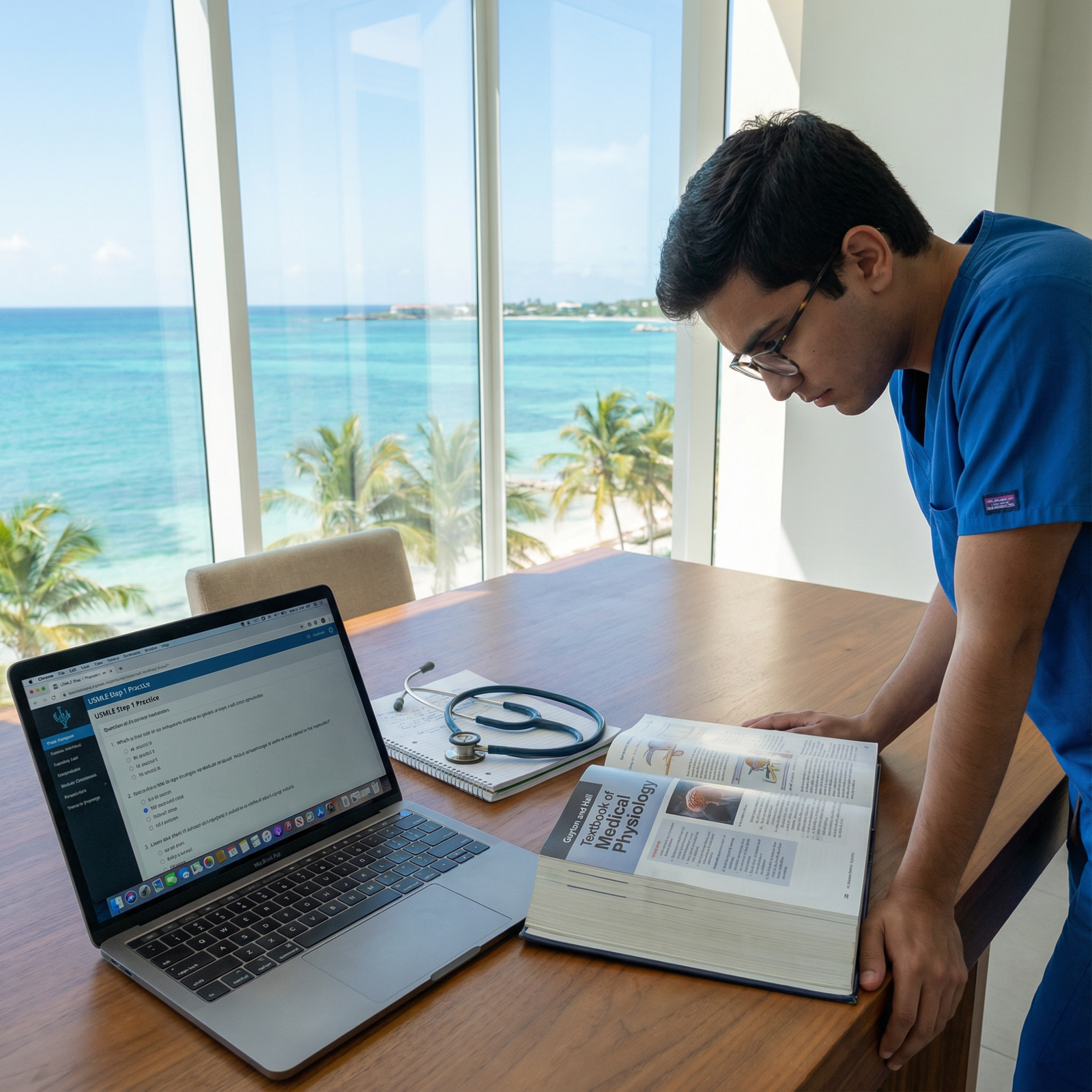
The Impact of Caribbean Medical Schools on Your U.S. Residency Options
Choosing where to pursue medical education is one of the most consequential decisions in your path to becoming a physician. For many premeds, U.S. MD or DO programs are the default goal. Yet each year, thousands of students who are determined to practice medicine in the United States choose Caribbean medical schools as an alternative route.
That decision inevitably raises questions:
- Will studying in the Caribbean hurt my chances at a U.S. residency?
- Which specialties are realistic for Caribbean graduates?
- How do I stand out as an International Medical Graduate (IMG)?
- What can I do now to protect my future residency options?
This guide takes a detailed, realistic look at how training at a Caribbean medical school can affect your U.S. residency prospects—and what you can do to maximize your chances of success.
Understanding Caribbean Medical Schools and Their Role in U.S. Residency
What Are Caribbean Medical Schools?
Caribbean medical schools are institutions located across various Caribbean nations that offer MD (and occasionally MD-equivalent) programs, primarily targeting international students—especially from the U.S. and Canada. They are a major pathway for students who:
- Were not accepted to U.S. MD or DO schools
- Have non-traditional backgrounds (career changers, older students)
- Have lower GPAs or MCAT scores than typical U.S. matriculants
- Want a second chance at a medical career after academic setbacks
These schools are often grouped into three informal tiers:
“Big Four” or Established Schools
A small group of Caribbean medical schools with:- Long-standing accreditation
- A track record of placing graduates into U.S. residency programs
- Broad U.S. clinical rotation networks
- Strong support for USMLE preparation
Mid-Tier Schools
- Some accreditation and U.S. clinical partnerships
- More variable match outcomes
- Often fewer resources and less structured USMLE support
Newer or Lower-Tier Programs
- Recently established, sometimes with unstable accreditation
- Limited or changing U.S. rotation sites
- Sparse published match data
Understanding this variability is crucial: not all Caribbean medical schools provide the same quality of medical education or IMG residency outcomes.
How Caribbean Medical Education Is Structured
Most Caribbean medical schools follow a structure similar to U.S. MD programs:
Basic Sciences (Pre-Clinical Years):
- Typically semesters 1–5 (about 2 years)
- Classroom-based instruction on anatomy, physiology, pathology, pharmacology, etc.
- Usually completed on the island campus
Clinical Sciences (Clinical Rotations/Clerkships):
- Typically semesters 6–10 (about 2 years)
- Core and elective rotations in U.S. (and sometimes Canadian) teaching hospitals
- Rotations in internal medicine, surgery, pediatrics, OB/GYN, psychiatry, family medicine, plus electives
For U.S. residency programs, what matters is not only where you studied but also:
- Whether your school meets ECFMG/World Federation of Medical Education (WFME) standards
- Whether your clinical rotations were in ACGME-affiliated (or comparable) teaching hospitals
- How well you performed on USMLE exams and in clinical settings
Accreditation and Why It Matters for U.S. Residency
Accreditation is a non-negotiable factor if your ultimate goal is U.S. residency and practice.
Key points to understand:
ECFMG Certification Requirement
To apply for U.S. residency (via NRMP) and take USMLE Step 3, you must obtain ECFMG certification, which requires:- Graduation from a medical school listed in the World Directory of Medical Schools (WDOMS)
- Meeting accreditation standards recognized by ECFMG/WFME
WFME-Recognized Accreditation
Starting in 2024, ECFMG requires that your medical school:- Is accredited by an agency recognized by the World Federation for Medical Education (WFME)
- Or is in a country with a WFME-recognized accrediting body
Regional Accrediting Bodies in the Caribbean
Examples include:- ACCM – Accreditation Commission on Colleges of Medicine
- CAAM-HP – Caribbean Accreditation Authority for Education in Medicine and other Health Professions
Not all Caribbean schools meet these standards. Before you apply or enroll, you should:
- Verify the school’s status in the World Directory of Medical Schools
- Confirm that the accrediting body is WFME-recognized
- Ask explicitly whether recent graduates are ECFMG-eligible and matching into U.S. residencies
Without proper accreditation, your path to U.S. residency may be blocked entirely, regardless of how motivated or capable you are.

Navigating the U.S. Residency Application Process as a Caribbean Graduate
Training at a Caribbean medical school makes you an International Medical Graduate (IMG) for the purposes of U.S. residency, even if you are a U.S. citizen. That means your strategy must be especially deliberate and early.
Step 1: USMLE Preparation and Timing
USMLE performance is often the single most critical objective measure residency programs use when evaluating Caribbean graduates.
Key exams:
- USMLE Step 1 – Now pass/fail but still crucial
- USMLE Step 2 CK – Numerically scored and heavily weighted
Actionable strategies:
Choose a School with Strong USMLE Support
- Look for dedicated USMLE prep courses, NBME practice exams, and institutional pass rates
- Ask current students about first-time pass rates and average Step scores
Build a Study Plan Early
- Start using board-style resources (e.g., UWorld, Anki, Boards & Beyond, Sketchy, etc.) during basic sciences
- Plan for a dedicated Step 1 study period (6–12 weeks, depending on your baseline)
Aim for Above-Average Scores
- As an IMG, your scores often need to be stronger than those of U.S. graduates to be considered competitive, especially for non-primary care specialties
- A strong Step 2 CK score is particularly important now that Step 1 is pass/fail
Avoid Multiple Fails
- Failing a USMLE exam significantly harms your IMG residency prospects
- Delay the exam rather than taking it underprepared
Step 2: Maximizing Clinical Rotations in the U.S.
Clinical rotations are not just educational—they are job interviews in disguise.
Important considerations:
Where Are Your Rotations?
Priority should go to:- ACGME-affiliated teaching hospitals
- Rotations in geographic regions where you might want to match
- Sites with active residency programs
Core vs. Elective Rotations
- Core rotations (IM, surgery, pediatrics, OB/GYN, psychiatry, family medicine) are often completed in a smaller number of affiliated hospitals
- Elective rotations / sub-internships (sub-Is) in your chosen specialty at hospitals with residency programs can dramatically improve your chances
Practical tips during rotations:
- Treat every day like an extended interview
- Be punctual, prepared, and proactive
- Volunteer for presentations, show ownership of patient care, and follow through
- Ask attendings and residents for feedback and apply it visibly
- Make it clear early (politely) that you are very interested in their specialty and would be grateful for strong letters of recommendation if you perform well
Step 3: Building Relationships, Letters of Recommendation, and Networking
Strong, U.S.-based letters of recommendation (LORs) are especially important for Caribbean medical graduates.
Strategic steps:
Secure U.S. LORs in Your Target Specialty
- Aim for at least 2–3 letters from U.S. attending physicians in the specialty you’re applying to
- A powerful letter from a program director or department chair at a teaching hospital can carry significant weight
Leverage Alumni Networks
- Many Caribbean schools have alumni in U.S. residency and attending positions
- Attend alumni events, webinars, and mentoring programs
- Politely reach out via LinkedIn or alumni offices for advice, not just recommendations
Join Professional Organizations
- For example: American College of Physicians (ACP), American Academy of Family Physicians (AAFP), American Psychiatric Association (APA), etc.
- Attend local chapter meetings, poster sessions, and conferences if possible
These relationships can help in several ways:
- Stronger LORs
- Interview invitations (when faculty recognize your name)
- Insight into which programs are more IMG-friendly
Step 4: ERAS Application Strategy for IMGs from Caribbean Schools
Your Electronic Residency Application Service (ERAS) application is your primary marketing document.
Key components to optimize:
Personal Statement
- Address your path honestly but confidently
- You do not need to apologize for being Caribbean-trained; instead, highlight resilience, adaptability, cross-cultural experiences, and maturity
- Clarify why you are committed to your chosen specialty and how your background adds value
CV and Experiences
- Include leadership roles (tutoring, class representative, student organizations)
- Research, QI projects, presentations, and volunteer work all strengthen your profile
- Show continuity of interest in your specialty (e.g., sustained involvement over time)
Program List Construction
- Apply broadly—Caribbean graduates often apply to 80–150+ programs, depending on specialty
- Prioritize programs known to be IMG-friendly (check NRMP Charting Outcomes, FREIDA, and program websites)
- Include a mix of academic and community programs
Step 5: Interview Performance and Match Day
Once you have interviews, your status as a Caribbean graduate becomes less important than how you present yourself.
On interview day:
- Be ready to explain:
- Why you chose a Caribbean school
- How you handled challenges (moving abroad, adapting to new systems)
- What you learned from that experience that will help you as a resident
- Practice concise, structured answers (e.g., using the STAR method for behavioral questions)
- Demonstrate insight into the program (know their patient population, strengths, and values)
Match Day, through the National Resident Matching Program (NRMP), is the culmination of this whole process. Your match chances will depend on:
- Specialty choice
- USMLE scores
- Clinical performance and LORs
- The reputation and outcomes of your specific Caribbean school
Residency Options and Specialty Competitiveness for Caribbean Graduates
Understanding IMG Residency Outcomes by Specialty
Caribbean medical graduates have successfully matched into a wide spectrum of specialties. However, the likelihood of matching varies across disciplines.
Broad trends (which can shift slightly by Match year):
1. More Accessible Specialties for Caribbean Graduates
These specialties historically have relatively higher match rates for IMGs, especially those who are U.S. citizens:
- Internal Medicine
- Family Medicine
- Pediatrics
- Psychiatry
- Neurology
- Pathology
These programs often value:
- Genuine commitment to patient care
- Good Step 2 CK scores
- Strong clinical evaluations and LORs
- Willingness to work in underserved or rural areas
2. Moderately Competitive Specialties
Caribbean IMGs do match into these, but competition is stiffer and profiles must be stronger:
- Emergency Medicine
- Anesthesiology
- Physical Medicine & Rehabilitation (PM&R)
- Obstetrics & Gynecology
Success usually requires:
- Above-average Step 2 CK scores
- U.S. clinical experience in that specialty (ideally sub-Is)
- Robust letters from faculty in the field
- Some scholarly activity, especially for academic programs
3. Highly Competitive Specialties for IMGs
These specialties have relatively low match rates for Caribbean graduates and require exceptional profiles:
- Dermatology
- Plastic Surgery
- Neurosurgery
- Orthopedic Surgery
- Ophthalmology
- Radiation Oncology
Matching here often demands:
- Outstanding USMLE scores
- Significant research (often with publications)
- Strong mentorship and advocacy from faculty in the specialty
- Often, U.S. clinical exposure in high-profile academic centers
Ambitious goals aren’t impossible, but you must be brutally realistic and develop contingency plans (such as dual-application strategies).
How Programs Perceive Caribbean Medical Schools
Perceptions vary considerably across institutions and specialties:
Some programs are actively IMG-friendly
- They routinely interview and rank Caribbean graduates
- Often in community-based or underserved areas
Others are IMG-neutral
- Caribbean grads are considered if their metrics are strong
- USMLE and performance can compensate for school name
Some programs rarely or never rank IMGs
- Particularly top-tier academic centers and competitive specialties
Your job is to:
- Use resources like FREIDA, program websites, and alumni to identify where Caribbean graduates have historically matched
- Prioritize those programs in your application strategy
- Align your expectations with data rather than assumptions
Key Factors That Influence Residency Success for Caribbean Medical Graduates
USMLE Performance as a Primary Filter
For Caribbean graduates, USMLE scores are often used as a first-pass filter.
- Strong Step 2 CK score can:
- Offset concerns about school name
- Open doors at more competitive programs
- Poor or failing scores:
- Can close doors even in more IMG-friendly specialties
Be strategic about exam timing, preparation, and practice tests. Seek help early if your NBMEs are not where they need to be.
Quality of Clinical Training and Evaluations
Programs look carefully at:
- Where you did your rotations (teaching hospital vs. small private clinic)
- The quality and detail of your clinical evaluations
- Whether your performance improved over time
Strive for:
- Honors or top evaluations in core clerkships, especially your target specialty
- Strong narrative comments highlighting work ethic, communication, professionalism, and clinical reasoning
Letters of Recommendation and Mentorship
LORs can tip the scales:
- A glowing letter from a U.S. attending who has trained both U.S. and Caribbean students carries significant weight
- Specific examples of your performance are more impactful than generic praise
Invest in mentorship:
- Ask attendings if they are comfortable writing you a strong letter
- Provide them with your CV, personal statement draft, and talking points
- Stay in touch and update them about your application progress
Research, Leadership, and Extracurriculars
While not always mandatory, these can differentiate you:
Research:
- Case reports, retrospective studies, QI projects, and poster presentations all count
- Particularly relevant for specialties with academic focus or competitive fields
Leadership:
- Tutoring, student government, interest group leadership, or volunteering can show maturity and initiative
Community Service:
- Longitudinal work with underserved populations reflects commitment to patient-centered care
Personal Resilience and Professionalism
Caribbean training often requires extra resilience:
- Adapting to life in a new country
- Handling resource limitations
- Dealing with the stigma some people may have toward Caribbean medical schools
If framed thoughtfully, this journey can be a strength:
- You can showcase grit, flexibility, cultural competence, and persistence—traits residency programs value highly.

Strategic Advice for Prospective and Current Caribbean Medical Students
Before You Enroll in a Caribbean Medical School
If you are still in the decision phase:
Reassess Your Application to U.S. Schools First
- Consider a reapplication cycle with improvements: post-bacc courses, MCAT retake, clinical experience
- U.S. MD/DO schools generally offer higher match rates and more predictable outcomes
Research Specific Caribbean Programs Intensely
- Accreditation status (WFME-recognized)
- USMLE pass rates and average scores
- Published residency match lists (look for details, not vague claims)
- Strength of U.S. clinical rotation sites
Talk to Current Students and Recent Graduates
- Ask candidly about academic support, exam prep, and actual match results
- Ask where they did rotations and whether those sites are stable or changing
If You’re Already in a Caribbean Medical School
You can still significantly influence your trajectory:
During Basic Sciences
- Build a strong academic foundation early
- Start integrating USMLE resources from day one
- Use office hours and tutoring; avoid falling behind
During Clinical Years
- Prioritize excellence in U.S. rotations
- Seek rotations at hospitals with residency programs in your chosen specialty
- Start cultivating letter writers early in each rotation
During Application Season
- Apply broadly and strategically
- Consider backup or parallel specialties if you are aiming for a competitive field
- Tailor your personal statement and program communications to show genuine interest
FAQ: Caribbean Medical Schools and U.S. Residency
1. Can graduates from Caribbean medical schools match into any U.S. residency specialty?
Yes, in theory Caribbean graduates can apply to any specialty, and there are rare success stories in highly competitive fields. In practice, match rates are significantly higher in primary care and less competitive specialties (internal medicine, family medicine, pediatrics, psychiatry, etc.). Highly competitive specialties (e.g., dermatology, orthopedic surgery, neurosurgery) are possible but require exceptional profiles and often substantial research and mentorship.
2. How important is USMLE performance for Caribbean medical graduates?
USMLE performance is critical. For IMGs, Step 2 CK in particular is a major filter. Strong scores can compensate for concerns about school reputation and open more interview opportunities, while low or failing scores can severely limit your options—even in more IMG-friendly programs. Thorough, early preparation and strategic exam timing are essential.
3. Do all Caribbean medical schools have the same reputation with U.S. residency programs?
No. There is wide variability. A small group of well-established Caribbean schools have a long track record of placing graduates into U.S. residency and maintaining accreditation. Others may have weaker outcomes, unstable rotation sites, or limited match data. Programs are aware of these differences. Research each school’s accreditation, USMLE performance, and specific match outcomes before enrolling.
4. How important are U.S.-based clinical rotations for Caribbean students?
U.S.-based clinical rotations are extremely important. They provide:
- Exposure to the U.S. healthcare system
- Opportunities to obtain U.S. letters of recommendation
- Direct interaction with potential residency programs and mentors
Whenever possible, complete core and elective rotations at ACGME-affiliated teaching hospitals, especially in regions and specialties where you want to match.
5. Can networking and mentorship really improve my chances as a Caribbean graduate?
Absolutely. For Caribbean-trained IMGs, networking and mentorship can be game-changing. Attending physicians, program directors, and alumni can:
- Write strong, specific letters of recommendation
- Alert you to IMG-friendly programs
- Advocate for you during the rank list process
Attendings who have seen you work hard during clinical rotations are often your best advocates. Invest in those relationships and maintain professionalism consistently.
Studying at a Caribbean medical school is a viable, though more challenging, route to U.S. residency. By choosing your school carefully, excelling academically, maximizing USMLE performance, and strategically leveraging clinical rotations and networking opportunities, you can significantly improve your chances of securing an IMG residency and ultimately practicing as a physician in the United States.