Life as an IMG: Unique Challenges and Rewards of Studying Medicine Abroad
In today’s interconnected world, the path to becoming a physician frequently crosses borders. International Medical Graduates (IMGs) are now essential contributors to healthcare systems worldwide, particularly in countries facing physician shortages. They bring diverse training, languages, and perspectives—but they also navigate a uniquely complex journey.
This expanded guide explores the lived experience of IMGs: the Healthcare Challenges they face, the rewards of international Medical Education, and practical Career Development strategies to succeed in a competitive global landscape. Whether you are considering studying medicine abroad, are already an IMG in training, or are supporting IMGs, this article aims to provide clarity, context, and actionable guidance.
Understanding the IMG Journey in Global Healthcare
Before focusing on specific challenges and rewards, it is crucial to clearly define what it means to be an International Medical Graduate and understand the broader context of their role.
What Is an International Medical Graduate (IMG)?
An International Medical Graduate is a physician who graduates from a medical school outside the country where they intend to practice. The term is often used in the context of doctors who:
- Earned their primary medical degree in one country
- Plan to apply for residency, licensure, or practice in another country
For example, in the United States, an IMG is anyone who graduated from a non-U.S. or non-Canadian medical school, regardless of citizenship. A U.S. citizen who attends medical school in the Caribbean and then returns for U.S. residency is still considered an IMG.
Why IMGs Matter in Modern Healthcare
International Medical Graduates are not just individuals navigating complex systems; collectively, they are pillars of care delivery:
- In the U.S., IMGs make up a significant portion of the workforce in primary care, geriatrics, and underserved rural or inner-city areas.
- Many countries rely on IMGs to support strained public health systems, especially in hospitals serving vulnerable populations.
- IMGs frequently staff critical specialties and after-hours services, filling gaps that might otherwise limit access to care.
Their presence brings immediate value—and their experiences, if properly supported, can greatly enhance Cultural Competence, patient-centered care, and innovation in Medical Education.
Core Characteristics of Successful IMGs
While IMGs are a highly diverse group, several traits are consistently associated with those who successfully navigate international training and practice:
Diverse Educational and Cultural Backgrounds
- Exposure to different disease patterns (e.g., more infectious diseases in some regions, more chronic illnesses in others)
- Varied clinical environments, from resource-limited settings to high-tech tertiary hospitals
- Multilingual abilities that can dramatically improve communication with diverse patient populations
Resilience and Persistence
- Many IMGs face competitive entry exams, visa barriers, and repeated high-stakes tests.
- They often re-learn clinical documentation, systems of care, and guidelines from the ground up in a new country.
- This process builds emotional resilience, adaptability, and problem-solving under pressure.
Global Perspective on Health and Illness
- IMGs often blend approaches from different health systems: prevention-focused European models, community-based initiatives from low- and middle-income countries, and technology-driven care from more resourced systems.
- This broader lens deepens their understanding of social determinants of health and health equity.
Unique Challenges Faced by International Medical Graduates
While the decision to study or train abroad can open powerful opportunities, IMGs encounter a set of Healthcare Challenges that domestic graduates rarely face. Understanding these early helps you plan strategically.

1. Licensing, Accreditation, and Exam Hurdles
Licensing is often the single most significant barrier for IMGs.
Complex Credential Verification
- IMGs typically must have their degrees and transcripts verified by an official body (e.g., ECFMG in the U.S., GMC in the U.K., Medical Council of Canada).
- This can involve:
- Document authentication
- Direct communication with medical schools
- Fees for each step of verification
Delays or incomplete documents can set applicants back by months or even an entire application cycle.
High-Stakes, Standardized Examinations
To ensure comparability with domestic graduates, IMGs must pass rigorous exams:
- United States: USMLE Step 1, Step 2 CK, and increasingly, strong performance on clinical skills during rotations or observerships.
- Canada: MCCQE exams and National Assessment Collaboration (NAC) OSCE.
- United Kingdom: PLAB or the new UKMLA pathway.
- Australia/New Zealand and others: Country-specific licensing exams and competency assessments.
Challenges include:
- Learning test formats and expectations that may differ significantly from their home-country exams
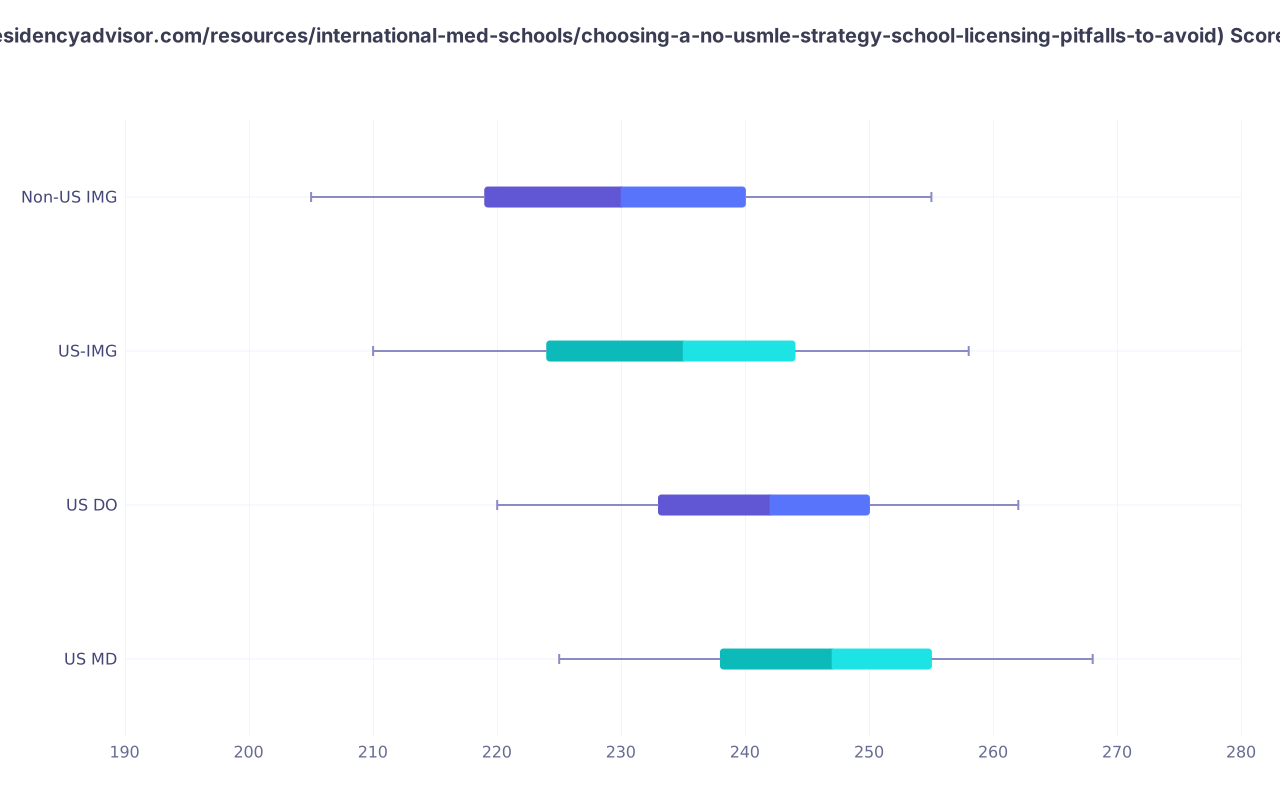
- Needing high scores to remain competitive for limited residency spots
- Managing the financial burden of exam fees, prep courses, and sometimes repeated attempts
2. Cultural, Communication, and System-Level Gaps
Even IMGs with strong English skills and excellent clinical acumen must adapt to nuanced Cultural Competence requirements in their new environment.
Communication Nuances
- Accent and idioms: Understanding regional accents, colloquial speech, and idiomatic expressions (e.g., “feeling blue,” “pins and needles”) is not always straightforward.
- Non-verbal communication: Norms around eye contact, physical touch, personal space, and how to deliver bad news can vary dramatically.
- Clinical documentation: Writing notes in a new language, using local abbreviations, and aligning with medicolegal expectations is another learning curve.
Different Attitudes Toward Authority and Decision-Making
- In some cultures, the physician is viewed as an unquestioned authority figure; in others, shared decision-making and patient autonomy are emphasized.
- IMGs must quickly understand:
- How much information patients expect about their conditions
- How to negotiate treatment plans collaboratively
- Legal norms around consent, confidentiality, and capacity
Failure to adapt can unintentionally lead to misunderstandings, reduced patient trust, or even complaints.
3. Adjusting to New Models of Medical Education and Practice
Medical Education systems differ widely:
- Teaching Styles: Some schools rely heavily on didactic lectures; others prioritize problem-based learning and team-based case discussions.
- Clinical Exposure: Some programs offer early clinical exposure and consistent bedside teaching, while others concentrate patient contact in later years.
- Use of Technology: EMRs, telemedicine, simulation labs, and decision-support tools may be more (or less) integrated than in an IMG’s home country.
IMGs may need to:
- Re-learn familiar content in unfamiliar formats
- Adapt to being evaluated on participation, professionalism, and communication style—not just exam performance
- Become comfortable asking questions, seeking feedback, and practicing reflective learning
4. Financial Pressures and Logistical Barriers
Studying or training abroad often carries a heavy financial burden, with limited local support.
Direct and Indirect Costs
- Tuition and living expenses in a foreign currency and often in higher-cost cities
- Exam fees and application costs (e.g., ERAS, CaRMS, Oriel)
- Travel and relocation expenses, including visiting exam centers and interview sites
- Visa and immigration costs, plus potential restrictions on work authorization during training
For many IMGs, these expenses accumulate while they are out of the workforce or working limited hours.
Visa and Immigration Constraints
- Time-limited visas can add pressure to secure residency or employment quickly.
- Some programs may be reluctant to sponsor visas, limiting options.
- Changes in immigration policy can suddenly alter long-term plans.
5. Social Isolation and Mental Health Strain
Starting over in a new country, often without family, can be isolating.
- Cultural adaptation (“culture shock”) can cause loneliness, anxiety, and self-doubt.
- Busy schedules and exam pressure can leave little time to build social support.
- Stigma around seeking mental health support may prevent some IMGs from accessing services when needed.
Proactively building community and accessing support early is critical for long-term well-being.
Unique Rewards and Long-Term Advantages of Being an IMG
Despite substantial challenges, many International Medical Graduates describe their path as deeply rewarding, both personally and professionally. In many ways, IMGs are uniquely equipped to thrive in modern, multicultural healthcare systems.
1. High-Quality and Diverse Medical Education
Many international medical schools offer excellent training that is:
- Clinically rich, with high patient volumes and varied pathology
- Scientifically rigorous, with robust preclinical curricula and research opportunities
- Contextually diverse, exposing trainees to both high-tech and resource-limited care environments
Countries such as Germany, the U.K., Australia, Canada, Ireland, and many Caribbean and Eastern European programs have extensive track records of graduating physicians who succeed in competitive residency programs worldwide.
2. Broadened Worldview and Cultural Competence
Living and training abroad naturally builds Cultural Competence:
- Understanding different health beliefs and traditions (e.g., use of traditional medicines, spiritual practices, or family decision-making structures)
- Appreciating how factors like immigration status, poverty, trauma, or war affect health-seeking behaviors
- Learning to build trust quickly with patients whose backgrounds may differ significantly from your own
This mindset is invaluable in diverse urban centers and in global health, humanitarian, and policy roles.
3. Strong Global Professional Networks
Studying medicine abroad creates a truly international network of peers, mentors, and collaborators:
- Classmates who scatter across multiple countries and specialties
- Faculty mentors connected to research, global health projects, and training programs worldwide
- Alumni networks that can facilitate observerships, electives, and job leads
Over time, these connections can translate into:
- Multi-center research projects
- Opportunities in NGOs, international organizations, and global health agencies
- Cross-border telemedicine or educational initiatives
4. Resilience, Adaptability, and Leadership Potential
The very process of becoming an IMG cultivates qualities that are central to effective leadership in healthcare:
- Flexibility in the face of constant change (new systems, new expectations, new roles)
- Problem-solving when resources are limited or when processes are unclear
- Empathy and humility based on firsthand experience of being “the outsider”
Many IMGs later become advocates for diversity, policy reform, improved Medical Education, and more inclusive Career Development pathways for future trainees.
5. Expanded and Non-Linear Career Options
IMGs often discover that their international training opens doors beyond the traditional clinician path:
- Academic medicine: teaching Clinical Skills, contributing to curriculum development on global health, cultural competence, or immigrant health
- Health policy and administration: advising on workforce planning, international recruitment, or health equity
- Public health and NGOs: working with WHO, MSF, Red Cross, or local NGOs on infectious diseases, maternal health, or health systems strengthening
- Telemedicine and digital health: leveraging language skills and cross-cultural experience for remote consultations across borders
Returning to one’s home country with new expertise—or combining practice across regions—can also be extremely rewarding.
Strategies for Success: Practical Tips for Current and Aspiring IMGs
The key to thriving as an International Medical Graduate is to approach your path with strategy, intentionality, and support.
1. Academic and Exam Preparation
Build a Structured Study Plan Early
- Map out all required exams, prerequisites, and application deadlines for your target country.
- Create a realistic timeline, integrating:
- Core content review
- Question banks and practice exams
- Dedicated time for weaker subjects
Use High-Yield, Country-Specific Resources
- Choose prep materials tailored to your target exam (e.g., USMLE-specific question banks, PLAB resources, MCCQE materials).
- Engage with:
- Online courses and video lectures
- Study groups (in-person or virtual) with other IMGs
- Local or online review programs with proven track records
2. Developing Cultural Competence and Communication Skills
Cultural Competence is not optional—it is central to safe, effective care.
- Take formal training: Look for workshops, webinars, or certificate programs in medical communication, cross-cultural care, and health equity.
- Practice language and nuance:
- Watch local medical dramas, news, and interviews to absorb slang and idioms.
- Practice case presentations and patient explanations with native speakers.
- Seek feedback:
- Ask supervisors and colleagues to comment specifically on your communication style and adjust accordingly.
3. Financial Planning and Resource Management
Thoughtful planning can reduce financial stress and keep long-term goals achievable.
Create a multi-year budget that includes:
- Tuition and living costs
- All exam, visa, and application fees
- Travel for interviews or clinical electives
Explore:
- Scholarships and grants for international medical students or IMGs
- Loan repayment or forgiveness programs that support physicians in underserved or rural areas
- Part-time work options (where visa regulations allow) that are compatible with study schedules
4. Building Clinical Experience and Credibility
Hands-on or observational experience in your target healthcare system can be transformative.
Pursue:
- Clinical electives during medical school
- Observerships or externships after graduation
- Research positions in academic departments aligned with your specialty interests
Use these opportunities to:
- Learn documentation, workflow, and team-based dynamics
- Demonstrate professionalism, reliability, and eagerness to learn
- Secure strong letters of recommendation from local supervisors
5. Networking, Mentorship, and Community Support
No IMG succeeds entirely alone.
Find mentors:
- Seek out physicians who are IMGs in your target specialty or country.
- Join national and local IMG associations and specialty societies.
Network intentionally:
- Attend conferences (virtual or in-person) and introduce yourself to faculty and program directors.
- Use professional platforms like LinkedIn to connect with alumni from your school who matched into your target programs.
Prioritize well-being:
- Join IMG peer support groups, both formal and informal.
- Access counseling or mental health services when needed.
- Maintain routines that support sleep, exercise, and social connection.

Frequently Asked Questions About Life as an International Medical Graduate
1. What is the general process for an IMG to practice medicine in the U.S.?
While specifics vary, the typical pathway includes:
- Credential verification through ECFMG (Educational Commission for Foreign Medical Graduates).
- Passing required exams: USMLE Step 1 and Step 2 CK (and meeting ECFMG certification criteria).
- Clinical experience in the U.S., often via electives, observerships, or externships to strengthen residency applications.
- Residency application through ERAS and participation in the NRMP Match.
- Completion of an ACGME-accredited residency (length depends on specialty).
- State licensure, which may include additional requirements depending on the jurisdiction.
IMGs should start researching exam timelines, visa options (e.g., J-1, H-1B), and program requirements at least 1–2 years before applying.
2. Are there financial aid or scholarship options available for IMGs and international medical students?
Yes, but they vary widely by country and institution:
- Some medical schools offer merit-based or need-based scholarships for international students.
- Certain governments and NGOs sponsor students from low- and middle-income countries in exchange for service commitments.
- Postgraduate loan forgiveness or repayment programs may be available for physicians who work in underserved or rural areas.
- A limited number of research grants, travel stipends, and conference scholarships are available through academic societies.
Planning ahead and speaking with financial aid offices, embassy education advisors, and IMG associations can help identify options early.
3. How can IMGs improve language and communication skills specifically for clinical practice?
Effective clinical communication goes beyond grammar and vocabulary:
- Engage in language immersion: live with native speakers when possible, consume local media, and practice daily conversations.
- Shadow local clinicians: pay close attention to how they phrase questions, explain diagnoses, and discuss sensitive topics.
- Use standardized patient encounters or simulation labs (when available) to practice history-taking and counseling.
- Ask for targeted feedback from supervisors and peers on clarity, empathy, and organization during case presentations and patient interactions.
Regular practice and openness to correction are more important than perfection.
4. What types of support systems are typically available for IMGs in host countries?
Most major training destinations offer some combination of:
- University/teaching hospital resources:
- International student or postgraduate offices
- Counseling and mental health services
- Academic support and tutoring
- Professional and cultural organizations:
- National or regional IMG associations
- Cultural or country-specific student groups
- Specialty societies with IMG committees
- Online communities:
- Forums, social media groups, and mentorship platforms dedicated to IMGs
Reaching out early—before problems escalate—can make adaptation much smoother.
5. What are common misconceptions about IMGs, and how can they be addressed?
Some frequent misconceptions include:
“IMGs are less competent than domestic graduates.”
In reality, IMGs who successfully navigate licensing exams and residency selection have demonstrated high levels of knowledge, adaptability, and resilience. Many are top performers in their home systems.“IMGs are only a stopgap for workforce shortages.”
While IMGs often fill critical gaps, they also bring unique skills in language, cultural understanding, and global health that enrich the entire healthcare system.“IMGs can’t match into competitive specialties.”
While more challenging, IMGs do successfully match into competitive fields by building strong academic records, clinical experience, research, and mentorship networks.
Addressing these misconceptions requires data, personal stories, and advocacy. IMGs can contribute by maintaining high standards, engaging in leadership, and supporting peers.
By more deeply understanding the journey of International Medical Graduates—their Medical Education pathways, Healthcare Challenges, Cultural Competence growth, and Career Development options—we can better support them as they care for patients across borders. For many, studying medicine abroad is not just a training choice; it’s a life-defining experience that strengthens global healthcare one clinician at a time.