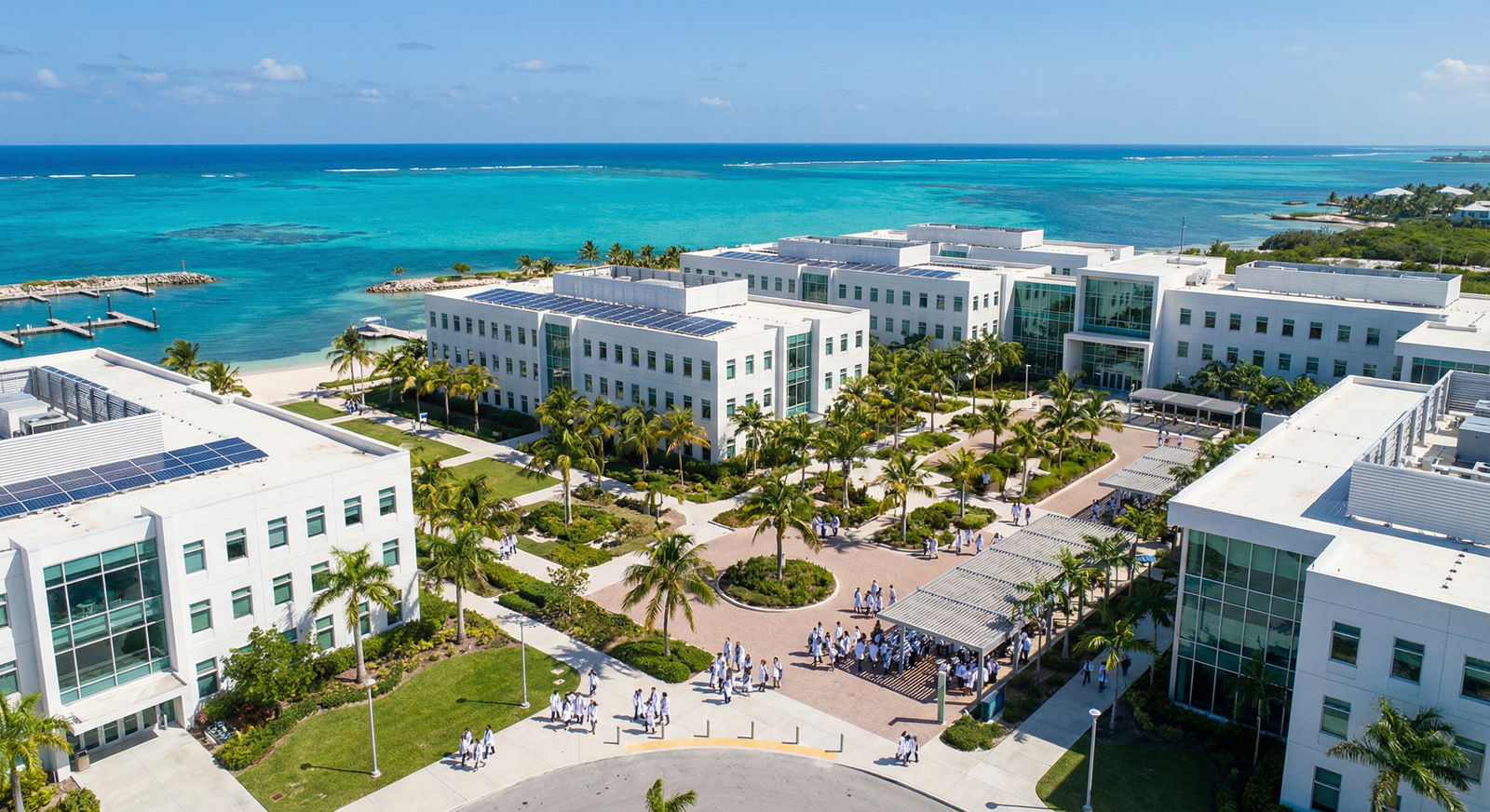
Why Caribbean Medical Schools Appeal to Future International Doctors
Pursuing a career in medicine is highly competitive—especially in the United States, Canada, and other high-demand regions. Many capable, motivated applicants find themselves shut out of traditional medical school admissions due to limited spots, strict GPA and MCAT cutoffs, or nontraditional academic backgrounds.
Caribbean medical schools have become a significant pathway for these aspiring physicians, particularly for those aiming to practice in the U.S., Canada, or the U.K. While they are not a “shortcut” to becoming a doctor, the best Caribbean schools can provide a legitimate, structured route into International Medicine with proper planning and realistic expectations.
Below is a comprehensive guide to the top 10 Caribbean medical schools, what sets them apart, and how to think strategically about your Medical Education and future clinical training.
Key Reasons Students Choose Caribbean Medical Schools
1. More Flexible Medical School Admissions
Many Caribbean medical schools consider applicants with:
- Slightly lower GPAs than typical U.S. MD programs
- MCAT scores below competitive thresholds
- Nontraditional academic backgrounds or career changers
- Gaps or prior degrees in other fields
Admissions committees at these institutions often take a more holistic view, weighing:
- Upward academic trends
- Post-baccalaureate or graduate coursework
- Clinical experience, volunteering, and leadership
- Personal statements and letters of recommendation
This flexibility can make Caribbean Medical Schools an important option for strong candidates who may not fit the conventional U.S. admissions profile.
2. Multiple Start Dates and Accelerated Paths
Unlike most U.S. and Canadian schools that admit one cohort per year, many Caribbean schools offer:
- Three start dates annually (often January, May, and September)
- Trimester systems that can allow students to complete the pre-clinical curriculum more quickly
This structure provides:
- Faster entry into medical school without waiting for the next application cycle
- A clearly defined, often accelerated path from pre-clinical years to clinical training
3. Clinical Training and Rotations in the U.S. and Beyond
One of the major strengths of top-tier Caribbean schools is access to:
- Clinical rotations in U.S. teaching hospitals
- Elective rotations in the U.K. or Canada (depending on agreements and eligibility)
- Exposure to diverse patient populations and healthcare systems
These clinical training opportunities are critical for:
- Building networks for residency applications
- Gaining familiarity with U.S. healthcare standards and workflows
- Collecting strong clinical evaluations and letters of recommendation
4. Diverse, Global Learning Environment
Caribbean campuses tend to have highly international student bodies, with students from:
- The U.S. and Canada
- The Caribbean and Latin America
- Europe, Africa, Asia, and the Middle East
This multicultural environment supports:
- Cross-cultural communication skills
- Broader perspectives on global and International Medicine
- A professional network spanning multiple countries and healthcare systems
Overview of the Top 10 Caribbean Medical Schools
The following schools are among the most established and recognized Caribbean Medical Schools for students aiming to practice abroad. For each, you’ll find location, background, and key strengths, along with considerations relevant to premed and medical school preparation.
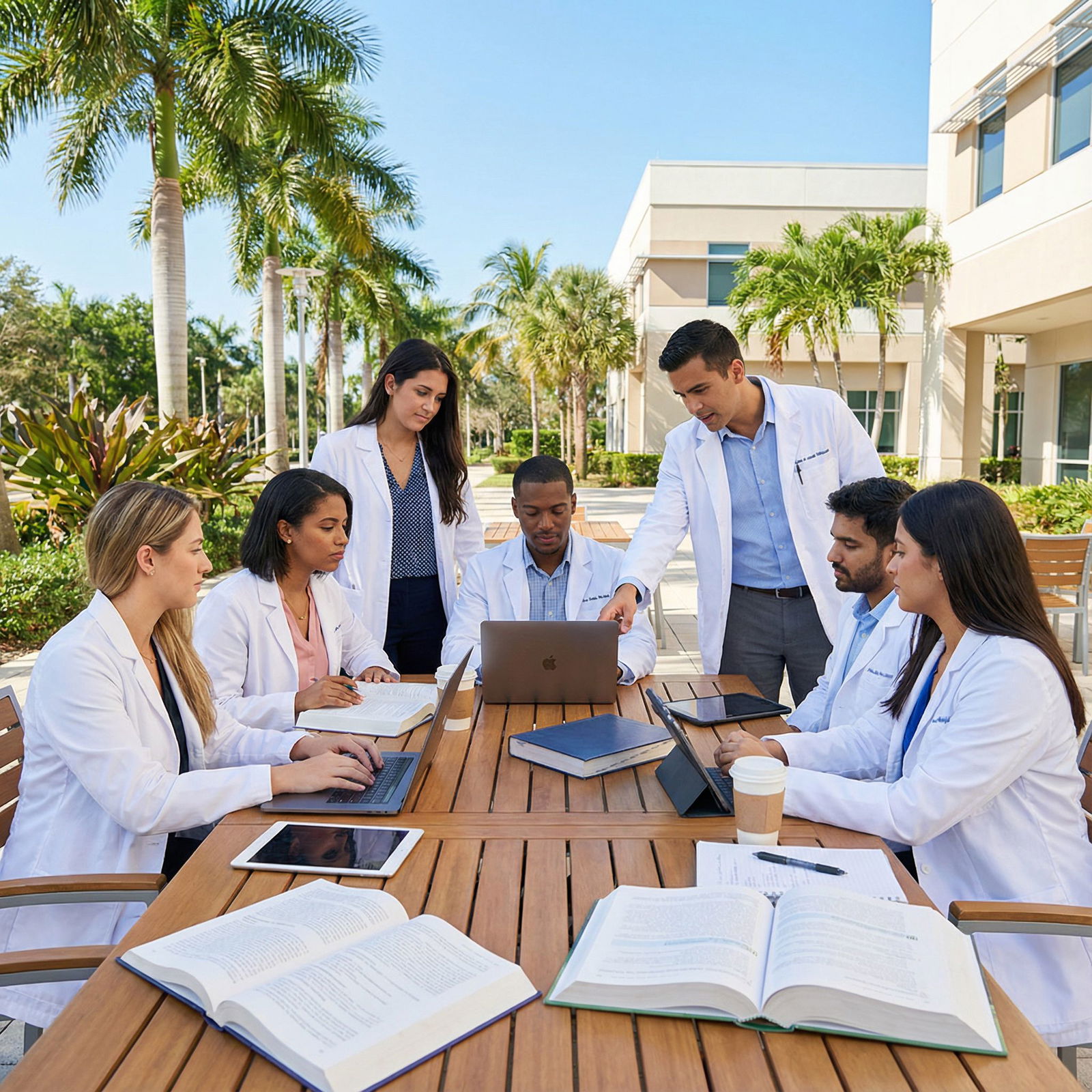
1. St. George’s University (SGU)
Location: Grenada
Founded: 1976
Degree: MD (with additional health sciences programs)
St. George’s University is one of the most recognized Caribbean medical schools globally, particularly among those seeking to practice in the United States. SGU has grown into a large international institution with students and faculty from over 150 countries.
Key Academic and Clinical Strengths
- Comprehensive MD program that mirrors U.S.-style medical curricula
- Modern campus facilities including simulation centers, anatomy labs, and research infrastructure
- Structured preparation for the USMLE exams, including integrated test-prep resources
SGU places heavy emphasis on clinical training, with:
- A wide network of affiliated hospitals in the U.S. and the U.K.
- Opportunities for core and elective rotations in major U.S. cities
- Clinical experiences designed to meet U.S. standards of care
Notable Features
- More than 20,000 medical graduates practicing in the U.S., Caribbean, and worldwide
- Support services including academic tutoring, wellness resources, and career advising
- Established reputation among U.S. residency programs due to the large alumni base
Best for: Students seeking a well-known, established Caribbean option with extensive U.S. clinical exposure and a structured path to International Medicine.
2. Ross University School of Medicine
Location: Barbados (formerly Dominica)
Founded: 1978
Degree: MD
Ross University is another long-standing Caribbean medical school focused on training international physicians for practice in the U.S. and Canada.
Academic Focus and Curriculum
- Rigorous, systems-based curriculum designed around USMLE requirements
- Strong emphasis on foundational sciences in the first two years
- Integrated early clinical exposure and standardized patient encounters
Clinical Training Opportunities
- Clinical rotations at affiliated teaching hospitals in the U.S. and some in Canada
- Structured core rotations in internal medicine, surgery, pediatrics, OB/GYN, psychiatry, and family medicine
- Electives tailored to residency interests, including subspecialties
Notable Features
- A high percentage of graduates obtain residency placements in the U.S. and Canada
- Dedicated advisors and academic support teams focusing on exam preparation and clinical readiness
- A history of placing graduates into primary care and various specialties
Best for: Students who want a strongly exam-oriented curriculum and are highly motivated to match into U.S. or Canadian residency programs.
3. American University of the Caribbean (AUC)
Location: Sint Maarten
Founded: 1978
Degree: MD
The American University of the Caribbean emphasizes small cohorts, supportive faculty, and clinically relevant training from early stages of Medical Education.
Educational Environment
- U.S.-modeled curriculum with integrated problem-based learning
- Small class sizes and accessible faculty
- Focus on professionalism, communication, and patient-centered care
Clinical Rotations and Outcomes
- Extensive network of clinical training sites in the U.S. and the U.K.
- Emphasis on gaining hands-on experience and strong clinical evaluations
- Graduates practicing across the U.S., U.K., and various international locations
Notable Features
- Culturally diverse student body and faculty
- Multiple student support programs: peer tutoring, counseling, and career guidance
- Active efforts to prepare students for international licensing requirements
Best for: Students seeking a community-oriented campus culture with strong clinical training bridges to the U.S. and the U.K.
4. The University of the West Indies (UWI)
Campuses: Jamaica, Barbados, Trinidad & Tobago
Founded: 1948
Degree: MBBS (Bachelor of Medicine, Bachelor of Surgery) and postgraduate specialties
The University of the West Indies is a regional public university and the primary training ground for many Caribbean physicians. It occupies a unique space compared to private offshore schools, as it is deeply embedded in the region’s public health and academic systems.
Academic Reputation and Structure
- Long-standing, well-respected MBBS programs across multiple campuses
- Strong track record of producing consultants, specialists, and academic physicians in Caribbean and Commonwealth countries
- Extensive postgraduate training and residency programs within the UWI system
Clinical Training and Research
- Clinical training occurs in major regional hospitals and public health facilities
- Opportunities for research in tropical medicine, public health, non-communicable diseases, and more
- Graduates often work in leadership roles in Caribbean health systems
Notable Features
- Particularly respected in Commonwealth nations and recognized by many international bodies
- Strong emphasis on community health and regional health priorities
- A good option for those interested in long-term practice in the Caribbean, U.K., or other Commonwealth nations
Best for: Students interested in a more traditional MBBS route with strong regional reputation and those who may pursue practice or postgraduate training in the Caribbean or the U.K.
5. Saba University School of Medicine
Location: Saba
Founded: 1993
Degree: MD
Saba University is known for its small class sizes, intense academic environment, and consistently strong USMLE performance.
Academic and Clinical Focus
- Highly structured basic science curriculum with close faculty monitoring
- Emphasis on clinical reasoning and exam readiness from early semesters
- Strong integration of clinical skills labs and standardized patient interactions
Outcomes and Training
- Historically high first-time pass rates on USMLE Step exams
- Graduates who have matched into a wide range of residency programs in the U.S. and Canada
- Clinical rotations primarily in the U.S., with some sites in Canada
Notable Features
- Close-knit campus community due to small cohorts
- Strong student-faculty relationships with personalized support
- Reputation for academic rigor despite the smaller size
Best for: Highly self-disciplined students who value small-group learning, strong USMLE performance, and individualized attention.
6. Medical University of the Americas (MUA)
Location: Nevis
Founded: 1998
Degree: MD
Medical University of the Americas emphasizes evidence-based medicine and patient-centered care, framing its Medical Education around clinical relevance from the outset.
Academic Strengths
- Modern, U.S.-style medical curriculum with early clinical exposure
- Focus on communication skills, ethics, and professional behavior
- Opportunities for student research and scholarly work
Clinical and Career Opportunities
- Clinical rotations at affiliated hospitals in the U.S. and sometimes in Canada
- Alumni practicing in multiple countries, primarily the U.S. and Canada
- Advising for residency applications and specialty planning
Notable Features
- Supportive learning environment with robust academic assistance
- A growing alumni network across primary care and specialty fields
- Emphasis on producing well-rounded, compassionate physicians
Best for: Students who want a balance of supportive culture, clinical training in North America, and a holistic approach to medical practice.
7. Caribbean Medical University (CMU)
Location: Curaçao
Founded: 2003
Degree: MD
Caribbean Medical University offers a practical, clinically oriented curriculum and markets itself as a cost-effective path to an MD.
Curriculum and Training Approach
- Early introduction to clinical skills and patient contact
- Integration of case-based learning with foundational science courses
- Emphasis on hands-on experiences and practical application
Notable Features
- Focused on building strong clinical and procedural skills
- Scenic island setting that can offer a lower-stress study environment for some students
- A range of student organizations and opportunities to get involved in community health initiatives
Best for: Students seeking a practical, skill-focused program and who are comfortable with a smaller, developing school environment.
8. University of Medicine and Health Sciences (UMHS)
Location: St. Kitts
Founded: 2007
Degree: MD
UMHS is a newer entrant among Caribbean Medical Schools but has built a reputation for small class sizes and a strongly student-centered model.
Educational Philosophy
- Low student-to-faculty ratio, allowing for personalized instruction and feedback
- Use of modern educational technology and simulation to enhance learning
- Curriculum aligned closely with U.S. standards and USMLE expectations
Clinical Training
- Core and elective rotations at affiliated hospitals in the United States
- Continued academic and career advising during clinical years
- Focus on preparing students to be competitive applicants for residency programs
Notable Features
- Strong emphasis on professionalism and communication skills
- Flexible entry points with multiple start dates per year
- Focus on continuous quality improvement and student outcomes
Best for: Students who value individualized support, smaller cohorts, and an environment where faculty closely follow student progress.
9. Trinity School of Medicine
Location: St. Vincent and the Grenadines
Founded: 2008
Degree: MD
Trinity School of Medicine emphasizes team-based learning and close mentorship, aiming to create a collaborative academic culture.
Academic and Learning Culture
- Team-based learning (TBL) and small-group discussions integrated into the curriculum
- Continuous assessment and feedback to keep students on track
- Focus on clinical reasoning, not just memorization
Clinical Rotations
- U.S.-based clinical rotations in affiliated hospitals
- Structured pathways to practice in the U.S., including residency counseling
- Early exposure to clinical settings within the Caribbean before U.S. rotations
Notable Features
- Faculty with significant international clinical and academic experience
- Tight-knit student community, which can support well-being and academic resilience
- Hands-on opportunities in community health and outreach
Best for: Students who thrive in collaborative learning environments and value mentoring relationships.
10. All American Institute of Medical Sciences (AAIMS)
Location: Jamaica
Founded: 2007
Degree: MD
AAIMS is a smaller institution with a mission-driven focus on community health and service.
Educational Focus
- Solid basic science foundation with a strong emphasis on clinical relevance
- Curriculum that integrates public health, preventive medicine, and community outreach
- Opportunities to participate in health initiatives in underserved areas
Notable Features
- Strong community orientation, particularly within Jamaica and surrounding regions
- Small classes and a close, supportive student community
- Emphasis on producing physicians who will contribute to health improvement locally and internationally
Best for: Students drawn to community medicine, public health, and practicing in underserved or resource-limited environments.
How to Choose the Right Caribbean Medical School for You
Not all Caribbean medical schools are equal, and choosing the right one is a critical decision that can shape your entire career in International Medicine. Beyond brochures and marketing, you should take a systematic approach.
1. Verify Accreditation and Eligibility for Licensure
This is non-negotiable. Before applying, confirm:
- Accreditation status: Is the school accredited by an internationally recognized body (e.g., CAAM-HP, ACCM, or others with WFME recognition)?
- FAIMER and World Directory listings: Is the school listed as eligible for ECFMG certification for U.S. licensing?
- Country-specific eligibility:
- For the U.S.: Will graduates be able to sit for the USMLE and apply for residency?
- For Canada: Does your target province accept graduates from that school?
- For the U.K.: Will the GMC accept the degree for registration (post-PLAB or equivalent)?
Action step: Check the World Directory of Medical Schools and each country’s licensing authority before submitting applications.
2. Research Clinical Training Sites and Partnerships
Clinical Training quality is often the key differentiator between programs. Ask:
- Where are the core clinical rotations (internal medicine, surgery, pediatrics, etc.) located?
- Are the hospitals ACGME-affiliated or teaching hospitals in the U.S.?
- How many clinical sites are available, and how competitive are they among students?
- Are there options for elective rotations in specialties you are interested in?
Action step: Request a detailed list of clinical affiliates from admissions and speak with current students about actual access to those rotations.
3. Analyze Academic Outcomes and Residency Match Data
Look for transparent, up-to-date outcome statistics:
- USMLE Step 1 and Step 2 first-time pass rates
- Percentage of graduates who obtain U.S./Canadian residency positions
- Types of specialties and locations of recent match outcomes
Keep in mind that individual effort matters enormously, but institutional support and track record are also crucial.
4. Speak Directly with Students and Alumni
Online forums can provide insight but may be biased or outdated. Instead:
- Ask admissions to connect you with current students or recent graduates
- Prepare specific questions about workload, faculty support, and clinical experiences
- Ask how well they felt prepared for USMLE, residency interviews, and clinical practice
Their experiences will give you a more realistic view than marketing materials.
5. Consider Location, Cost, and Lifestyle
Life outside the classroom matters. Evaluate:
- Cost of tuition and fees, plus realistic estimates for housing, food, transport, and flights
- Safety, infrastructure, and healthcare access on the island
- The impact of weather, isolation, and distance from home on your mental health and support system
Some students thrive in a quiet island environment, while others find it challenging. Be honest about your preferences and coping style.

FAQs About Caribbean Medical Schools and International Medical Careers
1. Are residency match rates from Caribbean medical schools comparable to U.S. schools?
Residency match rates vary significantly between Caribbean medical schools and often are lower, on average, than U.S. MD programs. However, some of the more established Caribbean schools (such as SGU, Ross, AUC, Saba) report competitive match rates for well-prepared students—especially into primary care specialties.
Your personal outcome will depend on:
- Academic performance and USMLE scores
- Clinical evaluations and letters of recommendation
- Specialty choice (primary care vs. highly competitive specialties)
- Strength of your overall residency application
It’s essential to review each school’s most recent match list and ask specifically about outcomes in your target country and specialties.
2. Are degrees from Caribbean medical schools recognized in the U.S., U.K., and Canada?
In many cases, yes—if the school is properly accredited and recognized by relevant authorities. In general:
- United States: Graduates must receive ECFMG certification, pass USMLE Steps, and complete residency training. Accreditation and World Directory listing are crucial.
- Canada: Recognition varies by province and by school. Many Caribbean grads do obtain Canadian residencies, but competition is intense.
- United Kingdom: International graduates typically need to pass the PLAB (or have recognized postgraduate training), and their school must be acceptable to the GMC.
Always verify with licensing bodies (ECFMG, provincial Colleges of Physicians, GMC, etc.) before enrolling.
3. What is the typical cost of attending a Caribbean medical school?
Costs vary widely by institution, but you can expect:
- Tuition: Roughly USD $15,000–$30,000 per year or more, depending on the school and stage (pre-clinical vs. clinical)
- Living expenses: Vary by island, but often $10,000–$20,000 per year for housing, food, transportation, and incidentals
- Additional costs: Exam fees (USMLE), travel expenses for rotations and interviews, visa/immigration fees, health insurance
Over four years, total cost can approach or even exceed that of many U.S. private medical schools. Carefully compare financial aid options, scholarships, and long-term debt implications.
4. Are scholarships or financial aid available for Caribbean Medical Schools?
Many Caribbean Medical Schools offer merit-based and need-based scholarships, including:
- Entrance scholarships for strong academic or MCAT performance
- Continuing scholarships based on maintaining academic standards
- Special awards for leadership, community service, or underrepresented backgrounds
Some schools also participate in U.S. federal loan programs (though eligibility may change), while others work with private lenders. Always:
- Confirm current financial aid status and options directly with the school
- Avoid over-borrowing by realistically budgeting for living expenses and travel
- Consider long-term repayment under different residency salary scenarios
5. How can I strengthen my application to a Caribbean medical school and my future residency prospects?
To maximize your success at both the admissions and residency stages:
Before applying:
- Improve your academic record with post-bacc or graduate courses if needed
- Prepare thoroughly for the MCAT to maximize your score
- Gain meaningful clinical experience, shadowing, and volunteer work
- Write a clear personal statement explaining your path and resilience
During medical school:
- Prioritize strong grades and high USMLE Step scores
- Build relationships with faculty and clinicians for strong recommendations
- Seek leadership roles, research opportunities, and community service
- Start planning for residency early—understand requirements for your desired specialties and countries
Being strategic and proactive at every stage can significantly improve your chances of matching into a good residency program after graduating from a Caribbean institution.
Caribbean Medical Schools can be a powerful route into International Medicine for determined, resilient students who understand both the opportunities and the challenges. With careful selection, rigorous work habits, and a clear long-term plan, these programs can serve as a launchpad to a meaningful medical career across borders.