

Yes — sometimes turning down a chief resident offer is the smartest move you can make.
The culture in many programs treats “chief” as an automatic yes. Prestigious. Expected. “You’d be crazy to turn it down.” I’ve heard that exact sentence in a resident lounge more than once.
That mindset is how people end up burned out, underpaid, and quietly resentful in what should have been a capstone year.
Let me walk you through when saying no makes sense, when it’s a mistake, and how to decide without blowing up relationships or your future fellowship/job prospects.
What Chief Resident Actually Is (Not the Sugar-Coated Version)
Before you decide yes or no, you need to be clear on what you’re actually accepting.
Chief is usually a mix of:
- Schedule architect and complaint magnet
- Liaison between residents and leadership
- Enforcer of policies you did not create
- Email triage service and meeting attendee-in-chief
- Sometimes teacher, sometimes administrator, sometimes therapist
And the tradeoffs:
- Extra work (often a lot)
- Sometimes less clinical time, but not always
- Sometimes a stipend, sometimes laughably small, sometimes nothing
- Title and leadership experience that look good on paper
Programs package it as an “honor” and “great opportunity.” Both can be true. But it’s also labor. You’re cheap middle management.
That’s not inherently bad. It’s just the reality you’re deciding on.
When It Is Smart to Turn Down a Chief Offer
There are very real cases where declining is not only reasonable but wise.
1. When It Hurts Your Career Trajectory
If your long-term goal conflicts with the chief timing or responsibilities, you should at least strongly consider saying no.
Common career conflicts:
- You need a research-heavy year to be competitive for a hyper-competitive fellowship (derm, plastics, some oncology, advanced cards, etc.).
- You already have a lined-up fellowship that starts immediately after residency and chief would delay graduation.
- You’re changing specialties or planning a nontraditional path (policy fellowship, industry, global health) that requires dedicated time or specific experiences.
If chief year means:
- Delaying a fellowship you already have
- Losing a funded research opportunity
- Weakening your application for a top-tier program you’re realistically competitive for
Then turning it down can absolutely be the right move.
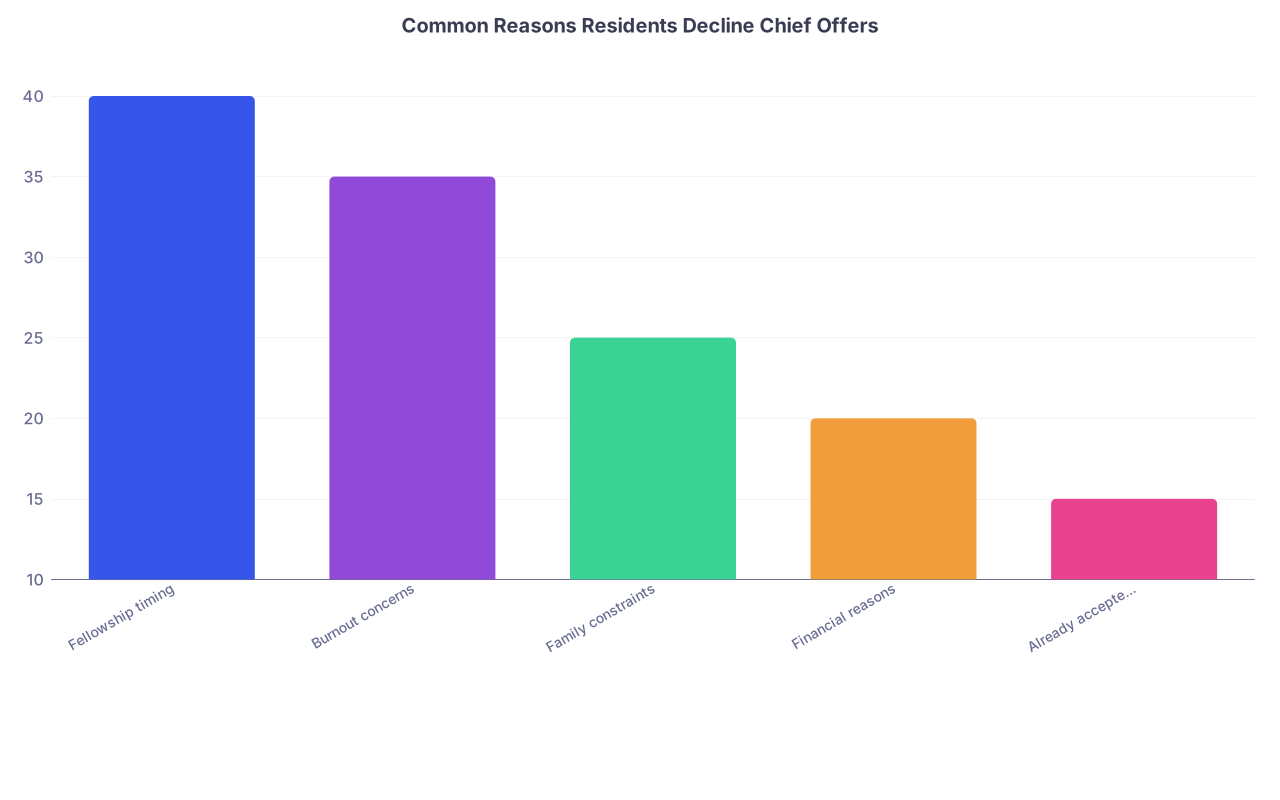
| Category | Value |
|---|---|
| Fellowship timing | 40 |
| Burnout concerns | 35 |
| Family constraints | 25 |
| Financial reasons | 20 |
| Already accepted job | 15 |
2. When You’re Already On the Edge of Burnout
If you are barely keeping it together as a senior — forget the inspirational speeches — chief will probably make it worse.
Warning signs where chief might be dangerous:
- You’re dreading work most days, not just during bad rotations.
- You’re constantly behind on notes, emails, and life logistics.
- You’ve lost interest in anything academic or extra-curricular; you’re in survival mode.
- You’re already in therapy for burnout or depression and barely stable with the current workload.
Chief residents don’t get fewer fires. They just get bigger ones. You become the person everyone calls when something goes wrong — call schedule gaps, resident conflict, attendings upset about coverage, admin demanding metrics.
If you’re emotionally and physically tapped out, saying no to chief is not a character flaw. It’s self-preservation.
3. When the Role Is Mostly Admin Work You Don’t Want
Some programs use chiefs as glorified schedulers and policy enforcers with no real educational or leadership autonomy.
Red flags:
- Prior chiefs warn you: “It’s 80% schedule and 20% stuff you actually care about.”
- No real support — no admin staff, no protected time, no authority to change things.
- Chiefs attend lots of meetings, but decisions are made over their heads.
- The “teaching” part is minimal in practice.
If your interests are in teaching, QI, leadership, or innovation, and the role is essentially “shift scheduler with a fancy title,” you’re not obligated to take it just because it looks good on a CV.

4. When Your Personal Life Cannot Take Another Hit
There are seasons of life where “extra” is no longer possible:
- New baby, pregnancy complications, fertility treatment
- Partner with a demanding career or frequent travel
- Aging or sick parents needing regular support
- Your own chronic health condition that flares with stress or lack of sleep
Chief is extra. Extra time, extra emotional labor, extra responsibility. Sometimes also extra nights and weekends.
If taking chief realistically means:
- You’ll be an absentee partner or parent for another year
- You’ll neglect your health to stay afloat
- You’ll cancel important life plans you’ve already postponed for years
Then yes, turning it down can be the mature call.
5. When Your Program Culture Makes Chief Miserable
Some programs are deeply supportive of their chiefs. Others… are not.
Bad environments for chief:
- Toxic leadership: PD or chair who uses chiefs as shields or scapegoats.
- Resident body that’s chronically angry with leadership and takes it out on chiefs.
- No backup when you enforce necessary but unpopular policies.
- Culture of blaming the chief for every unpleasant schedule or change.
If prior chiefs quietly tell you, “I would not do it again,” listen. That’s not drama. That’s data.
| Goal | Question to Ask |
|---|---|
| Workload | How many hours per week did you actually work? |
| Authority | What decisions could you truly influence? |
| Support | Who backed you when residents were upset? |
| Burnout risk | Were you more or less burned out as chief? |
| Career impact | Did this actually help your next step? |
When Turning Down Chief Hurts You
Now the flip side. There are cases where reflexively saying no is a mistake.
1. When You Want an Academic or Leadership Career
If you’re eyeing:
- Academic attending roles
- Program director or APD tracks
- Hospital leadership, QI, medical education roles
Chief resident is very helpful currency.
It signals:
- You can manage peers and conflict
- You’ve worked with administration
- You understand scheduling, systems, and logistics
- You care enough about the program to take on extra work
Could you still reach those roles without being chief? Yes. But it’s one of the clearest early leadership “proof points” in medicine.
2. When You’re Mildly Tired, Not Truly Burned Out
Everyone is tired by PGY-3 or PGY-4. That’s not a reason alone to say no.
If your situation looks like:
- You’re tired but still find meaning in teaching juniors.
- You’re frustrated sometimes but not chronically miserable.
- You recover during lighter rotations and vacations.
- You still care about improving the program.
Then chief could be challenging, but not destructive. A growth year rather than a breaking year.
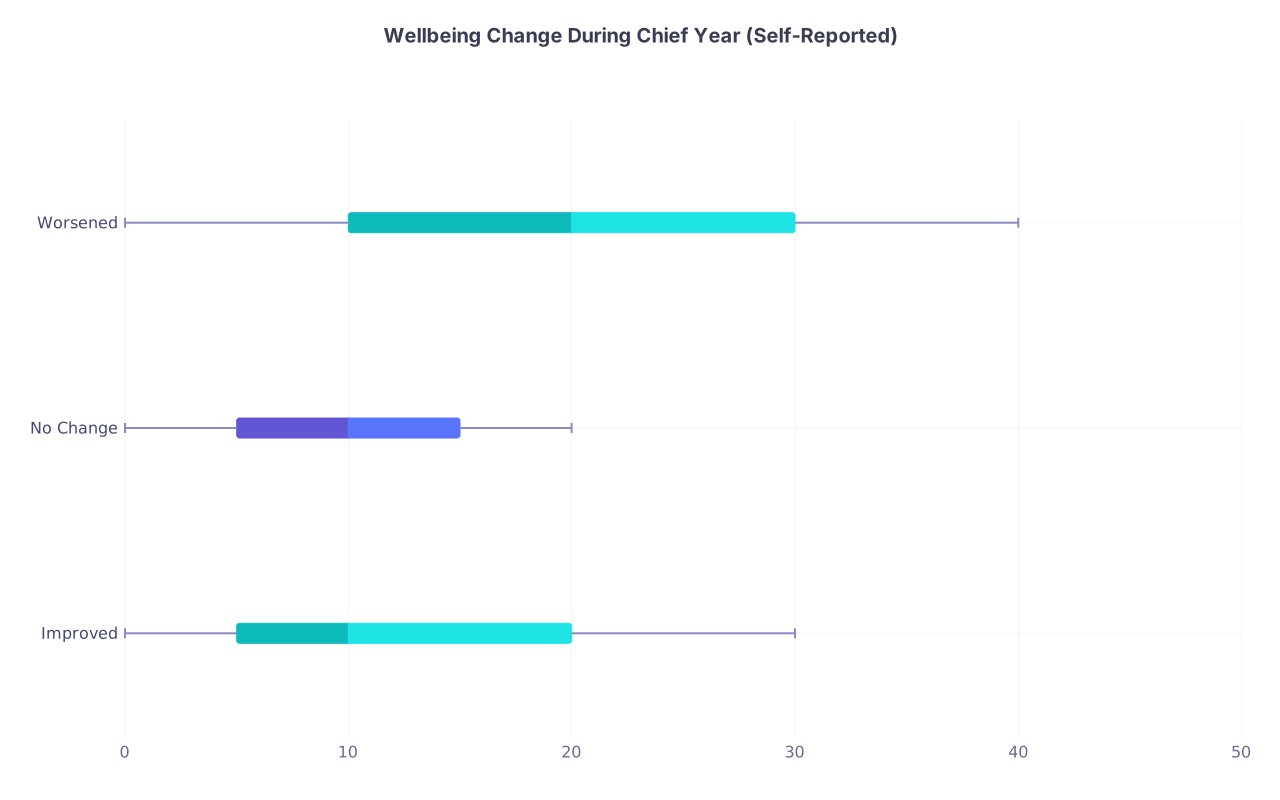
| Category | Min | Q1 | Median | Q3 | Max |
|---|---|---|---|---|---|
| Improved | 0 | 5 | 10 | 20 | 30 |
| No Change | 0 | 5 | 10 | 15 | 20 |
| Worsened | 0 | 10 | 20 | 30 | 40 |
(Interpretation: some chiefs improve, some stay the same, some get worse. It’s not universally bad or good.)
3. When You’re Saying No Only Out of Fear
I’ve watched residents turn down chief for reasons that were pretty flimsy once we unpacked them:
- “I’m not a natural leader.” (Leadership is learned, not genetic.)
- “What if people don’t like my decisions?” (They won’t. That’s part of the job.)
- “I don’t want to send so many emails.” (You’ll send them anyway as an attending.)
If chief aligns with your long-term goals and you’re reasonably well, but you’re scared of being visible, making decisions, or handling conflict — that’s actually a strong reason to say yes. It’s a safe place to develop those skills with supervision.
A Simple Framework: Should You Say Yes or No?
Use this as a quick decision filter. If you’re majority “yes” in the first column, consider accepting. If it’s majority “no” in the second, seriously think about declining.
| Domain | If this is true… | Consider… |
|---|---|---|
| Career | Chief clearly helps my next step | Saying YES |
| Career | Chief delays or harms my concrete next step | Saying NO |
| Wellbeing | I’m tired but fundamentally stable | Saying YES |
| Wellbeing | I’m burned out and barely functioning | Saying NO |
| Personal Life | Family/support can handle one more heavy year | Saying YES |
| Personal Life | Home situation is already extremely strained | Saying NO |
| Role Fit | I like teaching, organizing, problem-solving | Saying YES |
| Role Fit | I hate conflict, admin work, and being the middle person | Saying NO |
3. Reassure Them About Your Senior Year
Programs worry that declining chief means you’re checking out.
Explicitly counter that:
“I’m still very invested in our residents and patients. I’m happy to help with [teaching sessions/mentoring juniors/QI projects] as a senior. I just can’t take on the full chief responsibility.”
Make it clear you’re still a team player, just not the team manager.
4. Accept That Some People Won’t Love It
Someone will be annoyed:
- PD: “We really needed you.”
- Co-resident: “You’d have been a great chief; why are you bailing?”
- Random attending: “In my day, no one ever turned this down.”
You’re not responsible for their narrative. You’re responsible for your life, career, and mental health.
Be polite. You don’t have to justify yourself repeatedly.
How to Say Yes Without Getting Crushed
If you do accept, do it with eyes open and some upfront negotiation.
Ask for:
- Clear expectations in writing
- Protected time for admin and teaching
- Some support (admin staff, scheduling software, PD backup for major conflicts)
- A defined channel to escalate issues you can’t solve
And be intentional:
- Decide in advance what you will say no to (extra committees, unnecessary projects).
- Build peer support with your co-chiefs.
- Set boundaries with your time, especially on “off” days.

Quick Reality Check: What Chief Actually Buys You
Let’s be blunt: chief will not magically fix a mediocre CV. But it can:
- Distinguish you among similar applicants for academic or leadership-leaning roles.
- Get you stronger letters from PDs and chairs who’ve seen you operate at a higher level.
- Give you confidence and experience managing teams, conflict, and systems — which you will need as an attending whether you like it or not.
On the other hand, skipping chief:
- Will not automatically kill your academic ambitions.
- Will not be held against you forever if you handle the decline professionally.
- Can protect your sanity, your family, and your long-term performance.
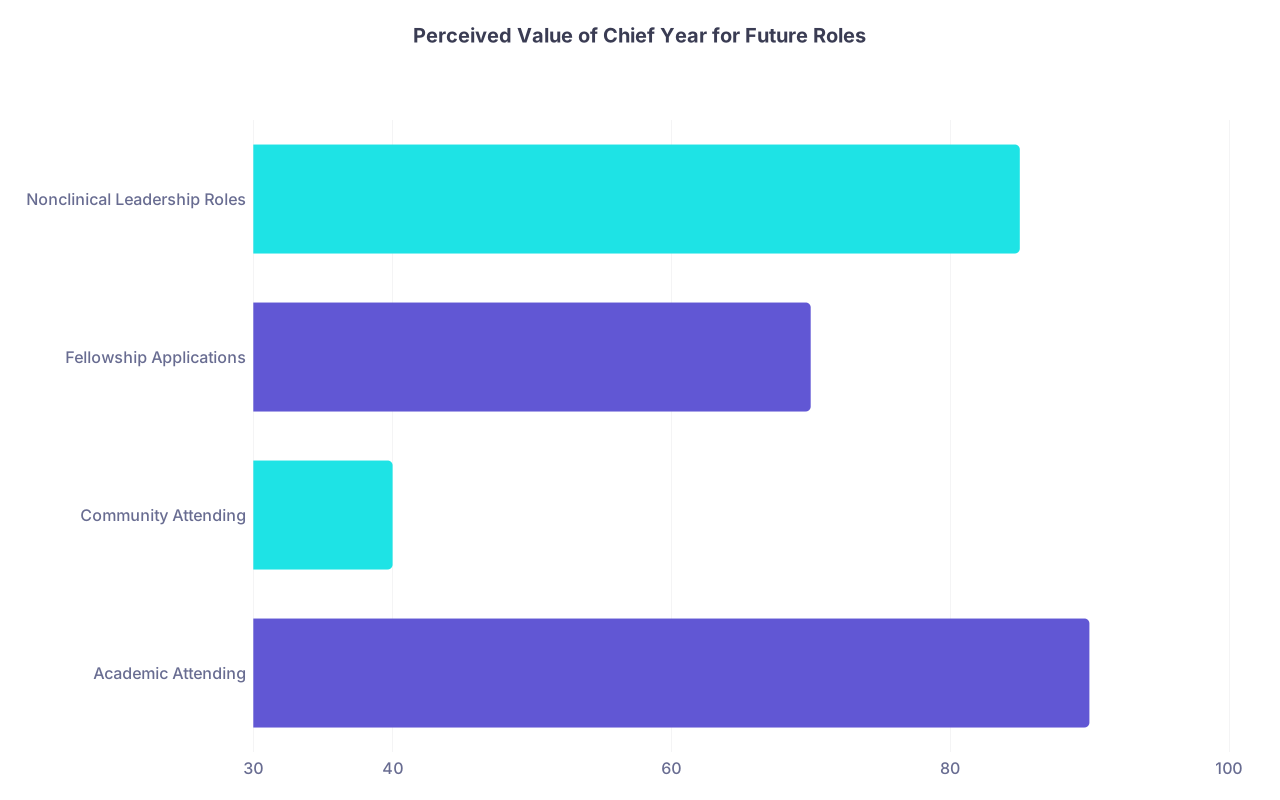
| Category | Value |
|---|---|
| Academic Attending | 90 |
| Community Attending | 40 |
| Fellowship Applications | 70 |
| Nonclinical Leadership Roles | 85 |
(Interpret as: very helpful for academic and leadership, moderately useful for fellowship, less critical for community-only careers.)
FAQs
1. Will turning down a chief resident offer hurt my fellowship chances?
It can, but usually only at the margins and mostly in academic-heavy fields where leadership is heavily valued. If you have strong letters, solid clinical performance, and meaningful research or teaching, turning down chief — especially for a clear reason like a research year or personal constraints — is unlikely to sink you. Where it might matter: hyper-competitive programs choosing between two similar applicants, one of whom was chief.
2. Should I ever accept a chief role if I’m already feeling burned out?
Mild end-of-residency fatigue, yes, that’s almost universal. True burnout — where you’re emotionally numb, depersonalized, or barely functioning — is a different story. In that case, I’d strongly advise against taking on chief unless your program can significantly restructure the role or provide serious support. Chief amplifies stress; it rarely decreases it.
3. How do I know if my program’s chief role is “worth it”?
Talk to at least two previous chiefs privately. Ask them concrete questions: real hours per week, biggest stressors, what they’d change, whether they’d do it again. Look at how your program treats chiefs: Do they get real support and appreciation, or are they the default punching bags? If three out of three prior chiefs say, “I wouldn’t do it again,” that’s a loud signal.
4. Is it worse to initially say yes to chief and then back out later?
Yes. Backing out late leaves your program scrambling and can create real resentment. If you’re on the fence, ask for a clear decision deadline and use that time well — talk to mentors, chiefs, your family, and be honest with yourself. Once you give a firm yes and the program announces it, you should treat that as a commitment unless there’s a major life change.
5. Should I mention that I turned down chief in future applications or interviews?
Usually no, unless you’re directly asked or it’s relevant to explaining a particular path (for example, you declined chief to take a funded research fellowship that appears on your CV). You don’t get extra points for “I was offered chief but said no.” If asked why you weren’t chief, a simple, confident explanation tied to your goals or personal situation is enough.
6. What’s the biggest mistake residents make when deciding about chief?
Letting default expectations decide for them. Either saying yes automatically because “you’re supposed to,” then regretting the burnout and delay… or saying no reflexively out of fear of responsibility, missing a powerful growth opportunity aligned with their goals. The right move is boring: clear-eyed assessment of your career plans, wellbeing, personal life, and the actual role at your program — then making a deliberate choice and owning it.
Bottom line:
- It is absolutely sometimes smart to turn down a chief resident offer — especially if it harms your career timing, worsens serious burnout, or clashes with major personal responsibilities.
- Chief can be a powerful step for those aiming at leadership or academic careers, but it’s not mandatory for success.
- Make the decision deliberately, communicate it clearly, and align it with your long-term life — not just with what looks impressive on paper.


