
The most popular letter writers in premed culture are often the worst possible choices for you.
The Status-Obsessed Letter Mistake
Let me be blunt: chasing big titles for your letters of recommendation is one of the fastest ways to quietly sabotage your application.
Every year I see the same pattern:
- The student brags: “I got a letter from the Dean of the Medical School!”
- They think this alone is a flex.
- Then they’re confused when interview invites are… underwhelming.
Meanwhile, the applicant with a letter from a mid-level research mentor who actually knows them gets into multiple top programs.
You’re being sold a bad idea: that the title of your recommender matters more than what they can truthfully say about you. That’s wrong. And it hurts applicants who should’ve been easy admits.
Let’s dismantle the fantasy before you waste precious political capital, time, and opportunities.
The Popular but Useless Recommenders You Should Avoid
There are certain “celebrity” letter writers everyone chases. You’ve heard the names:
- The Dean of the College of Science
- The Chair of Surgery
- The Chief of Cardiology at the big teaching hospital
- The Nobel Prize winner who gave a single guest lecture
- The PI whose lab you rotated in for six weeks and barely spoke to
On paper, they sound impressive. In practice, they often write the blandest, shallowest, most forgettable letters on your entire application.
Here’s the core problem:
A famous name without meaningful knowledge of you is like an empty signature on expensive stationary. It looks nice for two seconds, then the reader realizes there’s nothing behind it.
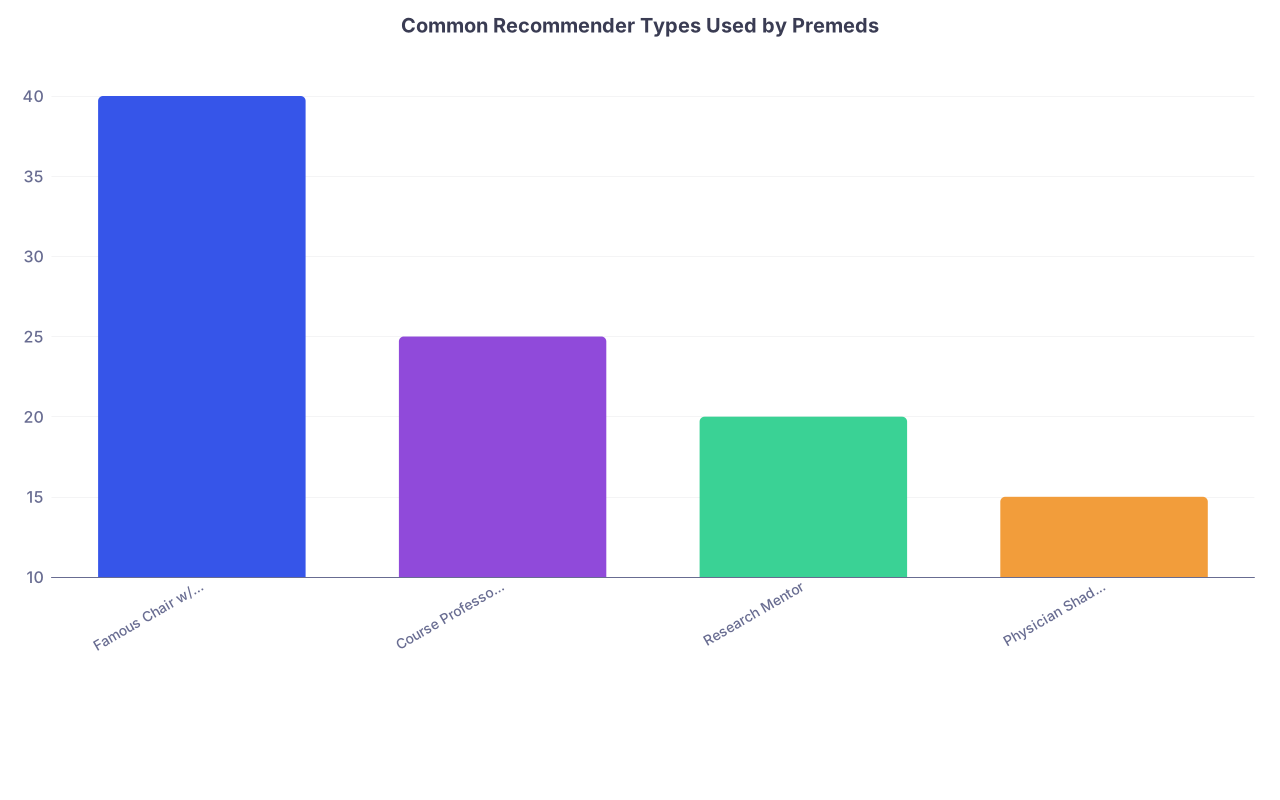
| Category | Value |
|---|---|
| Famous Chair w/ weak contact | 40 |
| Course Professor who knows you | 25 |
| Research Mentor | 20 |
| Physician Shadowed Briefly | 15 |
Those “famous chairs” and “deans” are massively overused by applicants. Admissions committees know that. They’re not dazzled; they’re numb.
They have read hundreds of:
- “I have known [Student Name] for four months and find them to be pleasant and intelligent…”
- “I am pleased to write on behalf of [Student Name], who performed satisfactorily in our course…”
Satisfactory. Pleasant. Intelligent. Those are death words in highly competitive pools.
Why These Letters Get Ignored
Here’s what’s going through the mind of an adcom member when they see a big title but a generic letter:
- “Okay, this dean doesn’t actually know the student.”
- “This sounds like a letter template they use for everyone.”
- “No specifics. Nothing unique. Moving on.”
They don’t care that your recommender’s email signature is six lines long. They care whether the letter answers practical questions:
- Can this person handle the academic load?
- Are they teachable?
- Do they consistently show up prepared?
- Would I want them taking care of patients in front of my family?
A recommender with a fancy title who can’t answer those questions with concrete stories is worse than a lower-profile professor who actually can.
The Red Flags in “Impressive” Letters
These are the phrases and patterns that scream “popular but useless recommender” to anyone reviewing applications.
1. Short Timeframe, Big Title
“I have known John for three months during his time shadowing in our department…”
Translation inside the committee room:
You passed through. You weren’t known.
Shadowing for a few weeks or doing one meeting and getting a dean’s letter isn’t depth. It’s window dressing.
2. Vague, Recyclable Praise
Watch for letters built from generic praise:
- “hardworking”
- “diligent”
- “pleasant to work with”
- “highly motivated”
- “team player”
Without specific examples, these mean almost nothing. Every applicant is “hardworking” on paper. If a letter could describe 50 other students with no changes, it’s weak.
3. No Concrete Stories
Real letters that matter sound like this:
“During our neurology unit, she organized and led a struggling study group that turned two students from borderline failing to scoring above the class average on the final. She met with me twice to ask how she could better support them.”
Useless letters sound like this:
“She has demonstrated leadership and compassion throughout her studies.”
See the difference? One gives the committee something to remember and talk about. The other is cotton candy—fluffy, dissolves instantly.
4. Overemphasis on the Recommender, Not You
Classic mistake: the letter spends a third of the space describing the recommender’s department, accomplishments, or the hospital system.
Why this is bad: It often means they’re reaching for filler. If they had more real examples about you, they’d use them.
5. Hesitant or Passive Language
Admissions people read between the lines. They pay attention to tone. Red-flag wording:
- “performed satisfactorily”
- “met expectations”
- “appeared engaged”
- “seems capable”
- “I believe they will do well with appropriate support”
That last phrase? I’ve watched faces change in committee when someone reads it out loud. It’s often code for: “They might struggle if left alone.”
The Myth of “Name Recognition” in Letters
You’ve probably heard some version of this:
“If you can get a letter from the department chair or the dean, do it. Their name carries weight.”
Here’s what I’ve actually seen:
A committee member sees a famous name, looks interested for two seconds, then starts reading. If the content is generic, the name gives you maybe a 0.5-second longer glance. That’s it.
What actually carries weight:
- Candid comparisons to past students (“top 5% of students I have taught in 15 years”)
- Specific, verifiable stories
- Evidence of judgment and resilience
- Clear, confident endorsement (“I recommend her enthusiastically and without reservation”)
A letter from “Assistant Clinical Professor in Biology” who supervised you in office hours for two years and writes a detailed, heartfelt letter is stronger than a chair who calls you “a bright premedical student” and moves on.
How Useless Recommenders Quietly Damage Strong Applicants
This is the part most students underestimate.
A useless letter doesn’t just “not help.” It competes with, and dilutes, your good letters.
Picture this:
You have three letters:
- Research mentor who worked with you for two years, knows you well.
- Course professor in Organic Chem, has seen your growth and grit.
- Big-name hospital chief who met you twice.
Here’s what the committee often thinks:
- “Why did they choose this chief? Did they think the name matters more than substance?”
- “Do they not understand what a good letter looks like?”
- “Couldn’t they find someone closer who really knew them?”
It can signal poor judgment. That you’re playing to optics instead of substance. Medicine is not kind to people who constantly choose optics over substance.

How to Choose Recommenders Who Actually Help You
If you want to avoid the “popular but useless recommender” trap, use a different set of criteria.
The Question That Should Decide It
Ask yourself:
“Who can tell the most detailed, honest, and positive story about my work, my habits, and my character?”
Not:
“Who has the fanciest title?”
Not: “Who will impress my parents?”
Usually, your strongest letter writers are:
- Professors who’ve had you in multiple courses or saw you consistently in office hours.
- Research mentors who supervised you weekly or daily over months to years.
- Clinical supervisors who watched you actually work, not just follow silently.
- Advisors who’ve seen you handle setbacks, not just success.
The 3–2–1 Rule for Premeds
As a general guideline (yes, there are exceptions, but fewer than you think):
- At least 3 letters should be from people who directly evaluated your academic or research performance.
- At least 2 of those should be from science faculty or research mentors who can speak to your intellectual abilities and habits.
- At least 1 can be more “clinical” or “service” oriented, but only if they truly know you.
If your list of recommenders is:
- Dean of the College
- Department Chair, Surgery (shadowed 2 weeks)
- “Famous” PI you rotated with for one summer
You’re making the exact mistake this article is warning you about.
Here’s what a stronger line-up looks like:
| Line-up Type | Recommenders |
|---|---|
| Weak (Title-Heavy) | Dean of Science; Hospital Chief (shadowed); Department Chair (one class, large lecture) |
| Strong (Content-Heavy) | Research Mentor (2 years); Biology Professor (2 courses + office hours); Volunteer Clinic Supervisor (1 year consistent work) |
| Mixed (Better Than Weak) | Chair who taught small seminar; Lab PI (1 year); Physician preceptor (weekly for a semester) |
How to Test if a Recommender Is Actually Strong
Before you ask, do a reality check. If you can’t answer these questions confidently, think twice.
Ask yourself:
- Have I worked closely with this person for at least a semester (preferably longer)?
- Have they seen me struggle and improve, not just perform when it’s easy?
- Could they describe one or two specific situations where I showed maturity, leadership, or resilience?
- Would I feel comfortable sitting in a room while they talk about me to an admissions committee?
If the answer to most of those is “no,” their title will not save that letter.
How to Ask in a Way That Protects You
When you do ask, don’t just say, “Can you write me a letter?”
Say this instead:
“Do you feel you could write me a strong and detailed letter of recommendation for medical school? I’m specifically looking for people who can speak to my work ethic, growth, and potential as a future physician.”
That phrase — “strong and detailed” — is intentional. Good recommenders will:
- Say yes confidently, or
- Say something like, “I’m not sure I know you well enough to write the kind of letter you’re looking for.”
If they hesitate, believe them. Don’t push. They just told you they’d likely write a weak or generic letter. That’s them trying not to hurt you.
Premed Culture Encourages This Mistake. Ignore It.
You’ll hear all kinds of bad advice swirling around:
- “My cousin got into UCSF with a dean’s letter, you should get one too.”
- “At my school, everyone tries to get the hospital CEO.”
- “The advising office said the chair’s letter carries weight.”
People confuse correlation with causation constantly. The student who got in with a dean’s letter probably also had:
- A 3.95 GPA in a hard major
- A 520+ MCAT
- Strong research
- Two other excellent, substantive letters
The dean’s letter likely didn’t make the difference. It just didn’t hurt enough to matter.
Your goal is not to copy the superficial parts of other people’s applications. Your goal is to avoid weaknesses that drag down the rest.
You’re better off with:
- “Unimpressive” titles + very strong content
than - “Impressive” titles + vague, lukewarm fluff.
Concrete Steps to Avoid the Popular but Useless Recommender
Let me make this painfully practical. Here’s how you avoid this trap step by step.
1. Audit Your Current Plan
Write down the names and titles of everyone you’re thinking of asking.
Next to each, write:
- How long you’ve known them
- In what context
- One specific story they could realistically tell about you
If you struggle to think of even one real story for a recommender, that’s a huge warning sign.
2. Prioritize Relationship Over Rank
If you have a choice between:
- Famous Chair you interacted with for 2 months
- Mid-level lecturer who taught you twice and knows your study habits
Pick the latter. Every time.
The only exception: the famous Chair also knows you deeply and can tell real stories. That’s rare, but it happens.
3. Invest Early in Future Letter Writers
You’re a premed. That means you still have time to fix this.
Do this today, not “sometime later”:
- Pick 1–2 professors whose classes challenge you.
- Go to their office hours consistently.
- Ask real questions. Show them your thought process.
- Follow up after exams. Ask how you can improve.
You aren’t “using” them. You’re building a professional relationship. That’s how good letters are born.
4. Stop Chasing People Who Barely Know You
If your logic is:
“They’re busy and important, so even a short letter from them is huge”
You’re wrong. That mindset builds weak applications.
Signs you’re chasing the wrong person:
- You feel scared they won’t remember your name.
- You’re hoping your email will “remind them” who you are.
- You’re thinking more about their prestige than their knowledge of you.
Walk away from that plan now.