
It’s late September. You’re standing outside a department chair’s office in a slightly-too-quiet hallway, clutching your CV and “personal statement draft,” wondering if this ten‑minute meeting decides your future. Everyone keeps telling you, “You need a chair letter” or “A strong department letter can make your whole file.”
You walk in. They’re friendly enough. They nod, skim your CV for about twelve seconds, ask two or three perfunctory questions, and then say, “Sure, I’d be happy to support you.”
You walk out thinking:
“Was that it? Are they actually going to write me a good letter? How did they decide this quickly?”
Let me tell you what actually happens on the other side of that door. How department chairs really decide whose letter gets their signature—and whose request gets the silent downgrade to a generic, forgettable paragraph that does nothing for you.
First Truth: Chairs Are Not Reading Your Soul, They’re Managing Risk
Here’s the part no one tells premeds and early med students.
Department chairs are not sitting there thinking, “How can I perfectly capture this student’s essence?” They are asking three much blunter questions:
- Can this person hurt our department’s reputation if I oversell them?
- Will anyone I trust vouch for them without hesitation?
- How many of these damn letters do I already have this week?
You think they’re deciding based on your GPA and your heartfelt story about your grandmother. They’re deciding based on signals. On who is safe, who is a “must support,” and who is a “minimal effort” letter.
Most chair letters fall into three tiers behind the scenes:
| Tier | What It Really Means | Impact On You |
|---|---|---|
| Strong advocacy | Chair personally knows you and has trusted endorsements | Moves the needle |
| Polite, generic support | Chair barely knows you, safe but bland | Filler, rarely helps |
| [Red‑flag or faint praise](https://residencyadvisor.com/resources/letters-of-recommendation/the-hidden-red-flags-in-your-lor-writers-that-adcoms-spot-instantly) | Concerns, hesitations, or coded language | Actively hurts |
You want that first tier. But most students never even realize there are tiers. They assume “I got a chair letter” means they’re set. No. Selection is happening—just not publicly.
How Chairs Actually Learn Your Name (And Why That Matters)
By the time you show up asking for a letter, most chairs already have a mental short-list for the year. The “of course I’ll go to bat for them” group.
You think that list is created from official awards and class rank. That’s only half true. The inner circle gets formed from things you don’t see:
- The resident who tells the chair, “This MS3 is the best student I’ve ever worked with.”
- The clerkship director who drops your name in a monthly meeting.
- The program coordinator who says, “This one is on top of everything. Super reliable.”
- The chief resident who emails, unprompted, “We should really support this student for [specialty].”
By the time you send that polite “Dear Dr. X, I’m applying in…” email, you’re either:
- Already on their radar in a good way
- A blank slate they need to quickly classify
- Someone they’ve heard something…mixed…about
I have seen chairs glance at an email request, recognize the name instantly, and say, “Oh yeah, of course, I’ll do a strong one.” No CV yet. No meeting scheduled. Their decision was already made from months of back‑channel impressions.
I’ve also seen the opposite. Chair looks at the name, pauses, and says quietly, “Huh. I should probably talk to [clerkship director] about this one before I commit.” Translation: there’s a story.
You do not control all of this. But you control more than you think. Your reputation is being built on every rotation, every late note, every time you step up for the shift no one wants.
What Happens The Minute You Ask For a Chair Letter
Let’s walk through the internal process, because it’s not what students imagine.
Step 1: The Quick Internal Scan
The first thing a good chair does—even if it doesn’t look like it—is run through a mental checklist the second your name appears in their inbox:
- Have I heard this name before?
- Were they on the student honors list? AOA? Gold Humanism?
- Did any trusted faculty/residents mention them?
- Any negative incidents? Professionalism flags? Quiet complaints?
If you trigger clear positive memories or endorsements, you’re immediately in the “green” column. If they vaguely recognize your name but are not sure why, they ask around.
If they have never heard of you? Then you’re asking them to put their signature on trust they haven’t earned with them—so they’ll go searching for someone who has seen you up close.
Step 2: The Behind-the-Scenes Calls and Hallway Conversations
Chairs don’t advertise this, but they’re constantly sanity-checking letter decisions.
I’ve literally watched this play out:
Chair (in the doorway of the residents’ room):
“Hey, who worked with [Student Name] on wards?”Resident: “Oh yeah, they were solid. Hard worker, good team player.”
Or: “Uh… smart, but kind of disappeared on weekends.”
Or: “Honestly? Bit of an attitude. Knows a lot, but not someone I’d want as an intern.”
Those one-liners become the tone of your letter.
Same with faculty:
“How strong is this one?”
“I’d rank them in the top 15–20%.”
“I’d be careful sending them to a super high-intensity program.”
You will never hear these conversations. But they absolutely shape the strength of what gets written.
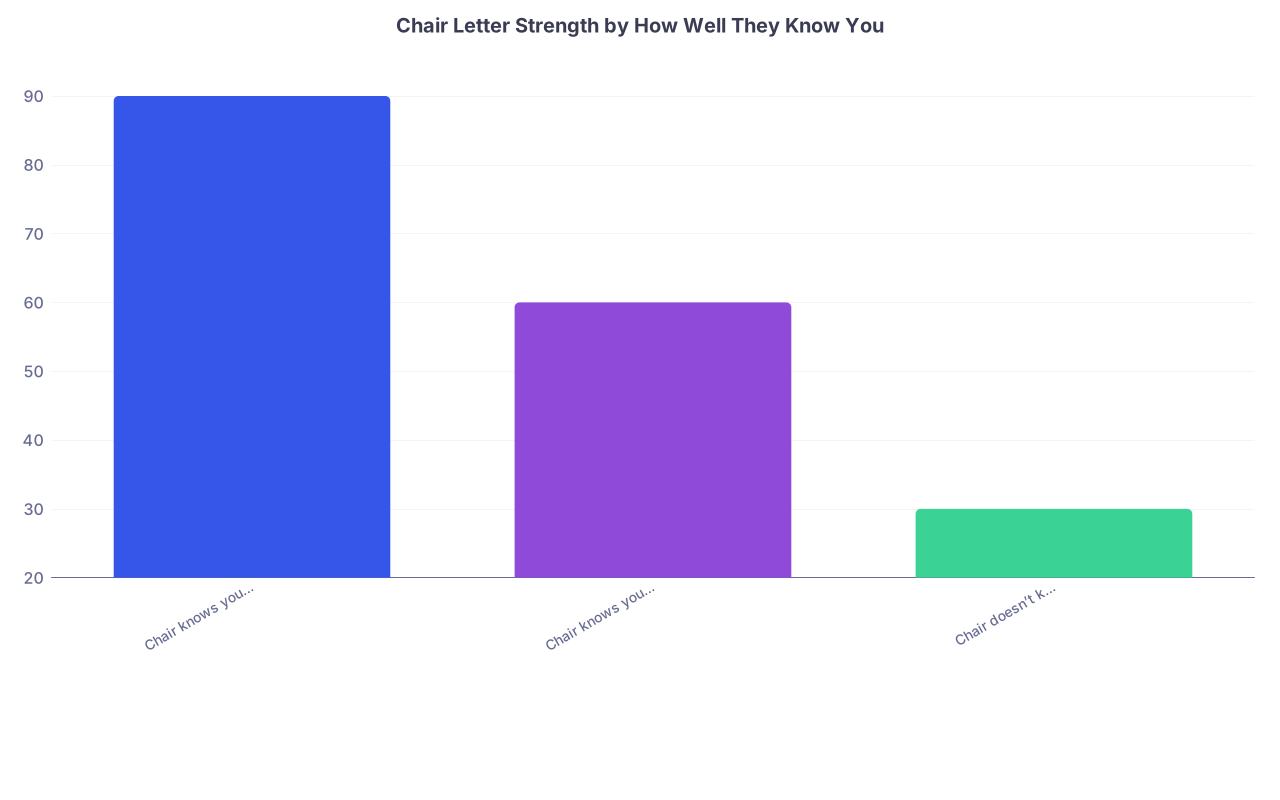
| Category | Value |
|---|---|
| Chair knows you well | 90 |
| Chair knows you indirectly | 60 |
| Chair doesn’t know you | 30 |
(Think of those numbers as the rough “percent chance” you’ll get a truly strong, personalized letter. When they do not know you, it’s usually a form letter with a few tweaks.)
Step 3: The Sorting: Advocate vs. Neutral vs. Cautious
After they get the “read” on you, every chair does a mental sort even if they’d never say it out loud:
- “I will actively advocate for this student.”
- “I will write an appropriate, supportive, but standard letter.”
- “I will write, but I am not going to oversell them.”
You’re all hearing, “I’d be happy to write a letter.”
What they’re really deciding is how far they’re willing to stick their neck out.
What Actually Pushes You Into the “Strong Letter” Category
Here’s the blunt version. These are the things that move chairs from “sure, I’ll sign” to “I will personally help you get where you want to go.”
1. Trusted People Are Willing to Go on Record For You
If your clerkship director, research mentor, or a senior faculty member has already told the chair something like:
- “This is one of our top applicants this year.”
- “I’d be very comfortable with them as my intern.”
- “I’d take this person into our residency without hesitation.”
You’re basically pre-approved.
If all they hear is, “Yeah, they were fine” or “They were good”… that’s lukewarm. That translates into generic language and no real push.
2. You’ve Shown Up Repeatedly, Not Just Once
Chairs pay attention to patterns. One great month on one rotation? Good. But to land in their “strong support” zone, there’s often a trail:
- Solid performance on the core clerkship
- A sub‑I where you didn’t fall apart when given more responsibility
- Some conference talks, teaching, or research where your name floated up more than once
- They’ve seen you in conference, grand rounds, morning report asking intelligent (not performative) questions
If the first time they ever hear about you is when you’re asking for a letter three weeks before ERAS opens, you’ve already made their job harder.
3. You Don’t Trigger Risk Flags
This part is harsh, but it’s real.
Chairs are terrified of writing glowing letters for people who later:
- Match and then fail out
- Get tagged for professionalism issues
- Become that intern program directors complain about for years
So they are very conservative with praise for anyone who has:
- Documented professionalism concerns
- Even one big “incident” report
- Recurrent lateness, disappearing acts, not answering pages
- Reputation for arrogance or being “above the work”
You can be brilliant on paper and still get a “cool” letter if enough people say, “Very smart, but…”
Chairs hear that “but,” and their pen stops.
The Stuff You Submit: How Much They Actually Read and Use
Let’s talk about the CV, personal statement, and “brag sheets” you send. You imagine the chair sitting there, highlighter in hand, studying your trajectory.
Reality: They skim.
They’re not blind; they’re busy. A typical workflow looks like this:
- Open your CV. Jump straight to:
- Honors / awards
- Publications and presentations
- Leadership roles that mean something (not “treasurer of 17 clubs”)
- Glance at your transcript (if they have access) for:
- Pattern of strong clinical evals
- Honors / HP distribution
- Skim your personal statement for:
- Why this specialty?
- Any glaring red flags in how you present yourself?
- Anything they can steal as a personalized sentence
Then they go to their templates.
Yes, most chairs use templates or past letters as scaffolding. Then they drop in specific lines if they have any real knowledge of you.
If they do not know you and no one has sung your praises? They fall back on genre phrases:
- “Hard‑working and dependable”
- “Will make a solid resident”
- “Pleasure to work with”
This is recommendation‑letter purgatory. Safe. Useless.
The Subtle Language Chairs Use When They Don’t Fully Believe in You
Program directors, especially in competitive specialties, are fluent in Letter‑Speak. They know which chairs are “inflaters” and which are brutally honest. They know how to read between the lines.
Here’s what happens:
If a chair really believes in you, the letter will usually contain things like:
- Explicit comparative language: “Top 5% of students I have worked with over the last 10 years.”
- Ownership: “I will be delighted to have them in our own program.” (And they mean it.)
- Concrete anecdotes: “On our inpatient service, they independently recognized X and did Y.”
If they’re lukewarm or worried, they shift into vague or softer language:
- “I expect they will be a good resident.”
- “Given appropriate supervision, they will perform well.”
- “They have grown during their time with us.”
- “I have no reservations in recommending…”
Program directors know “no reservations” is code for “I’m not excited, but they’re not dangerous.” It’s faint praise dressed up.
How To Make It Easy For a Chair To Say “Yes—and I Mean It”
You cannot fake a reputation at the last minute, but you can be strategic.
1. Start Building Your “Chair File” Early
Long before you ever meet the chair, the department is collecting data points on you. You want as many of those points as possible to be:
- Showed up early, stayed late when it mattered
- Took responsibility for patient care, not just “student tasks”
- Did the scut work without whining, but also stepped up cognitively
- Was kind to nurses, unit clerks, techs (word gets around faster than you think)
You’re not doing this to impress one person. You’re doing it because the network that feeds the chair is paying attention.
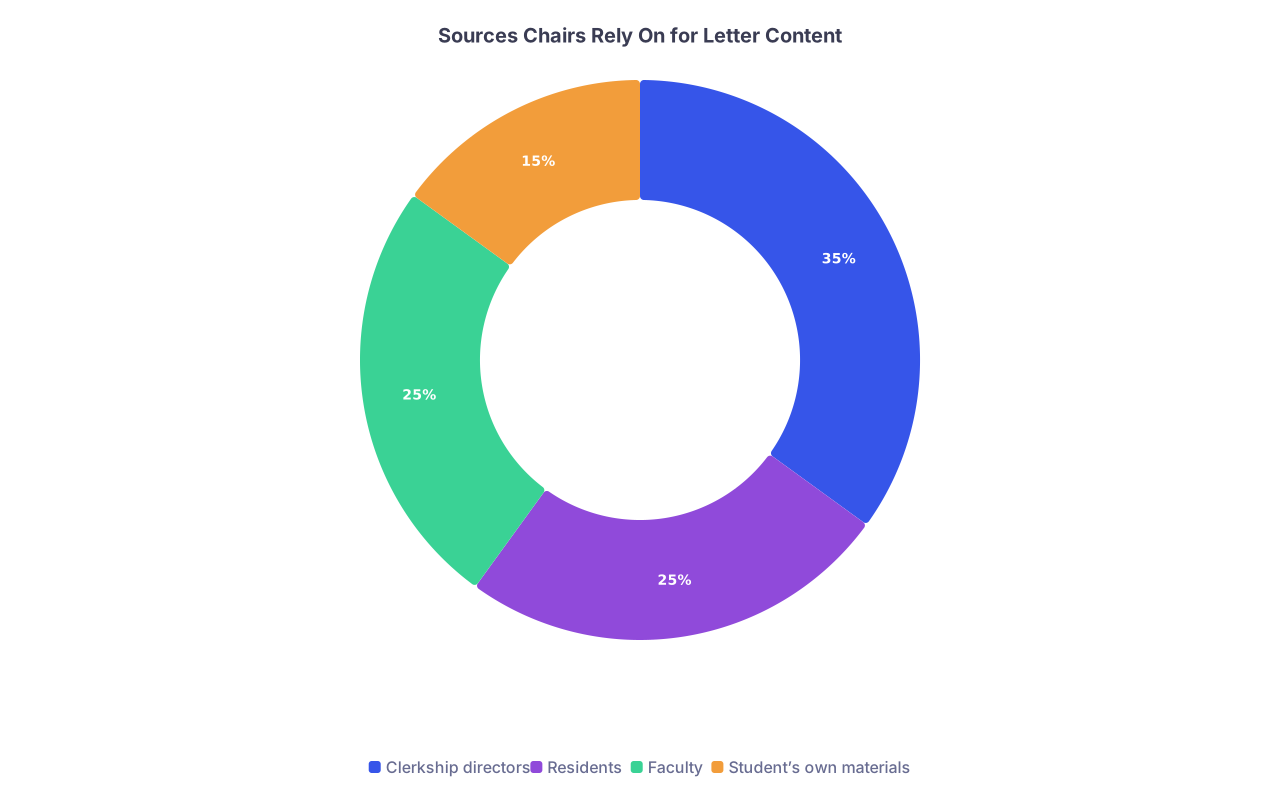
| Category | Value |
|---|---|
| Clerkship directors | 35 |
| Residents | 25 |
| Faculty | 25 |
| Student’s own materials | 15 |
That last slice—what you hand them—is the smallest.
2. Use the Right Intermediaries
If you want a strong chair letter, the single best move is this:
Get a specific, influential person to advocate for you before you ever email the chair.
For example:
- Ask your clerkship director, “Would you feel comfortable strongly supporting my application in internal medicine?” If yes, let them know you’ll likely need a chair letter and ask if they’d be willing to mention you to the chair.
- If you have a research PI who’s well‑known in the department, same approach.
Behind the scenes, these are the conversations that actually matter:
Clerkship Director to Chair: “By the way, [Student] is one of our top students this year for IM. Definitely someone we should support.”
One 15‑second comment can do more for the strength of your chair letter than any carefully worded email you send.
3. Be Blunt (Politely) About What They’re Signing Up For
Chairs appreciate blunt clarity. When you request the letter, do not write a meandering emotional essay. You want something like:
- What specialty you’re applying to
- Rough competitiveness level of your target programs
- Your exam/grade profile in one clean paragraph
- Any specific angle: geographically tied, couples match, etc.
And then the key line:
“If you feel you cannot write a strong letter of support for my application, I completely understand and would appreciate your honesty.”
That is not just politeness. It gives them an honorable exit if all they can offer is a lukewarm, generic letter. You’re better off without it.
4. Give Them Real Ammunition, Not Fluff
If they do want to help you, make their job easy.
Along with the CV and personal statement, include a short, focused document answering:
- What 2–3 clinical strengths you hope they can highlight
- A concrete patient care story or scenario where you performed well (that others witnessed)
- Any leadership/teaching roles you’ve had that people in the department would recognize
Not a six‑page “brag sheet.” A one‑page, high-yield snapshot.
What happens then is this:
They don’t have to invent. They can cross‑check your anecdotes with what they hear from faculty/residents. If it aligns, they feel more comfortable writing a detailed, positive paragraph. The detail is what convinces program directors you’re real.
Premeds: What This Means For You (Yes, Before Med School)
You might be thinking, “I’m premed, I’m not even at the chair‑letter stage yet.” Fine. But the same principles apply with premed committee letters and departmental science letters.
Here’s the parallel:
- Committee chairs also rely heavily on what other faculty say about you.
- They’re trying to avoid over‑endorsing someone who’ll flame out in med school.
- They’re deciding which applicants they’re going to actively sell to admissions versus just “support.”
So what should you be doing now?

| Step | Description |
|---|---|
| Step 1 | Premed classes |
| Step 2 | Stand out in 1-2 science courses |
| Step 3 | Build real relationship with 1-2 professors |
| Step 4 | Consistent performance over time |
| Step 5 | Professor advocates to committee chair |
| Step 6 | Committee chair writes strong letter |
The sooner you understand that strong letters are a network product, not a single conversation, the better you’ll play the long game.
Common Myths About Chair Letters (That Hurt Students)
Let me knock these down directly.
Myth 1: “Any chair letter is better than none.”
Wrong. A generic, noncommittal chair letter in a competitive specialty does nothing for you and can subtly hurt if other applicants have strong advocacy letters.
Myth 2: “If I did well on the rotation, the chair letter will be strong.”
Not necessarily. The chair may never have seen you. If your attendings did not communicate your performance up the chain, the chair has no context. You can be excellent and still invisible.
Myth 3: “High board scores guarantee a strong chair letter.”
No. I’ve seen 260+ students get lukewarm letters because of professionalism concerns. I’ve seen mid‑230s students get glowing advocacy because everyone trusted they’d be phenomenal residents.
Myth 4: “If the chair says yes, they must like me.”
You’re confusing politeness with advocacy. Most chairs will almost never say “no” directly unless there’s a glaring issue. The strength of what they write is a separate decision you do not witness.
If You Suspect Your Chair Letter Might Be Weak
You’re not always wrong. Students have decent instincts about who really knows them and who doesn’t.
Some warning signs:
- Chair has never seen you clinically and barely knows your face or name
- No clerkship director, faculty, or resident has ever hinted, “We’ll support you strongly”
- You’ve had any professionalism hiccups or difficult feedback that “might have gotten around”
What you do:
- Prioritize non‑chair letters from people who know you very well and will go to bat for you.
- If your specialty absolutely expects a chair letter, still get it—but build the rest of your letter portfolio to carry the actual weight.
- Don’t rely on the chair letter as your savior. At that point, it’s a box checked, not a weapon.