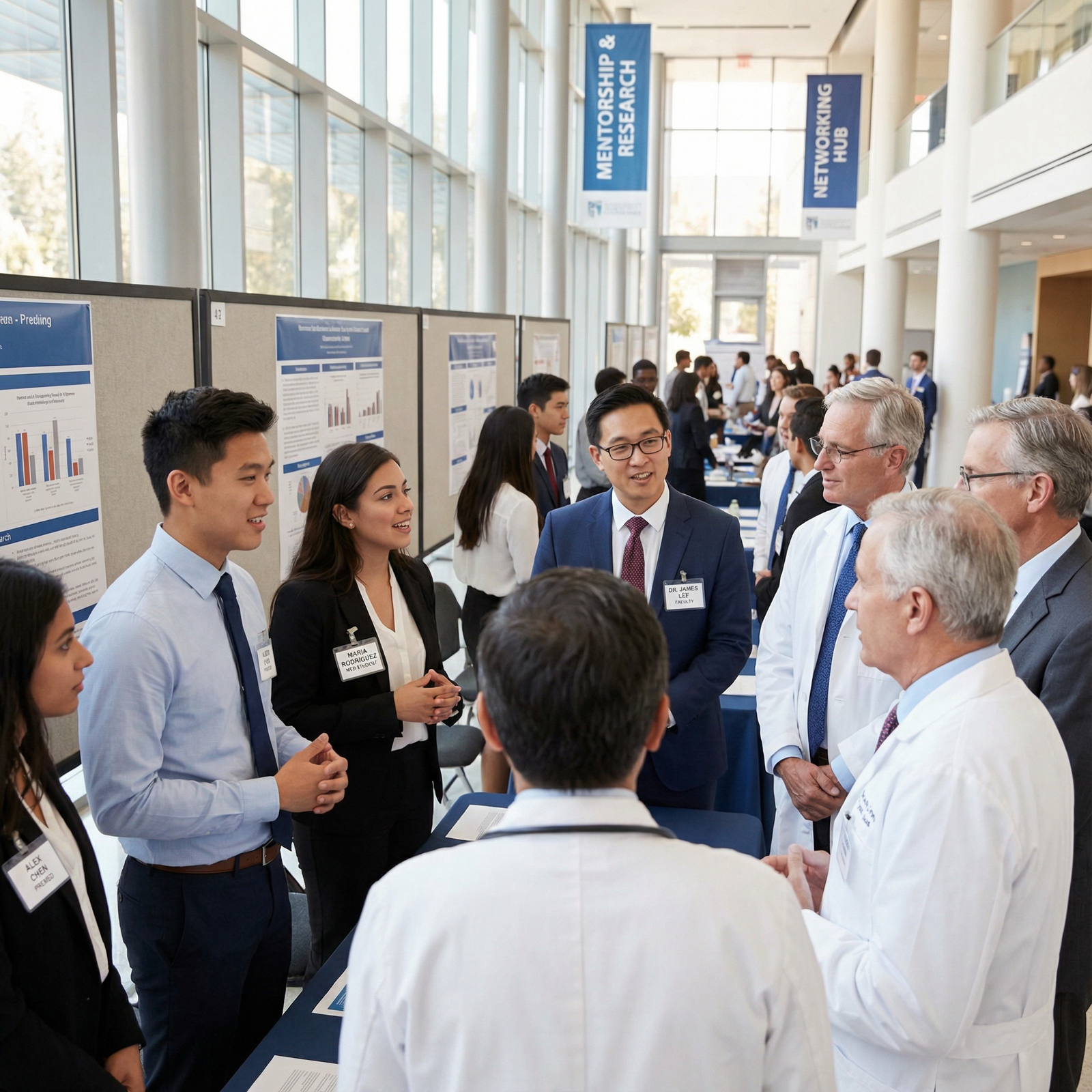
You’re a second-year international student at a U.S. university. You’re premed. Your GPA is solid, your MCAT prep is on the horizon, and you keep hearing the same thing from every advisor and forum: “Strong letters of recommendation are critical.”
There’s just one problem.
You did not grow up in this culture. You’re not used to calling adults by their first names. “Office hours” still feel like a trap. You aren’t sure how assertive you’re “supposed” to be. Your classmates walk into professors’ offices like they’ve known them for years; you draft and redraft a single email for 30 minutes.
And in the back of your mind: you know U.S. medical schools are already a stretch for international students. You cannot afford mediocre letters.
This is the situation. Let’s handle it.
1. Understand the Letter Game (You’re Not Overreacting)
Before we talk tactics, you need to understand the stakes—especially as an international student.
U.S. med schools read letters like this:
- Who wrote it? (Position, reputation, how well they know you)
- How specific is it? (Stories, examples, comparisons)
- How strong is the language? (They don’t all use “excellent” the same way)
- Do they sound like they actually know you as a person, not just as a grade?
For international students, the bar is higher for one simple reason: adcoms know you’ve had fewer built-in advantages. If you still managed to earn strong, specific letters in a foreign academic system, that signals social intelligence and adaptability. They notice.
So no, you are not “too obsessed” with letters. You’re right to care. But you need to stop thinking of recommendations as “favors from powerful people” and start thinking of them as the final product of a multi-month professional relationship.
Letters are the outcome. Relationships are the work.
Your challenge as an international student is that many of the unspoken rules of forming those relationships are foreign to you. So we’re going to make them spoken and extremely clear.
2. Decode the Cultural Stuff That’s Quietly Blocking You
You’re not “shy.” You’re operating with a different rulebook. Let’s translate.
Calling professors by their first names
You grew up where it’s “Professor X” or “Dr. Y” or maybe “Sir/Ma’am.” Your classmates say “Hey, John, do you have a minute?”
Here’s the rule in U.S. academia:
- If they introduce themself as “Hi, I’m John,” it’s ok to say “Professor Smith” at first.
- Watch how they sign emails. If they write “Best, John,” it’s usually safe to switch to “John” after a few exchanges.
- If you’re unsure: “Professor Smith” is always safe. No one will be offended by too much respect.
Do not let fear of using the wrong form of address keep you from emailing. That’s a tiny error compared to never showing up.
Speaking up vs. “showing off”
In many cultures, students who speak up a lot are seen as arrogant or disrespectful. In a U.S. classroom, controlled, thoughtful participation is literally one of the ways professors identify who to invest in.
You do not need to become the loudest person. But you cannot be invisible.
Aim for:
- 1–2 meaningful comments or questions per class session
- Visiting office hours a couple of times each month, even with small questions
- Sending a short follow-up email once in a while when something connects to your interests
If you’re thinking, “But I don’t want to look like I’m trying too hard,” I’ll be blunt: you are trying hard. You’re trying to get into medical school as an international student. The people who pretend not to care are the ones who get forgotten.
“Bothering” the professor
In a lot of countries, you don’t go to a professor unless you’re in serious trouble or have something very important. Here? Office hours exist precisely so you can come before it’s urgent.
Professors know:
- Premeds need letters later
- Many students struggle silently
- International students get lost in the system
You are not bothering them by coming prepared with questions.
What is annoying: showing up once, two weeks before the final, saying, “I need an A.”
What’s welcome: coming steadily throughout the semester with real engagement and curiosity. That’s what builds a letter.
3. Choosing the Right Potential Mentors (Strategic, Not Random)
You don’t have time or emotional energy to try to bond with every faculty member. You need 2–4 strong letter writers by the time you apply: usually at least 2 science professors, maybe 1 non-science, and ideally 1 mentor from research/clinical/community work.
Here’s how to prioritize.
| Priority Level | Who They Are |
|---|---|
| Highest | Science profs who know you well |
| High | Research PI or supervisor |
| Medium | Non-science prof who likes you |
| Lower | Large lecture prof who barely knows you |
Look for:
- Classes where you’re already doing well or feel you could do well
- Professors who:
- Remember your name
- Seem open, responsive, or invested in students
- Hold regular office hours and are actually present
- Activities where someone sees you consistently: lab, volunteering, tutoring, TA-ing
Red flag for letters:
- Someone who barely replies to emails
- A PI who’s never actually seen you work (you only talk to the postdoc)
- A professor who clearly dislikes premeds (you’ll hear it in how they talk)
You want access + alignment. Access: you can actually see them multiple times. Alignment: they care about teaching/mentoring at least a little.
4. How to Start Contact Without Feeling Fake
You’re in a class you like. The professor seems decent. You want to start building a relationship but don’t want to sound like: “Hello, I need a letter.”
Here’s a simple progression:
Step 1: Low-stakes email
Use this when you’ve never spoken 1-on-1.
Subject: Question about [Topic] from today’s lecture
Body (adapt and shorten as needed):
Dear Professor Smith,
My name is [Name], and I’m in your [Course, Section, Time]. I really appreciated your explanation of [specific concept] today. I’m still trying to understand how [very specific question].
Would you recommend any particular resource or example to help me think through this?
Thank you for your time,
[Name]
Key details:
- Mention specific content.
- Ask for something concrete, not “teach me everything again.”
- Keep it short.
Step 2: Office hours visit
When they reply (they usually will), answer their question as best you can on your own, then go to office hours. Show up with:
- The question printed/written
- Your notes from class
- One or two follow-up questions
Open like this:
“Hi Professor Smith, I emailed you about [topic] from Monday’s lecture. I tried thinking it through like you suggested, and I realized I don’t fully see how [specific thing] works.”
Then, at the end:
“Thank you, this really helps. I’m an international student planning to apply to medical school here, so I’m trying to understand the material at a deeper level, not just for the exam. I’ll keep coming by if that’s alright.”
You’ve now:
- Introduced your long-term goals
- Signaled seriousness without begging for a letter
- Put a face and story to your name
Step 3: Keep a light, consistent presence
Over the semester:
- Visit office hours 2–4 more times
- Participate in class when you have something real to say
- If you find an article, study, or news related to their field, send a short email:
“I saw this article about [topic] and it reminded me of your example in class. Thought you might find it interesting.”
Done. That’s relationship-building without faking personality.
5. Using Your “International” Identity as a Strength, Not a Handicap
A lot of international students try to hide their differences. That’s a mistake. The right mentors will actually find your background interesting and respect the extra work you’ve had to do.
You don’t need to trauma-dump your life story. But do connect dots.
Examples of things you can share in conversation or email:
- How science was taught where you grew up vs. in the U.S.
- Why you chose to pursue medicine in the U.S. specifically
- What has been surprisingly difficult (e.g., class participation norms) and how you’re adapting
- Any responsibilities you have back home (family, financial, visa pressure)
This does two things:
- It gives your mentor context for your behavior (quiet in class but thoughtful in writing, etc.).
- It gives them material for a letter: they can comment on resilience, adaptability, and cross-cultural perspective.
You want a professor writing:
“Despite navigating a new educational system and studying in a second language, [Name] has consistently performed at the top of the class and has been proactive about seeking feedback.”
They can only say that if you’ve told them enough to understand your reality.
6. Clarify Expectations Directly (Yes, You Have to Ask)
Many international students assume: “If I work hard and do well, the professor will automatically know how to support me.”
No. Not always.
You need to ask explicitly for what you need, but in a culturally normal way.
Asking for feedback on how you’re doing
Simple script in office hours:
“Professor, I’m really trying to grow, not just get a grade. Based on what you’ve seen so far, are there one or two things I should improve in how I participate or study for this class?”
Then shut up and take notes. Do not argue.
Later, you can circle back:
“I tried your suggestion about [study method/participation], and I think it helped. Thank you for being direct with me.”
You’ve just shown:
- Coachability
- Initiative
- Respect for their expertise
All gold for letter content.
7. The Actual Ask: Turning a Mentor into a Letter Writer
If you’ve:
- Taken a class with them (and done well, ideally A or A–)
- Engaged outside of class at least a few times
- Shown them your seriousness and consistency
Then you’re ready to ask. Do not wait until 5 days before a deadline.
Timing:
- For med school, 2–3 months before you need the letter uploaded is reasonable. Earlier is fine.
Method:
- Email first to request a short meeting (Zoom or in-person).
Sample email:
Subject: Request for meeting about future applications
Dear Professor Smith,
I hope you’re doing well. I was a student in your [Course, Semester/Year], and I’ve really appreciated your guidance over the past [time period].
I’m planning to apply to medical school in the upcoming cycle and was hoping to ask your advice about my application and potential letters of recommendation. Would you be available for a brief meeting sometime in the next couple of weeks?
Best regards,
[Name]
In the meeting:
“Professor, I’ve really valued your class and your feedback this past year. Since you’ve seen my work and growth, I wanted to ask if you’d feel comfortable writing a strong letter of recommendation for my medical school applications.”
The word “strong” is not an accident. It gives them a polite way to decline if they can’t write more than a generic note.
If they hesitate or say anything like “I can write a letter, but I don’t know how strong it will be,” that’s a no. Thank them and move on.
If they say yes, you say:
“Thank you very much. I’ll send you my CV, draft of my personal statement, and a short summary of my work in your class, along with deadlines and upload instructions.”
8. Make It Easy for Them to Write a Good Letter
This part is where a lot of students, not just internationals, drop the ball.
You cannot control their writing ability. You can control what information they have.
Send one organized email with:
CV or resume
Draft of your personal statement (even if rough)
Unofficial transcript
A 1-page “letter packet” about your time with them:
- Course name, semester, grade
- 2–3 specific things you did in their class:
- “Led a group presentation on X and integrated Y”
- “Came to office hours several times to discuss [topic]”
- “Improved from 82% on first exam to 95% on the final”
- Any personal context you’re comfortable sharing:
- International background
- Language adaptation
- Work/visa constraints
Clear deadlines and instructions:
- “The AMCAS letter service deadline is [date]. If possible, I’d appreciate if the letter could be submitted by [earlier date] to keep my application on time.”
You’re not writing your own letter. You’re reminding them of what they’ve already seen so they can write with detail.
9. When Cultural Misfires Happen (Because They Will)
Let me be realistic: at some point, you’re going to misread a tone, say something too formally or too informally, or feel like you embarrassed yourself.
One awkward moment doesn’t kill a relationship. Silence does.
If you feel something went weird:
- You sent an email that felt too demanding
- You accidentally overshared
- You used the wrong name/title
You can fix most of it with a short follow-up.
Example:
“Professor Smith, I realized my last email may have sounded more urgent than I intended. I apologize if it came across that way. I really appreciate your time and guidance.”
Or:
“I also wanted to clarify that as an international student, I’m still getting used to some of the academic norms here, so if I ever address you incorrectly, please know it’s out of unfamiliarity, not disrespect.”
Most professors will be understanding. And the ones who aren’t? Those weren’t going to be good mentors anyway.
10. If You’re Late in the Game (Junior/Senior Year Panic)
Maybe you’re reading this as a junior who hasn’t built any real relationships yet. You’re thinking, “I’m screwed.” You’re not. But you need to move.
Here’s the triage plan:
Identify 2–3 professors from past or current classes where you:
- Got an A or high B+
- Weren’t a total ghost (submitted things on time, maybe emailed once)
Send each a tailored email:
“Dear Professor X,
I took your [Course, Semester], and it was one of the classes that confirmed my interest in [field/medicine]. I’m an international student preparing to apply to medical school, and I’ve realized I should have been more proactive about seeking mentorship earlier. I was wondering if you might have 15–20 minutes to talk about how I can strengthen my preparation and whether you’d feel comfortable getting to know my work better this semester, potentially for a future recommendation letter.”
You’re owning the delay, showing maturity, and focusing on the future, not begging for something you haven’t earned.
- For at least one professor, try to take another course, do an independent study, or assist with a project. More contact = better letter.
11. Quick Reality Check on “Bad” Mentors
Not every professor is going to understand your situation. Some will:
- Talk over you
- Make assumptions about your language ability
- Treat visas or international status like a curiosity
You don’t have to “educate” everyone. Protect your time and emotional energy.
Green flags:
- They remember details you tell them
- They ask questions about your goals
- They give candid but respectful feedback
- They answer emails in a reasonable time
Red flags:
- They constantly confuse you with another student
- They dismiss your questions as “basic” or “obvious”
- They say things like “Well, it’s harder for international students anyway” with a shrug
You are not obligated to pursue letters from red-flag people, even if they’re “famous.” A specific, sincere letter from a solid-but-not-famous professor beats a generic paragraph from a superstar.
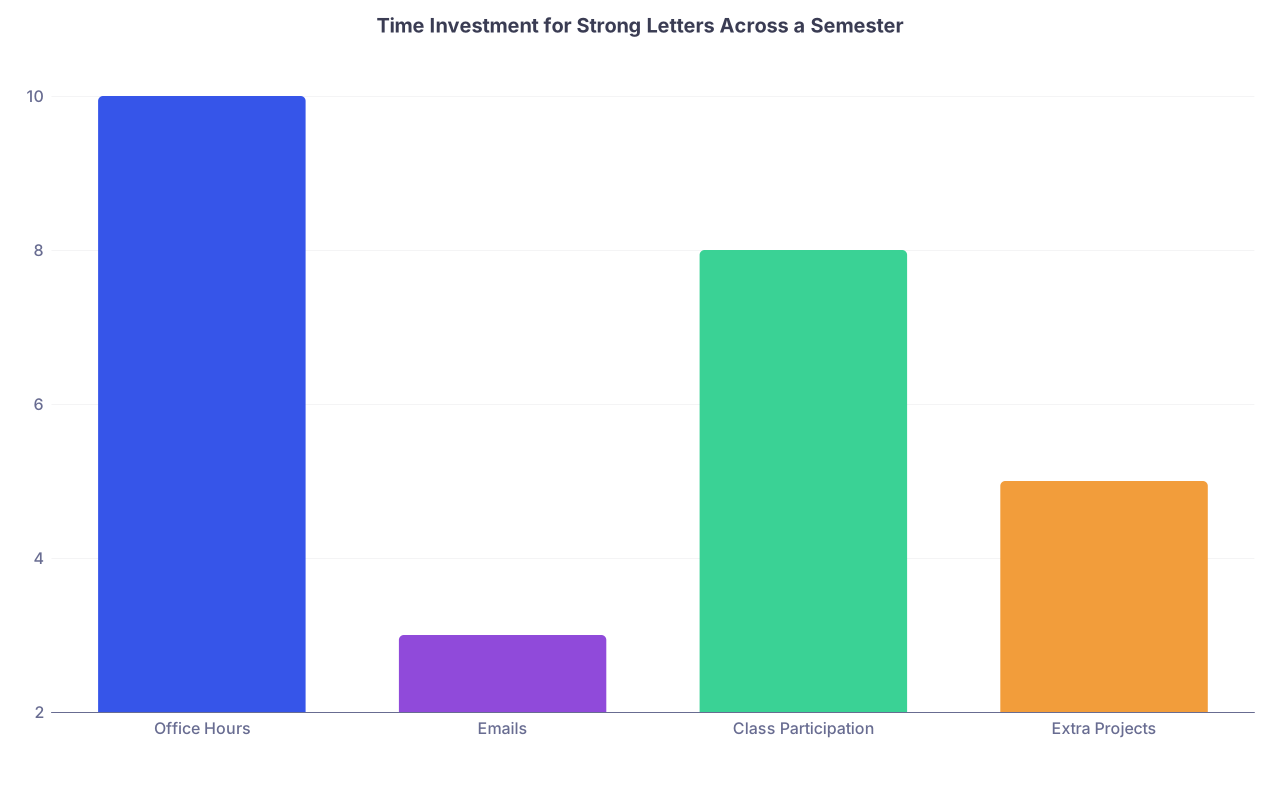
| Category | Value |
|---|---|
| Office Hours | 10 |
| Emails | 3 |
| Class Participation | 8 |
| Extra Projects | 5 |
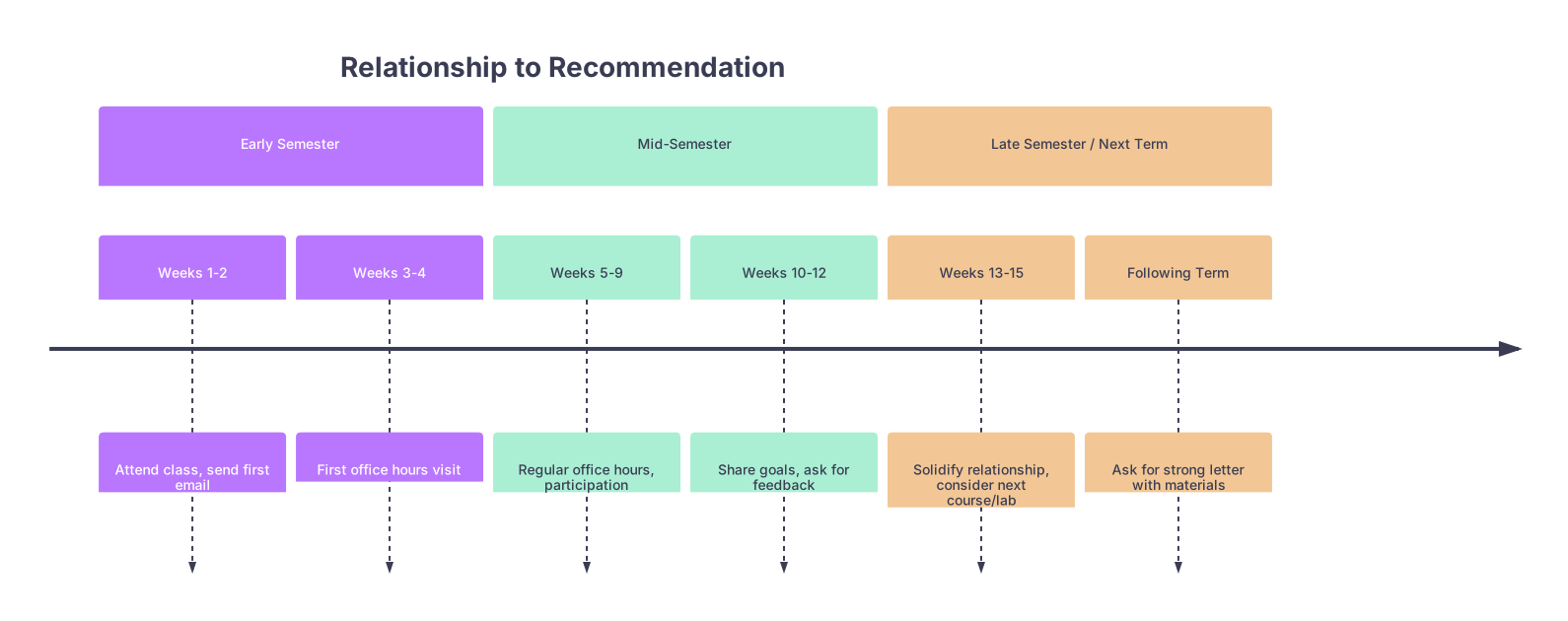
| Period | Event |
|---|---|
| Early Semester - Weeks 1-2 | Attend class, send first email |
| Early Semester - Weeks 3-4 | First office hours visit |
| Mid-Semester - Weeks 5-9 | Regular office hours, participation |
| Mid-Semester - Weeks 10-12 | Share goals, ask for feedback |
| Late Semester / Next Term - Weeks 13-15 | Solidify relationship, consider next course/lab |
| Late Semester / Next Term - Following Term | Ask for strong letter with materials |

FAQs
1. What if my English isn’t perfect—will that hurt my letters?
No, not by itself. Many professors respect students working in a second (or third) language. What matters more is whether you show effort, ask for clarification when needed, and improve over time. If language is a barrier, be explicit: “I sometimes need more time to process spoken English, but I review the material carefully afterward.” That gives professors context to write about your perseverance instead of misreading your quietness as disinterest.
2. Is it okay to ask a professor for a letter after only one class?
Yes, if during that one class you were visible: strong performance, office hours, real engagement. Ideally, you stack it by either taking another class with them or staying in touch through a project or occasional check-in emails. If you only got an A and never interacted, they’ll write you a bland letter. That’s not enough for you, especially as an international applicant.
3. Can I use a letter from my home country instead of a U.S. letter?
You can include one, but it should be supplemental, not your main evidence. U.S. med schools want to see you succeed in the U.S. system. A strong letter from your home institution can highlight long-term character and background, but you still need core letters from U.S. faculty or mentors who have seen you work here. Aim for mostly U.S. letters, plus one strong international one if it meaningfully adds to your story.
4. What if a professor agrees but then never uploads the letter?
This happens. Do not panic, but do not wait in silence either. About 3–4 weeks before the deadline, send a polite reminder with all the details again. Two weeks before, if it’s still not in, send another short reminder. If it’s the final days and still missing, call the department office or speak to the professor in person if possible. And always have backup options: be building relationships with more than the bare minimum number of potential letter writers.
Key Takeaways:
- Letters are just the written result of long, visible, professional relationships—start building those early, even if the cultural rules feel foreign.
- Use your international background as context and strength, not something to hide; mentors can’t write about challenges and resilience they never hear about.
- Make it easy for mentors to support you: be clear, organized, and direct about what you’re asking for and why—then follow through like a professional.