
The way most premeds “get” letters of recommendation is backwards.
They scramble junior spring, spam old professors, and pray someone remembers their name.
You’re going to do the opposite. You’re going to spend four years building LOR‑ready mentors on purpose.
Below is the year‑by‑year, semester‑by‑semester, and even month‑by‑month timeline I use when I advise students. Follow it and you won’t be sending desperate “Hi, you might not remember me…” emails your senior year.
Big Picture: Your 4‑Year Mentor Strategy
Before we dive into the calendar, you need the target.
You are aiming to graduate with:
- 2–3 strong science faculty mentors
- 1–2 non‑science or humanities mentors
- 1 clinical supervisor or PI who’s seen you with patients or in a lab
- 1 character / leadership mentor (advisor, coach, program director)
And out of those, you want at least 3 letters that are:
- Detailed
- Recent (from last 1–2 years)
- Backed by multiple interactions and responsibilities
Here’s roughly how your time and relationship‑building should shift over the four years:
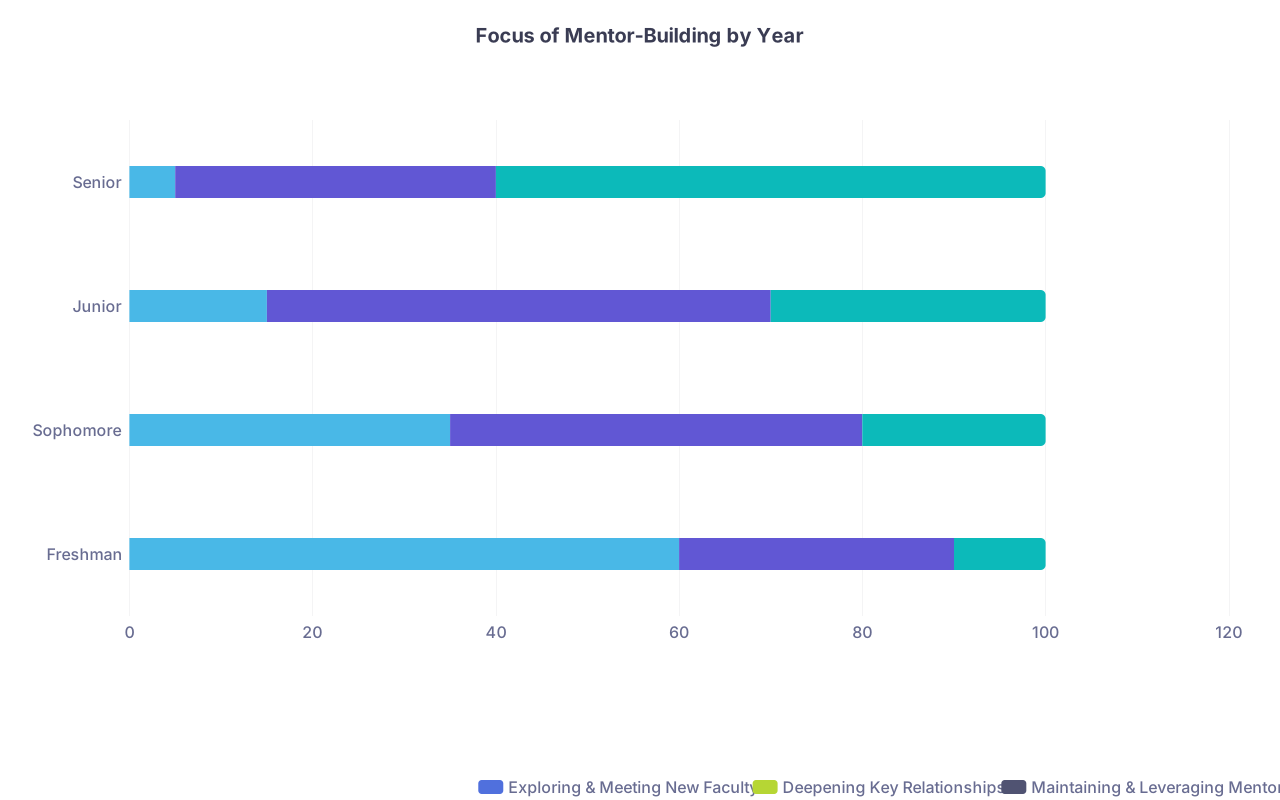
| Category | Exploring & Meeting New Faculty | Deepening Key Relationships | Maintaining & Leveraging Mentors |
|---|---|---|---|
| Freshman | 60 | 30 | 10 |
| Sophomore | 35 | 45 | 20 |
| Junior | 15 | 55 | 30 |
| Senior | 5 | 35 | 60 |
You’re front‑loading exploration, then consolidating into a core mentor group by late sophomore/junior year, then using and nurturing those relationships senior year.
Now let’s build this, step by step.
Freshman Year: Planting Seeds (You’re Not Asking for Anything Yet)
Freshman year is about exposure and impressions, not letters. At this point you should focus on being the kind of student people want to invest in.
Fall Freshman (Months 1–4): Learn How to Be Seen
Week 1–2
At this point you should:
- Identify 2–3 courses with professors who:
- Actually teach (not only TAs)
- Have reasonable class sizes or required discussion sections
- Are in likely premed‑relevant areas (bio, chem, math, or a writing‑heavy humanities class)
Week 3–4
Now you start showing up as a real person, not just a name on a roster.
Do this every week:
- Go to office hours even if you have no crisis. Example script:
- “I’m premed and trying to improve how I study science. Can I get your advice on how you’d approach this class?”
- Ask 1–2 content questions you’ve actually thought about, not just “Can you re‑explain lecture 3?”
- Stay 5–10 minutes, not 45. Respect their time.
Weeks 5–8
At this point you should be:
- Sitting in roughly the same spot in class (so you’re visually familiar)
- Participating once or twice per class in a way that signals:
- You did the reading
- You’re thinking beyond “is this on the test?”
You’re not networking. You’re just being consistently present, serious, and curious.
Spring Freshman (Months 5–8): Choose Early Prospects
By the start of spring, aim to have 2–3 professors or instructors who at least recognize your face and name.
Week 1–2 of Spring
At this point you should:
- Email each professor from fall you liked and say:
- “I really enjoyed your course last semester and found X especially helpful. I’d love to stop by office hours sometime this term to get your thoughts on [premed path, study strategies, or related topic].”
- Actually show up once that month. This shifts you from “former student” to “developing mentee.”
Weeks 3–10
Your moves:
- Take at least one class with an instructor you could see as a long‑term mentor (could be science or non‑science)
- Continue weekly or bi‑weekly office hours with 1–2 professors
- Join 1–2 activities where adults are present (research‑adjacent program, health‑related volunteering, or a seminar series)
You’re still not asking anyone for letters. You’re just building a pattern: you’re serious, you care, you come back.
Sophomore Year: Converting Contact into Mentorship
Sophomore year is when you turn recognition into actual mentorship. At this point you should start giving people real reasons to vouch for you.
Fall Sophomore: Commit to 2–3 Faculty Relationships
Goal: End this semester with 2 faculty who know you well enough that you can reasonably ask for a future letter (not yet, but soon).
Week 1–2
At this point you should:
- Enroll in:
- 1 core premed science with a professor you can interact with
- 1 smaller course or seminar (science or humanities) where discussion is expected
- Reconnect with at least one freshman‑year professor:
- Quick email: “I’m starting [course/research/club] this fall and your class really shaped how I think about X. Could I get 15 minutes of your time this month for some advice?”
Weeks 3–6: Increase Contact Frequency
With your top 2–3 targets, you should:
- Go to office hours every 1–2 weeks
- Ask for feedback on:
- A practice exam
- A draft of a paper
- How to approach upper‑level courses or research
- Stay after class 1–2 minutes when you have a genuine question
Weeks 7–12: Ask for Small Responsibilities
You’re not jumping straight to “Will you write my med school letter?” Instead, at this point you should:
- Ask:
- “Are there any readings you’d recommend if I want to go deeper into [topic]?”
- “Do students ever help with any projects or course materials?”
Sometimes you get nothing. Sometimes you get:
- “You can help collect articles for a future class.”
- “I need students to help mentor the next cohort.”
- “We have an informal reading group.”
You say yes to sensible opportunities. These are the hooks that turn professors into mentors.
Spring Sophomore: Start Building LOR‑Level Evidence
By now, you should have identified 3–4 realistic letter‑writer candidates:
- 2 science faculty (or 1 science + 1 math/statistics)
- 1 non‑science/humanities
- 1 research or clinical supervisor candidate (may still be in development)
Week 1–3
At this point you should:
- Intentionally sign up for another course with a professor you liked and could see as a letter writer
- Email your possible mentor(s) and say something like:
- “I’m premed and starting to think ahead about building strong relationships with faculty. I really enjoyed [class] and wondered if you’d be open to me checking in a few times this semester to get your advice on courses and opportunities.”
Most will say yes. You’ve just given them a label for your relationship.
Weeks 4–10: Show Them Longitudinal Growth
You want these people to see improvement, not just static goodness.
Concrete actions:
- Bring old work and new work:
- “Here’s how I approached exams last term vs this term. Does this seem like I’m improving in the right direction?”
- Ask them to sanity‑check your upcoming course plan:
- “I’m considering [orgo + physics + research + 10 clubs]. Does this seem reasonable?” (Spoiler: they’ll probably tell you to cut something. Listen.)
Week 11–14: Soft Future Ask (Not the Official LOR Yet)
You’re not applying to med school yet, but you are testing the water. At this point you should say something like:
“I’ve really appreciated your mentorship this year. I’m planning to apply to medical school after my junior year, so I’m starting to think about who might be able to speak to my academic strengths in detail. If I keep working at this level (or higher), do you think you’d be comfortable writing a strong letter for me down the line?”
Watch their reaction:
- If they say “Yes, definitely” → green light, keep investing
- If they say “I could probably write something” / “I don’t know you that well” → that’s a no. Adjust. Find another mentor.
Junior Year: Locking In Your LOR‑Ready Mentors
Junior year is where the letters are actually built. Not when they’re requested—when the underlying stories are created.
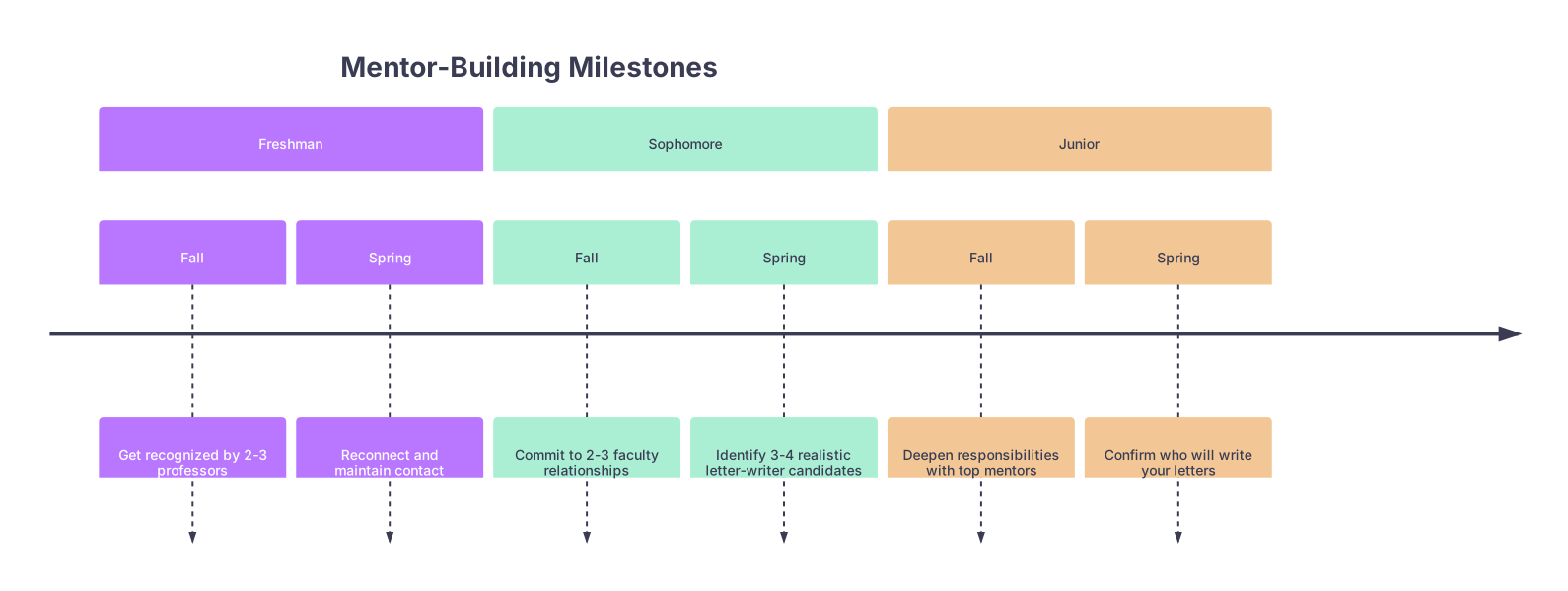
| Period | Event |
|---|---|
| Freshman - Fall | Get recognized by 2-3 professors |
| Freshman - Spring | Reconnect and maintain contact |
| Sophomore - Fall | Commit to 2-3 faculty relationships |
| Sophomore - Spring | Identify 3-4 realistic letter-writer candidates |
| Junior - Fall | Deepen responsibilities with top mentors |
| Junior - Spring | Confirm who will write your letters |
Fall Junior: Take on Real Responsibility
At this point you should already have 2–3 mentors who know who you are. Your goal now is to give them substantive material to write about.
Weeks 1–3
- Enroll in:
- An upper‑level course with one of your target letter writers, or
- A research/clinical experience supervised by someone on your list
- Email each potential letter writer and say:
- “I’m hoping to apply to medical school in [upcoming cycle / after a gap year]. My goal this year is to really deepen my work in your course/lab/clinic so you have a clear sense of my abilities. Can I check in a few times this semester to get feedback on how I’m doing?”
You’ve now told them explicitly: I’m building toward a letter. This is not “bothering” them. It’s helpful.
Weeks 4–10: Execute Relentlessly
You need evidence:
For coursework mentors:
- Consistently perform at a high level
- Ask for feedback and act on it
- Take on optional challenges: advanced problems, extra readings, leading a discussion
For research/clinical mentors:
- Show up early, leave late when possible
- Volunteer for annoying but necessary tasks (data cleanup, weekend recruitment, patient follow‑up calls)
- Proactively solve problems instead of waiting for instructions
You want them thinking: “This student is reliable, smart, and low‑maintenance.”
Weeks 11–14: First Explicit Ask for Future Letters
If you’re planning to apply end of junior year, this is the time you ask for real. If you’re applying after a gap year, you still ask—then manage timing.
Your script, customized:
“I’m planning to apply to medical school in [month/year]. I’ve really valued working with you in [context], and I was wondering if you’d feel comfortable writing a strong letter of recommendation for my applications.”
Key details:
- Say “strong letter” on purpose. It forces honesty.
- If they hesitate or qualify—thank them and pivot. You need enthusiastic writers, not lukewarm ones.
If they say yes, follow up with:
- Your resume/CV
- Unofficial transcript
- A 1‑page “brag sheet” with:
- Specific projects you did with them
- What you learned
- What skills you hope they’ll highlight
You’re not writing the letter for them. You’re jogging their memory.
Spring Junior: Finalize the Letter Team
By the end of junior spring, you should have:
- 2 committed science faculty letter writers
- 1 non‑science/humanities faculty letter writer
- 1 research or clinical supervisor
- Optionally 1 character/leadership mentor (coach, advisor, program director)
Let’s be honest: some people promise letters and then flake. So at this point you should also build redundancy.
| Letter Type | Target Number | Backup Needed? |
|---|---|---|
| Science Faculty | 2 | Yes (1) |
| Non-Science Faculty | 1 | Optional (1) |
| Research/Clinical | 1 | Yes (1) |
| Character/Leadership | 1 | Optional |
Weeks 1–4
- Confirm details with each letter writer:
- How they prefer to receive submission links (AMCAS/secondaries)
- When they’d like your final personal statement or activity list
- Whether they’re OK writing for both MD and DO if needed
Weeks 5–12
Your job now is twofold:
- Keep giving them fresh material
- Update them on:
- New responsibilities
- Leadership roles
- Recent grades or projects
- Update them on:
- Do not vanish after they agree
- Drop by office hours once a month
- Send a brief progress email: “Since we last spoke, I’ve started [X], and I’m learning [Y]. Thank you again for supporting my applications.”
Senior Year (or Application Year): Maintain, Remind, and Respect
By senior year, your mentor garden is planted and tended. Now you don’t wreck it with last‑minute panic or ghosting.

If You Apply After Junior Year (Traditional Route)
Summer Before Senior Year
At this point you should:
- Have all med school letters requested and ideally submitted by mid‑summer
- Send each letter writer:
- Final personal statement
- List of schools and why you chose them
- Any major updates since your last meeting (new roles, awards, MCAT score)
During Senior Year
Your goal is relationship maintenance, not extraction.
Every 2–3 months:
- Email a short update:
- “I’ve received X interview invites so far; thank you again for your support.”
- Drop into office hours once or twice if you’re still on campus
- After acceptances:
- Send a brief thank‑you email:
- “I wanted to share that I was accepted at [school] and will be attending. Your support and mentorship over the past few years made a huge difference. Thank you.”
- Send a brief thank‑you email:
If You’re Taking a Gap Year (Application During or After Senior Year)
This is where students usually screw it up. They disappear senior spring, then email from another city two years later asking for a letter.
Don’t be that person.
Senior Fall
At this point you should:
- Reconfirm availability:
- “I’m planning to apply in [upcoming cycle] while I’m doing [gap year job]. Would you still be comfortable writing a strong letter next year if I keep you updated?”
- Ask if they’d prefer:
- To write now (while you’re fresh in mind), or
- To wait until closer to application time
If they want to write early:
- Have them send the letter to your prehealth committee or a secure letter service (Interfolio, etc.) so it’s stored.
Senior Spring
You’re closing the “on campus” chapter.
- Visit each mentor in person at least once to say:
- Thank you for the past years
- Here’s what I’m doing next year
- I’ll keep you updated and send application materials when the time comes
Gap Year
Every 3–4 months you should:
- Send a concise update email:
- “Since we last spoke, I’ve been doing [X] at [place]. I’m learning [Y]. I still plan to apply to medical school in [month/year] and remain very grateful for your mentorship.”
- 2–3 months before application opens, send:
- Finalized personal statement
- School list
- Updated CV
- Specific reminders of what you did with them (“In your lab, I worked on [project], presented [poster], and helped with [task].”)
This keeps the letter grounded and specific, even if a year has passed.
Micro‑Level: Weekly and Monthly Habits That Actually Build Mentors
The timeline matters. But the habits are what actually make people want to write for you.
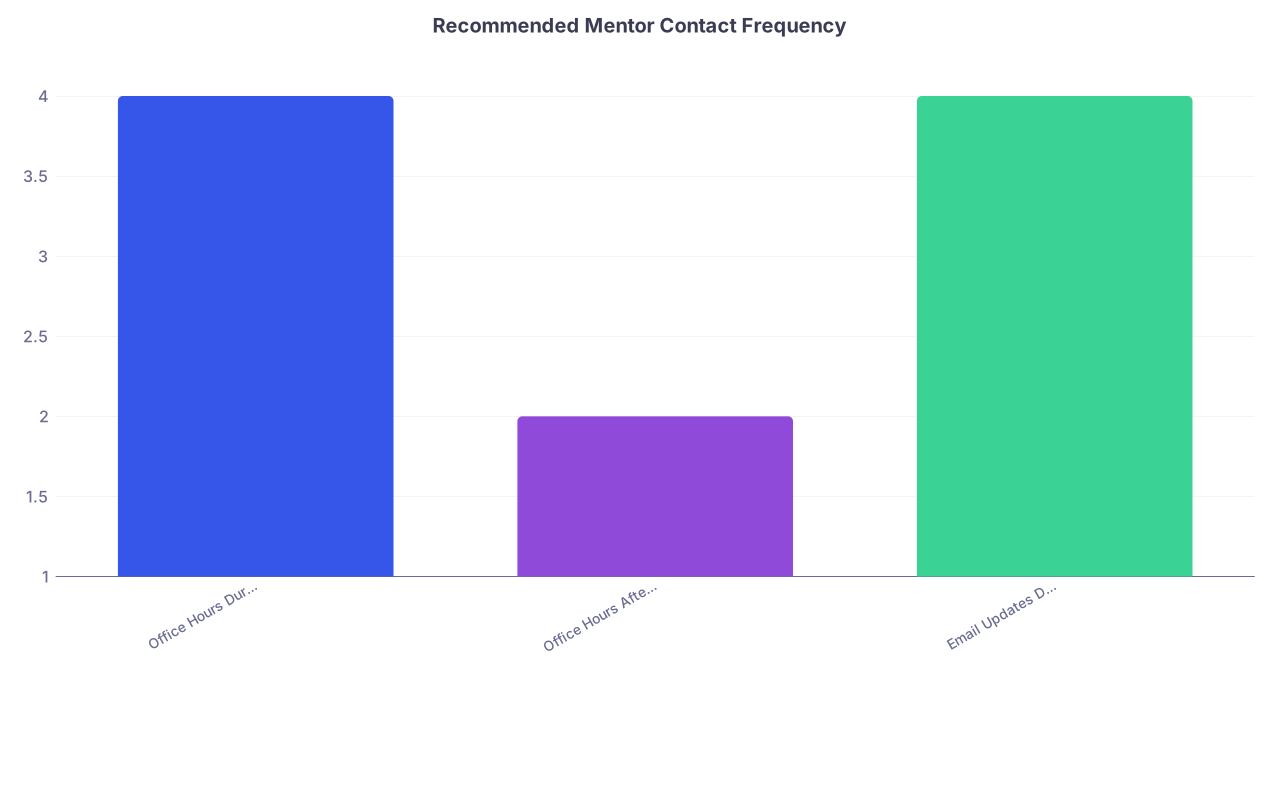
| Category | Value |
|---|---|
| Office Hours During Course | 4 |
| Office Hours After Course | 2 |
| Email Updates During Application Year | 4 |
Think in touch points:
- 4+ meaningful contacts during a semester course (office hours, feedback meetings)
- 2+ follow‑ups in later semesters
- 3–4 updates during the application year
At any given point in college, you should be doing some mix of:
Monthly:
- Attending office hours with at least 1–2 faculty
- Emailing 1 mentor with a genuine update or question
Weekly (during semesters):
- Speaking in each class at least once (substance, not noise)
- Writing down the names of instructors and mentors and noting:
- Does this person know me?
- What have they seen me do?
- Do I want them writing about me in 3 years?
This is how you avoid the senior‑year panic.
Quick Reality Check: Green Flags vs Red Flags in Potential Mentors
Choosing the wrong letter writer can hurt you more than not having one.
At any point you should be screening for this:
| Type | Green Flag | Red Flag |
|---|---|---|
| Availability | Holds regular office hours, replies to email | Frequently cancels, slow replies |
| Engagement | Remembers you after a few visits | Struggles to recall who you are |
| Feedback | Gives concrete advice, constructive critique | Vague praise, dismissive of your goals |
| Enthusiasm | Says “absolutely” to future letter question | Says “maybe” or “I don’t know you well” |
If you’re not getting clear green flags by mid‑sophomore year, you adjust. You don’t keep investing in a dead relationship out of politeness.
Final Checklist by Year
By End of Freshman Year, You Should:
- Have 2–3 professors who recognize you and have seen you at least twice in office hours
- Know which teaching styles and personalities you click with
- Be comfortable walking into office hours without a crisis
By End of Sophomore Year, You Should:
- Have 3–4 realistic future letter writers identified
- Have asked at least 2 of them if they would feel comfortable writing a strong letter in the future
- Be doing or planning at least one experience (course, research, or clinical) that deepens those relationships
By End of Junior Year, You Should:
- Have formal “yes” commitments from:
- 2 science faculty
- 1 non‑science or humanities faculty
- 1 research or clinical supervisor
- Have given each letter writer:
- Your CV
- Transcript
- Brag sheet with specific shared experiences
By Graduation (or Application Year), You Should:
- Maintain light but regular contact with each mentor
- Send thoughtful updates and eventual thank‑you notes
- Feel zero need to panic‑email strangers because you already did the work.
If you strip this whole process down, three points matter:
- Start freshman year, not junior year. Early neutral contact turns into real mentorship over 4–8 semesters.
- Choose people, not titles. A mid‑career lecturer who knows you well beats a famous PI who barely remembers your face.
- Ask clearly and early, then keep showing up. Strong letters come from long, visible, consistent work—not last‑minute “remember me?” emails.