
It’s Thursday at 4:15 p.m. Your syllabus says your professor has office hours from 4–5. You’re sitting in the library staring at the clock, thinking, “I should go. I need a letter eventually. I also need help on this material.”
And then you imagine it: awkward small talk, them realizing you’re not that impressive, running out of things to say in 3 minutes flat, that weird silence, then you bolting. So you don’t go. Again.
Now it’s halfway through the semester. You’re doing fine grade-wise, but you’ve never spoken to this professor one-on-one. Same story in your other classes. You see other students laughing with faculty, chatting after lecture, clearly “known.” And your brain goes straight to:
“I’m never going to have any mentor. No one will write me a real letter. I’m already behind. Everyone else started in freshman year and I’m just… invisible.”
Let’s talk about that. Because it’s not as doomed as it feels in your head, but there are some traps you’re probably falling into if you’re shy and conflict-avoidant like most of us.
First: You’re Not Broken For Being Shy
Let me just say this bluntly: being shy or introverted doesn’t disqualify you from having mentors or getting strong letters.
Admissions committees don’t secretly have a checkbox that says: “Outgoing extrovert? Y/N.”
But here’s the problem. The systems we’re stuck in are built around people who are comfortable doing things like:
- Hanging around after class
- Dropping by office hours casually
- Emailing out of nowhere to ask for research or shadowing
If that’s not you, you feel like you’re playing a game designed for someone else’s personality. And your instinct is to opt out rather than play badly.
The real issue isn’t that you’re shy. It’s that your current strategy is “avoid everything and hope a mentor appears out of nowhere.” That doesn’t work. Not for extroverts either, honestly.
So what you need is a shy-person strategy. Something structured and predictable, where you don’t have to magically become charismatic overnight just to get a letter of recommendation that doesn’t sound like “they got an A and sat quietly in the back.”
What Makes a Mentor “Worth Asking” For a Letter?
Let’s define what you’re even trying to build, because “mentor” is this huge vague word that feels impossible.
Forget the fantasy of some Grey’s Anatomy attending who adopts you as their prodigy in week one. For the premed / early med school phase, a mentor “worth asking” for a letter usually has:
- Enough direct experience with you to judge your work or character
- A credential or role that admissions cares about (professor, PI, physician, dean, etc.)
- A basic positive impression that you’re reliable, decent, and not a red flag
That’s it. They do not have to be your second parent, your therapist, or your ride-or-die advocate since freshman year.
Here’s the secret people don’t say out loud: a ton of perfectly good letters come from fairly normal, low-drama relationships like:
- A professor you went to office hours with 4–5 times
- A PI you worked for one summer who saw you show up and try
- A clinic volunteer coordinator who noticed you never flaked
- A course director you helped as a TA for a semester
Not every letter-writer started as a deeply personal mentor. Many became “mentors” because they wrote the letter and kept in touch.
So your goal isn’t “find a lifelong mentor.” It’s simpler:
“Create 2–4 adults in academic/clinical roles who know me specifically and could say something real about me.”
If You Avoid Office Hours, Where Do You Even Start?
Let’s be painfully realistic. You’re not going from never-talking-to-anyone to walking into every office hour this week with a confident smile and a list of questions. That’s not happening. Your nervous system will revolt.
So you need on-ramps—low-intensity steps.
1. Use Email as Your First Contact, Not Your Crutch
You probably default to email because it feels safer. Keep it, but stop using it as an excuse to never show your face.
Example for a professor you’ve never talked to:
Subject: Quick question about [Course Name] and office hours
Dear Dr. Smith,
I’m in your BIO 201 class (MWF 10 a.m., front left side). I’ve been really interested in the unit on [topic] and had a couple questions I was hoping to ask you about, and also wanted to get a bit of guidance on how to best prepare for the exam.Would it be alright if I stopped by your office hours this week? I tend to get a bit anxious in new situations, so I find it helpful to have a plan—would you prefer I come with written questions, or is it okay if we talk more generally about strategies for the course?
Thank you for your time,
[Your Name]
You just did three important things:
- Identified yourself as a real person in their actual class
- Gave a concrete reason to show up
- Gently flagged that you’re anxious, which for a decent human being translates into “be kind and structured with this student”
You’re not oversharing. You’re setting expectations.
Then—sorry—you actually have to go.
2. Script the First 2–3 Office Hours So You Don’t Freeze
You don’t need to “click” or be fascinating. You need repetition and familiarity.
Plan exactly how you’ll start, like a small play you already rehearsed. Literally write this down and bring it:
First visit:
- “Hi, I’m [Name] from your [day/time] class. I emailed you earlier this week.”
- “I had a couple questions about [lecture topic/problem set] and also wanted to make sure I’m studying the right way for your exams.”
Bring 2–3 real questions. Not “how do I get an A.” Something like:
- “I’m having trouble seeing the big picture between X and Y concepts. Can I show you where I’m getting stuck?”
- “For the last quiz, I thought I understood the material, but I still missed questions like [example]. Can you help me see what I’m missing in how I’m thinking?”
Then when things feel like they’re winding down:
- “This was really helpful, thank you. Would it be okay if I came back next week after I try some of these strategies?”
That last sentence is the important one. You’re not going for a single magical conversation. You’re training them to expect to see you again.
Second visit:
- “Hi again, I tried what you suggested about [thing] and I think it helped with [specific]. I had a couple follow-up questions.”
You’re now on their radar as “the quiet student who keeps showing up and clearly cares.”
Third visit:
- “I’m thinking long-term about medicine and trying to build better study habits now because I know the material will only get harder. Could I get your honest feedback on how I’m doing so far and anything you’d recommend I focus on?”
Boom. You’ve shifted from random student → person with a trajectory.
Non-Office-Hour Ways to Build Mentors (If You Truly Hate That Doorway)
You don’t have to funnel everything through office hours. Some people vibe better in structured settings.
Here are alternatives that still count as “real” relationships in the eyes of letter-writers:

Join Something Small and Repeat
Huge premed clubs are often social nightmares for shy people. You stand there holding a slice of pizza, talk to no one, go home, feel worse.
Instead, look for:
- A small reading group / journal club
- A service project with 5–10 people
- A tutoring/TA role where you work closely with one faculty or coordinator
- A research lab with weekly meetings
Why this works: you see the same adult regularly, in a structured environment. You don’t have to “network.” You just have to show up, participate a bit, and be consistent.
Over time they’ll naturally learn your name, your interests, your vibe. Then when you eventually ask for a letter, it doesn’t feel out of nowhere.
Use “Feedback” As Your Social Cheat Code
If you feel weird “talking about yourself,” ask for feedback instead. Most mentors love it because it gives them something to respond to.
Example emails to a lab PI / course director / volunteer coordinator:
- “I’ve been trying to improve my [presentation skills / time management in lab / way I work with patients]. Could we set up a 15–20 minute meeting sometime for general feedback on how I’m doing and what I should work on?”
Then when you meet:
- “I’m hoping to apply to medical school in the next [X] years, and I know you’ve worked with a lot of students. What do you think my strengths are so far? And what do I need to improve to be ready?”
You’re giving them a chance to see you as someone growing, not just existing. That’s what they’ll later write about in your letter.
What If It’s Already “Late” and You Have No One?
This is the nightmare loop, right?
“I’m a junior.”
“I’m an MS2.”
“I should’ve started years ago. Now it’s too late. Everyone else has multi-year mentors; I have… my Cat 101 professor from freshman year.”
You’re not the only one. I’ve seen plenty of people wake up in late undergrad or early med school and realize they’ve done… zero relationship-building. They still got into med school or matched.
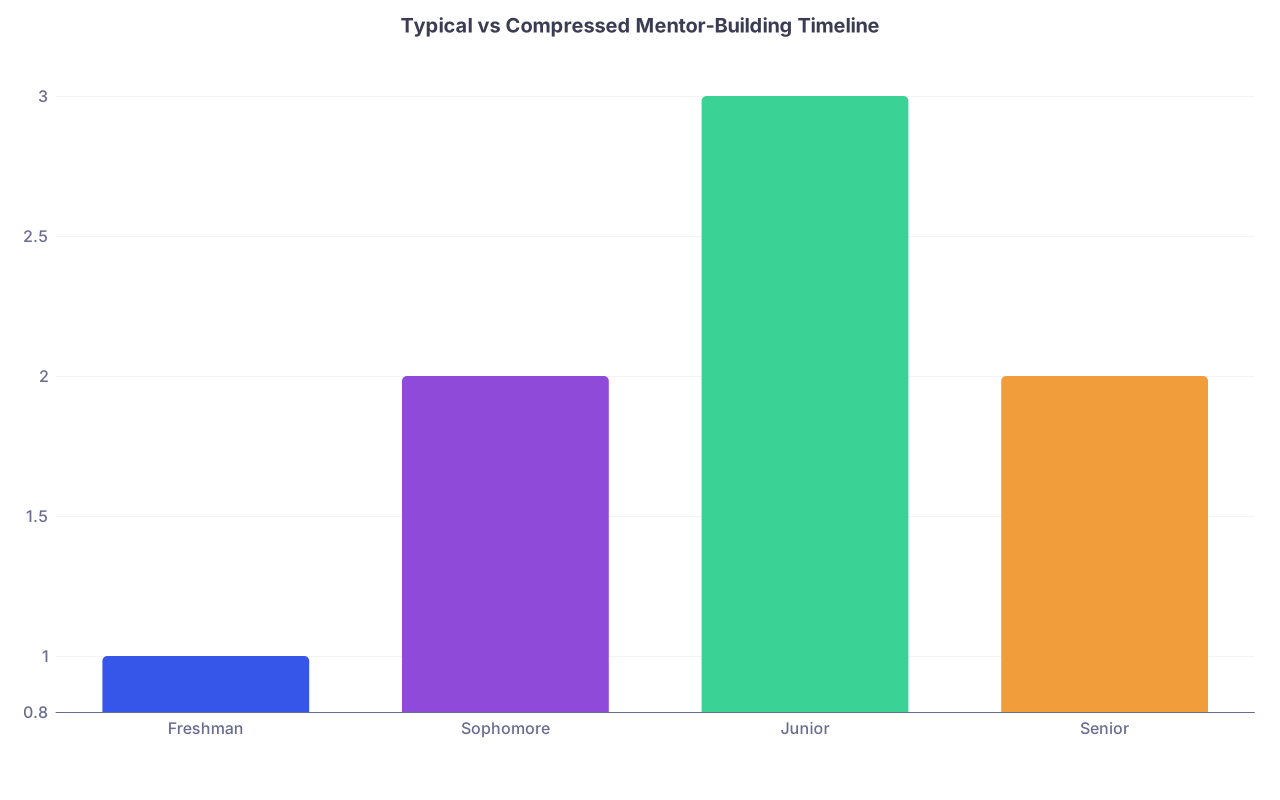
You just don’t have the luxury of waiting another year to “feel ready.” You have to compress the timeline by being more intentional.
| Category | Value |
|---|---|
| Freshman | 1 |
| Sophomore | 2 |
| Junior | 3 |
| Senior | 2 |
If you’re within 1–2 years of applying, aim aggressively for:
- 1–2 science professors who know you from class + office hours
- 1 clinical supervisor (volunteering, scribing, MA, etc.)
- 1 research or service mentor (PI, project lead, coordinator)
You do not need 7 mentors. You need 3–4 solid ones.
That might mean:
- Picking 1–2 classes this semester where you commit to actually being seen: front-ish seat, ask occasional questions, attend office hours 3–4 times per term
- Taking or seeking roles that force regular contact with an adult: TA, lab assistant, clinic volunteer, etc.
- Emailing to schedule short 15–20 minute check-ins a couple times instead of hoping “they’ll notice you”
You might feel behind, but you’re not disqualified. You just need focused reps.
Exactly How To Ask For a Letter When You’re Shy and Unsure
This part terrifies people even more than office hours. The ask.
You’re going to assume they secretly don’t like you, that your letter will be weak, that you’re imposing. Your brain will tell you: “If they wanted to write for you, they’d have asked.”
No. Faculty are busy and bad at telepathy.
Here’s a script you can adapt, after you’ve had at least a few real interactions:
Dear Dr. [Name],
I’ve really appreciated the chance to [take your course / work in your lab / volunteer under your supervision] this [semester/year]. I’ve learned a lot about [specific detail or example].
I’m planning to apply to medical school in the upcoming cycle and I was wondering if you’d feel comfortable writing me a strong letter of recommendation. I’ve valued your perspective on my [academic work / clinical skills / research work], and I think admissions committees would as well.
I’d be happy to provide my CV, personal statement draft, and a short summary of the work I’ve done with you. And I completely understand if you don’t feel you know me well enough to write a strong letter—no pressure at all.
Thank you again for all your support,
[Your Name]
The key things:
- You specifically say “strong” letter—gives them an out if all they can write is a bland note
- You mention concrete things you’ve done with them—reminds them you exist as more than a name
- You offer materials so they’re not writing from scratch
If they say yes, you follow up with:
- CV / resume
- Draft personal statement (even if rough)
- Short bullet summary: what you did with them, notable projects, strengths you hope they can highlight
You are not being annoying. This makes their life easier.
What If They Say “No” or Ignore You?
This is the nightmare outcome in your head. Total rejection. Confirmation that you are, in fact, forgettable.
Reality: a “no” usually means one of three things:
- They honestly don’t remember you well enough
- They’re overwhelmed and don’t want to commit
- They’re picky about who they write for
This is actually good. A lukewarm letter can hurt you. Better to know and ask someone else.
If they ghost you:
- Wait a week
- Send a short follow-up: “Just checking if you had a chance to see my last email about a potential letter of recommendation. If you’re too busy, no worries at all—I completely understand. I just wanted to plan accordingly.”
If they still don’t reply, move on. Do not take this as a sign you should never ask anyone again.
You’re looking for people who are at least somewhat responsive and willing, not perfect mythical mentors with unlimited time.
A Very Simple 8-Week Plan for the Shy Applicant
Here’s a bare-bones, realistic structure:

| Step | Description |
|---|---|
| Step 1 | Week 1-2: Identify 2 targets |
| Step 2 | Week 2-3: First contact via email |
| Step 3 | Week 3-4: 1st office hour or meeting |
| Step 4 | Week 4-6: 2nd and 3rd visits or check-ins |
| Step 5 | Week 6-8: Share goals & ask for feedback |
| Step 6 | After Week 8: Decide who to ask for a letter later |
You’re not trying to be everywhere with everyone. Just pick two humans and show up consistently.
You Don’t Need To Become Someone Else
Here’s the part that’s easy to forget while you’re spiraling:
Quiet, thoughtful, observant students actually make some of the best mentees. You listen. You reflect. You don’t waste people’s time. You remember details.
You also probably assume other people are judging you way more harshly than they actually are. Most faculty are just trying to get through the semester and will be pleasantly surprised if a student:
- Shows up prepared
- Cares
- Follows through
You can absolutely do that without ever becoming the loudest person in the room.
FAQs
1. What if I’m awkward in person and feel like I make a bad impression?
You’re overestimating how much people care about “smoothness.” Professors and physicians care way more about: do you show up, do you try, do you improve. If you’re worried, lean on structure: prepare questions in writing, rehearse your opening line, and keep meetings short at first (10–15 minutes). Awkward but engaged beats charming and flaky every single time.
2. Is it okay if my main mentors only know me for 6–12 months, not multiple years?
Yes. Multi-year relationships are nice, not required. A professor who’s seen you consistently over one semester and watched you seek help, improve, and show initiative can write a very strong letter. Same for a PI or clinical supervisor you’ve worked closely with for a year. Depth of interaction matters more than the calendar length.
3. What if my only options are TAs or residents who know me well, not big-name professors?
You usually want at least some letters from full faculty or attendings, because schools sometimes specify that. But TAs and residents can absolutely contribute by co-writing or providing input. For example, the TA writes detailed feedback that the professor incorporates, or the resident tells the attending what you were like on the team. Don’t dismiss relationships just because the person isn’t high-title; use them as bridges to the people who can officially sign.
4. How many office hour visits or meetings do I need before I can reasonably ask for a letter?
There’s no magic number, but as a rule of thumb: if you’ve had 3–5 meaningful interactions (office hours, feedback meetings, project discussions) and they’ve seen your actual work (exams, assignments, patient care, research tasks), you’re in reasonable territory. If all you’ve done is say hi once, that’s too thin. If you’ve been a regular, thoughtful presence over a semester, you’re probably fine.
Key points, stripped down:
You don’t need to become extroverted; you need a repeatable, low-drama way to be visible to a few adults who can vouch for you. Structured office hours, small-group roles, and feedback meetings are your main tools. And “mentor worth asking” is not a mythical soulmate—it’s anyone who has seen you show up, struggle a bit, get better, and still be there.