
Your worst fear is valid: a bad letter can quietly wreck an application.
Let me say that bluntly, because people sugarcoat this all the time. A weak, generic, or faintly negative letter from a PI who barely knows you can hurt more than not having a “big name” letter at all.
But that doesn’t automatically mean you shouldn’t use your PI. It means you can’t just assume “PI = strong letter.” You have to be strategic, especially if they barely speak to you.
Let’s walk through this like an actual panicked premed who overthinks everything. Because that’s… us.
The Silent PI Problem: Why This Feels So Terrifying
Your situation probably looks something like this:
You’ve been in the lab for months (or years), running Westerns, doing cell culture, labeling tubes, babysitting experiments that never work. Your PI walks in, nods vaguely at the lab, says something to the postdoc, disappears into their office. Maybe they’ve said your name twice. In total.
You’re thinking:
- “How can they write about me if they literally don’t know me?”
- “Everyone says I need a PI letter for research-heavy schools. Am I screwed?”
- “What if they say something like ‘X completed assigned tasks’ and that’s it?”
- “Is it better to have a generic letter from a famous PI or a strong letter from a nobody?”
Here’s the ugly truth no one says out loud: adcoms can smell a generic letter from space.
They’ve read thousands that say:
“X was a member of my lab. They were punctual and performed assigned tasks.”
That’s code for: I don’t know this person well enough to vouch for them.
And yes, that hurts. It doesn’t always tank you alone, but in a competitive pool it absolutely drags you down.
How Much Does a PI Letter Actually Matter?
It depends on the type of applicant and school, but here’s the general reality.
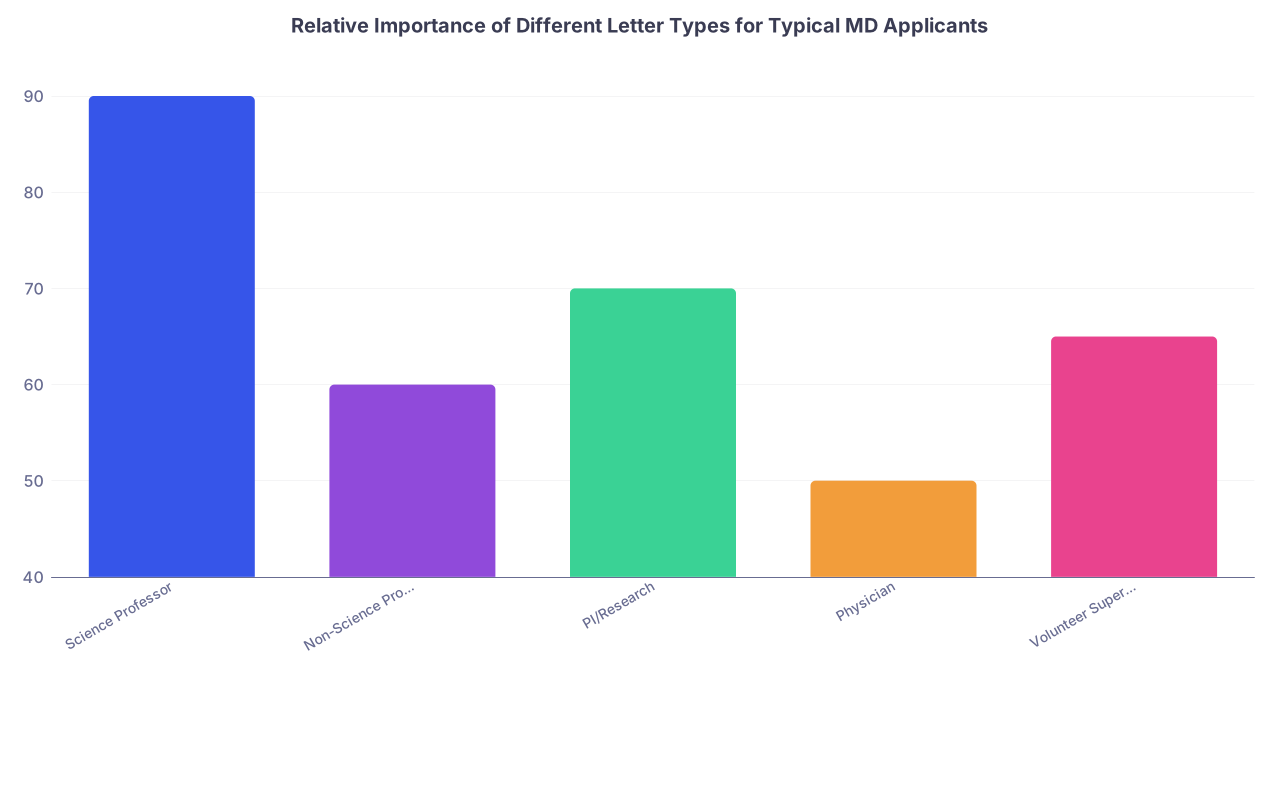
| Category | Value |
|---|---|
| Science Professor | 90 |
| Non-Science Professor | 60 |
| PI/Research | 70 |
| Physician | 50 |
| Volunteer Supervisor | 65 |
For a standard MD applicant:
- Science faculty letters usually matter more than a random lab PI who barely knows you.
- For MD/PhD or research-heavy programs, PI letters matter more, but only if they’re actually strong.
A famous name on a weak letter is not a cheat code. Adcoms are not dazzled by letterhead alone. I’ve seen committees literally say, “Wow, this is from [Big-Name] and still says nothing. Red flag.”
So the real question isn’t “Do I need a PI letter?”
It’s: “Is this PI going to write me a letter that helps instead of silently undermining me?”
Diagnose Your Situation: How Bad Is It Really?
Before you spiral, you need to get honest about what your PI actually knows about you.
Ask yourself:
- Have they ever seen you present (lab meeting, poster, abstract)?
- Have you met with them one-on-one, even once?
- Do they know what your project is and what you specifically did versus the postdoc?
- Have they given you feedback on anything?
- Have they complimented your work ethic, independence, or growth, even casually?
If the answer is “no” to all of that, they currently can’t write you a strong letter. They’d be guessing. Or they’d be writing a template filled with vague praise and no specifics.
That’s the worst-case scenario: a letter that says nothing concrete.
Should You Still Ask Them? The Decision Framework
Here’s how I’d sort it, brutally:
Strong “Yes, Ask the PI” if:
- You’ve had at least a few substantial interactions (presentations, one-on-one discussions, emails about your data).
- They’ve seen your work ethic or progress over time.
- You can give them a packet (CV, draft personal statement, bullet points) and realistically they’ll use it.
- You’re doing MD/PhD or applying to places that explicitly say they strongly prefer a PI letter.
Solid “Maybe” if:
- Most of your interaction is through a postdoc/grad student, but the PI at least knows your project, your name, and has seen you present once or twice.
- The postdoc/grad can advocate for you and the PI respects their judgment.
- You have at least two other very strong letters and this would be “bonus” or “for certain schools only.”
Lean “No” if:
- They literally don’t know what you’ve been working on.
- They wouldn’t recognize you outside the lab.
- They’ve never seen you engage intellectually with the project (questions, discussion, troubleshooting).
- You have other people (postdoc, research coordinator, faculty instructor) who can write detailed, concrete letters.
And here’s the key: a strong letter from a “less prestigious” person beats a lukewarm letter from a superstar PI. Every. Single. Time.
How to Test the Waters Without Torpedoing Yourself
You don’t have to walk into their office and immediately say, “Will you write me a letter?” That’s the nuclear version.
Start smaller.
Step 1: Create an excuse to talk to them
Ask for a brief meeting “to discuss my future plans and get your advice.” Most PIs will agree to that.
During that meeting:
- Tell them you’re intending to apply to medical school (or MD/PhD).
- Briefly summarize what you’ve done in the lab and what you’ve learned.
- Ask them one or two thoughtful questions about your project or field so they see you’re not just a pair of hands.
This lets them connect your face, your name, and your work.

| Step | Description |
|---|---|
| Step 1 | Schedule Meeting |
| Step 2 | Discuss Goals & Work |
| Step 3 | Gauge Their Reaction |
| Step 4 | Ask Directly if They Can Write a STRONG Letter |
| Step 5 | Use Other Letter Writers |
| Step 6 | Positive & Supportive? |
Step 2: Listen very carefully to their response
When you eventually ask, use this wording:
“Would you feel comfortable writing me a strong letter of recommendation for medical school?”
That word “strong” is doing a lot of work.
If they say:
- “Of course, I’d be happy to, you’ve done great work here” → green-ish light
- “Sure, I can write something” → yellow to red
- “I can write a letter confirming you were here and did your work” → absolutely not
- “Honestly I don’t know you well enough” → this is actually a gift; they’re saving you
Passive, hesitant, or “confirmation letter only” = do not use them. That’s not you being dramatic. That’s you being realistic.
What If the PI Barely Knows Me, But the Postdoc Knows Me Really Well?
This is extremely common. The PI is a satellite; the postdoc is your actual supervisor.
In that case, you have a few options:
- Ask the postdoc/grad student for a letter directly (some schools accept non-faculty supervisors, especially for research/character letters).
- Ask the PI if they’d co-sign a letter largely drafted or informed by the postdoc.
- Use the postdoc as your primary research letter and accept that you might not have a classic “PI letter.”
A lot of letters from PIs are actually co-constructed like this anyway. The trainee writes a draft or detailed bullet points, the PI edits and signs. That’s not shady; that’s reality.
So in your ask, you can say:
“Dr. X knows my work very closely and has supervised me day to day. Would you be open to working with them on a letter on my behalf?”
If the PI says yes and the postdoc loves you, that can turn a weak relationship into a solid letter.
When You Really Shouldn’t Use Them
Let’s talk worst case, since that’s where your brain is living anyway.
Do not use a PI if:
- They’ve made negative comments about your performance, reliability, or motivation.
- You’ve had conflicts about attendance, responsibility, or professionalism.
- You left the lab abruptly on bad terms.
- They openly said anything like “I can only confirm your time here” or “I don’t know you well enough.”
Adcoms read between the lines. A line like:
“X fulfilled the minimum expectations of their role.”
is a quiet death sentence.
They will never email you and say, “Your PI sank you.” You’ll just… never know. You’ll just see silence, rejections, or “we had a very strong pool this year.”
So yes, it’s absolutely better to skip a PI letter than include a subtly negative one.
Balancing the Letter Portfolio: Who Else Can You Use?
Don’t obsess so hard over the PI that you ignore the fact that you probably have other, better options.
Think about:
- Science professors who actually remember you, especially from small classes, office hours, or projects.
- A non-science professor who watched you grow as a writer, thinker, or leader.
- A clinical supervisor or physician you’ve shadowed who can speak to how you interact with patients and staff.
- A volunteer coordinator who’s seen your consistency and character.
| Option | Likely Strength |
|---|---|
| PI who barely knows you | Weak |
| Postdoc who supervised you closely | Strong |
| Science prof from small class | Strong |
| Big-name physician you shadowed once | Weak |
| Volunteer coordinator who knows you well | Strong |
If you can build a set of 3–4 letters that are all detailed and positive, missing a PI letter is not going to sink a typical MD application. For MD/PhD, it’s trickier—but even then, a strong research letter from a non-PI supervisor is still better than a bad PI letter.
How to Salvage a Distant PI Relationship (If You Still Want Their Letter)
If you’re early enough in the timeline (6–12 months before you apply), you can still try to transform this:
- Start meeting with them occasionally about your project. Even brief check-ins.
- Ask to present at a lab meeting, even a short update.
- Send a concise email summarizing your contributions and progress every month or two.
- Ask meaningful questions about the science so they see your brain, not just your hands.
You’re basically giving them material for a future letter.
When you eventually ask, you’ll attach:
- Your CV
- Draft personal statement
- A 1-page “brag sheet” with bullet points: what you did in the lab, what skills you developed, any posters/pubs, plus 2–3 stories that show your growth or resilience
That doesn’t guarantee a strong letter. But it takes “they barely know me” to “they at least have something real to say.”
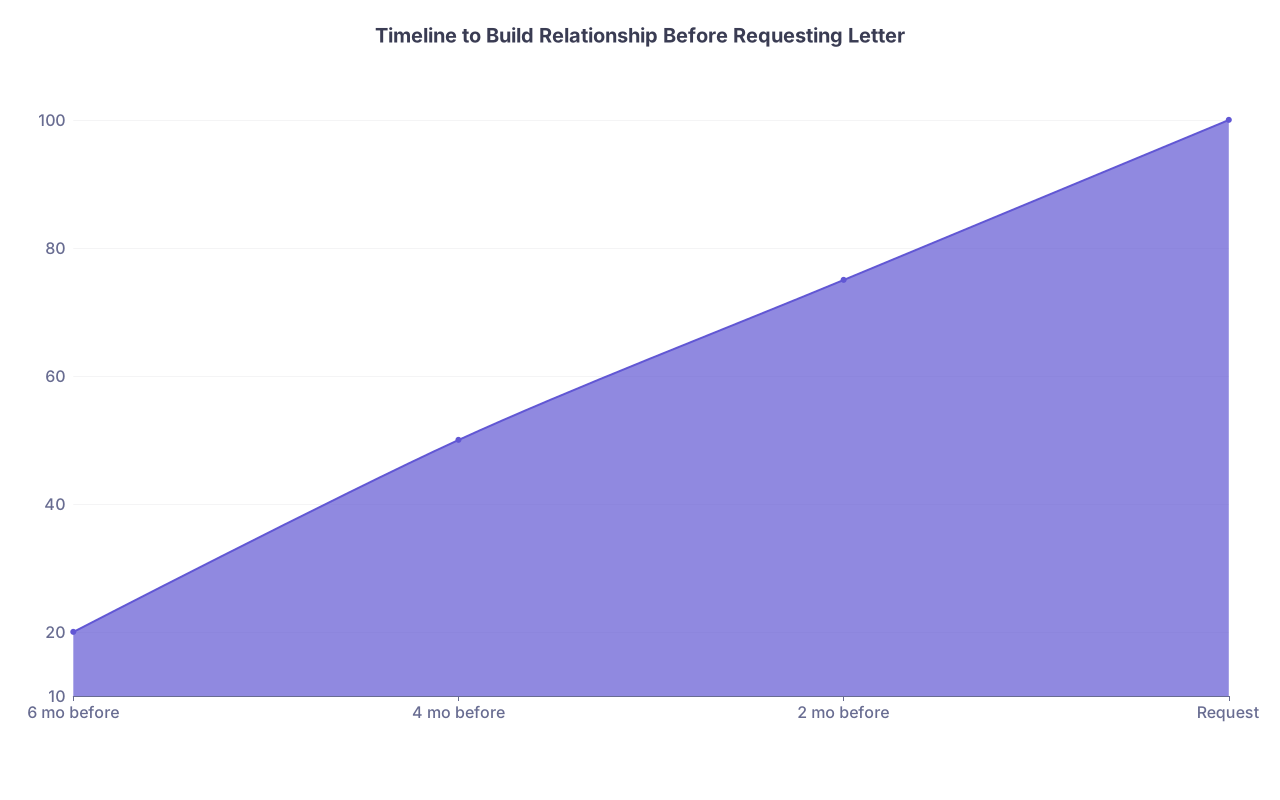
| Category | Value |
|---|---|
| 6 mo before | 20 |
| 4 mo before | 50 |
| 2 mo before | 75 |
| Request | 100 |
(Think of that “100” as “enough interactions to not sound fake in a letter,” not perfection.)
What If I Already Asked… And Now I’m Worried It’s Weak?
This is where the anxiety spikes, right? You already asked. They already submitted. And now you’re reading this thinking, “Oh no. That’s exactly my situation.”
You have limited options, but you’re not completely doomed.
You can:
- Add additional strong letters if the schools allow more than the minimum.
- For future cycles (or if you’re still early enough with some schools), shift which letters go where via your application service (within their rules).
- Focus on crushing every other part of your app—MCAT, personal statement, secondaries, interviews—so one lukewarm letter is just background noise, not the main event.
Adcoms don’t weigh each letter equally. A clearly weak one is bad, yes. But one mildly generic letter among several strong, detailed ones isn’t always fatal.
A Quick Reality Check (Because Your Brain Is Spiraling)
You’re scared that:
- If you don’t use your PI, schools will think you’re not serious about research.
- If you do use your PI, they’ll tank your application with a vague or negative letter.
- There’s some perfect “right answer” that everyone else knows except you.
Here’s the reality:
Most premeds’ PI letters are… fine. Not glowing, not disastrous. Just fine.
Committees see that all the time. They don’t assume a missing PI letter = secret disaster. They assume you picked people who actually know you. Which is what you should be doing.
The only truly bad move is ignoring your instincts and letting someone who barely knows you be the main character of your recommendation package.
FAQs
1. Do I absolutely need a PI letter for MD-only programs?
No. For most MD programs, strong letters from science faculty and people who truly know you are more valuable than a generic PI letter. A PI letter becomes more “expected” for very research-heavy schools, but even there, a weak PI letter isn’t magically better than a strong non-PI letter. If your PI doesn’t know you, you’re not automatically doomed by skipping them.
2. How many times should I have interacted with my PI before asking for a letter?
There’s no magic number, but if you’ve never had a one-on-one conversation, never presented in front of them, and never gotten direct feedback, that’s a problem. Aim for at least a few substantial interactions: a lab meeting presentation, a project discussion, some email exchanges where you show your thinking. If all of that is missing, they don’t have enough material to write a strong letter.
3. Can I ask to read or see my PI’s letter before it’s submitted?
Technically, yes, some PIs will share it with you. But most schools and application services strongly suggest or require you to waive your right to view letters because confidential letters are seen as more credible. If you don’t waive, adcoms may side-eye that. Instead of trying to see the letter, listen to their response when you ask if they can write a strong letter—how they answer that question tells you almost everything you need to know.
4. Is it rude to choose not to use my PI after they agreed to write a letter?
No. Letters are uploaded to a central system, and you choose which ones to send where. You’re not obligated to use every letter that exists. This is your career, your application. If you get the sense their letter will be generic or weak, you can prioritize stronger letters elsewhere. If they ever ask (they probably won’t), you can honestly say you went with people who worked more closely with you day to day.
Years from now, you won’t remember the exact wording of your PI’s emails or how awkward that office meeting felt. You’ll remember that you chose people who actually believed in you to speak for you—and that you trusted yourself enough not to hand your future to someone who barely knew your name.