
The biggest mistake premeds make in their MCAT year is pretending letters of recommendation are a side quest. They are not. They are a parallel project that needs its own timeline.
You are not just “studying for the MCAT.” You are running a 9–12‑month operation with two equal priorities:
- Hitting your target score.
- Turning professors and supervisors into enthusiastic letter writers.
Here is how to schedule that year—month by month, then week by week, then day by day—so you do not torch your MCAT score or end up begging for lukewarm letters in May.
Big Picture: Your MCAT + LOR Year at a Glance
Assume a standard timeline:
- You want to start medical school in Fall 20XX.
- You plan to submit primaries in June of the previous year.
- You will take the MCAT between January–April of that application year.
- You are currently ~12 months out from June submission.
If your dates are different, shift the months but keep the sequence.
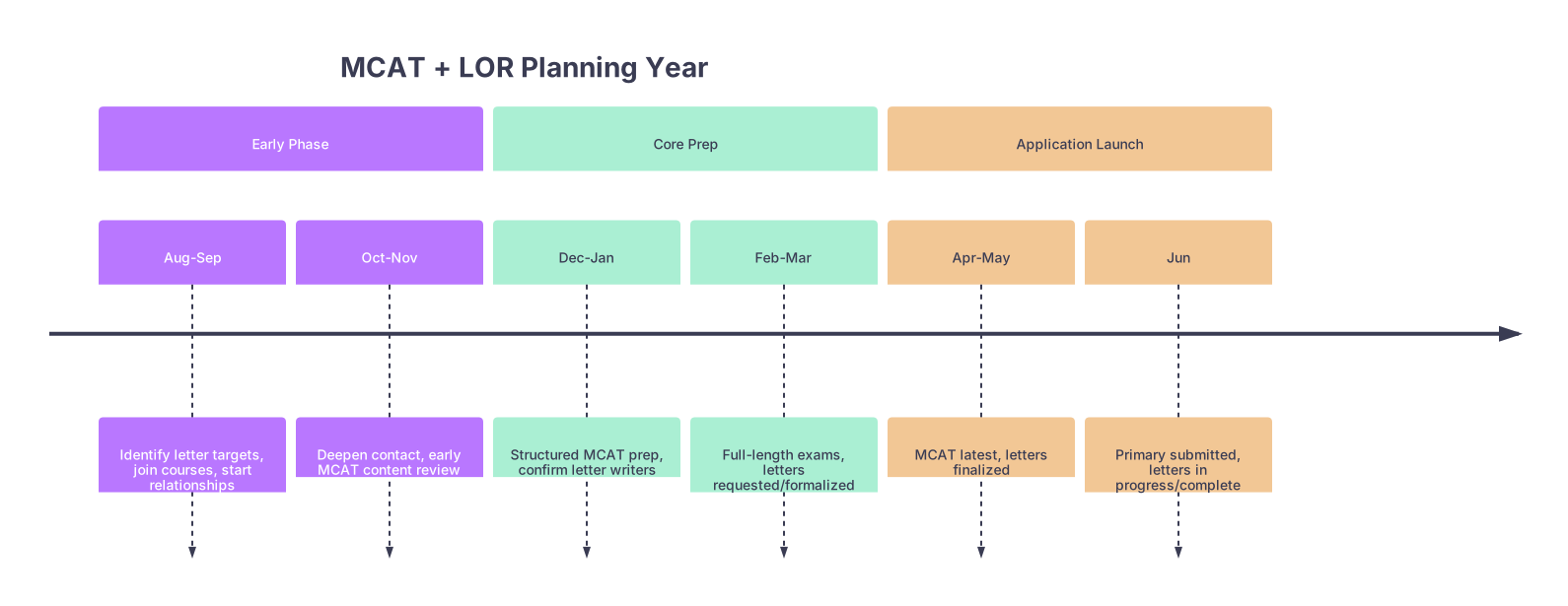
| Period | Event |
|---|---|
| Early Phase - Aug-Sep | Identify letter targets, join courses, start relationships |
| Early Phase - Oct-Nov | Deepen contact, early MCAT content review |
| Core Prep - Dec-Jan | Structured MCAT prep, confirm letter writers |
| Core Prep - Feb-Mar | Full-length exams, letters requested/formalized |
| Application Launch - Apr-May | MCAT latest, letters finalized |
| Application Launch - Jun | Primary submitted, letters in progress/complete |
Months 0–2 Before MCAT Prep: Set the Stage for Letters
At this point you should not be touching Anki decks for the MCAT yet. You are laying the relationship groundwork.
Month 0: Audit Your Future Letter Portfolio
Goal: Decide who you want letters from and position yourself in their orbit.
Most schools want:
- 2 science faculty (biology, chemistry, physics, math)
- 1 non‑science faculty
- 1–2 additional letters (PI, physician, supervisor, advisor)
Step-by-step in Month 0:
Make a target list of 5–7 potential letter writers:
- Science: The professors who know you or could know you well (even if they do not yet).
- Non‑science: Humanities / social science instructor who sees you write or discuss.
- Others: Research PI, clinical supervisor, volunteer coordinator.
Structure your semester or year around these people:
- Enroll in their classes or advanced seminars.
- Join their lab or group if realistic.
- Volunteer in clinics or organizations with stable supervision (same person for 6–12 months).
-
- Send a concise email or talk after class.
- Use lines like, “I’m planning to apply to medical school next cycle and want to engage deeply in this course / project. I expect I’ll be asking for letters then, so I’d like to make sure you really get to know my work.”
Yes, you say it that directly. You are giving them context for why you are investing.
Month 1–2: Show Up and Be Seen
At this point you should be visible and consistent.
Weekly actions:
- Attend office hours every 1–2 weeks.
- Sit near the front. Commit to speaking up at least once per class.
- Hand in work early and ask for feedback.
- In research or volunteering, pick 1–2 projects you will actually stick with all year.
What you are doing here:
- Building a narrative. When they write, they need more than “earned an A.” They need, “By mid‑semester, she was leading group problem‑solving sessions and mentoring other students.”
Months 3–5 Before MCAT: Start MCAT Prep, Deepen Relationships
Now the MCAT enters the picture. Most students start meaningful prep 4–6 months before test day.
Assume MCAT in March → prep begins around October/November.
At this point you should be:
- Stabilizing your relationships with letter writers.
- Beginning structured content review—without ghosting your mentors.
Month 3: Launch Light MCAT Prep (In Parallel with LOR Building)
Targets this month:
- 5–8 hours/week MCAT prep.
- 1–2 high‑quality interactions per week with potential letter writers.
MCAT:
- Diagnose baseline:
- Take a half‑length or low‑stakes diagnostic (not necessarily an official AAMC FL yet).
- Identify your weakest sections.
- Set your test date window.
- Choose your resources and schedule regular blocks.
Letters:
- Convert “I exist” into “I matter here.”
- Ask to help with a small task in lab.
- Volunteer for an extra assignment in class.
- Tell your professor after an exam, “I’m aiming for medical school. If you see ways I can stretch myself in this course, please let me know.”
You are feeding them phrases they will later use.
Month 4–5: Increase MCAT, Start Planting the LOR Seed Explicitly
Increase MCAT commitment to 8–12 hours/week.
MCAT:
- Begin structured content review. For example:
- 4 days/week content (2 hours each).
- 1 day/week mixed practice + review.
- Track scores per topic to see where “dumb mistakes” vs “content holes” live.
Letters: At this point you should begin hinting at letters more clearly.
- Late in the semester, have a short conversation:
- “Next year I will be applying to medical school. If my performance continues at this level, would you be comfortable writing a strong letter for me when the time comes?”
- That phrase “strong letter” matters. It gives them an out if they are lukewarm.
If they hesitate, you listen. Then you replace them on your target list. Weak letters are worse than fewer letters.
Months 6–7 Before Primary Submission: Core MCAT Phase + Formal LOR Commitments
Now you are entering heavy MCAT territory. But this is also exactly when you should secure letters.
Assume:
- MCAT in March.
- Primary submission in June.
So December–January is where the balance gets tricky.
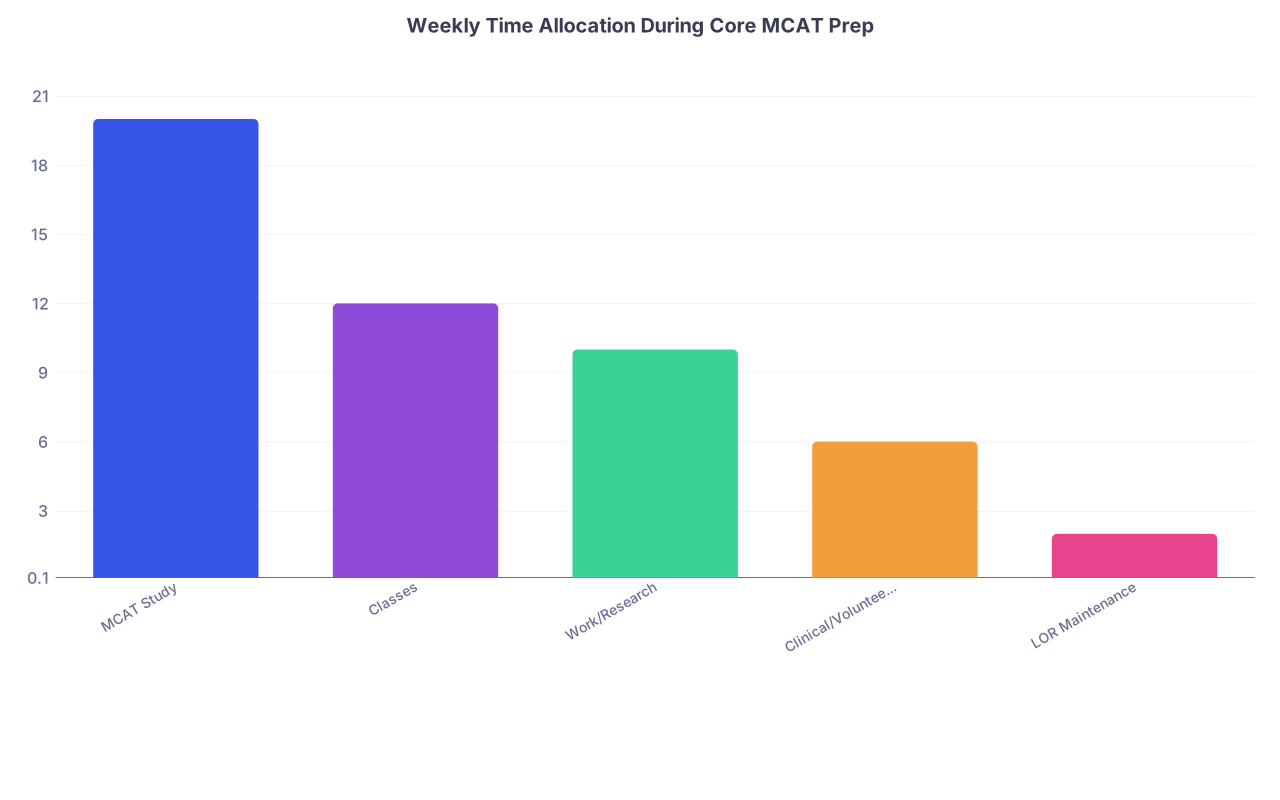
| Category | Value |
|---|---|
| MCAT Study | 20 |
| Classes | 12 |
| Work/Research | 10 |
| Clinical/Volunteering | 6 |
| LOR Maintenance | 2 |
Month 6: Lock in Your Letter Writers
At this point you should:
- Have 3–5 people who know you well.
- Have at least 2 science, 1 non‑science, and 1 “other” lined up.
Tasks this month:
Draft your CV + pre-med resume
- 1–2 pages, tailored to medicine.
- Include GPA, MCAT practice range (optional), research, clinical, leadership, and awards.
-
- Short personal statement (½–1 page) about:
- Why medicine.
- How you know them.
- What you hope they will highlight (work ethic, curiosity, leadership, etc.).
- List of schools (if you have it yet) and your planned timeline:
“I expect to submit my primary application in early June. Letters will be uploaded through [school’s system / Interfolio / AMCAS] by then.”
- Short personal statement (½–1 page) about:
Have the conversation in person if possible Script you can actually use:
- “Professor X, I have really valued this course / research experience and your feedback. I am applying to medical school this coming cycle, with primaries in June and my MCAT planned for March. Would you be willing to write a strong letter of recommendation for me?”
If they say yes:
- Ask what they need from you (CV, draft, statement).
- Ask when they prefer to receive the official request (some like it 1–2 months before, others want it right away).
Month 7: Heavy MCAT, Light Touch Maintenance With Writers
This is peak MCAT season. 18–25 hours/week is common for serious improvement.
MCAT:
- Full content review wrapping up.
- Start weekly full‑length exams (every 1–2 weeks) with deep review.
- Tight schedule: 3–4 hours/day, 6 days/week is typical.
Letters: You cannot vanish. But you do not need massive time.
At this point you should:
- Maintain minimal but meaningful contact:
- Quick email update once a month:
- “Just wanted to update you—I’m scheduled to take the MCAT on March 16. I really appreciate your willingness to support my application. I’ll send the official letter request and materials in April once the systems open.”
- Keep doing your job well in lab, work, or volunteering.
- If a project can wrap up in late spring with a poster or presentation, even better—that becomes a bullet in their letter.
- Quick email update once a month:
2–3 Months Before MCAT: Week-by-Week Balance
Now let’s get more granular. Assume a March MCAT.
10–12 Weeks Before MCAT (Early January)
At this point you should:
- Be in full MCAT mode.
- Have verbal commitments from your letter writers.
Weekly pattern example:
- MCAT: 20 hours
- 3 full review days (content + targeted practice).
- 1 practice passage day.
- 1 half‑length or section-specific test.
- 1 long review block.
- LOR:
- 1 interaction per week max:
- Attending a meeting, sending an update email, or quick chat after class.
- 1 interaction per week max:
Checklist:
- Confirm who is writing:
- 2 science, 1 non‑science, 1–2 others.
- Clean up your resume / CV.
- Start roughing out your personal statement. Your writers will sometimes ask for it.
6–8 Weeks Before MCAT (Early–Mid February)
At this point you should:
- Be taking full‑lengths regularly.
- Have a clear idea of whether your score is in realistic range.
MCAT:
- 1 full-length every 7–10 days.
- Intense review: the review is where half your learning happens.
- Taper content review; emphasize weak areas discovered via FLs.
Letters:
- Send a mid‑semester update email:
- Brief, 5–7 sentences:
- MCAT test date.
- Current projects / responsibilities with them.
- Appreciation for their support.
- Re-confirm that you will follow up in April/May with formal submission links and any forms.
- Brief, 5–7 sentences:
You are reminding them without nagging.
MCAT Month: Protect Your Brain, Maintain the Relationships
2–4 Weeks Before MCAT
At this point you should ruthlessly protect your time.
MCAT:
- Prioritize:
- 1–2 more full-lengths.
- Intensive review.
- Sleep, exercise, and sanity.
Letters:
- Zero new relationship-building.
- Just maintain respect:
- Show up on time to anything you are committed to.
- If MCAT stress affects your lab/volunteer schedule, communicate early.
Example email:
- “I have my MCAT on March 16 and my schedule is very tight for the next 2 weeks. I want to be sure I still meet expectations in lab. Would it be possible to adjust my hours slightly for this short period? After the exam I will be back to my usual schedule.”
People remember professionalism. They also remember flakiness. Choose which memory you want.
Post-MCAT to Primary Submission: Convert Commitments into Actual Letters
Once the MCAT is done, the center of gravity shifts. You still maintain some MCAT review if you plan a retake, but your main job becomes: execute on applications and lock down letters.
Immediately After MCAT (Weeks 1–2)
At this point you should:
- Not touch your score report until you decompress a bit.
- Move straight into application preparation.
Tasks:
- Refine your personal statement.
- Draft your activities section.
- Finalize your school list range (based on GPA and expected MCAT band).
Letters:
- Send a “MCAT done” update to your writers:
- “I took the MCAT on March 16 and am now focusing on my personal statement and primary application, which I plan to submit in early June. I am very grateful you agreed to support my application with a letter.”
You are reminding them: timeline is here.
6–8 Weeks Before Primary Submission (April–Mid May)
This is where letter logistics matter.
At this point you should:
- Send official letter requests.
- Deliver your LOR packets.
System specifics:
- AMCAS: You generate Letter IDs and give those to writers or upload systems like Interfolio.
- AACOMAS / TMDSAS: Slightly different, but similar concept.
Your packet to each writer should include:
Personalized cover email/letter with:
- Your target submission date (e.g., “I plan to submit my primary application the first week of June”).
- How to submit the letter (AMCAS letter ID, Interfolio link, etc.).
- Any deadlines: “It would be extremely helpful if your letter could be uploaded by May 25 so that my application is complete when schools first start reviewing.”
Attachments:
- Resume/CV.
- Draft personal statement.
- Unofficial transcript (helpful).
- Bullet list of 3–5 things you hope they might emphasize:
- “My growth in your course from struggling on the first midterm to scoring in the top 10% on the final.”
- “My leadership in small-group discussions.”
- “My reliability and independence in the lab.”
You are not writing the letter for them. You are giving them ammo.
June: Application Launch and Final Letter Cleanup
Primary Submission Month
At this point you should:
- Have your primary ready to go early June.
- Be tracking letters like a hawk—but politely.
MCAT:
- Review your actual score.
- If it is aligned with your practice FLs and within your target range → proceed.
- If it is dramatically lower, you may need a retake plan; do not decide this alone. Talk to a premed advisor.
Letters:
- Track letter status:
- Make a simple spreadsheet:
- Writer name.
- Type (science, non‑science, other).
- Date requested.
- Date confirmed.
- Date received.
- Make a simple spreadsheet:
- Two weeks before your ideal “complete” date (for many, late June or early July):
- Send gentle reminder emails:
- “I wanted to thank you again for agreeing to write on my behalf. AMCAS is now processing my primary application, and it would be incredibly helpful if your letter could be uploaded by June 25 so that my file is complete for early review. Please let me know if there is anything else I can provide.”
- Send gentle reminder emails:
You do not send reminders every 3 days. You send 1–2 well‑timed, respectful nudges.
Sample Weekly Template During Core MCAT + LOR Window
Here is how a typical week in January–February might look for someone with classes, research, and prep:
| Activity | Hours/Week |
|---|---|
| MCAT Study | 20 |
| Classes (in lecture) | 10 |
| Studying for Classes | 8 |
| Research / Lab | 8 |
| Clinical / Volunteering | 4 |
| LOR Maintenance | 1–2 |
LOR maintenance is tiny on paper:
- One office hours visit.
- One meaningful email or check-in.
- Doing visible, high-quality work where they see you.
But those 1–2 hours, repeated for 8–10 months, are what turn into lines like, “Over the past year, I have watched her grow from a shy participant into a leader in our lab.”
Common Pitfalls and When in the Year They Happen
You are not immune to these. Plan around them.
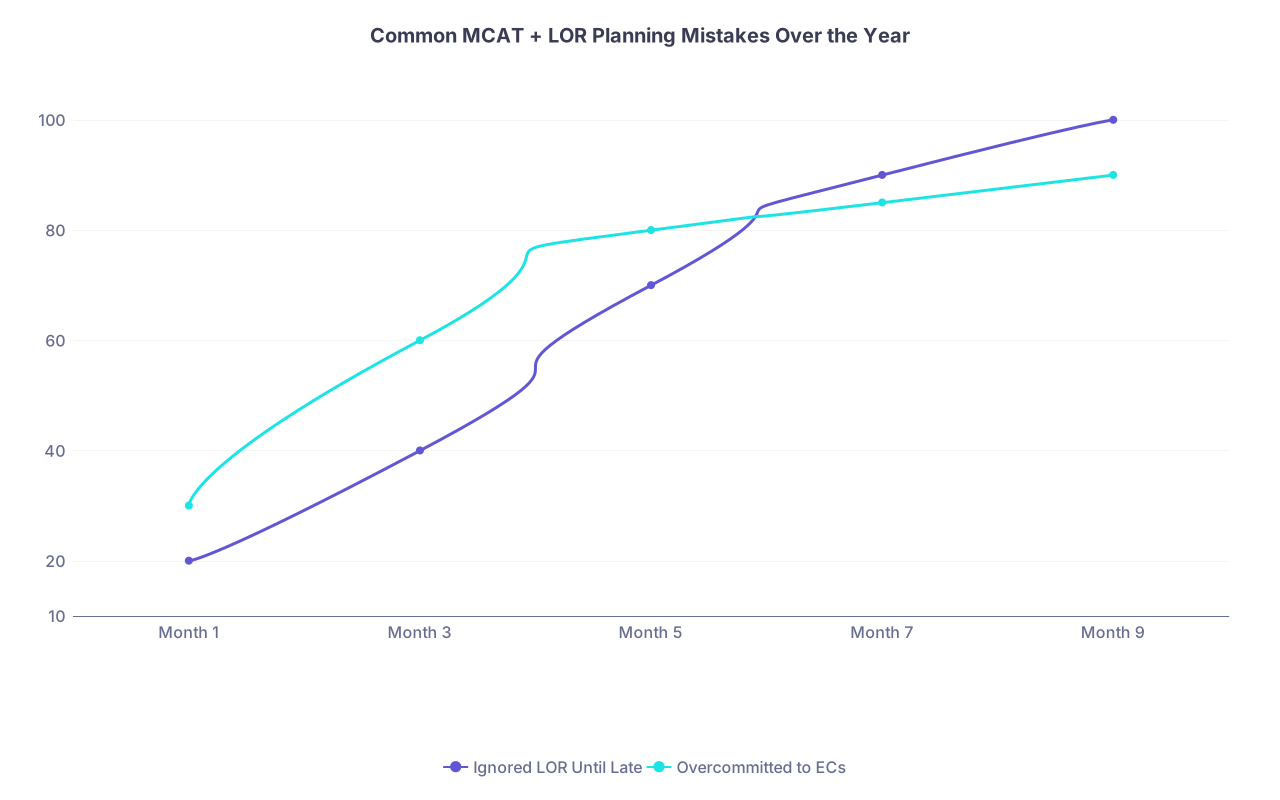
| Category | Ignored LOR Until Late | Overcommitted to ECs |
|---|---|---|
| Month 1 | 20 | 30 |
| Month 3 | 40 | 60 |
| Month 5 | 70 | 80 |
| Month 7 | 90 | 85 |
| Month 9 | 100 | 90 |
- Months 1–3: “I’ll just get letters from whoever I get As with.”
- Wrong. As are common. Relationships are not.
- Months 4–6: Overloading research/volunteering to impress.
- Then you have no energy for MCAT and burn out.
- Months 7–9: Assuming verbal “yes” = timely letter.
- It does not. People forget, travel, get sick, or procrastinate.
Your antidote:
- Early planning.
- Controlled commitments.
- Clear communication.
FAQs
1. When is it too early to ask someone if they might write me a letter?
If you just met them last week, too early. After 4–8 weeks of consistent, meaningful interaction (speaking in class, doing well on assessments, contributing in lab), it is reasonable to say, “I am planning ahead for medical school applications next year and hope to build strong relationships with a few professors. If I continue performing at this level, do you think you might be comfortable writing a strong letter for me when the time comes?” That is not premature; that is strategic.
2. What if my MCAT score ends up lower than expected—do I still use the same letter writers?
Usually yes. Letters are about your longitudinal performance and character, not your MCAT score. If you delay your application by a cycle to retake, you keep those writers warm with updates and, ideally, continued involvement (research, volunteering, advanced courses). The only time you switch is if a writer leaves, retires, or you realize someone else can write a much stronger, more recent letter.
3. How many months of working with someone do I need for a good letter?
Three months can produce a decent letter if you are very engaged and visible. Six months is better. A full academic year is ideal. The year plan I laid out is built to give your best letter writers 6–12 months of observing you. Short, shallow interactions produce generic letters. Long, consistent engagement produces specific stories and strong endorsements.
4. Is it worth slowing down my MCAT timeline to protect my grades and relationships?
Yes. Tanking a semester’s GPA or ghosting your PI to cram for an early MCAT is a bad trade. You can move an MCAT date a few months later; you cannot easily repair a damaged reputation or a 2.9 semester. Your priorities, in order: protect GPA and professionalism, then build strong letters, then schedule MCAT in the earliest window that still allows you to do both well. An April MCAT with strong letters and solid grades beats a February MCAT with burnout and annoyed faculty.
Two things to remember:
- At every point in the year, you are working on both your score and your story.
- Letters do not appear in May; they are earned from August onward, in small, consistent moves.