
The biggest mistake premeds make with letters of recommendation is staying “just a shadow” for way too long.
You do not get a strong letter because you logged hours. You get one because, at the right time, you stopped hovering in the background and built a real working relationship. That shift—from shadowing to mentorship—is what decides whether your eventual letter is generic fluff or a detailed endorsement that moves admissions committees.
Let’s walk through when and how to make that transition, step by step, from early premed through the start of medical school.
Big-Picture Timeline: Shadowing → Mentorship → Recommendation
At this point you should understand the arc you’re aiming for:
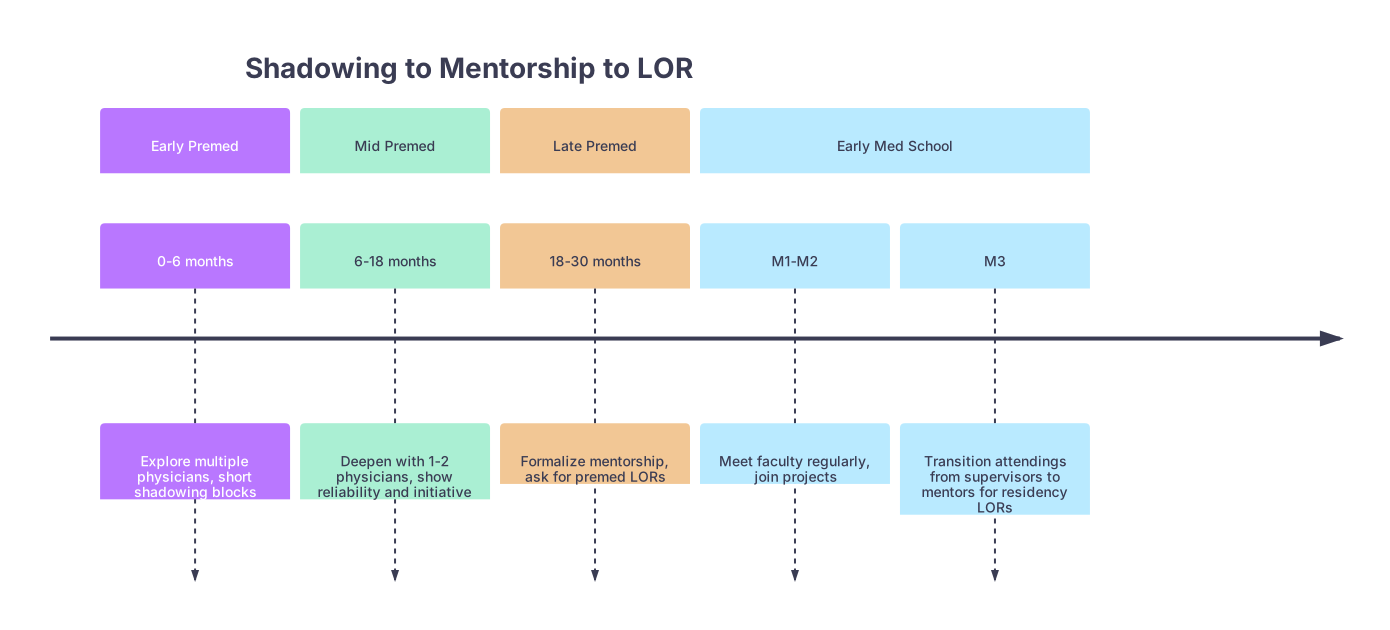
| Period | Event |
|---|---|
| Early Premed - 0-6 months | Explore multiple physicians, short shadowing blocks |
| Mid Premed - 6-18 months | Deepen with 1-2 physicians, show reliability and initiative |
| Late Premed - 18-30 months | Formalize mentorship, ask for premed LORs |
| Early Med School - M1-M2 | Meet faculty regularly, join projects |
| Early Med School - M3 | Transition attendings from supervisors to mentors for residency LORs |
Here’s the core rule:
- Shadowing is passive observation over weeks to a few months.
- Mentorship is an active, ongoing relationship over months to years, with bidirectional trust and real responsibility.
You transition when you’ve:
- Shown up consistently.
- Demonstrated you’re not a liability.
- Given them something to work with besides “shows interest in medicine.”
Now let’s break it down chronologically.
Stage 1: Early Premed (0–6 Months of Clinical Exposure)
At this point you should be in exploration mode, sampling environments and figuring out whom you actually click with.
Months 0–2: Pure Shadowing, No Agenda
Your job here is simple: show up, observe, and avoid being annoying.
You’re usually:
- Doing half‑day or full‑day shadows, once a week or less
- Rotating across multiple physicians/specialties
- Barely on their radar (and that’s fine—for now)
Your goals during this phase:
- Learn basic clinical etiquette: where to stand, when to speak, how to chart nothing.
- Watch how different physicians teach. Some narrate everything, some barely talk. File that away.
- Notice who actually seems to enjoy having you around.
Do NOT try to ask for mentorship or future letters in the first 2–3 encounters. That’s rushing the relationship. You haven’t shown any staying power.
Months 2–4: Narrow to 2–3 Potential Long-Term Mentors
At this point you should start being intentional.
Out of the physicians you’ve shadowed, look for those who:
- Remember your name and ask what you’re up to
- Naturally slip into teaching mode with you
- Comment on your behavior: “You handled that family well,” “Good question,” etc.
Once you’ve shadowed a given physician at least 3–4 separate days, you can lightly shift your stance from “random observer” to “interested future applicant.”
Concrete moves here:
- Before or after clinic, say something like:
- “I’ve really enjoyed shadowing you these last few weeks. I’m thinking seriously about applying to medical school in the next couple of years, and I’d love to keep learning from you if you’re open to it.”
- You are not asking for a letter yet. You’re signaling long-term interest.
This is where many students blow it. They stay in pure observation mode for a year, then suddenly, “Can you write me a letter?” No relationship built, no mentorship, just a favor ask. That’s how you get the two-paragraph “hardworking and punctual” letter.
Months 4–6: Start Acting Like a Protégé, Not a Tourist
By now, with 1–2 physicians you see regularly, you should:
- Show up on a predictable schedule (e.g., every other Tuesday morning).
- Keep a small pocket notebook. Jot down:
- Memorable cases
- Clinical questions to look up
- Things to ask them later (“You mentioned X guideline—where do you like to read about that?”)
At this point you should:
- Begin short debriefs: 5–10 minutes at the end of sessions when appropriate.
- Ask process questions, not just science trivia:
- “How do you decide when to admit vs send home in cases like that?”
- “How did you learn to have that kind of goals-of-care conversation?”
Once you’ve had:
- ~4–6 separate shadowing sessions with someone
- Plus a couple of short, thoughtful conversations
…you’re ready to test the mentorship waters.
Stage 2: The Actual Transition: Shadowing → Mentorship
This transition doesn’t require a ceremony. But it does require intention and timing.
The Right Moment to Ask
At this point you should:
- Have at least 2–3 months of intermittent contact with them.
- Have demonstrated basic maturity: punctual, dressed properly, doesn’t check phone in clinic, doesn’t overshare.
Look for one of these green lights:
- They’ve offered life/career advice unprompted.
- They’ve asked about your long-term plans more than once.
- They use phrases like “If you end up in medicine…” or “For your apps, you’ll want…”
When one of those shows up, that’s your opening.
The ask can be simple:
“I’ve really appreciated learning from you these past few months. I’m starting to look for a few mentors I can check in with as I prepare for medical school. Would you be open to that kind of role for me—maybe occasional emails or meetings to ask for advice?”
You’re not asking for a letter yet. You’re naming the relationship. That matters.
What Changes Once They Say Yes
Now you’re no longer just a shadow. Your behavior should shift in very specific ways:
Regular check-ins
- Every 4–8 weeks, send a concise update:
- What you’re working on
- One specific question
- Appreciation for something you learned from them
- Every 4–8 weeks, send a concise update:
Focused questions
- “I’m planning my next year: scribe job vs more research. How would you think about that at my stage?”
- “I’m building a school list. Do you think my background fits better with state schools or should I stretch for a few research-heavy programs?”
Offer small, real help
- “If you ever need someone to help with basic chart review for a QI project, I’d love to be involved if that’s appropriate at my level.”
- “If the clinic ever runs health fairs or community events, could I volunteer?”
The secret: mentors become good letter-writers after they’ve watched you take their advice seriously over time.
Stage 3: Timeline by Application Year (Premed)
Now let’s anchor this to an actual premed timeline. Assume you plan to apply in June 2027. Here’s how your transition should look.
| Period | Primary Goal | Relationship Status |
|---|---|---|
| Freshman Fall–Spring | Explore shadowing | Short-term observer |
| Sophomore Summer–Fall | Identify 1–2 physicians | Emerging mentee |
| Sophomore Spring–Junior Fall | Active mentorship | Growing trust |
| Junior Winter–Spring | Ask for LOR | Formal recommender |
Freshman Year: Collect Exposure, Don’t Force Mentorship
At this point you should:
- Try 3–5 different settings: primary care, hospitalist, surgery, ED, maybe a subspecialty.
- Track where you naturally keep coming back.
Your only real job freshman year: build options. You don’t need letters yet.
Sophomore Year: Convert 1–2 Shadowing Relationships into Mentorship
Sophomore Summer–Fall:
Now is when that earlier script comes into play. For the 1–2 physicians you’ve seen the most:
- Name them as a mentor.
- Start those periodic, thoughtful emails.
- If they’re academic physicians, ask:
- “Are there any ongoing projects a student at my level could help with? Even basic data entry or literature searches?”
By the end of sophomore year, you should have:
- At least one physician who:
- Knows your story
- Has seen you repeatedly
- Has watched you grow in some obvious way
This person is now a future letter candidate—but you still don’t ask yet.
Junior Fall–Winter: Deepen Before You Ask
At this point you should be about 6–12 months away from your application.
Your goals with your now-mentor:
Have at least one longer (~30–45 min) conversation:
- Medical school selection
- How they chose their specialty
- Any major concerns you have (GPA, MCAT planning, activities gaps)
Share concrete progress:
- “I retook orgo and raised my grade from a C+ to an A-.”
- “I’ve been volunteering at the free clinic for 9 months now, mostly doing triage and patient intake.”
When they see:
- Improvement over time
- Consistency
- Maturity in how you talk about failures
…you’re finally in the right zone to talk about letters.
Junior Winter–Spring: When to Pivot to “Future Recommendation” Mode
At this point you should be 3–6 months away from submitting your primary.
Timeline for asking:
- January–March of your application year is ideal.
- Earlier than that, you look overeager.
- Later than April/May, you start cutting it close—especially for busy clinicians.
How to ask:
“I’m planning to apply to medical school this June, and I’ve really valued your mentorship over the last year and a half. Would you feel comfortable writing me a strong letter of recommendation that speaks to my fit for medicine?”
That word—strong—is intentional. It gives them a polite exit if they’re not the right person.
If they hesitate, or say something like, “I can write you a letter, but I don’t know how much detail I can provide,” thank them and do not use that letter as a primary one. That’s code for “It will be generic.”
What You Should Be Doing at Each Interaction Level
To keep this practical, here’s what changes as you move along the spectrum.
| Stage | Duration Together | Your Behavior | Their Role |
|---|---|---|---|
| Shadowing | 1–3 visits | Observe, brief questions | Teacher in clinic |
| Early Mentorship | 3–6 months | Updates, advice-seeking | Occasional advisor |
| Established Mentorship | 6–18 months | Deeper discussions, small projects | Career guide |
| Letter-Writing Stage | 12+ months | Provide CV, drafts, goals | Advocate & recommender |
You should not be asking for letters in the “Shadowing” phase. Ever. I’ve watched too many physicians agree out of politeness and then write the kind of letter that quietly tanks an application.
How Medical Students Should Time the Transition (For Future Residency Letters)
If you’re already in med school, the same pattern applies—just faster and higher stakes.
M1–Early M2: From Orientation Faces to Real Mentors
At this point you should:
- Attend interest group events and actually talk to the faculty sponsor afterward.
- Pick 1–2 faculty you see repeatedly and request brief advising meetings.
After 2–3 meetings over 6–9 months, you can say:
“You’ve been really helpful as I’m figuring out my path. Would you be open to continuing as a mentor as I move into clinical rotations?”
Again, you’re labeling the relationship.
M3: Clinical Attendings → Mentors → Letter Writers
Here’s where most students procrastinate and then panic.
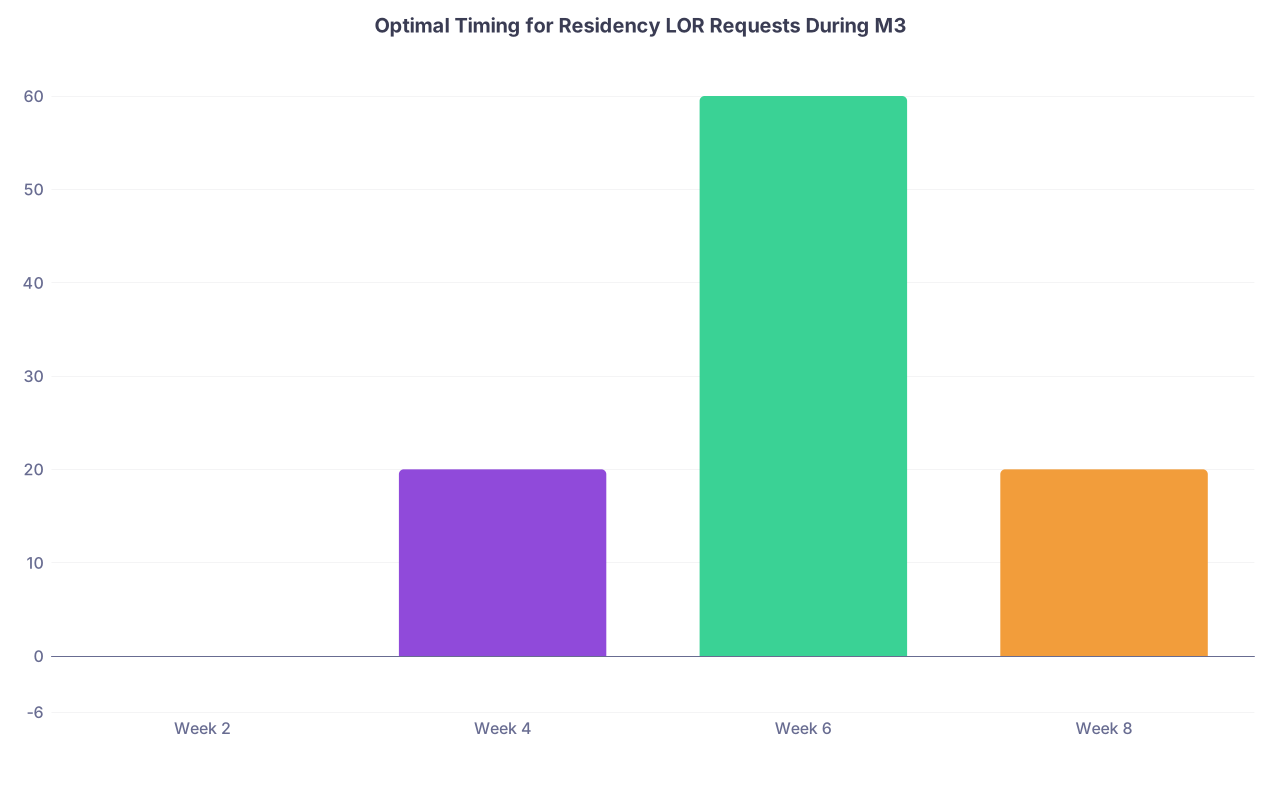
| Category | Value |
|---|---|
| Week 2 | 0 |
| Week 4 | 20 |
| Week 6 | 60 |
| Week 8 | 20 |
On a typical 6–8 week rotation:
- Week 1–2: You’re learning basic workflow and trying not to get lost. Shadowing mode.
- Week 3–4: You’re taking real responsibility, presenting patients, writing notes. This is where you quietly shift into “potential mentee” mode:
- Ask for feedback.
- Schedule a 10–15 minute mid-rotation check-in.
- Week 5–6+: If an attending has seen you consistently and given feedback, this is when you say:
- “I’ve really appreciated your teaching on this rotation. I’m considering [specialty or related field]. If things continue to go well, would you potentially be someone I could ask for a letter down the line?”
That last phrase—“if things continue to go well”—makes it not presumptuous. You’re floating the idea early enough that they can watch you with that in mind.
By the last week of the rotation, if they seemed positive earlier, you can formalize:
“I’ve really valued working with you this block. Would you be willing to write a strong letter of recommendation for my residency applications?”
Then follow up within a week with:
- CV
- Draft of personal statement paragraphs or talking points
- Brief bullet list of 3–4 cases you worked on with them that went well
You’re not writing the letter for them; you’re refreshing their memory so the letter has specifics.
What You Should Bring Once Someone Transitions to “Future Recommender”
At this point—once they’ve said yes to writing a future letter—you stop being casual about this.
Within 1–2 weeks of their yes, send:
- A 1–2 page CV
- A short narrative (½–1 page) that includes:
- Why you’re pursuing medicine (or that specialty)
- How you see your strengths
- Any context for weaknesses they might notice (low semester, gap, etc.)
And here’s the move almost no students do but should:
- Ask them directly:
“Is there anything specific you’d like to see me do or improve on between now and when you write the letter?”
Then actually work on that. Circle back months later and say, “You’d mentioned I should push myself to be more proactive with [X]. Here’s what I’ve done since then.” That’s the kind of growth mentors love to write about.
Red Flags: When NOT to Transition to Mentorship or Ask for a Letter
If at any point you notice:
- They consistently forget who you are even after multiple encounters.
- They give you no feedback, ever.
- Their comments about students or applicants are cynical and dismissive (“They’re all the same, I just sign the forms.”)
At this point you should not push a mentorship narrative. Be polite, get what learning you can, and look elsewhere for long‑term relationships. You only need a few strong advocates, not a dozen lukewarm acquaintances.
Quick Recap: The 3 Things to Remember
- Time + depth = letter quality. You typically need at least 6–12 months of real interaction with someone—beyond pure shadowing—before they can write a strong, detailed recommendation.
- Name the relationship before you need the letter. Shift from “shadow” to “mentee” months or years before you ask for a recommendation. That transition happens with a simple, direct conversation.
- Ask early, with an off‑ramp. About 3–6 months before applications, ask if they can write a strong letter. If they hesitate, thank them and find someone who’s genuinely enthusiastic about advocating for you.