
The way most students ask for letters of recommendation is backwards. They panic two weeks before a deadline, fire off a rushed email, and then wonder why the letter is generic. You’re not going to do that.
You’re going to run a 6‑month campaign with each mentor. Deliberate, paced, and predictable.
Below is a month‑by‑month, then week‑by‑week countdown you can literally map onto your calendar. I’ll assume:
- You’re 6 months out from when you need completed letters in hand or uploaded (medical school, post‑bac, scholarships, whatever).
- You have 2–4 potential letter writers: science professor, PI, physician, maybe a non‑science professor.
I’ll walk through the full timeline for each mentor. Same skeleton, customized slightly based on who they are.
Month 6: Identify, Position, and Send the First Email
At this point you should stop thinking “I’ll ask Dr. X eventually” and lock in a short list.
Week 1–2: Build Your Letter Writer List
Your target: 3–5 strong letters, not 8 mediocre ones.
For each potential mentor, write down:
- Name, title, department
- How they know you (course, lab, clinic, volunteering)
- Time spent with them (hours/week, months)
- Evidence they actually know your work (graded assignments, evaluations, feedback)
Then filter using this rule:
If they couldn’t recognize you walking past them on campus, they’re probably not a primary letter writer.
Ideal premed medical school mix (adjust if needed):
- 2 science faculty (biology, chemistry, physics, etc.)
- 1 additional academic (non‑science or another science)
- 1 clinical supervisor (physician, PA, NP) or PI
- 1 “character / service” supervisor (optional bonus)
| Type | Count | Priority |
|---|---|---|
| Science Faculty | 2 | High |
| Non-Science Faculty | 1 | Medium |
| PI / Research Mentor | 1 | High |
| Physician / Clinical | 1 | Medium |
| Service Supervisor | 0-1 | Optional |
Week 3: Warm Up Each Mentor
Before the first “letter” email, you need a warm touch.
For classroom faculty:
- Go to office hours with a real question (exam review, project idea, topic you liked).
- Mention your long‑term goal once, casually: “I’m planning to apply to medical school next cycle.”
For research mentors:
- Schedule a quick meeting: “Can we talk about how I’m progressing in the lab and what I should aim for over the next few months?”
For physicians / supervisors:
- Ask for feedback: “Could I get 10 minutes sometime this month to hear how I’m doing and how I can improve?”
Do this once with each potential writer. Testing two things:
- Do they seem supportive?
- Do they remember specific things about you without prompting?
If they’re lukewarm, they become backup, not primary.
Week 4: Send the First “Positioning” Email
At this point you should send the first intentional email to each chosen mentor, but notice: you’re not officially asking for the letter yet. You’re framing the next 6 months.
Example subject lines:
- “Planning ahead for med school applications – would value your guidance”
- “Looking ahead to letters for 2026 cycle”
Core email structure (adapt per mentor):
- Remind them who you are and how you know each other.
- State your application timeline (cycle, target submission month).
- Ask for a brief meeting to discuss if they’d be a good person to support you.
Your ask now is a conversation, not a commitment. This does two things:
- Gives them an easy out if they can’t write a strong letter.
- Starts their mental clock that you’re serious and early.
Month 5: Secure the “Yes” and Start Feeding Material
At this point you should convert interest into a clear “Yes, I can write for you.”
Week 1–2: Meeting #1 – The “Fit” Conversation
Schedule and hold a 15–30 minute meeting with each mentor.
Your goals in that meeting:
- Confirm they feel they know you well enough to support you.
- Anchor the final letter deadline in their mind.
- Ask how they prefer to receive your materials (CV, draft personal statement, bullet points).
Ask this exact question:
“Do you feel you know my work well enough to write a strong letter of recommendation for medical school?”
You want the word “strong” in there. If they hesitate, thank them and downgrade them to backup.
If they say yes:
- Confirm: “My goal is to submit all applications by [Month]. Would it work for you if I set your personal deadline for [two weeks earlier]?”
- Ask: “What would make it easiest for you to write this over the next few months?”
Week 3: Assemble Each Mentor Packet
Now you create a custom packet for each letter writer. Not generic. Tailored.
Common core items for all:
- Updated CV or resume
- Unofficial transcript
- Draft personal statement (even if rough)
- List of schools or type of programs
- Absolute letter deadline
Plus a mentor‑specific one‑pager:
For a science professor:
- Course(s) and term(s) you took with them
- Final grade and class rank if known
- 2–3 specific assignments or exams you did well on
- One concrete moment you remember (e.g., “After Exam 2, you encouraged me to…”)
For a PI:
- Projects you worked on, with dates
- Techniques you’ve learned
- Any posters, talks, or papers
- Your independent contributions
For a physician:
- Approximate total hours and dates
- Types of patients / settings
- Responsibilities you handled alone vs supervised
- One or two specific clinical encounters that shaped you
Week 4: Send the Packet + Light Ask
You’re still not setting the final letter request form in motion (like AMCAS/Interfolio) unless they want it early. You’re simply:
- Sending tailored packet
- Restating the plan
- Confirming they’re comfortable with the timeline
Your email at this stage ends with something like:
“I’ll send the official letter request link and final materials around [Month 3 marker], but I wanted you to have everything early so you can think about it on your own schedule.”
That line alone separates you from 90% of applicants.
Month 4: Deepen the Relationship and Update Progress
At this point you should stay present in their mind without becoming annoying.
Week 1–2: Scheduled Check‑In
Book a short follow‑up with each mentor (10–20 minutes).
For professors:
- Bring updated grades or feedback from other courses.
- Ask 1–2 content questions (show you still engage with the field).
- Share 1 meaningful update: “I started volunteering at X clinic” or “I joined Y research project.”
For research mentors:
- Agree on concrete tasks for the next 2–3 months (experiment, analysis, poster).
- Ask what would make your contribution “letter‑worthy.”
For physicians:
- Ask if you can increase responsibility slightly (more note‑writing, more patient education, etc).
Week 3–4: First Formal Reminder (Soft)
You’re still 3 months out. This is the lightest possible reminder.
Short email structure:
- Gratitude for their support.
- Brief update (2–3 bullets, max).
- Re‑state the target deadline they agreed to.
- Ask if they need anything else from you.
Month 3: Official Request and System Setup
At this point you should convert your verbal yes into an official, trackable request.
Week 1: Open Letter Services and Get Links
If you’re premed / applying to medical school, that usually means:
- AMCAS / AACOMAS / TMDSAS letter forms
- Interfolio or another dossier service if you’re using one
- School‑specific forms for special programs or scholarships
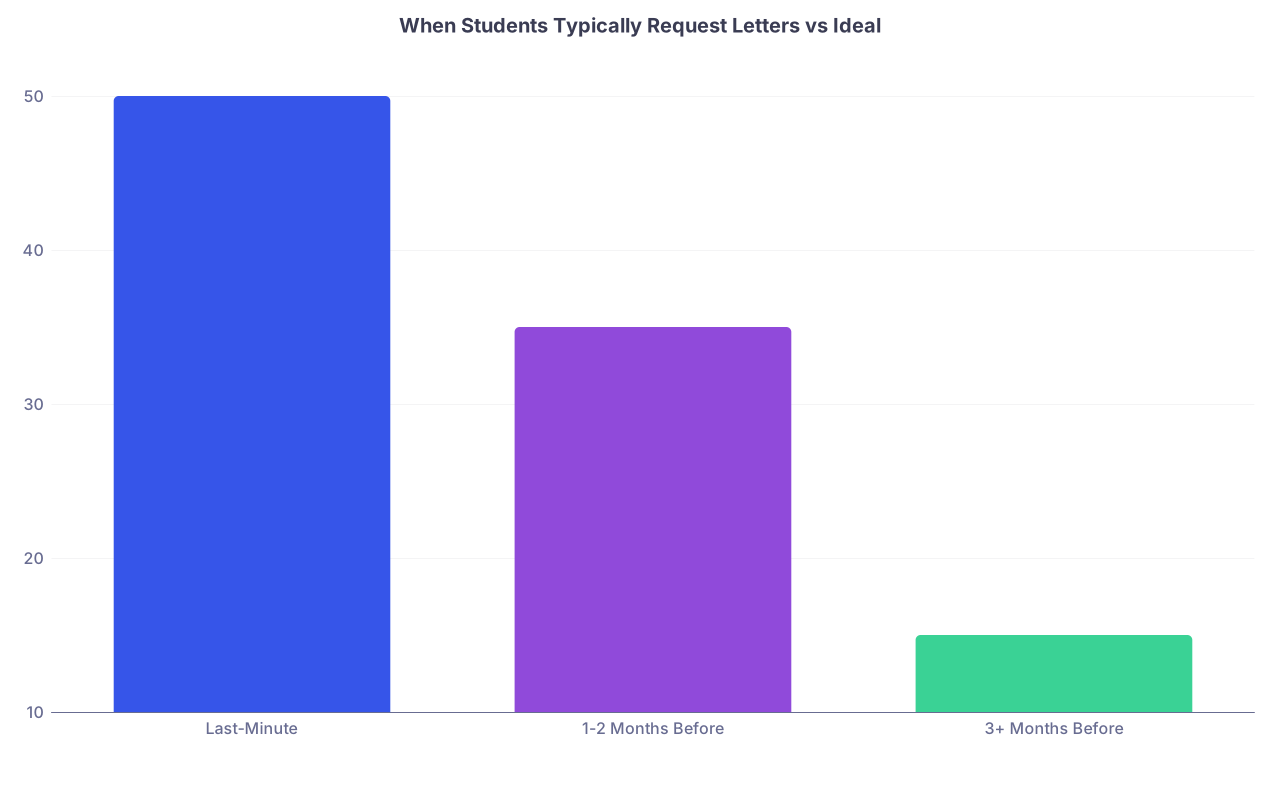
| Category | Value |
|---|---|
| Last-Minute | 50 |
| 1-2 Months Before | 35 |
| 3+ Months Before | 15 |
You’re aiming for the right side of that chart: the 3+ months group.
Generate:
- One unique letter request per mentor (correct designation: “science faculty,” “physician,” etc.)
- A short note on each request matching what you’ve already told them.
Week 2: Send the Official Request Email + Link
This is when you finally say the actual words: “Would you please write a letter of recommendation…”
Your email to each mentor should include:
- The official link/form or Interfolio request.
- Your updated CV and revised personal statement (if improved since last time).
- A tailored bullet list of qualities you hope they’ll highlight.
Be specific. For example, to a PI:
- Independence in the lab (designing parts of experiments).
- Persistence through failed experiments.
- Ability to learn and apply new techniques quickly.
- Communication with the team and in lab meetings.
Do not write their letter for them. But you absolutely can write:
“Programs are especially interested in concrete examples of my problem‑solving, teamwork, and reliability. If any specific situations come to mind where I demonstrated those, that would be incredibly helpful for them to hear.”
Week 3–4: Track Responses and Confirm Receipt
Create a simple tracking sheet (spreadsheet, Notion, notebook, I don’t care, just pick one).
Columns:
- Mentor name
- Type (science, PI, physician, etc.)
- Date of first “Yes”
- Official request sent (date)
- Their stated plan (“Will write by…”)
- Letter received? (Yes/No + date)
- Thank‑you sent? (Yes/No)

Aim to confirm that each mentor has:
- Seen the request
- No obstacles (technical access, institutional rules)
- A clear target date (ideally 4–6 weeks from now, still ahead of your true deadline)
Month 2: Gentle Pressure and Concrete Updates
At this point you should start tightening the timeline without sounding desperate.
Week 1: First Real Reminder
If they haven’t submitted yet, send a reminder that assumes good intent.
Subject: “Med school letter – checking in (2 months out)”
Include:
- One‑sentence reminder of deadline.
- One‑sentence appreciation.
- One short paragraph of updates since you last wrote (interview invites, new responsibilities, grades, etc.).
- Offer to resend links or documents.
Something like:
“I know this is a busy time in the semester, so I wanted to gently check in about the letter of recommendation for my medical school applications, which I’m hoping to have in by [date]. I’ve attached my updated CV and personal statement with a couple of recent additions in case that’s useful.”
Week 2–3: Stay Visible in Real Life
Do not hide.
For professors:
- Attend at least one office hour.
- If you’re no longer in their course, drop by once with a quick update and a thank‑you.
For PIs:
- Double‑down on being reliable in lab. Show up early, stay a bit late, take ownership.
For clinicians:
- Keep showing up prepared, on time, and engaged.
The subtext you want in their head while they’re writing: “This student has been consistently serious for months.”
Week 4: Safety Check – Do You Need a Backup?
At this point, if:
- A mentor is slow to respond
- You’re getting vague “I’ll get to it” emails
- Or your gut says they’re overwhelmed
You quietly start Plan B.
That means:
- Identifying 1–2 backup writers (TA who knows you well, another clinical supervisor, a course director from a smaller class).
- Initiating a compressed version of the earlier steps: quick meeting, tailored packet, and a very honest explanation that you had a writer become unavailable and would be grateful if they could support you.
Do not wait until two weeks before your deadline to do this. Month 2 is your buffer.
Month 1: Final Push, Confirmations, and Damage Control
At this point you should stop assuming anything and verify everything.
Week 1: Firm Reminder with Clear Deadline
If a letter is still outstanding, your tone shifts slightly more direct, still respectful.
Subject: “Med school letter – approaching final deadline”
Key elements:
- Exact date you need the letter.
- Acknowledgement of their time.
- Gentle statement that your application can’t be submitted or complete without it.
Example:
“I wanted to quickly follow up about the letter of recommendation for my medical school applications. My goal is to have everything finalized by [date], and your letter is an important part of completing my file. I’m very grateful for your support and know this is a significant favor.”
Attach documents again. Include the link again.
Week 2: Direct Check‑In (If Local)
If they’re on campus or in your hospital:
- Stop by office hours.
- Or ask the admin/assistant if they have a preferred way for students to check on letters.
In person, you can say:
“I just wanted to make sure everything is working correctly with the online system for my letter. If it’s more convenient, I can resend the link or provide a stamped addressed envelope.”
Tone: calm, respectful, slightly urgent but not panicked.
Week 3: Implement Backup Fully If Needed
If, by now, a mentor still hasn’t submitted and isn’t responding clearly:
- Activate your backup writer for real.
- Give them a slightly later but still manageable deadline.
- Explain the situation honestly but without throwing the original writer under the bus.
For example:
“One of my original letter writers had an unexpected schedule change and hasn’t been able to complete the letter, so I’m hoping you might be able to step in and support my application.”
You may end up with an extra letter if the original finally comes through. That’s fine. Programs can handle one more strong letter.
Final 2 Weeks: Confirm, Thank, and Close the Loop
At this point you should move from asking to appreciating.
Day‑Level Checklist: 10–14 Days Before Deadline
For each mentor:
Check your application portal or letter service:
- Status says “Received”? Good.
- Still “Requested”? You’re not done.
If submitted:
- Send a same‑day thank‑you email. Be specific:
- “I know you’re in the middle of midterms / grant season / call nights; I really appreciate you taking the time to write on my behalf.”
- Send a same‑day thank‑you email. Be specific:
If not submitted:
- One last, very clear reminder, reiterating the hard deadline.
Day‑Level Checklist: 3–5 Days Before Deadline
This is the absolute last window for problem‑solving.
- Double‑check:
- All letters attached to the correct application ID
- No duplicate or wrong designations (e.g., physician letter labeled “non‑academic” if the program needs “clinical”)
- For any still missing:
- Quick email + short in‑person visit if possible.
- Simultaneously, alert your backup if you’ve truly hit crisis mode.

| Period | Event |
|---|---|
| Month 6 - Identify writers | Shortlist mentors |
| Month 6 - Warm visits | Office hours & check-ins |
| Month 6 - Positioning emails | Plan meeting |
| Month 5 - Fit meetings | Confirm strong yes |
| Month 5 - Build packets | Tailored materials |
| Month 5 - Send packets | Light ask |
| Month 4 - Check-ins | Progress meetings |
| Month 4 - Soft reminder | Email update |
| Month 3 - Set up systems | AMCAS/Interfolio |
| Month 3 - Official requests | Send links |
| Month 3 - Track status | Spreadsheet |
| Month 2 - Gentle reminders | Email + updates |
| Month 2 - Visibility | Office hours & clinic |
| Month 2 - Backup planning | Identify alternates |
| Month 1 - Firm reminders | Confirm deadlines |
| Month 1 - In-person check | Office visits |
| Month 1 - Backup activation | If needed |
After Submission: Real Thank‑Yous and Future Positioning
You’re not done when the letters are in. You’re done when you’ve closed the loop.
Once your applications are submitted and you start hearing back:
- Email each mentor:
- Let them know your file is complete.
- Share any early good news (secondaries, interviews).
- When you get outcomes:
- Send a short note with where you were accepted and where you’re going.
- For your key mentors, write a handwritten note. Yes, on actual paper.

These people can help you again: scholarships, research positions, residency letters. You’re playing long‑term.
How This Looks With One Example Mentor
Let me tie this together with one concrete person: Dr. Chen, your Organic Chemistry professor.
Month 6
- Week 2: You attend office hours, ask about reaction mechanisms, mention med school.
- Week 4: You email: “I’d love your guidance as I plan for letters over the next 6 months.”
Month 5
- Week 2: Meeting in office. You ask if she can eventually write a strong letter. She says yes.
- Week 3–4: You send her:
- CV
- Transcript
- Draft personal statement
- One‑pager listing: your exam scores, final grade (A), group project you led, and the time she told you your problem‑solving was strong.
Month 4
- Week 2: You stop by office hours, update her on your research and volunteer work.
Month 3
- Week 1: You generate AMCAS letter request labeled “Science (Faculty).”
- Week 2: You send the official link with a short email, including 3 bullet points about what she’s seen you do.
Month 2
- Week 1: You send a gentle reminder with updates and offer to resend everything.
Month 1
- Week 1: You send a firm reminder: “I hope to have all letters in by June 10.”
- Week 2: You check AMCAS; her letter appears as “Received.”
- Same day: You send a thank‑you email.
Post‑acceptance
- You write: “I’ve been accepted to University of Michigan and will be starting there this fall. Your support and your class were a big part of getting me here.”
Multiply that process by each mentor. That’s your 6‑month system.
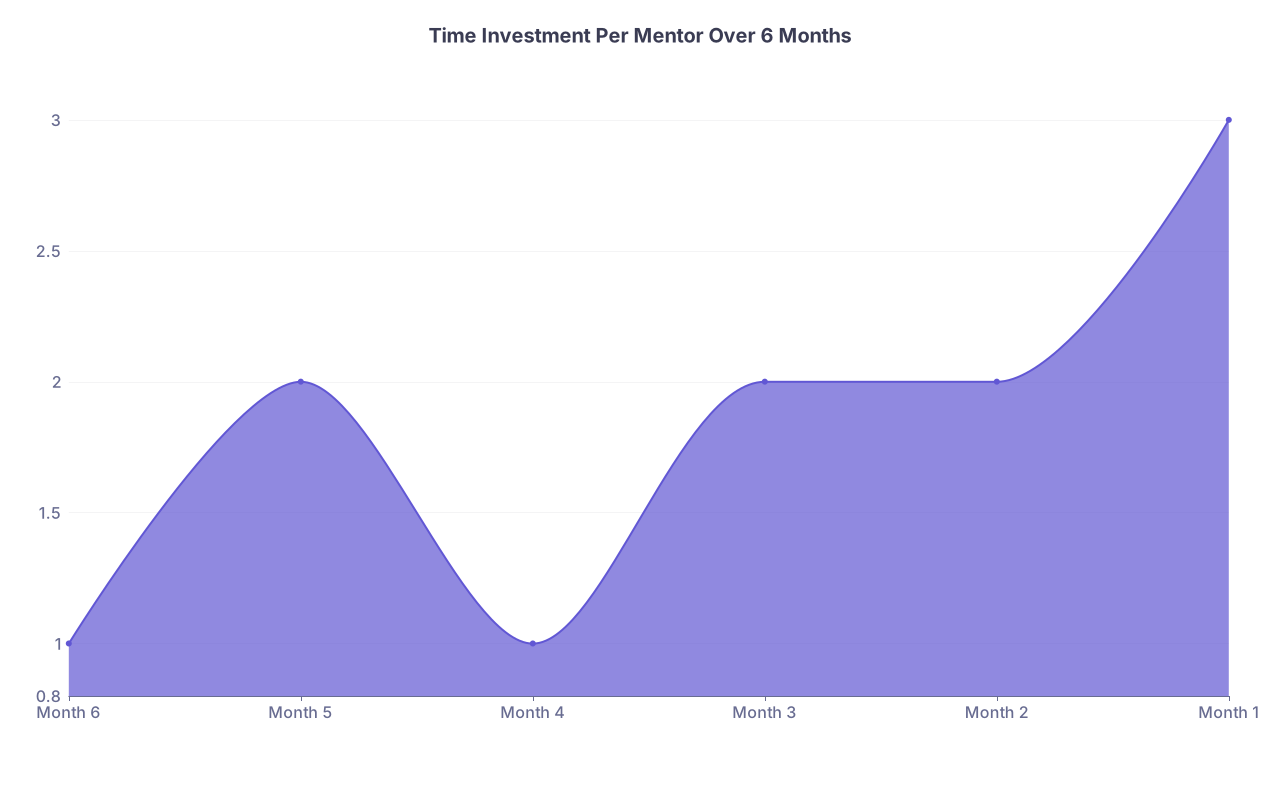
| Category | Value |
|---|---|
| Month 6 | 1 |
| Month 5 | 2 |
| Month 4 | 1 |
| Month 3 | 2 |
| Month 2 | 2 |
| Month 1 | 3 |
You’re looking at maybe 10–12 hours per mentor spread across half a year. That’s nothing compared to the impact of a letter that actually sounds like you.
Today’s next step is simple:
Open a blank page and list five possible letter writers. Next to each name, write how many real conversations you’ve had with them in the last 3 months. Then pick the top three and put a 30‑minute “letter planning” meeting with each of them on your calendar within the next two weeks.