
It’s late August. You’re in that awful in‑between where your primary’s in, secondaries are rolling, and now you’re staring at the “Letters of Recommendation” section like it’s a trap.
You’ve got three names typed in.
A big‑name PI.
A “knows you well” professor.
And a physician you shadowed.
On paper, this looks solid.
In reality, you might have just built a landmine section that an adcom will spot—and penalize—within 20 seconds of opening your file.
Let me tell you what really happens on the other side of that portal.
I’ve sat in those committee rooms where 40–60 applications get reviewed in a morning. I’ve watched a room of attendings and PhDs flip to the letters, scan the first paragraph, and say: “Weak letter.” Then move on. No discussion. No benefit of the doubt. Just a quiet, collective “nope.”
The red flags often aren’t in your file. They’re in your writers. And most premeds are completely blind to them.
Let’s walk through the things adcoms see—instantly—that you never do.
1. The “Big Name, Tiny Effort” Writer
You think: Famous PI = huge boost.
Adcoms think: “Oh. Another one of Dr. X’s three‑sentence ‘I barely know this kid’ letters.”
This is the first trap.
There’s a very short list of faculty whose letterhead actually moves the needle. I’m talking: department chairs who actually write good letters, research giants who take time to mentor, long‑time admissions insiders. Not just “published” or “well‑known in the department.”
Here’s the part students never see: adcoms start to profile writers, not just applicants. They remember patterns.
“We know Dr. ___ doesn’t really write strong letters.”
“I’ve never seen a detailed letter from that PI.”
“Oh boy, another copy‑paste from that surgery group.”
And yes, they say this out loud.
The classic big‑name red flags:
Ultra‑short letters
Half a page. Maybe three short paragraphs. Very little detail.Translation in committee discussion:
“They worked in the lab, probably did what they were asked, but this mentor didn’t know them or didn’t care enough to write.”Generic praise with no receipts
“Hard‑working.” “Pleasure to have in the lab.” “Completed assigned tasks.”Without specific examples of your work ethic, independence, problem‑solving, or ownership of a project, those adjectives are empty. Adcoms have seen thousands of them. They ring hollow.
Obvious template reuse
Faculty who change your name and a few nouns and send the same letter for every student.The committee members who review the same school’s applicants year after year start recognizing these templates. Once a writer is known for “template letters,” their future letters are quietly discounted. Big name or not.
Bottom line: a famous letterhead with weak substance is worse than a solid mid‑tier professor who knows you cold.
If you have to choose, pick the strong writer, not the prestige signature.
2. The “Knows You” Writer Who… Actually Doesn’t
Students love to say, “I’ll ask Dr. Smith, she really likes me.”
Does she? Or does she vaguely recognize you from the front row?
On the adcom side, weak “knows you” letters are painfully obvious:
- No mention of specific conversations or interactions
- No reference to a project, email, or topic you discussed
- No concrete description of how you grew over time
Instead you get:
“Juan was a quiet but attentive student in my course. He regularly attended class and did well on the exams. He was respectful and punctual.”
That’s not a recommendation. That’s an attendance report.
What adcoms infer:
- You didn’t cultivate any deep mentorship relationship
- You might not have anyone who truly knows your character
- You scrambled when it was time to request letters
I’ve watched files where the committee literally flipped past the first letter after 20 seconds, looked annoyed, and said:
“Okay, that’s not helpful. Do we have anyone who actually supervised them closely?”
If the answer is no, you’re done. Not rejected solely for that reason, but your application loses that critical qualitative boost.
Reality check: what “knows you well” actually looks like
Letters that are taken seriously usually include:
- A specific story: “During our weekly meetings, she…”
- Evidence of longitudinal contact: “Over the past two years…”
- Clear context of comparison: “Among the ~200 students I’ve taught in the last 5 years, he ranks in the top 5…”
If your potential writer can’t quickly recall a concrete story about you without digging through emails, they probably shouldn’t be writing a core LOR.
3. The Lukewarm Language That Screams “Do Not Take”
There’s a dark little codebook of LOR language that adcoms learn to read fluently. Believe me, it’s not subtle.
You see: “He is reliable and completes assigned tasks.”
They see: “He does the bare minimum and I have nothing else to say.”
You see: “She is quiet but respectful.”
They see: “Non‑engaged, forgettable, not a leader, not particularly impressive.”
You see: “I can recommend her for medical school.”
They see: “This writer is avoiding ‘strongly’ or ‘enthusiastically’ for a reason.”
Here’s what faculty say when no students are around:
“If I don’t want to help them get in, I’ll write a ‘factual letter’ and let the wording speak for itself.”
They’ll almost never write, “Do not admit this student.” They’ll simply avoid powerful endorsements.
Pay attention to these negative-by-omission patterns:
- “Recommend” vs “strongly recommend” vs “enthusiastically recommend”
- “Has potential to succeed” – translation: hasn’t shown it yet
- “Performed adequately” – translation: I’m being polite
- “Met expectations” – translation: did not exceed them
Adcom members have all been letter readers for years. They know this code. They’ve used it themselves.
You cannot 100% control what someone writes. You absolutely can control who you choose, and whether that person is actually enthusiastic about you or just being polite.
If you’re not sure, ask outright:
“Do you feel you can write me a strong and detailed letter of recommendation for medical school?”
If there’s any hesitation, any pause, any “Well, I can write you a letter,” that is a quiet no.
4. The Time‑Bomb Writer: Disorganized, Late, or Passive‑Aggressive
You want to know one of the fastest ways to quietly kneecap your application? Pick a writer who’s notoriously disorganized.
There are faculty every advising office knows: brilliant in the OR, catastrophic with deadlines. Adcoms see their names and think, “We’ll see this letter… maybe… after three reminder emails.”
Here’s the part that hurts you: late letters can affect how your file gets read.
Some schools don’t mark your file complete until all letters are in. While your dream school is drowning in applications in October, your file might still be sitting in “incomplete” because Dr. Last‑Minute hasn’t uploaded.
And then there’s the darker version: the passive‑aggressive “I’ll write it but I’m not a fan” letter.
You don’t see it, but committee members do. The wording is brutal in a quiet way:
- “She sometimes struggled with deadlines.”
- “He required more supervision than typical students at his level.”
- “She improved over time, though earlier performance was inconsistent.”
Faculty who are annoyed at you, who felt you were entitled, who watched you come late to lab or leave early from clinic—they will encode that in the letter. Without your knowledge.
If you’ve ever:
- Flaked on a commitment
- Ghosted a project
- Shown up late repeatedly
- Treated “volunteering” like a checkbox instead of a responsibility
You should not be asking that person for a letter. Period.
5. The Misaligned Writer: Great Person, Wrong Lens
This one stings because it often involves people you love.
The pastor who’s known you since childhood.
The coach who watched you grind for years.
The family friend who’s a lawyer and thinks you walk on water.
Their sentiment may be genuine. Their letter may read beautifully. But on the adcom side, a certain unspoken hierarchy absolutely exists.
| Writer Type | Typical Impact on Med School Adcoms |
|---|---|
| Science faculty (core premed) | High |
| PI / research mentor (longitudinal) | High |
| Physician who directly supervised | High |
| Non-science faculty (substantial) | Moderate |
| Non-academic professional mentor | Low–Moderate |
That pastor writing “He is the finest young man I’ve ever known” will make people smile. It will not replace the missing science faculty letter.
Common misalignments adcoms notice immediately:
Shadowing‑only physician letter that’s 90% fluff: “He was always present, polite, and eager to learn.”
Translation: You stood in the corner and didn’t cause problems. That’s the minimum, not a recommendation.Employer letter from a low‑accountability job: retail, basic desk work, anything where your “responsibilities” were: show up, be polite, clock out. It can help slightly, but it won’t rescue weak academic letters.
Friend/family‑adjacent letter: faculty friend of your parents, physician who “knows the family,” people you’ve never worked with directly in a structured role. Adcoms can smell these from a mile away.
Use these as supplemental letters if the school allows. Never as your core academic or clinical anchors.
6. The Invisible Risk: Writers with Quietly Bad Reputations
Here’s the part nobody tells premeds: adcoms sometimes know your letter writers better than you do.
They’ve:
- Sat on committees with them
- Heard hallway gossip about their students
- Read 20 of their letters over the last five cycles
So when a committee member sees:
“Letter from Dr. ___ in Biochemistry”
they may already have an internal reaction:
- “This person is notoriously stingy with praise. A ‘strong’ from them is gold.”
- “This one writes novels. We need to skim for actual content.”
- “This one writes letters for everyone. They don’t filter.”
- “This one uses letters to vent about students.”
You will have no idea this is happening.
I’ve seen cases where the name of the writer immediately lowered expectations. The committee was already interpreting the letter through a cynical lens before even reading the first line.
You can’t fully fix this, but you can do your homework:
- Ask older students: “How was their letter? Detailed or generic?”
- Ask advisors: “Do you know if Dr. X is known to write strong premed letters?”
- Watch faculty behavior: Do they seem invested in student futures, or burned out and transactional?
If multiple students say, “Yeah, they wrote it, but I don’t think it helped much,” believe them.
7. What Strong, Non‑Red‑Flag Letters Actually Look Like
Let’s flip the script for a minute. Here’s what makes committee members sit up instead of tune out.
Strong letters usually have:
- Clear context: how they know you, how long, in what role, and against what comparison group
- Concrete examples: a specific lab challenge, a patient interaction, a teaching moment
- Evidence of growth: you didn’t just show up impressive; you improved
- Explicit endorsement language: “I give my strongest possible recommendation” or “I would rank her among the top X% of students I have taught”
And the tone matters. Strong letters sound like the writer is trying to convince someone.
A bland strong letter:
“John did well in my course. He was hardworking and respectful. I recommend him for medical school.”
A serious strong letter:
“Among the ~300 undergraduates I’ve taught in organic chemistry over the last decade, John stands out in the top 5 for his combination of intellectual curiosity, discipline, and maturity. I give him my unqualified and strongest recommendation for medical school.”
Adcoms read letters all day. They know when a writer is sticking their neck out versus phoning it in. The difference is obvious.
8. How to Avoid Walking into These Traps
Let’s be practical. Your power isn’t infinite, but you have more control than you think.
First: your LOR strategy needs to start 6–12 months before you ever request a letter.
I’m serious. Here’s the actual timeline of how strong letters happen:
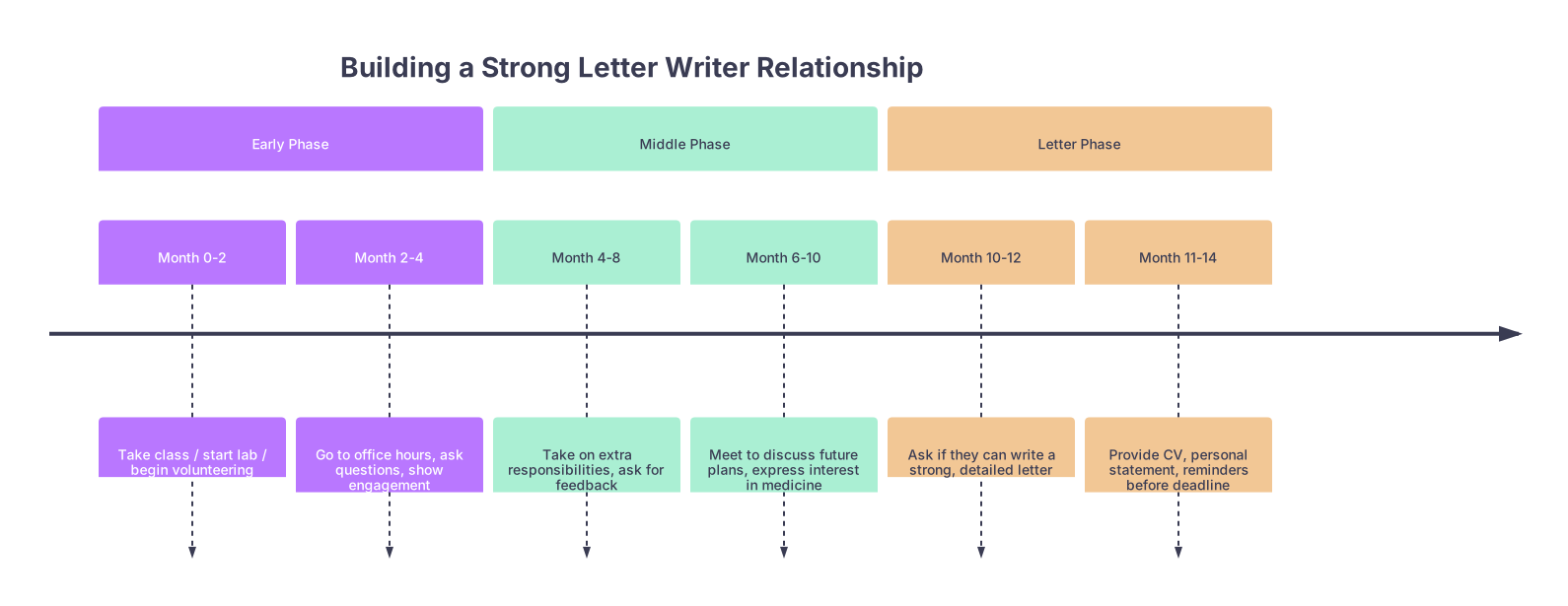
| Period | Event |
|---|---|
| Early Phase - Month 0-2 | Take class / start lab / begin volunteering |
| Early Phase - Month 2-4 | Go to office hours, ask questions, show engagement |
| Middle Phase - Month 4-8 | Take on extra responsibilities, ask for feedback |
| Middle Phase - Month 6-10 | Meet to discuss future plans, express interest in medicine |
| Letter Phase - Month 10-12 | Ask if they can write a strong, detailed letter |
| Letter Phase - Month 11-14 | Provide CV, personal statement, reminders before deadline |
Notice what’s not in there: “Ask them cold two weeks before AMCAS opens.”
Concrete moves you should be making:
Pick for relationship + vantage point, not just title.
Someone who saw you take initiative, struggle a bit, then excel is way more powerful than a distant big‑deal name.Ask the right question.
Not “Can you write me a letter?”
Ask: “Do you feel you can write me a strong, detailed letter of recommendation for medical school?”The word “strong” forces them to self‑filter. If they waffle, let them off the hook gracefully.
Arm them with specifics.
Send a short bullet list (yes, this is one of the few times bullets are useful) of concrete things they might not remember:
a project you led, a patient interaction they witnessed, feedback you incorporated. This pushes them toward story‑based writing instead of bland adjectives.Don’t overload any single “meh” writer.
If someone can only speak to one narrow part of you (say, a semester of lab work where you weren’t primary), that’s fine as a secondary letter. Don’t build your entire LOR core out of those.Have a backup.
At least one alternate writer you’ve been cultivating. People bail. People move. People get sick. Or they just don’t deliver a letter on time.
This isn’t paranoia. It’s just how the game is actually played.
9. Behind Closed Doors: How Letters Really Get Read
Let me pull the curtain all the way back.
In a typical committee meeting, the file reviewer or dean flips through:
- MCAT, GPA, trend
- Personal statement, experiences
- Then: letters
They don’t carefully dissect every line. They skim for 3 things:
- Is there at least one truly strong academic letter?
- Is there at least one meaningful clinical or research letter?
- Any red flags or veiled concerns?
If the letters are all generic, non‑committal, or lukewarm, the narrative becomes:
“Solid numbers, fine activities, but no one went to bat for them. No one seems blown away by this applicant.”
That is deadly in a crowded pool.
On the flip side, I’ve watched average stat applicants get a serious second look because of a single, exceptional letter:
- “If this student does not get into medical school, we will have lost a truly rare physician‑in‑the‑making.”
- “I invited him to co‑present at a national meeting—something I’ve only done twice in 15 years with undergraduates.”
When a letter reads like that, the committee pauses. They argue for you, not against you.
The difference started a year before you clicked “request letter,” long before your AMCAS existed.
10. Quick FAQ – The Blunt Answers You Actually Need
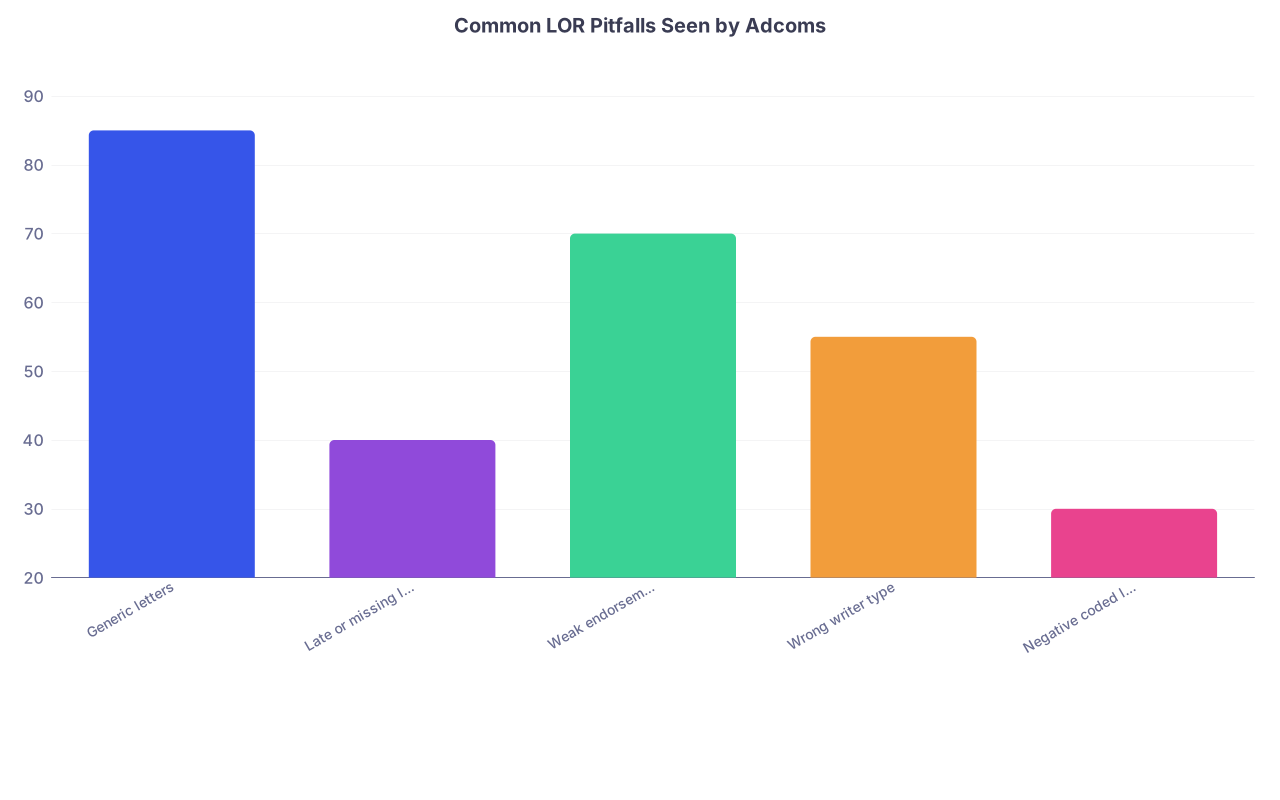
| Category | Value |
|---|---|
| Generic letters | 85 |
| Late or missing letters | 40 |
| Weak endorsement language | 70 |
| Wrong writer type | 55 |
| Negative coded language | 30 |

FAQ 1: Is a short letter automatically bad?
Not automatically, but usually, yes, it’s a bad sign.
If the letter is half a page but every line is loaded with concrete examples, clear comparisons, and a strong endorsement, you’re fine. That’s rare.
Most short letters are short because the writer:
- Didn’t know you well
- Didn’t care enough
- Was doing a favor for advising or a colleague
Adcoms have seen too many of these. The assumption is: “This writer had nothing substantial to say.”
If you suspect a writer tends to dash off short, generic letters, do not make them a core writer.
FAQ 2: What if my school requires a committee letter and it’s not flattering?
This is touchy, and I’ve seen it sink people.
Committee letters that are bland, “balanced,” or faintly critical are interpreted as:
- “This student is fine, but we are not strongly endorsing them.”
And med schools know your home institution’s committee norms. For some schools, a committee letter is basically: “We’re standing behind this person.” For others, it’s a 4‑page data dump with lightly coded opinions.
If you’re worried:
- Meet with advising early (year before you apply)
- Ask bluntly: “Are there any concerns that might appear in a committee letter?”
- Fix what you can—professionalism, timing of coursework, MCAT, etc.
If your school allows you to bypass the committee letter (some do, some don’t), realize that raises eyebrows too. Programs ask: “Why didn’t they get the committee letter?”
Bottom line: do not treat committee letters as a formality. They’re part summary, part institutional endorsement.
FAQ 3: Should I ever waive my right to see my letters?
Yes. Almost always, yes.
Adcoms look at whether you waived your rights. Non‑waived letters are automatically suspect. Committees think, “The writer may have pulled punches knowing the student would read it.”
The only time I’d even consider not waiving is if:
- You have a very shaky relationship with the writer (in which case, why are you asking them?), or
- You have reason to believe the writer might be vindictive (again: do not use them)
If you don’t trust someone enough to waive your right, you probably shouldn’t trust them with your application.

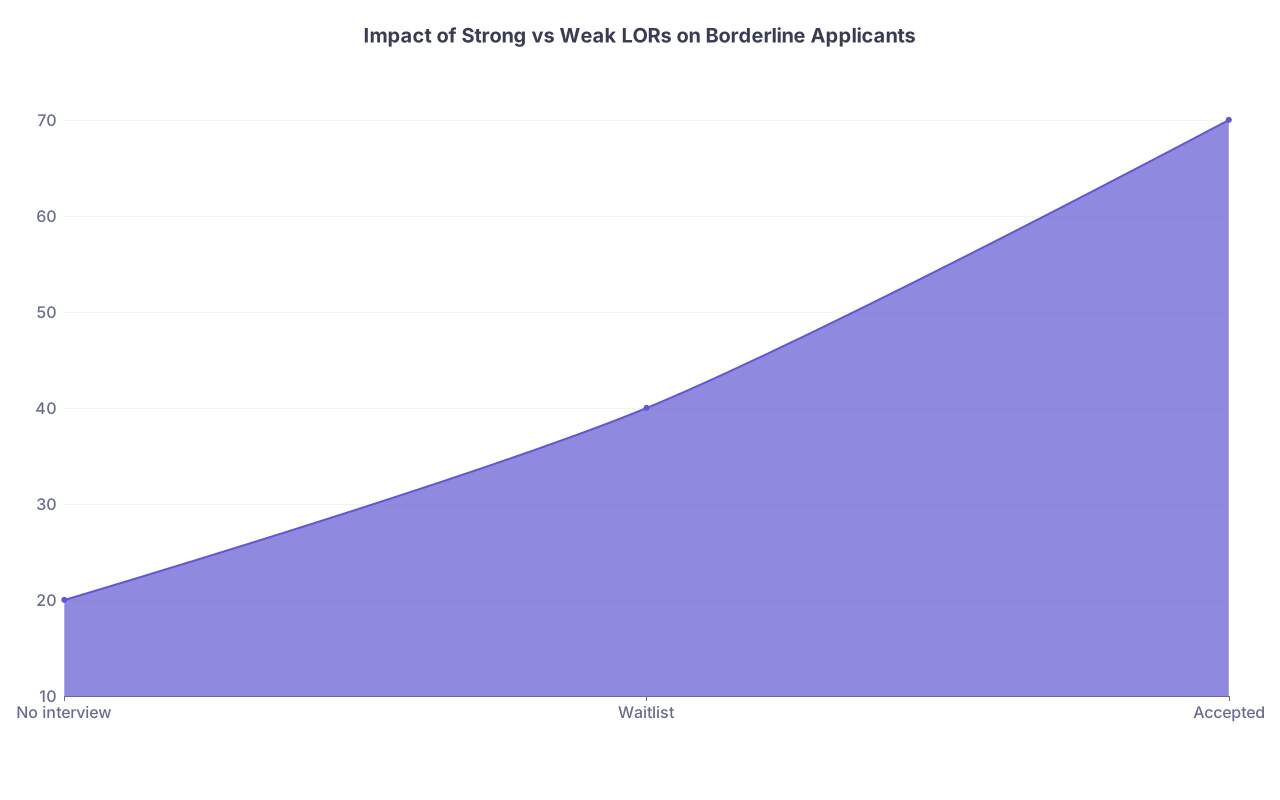
| Category | Value |
|---|---|
| No interview | 20 |
| Waitlist | 40 |
| Accepted | 70 |
The Short Version: What You Need to Remember
One: Adcoms don’t just read your letters. They read your writers. Their patterns, their language, their effort. Your choice of writer is as much a data point as what’s written about you.
Two: Generic, lukewarm, or misaligned letters quietly kill borderline applications every cycle. A single truly strong, specific, enthusiastic letter can pull you back into serious consideration.
Three: Strong letters are built over months, not requested over email two weeks before the deadline. Choose writers who know you, who like you, and who are actually willing to go to bat for you. Anything less is a red flag—whether you see it or not.