
The most damaging letters of recommendation are not the bad ones. They’re the bland ones from the wrong people—often friends, family, or alumni you barely know.
If you’re a premed or early medical student, you’re about three casual conversations away from sabotaging your own application without realizing it. I’ve watched it happen more times than I like to admit: “But my aunt is a physician,” “My family friend went to this med school,” “This alum said they’d be happy to write something.”
You think you’re leveraging connections. Admissions committees see something very different: weak judgment, lack of professionalism, and, worst of all, no real evidence that you’re ready for medicine.
Let’s walk through when friends, family, or alumni should absolutely not be your letter writers—and how to avoid the mistakes that quietly tank applications.
The Fundamental Rule You Cannot Ignore
Here’s the non-negotiable standard:
If the person cannot provide specific, detailed, first-hand examples of your academic ability, work ethic, character, and suitability for medicine, they should not be writing you a letter.
I don’t care if they:
- Went to Harvard Med
- Are an attending in a flashy specialty
- Donated a building to the hospital
- Are your parent’s best friend
If they don’t know you in a professional or academic context, their letter is dead weight. Sometimes worse than dead weight, because it pushes out stronger letters and raises red flags.
Admissions readers are not stupid. They can smell “favor” letters—generic endorsements written out of obligation—from the first paragraph.
When Friends Should Not Be Your Letter Writers
Using a friend as a letter writer is almost always a mistake. Let me be blunt: if your friend is writing a letter for medical school, something has already gone wrong in your planning.
Here are the obvious and less-obvious disasters.
1. The Peer or Classmate Letter
Scenario I’ve seen too often:
- You did a lot of study sessions with a friend who did well
- They’re a year ahead of you and now in med school or a prestigious program
- They offer, “I can totally write you a letter if you need one”
You think: “They know how hard I worked. This will show my dedication.”
Admissions thinks: “Why is this applicant using a peer? Did no faculty or supervisors know them well enough?”
- The letter writer is close to your age
- They have no formal supervisory or evaluative role
- They can only speak as a “friend” or “classmate”
What committees infer:
- Lack of strong mentorship
- You didn’t build relationships with professors or supervisors
- Poor understanding of professional norms
You are applying to be a professional. Not for a club. Not for a summer gig. Professional schools expect professional letters.
2. The Social Friend Who Happens to Be “Impressive”
This is the “friend who’s now a resident at Mayo” scenario. You worked together at some point, but your relationship has mostly been social: group dinners, parties, group chats.
If the friendship comes first and any work together was:
- Brief
- Informal
- Lightly supervised
Then their letter will read like this:
“I’ve known Alex for three years. Alex is compassionate, hardworking, and passionate about medicine. Alex will be an asset to any medical school.”
That’s fluff. Generic. Non-specific. Committees see this style of writing literally hundreds of times. If it could be written about any applicant, it helps no one.
The test:
- Can this friend describe specific examples of your performance, reliability, initiative, and integrity in a work or academic setting, in detail?
- Did they have formal responsibility for supervising or evaluating you?
If the answer is no, do not use them.
When Family Should Not Be Your Letter Writers
Family members writing letters for you is almost always a terrible idea. There are very rare edge cases in academic medicine and research where it might not be fatal, but as a premed? No. Don’t touch this.
1. The Parent (Even If They’re a Physician)
This one is almost comical from the committee side. I’ve seen letters that literally say:
“As her mother and as a physician with 25 years of experience, I can confidently state that she is one of the brightest and most compassionate students I’ve met.”
You know what everyone in the room thinks? “Of course you think that. You’re her mother.”
Problems with parent-written letters:
- Massive bias, obvious to everyone
- Boundary issues: shows poor understanding of professional norms
- Replaces a neutral evaluator with the most partial person in your life
Even if your parent is:
- A department chair
- A program director
- A published researcher
They should not be writing you a medical school letter as “Mom” or “Dad.” It’s an immediate credibility hit for you.
2. The “Family Friend” Doctor
Common version:
- You shadowed your parent’s friend once or twice
- You’ve known them since childhood
- They’re “happy to help”
If they barely interacted with you in a structured way (no real supervision, no long-term work together), their letter reads like a character reference. Medical schools don’t want character references from your family’s social circle. They want professional evaluation.
Committees know exactly what’s going on:
- This is a courtesy letter
- The writer is doing your family a favor
- The praise is not based on rigorous observation
And they mentally downgrade it.
When Alumni Should Not Be Your Letter Writers
This is a big one. Having alumni write your letter sounds smart. Often it is exactly the opposite.

1. The “We Met Once at a Networking Event” Alum
Scenario:
- You met an alum at a school-sponsored event, on Zoom, or via LinkedIn
- You had a good conversation, maybe two
- They say, “Let me know if you ever need a letter”
You think the school will be impressed: “Look, your own grad recommends me!”
They won’t. They’ll be suspicious.
Why this backfires:
- The alum doesn’t know your academic or clinical performance
- They’ve never supervised you
- They’re endorsing you based on a few conversations and vibes
Committees see straight through that. Alumni status does not magically make a weak letter meaningful.
2. The “Same Cultural/Religious/Regional Background” Alum
I’ve seen this: premeds chase alumni who share:
- Ethnicity
- Country of origin
- Religion
- Hometown
The logic: “They’ll want to support someone from their community.”
Sure. But that support is not the kind of support admissions committees are paying for with your precious letter slots.
If the alum:
- Hasn’t worked with you
- Doesn’t teach, supervise, or mentor you regularly
- Only knows you through identity-based networks
their letter is basically a networking favor. That’s not what letters are for.
3. Alumni Employed in Non-Academic Roles With No Supervisory Relationship
Even if the alum is:
- A physician in private practice
- A healthcare administrator
- A consultant
If you never:
- Worked in their office
- Did research under them
- Volunteered under their supervision
then their alumni label is irrelevant. Committees care about context and observation, not logos and affiliations.
How Committees Actually Read These Letters
Let me break the illusion: prestige of the letter writer is wildly overrated by applicants and consistently overvalued compared to what actually matters.
Here’s what readers are looking for, in this order:
Depth of Relationship
- How long have they known you?
- In what capacity?
- How directly did they observe you?
Quality of Examples
- Do they describe specific moments or patterns?
- Or do they just list adjectives?
Comparative Language
- Do they place you in context? (“Top 5% of students I’ve taught in 10 years.”)
- Or is it just “hardworking and passionate”?
Credibility of the Evaluator
- Are they in a position to judge academic/clinical potential?
- Professor, PI, physician supervisor, course director, etc.
Family / friends / random alumni fail on #1–3 nearly every time. They might score on #4 superficially (title, degrees), but that does not rescue a vague letter.
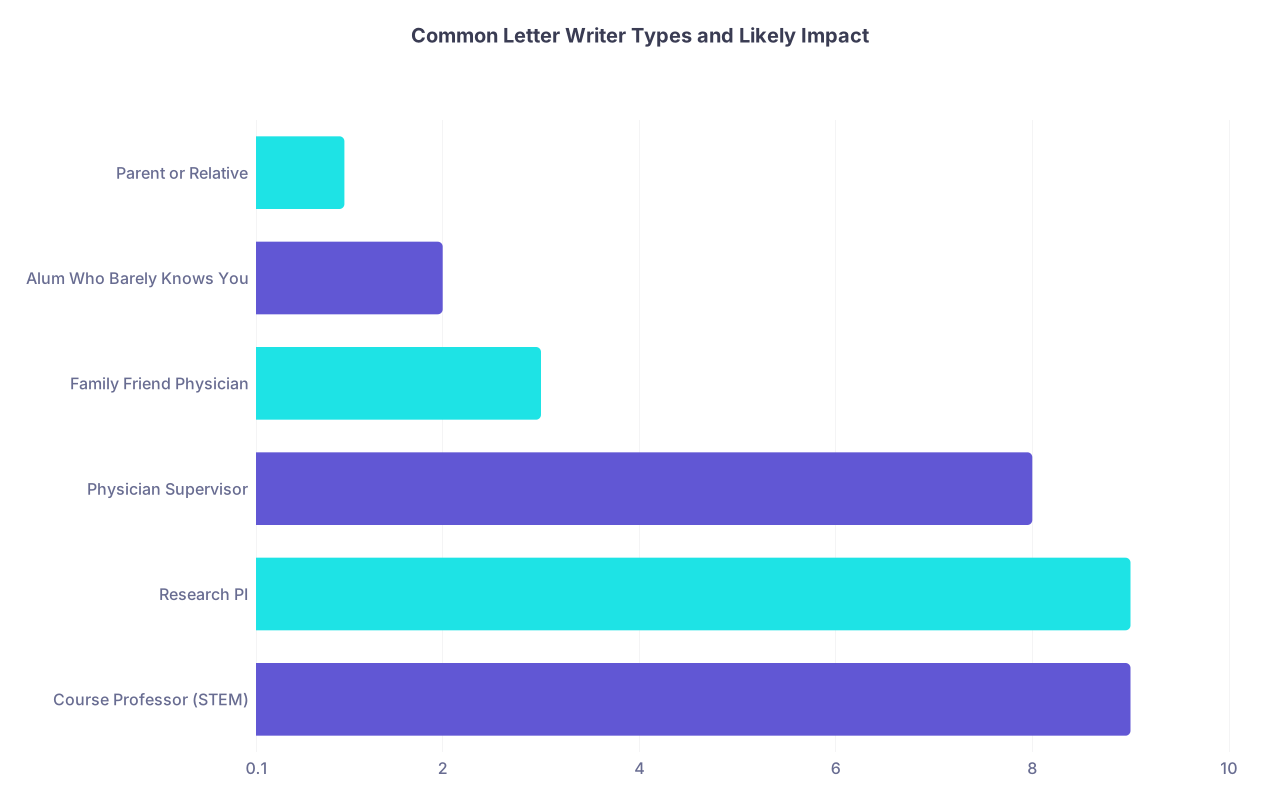
| Category | Value |
|---|---|
| Course Professor (STEM) | 9 |
| Research PI | 9 |
| Physician Supervisor | 8 |
| Family Friend Physician | 3 |
| Alum Who Barely Knows You | 2 |
| Parent or Relative | 1 |
Scale: 1 = actively harmful, 10 = highly valuable
You’d be surprised how many applicants submit two 2’s and a 3 when they could have built three 8–9’s with better planning.
The Subtle Ways These Letters Damage You
The worst part? These letters usually aren’t obviously awful. They’re politely positive. Which makes them harder for you to spot as a problem.
Here’s how they quietly hurt you:
They displace stronger letters. Most schools cap the number of letters they’ll read meaningfully. If they say 3–5 and you send 7, they’re not dutifully reading all seven. That alumni-favor letter might bump out the professor who actually knew you.
They signal poor professional judgment. You’re saying, indirectly, “I don’t understand who is qualified to evaluate me for this career.”
They raise suspicion about your performance. If you lean heavily on non-academic, non-supervisory writers, committees wonder: Did no one who actually taught or supervised you want to write?
They create inconsistency. Strong letters from professors saying you’re outstanding, followed by a vague “character” letter from a family friend, makes your file feel padded. Like you’re trying to cover something up.
When These People Can Help You (Without Writing Letters)
Here’s the thing: friends, family, and alumni can be very useful to your application—just not as letter writers.

Use them for what they’re actually good for:
Mock interviews. Alumni physicians and residents are gold for practice interviews. They know the tone, the pacing, the landmines.
Shadowing or exposure. A family friend physician can host you for shadowing, give you a better understanding of clinical life, and then refer you to someone who will actually work with you and later write a letter.
Network to legitimate mentors. Alumni can connect you to research PIs, course directors, volunteer coordinators—people who can eventually write real letters.
Feedback on your personal statement. Physician relatives or friends can tell you if your narrative sounds naive or unrealistic.
Reality-checking your school list. Alumni from specific programs can tell you if your stats/experiences align with what their alma mater actually seems to value.
Do this instead of immediately asking for “a letter.” You’ll get 10x more value.
What Strong Letter Writer Choices Actually Look Like
Let’s compare the letter writers side by side so you can see the difference.
| Category | Strong Choice Example | Weak Choice Example |
|---|---|---|
| [Science Letter](https://residencyadvisor.com/resources/letters-of-recommendation/dont-do-this-common-premed-errors-when-choosing-science-lor-writers) | Organic chemistry professor who taught you twice, knows your work | Lab TA who barely remembers you |
| Research Letter | PI who supervised your project 1+ year | Lab’s senior grad student you chatted with |
| Clinical Letter | Physician you volunteered under weekly for 6+ months | Parent’s friend you shadowed twice |
| Character/Service | Nonprofit supervisor who oversaw your leadership role | Pastor, family friend, or neighbor |
| Alumni Connection | Alum who was also your long-term mentor/supervisor | Alum you met at one mixer or on LinkedIn |
If you stare at that table and realize 2–3 of your top “planned” writers are actually in the weak column, good. You’ve caught it early.
How to Say No (or Not Ask) Without Burning Bridges
You might already have someone who’s offered: the family friend, the alum, the resident who knows you more socially than professionally.
Here’s how you protect your application and the relationship.
If They Offered First
You can say:
“I really appreciate that. For medical schools, they strongly prefer letters from people who have directly supervised my academic or clinical work, like professors or research mentors. I’m focusing on those right now, but I’d love your advice on my application or to do a mock interview if you’re open to it.”
You’ve:
- Validated their offer
- Blamed “medical school expectations” (true)
- Redirected to a more appropriate way to help
If You Already Half-Asked and Regret It
Then:
“I realized after talking with my premed advisor that for this cycle, I really need to prioritize letters from people who have directly evaluated my academic performance or clinical work, like my PI and course professors. I’d still really appreciate your mentorship and feedback, but I may not end up needing an additional letter.”
Awkward? Slightly. Catastrophic? No. Submitting a weak letter is worse.
Planning Ahead So You Don’t Get Desperate
Most students fall into the friends/family/alumni trap because they’re desperate late in the game. They didn’t cultivate real letter writers early enough, so they reach for whoever offers.
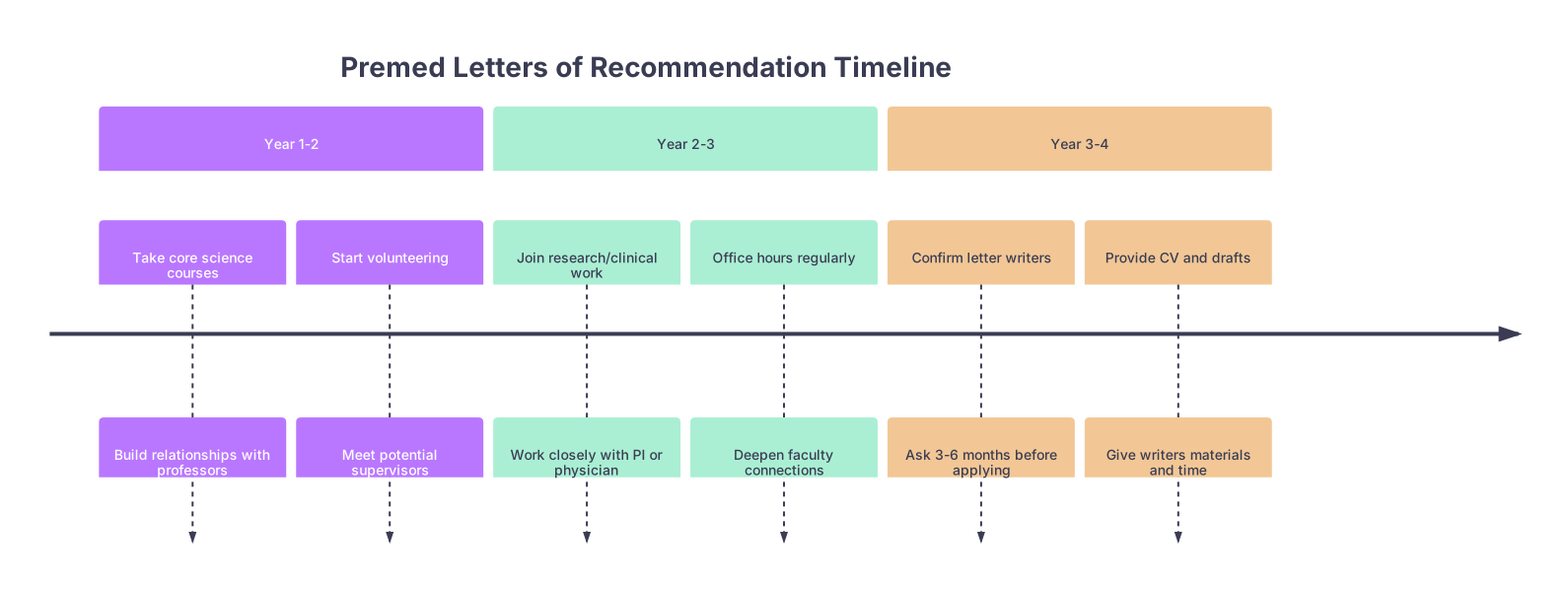
| Period | Event |
|---|---|
| Year 1-2 - Take core science courses | Build relationships with professors |
| Year 1-2 - Start volunteering | Meet potential supervisors |
| Year 2-3 - Join research/clinical work | Work closely with PI or physician |
| Year 2-3 - Office hours regularly | Deepen faculty connections |
| Year 3-4 - Confirm letter writers | Ask 3-6 months before applying |
| Year 3-4 - Provide CV and drafts | Give writers materials and time |
Basic rules to avoid panic:
By end of second year:
You should have at least two science professors who know your name, remember you, and have interacted with you beyond “just another face.”Within your main clinical experience:
Make sure there’s a clear supervisor who sees your work regularly and knows you beyond “the volunteer who stocks blankets.”With research:
If you’re in a lab, don’t hide in the corner. Meet with your PI periodically. Present your work. Make them actually aware of you.Ask early.
At least 2–3 months before you need the letter submitted. Serious people are busy. Rushed letters are often vague letters.
A Quick Reality Check: Common Rationalizations You Need to Drop
Let’s kill a few lies students tell themselves.

“But this alum went to my dream school!”
Does not matter if they barely know you. The committee will not care that their logo matches.
“But my uncle is a famous surgeon.”
Irrelevant if he’s never supervised your work. In some cases, this actually hurts you more because they assume it’s pure nepotism.
“But my family friend knows me really well.”
Personally, sure. Professionally? No. This is not a character witness trial. Schools want professional evaluation.
“Any extra letter helps, right?”
Wrong. Extra weak letters can drown out the strong ones and make your whole file feel padded and unfocused.
FAQs
1. Is it ever acceptable to have an alum write a letter for me?
Yes—but only if they also fit the real criteria of a strong letter writer. That means they:
- Directly taught, supervised, or mentored you
- Worked with you for a meaningful period (months, not days)
- Can describe specific examples of your performance and character
Their status as an alum is bonus, not the main reason they’re writing. If the only reason you’re asking them is “they went to that school,” skip it.
2. Can I use a family friend or relative as an extra letter, not one of my core ones?
You shouldn’t. Even as an “extra,” it:
- Clutters your application
- Risks overshadowing better letters
- Signals poor understanding of professional boundaries
If a school explicitly allows or requests a “personal” or “character” reference from outside academia/clinical work, it should still be from someone in a professional role who has supervised you (employer, volunteer coordinator, coach)—not a family friend doing your parents a favor.
3. What if I truly have no professors or supervisors who know me well enough?
That’s not a letter problem, that’s a preparation problem. And it’s fixable, but not instantly. You may need to:
- Spend more time in office hours and talk about coursework, research interests, or future plans
- Take on roles with more responsibility in clinical or volunteer settings so supervisors actually see your work
- Consider delaying your application cycle by a year to build authentic relationships and experiences
Rushing a weak application with poor letters just to “stay on schedule” is how people end up reapplying. Protect your future self: build the right relationships now so you don’t have to rely on friends, family, or random alumni later.
Key Takeaways:
- Friends, family, and alumni who barely know your work should almost never be your letter writers; they signal weak judgment and add little value.
- The only letters that help you are from people who have directly supervised or evaluated you and can give detailed, specific, comparative examples.
- Use friends, family, and alumni for mentorship, networking, and mock interviews—not for letters—and start building real relationships with faculty and supervisors early so you’re never desperate enough to compromise.