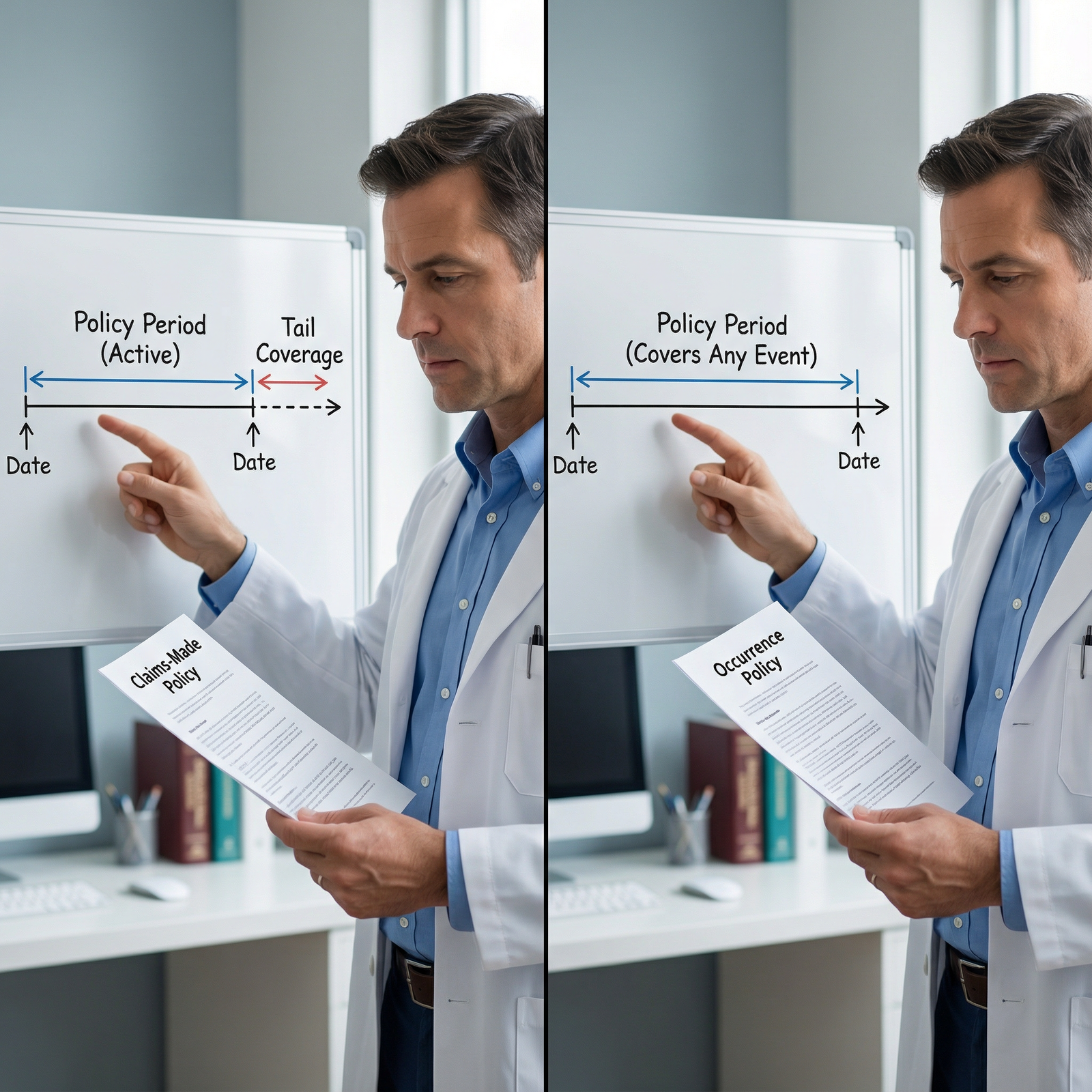
The fastest way to turn a case you should win into a financial and legal disaster is sloppy documentation. Not bad medicine. Bad charts.
I’ve watched cases where the clinical care was completely defensible—guideline‑consistent, thoughtful, correct—and the physician still lost or settled expensively because the record was a mess. Plaintiffs’ attorneys love this. Insurers hate it. Juries punish it.
Let me walk through where people screw this up and how not to be one of them.
How Bad Documentation Destroys a Defensible Case
You think malpractice risk is all about “don’t make a clinical error.” That’s naïve. Your real battlefield is the chart.
Here’s what actually happens in claims:
- Plaintiff attorney gets records before anyone talks to you. They hunt for inconsistencies, missing pieces, and vague notes.
- Expert reviewers judge you on the record alone. They aren’t in the room with you. They see what’s written. Nothing more.
- Your insurer decides how hard to fight based largely on documentation. Strong record = defensible = they’ll spend money to defend. Weak record = settlement pressure.
- If it goes to trial, jurors see your note on a giant screen. They don’t understand the medicine. They understand sloppiness, contradictions, and “CYA” edits.
The ugly truth:
If it’s not documented, it’s assumed not done.
If it’s poorly documented, it’s assumed done poorly.
The Classic Documentation Mistakes That Sink You
Let’s get concrete. These are the recurrent, career-threatening patterns.
1. Copy‑Paste and Smart Phrases That Contradict Reality
EHRs made this problem explode. I’ve seen this exact thing in multiple chart reviews:
- Templated ROS: “No chest pain, no shortness of breath, no fever”
- Triage note: “Patient reports 8/10 chest pain and dyspnea”
- Nursing note: “Febrile to 102.5 F at home”
Plaintiff expert: “Doctor, did you review the nursing and triage notes?”
If yes: “Then why did you document a completely normal review of systems?”
If no: “So you admit you didn’t review essential parts of the chart?”
You lose either way.
Other copy‑paste disasters:
- “No acute distress” for a patient who is later documented as hypotensive and diaphoretic
- “Appears well” for someone admitted to ICU a few hours later
- Repeating outdated meds, problems, or diagnoses that were already changed
Why this kills defensibility:
- Makes you look careless.
- Makes you look dishonest.
- Gives the plaintiff expert room to say, “This physician did not meaningfully assess the patient.”
Avoid this mistake:
- Use templates as a starting point, not an autopilot.
- Delete irrelevant sections aggressively.
- Never carry forward exam/ROS without actively checking against the actual encounter.
- If something is genuinely unchanged and you must copy it, add a line like “Reviewed and updated; no interval change since [date].”
2. The Vanishing Differential Diagnosis
You might think, “I obviously considered PE; that’s why I ordered a D‑dimer.” Yeah. But your chart never says you were thinking about PE, or why you ruled it out.
That silence will be used against you.
Common pattern:
- Minimal assessment: “Abdominal pain – likely gastroenteritis. Discharge with Zofran.”
- Later: Perforated appendicitis, sepsis, prolonged ICU stay.
- Record: No mention of appendicitis, obstruction, ectopic, etc.
Plaintiff expert line:
“A reasonably careful physician would have considered appendicitis and documented why it was ruled out. There is no evidence that was done.”
Why this kills defensibility: You probably did think of serious diagnoses. But:
- There’s no documented reasoning.
- Juries and experts only see a superficial assessment.
- It looks like you anchored prematurely and never thought past the first idea.
Avoid this mistake: You don’t need an essay. You need evidence of thinking:
- “DDx: appendicitis, biliary colic, gastroenteritis, SBO. Less likely appendicitis given no RLQ tenderness, normal WBC, normal CT A/P.”
- “Considered ACS vs musculoskeletal pain; low suspicion for ACS based on normal ECG, negative serial troponins, non‑exertional pain.”
Two to four lines is usually enough. But having none is malpractice Russian roulette.
3. Missing or Garbage Documentation Around Informed Consent
If there’s a complication and your consent process isn’t documented, you’re exposed. I’ve seen surgeons, proceduralists, even hospitalists hammered for this.
Typical defense‑destroying situations:
- “I told them about the risks”—but no signed form, no note.
- Generic consent form with no specific high‑risk issues listed.
- Sedation documentation with no clear risk/benefits discussion.
Consent disputes are “he said, she said.” The patient (or family) will almost always remember you not warning them about the specific bad outcome that actually happened.
If the record is thin, a jury will believe them.
Avoid this mistake: Document three core things clearly:
- Nature of the procedure/treatment
- Major material risks (especially the rare but catastrophic ones)
- Reasonable alternatives, including doing nothing where applicable
You don’t need a novel:
- “Discussed risks (bleeding, infection, damage to nearby structures, need for further surgery), benefits (pain relief, improved function), and alternatives (conservative management, no surgery). Patient verbalized understanding and wishes to proceed.”
If there’s something uniquely concerning—prior complications, high BMI, borderline airway, advanced age—say it in the note.
4. Horrible Discharge and Follow‑up Instructions
A lot of perfectly defensible medical decisions turn into six‑figure settlements because the discharge section is lazy.
Scenario:
- ED visit for headache. You think it’s benign. Probably is.
- Discharge instructions just say: “Follow up with PCP as needed.”
- No red flag list. No timing. No documentation that you explained when to come back.
Then the patient returns 24 hours later with SAH. Or meningitis. Or stroke.
Plaintiff expert: “A reasonably careful physician would have provided explicit return precautions and arranged timely follow‑up.”
Chart: “FU PRN.”
You’re in trouble.
Avoid this mistake: Spell out:
- Timeframe: “Follow up with PCP or clinic in 24–48 hours.”
- Specific return precautions tied to serious conditions you were worried about (even if you thought they were unlikely):
- “Return immediately for worsening pain, new weakness, difficulty speaking, confusion, fever, or neck stiffness.”
Ideally:
- Document that you verbally reviewed these with the patient/family, not just handed them a sheet.
- Note that the patient/family verbalized understanding.
Two extra sentences here can save your career later.
5. Disrespectful, Snarky, or Blaming Language
Juries hate doctors who sound contemptuous in their notes. So do defense attorneys.
I’ve seen:
- “Drug seeker”
- “Non‑compliant, refuses to care for self”
- “Difficult family”
- “Crazy”
- “Frequent flyer”
Those words will be read aloud in a courtroom. They’ll make you look biased and uncaring. Plaintiff attorneys use this to argue you didn’t take the patient seriously, that you dismissed red flags, that you gave substandard care because you didn’t like them.
Avoid this mistake: Describe behavior and facts, not judgment:
- Instead of “drug seeker”: “Requesting opioids by name, reports lost prescriptions, PDMP shows multiple recent opioid prescriptions from several prescribers.”
- Instead of “non‑compliant”: “Has not taken prescribed antihypertensives for three months due to cost concerns and transportation barriers.”
You can be honest without being cruel or lazy.
6. Charting Wars With Nursing or Other Staff
There’s a special circle of malpractice hell reserved for physicians who argue with nurses in the record.
Examples I’ve actually seen:
- Nurse: “MD notified of hypotension; no new orders.”
- MD addendum: “Nursing overreacting; patient fine.”
- Later: patient crashes.
Now the jury sees your arrogance in writing.
Or:
- You correct a nurse note inside your physician note instead of talking to them directly.
- You use the chart to complain about consultants or primary teams.
Avoid this mistake:
- If there’s a factual discrepancy that truly matters, clarify it professionally and factually:
- “At time of my assessment, BP 118/70, patient alert, no distress. Earlier low BP documented by nursing had resolved prior to my exam. Plan: monitor closely, repeat vitals q30 minutes.”
- Never use the chart to vent. Ever.
If you have a serious concern about staff behavior, that belongs in an incident report or through internal channels, not your clinical note.
7. Late, Altered, or Suspicious Addenda
Nothing attracts a plaintiff attorney like an addendum dated right after an adverse event, complaint, or request for records.
They’ll subpoena EHR audit trails. They’ll show exactly when every keystroke was made. If it looks like you “fixed” the chart after the fact, you’ve handed them a narrative of dishonesty.
Common disasters:
- Editing pre‑event notes after a complication without marking it as an addendum.
- Back‑dating notes.
- Suddenly boosting your documentation quality only after something bad happens.
Avoid this mistake:
- If you must correct or add, label it clearly as an addendum with:
- Date and time of the addendum.
- Clear explanation: “Addendum to note from [original date/time] to clarify…”
- Never alter prior text to change clinical judgment or timing. Don’t rewrite history.
- Do not “catch up” a whole shift of weak notes after a bad outcome. It’s obvious and it backfires.
If you’re facing potential litigation or a serious adverse event, call risk management and your malpractice carrier before touching the chart.
How Documentation Quality Changes Your Legal and Financial Reality
Your insurer isn’t just looking at the medicine. They’re looking at the litigability of the case. Documentation is a giant part of that.
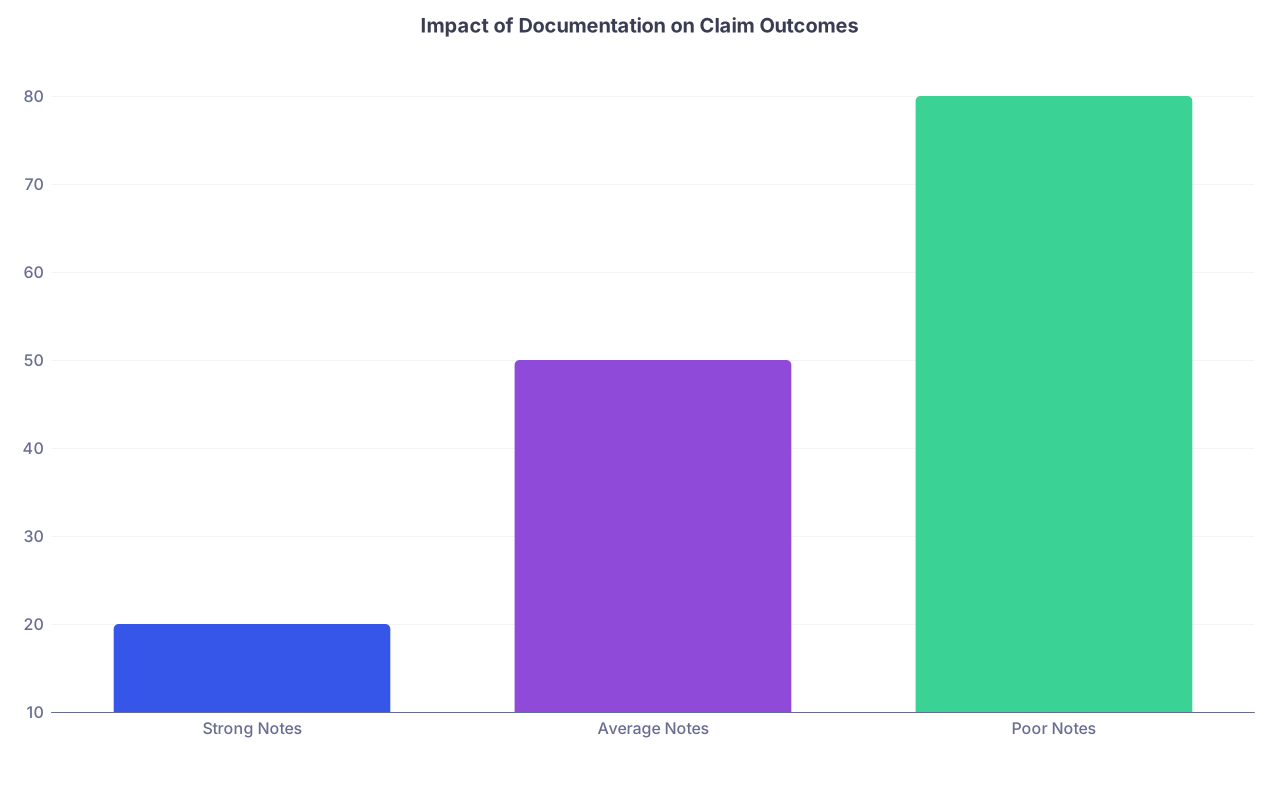
| Category | Value |
|---|---|
| Strong Notes | 20 |
| Average Notes | 50 |
| Poor Notes | 80 |
(Think of these as rough “likelihood of settlement under pressure” scores—high is bad.)
What Poor Documentation Costs You Financially
Don’t kid yourself; malpractice fallout isn’t abstract.
Direct financial hits:
- Higher probability of settlement even when your care met standard.
- Larger settlement amounts, because plaintiff counsel knows you don’t want your chart dissected at trial.
- Future premium increases, often for years.
- Potential loss of coverage if you look like a repeat documentation problem.
Indirect hits:
- Hours (or days) off work for depositions and trial.
- Unpaid time spent reviewing terrible old notes to remember what you did.
- Emotional fatigue leading to burnout, which can then cause more mistakes.
Strong documentation:
- Shortens claim life.
- Increases the chance of dismissal or defense verdict.
- Gives your insurer confidence to fight instead of fold.
Specialty‑Specific Documentation Traps
Not all documentation landmines are the same. Your specialty shapes your risk.
| Specialty | Key Documentation Trap |
|---|---|
| Emergency | Weak return precautions, no differential |
| Surgery | Vague consent, missing operative details |
| OB/GYN | Poor fetal monitoring interpretation |
| Hospitalist | Bad handoffs, unclear responsibility |
| Psychiatry | Inadequate suicide risk assessment |
Emergency Medicine
- Thin HPI and ROS with templated “all systems normal”
- No documentation of re‑evaluation before discharge
- Discharges without clear red flag instructions
Surgery / Procedural
- “Standard risks discussed” with no details
- No note about why surgery risk is acceptable for a frail or complex patient
- Inadequate documentation of intra‑op decisions (e.g., why a certain structure was left/resected)
Obstetrics
- Minimal interpretation of fetal heart tracings
- No documentation of discussions when labor isn’t progressing or when risks increase
- Poorly documented handoffs between shifts
Hospital Medicine / Internal Medicine
- Ambiguous responsibility:
- “Will follow labs” — who, exactly?
- “Consider CT” — by when, and under what conditions?
- Discharge summaries that don’t actually summarize:
- No rationale for major decisions
- No documentation of prognosis, goals of care, or advance care planning discussions
Psychiatry
- Vague suicide risk assessments:
- “Denies SI” and nothing else
- No documentation of protective factors, prior attempts, access to means, or collateral information
- Thin safety planning notes
Each of these can turn a legally defensible clinical judgment into a brutal cross‑examination.
Practical Documentation Habits That Actually Protect You
You don’t have time for perfect notes. No one does. You do have time to avoid the worst litigation traps.
1. Make Your Assessment and Plan Do the Heavy Lifting
If you’re pressed for time, this is where your risk management effort should go.
Hit four things, briefly:
- What you think is going on
- What serious things you considered and why they’re less likely
- What you’re doing about it
- What the patient is supposed to do next (and when)
A minimal but protective example:
- “Likely viral bronchitis. Considered pneumonia and PE; less likely given clear lungs, normal vitals, low Wells, negative CXR. Treat with inhaler, supportive care. Return immediately for high fever, SOB, pleuritic pain, or hemoptysis. PCP follow up 2–3 days.”
That’s maybe 3–4 extra sentences. But it transforms your defense.
2. Align Your Note With the Rest of the Chart
Before you sign:
- Glance at triage, nursing, and consultant notes.
- Fix any glaring contradictions:
- If triage says “severe pain” and you write “no distress,” either:
- Clarify that things improved, or
- Re‑examine and update your note.
- If triage says “severe pain” and you write “no distress,” either:
You don’t have to micromanage every line. Just avoid obvious conflicts that will be highlighted in bold at trial.
3. Document the “Crucial Conversations”
If someone is angry, refusing, or at high risk, your documentation needs to be very tight.
Examples:
- Patient refuses CT scan you believe is important:
- “Discussed recommended CT scan to evaluate for possible intracranial bleed. Patient declines after risks, including potential for missed serious diagnosis, explained. Patient states, ‘I just want to go home, I’ll come back if worse.’ Assessed capacity; patient able to repeat back information and consequences.”
- Family pushes for discharge against your advice:
- “Advised admission for observation and serial exams. Family insists on taking patient home. Discussed risks, including potential deterioration without monitoring. They understand and accept these risks. AMA form signed.”
These are the kinds of notes that move insurers from “we have to settle” to “we can defend this.”
What To Do Immediately After a Bad Outcome
This is where people panic and make career‑level mistakes.

| Step | Description |
|---|---|
| Step 1 | Adverse Event |
| Step 2 | Stabilize Patient |
| Step 3 | Notify Supervisors |
| Step 4 | Contact Risk Management |
| Step 5 | Call Malpractice Carrier |
| Step 6 | Write Factual Note |
| Step 7 | Avoid Speculation |
Do NOT:
- “Fix” old notes.
- Add long narrative rationalizations days later.
- Vent in the chart about anyone.
Instead:
- Write a prompt, factual clinical note describing:
- What happened
- What you did
- Patient response
- Keep analysis and “why this happened” speculation out of the chart.
- Call risk management and your malpractice insurer for guidance before adding anything beyond the immediate clinical facts.
They’d much rather talk to you before you document than try to repair damage from a defensive, over‑explaining novel you wrote at 2 a.m. after a sentinel event.
Two Mindsets That Keep You Out of Court
If you remember nothing else, keep these mental shortcuts:
“Would this note make sense to someone who has never met the patient?”
If the answer is no, you’re the only one who can defend it—and you won’t remember the details in three years. Your future self will thank you for one or two extra lines now.“If this sentence was projected in front of a jury, how would I look?”
That’s how you should judge every snarky phrase, copy‑paste block, or passive‑aggressive jab at staff.
Key Takeaways
- Good medicine with bad documentation is not defensible care. If it isn’t written clearly, it may as well not have happened in the eyes of the law and your insurer.
- You don’t need longer notes; you need smarter ones—clear reasoning in the assessment/plan, credible consent documentation, and explicit discharge/return instructions.
- Never use the chart to vent, argue, or rewrite history. Every sarcastic comment and suspicious addendum is a gift to the plaintiff’s attorney and a direct hit to your financial and legal security.