
What actually happens when a “low‑risk” primary care doctor gets hit with a malpractice suit that looks exactly like the ones surgeons lose sleep over?
Let me be blunt: the idea that only neurosurgeons, OB/GYNs, and orthopedic surgeons need serious malpractice coverage is one of the most expensive myths circulating in medicine. I’ve watched family docs, pediatricians, and even dermatologists get financially and emotionally wrecked because they bought into the “I’m low risk, I’ll be fine with the basic policy” story.
Here’s what the data actually shows—and it does not care how “low risk” you think you are.
Myth #1: “I’m in a low-risk specialty, so my chance of getting sued is tiny.”
This is the core fantasy. And it’s wrong in two different ways.
First, let’s talk raw numbers.
Claim frequency and claim severity are not the same thing. Surgeons and OBs tend to have higher severity—huge payouts, massive verdicts. But in many states, internal medicine, family medicine, and pediatrics are in the top tier for number of claims.
Why? Volume and first contact.
Primary care and outpatient fields are the front door to the system. You order the tests (or do not), you make the referrals (or do not), you interpret early symptoms (or miss them). A delayed cancer diagnosis, a missed MI, an untreated sepsis brewing at home—those claims almost always start at the primary care or ED level, not in the OR.
Here’s how the risk actually shakes out in many datasets from carriers and the AMA (numbers vary by state and time, but the pattern is the same):
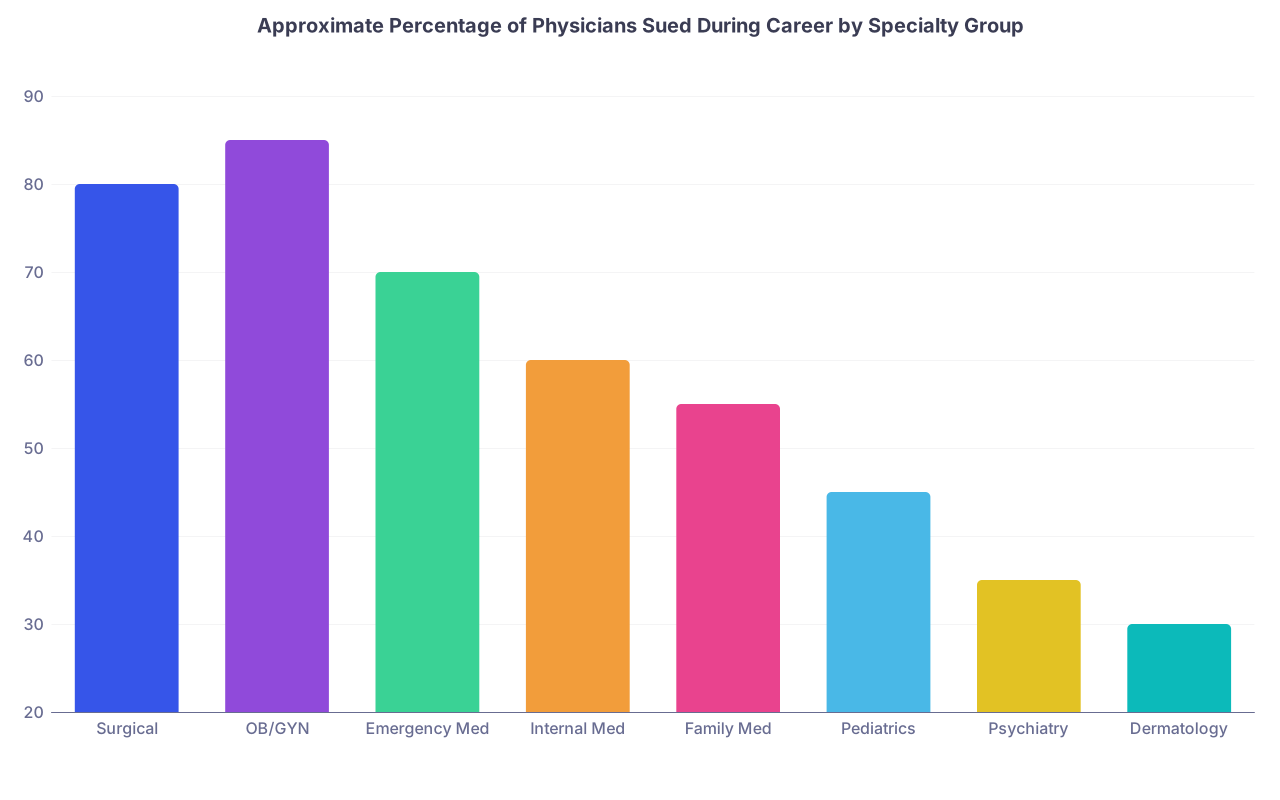
| Category | Value |
|---|---|
| Surgical | 80 |
| OB/GYN | 85 |
| Emergency Med | 70 |
| Internal Med | 60 |
| Family Med | 55 |
| Pediatrics | 45 |
| Psychiatry | 35 |
| Dermatology | 30 |
Notice two things:
- “Low‑risk” doesn’t mean “no risk.” A coin flip or better for many cognitive specialties.
- Being lower risk than OB doesn’t protect you if you are the one named in a suit.
I’ve seen a pediatrician blindsided by a case involving a missed meningitis diagnosis that allegedly started as “flu-like symptoms.” He’d been practicing for 20 years with no complaints. Thought his risk was near zero. Then he spent three years in litigation and six figures on defense (paid by the carrier, thankfully) for one case.
Your personal experience so far tells you nothing about your real exposure. That’s survivorship bias dressed up as “I know how these things go.”
Myth #2: “My exposure is small, so basic limits are plenty.”
The second dangerous belief is: “I see mostly healthy patients. My claims, if any, will be small. I don’t need high limits.”
Reality check: you don’t get to choose the size of the damages your plaintiff’s attorney puts on the table. And you don’t control what a jury does when they’re staring at a catastrophically injured child or a death with a sympathetic family.
Typical policy in many markets: $1 million per claim / $3 million aggregate per year. A lot of people cruise along with that and think they’re “covered.”
Two problems:
- Verdicts and settlements have been creeping up for years (“social inflation” is not just a buzzword).
- Defense costs can be enormous, and in some policies or states, they erode your limits.

You might think only the neurosurgeon gets the $10M demand letter. But look at high‑severity claims against non‑procedural specialties:
- Missed lung cancer in a primary care clinic: multi‑million exposure if plaintiff is relatively young and employed.
- Delayed diagnosis of pediatric sepsis: juries do not stay conservative when confronted with a severely disabled child.
- Missed stroke in the ED or clinic: large life‑care plans, decades of lost wages, seven-figure “ask” is routine.
If your policy limit is well below the realistic upper range of a verdict in your jurisdiction, you’re effectively self‑insuring the gap with your personal assets and future earnings.
And no, “I’ll just declare bankruptcy if that happens” is not a plan. In many states, certain judgments and obligations can follow you in ways that do not just vanish with a filing. And if you think plaintiff attorneys and carriers do not factor your personal insurance limits into their strategy, you’re kidding yourself. They absolutely do.
Myth #3: “As long as I have a policy, I’m safe.”
This one is subtle and nasty. Doctors think in binary: insured vs. uninsured. But malpractice coverage is not binary. It’s a bundle of specific promises with a shocking amount of fine print.
Let’s break down a few dimensions that matter more than specialty “risk level”:
| Feature | Minimal Coverage | Robust Coverage |
|---|---|---|
| Per-claim / annual limits | Low / state minimums | Higher, tailored to region |
| Tail coverage | Not included / unclear | Explicit, funded or negotiated |
| Defense costs | Within limits | Outside limits when possible |
| Consent to settle | Pure hammer clause | Strong consent protection |
| Licensing board defense | Not included | Included with separate sublimit |
The money is only part of it. You’re also paying for:
- Skilled legal defense that understands medicine.
- Control (or loss of control) over settlements that affect your record and reputation.
- Protection for administrative/board actions that spin off from a claim.
That last one is the sleeper. A malpractice allegation that gets reported to the medical board can trigger a separate nightmare—interviews, monitoring, practice limitations. Many cheap policies either provide nothing or a token $5,000 for “licensing board defense.” That doesn’t get you far.
I’ve seen a psychiatrist with a relatively minor claim spend more time and stress dealing with the board than the civil suit itself. The board hired their own expert. The doctor ended up needing separate counsel. The malpractice carrier’s help was minimal because the policy was bare‑bones.
You don’t notice this until the day you need it. Then you’ll wish you hadn’t saved that $800 a year.
Myth #4: “Only procedural specialties need to worry about tail coverage.”
Tail coverage is the exit trap, and non‑procedural docs walk right into it because they’re told, “Your risk is low. You’ll be fine.”
Claims‑made policies only cover incidents that occur and are reported while the policy is active. You leave a group. Policy ends. Two years later, a patient’s attorney takes a case from your old clinic and names you. No tail? You’re naked.
Low‑risk specialties are not immune to delayed discovery:
- Cancer diagnosis lagging 1–3 years before litigation.
- Pediatric issues where the “standard of care” is judged much later.
- Chronic management problems (HTN, diabetes, psych meds) where outcomes unfold slowly.
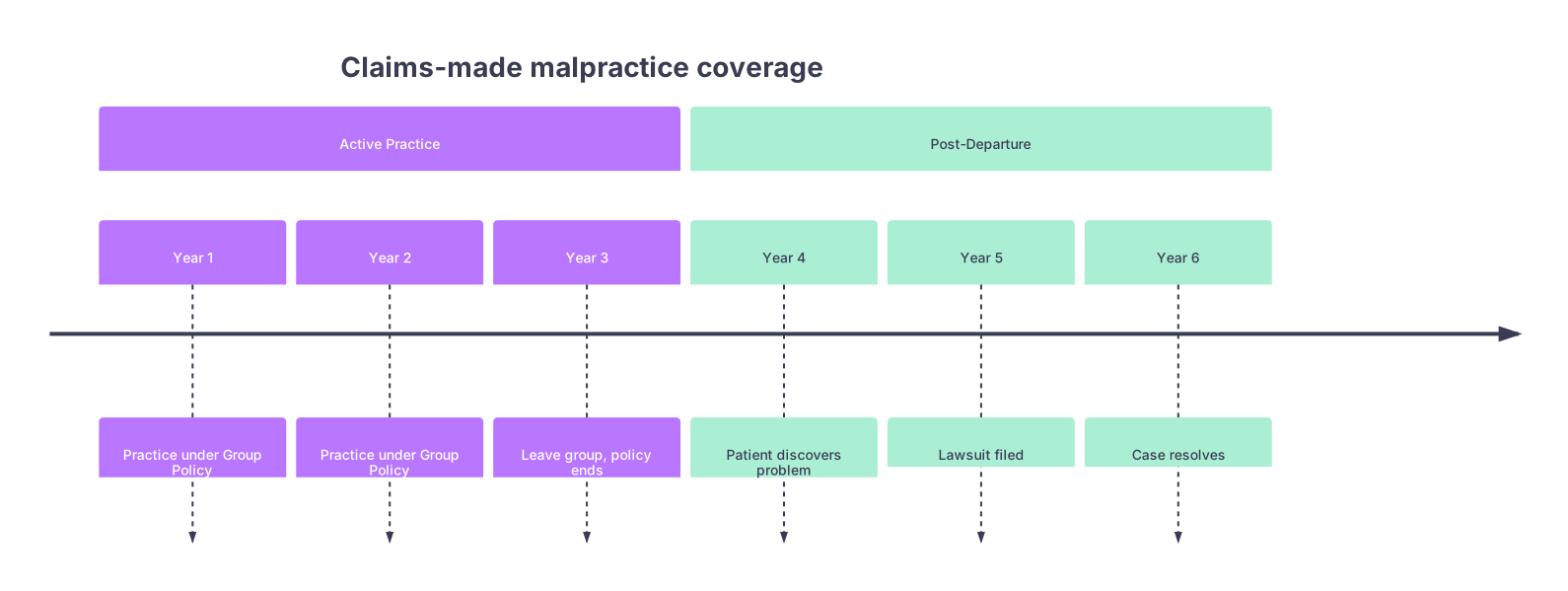
| Period | Event |
|---|---|
| Active Practice - Year 1 | Practice under Group Policy |
| Active Practice - Year 2 | Practice under Group Policy |
| Active Practice - Year 3 | Leave group, policy ends |
| Post-Departure - Year 4 | Patient discovers problem |
| Post-Departure - Year 5 | Lawsuit filed |
| Post-Departure - Year 6 | Case resolves |
Without tail, that entire post‑departure period is on you.
I’ve watched “low‑risk” docs get blindsided at contract time:
- Group says: “If you leave before 3 years, you pay your own tail.”
- Tail quote: 150–200% of your annual premium.
- You: “But I’m just IM / psych / derm—why so high?”
- Carrier: “Because your exposure lives for years after you leave.”
This is where robust coverage and clear contract language save you. Negotiating tail responsibility is a financial decision, not a specialty‑risk decision. If you ignore it because “I’m not high‑risk,” you just volunteered to write a $40–80K check later.
Myth #5: “If anything goes wrong, my employer’s policy has me covered.”
Employed physicians love this one. “Hospital has a big policy. I’m just named on theirs. I’m fine.”
Sometimes. Sometimes not.
Here’s where it breaks:
You leave the job.
- Does the employer’s claims‑made policy keep covering you for future suits on past patients?
- Some do. Many don’t. Or they say they do until the renewal fight, then suddenly they don’t.
You do any moonlighting, telemedicine, or side work.
- Hospital policy rarely extends to your outside tele‑gig or your private med‑spa shift on weekends.
- You are personally exposed there, and plaintiffs love multiple defendants.
Multi‑defendant suits drain shared limits.
- One “per claim” limit might be split across the hospital, two nurses, and three physicians.
- You’re assuming deep pockets; in reality, you’re sharing one pot.
Coverage is aligned with the hospital’s interests, not yours.
- Settlement decisions might be driven by institutional PR, not your long‑term record.
- A settlement with you named can haunt your credentials, NPDB record, and job prospects.
Robust personal protection is not just about an extra policy. It’s about making sure your name, your career, and your finances aren’t collateral damage in your employer’s risk‑management strategy.
What the Data and Reality Actually Say About “Who Needs Robust Coverage”
If you stop listening to folklore and look at actual patterns, a more honest rule emerges:
You need robust malpractice coverage if:
- You see patients.
- You document decisions that affect diagnosis, treatment, or follow‑up.
- You have any personal assets, future earnings, or professional reputation you care about.
Specialty tweaks the type and scale of risk, but it does not flip you from “needs coverage” to “doesn’t need coverage.”
A non‑procedural doc might focus more on:
- Adequate limits for high‑severity but lower‑frequency events.
- Strong defense provisions and consent‑to‑settle protections.
- Licensing board and regulatory coverage.
- Guaranteed, funded tail or occurrence coverage to avoid the exit trap.
A procedural doc might crank the limits even higher and be more aggressive about umbrella structures or asset protection. But both need to take this seriously.
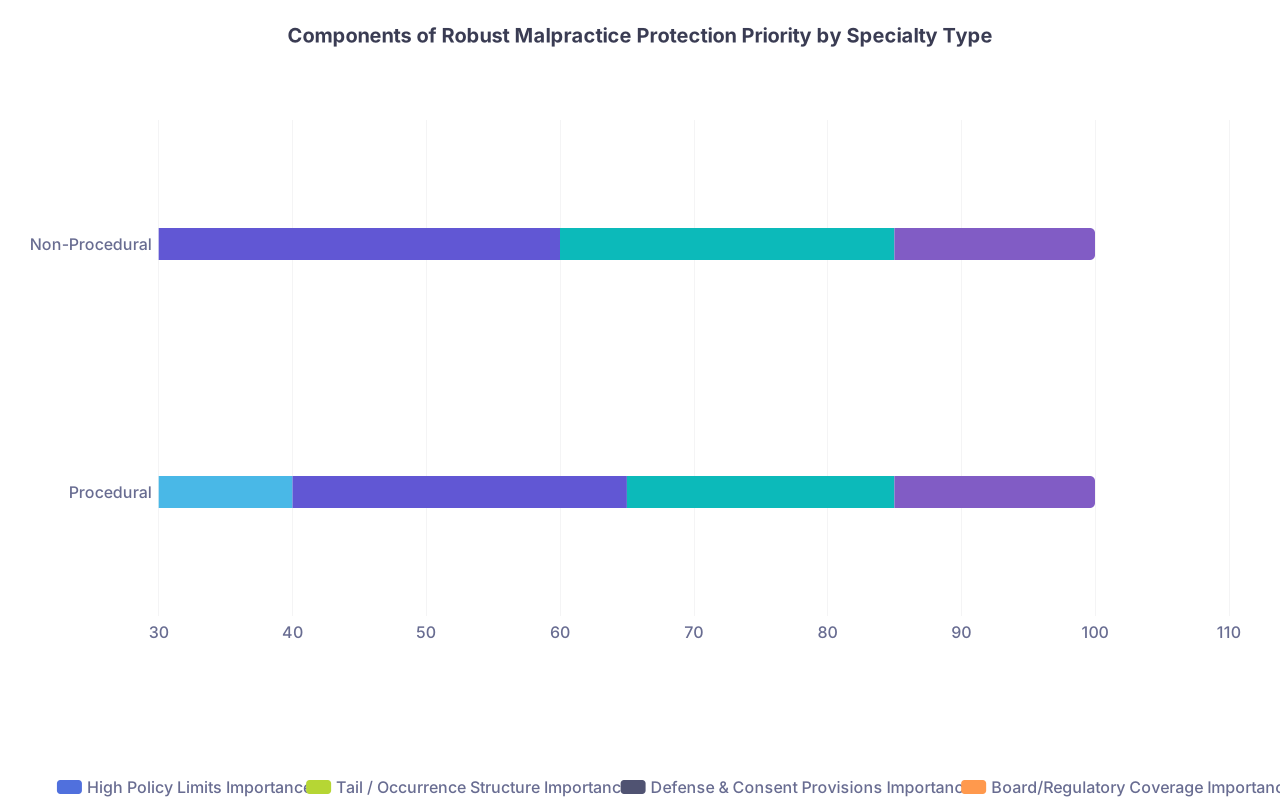
| Category | High Policy Limits Importance | Tail / Occurrence Structure Importance | Defense & Consent Provisions Importance | Board/Regulatory Coverage Importance |
|---|---|---|---|---|
| Procedural | 40 | 25 | 20 | 15 |
| Non-Procedural | 30 | 30 | 25 | 15 |
The weights change. The underlying need does not.
How This Myth Costs Real Money
I’ve seen this play out enough times that the script is familiar:
- Resident in a “low‑risk” field is taught: “At least you won’t pay much for malpractice.”
- First attending job: they sign the contract, never ask about tail, and accept the bare minimum group coverage.
- Three years later: they change jobs. Find out they’re on the hook for tail. Discover the policy didn’t include true consent‑to‑settle. Realize their board coverage is nonexistent.
- One unlucky case appears. Suddenly they’re learning more about malpractice law, asset protection, and NPDB reporting than they ever wanted.
The premium difference between “minimum viable” and “robust, sane” is often a few thousand dollars a year. The cost difference when things go wrong? Orders of magnitude higher.
This is not about living in fear. It’s about refusing to outsource your financial and legal life to myths and wishful thinking.
Quick sanity check: questions to ask your broker or risk manager
Keep it simple but specific. It takes 20 minutes and prevents years of pain. Ask:
- What are my per‑claim and annual limits, and how do they compare to typical verdicts in my state?
- Are defense costs inside or outside the limits?
- Do I have consent‑to‑settle, and is there a hammer clause?
- Who pays for tail if I leave, and is that in my employment contract?
- What coverage do I have for board investigations, peer review, or hospital credentialing actions?
If the answers are vague, dismissive (“You’re low‑risk, don’t worry about it”), or buried in jargon, that’s not reassuring. That’s a red flag.