
What actually happens to your malpractice coverage the day you walk out of your employed job and into private practice?
If your answer is “I think HR handled that” or “the group’s policy should still cover me,” you’re flirting with a very expensive surprise.
Let me walk through the situation you are actually in, not the fantasy version you wish were true.
You’re leaving an employed position (hospital system, large group, FQHC, academic center) and starting or joining a private practice. You assume your old malpractice coverage is “done” and you just need a new policy for the new job.
Wrong frame.
You don’t just need new coverage going forward. You need to rebuild your malpractice protection across three different time zones:
- Your past patients at the employed job
- Your present transition period (gaps, moonlighting, side work)
- Your future private practice
If you ignore any one of those, you leave a hole. Plaintiffs’ attorneys live for those holes.
Let’s fix that.
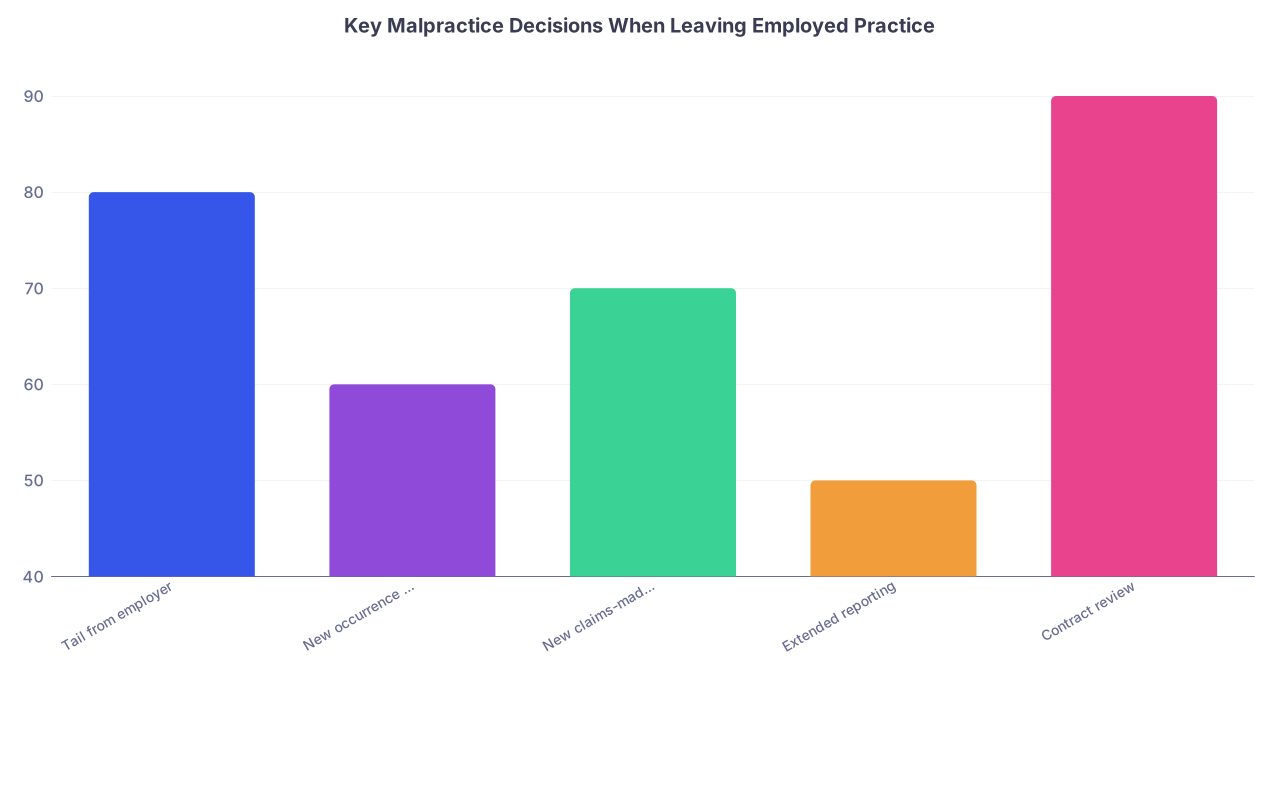
| Category | Value |
|---|---|
| Tail from employer | 80 |
| New occurrence policy | 60 |
| New claims-made policy | 70 |
| Extended reporting | 50 |
| Contract review | 90 |
Step 1: Figure Out Exactly What You Have Right Now (Not What You Think You Have)
Do not call an agent first. Do not ask a colleague what “usually” happens. Start with the paper.
You want three things from your current employer or risk management department:
- A full copy of the malpractice insurance declarations page (“dec page”)
- The actual policy form (not just the summary)
- Your employment contract and any amendments
You’re looking for very specific details:
Policy type
On the dec page, you’ll see either:- “Claims-made”
- “Occurrence”
- Or something like “claims-made with extended reporting endorsement”
Most employed physicians are on claims-made policies, often through a big system self-insurance or a captive. Occurrence is less common in employed settings.
Who is the named insured?
If the named insured is:- The hospital/health system only → you’re covered as an “additional insured”
- You personally + the entity → better, but still check terms
Your problem: when you leave, their coverage for you is not guaranteed forever, especially if they restructure, sell, or go bankrupt. “They’re huge, they’ll be fine” is not a plan.
Tail or no tail
Your employment contract may say one of a few things:- Employer provides tail if you complete contract term
- Employer provides tail unless terminated for cause
- You must buy your own tail on leaving
- Silent about tail (which is functionally: you’re on your own unless they voluntarily provide it)
If your contract says “claims-made coverage provided during employment” and says nothing about tail, assume you are not covered for future claims after you leave, unless they explicitly state otherwise in writing.
That’s your starting truth.
Step 2: Decide How Your Prior Acts Will Be Covered (This Is Where People Get Burned)
You have two core problems to solve:
- Who pays claims for care you provided while employed, after you leave?
- Who pays claims for care you’ll provide in your new private practice?
Those are related but separate.
A. Covering the old employed work: Tail vs Prior Acts
If your current coverage is claims-made, you’re exposed for prior patients unless:
- The employer buys tail (extended reporting coverage), or
- You buy your own tail, or
- Your new policy picks up prior acts with the same retroactive date
Those are your three levers.
Let’s be concrete.
Suppose:
- You started with Big Health System in 2019
- Your current claims-made policy retro date = 07/01/2019
- You are leaving 09/30/2026
Your malpractice timeline looks like this:
- 07/01/2019 → 09/30/2026: You saw patients covered by employer’s policy
- 10/01/2026 → onward: Private practice
Claims can be filed years later. A birth injury, delayed diagnosis, missed cancer—those can show up 2–5–10 years out depending on statute of limitations and discovery rules in your state.
If nobody keeps that 07/01/2019 retro date protected after you leave, you are naked for all those years of work.
You solve this in one of three ways:
Option 1: Employer buys tail for you
Best case. If your contract clearly says:
“Upon termination, employer will purchase extended reporting coverage (tail coverage) at its sole expense for acts performed during employment.”
If you have that, you confirm in writing:
“Please confirm that upon my separation effective 09/30/2026, the hospital will purchase tail coverage for my malpractice policy including coverage for all acts performed during my employment beginning 07/01/2019, and that this coverage will name me as an insured.”
Get a copy of the tail endorsement when it’s issued. Save it offline, not just in your work email.
If they drag their feet, escalate. This is not optional.
Option 2: You buy your own tail
More painful, but sometimes unavoidable.
Tail costs are often 150–250% of your last annual premium for that policy. If your employed premium would have been $18,000/year, tail might be $27,000–$45,000. Pay once, covers indefinitely (for that prior period only).
Do not assume you can “skip tail for a year and fix it later.” Tail must generally be purchased within a short window after policy termination (often 30–60 days). Miss that window, and you may have no way to go back and seal that gap.
If you must buy tail personally:
- Get quotes from the current carrier (they’re usually the only one who can sell tail on that policy)
- Time your resignation to when you can actually afford the payment, or negotiate severance contributions
- Consider a sign-on bonus from your new group that explicitly helps cover tail
Option 3: New policy adopts your retro date (“nose” coverage)
This is where rebuilding safely gets more nuanced.
Sometimes a new insurer will agree to cover your prior acts going back to your original retro date (2019 in our example). That’s called prior acts or “nose” coverage.
Conditions:
- Same or similar specialty
- Stable claims history (no big open disasters)
- Insurer willing to assume that risk
Pros:
- One continuous policy with a single retro date
- May be cheaper than standalone tail
- Cleaner story for future applications
Cons:
- Not every carrier will do it
- If your new policy is canceled later and you forget tail then, you lose coverage for all years back to 2019
You absolutely must see the retro date on your new policy’s dec page. If it says 10/01/2026, they did not pick up prior acts.

Step 3: Decide What Kind of Policy You Want for Your New Private Practice
You’re now solving for the future work.
You have two main choices: occurrence or claims-made.
Let me be blunt: too many physicians pick based only on the first-year premium and ignore the life-cycle cost and risk. That’s how you get unpleasant phone calls at 58 when you want to retire.
Occurrence coverage
- Covers incidents that happen during the policy period, regardless of when the claim is filed
- No tail needed when you leave or retire for that covered period
- Premium higher per year, especially in early years
This is “cleaner” for small private practices if you can afford it. It simplifies future transitions and retirement.
Claims-made coverage
- Covers claims filed while the policy is active, but only for acts after the retro date
- Needs tail or new policy with same retro date when you stop practicing or change carriers
- Cheaper in year 1, ramps up over 5–7 years as “mature” premium
A realistic breakdown:
| Feature | Occurrence | Claims-Made |
|---|---|---|
| Tail needed on exit | No | Yes (or new policy with retro) |
| Year 1 premium | Higher | Lower |
| Long-term complexity | Lower | Higher |
| Common for solo practices | Less common | Very common |
| Easier retirement | Yes | Only if you plan tail |
If you have the cash flow and you want simplicity, occurrence is ideal when you’re building a long-term private practice.
If cash is tight and you can handle more planning, claims-made is fine—but you must mentally budget future tail as part of your long-term cost structure. Not optional.
Step 4: Coordinate Old and New So There’s No Gap
This is the part most physicians mess up. They treat the old and new policies like two separate projects. They’re not. They’re one continuous risk story.
You should aim for this:
- Clear, written confirmation of how prior acts will be covered (tail from old policy or prior acts on new)
- New policy in place before or on your first day seeing patients in private practice
- Retro date on new policy either:
- Matches your original retro date (if picking up prior acts), or
- Is simply “policy inception date” if your old tail is fully handled
If you’re switching carriers and picking up prior acts, use a timeline like this:
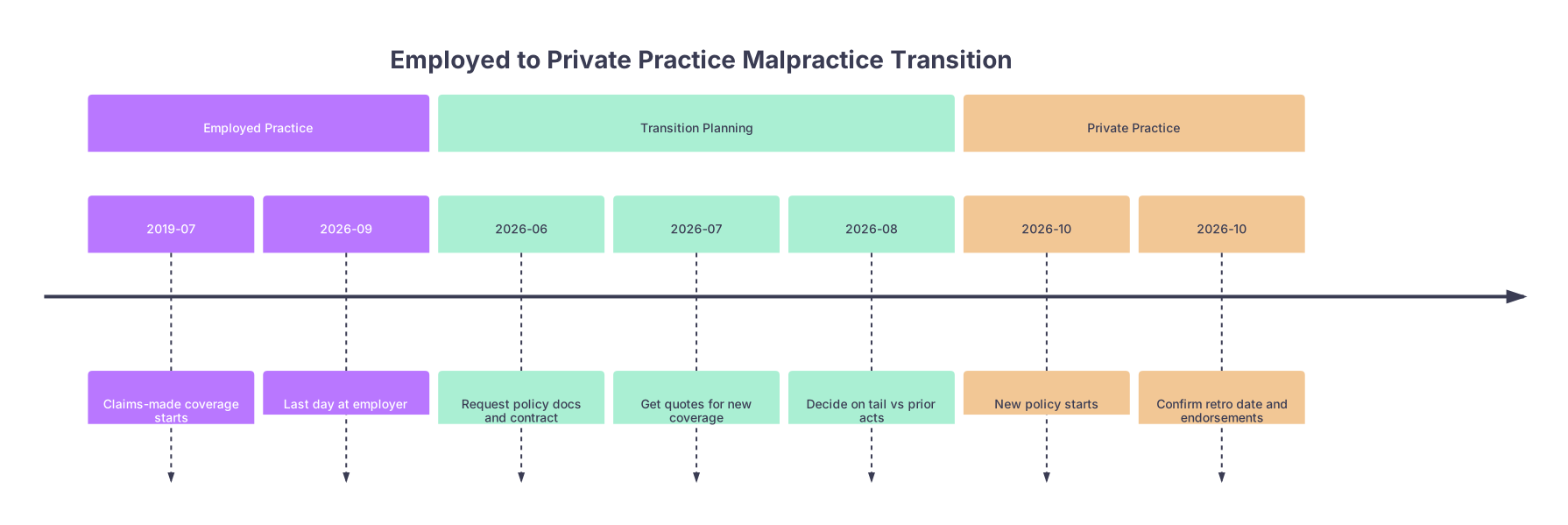
| Period | Event |
|---|---|
| Employed Practice - 2019-07 | Claims-made coverage starts |
| Employed Practice - 2026-09 | Last day at employer |
| Transition Planning - 2026-06 | Request policy docs and contract |
| Transition Planning - 2026-07 | Get quotes for new coverage |
| Transition Planning - 2026-08 | Decide on tail vs prior acts |
| Private Practice - 2026-10 | New policy starts |
| Private Practice - 2026-10 | Confirm retro date and endorsements |
Key rule: there must be no period where you’re seeing patients and do not have active coverage. Even a “just covering a friend’s clinic for a day” gig during your gap can be a serious problem.
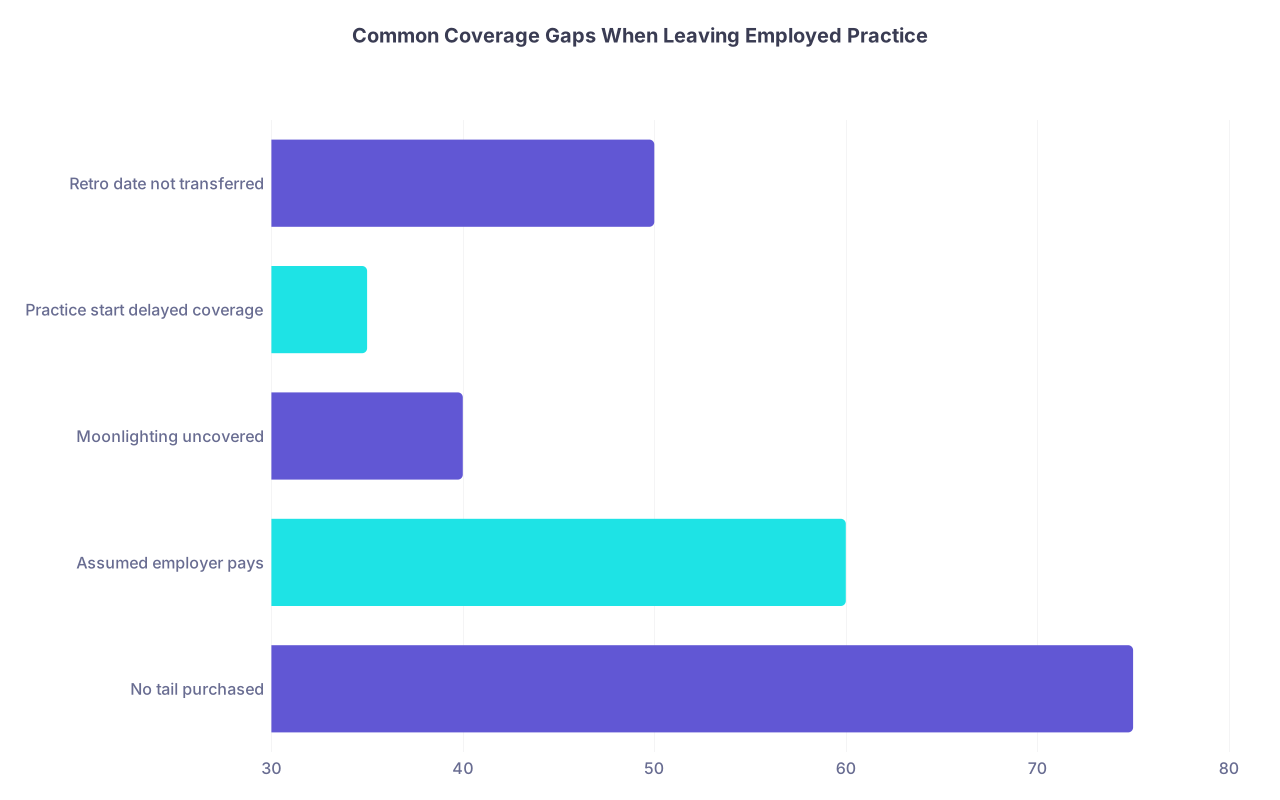
| Category | Value |
|---|---|
| No tail purchased | 75 |
| Assumed employer pays | 60 |
| Moonlighting uncovered | 40 |
| Practice start delayed coverage | 35 |
| Retro date not transferred | 50 |
Step 5: Handle Side Work, Moonlighting, and “Just Helping Out” Carefully
Here’s where real-life sloppiness creeps in.
You might be:
- Doing locums between jobs
- Helping out in a colleague’s office as you build your own
- Covering hospital call a few weekends a month
- Running a small concierge panel while still on the hospital’s payroll
Do not assume your main policy covers all of this.
Confirm, in writing, for each scenario:
- Who is the named insured?
- Are you listed as an insured?
- What locations/procedures are covered?
- Does your employer’s policy exclude outside work?
If you’re starting a private practice while still technically employed, there are three coverage possibilities:
- Employer policy covers all your professional work, including side practice (rare, check for explicit written permission).
- Employer policy covers only work done for employer; you need a separate policy for private practice patients.
- You’re in a gray zone: doing work under the table without anyone really insuring it.
Number 3 is malpractice suicide.
If you’re in the transition blur, you might need:
- Your employer’s policy (for employed work)
- A separate part-time or per-diem policy for early private practice or locums
- Tight documentation of which patients you saw under which entity
Set a clear “switch date” where you stop relying on the employer for any patient care and start operating fully under your new private practice policy.

Step 6: Work With the Right People (Not Just Whoever Cold-Called You)
You want three categories of humans involved:
Healthcare attorney (contract review)
Not your cousin who does real estate. Someone who routinely reviews physician employment contracts and malpractice clauses in your state.Ask them specifically to review:
- Tail provisions and who pays
- Indemnity and hold-harmless language
- Any non-competes affecting your new practice location
Experienced malpractice broker or agent
Not a generic “business insurance” person. You want someone who places coverage for physicians in your specialty and geography weekly, not once a year.You ask them:
- Which carriers are strongest/most stable in my state?
- What are my realistic options for prior-acts coverage?
- Can you model the 10-year cost difference between occurrence and claims-made + tail?
Your new practice’s leadership or ownership
If you are joining an existing private group:- Are you on their group policy or buying your own?
- If on their policy, what happens if you leave—who pays tail?
- Do they require certain limits (e.g., $1M/$3M vs $2M/$6M)?
Do not just nod along when a senior partner says, “We’ve always done it this way and it’s fine.” Ask to see the actual policy structure and your status on it.
Step 7: Consider Long-Term Exit and Retirement While You’re Entering Private Practice
You probably do not want to think about retirement while you are building a private practice. Too bad. This is exactly when you should.
Questions to answer now:
- If I stay with this new practice until I retire, who will pay for tail?
- Does the policy or carrier offer free retirement tail after a certain age or years of coverage?
- If I move states later, can my retro date follow me with another carrier?
Some carriers offer free tail if:
- You’ve been continuously insured with them for X years (often 5+), and
- You fully retire from clinical practice, and
- You’re over a certain age (often 55–60)
If that’s available, that can be a huge win. But only if you actually stay with that carrier long-term.
So picking a carrier purely based on a tiny premium difference, ignoring their retirement tail policy, is short-sighted.

Step 8: Red Flags and Dumb Assumptions to Avoid
I’ve seen variations of these mistakes more often than I should:
“The hospital is huge, they’ll always be there.”
Hospitals merge. Systems collapse. Captives get dissolved. When that happens, their obligation to cover you can become…murky.“If something happens, I’ll just sue them to cover me.”
Enjoy hiring your own defense counsel to sue your former employer while defending a med-mal suit. That’s a two-front war, and you are paying for both.“My friend said their new policy covered old acts automatically.”
There is no “automatic.” There is only: what does your dec page and endorsement actually say?“It’s only primary care, risk is low.”
Primary care gets sued all the time—for delayed diagnoses, med interactions, missed cancer. Low drama does not equal low risk.“I’ll wait until right before I leave to figure this out.”
Carriers move slow. Underwriting takes time. Getting tail quotes, new coverage, and legal review can take weeks to months. Last-minute equals bad deals and errors.
Step 9: Your Concrete Action Plan (No Abstractions)
Here’s exactly what to do if you’re 3–12 months from leaving employed practice for private practice:
Pull your documents this week:
- Current dec page and full malpractice policy
- Employment contract + malpractice amendments
- Any system memos about tail
Mark up your contract:
- Highlight who pays tail
- Highlight any clauses about outside practice
- Highlight termination conditions affecting coverage
Email risk management / HR:
- “Upon my eventual separation, will the hospital purchase tail coverage for my professional liability insurance? If so, under what conditions? Please confirm in writing.”
Schedule a 30–60 minute call with a healthcare attorney:
- Send them your contract and policy
- Ask: “What are my obligations and risks if I leave to start a private practice next year?”
Reach out to 1–2 malpractice brokers:
- Ask for options in your state for your specialty
- Ask for side-by-side quotes: occurrence vs claims-made (with estimate of future tail)
- Ask specifically about prior-acts coverage from 2019 (or your actual retro date)
Decide your strategy for old coverage:
- Employer tail
- Self-funded tail
- New policy with prior-acts (nose) coverage
Decide your strategy for new coverage:
- Occurrence if you value simplicity and can pay more now
- Claims-made if you accept the tail obligation later and want initial savings
Set dates:
- Last day covered by employer
- Policy start date for private practice
- Drop-dead deadline to purchase tail if needed (put it on your calendar with reminders)
Today, not next month:
Open your employment contract and your most recent malpractice dec page. Find the words “claims-made,” “occurrence,” “tail,” and “retroactive date.” If you cannot locate all four, your very next step is to email HR or risk management and ask for the missing documents—before you take another step toward private practice.