
The belief that “my hospital covers me” is one of the most expensive lies residents tell themselves.
You’re in training. You’re overworked. You’re underpaid. And you’re probably walking around completely exposed on malpractice coverage without realizing it.
Let me walk you through the specific gaps residents create when they rely only on hospital or program coverage, and how people get burned by them later. Because I’ve watched more than one physician find out—years after residency—that a cheap policy decision as a PGY‑2 just cost them five figures and a career‑level headache.
The Big Myth: “The Hospital Covers Everything”
Most residents assume three things:
- The hospital’s malpractice policy covers every patient they see
- That coverage automatically follows them when they graduate
- If something goes wrong, the institution’s lawyers will “take care of it”
All three are wrong. And the consequences show up exactly when you’re most vulnerable—during a claim, a board application, or a background check for your dream job.
Here’s the actual reality:
- Hospital coverage is employer-focused, not resident-focused
- Policies are full of carve‑outs and exclusions you’ve never seen
- Coverage usually ends when your employment ends
- Your name might be protected last, not first, when there’s a settlement strategy
The most dangerous part? You don’t feel the problem now. You feel it 3–7 years later when a claim surfaces, a lawyer calls, or a credentialing committee starts asking questions you can’t answer cleanly.
Where Residents Accidentally Go Bare
Let’s get concrete. Here are the biggest holes residents unknowingly create when they rely only on hospital coverage.
1. Coverage That Ends When You Walk Out the Door
Most residency coverage is one of two types:
- Claims-made: Only covers claims filed while the policy is active
- Occurrence: Covers incidents that happened during the policy period, whenever the claim is made
Hospitals love claims-made because it’s cheaper. Residents love not reading anything and just signing contracts.
The trap: you graduate, your claims-made coverage ends, and two years later a patient from your PGY‑3 year files a lawsuit. If there’s no tail coverage in place for that policy?
You’re effectively uninsured for that case.
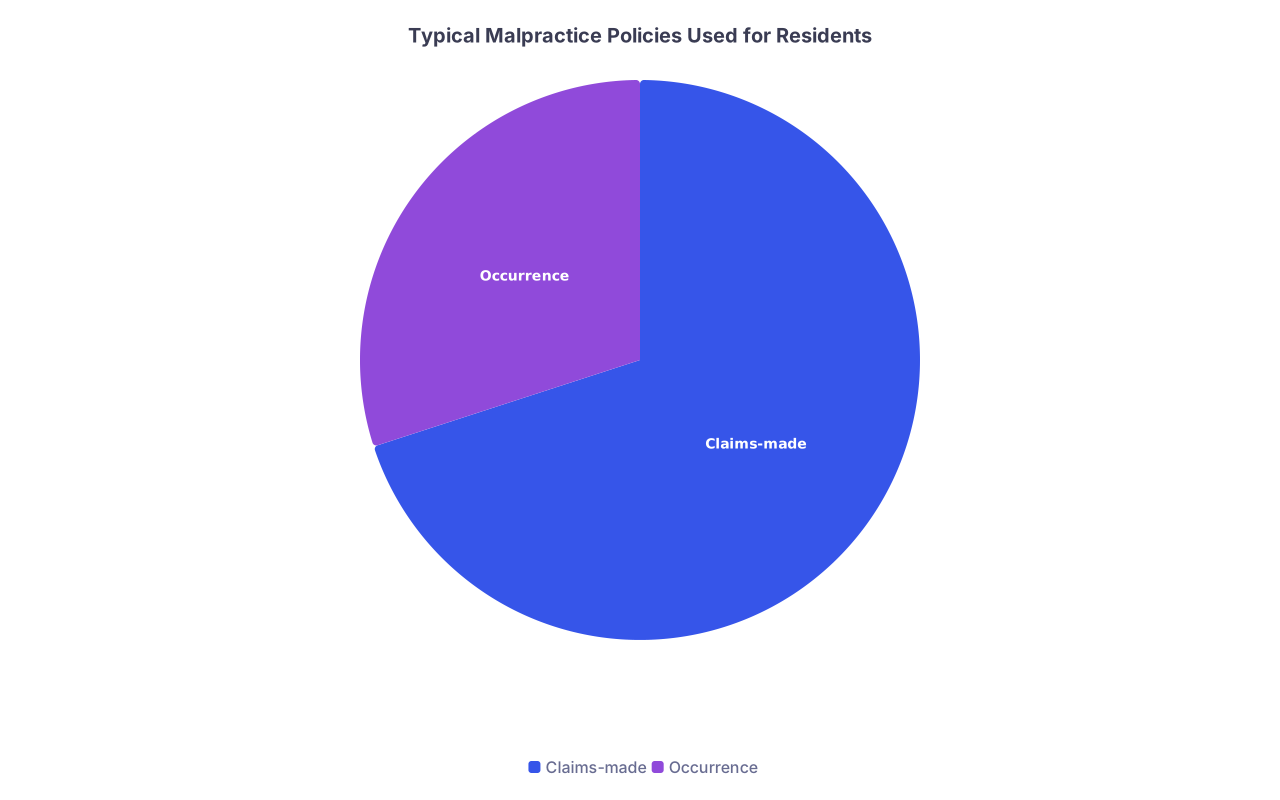
| Category | Value |
|---|---|
| Claims-made | 70 |
| Occurrence | 30 |
What residents assume:
- “The hospital will handle anything from when I was there.”
What the fine print often says:
- Coverage applies only to claims reported during the active policy period
- Once your employment and the policy end, new claims from that time might not be reported under your old coverage unless tail coverage exists
The specific mistakes:
- Never asking: “Is this claims-made or occurrence?”
- Never asking: “Who pays for tail when residents leave?”
- Never getting this in writing from GME, not just verbal reassurance
If your coverage is claims-made and the institution doesn’t provide tail (or you do moonlighting under a different policy), you can leave residency with a ticking time bomb behind you.
2. Moonlighting Without Proper Coverage
This one is brutal because the money feels so good in the moment.
I’ve seen residents:
- Moonlight at an outside hospital assuming “I’m covered under their policy”
- Work urgent care shifts using “the group’s coverage,” having never seen the declaration page
- Accept verbal assurances like: “Yeah, our malpractice covers all docs working here”
You know what doesn’t hold up when a claim hits? Casual hallway promises.
Here are the landmines:
- Separate employer, separate policy: Your residency coverage probably does not cover outside moonlighting
- Coverage limits stacked with others: You might share limits with a whole group, not have your own
- Unclear retroactive date: Your moonlighting policy may only cover incidents after a certain date
| Scenario | Risk Level | Core Problem |
|---|---|---|
| “Covered under hospital policy” with no documents | High | No proof of coverage, unknown limits |
| Working as 1099 contractor | Very High | Often no automatic malpractice provided |
| Using agency shifts | High | Coverage may be narrow and claims-made only |
| Multiple moonlighting sites | High | Fragmented coverage, gaps between policies |
Do not:
- Assume your residency policy extends to any moonlighting
- Assume the moonlighting site’s policy is adequate
- Assume being “added to their policy” means what you think it means
You need to see:
- The name of the carrier
- Limits of liability (e.g., $1M/$3M)
- Whether it’s claims-made or occurrence
- The retroactive date
- Whether tail is provided if you leave
If they can’t or won’t give you the certificate of insurance in writing, that’s your red flag. You’re disposable to them—do not let them risk your license and future earnings for an extra $100/hour.
The Gaps Within Hospital Coverage Itself
Even when you’re “covered” as a resident, that coverage is not designed primarily to protect you. It’s designed to protect the institution.
3. Being Named Personally vs Just as an Agent
In an actual malpractice lawsuit, plaintiffs’ attorneys don’t just sue the hospital. They name:
- The attending
- The resident(s)
- The nurse(s)
- The group
- The hospital
- Sometimes even “John Doe providers”
Your hospital coverage might cover defense and indemnity, but:
- You can still be named individually
- Your NPDB (National Practitioner Data Bank) record can be affected
- Your personal claims history will be impacted for future credentialing and insurance
And here’s the part residents underestimate:
The hospital’s lawyers represent the hospital first, and you as an extension of that.
If the easiest legal path is:
- “We’ll settle and pin this more on the individual clinicians than systemic issues”
Don’t assume the system will twist itself into knots to protect your long-term record.
That does not mean you need to be adversarial. It does mean you cannot be naïve.
4. Activities the Hospital Policy May Not Cover
Residents routinely step into activities that feel “clinical” but may not be covered:
- Giving an off-the-record curbside to a friend’s family member and it turns into “You told me X was fine”
- Charting on a patient when you’re unofficially helping an off-service team
- Volunteering at a free clinic that assumes “everyone’s covered by their home institution”
- Doing telemedicine “on the side,” casually, for people in other states
Many hospital policies are very specific:
- Covered location(s)
- Covered patient type
- Covered scope of practice
- Covered employer relationship
Step outside that structure—even slightly—and you might be outside coverage.

Classic trap: residents volunteering at free clinics.
Some clinics:
- Have their own occurrence policies. Good.
- Assume institutional coverage follows the resident. Very much not always good.
If your hospital explicitly excludes volunteer work or non-employed activities, you’re exposed. And no one at that clinic is going to write you a check if something goes wrong.
The Financial Disaster You Don’t See Coming
Residents underestimate how expensive malpractice mistakes are because everything right now is measured in $50 Uber rides and $6 coffees. You’re not thinking in $40,000 tail premiums and $200,000 future surcharges.
You should be.
5. The Tail Coverage Time Bomb After Training
When you finish residency or fellowship and move on, if you were covered under:
- A claims-made policy, and
- No tail coverage is provided
You are wide open to lawsuits about your residency cases.
Tail coverage is what keeps that old policy alive for future claims related to past care. It’s often:
- 1.5–2.5 times the annual premium
- Due as a lump sum
- Required at the exact moment you’re broke, moving, and starting your attending job
Now imagine:
- You moonlighted on a separate claims-made policy with no tail.
- The group doesn’t provide it.
- Three years later, a bad outcome from that ER shift pops up.
You now get:
- A letter from a plaintiff’s attorney
- A malpractice carrier asking about uninsured prior acts
- A potential denial of coverage from your current insurer because they never underwrote that risk
This is how young attendings end up writing personal checks, negotiating settlements, or paying massive surcharges to a new carrier willing to pick up their dirty history.
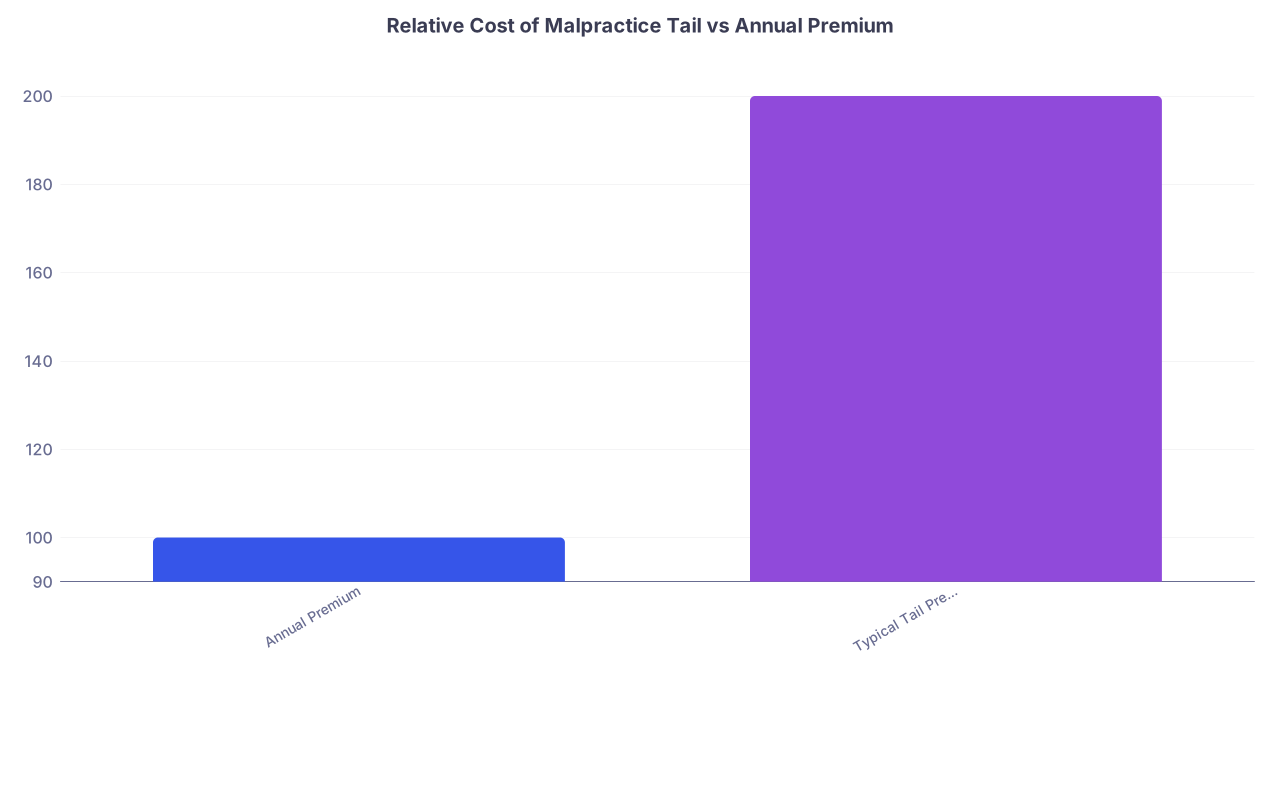
| Category | Value |
|---|---|
| Annual Premium | 100 |
| Typical Tail Premium | 200 |
(Think of that chart as 100 = annual premium; tail commonly runs ~200 relative units—roughly 2x.)
The resident mistake:
“I’ll think about that later when I’m an attending.”
Later might be too late. You want to know now:
- Is my residency coverage claims-made?
- Does the institution provide automatic tail when I leave?
- Does any moonlighting I do include tail when I stop?
If not, you need a plan. Before you walk out the door.
Legal and Career Fallout Residents Don’t Anticipate
The lawsuit itself isn’t the only problem. The paper trail it creates follows you for decades.
6. Credentialing Questions You Can’t Answer Cleanly
Every serious job you’ll want later will ask:
- “Have you ever been involved in a malpractice claim or suit?”
- “Has any malpractice carrier ever declined, limited, or non-renewed your coverage?”
- “Are you aware of any potential claims that may arise from your past practice?”
If:
- You were moonlighting without clear coverage
- You had a claim arise from an uncovered period
- You had to scramble to find a carrier to pick up prior acts
You now have to explain. In writing. To:
- Hospital credentialing committees
- Insurance carriers
- State medical boards in some cases
This is where sloppy resident decisions become career obstacles.
People read those explanations very differently when they see:
- “Well-structured continuous coverage, standard tail in place”
versus
- “Had to buy late retroactive coverage after an uncovered claim arose from moonlighting without a clear policy”
You do not want to be in that second category. It screams poor judgment.
7. Assuming the Institution’s Lawyers Protect You
Another subtle but dangerous assumption: “If I get sued, I’ll have great lawyers. The hospital has a whole team.”
They do. But understand the hierarchy:
- The hospital is the client
- The risk manager works for the hospital
- You’re in the room, but you’re not the main character in their risk story
If litigation strategy involves:
- Settling early to avoid bad press
- Blaming “documentation issues” or “individual clinical judgment”
- Using your deposition to support a narrative that minimizes institutional exposure
Your future insurability and reputation are collateral damage, not the first priority.
You may want:
- Your own independent attorney (yes, even as a resident) if things get ugly
- To understand who officially represents you in a claim
- Clarification on whether you are assigned your own defense counsel or shared counsel
As a resident, you’re taught to be a team player. That’s fine clinically. Legally and financially, you must be more selfish.

How to Avoid These Gaps Without Losing Your Mind
You don’t need to become an insurance expert. But you do need to stop being blind. Here’s the minimum due diligence.
8. The Essential Questions You Must Ask (and Get in Writing)
Ask your GME office, risk management, or HR—in writing—the following:
What type of malpractice policy covers residents—claims-made or occurrence?
Who is the carrier, and what are the limits?
If it’s claims-made, does the institution provide tail coverage for residents when they complete training or leave?
Are residents covered for:
- Moonlighting within the institution?
- External moonlighting?
- Volunteer work?
- Telemedicine?
Am I covered only while I’m an employee, or does coverage follow for incidents that occurred during my training once my contract ends?
For any moonlighting job:
- Request the certificate of insurance
- Confirm:
- Claims-made vs occurrence
- Limits
- Retroactive date
- Tail responsibilities when you stop working there
If an employer or group cannot answer these clearly or resists sharing documents, that’s your warning sign. They care more about filling shifts than protecting you.
9. When You Should Consider Your Own Policy
Some residents (especially in high-risk specialties or doing lots of outside work) decide to buy their own individual malpractice policy. This can:
- Provide a clean, continuous coverage history that’s clearly yours
- Cover volunteer or outside activities that employer policies exclude
- Give you your own advocate in the event of a claim
It’s not always necessary. But it’s often smarter than:
- Trusting multiple vague employer policies
- Hoping everyone’s tail coverage promises actually happen
- Admitting years later on applications that some periods were “unclear”

| Step | Description |
|---|---|
| Step 1 | Resident starts training |
| Step 2 | Review hospital policy |
| Step 3 | Confirm scope of coverage |
| Step 4 | Ask about tail coverage |
| Step 5 | Consider own policy or negotiate |
| Step 6 | Document answers and keep copies |
| Step 7 | Obtain moonlighting policy details |
| Step 8 | Decline job or get own coverage |
| Step 9 | Claims-made or occurrence |
| Step 10 | Tail provided at exit |
| Step 11 | Moonlighting? |
| Step 12 | Adequate coverage? |
The Bottom Line: Protect Future-You
Resident you is tired, overworked, and under‑informed.
Future you is licensed, higher‑earning, and very much affected by what you do right now.
Do not:
- Blindly trust that “the hospital’s got it”
- Moonlight under vague verbal promises
- Ignore the words claims-made, tail, or retroactive date
- Assume your name is a low priority in a lawsuit strategy meeting
You don’t need to become paranoid. You do need to become intentional.
Key takeaways:
- Hospital coverage is designed to protect the institution first, you second—understand exactly what it does and does not cover.
- Claims-made policies and moonlighting arrangements are where residents most often create dangerous uninsured gaps, especially around tail coverage.
- Ask blunt questions now, get the answers in writing, and consider your own policy if there’s any gray zone—because the cost of being wrong shows up years later, when it’s too late to fix.