
It’s 7:45 pm. Clinic ran late. You’re still in the exam room with a patient whose test result wasn’t great and whose care earlier in the week was… not perfect. You’re staring at the EMR, heart pounding, thinking:
“If I tell them everything that happened, will that just hand them a lawsuit on a silver platter?”
You’ve probably heard both extremes.
“Always be 100% honest, it protects you.”
“If you admit anything, you’re done, that’s malpractice suicide.”
So now you’re stuck in the worst place: afraid of being a bad doctor if you don’t tell the truth, and afraid of getting sued if you do.
Let me cut through this: talking honestly to patients, done the right way, usually lowers your malpractice risk. The problem is no one teaches you what “the right way” actually looks like, and the fear of saying the “wrong” sentence is real.
Let’s walk through the scary parts, not the brochure version.
What Really Drives Malpractice Lawsuits (It’s Not Just “Bad Outcomes”)
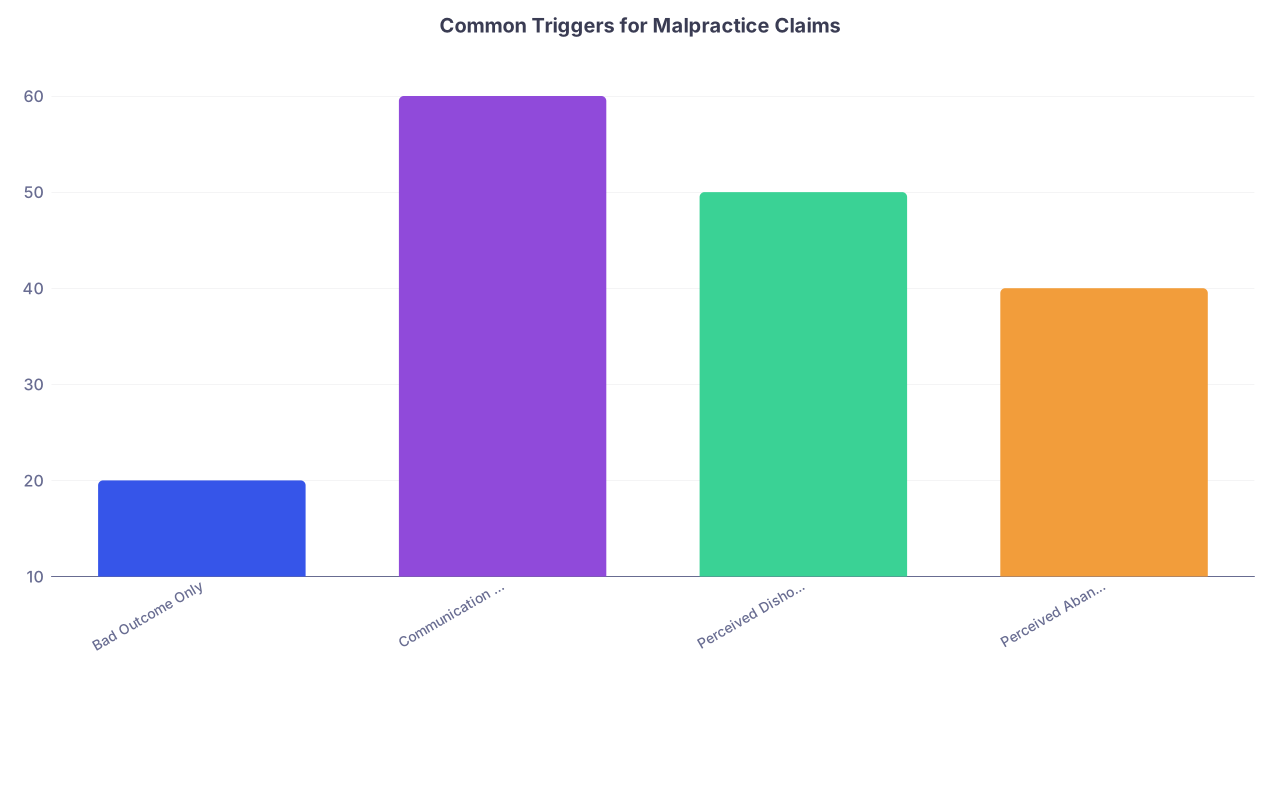
| Category | Value |
|---|---|
| Bad Outcome Only | 20 |
| Communication Problems | 60 |
| Perceived Dishonesty | 50 |
| Perceived Abandonment | 40 |
Most students think lawsuits happen because:
“Patient had a bad outcome → they sue.”
That’s too simple. I’ve seen this pattern over and over in risk management talks, claim reviews, and those grim morbidity-and-mortality meetings where legal quietly sits in the back.
The usual trigger combo is more like:
- Bad outcome
- Plus: patient feeling ignored, dismissed, or misled
- Plus: no one explaining anything clearly afterward
What actually pushes people to call a lawyer isn’t just the complication. It’s this poisonous mix of anger + confusion + betrayal.
Things you hear in depositions and complaints over and over:
- “No one told me this was a risk.”
- “They wouldn’t answer my questions.”
- “They acted like nothing went wrong.”
- “I found out from someone else that they missed my diagnosis.”
That “I feel lied to / shut out” piece is what lights the fuse.
So where does honest communication sit in all this? It usually defuses that fuse. As long as you don’t confuse “being honest” with “self-incriminating monologue with zero filter.”
The Big Fear: “If I Admit Anything, I’m Toast”

You’re probably spinning through all the worst-case legal scenarios in your head:
- “If I apologize, is that legally an admission of guilt?”
- “If I say, ‘We should’ve caught this earlier,’ am I basically writing the plaintiff’s opening statement?”
- “If I mention we had a delay, will they go straight from clinic to a lawyer’s office?”
You’re not crazy for worrying about this. Some attendings flat-out say things like, “Never admit fault,” or “Let risk management handle it, don’t say anything.” So you get the message: honesty is dangerous.
Here’s the reality, not the myth.
1. Apology ≠ Admission of Liability in Many Places
A lot of states have “apology laws” that protect some forms of apology from being used as evidence of liability.
The details vary, but roughly:
- In many states, expressions of sympathy (“I’m so sorry this happened to you”) are protected.
- In some, even partial acknowledgment of error is protected if done in the right context.
- In others, it’s more limited.
So yes, the law does care about the words you use. But the blanket advice “never apologize” is outdated and, honestly, bad medicine.
2. Patients Sue More When They Feel Blown Off
There’s a line I’ve heard from multiple malpractice defense lawyers:
“Patients rarely sue doctors they feel emotionally connected to, even when something really did go wrong.”
Is that always true? No. There are exceptions. Some people will sue no matter what you say or do. But statistically and anecdotally, poor communication is heavily overrepresented in malpractice claims.
The doctor who disappears after a complication? Huge risk.
The doctor who stonewalls questions? Huge risk.
The doctor who sounds scripted and defensive? Also risky.
The doctor who sits down, explains clearly, and treats the patient like a human? Not lawsuit-proof. But much, much safer.
What “Honest Communication” Actually Means (And What It Doesn’t)
This is where everyone gets tangled. “Be honest” sounds simple until you’re the one standing in front of a tearful family.
Honesty does not mean:
- Giving a running, unfiltered play-by-play of every internal doubt you’ve ever had.
- Speculating about who on the team “messed up.”
- Guessing at legal conclusions: “This was negligence,” “We obviously failed.”
Honesty does mean:
- Clear, factual explanations.
- Not lying. Not hiding important information.
- Not misleading patients about what happened, what it means, and what’s next.
You Can Be Honest Without Self-Destructing
Think of it like this: your job is to tell the medical truth in a way that’s accurate, compassionate, and doesn’t editorialize about legal fault.
There’s a huge difference between:
- “We delayed your surgery because the OR was backed up and your labs weren’t back yet. I know that was frustrating, and I’m sorry for the delay.”
versus
- “We totally messed up and that delay is probably why you had this complication, this is all our fault.”
First is honest, factual, takes responsibility for the experience, shows empathy.
Second is emotional dumping and may not even be accurate.
You’re not a judge or a malpractice attorney. Don’t assign legal blame. Your lane is: facts, empathy, and next steps.
Does Talking Honestly Increase My Malpractice Risk… Financially?
Let’s pull the malpractice insurance angle into this, because that’s where this really keeps people up at night: not just “will I get sued,” but “will my premiums explode, will I be uninsurable, will I tank my career?”
| Factor | Effect on Malpractice Risk* |
|---|---|
| Clear documentation | Lowers |
| Compassionate disclosure | Lowers / Neutral |
| Lying or hiding facts | Raises |
| Defensive, evasive tone | Raises |
| Early patient outreach | Lowers |
*General trend from risk management data and defense attorney experience, not a perfect guarantee.
Malpractice insurance companies are not sitting there punishing you for being kind and transparent with patients. What they really hate are:
- Obvious documentation gaps
- Clear miscommunication
- Angry patients who felt misled and then found out later what really happened
Some systems even have early disclosure and offer programs. Those are built around the idea that prompt, honest conversation after an adverse event, sometimes with early compensation offers, can reduce lawsuits and long, expensive litigation.
So no, malpractice carriers are not thinking, “Ugh, another doctor who tells patients the truth, time to jack their premiums.” They’re thinking, “Does this doctor create situations that explode into claims?”
Good communication tends to calm things down. Bad communication pours gasoline.
What To Actually Say When Something Goes Wrong
Here’s the part you probably really care about: the script. The “please just tell me what words are safe” part.
I’ll give you a simple structure that’s usually defensible and also fundamentally decent.
Step 1: Acknowledge and Empathize
“I’m so sorry you’re going through this. I can see how painful / scary / frustrating this is.”
Protected in many states. Human everywhere.
Step 2: State the Facts Clearly, In Plain English
“At your visit last week, we ordered X test. The result shows Y. That means Z for your health.”
Avoid:
- Blame assignments
- Dramatic language
- Speculation
Stick to what you know right now.
Step 3: If There Was a Delay or Missed Opportunity, Address It Without Self-Destruction
“This could have potentially been picked up earlier. We’re reviewing the care you received, including my own decisions, to understand exactly what happened and how we can improve.”
Notice:
- You’re not saying “I committed malpractice.”
- You’re not blaming colleagues.
- You’re not hiding that there might have been a problem.
Step 4: Describe Next Steps (Patients Care About This More Than You Think)
“Right now, the most important thing is that we do A, B, and C for your health. I also want to make sure your questions are answered. After this visit, I’ll be talking with our team / risk management / department to review your case in detail.”
When people feel like there’s a plan, they’re less likely to spiral into “I have to go outside the system to get justice.”
The Part You’re Really Afraid Of: “What If I Get Sued Anyway?”
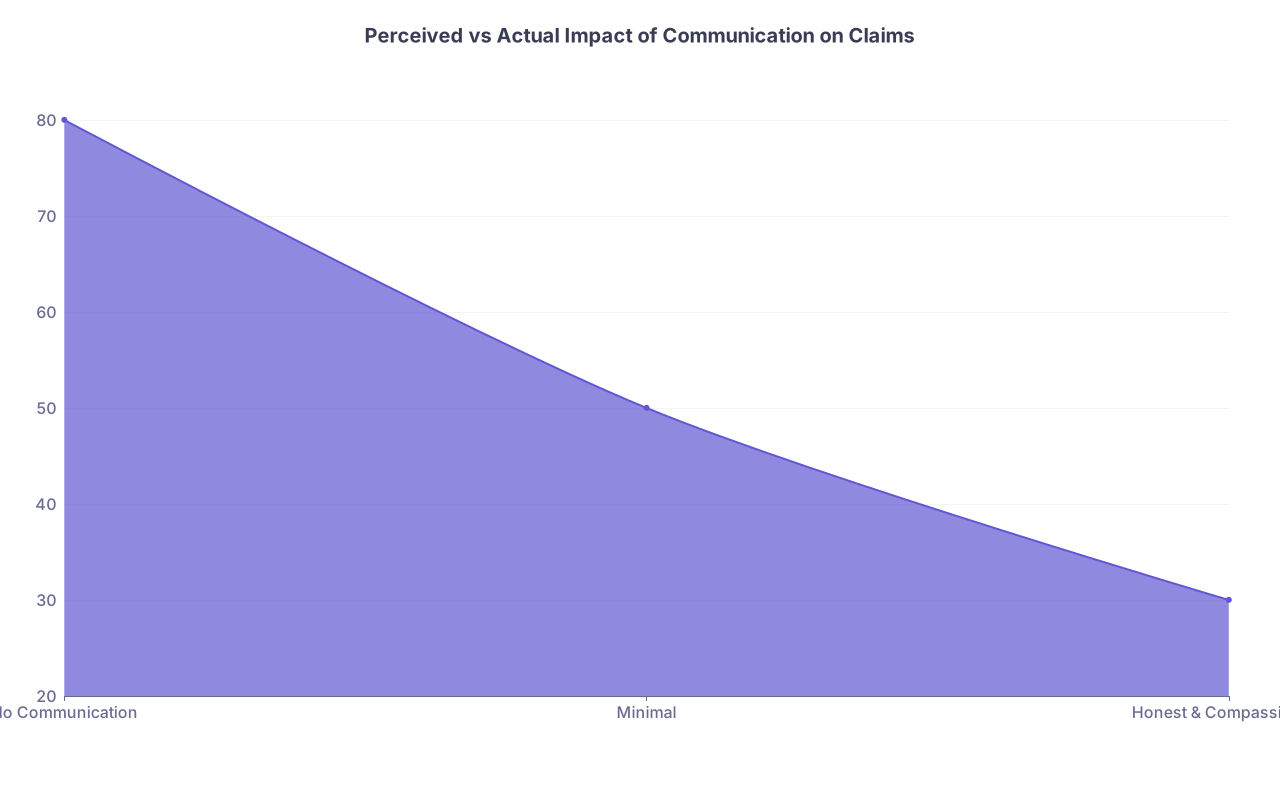
| Category | Value |
|---|---|
| No Communication | 80 |
| Minimal | 50 |
| Honest & Compassionate | 30 |
Yes, sometimes you do everything “right” and they still sue.
You were honest. You apologized. You did a careful disclosure. You followed the script.
And still. The letter comes. Or the sheriff shows up with papers.
That’s the nightmare.
Here’s the hard truth: you can’t make malpractice risk zero. Medicine has irreversible outcomes. People get hurt, sometimes badly, even when you do everything correctly.
The real question isn’t: “Can I avoid all risk?”
It’s: “Am I going to practice medicine in a way that I can live with, knowing I did the right thing medically and ethically, while not being reckless legally?”
Honest, thoughtful communication is not reckless. It’s the standard of decent care. If a lawsuit still comes, your defense team will be very, very glad you:
- Documented conversations
- Didn’t lie or contradict yourself
- Avoided wild, self-blaming statements
- Showed that you were responsive and caring
Plaintiff attorneys love cold, dismissive, inconsistent doctors. They’re much less enthusiastic about suing the physician who sat on the bed, explained carefully, wrote excellent notes, and didn’t try to hide anything.
How Documentation Fits Into This (Your Quiet Safety Net)
You can say all the right things to the patient and still undo yourself with terrible documentation.
After any serious conversation about a bad outcome or potential error, your note needs to reflect:
- What you explained in plain language
- That risks / options were discussed (if applicable)
- That questions were invited and addressed
- That a plan was agreed upon and next steps were clear
What you don’t want is:
Chart says “everything normal” while the patient remembers “doctor said there might have been a delay and they’re looking into it.” That gap is brutal in court.
Be consistent. Your words and your chart should match.
Red Flags: When You Should Stop Talking and Call Risk / Your Attending
There are definitely moments where you should not keep ad-libbing.
If:
- The patient explicitly says they’re consulting a lawyer
- You’re being asked, “So are you admitting you committed malpractice?”
- You’re tempted to blame another provider, nurse, or service in the moment
- You feel yourself getting defensive, angry, or panicky
That’s your signal: stop. Say something like:
“I want to make sure we handle this correctly for you. I’m going to involve our risk management / patient relations / my attending so we can follow our process and make sure you get clear information.”
Then go get help. You’re not supposed to solo this.
Being honest doesn’t mean being reckless or alone.
So… Will Talking Honestly to Patients Increase My Malpractice Risk?
Short answer: generally no. Done properly, it tends to reduce it.
What increases your malpractice risk is:
- Lying or shading the truth
- Avoiding hard conversations
- Being vague, dismissive, or defensive
- Failing to document what you told the patient
What protects you (ethically and often legally) is:
- Honest, factual, compassionate conversations
- Clear, consistent documentation
- Knowing when to pause and get risk management involved
You’re afraid that if you open your mouth and tell the truth, your financial and legal future explodes. In reality, systematically not talking honestly is what builds the perfect storm: angry, confused patients who feel they have no other option but to sue.
You can be both:
- A doctor with integrity who tells patients the truth
and - A doctor who’s not casually handing plaintiffs’ attorneys gifts.
That middle ground exists. You just need to practice it.
FAQ (Exactly 4 Questions)
1. Can I say “I’m sorry” without it being used against me?
In many states, expressions of sympathy like “I’m sorry this happened” are protected by apology laws and can’t be used as admissions of liability. But “I made a negligent error” is a different beast. Stick to empathy + facts, avoid legal conclusions like “fault” or “negligence.” Know your institution’s policy and your state’s rules, but don’t be the robot who never says “I’m sorry.”
2. Should I admit to a mistake if I think I really did make one?
You should not lie or mislead, and you must follow your institution’s disclosure policy. Often the right move is: acknowledge that something may not have gone as intended, express that the care and decisions are being reviewed, and involve your attending/risk management. You can be transparent that you’re reviewing possible errors without making off-the-cuff legal admissions that might not even be accurate.
3. Will one malpractice claim ruin my ability to get insurance or a job?
One claim, even one payout, usually does not end your career. Malpractice carriers and credentialing bodies look at patterns: multiple claims, repeated similar errors, unprofessional behavior, refusal to remediate. A single case—especially if your documentation is solid and your communication was reasonable—may raise premiums but doesn’t usually make you uninsurable. The horror stories you hear are outliers, not the norm.
4. As a student or resident, should I be the one doing the disclosure?
You should be part of the conversation, but not alone. Serious adverse event disclosure is typically led by the attending or a designated physician, sometimes with risk management present. Your job: don’t lie, don’t speculate, don’t disappear. If you think a disclosure is needed, tell your senior/attending immediately and say, “I’m worried the patient/family doesn’t understand what happened and I think we need to talk with them.”
Today, do one small, concrete thing:
Open a recent note for a visit where you explained a risk or a bad result. Read your documentation and ask yourself: “If this went to court, would this note clearly show that I was honest, clear, and responsive to the patient?”
If the answer is no, fix the way you chart starting with your very next patient.