
What happens when your insurer settles a malpractice claim you’re ready to fight—and they do it without your approval—then report that payout to the NPDB and your hospital credentials committee?
That’s not a hypothetical. I’ve seen it wreck careers.
This is what happens when doctors treat malpractice policies like boring paperwork instead of loaded legal weapons. Specifically: when they ignore the consent-to-settle clause or—worse—don’t have one at all.
You can be clinically excellent, chart like a star, and still get burned if you hand control of settlements to an insurer whose main goal is cutting their losses, not protecting your reputation.
Let’s walk through the mistakes that get smart physicians trapped here—and how you avoid becoming another “We had a great doc, but then their record got messy” story.
1. The Core Mistake: Not Knowing Who Controls Settlement
Every malpractice policy answers a blunt question:
When a claim hits, who decides whether to settle? You or the insurer?
That answer lives in a short, deceptively boring paragraph: the consent-to-settle clause.
You’ll typically see one of three situations:
| Type | Who Controls Settlement | Risk to Reputation |
|---|---|---|
| No consent clause | Insurer only | Very High |
| Pure consent-to-settle | Physician must agree | Lower |
| Hammer clause version | Physician can refuse but pays price | Medium–High |
If your policy:
- Has no consent-to-settle clause → the insurer can settle whenever they want, for whatever amount they want, even if you beg them not to.
- Has a weak or conditional consent clause → you may “consent,” but if you refuse, they punish you financially (that’s the hammer clause).
- Has a strong consent-to-settle clause → they can’t settle without your written approval, with no backdoor penalty.
The career-killing mistake?
Signing or renewing a policy without knowing exactly which of these you have—then finding out the hard way when the insurer caves and settles purely to save legal fees.
2. Why Settlements You Don’t Want Can Destroy Your Career
A lot of doctors think: “If they settle, at least it goes away, right?”
Wrong. It follows you. For years.
Here’s the part many physicians don’t connect:
- Any indemnity payment on your behalf almost always triggers a report to the National Practitioner Data Bank (NPDB).
- Hospitals, health systems, and many large groups check the NPDB for credentialing, privileging, and renewals.
- State medical boards can and do pull NPDB reports when there’s any question about your practice.
- Payers (Medicare/Medicaid, large insurers) can become skittish when they see a pattern of paid claims.
So imagine:
You have a defensible case. Expert reviews support your management. The plaintiff’s theory is weak. You’re willing to testify.
But your insurer looks at the numbers and thinks:
“We can spend $200k defending this or pay $75k to make it go away. The doc’s reputation isn’t our problem. Settle.”
They write a $75k check. NPDB report. Now you look like a doc who had a malpractice payout.
Not fair. But real.
Why even small settlements hurt
I’ve seen credentialing committees do this:
- Look at an NPDB report showing a $25k–$100k payout
- Not dig deep into nuance
- Just flag you as “has prior indemnity payment” in your file
One settlement?
- Maybe explainable.
Multiple settlements?
- You start to look like “high risk,” even if every single payment was because the insurer took the cheap way out.
You will be the one:
- Explaining every claim over and over on credentialing forms
- Facing extra scrutiny on quality reviews and renewals
- Worrying about your reputation when you change jobs or states
All because you let someone else decide to settle in your name.
3. The Hammer Clause Trap: “Consent” That Isn’t Really Consent
Some policies look friendly at first glance:
“We will not settle any claim without the insured’s consent.”
Sounds great. Until you read the next sentence:
“…however, if the insured refuses to consent to a settlement we recommend, our liability shall not exceed the amount for which the claim could have been settled, plus defense costs incurred to the date of refusal.”
That’s the infamous hammer clause.
Translation:
You’re “allowed” to refuse a settlement, but if the case later goes badly, they’ll pretend they only owed the earlier settlement amount. Any extra judgment? That’s on you.
Example:
- Plaintiff offers to settle for $200,000
- You believe you’ll win at trial; you refuse
- Jury comes back with a $1,000,000 judgment
- Policy limit is $1,000,000
With a hammer clause, the insurer may argue:
- “We only owe $200k (the amount of the refused settlement) plus whatever defense costs we had at the time you refused.”
- You could be personally exposed for the remaining $800k judgment.
Now ask yourself honestly:
Can you truly consent “freely” when that financial gun is pointed at your head?
A hammer clause does not always mean you run. But pretending it’s not a big deal? Huge mistake.
4. How Insurers Think (and Why That Can Hurt You)
Insurers have a simple calculus: total cost.
They weigh:
- Cost to defend the case through trial
- Probability of losing
- Potential verdict size
- Administrative hassle
They do not weigh:
- Your future job prospects
- How this looks to a future credentialing committee
- How many explanations you’ll write over the next 20 years about this NPDB hit
Their objective: minimize their financial loss. Not protect your long-term reputation.
If you don’t have real consent-to-settle rights, you’ve effectively told them:
“Do whatever is cheapest for you. Use my name. Report it in my file. I’ll deal with the fallout.”
That’s not a business decision. That’s self-sabotage.
5. Red Flags to Spot in Your Policy (or Contract)
Stop guessing. Go find your actual policy—full form, not the summary page. Look for specific red flags.
Phrases that should make you nervous
If you see language like:
- “The Company may make such investigation and settlement of any claim as it deems expedient.”
- “The insurer shall have the right to settle any claim as it considers appropriate.”
- “We will defend and may settle the claim at our discretion.”
You do not have a consent-to-settle right.
If you see:
- “We will not settle any claim without the named insured’s written consent provided that…” followed by:
- “such consent shall not be unreasonably withheld”
- or a description of reduced coverage / liability limits if you refuse
You likely have a hammer clause or a heavily conditional consent arrangement.
You’re looking for clean language, something like:
“We will not settle any claim without the insured’s prior written consent.”
No “however.” No “provided that.” No coverage penalty for refusal.
Don’t forget employer policies
Another silent mistake: relying on your employer’s malpractice policy and assuming it protects you.
Here’s what often happens:
- Large system buys group coverage
- Policy gives all settlement authority to the system or insurer
- You, as an employed physician, are just a line on a schedule—no individual consent rights
So in practice:
- Hospital administration and insurer might settle a case with your name on it
- They might never ask if you want to fight
- You might not find out until after they’ve agreed in principle
And yes, that settlement still hits your record, not theirs.
If your coverage is employer-provided, you need to know:
- Do you personally have any consent-to-settle authority?
- Or is that control given to the institution?
If the latter, understand what you’ve traded: convenience and paid premiums in exchange for control over your career risk.
6. Practical Steps to Avoid This Career-Killing Mistake
You don’t fix this by wishing insurers were nicer. You fix it by being deliberate.
Step 1: Get your policy and read the actual words
Not the brochure. Not the website FAQ. The policy language.
Find:
- Section on “Defense and Settlement” or similar
- Any section titled “Consent to Settle,” “Settlement Authority,” or “Hammer Clause”
If you can’t find it, ask your broker or agent to point to the exact paragraph that governs settlement authority.
Step 2: Classify your current situation
You’re in one of three buckets:
- No consent – insurer full control → most dangerous
- Consent with hammer – you can refuse, but risk a financial penalty → risky
- Pure consent-to-settle – no settlement without your written approval → better, still needs context
Be brutally honest about which one you have. Don’t talk yourself into “it’s probably fine” because you don’t want to deal with it.
Step 3: If possible, change carriers or policy type
For many physicians (especially in high-risk specialties), having true consent-to-settle is worth:
- Higher premiums
- A slightly less “comfortable” relationship with the insurer
Especially if you:
- Do procedures
- Are in a litigious state
- Plan to change jobs, states, or systems in the future
You want a clean, defendable record. Settlements you didn’t approve do not help that.
Step 4: Negotiate or at least clarify hammer clauses
You may not always be able to remove hammer language, but you can:
- Ask how it’s historically applied
- Ask whether they will put in writing any limitations on how aggressively they use it
- At least understand your exposure if you refuse a settlement recommendation
If your broker shrugs it off as “standard boilerplate,” push back. Boilerplate is how physicians get trapped.
Step 5: Coordinate with your employment contract
If you’re employed:
- Check your employment agreement for language about:
- Who controls defense and settlement
- Whether you must cooperate with employer/insurer’s settlement strategy
- Many contracts say you must cooperate fully, which in practice means:
- If they want to settle, you’re expected not to obstruct
You may not be able to rewrite everything. But you should at least know:
- Are you signing up for potential NPDB hits you don’t control?
- Are you comfortable with that?
If not, this may need to factor into whether you stay or go.
7. Risk vs. Control: A Quick Comparison
Let’s be concrete about how these choices play out over a career:
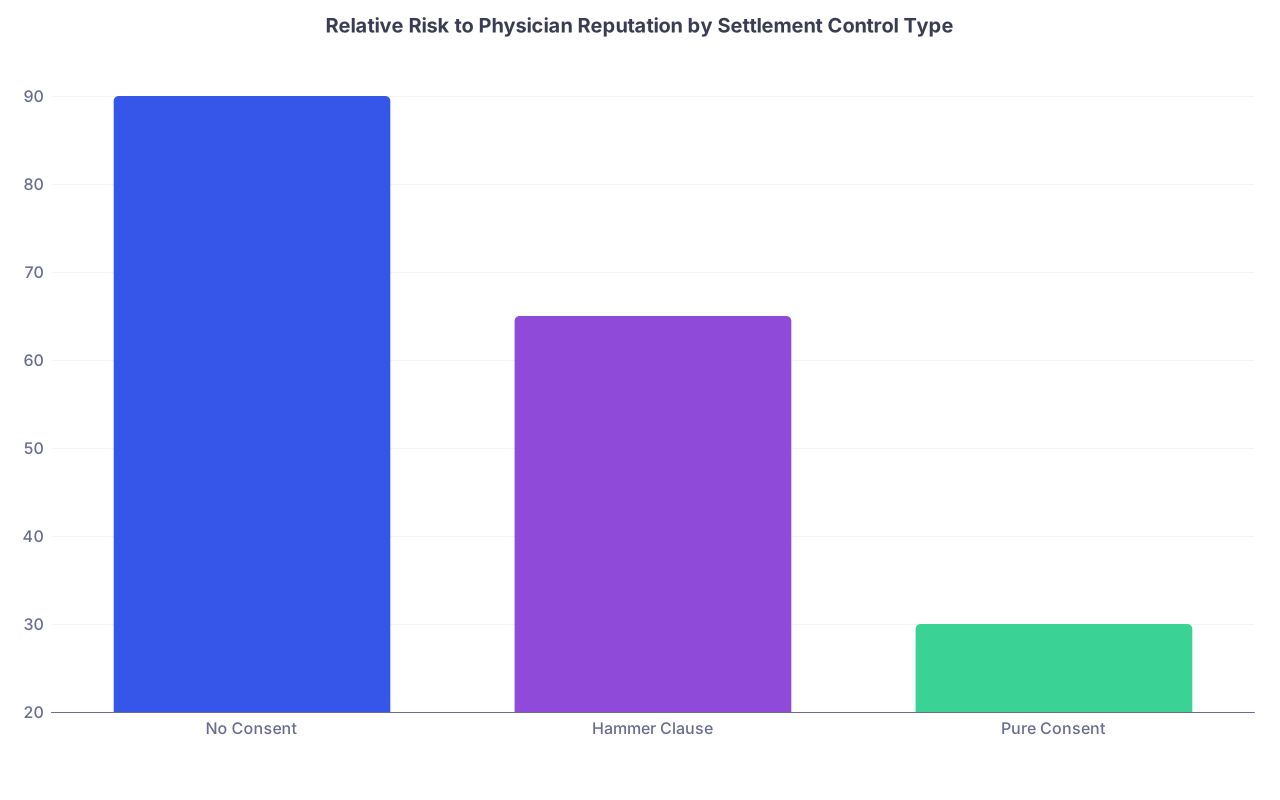
| Category | Value |
|---|---|
| No Consent | 90 |
| Hammer Clause | 65 |
| Pure Consent | 30 |
(Think of those numbers as “reputation risk score,” not percentages.)
- No consent → insurer freely settles weak cases to save money; you accumulate NPDB hits you wouldn’t have chosen
- Hammer clause → you get some say, but face huge pressure to accept settlements to avoid financial disaster
- Pure consent → you have true leverage; you can choose to fight winnable cases without being cornered
None of these eliminates malpractice risk. But one of them gives you agency. That matters.
8. Real-World Scenario: How This Blows Up Quietly
Walk through this:
Dr. S, OB/GYN, mid-career.
- Employed by large hospital system
- Covered under system’s group policy
- No personal review of the policy; assumes “we have great coverage”
Case:
- Shoulder dystocia delivery, known complication, charting solid
- Peer review supports her decision-making
- Plaintiff attorney demands $300k
- Hospital risk management and insurer do a cost-benefit analysis:
- Defense experts + trial could cost $200k+
- Verdict potential $1–2 million if jury sympathetic
- Settlement demand of $300k looks cheap
Dr. S wants to fight. She’s adamant the care was appropriate.
The hospital and insurer decide to settle anyway.
Result:
- $300k NPDB report with her name
- Future credentialing forms: she now checks “Yes” to prior malpractice settlement
- Every new hospital, group, or insurer:
“Explain the circumstances of this malpractice payment…”
And the kicker: she never had legal power to stop it. Because she never had a real consent-to-settle right in the first place.
Was the hospital irrational? No.
Were they protecting her future? Also no.
9. Don’t Ignore the Timeline: When These Decisions Hit
Most doctors only think about insurance when they buy or renew it. Bad timing.
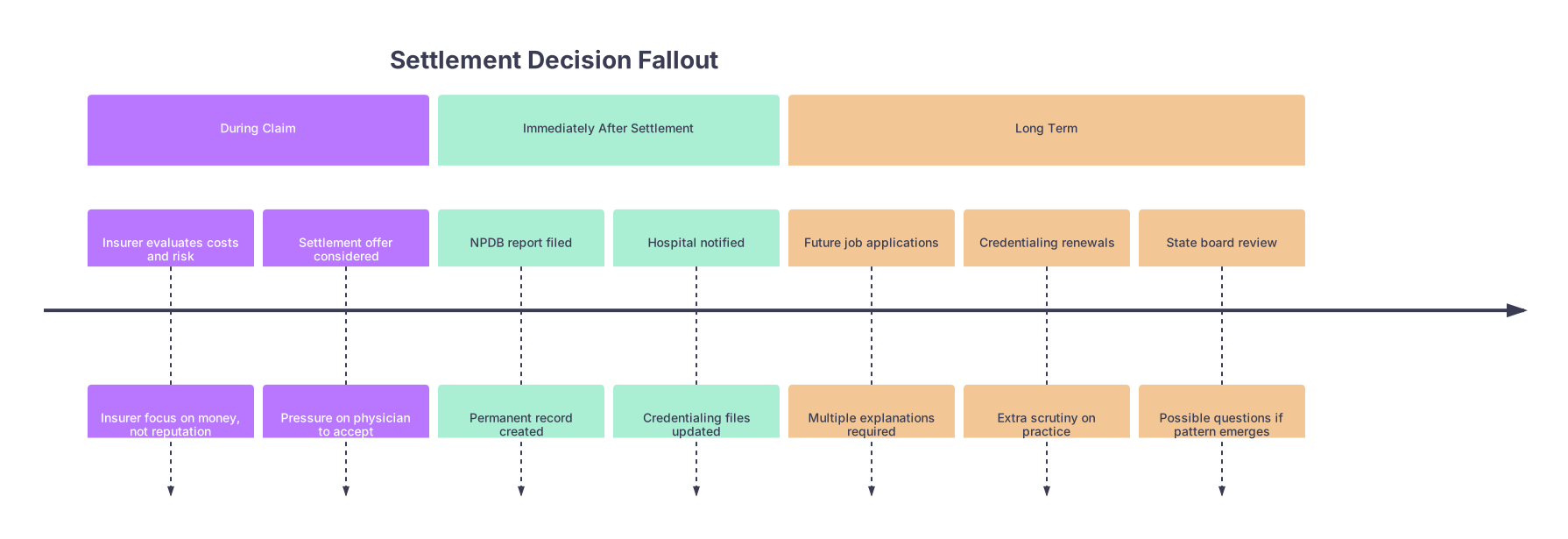
| Period | Event |
|---|---|
| During Claim - Insurer evaluates costs and risk | Insurer focus on money, not reputation |
| During Claim - Settlement offer considered | Pressure on physician to accept |
| Immediately After Settlement - NPDB report filed | Permanent record created |
| Immediately After Settlement - Hospital notified | Credentialing files updated |
| Long Term - Future job applications | Multiple explanations required |
| Long Term - Credentialing renewals | Extra scrutiny on practice |
| Long Term - State board review | Possible questions if pattern emerges |
The settlement choice gets made quickly.
The career damage drips out over years.
That’s why you don’t wait until you’re sued to decide if you care about consent-to-settle. You decide now, when you still have choices.
10. How to Talk to Brokers and Risk Managers Without Getting Snowed
Most physicians hate these conversations. The language is opaque, the incentives are misaligned, and some brokers absolutely bank on your fatigue.
Here’s how you cut through it.
Ask bluntly:
- “Does this policy give the insurer full authority to settle without my consent?”
- “Show me the exact consent-to-settle language.”
- “Is there a hammer clause or any reduction in coverage if I refuse a settlement?”
- “If I refuse a recommended settlement, what is the maximum amount I could be personally responsible for?”
- “In the last five years, how often has this carrier settled over a physician’s objection?”
If they can’t answer clearly, that’s your answer.
You’re about to trust these people with decisions that affect your license, your earning potential, and your reputation. If they get defensive when you ask these questions, that’s a red flag.
You are not being “difficult.” You’re protecting a multi-million-dollar career.
11. Quick Reference: What You Want vs. What Burns You
| Item You Should Check | Safe Answer |
|---|---|
| Insurer can settle without you | **No** |
| Explicit consent-to-settle clause | **Yes** |
| Hammer clause present | Prefer **No** |
| NPDB reporting after payment | Understand/Confirm |
| Employer controls settlement | Know it & accept risk |
And if you’re visual:
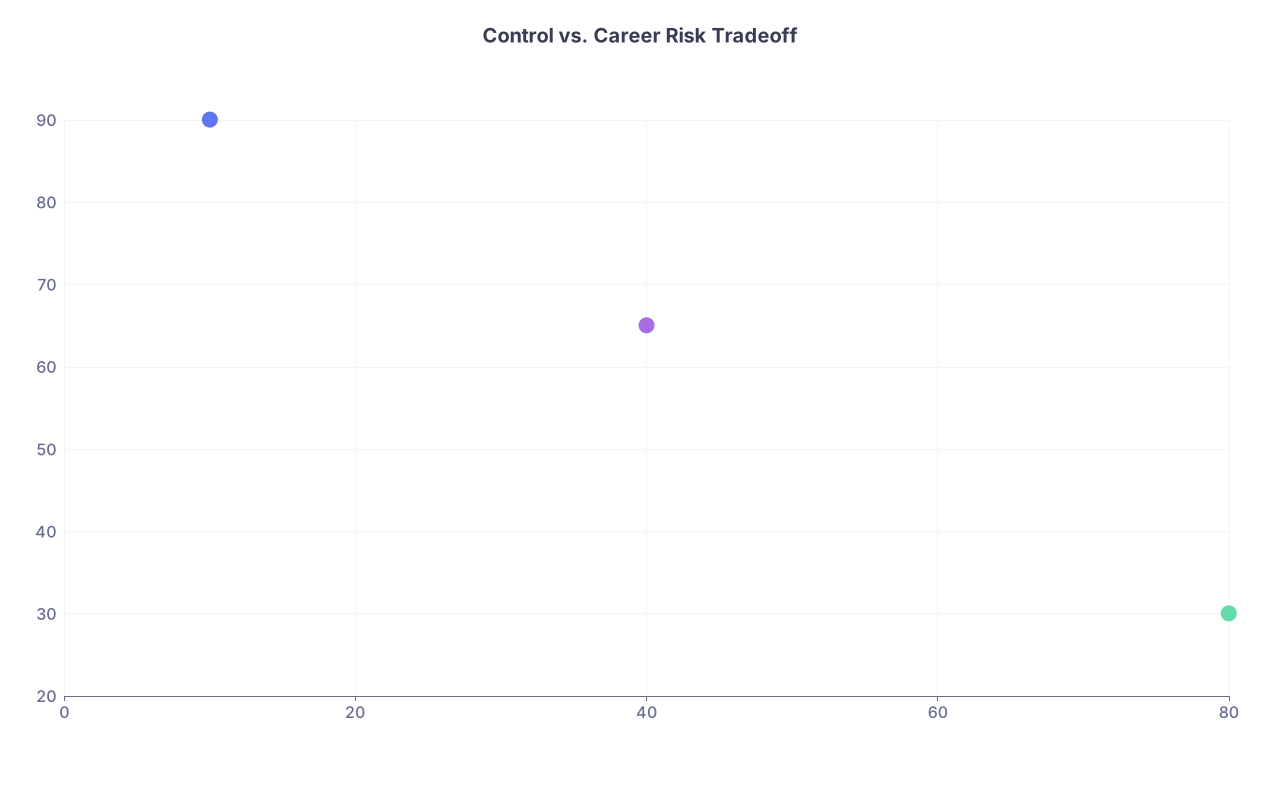
| Category | Value |
|---|---|
| No Consent | 10,90 |
| Hammer Clause | 40,65 |
| Pure Consent | 80,30 |
- X-axis (first number) = Your control
- Y-axis (second number) = Career risk from unwanted settlements
You want to live as far right and as low as you can get.
12. Bottom Line: Don’t Let Someone Else Spend Your Reputation
You worked too hard for credentialing, board certification, and referrals to let a silent clause in an insurance contract sell you out.
Ignoring consent-to-settle language is not a minor oversight. It’s handing a stranger the right to:
- Decide how many NPDB hits you take
- Decide when your name gets tied to a payout
- Decide what you’ll be explaining for the next decade of your career
You may still decide certain settlements are worth it. Sometimes they are. But you should be the one making that call—with full awareness of the tradeoffs.
Not your insurer. Not your hospital. You.
FAQ (Exactly 5 Questions)
1. If I have a consent-to-settle clause, can the insurer still pressure me to settle?
Yes. They can’t settle without your signature, but they can strongly “recommend” settlement and warn you about trial risks, jury unpredictability, and potential excess judgments. You’ll still feel pressure. The difference is, you retain the legal right to say no. That leverage matters, especially in defensible cases where you’re willing to testify and your experts are solid.
2. Does every settlement get reported to the NPDB?
Almost every indemnity payment made on behalf of an individual practitioner gets reported. There are narrow exceptions (like pure corporate-only payments in some situations), but you should assume: if the insurer pays money with your name attached on the claim, an NPDB report is likely. Defense-only costs (no payment to plaintiff) are not reportable.
3. Are claims-made vs. occurrence policies related to consent-to-settle?
No. Claims-made versus occurrence refers to when coverage is triggered (based on claim date vs. event date), not who controls settlement. You can have a claims-made policy with strong consent rights or none at all. Same with occurrence. Don’t let anyone distract you with that distinction when you’re asking specifically about settlement authority.
4. Can I negotiate my way out of a hammer clause?
Sometimes. Individual physicians with leverage (high earners, needed specialists, or part of a larger group) may get better terms or a softened hammer clause. Solo docs have less leverage, but it’s still worth asking. At minimum, you can clarify how they apply it and what your exact exposure would be if you refuse a recommended settlement. If they refuse to discuss or explain clearly, file that under “things I don’t trust.”
5. If my employer controls settlement, is there anything I can do?
You can’t always change the policy, but you can: (1) Know exactly what authority you have (usually none), (2) Ask for contractual language requiring that you be consulted before any settlement involving you, and (3) Factor this risk into job decisions. If you’re in a high-risk specialty and your employer can unilaterally settle in your name, that should weigh heavily when comparing offers, negotiating terms, or deciding how long you stay there.
Key takeaways:
- If you don’t know your consent-to-settle status, you’re gambling with your career, not just your premiums.
- Insurers optimize for cost, not your future reputation; if they control settlement, they’ll use your name to save their money.
- Get the policy, read the clause, and insist on real consent wherever you realistically can—before a claim makes the decision for you.