
The biggest financial landmine in your first attending contract is not your salary. It’s your tail coverage. And senior partners know it.
They may not be “hiding” it in a cartoon-villain way. But I’ve sat in enough partner meetings and contract reviews to tell you: they’re very aware that if you truly understood tail coverage costs, you’d negotiate a very different deal—or walk away.
Let me walk you through what really happens on their side of the table, and how you keep from getting financially trapped by a malpractice tail you never saw coming.
The Ugly Math They Hope You Don’t Run
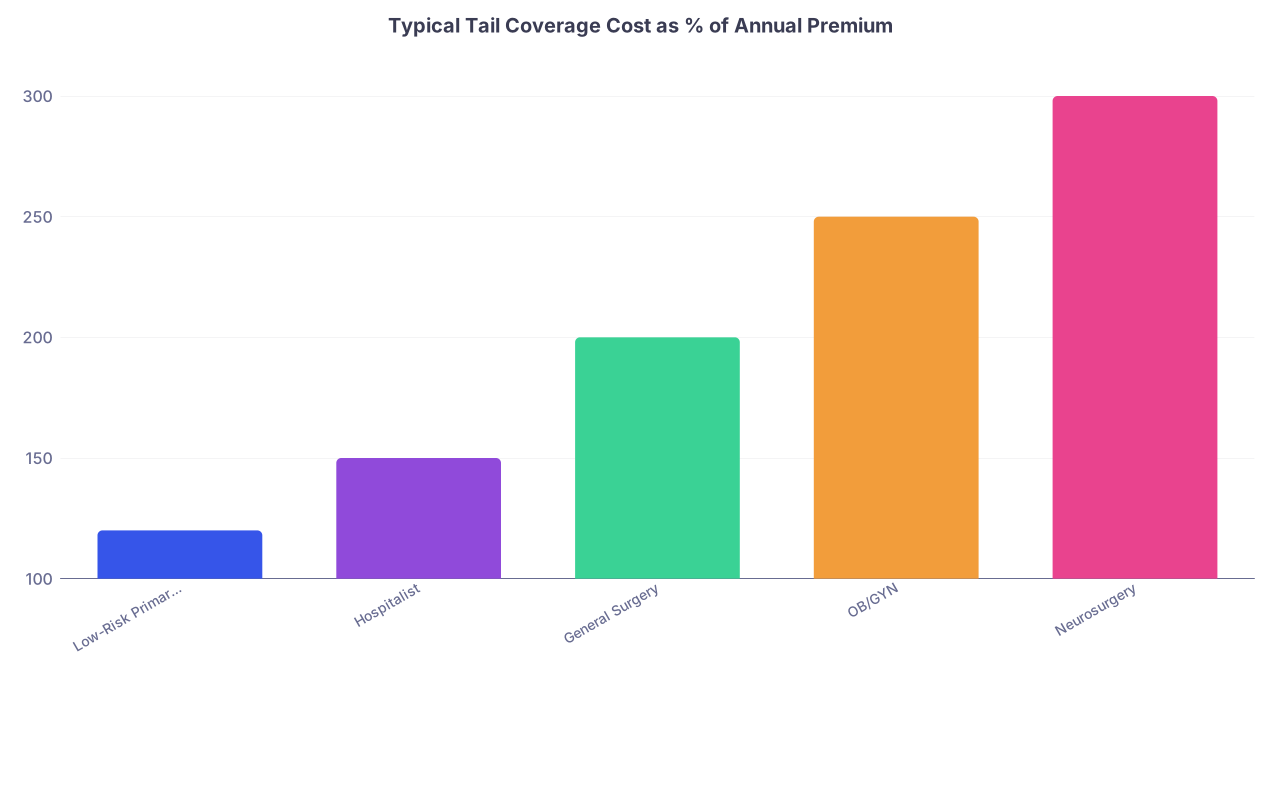
Here’s the unvarnished truth: malpractice tail coverage can easily cost 150–300% of your annual premium. In certain states and high-risk specialties, I’ve seen quotes over $100,000. For one person. One policy. Due immediately when you leave.
And that’s exactly why it gets glossed over during recruiting.
| Category | Value |
|---|---|
| Low-Risk Primary Care | 120 |
| Hospitalist | 150 |
| General Surgery | 200 |
| OB/GYN | 250 |
| Neurosurgery | 300 |
You sign your first job at $260,000 and they say, “We cover malpractice.” You hear “I’m protected.” What you should hear is: “I am protected while I am physically employed here, under this specific claims-made policy, and I may owe a five- or six-figure balloon payment the day I leave.”
Senior partners know three things you probably don’t:
Most new grads don’t really understand claims-made vs occurrence.
They just want to know, “Am I covered?”Tail is one of the biggest levers for golden handcuffs.
If you owe $60k in tail to leave, you are less likely to walk.Malpractice spend is one of the few big expenses they can push onto you quietly.
Salary is obvious. Tail can be buried in contract language you’ll skip on a tired Sunday afternoon.
The number that bites is not your annual premium. It’s the balloon. Tail is like a secret, backloaded signing bonus—except you’re the one paying it.
Claims-Made vs Occurrence: The Setup Behind the Trap
The entire tail coverage problem exists because of one thing: claims-made policies.
Occurrence coverage is simple: you’re covered for incidents that happen while the policy is active—no tail needed. It’s usually more expensive annually and less common in private groups for that reason.
Claims-made coverage is where the games start. It only covers claims that are both:
- Filed while the policy is active, AND
- Arise from care given during the policy period
When you leave a job, the policy doesn’t follow you. So a patient you saw in year two sues you in year five, after you’ve left? No active policy. No coverage. Unless you buy tail.
That tail is a one-time policy that extends the window for filing claims from your past work under that old claims-made policy. And insurers are not shy about pricing that risk.
| Feature | Claims-Made | Occurrence |
|---|---|---|
| Annual Cost | Lower (usually) | Higher |
| Needs Tail | Yes | No |
| Common in Groups | Very common | Less common |
| Employer Appeal | High (cheaper, flex) | Lower (costlier) |
Behind the scenes, many senior partners have had the same conversation with their insurance broker:
“Look, we’ll do claims-made, keep premiums down, and if associates leave, they buy their own tail. That sound about right?”
The broker nods. The partners lock in lower annual expense. The tail problem becomes your future issue, not theirs.
How Senior Partners Actually Think About Your Tail
Let me spell out the internal calculus from the partner side. I’ve watched this play out in private EM, Ortho, and OB groups more times than I care to admit.
You join as a new hire. They’re thinking:
- “If this person stays long enough and makes partner, we’ll probably help with or absorb tail, or we may roll them onto a new policy structure.”
- “If they leave early? Their problem. It’s right there in the contract. Their lawyer should catch it.”
They’re not necessarily malicious. They just live in a different mental frame:
You see:
“Job A vs Job B. Salary, location, call, benefits.”
They see:
“Revenue per FTE, malpractice cost per head, partnership track, retention levers.”
Tail is a retention lever. A sticky one.
So they’ll tell you, “We cover malpractice,” and they’re not lying. They do cover it. Now. They’re just leaving out, “We don’t cover the tail when you leave, which might cost half your attending income for a year.”
And if you do ask directly? I’ve literally heard these lines in partner meetings rehearsed for recruitment:
- “If it comes up, just tell them tail is standard and most people never leave before partnership.”
- “Say the group ‘typically’ helps with tail if someone leaves on good terms.” (That word “typically” is not a contract.)
- “Make it sound routine and not a big deal—if they’re hung up on tail, they’ll be a problem about everything.”
They know exactly what they’re doing.
The Contract Lines That Quietly Screw You
No one hides tail language on page 1. It lives in the dense parts. Indemnification, professional liability, termination.
Watch for phrasing like:
- “Employee shall be responsible for any extended reporting endorsement (tail coverage) upon termination of employment for any reason.”
- “Employer will provide professional liability insurance during the term of employment. Any post-termination coverage shall be at the Physician’s sole expense.”
- “In the event of voluntary resignation or termination for cause, Physician shall be solely responsible for tail coverage.”
That third one is a classic trick.
Here’s what that really means:
- If they fire you “for cause”? You owe tail.
- If you resign? You owe tail.
- If they non-renew you without cause? Maybe they owe tail, maybe they don’t. Depends on the wording.
I’ve seen new hires miss a key carve-out:
“Employer will pay tail coverage if Physician has completed at least three years of continuous full-time service immediately prior to termination, provided such termination is not for cause.”
Sounds generous. Until you realize:
- You leave at 2 years 11 months for a better job → you owe tail.
- They push you out at 2 years 10 months, document “performance issues,” and label it “for cause” → you owe tail.
Is that hypothetically petty? Yes. Has it happened? I’ve watched it.
Real Numbers: What Tail Coverage Can Actually Cost You
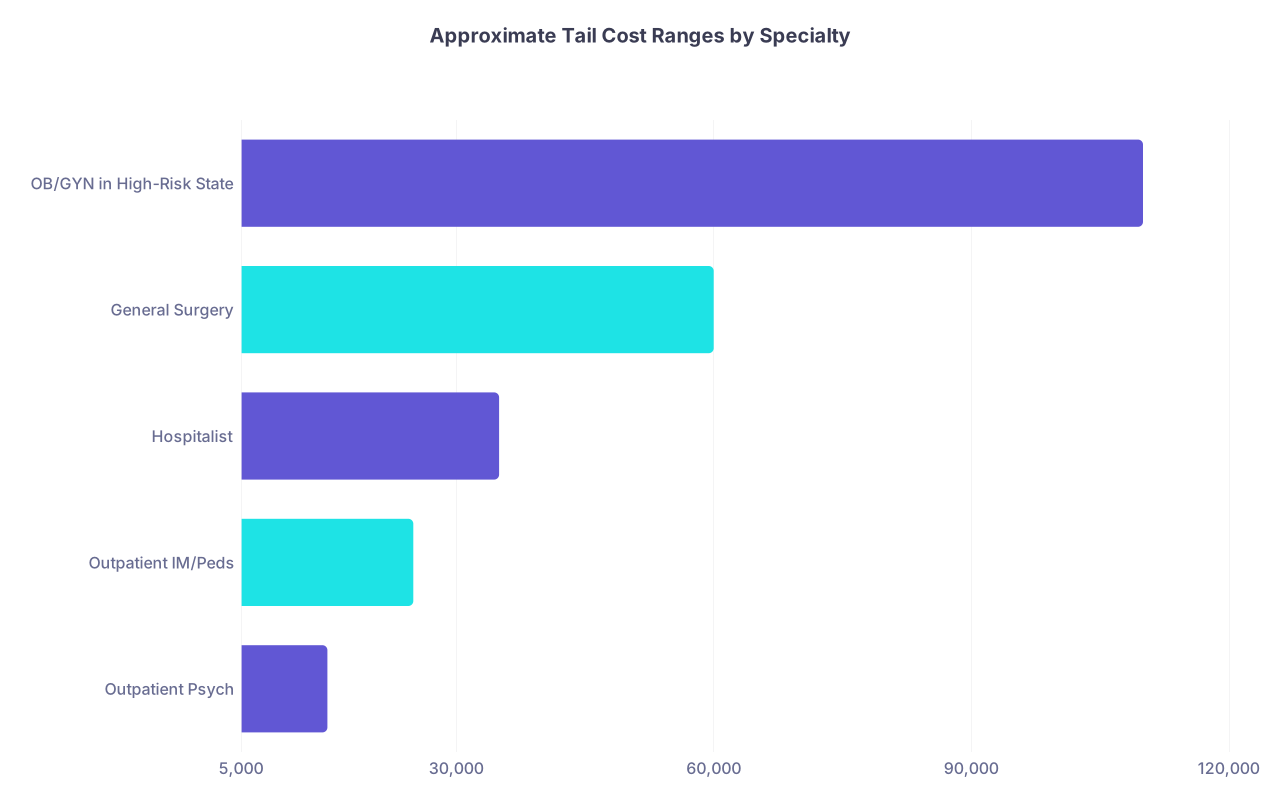
You need to see what this looks like in dollars, not abstractions.
| Category | Value |
|---|---|
| Outpatient Psych | 15000 |
| Outpatient IM/Peds | 25000 |
| Hospitalist | 35000 |
| General Surgery | 60000 |
| OB/GYN in High-Risk State | 110000 |
I’ve seen:
- A young OB/GYN in Florida stuck with a $95,000 tail bill after leaving a toxic private practice at 3 years. Her whole first-house-down-payment evaporated.
- A general surgeon in Texas with a $55,000 tail quote after a group breakup, where the partners quietly shifted tail to all non-partners in the dissolution agreement.
- A hospitalist in the Midwest with a $22,000 tail, “discounted” because he had multiple years with the same carrier. That was considered a “good deal.”
And remember: tail is often due in full, at once. This is not a payment plan you budget over five years (unless you arrange one with the carrier; sometimes possible, often not ideal).
The especially ugly twist? You might not even feel the problem until you’re already leaving. New job signed. Moving truck scheduled. Then the email hits:
“Here is your tail coverage quote: $48,320. Please remit payment by [date] to bind coverage.”
You’re not negotiating from strength at that point. You’re trapped.
How Employers Quietly Use Tail to Keep You
You want to know why senior partners don’t emphasize tail in recruiting? Because an associate with a large potential tail obligation is easier to keep.
It plays out like this:
Year 2: You’re unhappy. Call burden is worse than promised. Partnership feels vague. You start looking.
Then you do the math.
You call the broker “just to understand what tail would cost if I left.” She says, “Ballpark? Maybe $40–50k if you left this year. More if rates go up.”
You hang up and look at your checking account. Your savings. Your loans. Maybe a new baby.
Suddenly the conversation in your head shifts from, “Should I find a better job?” to “Can I really afford to leave?”
Senior partners know those phone calls happen. They’ve heard about them from the broker. And they know many people will just gut it out and stay.
So they aren’t exactly motivated to walk you through tail math at the offer stage.
How to Negotiate Tail Like Someone Who Knows the Game
Here’s what you do differently if you actually understand this stuff.
Step 1: Get concrete numbers before you sign
Don’t ask, “Is there tail?” Ask exact questions:
- “What are current annual premiums for my specialty under your policy?”
- “If I left after 1 / 3 / 5 years, what is the estimated tail multiple with your current carrier?”
- “Who has paid tail in the past for prior associates, and under what circumstances?”
You want to hear them squirm a little. Vague answers are red flags.
Step 2: Hard-wire tail responsibility into the contract
Do not settle for “typically,” “usually,” or “by custom.” Those are useless when things go bad.
You want written, specific language. For example:
- Employer pays 100% of tail regardless of reason for termination; or
- Employer and physician split tail 50/50; or
- Employer pays tail after X years of continuous service, and you negotiate what happens before that.
Also get clarity on different scenarios:
- If they terminate you without cause.
- If you resign for “good reason” (they cut pay, change location, radically change schedule).
- If they sell the group or switch carriers.
I’ve seen smart physicians get this clause:
“Employer shall be solely responsible for any tail coverage in the event Employer changes carriers or discontinues coverage.”
Translation: if they play games with carriers or sell the practice, you’re not the one stuck.
Red-Flag Situations You Should Treat as Dangerous
Some setups are especially likely to burn you on tail.

Watch yourself in these situations:
Private practice with heavy procedural or OB exposure in a high-risk state
Premiums are huge. Tail is huger. If the group casually says “You’ll handle tail if you leave early,” that could be a six-figure sentence.Groups that have switched malpractice carriers multiple times in the last 5–7 years
Frequent switching usually means they’re chasing lower premiums or had big claims. It also means there’s a history of tail “events” and possibly bad blood with prior associates.Contracts where only physicians (not the entity) are named for tail
If the entity isn’t automatically on the hook, ask why. Some groups intentionally structure it that way to limit their obligation.Any job selling you heavily on “partnership track” but vague on tail
Many groups say, “Once you’re partner, we handle all that.” And sometimes that’s true. But your risk is in the years before you get there. You want a tail plan for both routes: stayed and made partner vs. left and did not.
How Hospitals and Big Systems Play the Tail Game Differently
Now, to be fair, not everyone is out to stiff you. Many hospitals and large employed systems quietly absorb tail as the cost of doing business. But they still play angles.
You’ll often see:
- Occurrence policies for large hospital-employed groups. More expensive annually, simpler for you. Tail is a non-issue. This is the cleanest setup.
- Or claims-made with employer-paid tail, but only under narrow circumstances.
The sneaky part? Some systems structure tail responsibility based on why you leave:
- If they terminate you without cause → they pay tail.
- If you resign before X years → you pay all or some tail.
- If you’re terminated “for cause” → you definitely pay tail.
You also see repayment/tail hybrids: sign-on bonuses or relocation bonuses with long forgiveness schedules, paired with tail obligations if you leave early. Net effect: a huge financial penalty to leave before they’ve gotten their money’s worth in RVUs.
Do not assume that just because the logo is big and corporate, the contract is benign. I’ve reviewed system contracts where the resident-turned-new-attending was on the hook for both:
- A prorated sign-on bonus payback, and
- 100% of tail for leaving at year 2.
That’s a nasty combo.
Exit Strategy: How to Leave Without Getting Crushed
You will probably not stay at your first job forever. So plan your exit at the entrance.
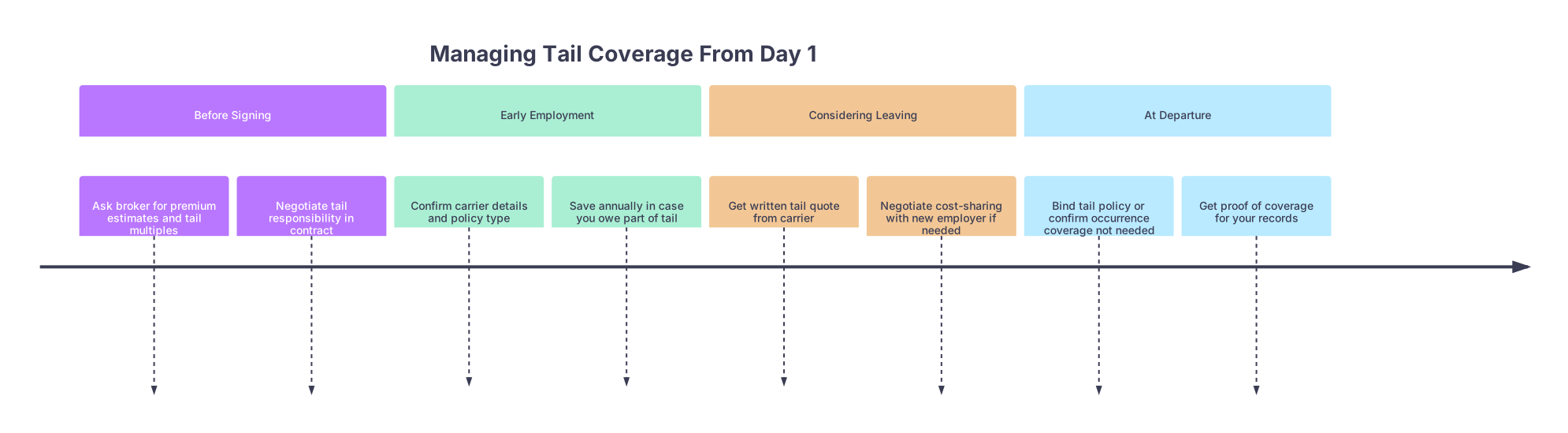
A few practical plays smart physicians use:
- Get a real tail quote before resigning. Not a guess. A written number from the carrier based on your actual hire date and specialty.
- Ask your new employer to pay part or all of your tail. Especially if they’re desperate to recruit. I’ve seen new employers quietly stroke a $30,000 check to get a surgeon out of a bad group.
- Document your coverage and keep it. Policy numbers, dates, proof of tail. Ten years later, you don’t want to be hunting down the old office manager who “thinks” you had coverage.
The other move: some physicians simply refuse to sign first-job contracts where they’re 100% responsible for tail. Especially in high-risk specialties. They’d rather accept slightly lower salary with guaranteed employer-paid tail than roll the dice on a future $80,000 bullet.
That’s not being difficult. That’s being sane.