
37% of residents incorrectly believe they’ll be fully protected from malpractice claims just because they’re “covered by the hospital.”
That belief is exactly how people end up exposed, shocked, and scrambling for a lawyer with nobody clearly in their corner.
Let me be blunt: “The hospital covers me” is one of the most dangerous half-truths in medical training. It is sometimes technically true and practically useless when things go wrong in the worst way.
You’re not supposed to think about this during residency. You’re supposed to grind, sign whatever GME or fellowship office sticks in front of you, and be grateful for a badge and EMR login. That works—right up until it doesn’t.
Let’s pull this apart.
What “Hospital Coverage” Really Means (Not What You’ve Been Told)
Most residents and fellows think “the hospital covers me” means:
- I can’t be personally sued.
- If I am, the hospital’s lawyers will protect me.
- Their insurance will pay any judgment.
- I don’t need to do anything else.
That’s not what the policies say. That’s what the hallway chatter says.
Here’s what usually exists in reality:
An institutional malpractice policy
This policy primarily protects:- The hospital/health system
- The sponsoring institution (for GME)
- Sometimes the residency program or faculty
You, the individual resident or fellow, are typically listed as an “additional insured” only while acting within the scope of your duties for that institution.
Scope of duties ≠ “anything you do in a white coat”
The coverage is often tied to:- Work at a specific site (or network)
- Under supervision parameters
- Within your training program
- During defined dates of employment
Moonlighting off-site? Telemedicine from your couch? Side consults for a friend’s clinic? Often not covered. Sometimes explicitly excluded.
Duty to defend the hospital first, you second
If a claim hits:- The hospital is the primary client.
- The hospital’s reputation and financial risk come first.
- Your interests only align with theirs until they don’t.
I’ve seen residents assume: “If my name is on the lawsuit, risk management will take care of it.” Sometimes true. Sometimes the hospital’s lawyers are actively negotiating in ways that protect the institution while leaving you hanging for future credentialing, NPDB reporting, or your personal reputation.
The Big Myths About Hospital Coverage
Let’s dismantle the greatest hits.
Myth 1: “If you’re a resident or fellow, you can’t be personally liable”
Absolutely wrong.
Plaintiffs’ attorneys routinely name everyone even remotely involved:
- Hospital/health system
- Attending(s)
- Resident(s), fellow(s)
- Sometimes nurses, NPs, PAs, groups, and staffing companies
You are a target because:
- Your name is in the chart.
- You documented the plan.
- You wrote the order.
- You were physically there at 2 a.m. when the attending was “available by phone.”
Can the hospital’s policy pay on your behalf? Often yes. That doesn’t mean:
- You avoid being named.
- You avoid being deposed.
- You avoid being reported.
- You avoid internal discipline.
And “the hospital policy paid it” doesn’t magically erase your name from the story. Future employers, credentialing committees, and malpractice carriers absolutely care if you were a named defendant and how the case resolved.
Myth 2: “If the hospital has coverage, I don’t need my own”
This is like saying, “My friend has car insurance, so if I drive his car, I must be fine forever.” Maybe. Until you’re not.
Where personal coverage matters:
- When you’re outside the hospital’s scope of coverage
- When there’s any gray zone: off-site, moonlighting, telemedicine, locums
- When there’s a conflict between your interests and the hospital’s
Personal “own-occupation” malpractice coverage for trainees is usually cheap compared to your future income:
- Often a few hundred dollars per year for residents/fellows
- Sometimes subsidized or offered through state or specialty societies
But residents skip it because:
- “Nobody else in my class has it.”
- “The hospital gives us coverage.”
- “I’ll get my own policy once I’m an attending.”
By the time you realize the hole in that logic, you’re already in trouble.
Claims‑Made vs Occurrence: The Tail You’re Ignoring
You cannot understand your risk until you understand this one distinction. Yes, it’s technical. Yes, it matters a lot.
| Feature | Claims-Made Policy | Occurrence Policy |
|---|---|---|
| Trigger for coverage | When claim is filed | When incident occurred |
| Need tail coverage? | Yes, after you leave | No |
| Common in hospital systems | Very common | Less common |
| Risk when changing jobs | High if tail not secured | Low |
The short version
- Occurrence coverage: If the event happened during the policy period, you’re covered, even if they sue you years later.
- Claims‑made coverage: You’re covered only if the policy is active when the claim is made. When you leave, that coverage ends—unless you (or someone) buys tail coverage.
Hospitals and large systems love claims‑made policies. They’re cheaper up front. Budget-friendly. Accounting loves them.
Residents and fellows often have no idea whether:
- The hospital coverage is claims-made or occurrence.
- Who pays for tail (if anyone) when they graduate or leave.
- If they’re individually named on the policy.
Here’s the trap:
- You do a procedure as a PGY‑3 in 2026.
- You graduate in 2028 and move across the country.
- In 2030, a patient sues over a complication tied to that 2026 procedure.
If your residency hospital had claims-made coverage and no tail is in place that still covers you? Good luck. The hospital may be protected. You might not be.
Where Residents and Fellows Are Commonly Unprotected
You want specifics. Here are the usual landmines.
1. External moonlighting and “side shifts”
The classic setup:
- You’re a PGY‑2 in internal medicine.
- Your main academic hospital provides malpractice coverage while on their rotation sites.
- A community ED 40 minutes away desperately needs nocturnists and offers “moonlighting” to residents. They say, “Don’t worry, we have malpractice coverage.”
What residents assume:
- “My home hospital covers me wherever I work.”
- “The moonlighting site said they have coverage, so I’m double protected.”
Reality:
- Your home hospital’s coverage often specifically excludes outside employment.
- The moonlighting site’s coverage might:
- Be minimal limits.
- Cover the facility, not you personally.
- Be claims‑made with no tail committed to you once you leave.
I’ve seen residents sign a one-page independent contractor agreement that basically says, “You’re responsible for maintaining your own malpractice insurance,” then assume the hospital has them covered because someone said “we’re covered.”
Two words: Read. The. Contract.
2. Off‑site clinics, telehealth, outreach
You’re on an “outreach” rotation at a clinic that’s technically part of the system but in a different state or under a separate corporate entity.
Questions nobody answers clearly:
- Is your hospital’s policy valid in that jurisdiction?
- Are you covered if you do telemedicine across state lines?
- Are you covered when you log in from home to manage overnight issues?
Sometimes these are fine. Sometimes there’s a regulatory or licensing wrinkle that creates coverage disputes. The entire telehealth boom has outpaced some institutional policies and risk management practices.
3. “Volunteering” and global health / mission trips
Volunteer clinic. Free clinic. Global health trip. All the feel‑good phrases that scream “liability gap.”
Frequently:
- Your main hospital coverage does not extend to these.
- The sponsoring organization may or may not have coverage.
- If they do, limits may be far below typical U.S. standards.
If you’re doing hands‑on clinical care, you should know:
- Is there malpractice coverage?
- What type is it?
- Does it include you by name?
- Are you waiving any rights by signing “participant” paperwork?
Follow the Money: Whose Lawyer Is “Your Lawyer”?
Here’s what happens when a big case hits and you’re named:
- The hospital retains defense counsel.
- That lawyer’s primary duty is to the hospital.
- Their strategy is to minimize institutional exposure, bad press, and payouts.
You’re part of the narrative they’re managing.
Most of the time your interests align:
- “Nobody did anything wrong.”
- “It was a known complication.”
- “The care met the standard.”
But not always.
Conflict scenarios I’ve seen or heard directly from people involved:
- Attending and resident have different recollections of a critical overnight call.
- Documentation suggests resident missed something… but resident says they escalated and attending dismissed it.
- Hospital wants to settle quickly, but the settlement will result in you being reported to the NPDB and flagged forever.
In real conflicts, it is not unusual for:
- The hospital’s lawyer to recommend separate counsel for you.
- You to suddenly realize no one is clearly tasked with protecting your individual future.
Personal malpractice coverage that includes a right to independent counsel changes that calculus. Someone is contractually obligated to defend you—even if that means pushing back against the hospital’s preferred narrative.
What the Data and Cases Actually Show
Let’s get away from vibes and look at patterns.
Most large resident‑related malpractice claims share a few characteristics:
System issues + trainee involvement
Overcrowded EDs, poor handoffs, bad coverage models, understaffing. The trainee becomes the visible person in the chart.Ambiguous responsibility
Was the fellow acting “independently”? Was the attending meaningfully available or just rubber‑stamping notes?Blurry documentation
“Discussed with attending” without a name or timestamp. Supervising signatures added hours later by auto‑cosign. Plaintiffs’ attorneys eat this up.
And yes, trainees are named a lot more than you think. They’re not always the ones paying dollars out of pocket. But they are in the stories:
- On deposition transcripts
- In NPDB entries when there’s a payment on their behalf in some cases
- In privilege/credentialing files down the line
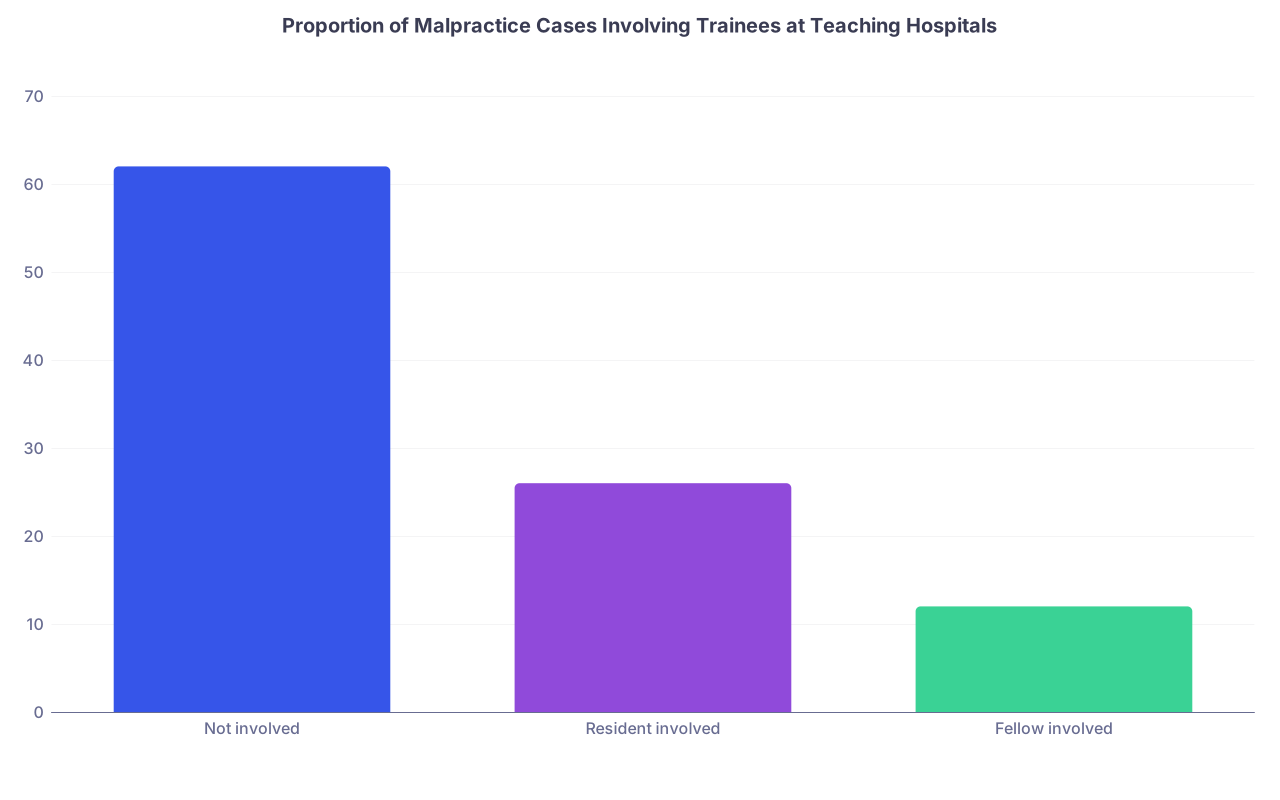
| Category | Value |
|---|---|
| Not involved | 62 |
| Resident involved | 26 |
| Fellow involved | 12 |
That chart is typical of published analyses: a substantial minority of teaching hospital malpractice cases involve residents or fellows in some capacity.
Are you usually the deepest pocket? No. The institution is. But are you exposed in career consequences? Yes.
How to Actually Protect Yourself (Without Becoming a Paranoid Lawyer)
No, you don’t need to become a risk management hobbyist. You do need to stop relying on vague assurances.
Here’s the sanity checklist:
1. Get straight answers in writing
From GME or risk management, ask directly:
- “Is my malpractice coverage claims‑made or occurrence?”
- “What are the coverage limits per claim and in aggregate?”
- “Does the policy cover me for:
- All training sites in my program?
- Telehealth I do as part of my duties?
- Hospital‑arranged off‑site rotations?”
- “If it’s claims‑made, who pays for tail when I leave?”
If anyone dodges or hand‑waves this, that’s your red flag.
2. For any moonlighting, demand specifics
Never rely on, “Don’t worry, we have you covered.”
Ask and verify:
- Am I an employee or an independent contractor?
- Who provides malpractice coverage—whose name is on the policy?
- Are you sending me a copy of the declarations page?
- Is it claims‑made or occurrence? If claims‑made, who’s buying tail?
If your contract says “physician shall maintain malpractice insurance at physician’s expense,” congratulations, that means you. Not them.
3. Strongly consider your own policy as a trainee
Most people don’t do this. That doesn’t mean it’s dumb. It means most people are relying on luck and institutional goodwill.
Benefits of having your own policy:
- Protection for side work not covered by the hospital.
- Potential for independent counsel if you’re personally named.
- Stronger footing when something falls into a gray area.
No, it won’t magically solve every conflict. But it’s the difference between having a lawyer whose job is to defend you and hoping the hospital’s lawyer will treat you as more than a line item.
How This Plays Into Your Future Career
Everyone focuses on “Will I have to pay?” That’s the wrong question. The higher‑yield questions are:
- Will I get reported to the NPDB?
- Will this case slow or block credentialing at my first attending job?
- Will malpractice insurers see me as higher‑risk and raise my premiums?
- Will state boards come knocking?
One nasty case during fellowship, handled poorly, can:
- Delay your first license in a new state.
- Make a big‑name group or hospital reconsider your hire.
- Follow you in every carrier and hospital application thereafter.
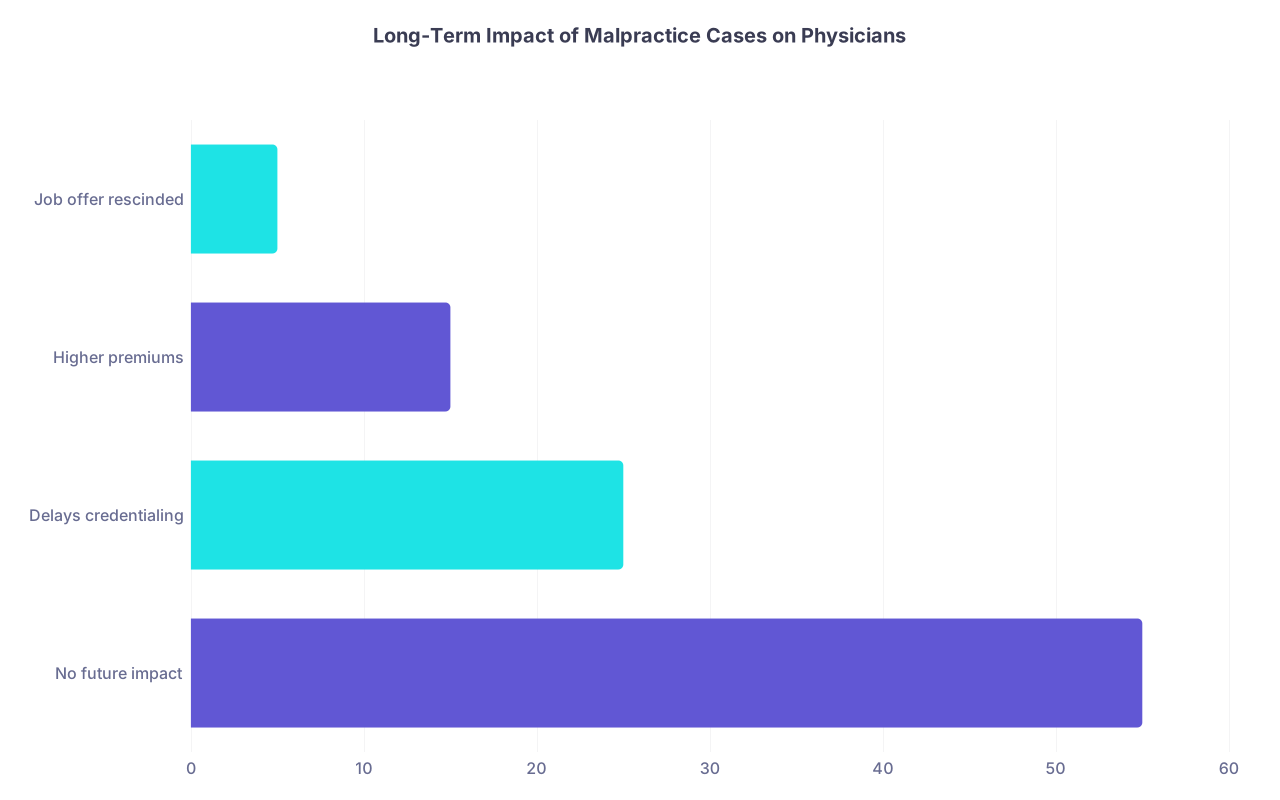
| Category | Value |
|---|---|
| No future impact | 55 |
| Delays credentialing | 25 |
| Higher premiums | 15 |
| Job offer rescinded | 5 |
That’s the real game. Not just “did I avoid writing a personal check?”
The Bottom Line
Three points, no sugar-coating:
“The hospital covers me” is not a plan. It’s a rumor. You’re usually an additional insured whose protection is conditional, limited to scope, and secondary to institutional interests.
Claims‑made vs occurrence and who pays for tail coverage are not technical footnotes. They decide whether you have any coverage years after you leave.
Serious trainees treat malpractice like they treat Step scores and contracts: they read the details, ask direct questions, and buy their own coverage when the gaps are obvious. Everyone else just hopes the system will be kind to them.
Hope is not a risk strategy.