
The most common way physicians damage their own malpractice defense is by giving a sloppy deposition.
You can have perfect records, solid care, and an excellent expert – and still get crushed because you walked into a deposition unprepared, overconfident, or defensive. I have watched smart, competent physicians make million‑dollar cases against themselves in three hours of careless testimony.
You are not going to do that.
This is a tactical guide: how to actually prepare, what to say, what not to say, and how to get through your deposition without blowing up your case or your career.
1. Understand What a Deposition Really Is
Forget the TV drama image. A deposition is not a friendly conversation, and it is not “just telling your side.”
A deposition is:
- Sworn testimony, under oath
- Transcribed word-for-word by a court reporter
- Often video recorded
- Evidence that can be used:
- To impeach you at trial
- To box in your future testimony
- To push for a bigger settlement
- To report to the medical board in some jurisdictions
The plaintiff attorney has one job: make you look careless, arrogant, inconsistent, or dishonest. That is the game.
Your job is not to “win” the deposition. Your job is to:
- Avoid self-inflicted wounds
- Be credible and consistent
- Protect the defensibility of your care
- Give the narrowest, accurate testimony required – nothing more
Think of it like operating in a tiny field: small incision, precise movements, no extra dissection.
2. Know the Legal and Financial Stakes
You will handle this better if you know exactly what is in play:
- Your personal finances
- Your malpractice premiums
- Your professional record
- Your emotional bandwidth for the next 1–3 years
Coverage, limits, and personal exposure
Before you even think about testimony, you should know your coverage cold:
| Item | What You Need To Know |
|---|---|
| Policy Type | Claims-made vs occurrence |
| Limits | Per-claim / aggregate limits |
| Tail Coverage | Active, planned, or needed |
| Consent to Settle | Do you have it, or can carrier settle without you? |
| Defense Costs | Inside or outside policy limits? |
If you cannot answer these without looking anything up, call your malpractice carrier or risk management department and fix that now.
This matters because:
- High exposure + thin limits = more incentive for plaintiff to push hard at your deposition.
- Weak policy structure (e.g., defense within limits) means long drawn-out litigation eats away at the money that could protect you.
- Consent-to-settle provisions affect how aggressive your defense team will be and how your testimony fits their strategy.
What the deposition means financially
No, the deposition itself does not cost you money directly. But it heavily influences:
- Whether the case settles or goes to trial
- How much the insurer is willing to put on the table
- How the plaintiff values the case after hearing you
A calm, prepared, credible physician often “shrinks” the case value. An arrogant, evasive, or disorganized one inflates it dramatically.
3. Pre‑Deposition Homework: What You Must Do Before You Testify
If you walk into your deposition having only skimmed the chart the night before, you are already behind. There is a structured way to prepare.
Step 1: Meet with your defense attorney – properly
This is not a 20‑minute phone call. You want:
- At least one dedicated prep session (2–4 hours)
- In person or secure video, uninterrupted
- With:
- Your attorney
- Sometimes a nurse risk manager or consultant
- Occasionally, your expert’s input relayed via counsel
In that session, you should:
- Go through the entire chart together.
- Review the complaint, interrogatories, and any expert reports.
- Clarify the exact allegations against you.
- Identify the “bad facts” – and how you will handle them.
- Rehearse typical plaintiff questions and your answers.
If your attorney does not insist on this, ask for it. A weak prep is not “saving time,” it is burning defense value.
Step 2: Rebuild the case in your head
You will likely be deposed years after the event. Your memory is not trustworthy. That is normal. Stop trying to remember things you obviously do not remember.
Do this instead:
- Read the full chart several times, including:
- ED notes
- Nursing notes
- Consultant notes
- Lab and imaging reports
- Orders and medication records
- Sketch a simple timeline:
- When patient first presented
- Key decisions and interventions
- Consults, transfers, discharges
- Outcome and follow-up
You are not memorizing every detail. You are reconstructing the clinical story so your answers make clinical sense even when you say, “I do not recall the specific patient, but my chart shows…”
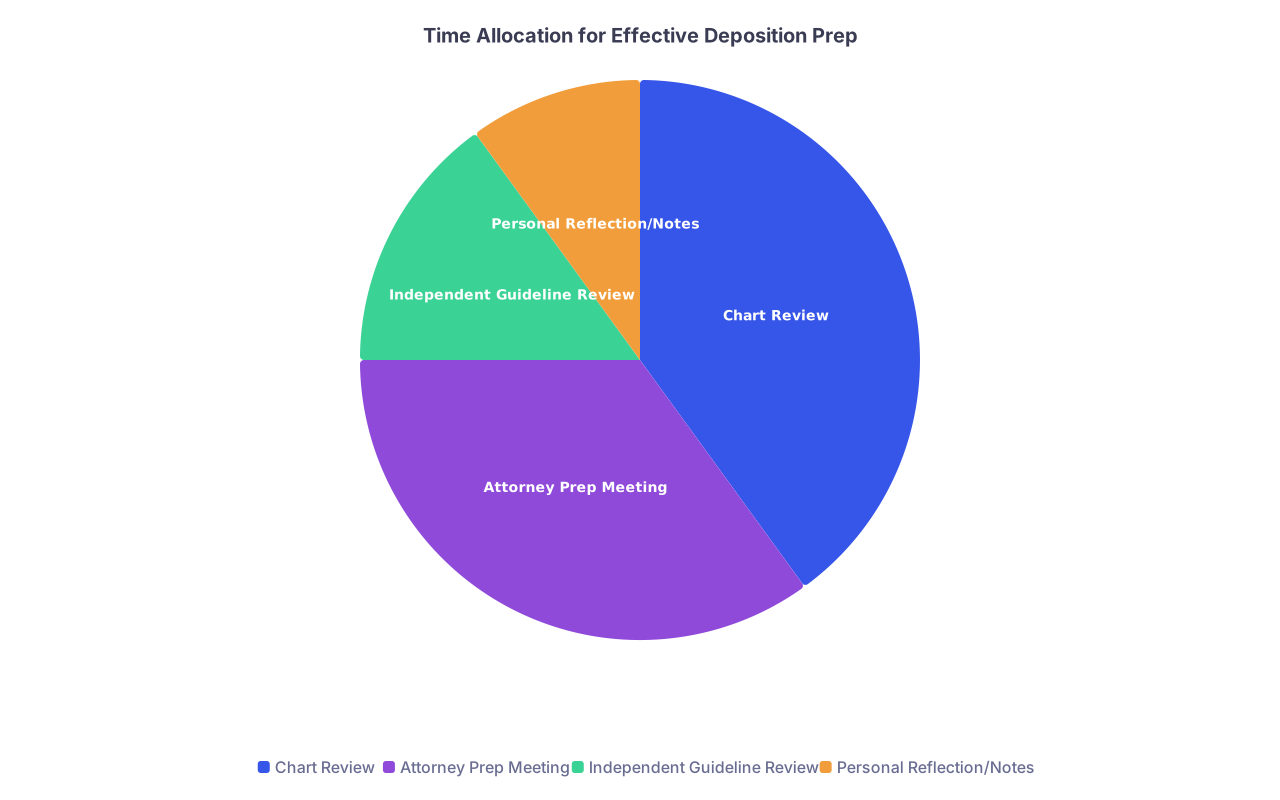
| Category | Value |
|---|---|
| Chart Review | 40 |
| Attorney Prep Meeting | 35 |
| Independent Guideline Review | 15 |
| Personal Reflection/Notes | 10 |
Step 3: Review guidelines and standard references – carefully
Do not go on an unsupervised PubMed binge and show up babbling about ten new guidelines your care did not follow. That is amateur hour.
With your attorney, identify:
- What guidelines were in effect at the time of care
- What your expert is likely to rely on
- Any hospital policies or pathways that apply
Your goal:
- Understand what “standard practice” looked like at that time
- Be able to explain why your decisions fit within a reasonable range of care
- Avoid volunteering “I did not follow X guideline” unless you have a clear, defensible reason to explain later – and your attorney is on board
Step 4: Clean your online footprint
Plaintiff attorneys sometimes dig. You do not want:
- Angry social media posts about “difficult patients”
- Public comments mocking guidelines or “gold-plated care”
- Online reviews you answered defensively
You cannot rewrite history, but you can:
- Lock down public profiles
- Stop posting anything case-related, even vaguely
- Alert your attorney about any problematic past posts so they are not blindsided
4. How to Behave During the Deposition: Rules You Do Not Break
This is where most physicians fail. They are used to being the expert in the room. Depositions punish that mindset.
Here is the protocol.
Rule 1: Answer the question asked – and only that question
If the question is:
“Did you order a CT scan on March 10?”
The correct answer is one of:
- “Yes.”
- “No.”
- “I do not recall, but the record shows…” (if you and your attorney agreed on that phrasing)
Not:
- “No, but the reason I did not was because CT scans in that setting are overused and there is radiation risk and actually the ACEP policy says…”
That is how you give the plaintiff a five‑minute clip to exploit.
Think in three steps:
- Pause.
- Decide what the narrow, honest answer is.
- Stop talking when that answer is complete.
Rule 2: Silence is not your enemy
Plaintiff attorneys use silence like a weapon. They ask a question, you answer briefly, then they stare at you in silence.
Do not fill the silence.
You are not on rounds explaining your reasoning to a resident. Your job is not to keep the conversation going. Answer and wait for the next question.
Rule 3: Do not guess. Ever.
There are only four acceptable categories of answers:
- “Yes.”
- “No.”
- A short factual statement based on records or your actual memory.
- “I do not know” or “I do not recall,” when that is true.
Guessing because you feel you “should know” is deadly. Common traps:
- “Doctor, what is the sensitivity and specificity of this test?”
- “How often does this complication occur?”
- “Is it always the case that…”
If you do not actually know the hard numbers or you did not have them in your mind at the time of care, say so. Do not retro‑engineer brilliance you did not use.
Rule 4: Control your body language and tone
Jurors and judges will often see you on video. They are not medical experts. They are reading you as a person.
You want to project:
- Calm
- Respect
- Seriousness
- Empathy (without admitting fault)
Here is what kills you on video:
- Eye rolls
- Sarcastic tone
- Talking down to the attorney
- Visible anger when patient’s conduct is discussed
- Laughing at questions that seem “stupid” to you
Aim for this mindset: “This is serious. I am willing to be questioned. I am not rattled. I care about patients. I stand by reasonable care.”
Rule 5: Never argue with the attorney
They will mischaracterize evidence. They will try to bait you. You will hear:
- “So you did nothing for six hours.”
- “You chose to ignore the nurse’s note.”
- “You discharged her knowing she could die.”
The instinct is to snap back. Do not.
Instead, calmly correct the record:
- “No, that is not accurate. During that period I ordered labs, monitored vitals, and reassessed the patient several times, as reflected in the chart.”
If it becomes a pattern of misstatement, your attorney will object. You just keep answering the precise questions.
Rule 6: Know the objection drill
Your attorney will object to some questions. Common ones:
- “Objection, form.”
- “Objection, vague.”
- “Objection, calls for speculation.”
Your role:
- Stop talking the second you hear “objection.”
- Wait for your attorney to finish.
- If they instruct you not to answer, you do not answer.
- If they say “You may answer,” answer as you normally would.
Do not let objections rattle you. They are part of the game.
5. Content Landmines: What You Must Avoid Saying
There are certain categories of statements that are poison. You need them out of your vocabulary for the duration of the litigation.
Landmine 1: Personal blame or admissions of negligence
You do not get points for self-flagellation. The legal standard is not “perfect care,” it is “reasonable care.”
Avoid:
- “I made a mistake.”
- “I should have done more.”
- “This is my fault.”
- “I was negligent.”
If you feel guilt or regret, that is human. But in legal terms, you say something like:
- “In hindsight we know more than we did at the time. Based on what I knew then, my decisions were consistent with accepted practice.”
Anything stronger than that is a gift-wrapped present to the plaintiff.
Landmine 2: Criticizing colleagues or your own facility
Plaintiffs love intra‑team finger pointing. It lets them expand the target – and makes you look defensive.
Avoid:
- “The nurse dropped the ball.”
- “Radiology always delays our reads.”
- “The ED was a disaster that night.”
If asked about systems issues:
- Acknowledge reality without throwing grenades.
- “It was a busy night, but I do not believe that affected the care I provided.”
- “I rely on the team, but ultimately I am responsible for my decisions.”
Landmine 3: Overconfident absolutes
Absolutes ruin you when the record shows exceptions.
Avoid phrases like:
- “I always…”
- “I never…”
- “Every time…”
Say instead:
- “My usual practice is…”
- “Generally, I would…”
- “In most circumstances, I…”
That keeps you from being impeached with the one chart that proves you wrong.
Landmine 4: Retrospective clinical brilliance
Do not pretend the care you actually delivered was based on exam findings or thought processes that are nowhere in the record.
If it is not charted, assume the plaintiff will say it did not happen. You still may testify about your typical practice, but label it honestly:
- “I do not have a specific memory of this patient, but my routine practice for chest pain is to do A, B, and C. If I had deviated from that, I would normally document it.”
Landmine 5: Volunteering opinions outside your scope
Plaintiff attorneys will happily let you talk yourself into being an expert on everything.
If you are an internist, you do not need to opine on neurosurgical standards. If you are an ED doc, you do not need to define definitive long‑term management of a rare disease.
You can say:
- “That question is beyond my specialty.”
- “I would defer to a neurology specialist on that issue.”
This is not weakness. It is discipline.
6. Mental and Emotional Preparation
An ugly secret: even when you do everything right clinically, being deposed feels like a personal attack. It is exhausting. It can bleed into your clinical work and home life.
You need a plan for that too.
Short‑term tactics
The week of the deposition:
- Protect your schedule:
- Do not book a brutal call schedule around it.
- Give yourself buffer on either side if possible.
- Sleep. This is not the time to run a sleep deficit.
- Practice out loud with your attorney:
- Especially difficult questions about outcome or death
- Saying “I do not recall” calmly
- Correcting mischaracterizations without anger
On the day:
- Eat lightly. Heavy meals + anxiety = foggy thinking.
- Do not rely on caffeine alone to carry you. Overstimulation makes some people talk more.
- Leave your phone outside the room or off. Distractions get you killed.
Longer‑term mindset
Remind yourself:
- A lawsuit is not a moral verdict on your entire career.
- The legal system is clumsy at measuring good medicine.
- Your goal is not perfection – it is defensible, reasonable care.
If the case involves severe outcome or death, consider a professional counselor, physician support group, or your institution’s wellness resources. This is not “weak.” This is self-preservation over a multi‑year grind.
7. Post‑Deposition: What To Do After You Walk Out
Most physicians treat the end of a deposition like crossing a finish line. The case may be far from over.
Here is what to do next.
Immediately after
- Debrief with your attorney:
- What went well?
- What concerned them?
- What themes did the plaintiff push?
- Write a short private summary for yourself while it is fresh:
- Key questions that rattled you
- Areas where you felt unprepared
- Any factual points you realized you did not know well
This is not to change your testimony. It is to inform future strategy and your own risk management.
In the following weeks
Your deposition will influence:
- Settlement discussions
- The other side’s expert strategy
- Whether you are dismissed, kept in, or targeted as the main focus
Ask your attorney, bluntly:
- “How do you think this impacted the case value?”
- “Am I more or less central to the plaintiff’s case after this?”
- “What should I be prepared for next?”
Use it as a risk‑management tool
Even if the case resolves favorably, do not waste the pain. Systematically ask:
- Did my documentation help me or hurt me?
- Were there delays or communication breakdowns that, even if not negligent, looked bad?
- Are there patterns here that could repeat with other patients?
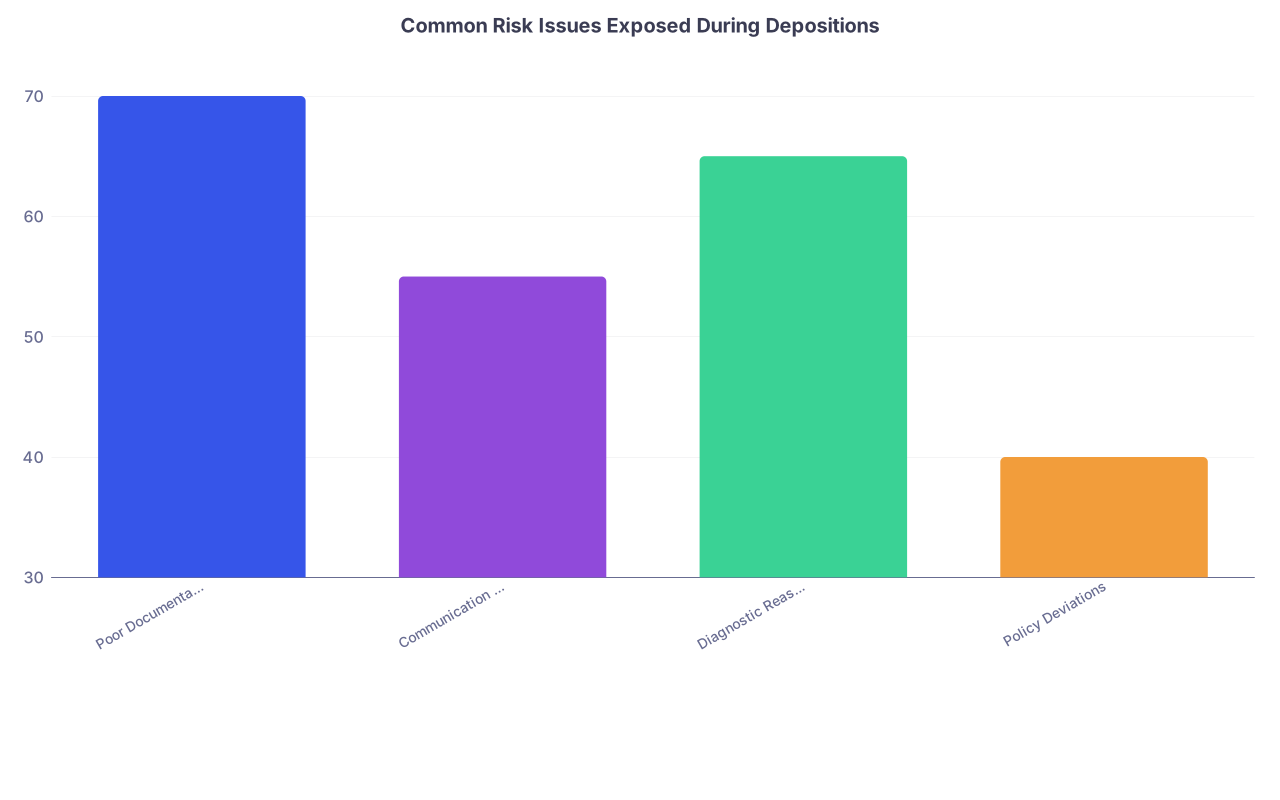
| Category | Value |
|---|---|
| Poor Documentation | 70 |
| Communication Gaps | 55 |
| Diagnostic Reasoning Not Charted | 65 |
| Policy Deviations | 40 |
Then implement one or two concrete changes:
- A standard phrase for key risk conversations (e.g., AMA discharges, refusal of tests)
- A simple template note for high‑risk presentations
- A check‑in process with nurses for borderline dispositions
Tiny, boring changes here do more for your long‑term risk than any amount of post‑hoc heroics.
8. A Simple Preparation Timeline
Assume your deposition is 4 weeks out. Here is a functional schedule.
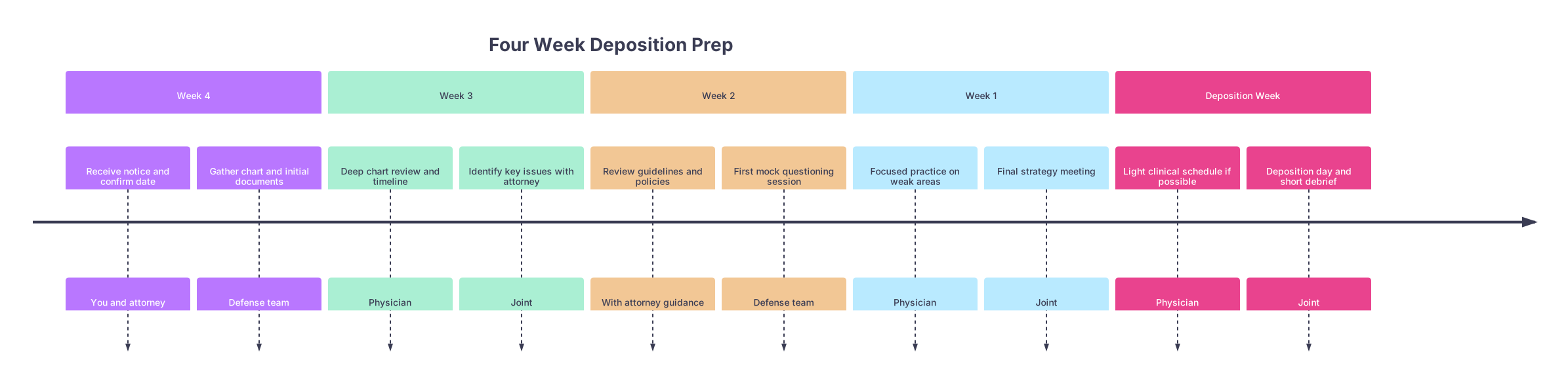
| Period | Event |
|---|---|
| Week 4 - Receive notice and confirm date | You and attorney |
| Week 4 - Gather chart and initial documents | Defense team |
| Week 3 - Deep chart review and timeline | Physician |
| Week 3 - Identify key issues with attorney | Joint |
| Week 2 - Review guidelines and policies | With attorney guidance |
| Week 2 - First mock questioning session | Defense team |
| Week 1 - Focused practice on weak areas | Physician |
| Week 1 - Final strategy meeting | Joint |
| Deposition Week - Light clinical schedule if possible | Physician |
| Deposition Week - Deposition day and short debrief | Joint |
You will not always get four weeks, but this is the ideal. Compress as needed, but do not skip steps entirely.
9. Red‑Flag Behaviors – Fix These Before You Sit Down
I will end the main section with the things that, when I see them, make me nervous for a physician heading into a deposition. If any of these sound like you, address them now:
- “I do not need much prep; I will just tell the truth.”
- “I remember this patient perfectly; I was so upset about the outcome.”
- “I am going to explain to that attorney how medicine really works.”
- “I do not want to say I do not recall. It makes me look incompetent.”
- “I am too busy for a long prep session.”
Every one of those statements is how good physicians end up creating bad legal outcomes.
You fix them by:
- Respecting the process.
- Trusting your defense team.
- Practicing disciplined, narrow, honest testimony.
- Leaving your ego in the parking lot.
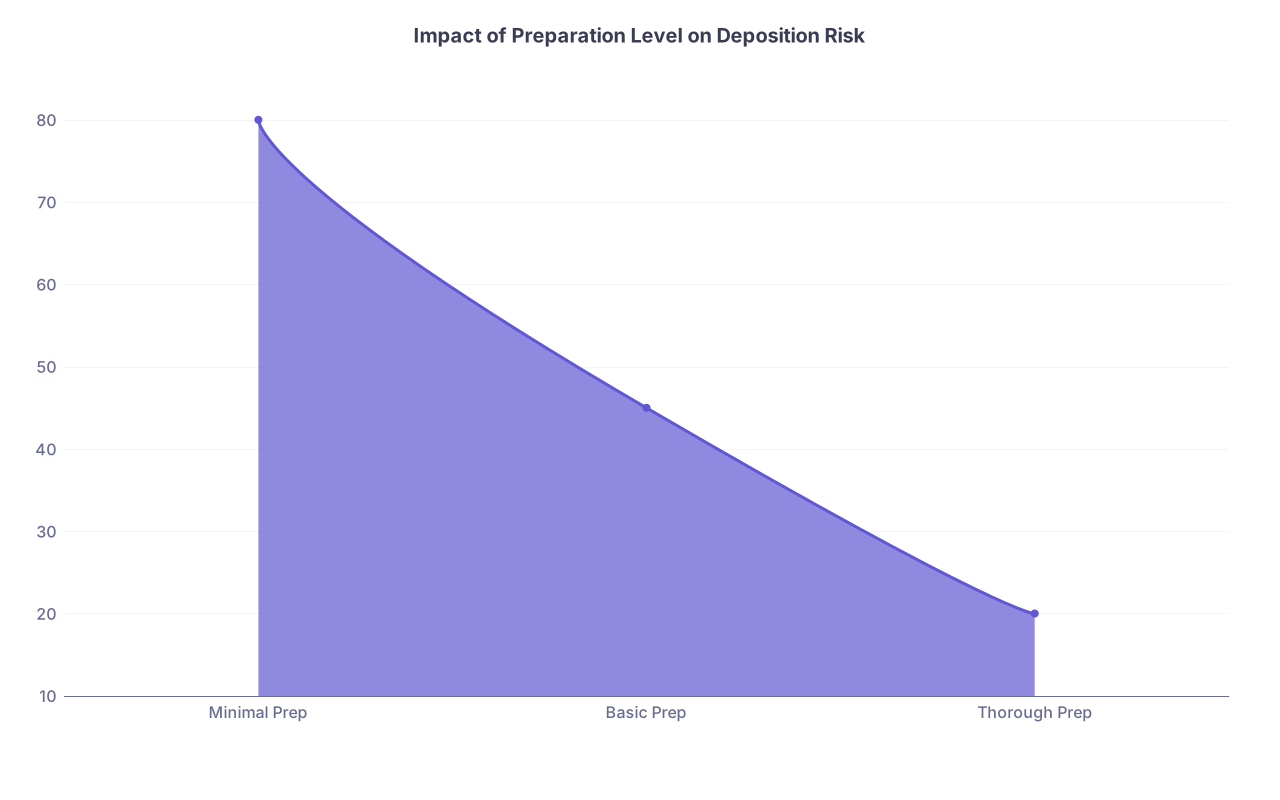
| Category | Value |
|---|---|
| Minimal Prep | 80 |
| Basic Prep | 45 |
| Thorough Prep | 20 |
(Values represent relative risk of giving harmful testimony; lower is better.)
FAQ (Exactly 3 Questions)
1. Should I ever meet or speak with the plaintiff or their attorney outside the deposition?
No. Absolutely not. Any communication with the plaintiff or their counsel must go through your defense attorney. Do not respond to letters, calls, emails, or social media messages from the patient or their family regarding the case. Forward everything to your attorney and your risk management office. Casual or “off the record” conversations do not exist in litigation.
2. Can I review the medical record while I am being deposed?
Yes, if a question refers to specific chart details and you need to look. Say, “Let me review the record to answer accurately.” Take your time. Read what you need, then answer. Do not treat the chart like a script you cling to constantly; but do not guess when the answer clearly lives in the record right in front of you.
3. What if my attorney seems too relaxed about preparation – should I push for more?
Yes. You are the one under oath, on video, with your name and license at stake. You are allowed to say, “I want at least a couple of hours of structured prep, including mock questioning.” If you feel rushed or dismissed, be explicit about needing more time. A competent defense lawyer will welcome a physician who takes preparation seriously.
Key points to walk away with:
- A deposition is a controlled, hostile interview that can define your entire malpractice case; treat it as such.
- Your defense comes from disciplined preparation, narrow honest answers, and emotional control – not from trying to “win” or over-explain.
- Use the process to both protect this case and upgrade your future risk management so you are less likely to sit in that chair again.