
You’re asking the wrong yes/no question. The real question is: what do you want that month before surgery to actually do for you?
Because “take an easy elective before a heavy surgical month” is common advice. And sometimes it’s smart. Other times it quietly sabotages you.
Let’s break this down like someone who’s actually lived through Q4 call and 4:30 a.m. pre-rounds.
The Short, Honest Answer
If you’re looking for a quick take:
- If you’re exhausted, burned out, and surgery is notorious at your school → an easier, lower-intensity elective right before can be a good idea.
- If you’re considering a surgical specialty or need strong evals → a smartly chosen prep month (not just “easy,” but useful) is usually better.
- If you stack back-to-back chill months then slam into surgery cold → you’re going to get smacked in the face by the adjustment.
So no, the answer is not “always take an easy elective.” It’s: take a strategically chosen month that matches your goals, your energy, and how brutal your surgery clerkship is at your school.
What That Pre-Surgery Month Actually Needs To Do
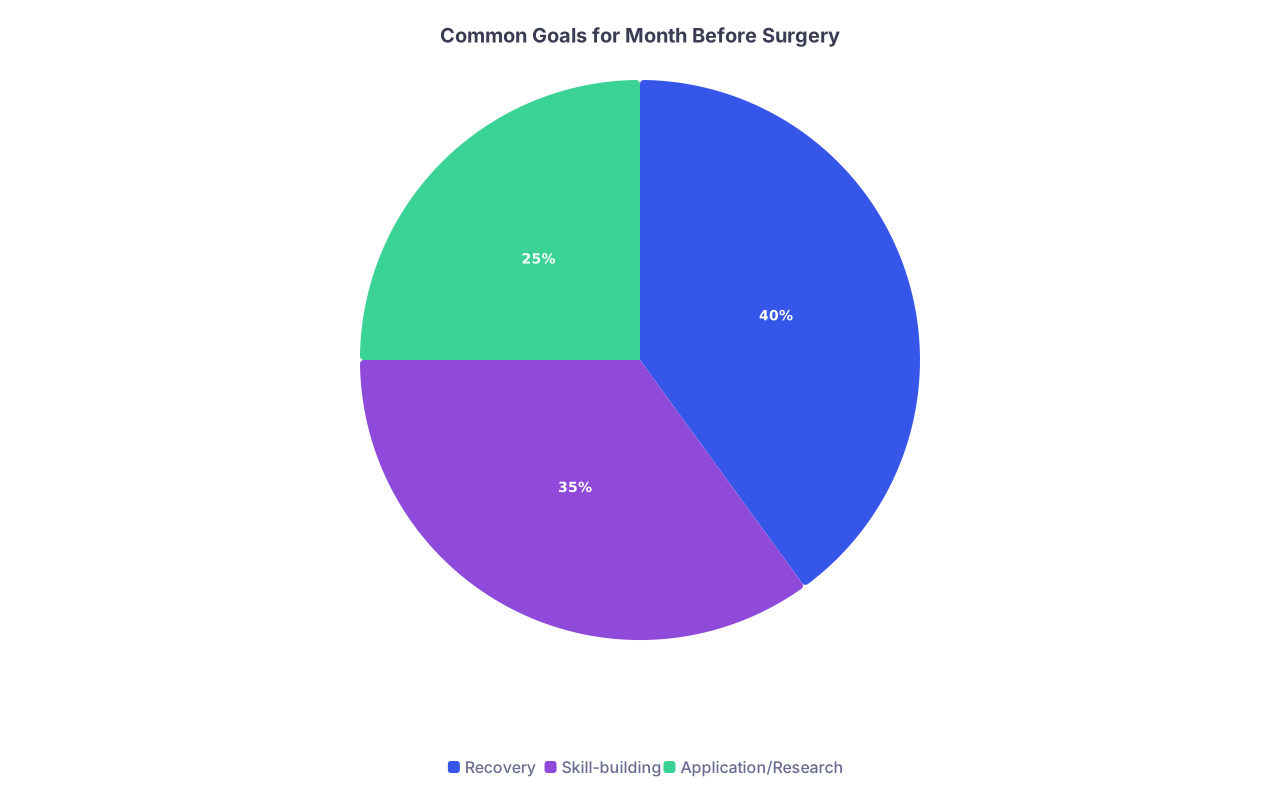
That month before your surgical block isn’t just a random filler. It has 3 possible jobs:
- Recovery month – You come in rested, less resentful, and mentally ready for long days.
- On-ramp month – You sharpen skills that make you look better on surgery (notes, presentations, basic procedures, efficiency).
- Application month – You use it to advance your CV: research, letters, audition-like exposure, Step 2 prep, etc.
You don’t get all three. You pick the top one (maybe two) and design around that.
| Category | Value |
|---|---|
| Recovery | 40 |
| Skill-building | 35 |
| Application/Research | 25 |
When an “Easy” Elective Actually Makes Sense
An easier elective makes sense if:
- You just finished medicine, OB, or psych and you’re cooked.
- Your school’s surgery rotation is infamous for 70–80 hour weeks.
- You’re not planning a surgical specialty and just need to survive, learn, and not hate your life.
- Your mental health is fraying and you know it.
In that situation, a lighter month focused on:
- Reasonable hours (no 5 a.m. pre-rounds)
- Predictable schedule
- Time to fix your sleep schedule, exercise, and reset
…is not laziness. It’s strategic self-preservation.
I’ve seen students who didn’t do this roll right from a nightmare inpatient month into a malignant surgery team and basically emotionally flatline. That shows. Residents pick up on it. Your evals reflect it.
The Hidden Downsides of an Easy Elective Before Surgery
Here’s the part no one tells you when they say “take derm, it’s chill.”
If your pre-surgery elective is too easy and too disconnected from inpatient care:
- Your stamina drops – going from 9–3 clinic with lunch breaks to 4:45 a.m.–6 p.m. plus call is a shock.
- Your clinical rhythm dulls – you’re slower on notes, H&Ps, thinking through plans.
- Your mindset gets soft – you get used to flexing out early, sleeping in, having evenings to watch Netflix or study at leisure.
So the first 1–2 weeks of surgery? You’re in survival mode, not learning mode. That’s a wasted opportunity.
Easy month is fine. Deconditioning month is not. There’s a difference.
Better Than “Easy”: Aim for “Light but Relevant”
The best move for a lot of students is not “as easy as possible,” but:
- Moderate hours
- Still clinically engaged
- With skills that translate directly to surgery
Good pre-surgery choices often include:
- Anesthesia – Airway basics, OR flow, learning how surgeons think, sterile technique.
- Radiology (especially MSK or abdominal) – How to read CTs and X-rays surgeons care about.
- Emergency medicine (lighter site) – Rapid assessments, focused exams, basic procedures, presentations.
- Outpatient surgical subspecialty – ENT, ortho clinic, vascular clinic; you’ll see pre-op/post-op issues, wound care, etc.
| Option | Hours/Intensity | Direct Help for Surgery | Good for Recovery? |
|---|---|---|---|
| Chill Derm | Low | Low | High |
| Anesthesia | Moderate | High | Moderate |
| Radiology | Low–Moderate | High | Moderate |
| Outpt Ortho/ENT | Moderate | Moderate–High | Moderate |
| EM (busy site) | High | High | Low |
You get some breathing space, but you’re still in the game. You can walk into surgery knowing how the OR runs and how to be useful.
How Your Career Plans Change the Answer
You can’t give the same advice to:
- A future dermatologist
- A maybe-ortho student
- Someone gunning for neurosurgery
Each one plays this month differently.
If You’re NOT Going Into Surgery
Your priorities:
- Don’t burn out.
- Learn enough to be safe and competent.
- Protect bandwidth for exams (NBME/shelf, Step 2 later).
For you, an easy-to-moderate elective before surgery is often completely reasonable. You don’t need to impress surgeons long-term. You just need to:
- Show up prepared and on time
- Have basic OR etiquette
- Study for the shelf in a disciplined way
A lighter month with time to:
- Skim a surgery question bank
- Review common abdominal pathology
- Get your sleep in order
…is probably the right call.
If You’re Considering a Surgical Field (even tentatively)
This is different. You’re under a microscope more than you realize.
Your pre-surgery month should:
- Get you comfortable in the OR
- Build your clinical confidence
- Keep your work stamina up
Anesthesia, EM (at a not-insane site), or a surgical subspecialty clinic month makes sense here. It’s not about killing yourself early, but about not coasting into your most important core clerkship.
If You’re All-In on a Competitive Surgical Specialty
You cannot afford to crawl into surgery half-asleep and unprepared.
For you, the pre-surgery month should check at least two of these:
- OR exposure
- Close resident/attending contact (for potential letters later)
- Actual responsibility (notes, presentations, following patients)
A pure fluff elective here? Bad move. You’ll lose early weeks adjusting when you should be shining and building your rep.
Don’t Forget the Exam Side of This
People forget the shelf until week 3 when they realize they haven’t opened a book.
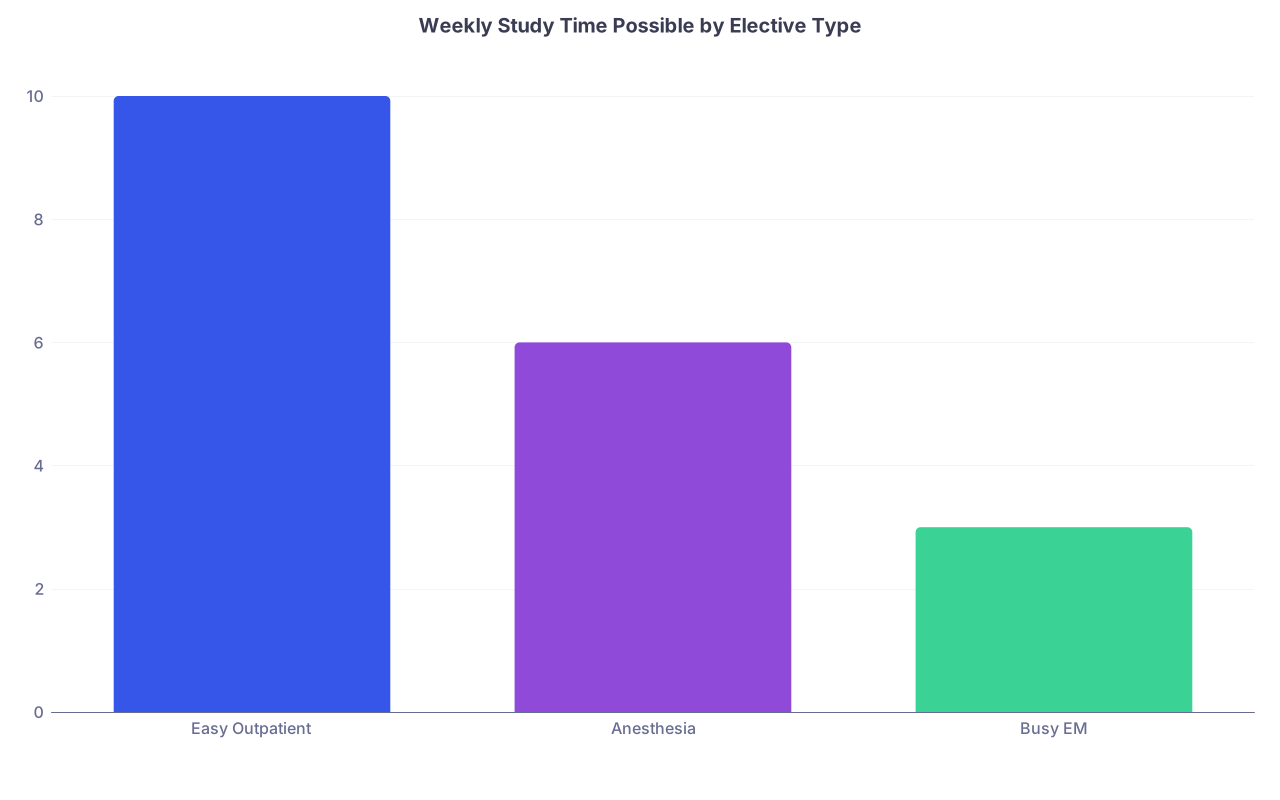
Your pre-surgery month choice affects your study logistics:
Heavy but structured elective (e.g., anesthesia)
You may be tired but still have some evening time. Work in 10–15 UWorld or AMBOSS surgery questions a day. You’ll walk in warmed up.Very easy elective (e.g., low-key outpatient)
You have the time—but that can backfire. If you don’t force structure, you’ll waste it. Set a specific daily question quota and reading plan.Research month
Dangerous if you treat it like vacation. Good if you’re disciplined and can knock out 1–2 hours of surgery prep daily.
| Category | Value |
|---|---|
| Easy Outpatient | 10 |
| Anesthesia | 6 |
| Busy EM | 3 |
If your school is known for a brutal surgery shelf, I’d lean toward:
- A lighter or moderate elective
- With enough structure to keep you in “student mode,” not full vacation mode
Then show up already having done at least:
- A few hundred surgery questions
- Some basic reading (e.g., DeVirgilio or Pestana)
Mental Health, Sleep, and Real Life
Ignore this and everything else falls apart.
You should lean toward an easier pre-surgery elective if:
- Your sleep is wrecked from back-to-back inpatient months.
- You’re feeling detached, cynical, or emotionally blunted.
- You’ve stopped doing things that normally keep you sane (exercise, talking to friends, hobbies).
This is not a grit contest. If a lighter month means:
- You fix your sleep
- You stop feeling like you hate medicine
- You walk into surgery ready to be curious again
Then yes, the “easy” elective was absolutely the right call.
On the flip side, if “easy elective” means you:
- Scroll your phone more
- Drift academically
- Destroy your circadian rhythm staying up late
…then you didn’t pick an elective. You picked self-sabotage.
How to Decide – A Simple Framework
Here’s how I’d walk a student through this in 5 minutes.

| Step | Description |
|---|---|
| Step 1 | Start |
| Step 2 | Moderate elective, OR exposure |
| Step 3 | Easy elective, light clinic |
| Step 4 | Anesthesia/EM/Surg subspecialty |
| Step 5 | Easy-moderate elective, shelf prep |
| Step 6 | Plan study schedule |
| Step 7 | Burned out? |
| Step 8 | Interested in surgery career? |
| Step 9 | Considering surgery field? |
Ask yourself:
How fried am I right now?
- Very → Lean easier.
- Manageable → Consider moderate + relevant.
Do I care about impressing surgeons or exploring surgery as a career?
- Yes → Choose something OR-adjacent.
- No → Protect your sanity and shelf score.
What’s the reputation of the surgery month at my school?
- If it’s brutal → Don’t come in already 50% drained.
- If it’s more humane → You can afford a slightly heavier pre-month.
Am I disciplined enough to use an easy month well?
- If you’ve never stuck to a self-made schedule in your life, don’t bank your shelf prep on suddenly changing.
Concrete Recommendations by Scenario
If you want straight answers, here you go.
You’re tired, not going into surgery, average student:
Take a relatively easy outpatient elective (family med clinic, derm, allergy, etc.). Set a daily surgery-study schedule. Protect your sleep.You’re unsure about surgery, open to it if you like the rotation:
Do anesthesia or a lighter EM month. Get familiar with the OR, tubes, lines, and presentations. Do a bit of surgery reading before you start.You’re aiming for ortho/ENT/urology/etc.:
Do something in that orbit: anesthesia, that subspecialty’s clinic, or a radiology month focused on imaging they care about. Don’t fully shut off—this is early game for your future field.You’re fully burned out and your mental health is shaky:
Take the easiest reasonably respectable elective you can, talk to someone you trust (advisor, counselor), and walk into surgery with your basic human needs back online.
Key Takeaways
- “Easy elective before surgery” isn’t automatically smart or dumb; it’s only good if it fits your energy level, goals, and your school’s surgery culture.
- If you’re surgery-leaning, pick light but relevant over fluff—anesthesia, radiology, or surgical subspecialty clinic beat random low-yield chill.
- Whatever you choose, don’t waste the month. Use it to either genuinely recover or intentionally prepare—not to drift.
FAQ (Exactly 5 Questions)
1. Will taking an easy elective before surgery make attendings think I’m lazy?
No. They rarely track what you did the month before. They care about what you do on their team. The risk isn’t how it looks on paper; it’s whether you show up deconditioned and mentally soft after a month of coasting.
2. Is anesthesia really that helpful before surgery?
Yes. You learn OR workflow, sterile technique, basic airway stuff, and you get comfortable in that environment. You’ll also see how surgeons and anesthesiologists communicate, which makes you less lost on day one of surgery.
3. Can I use a research month right before surgery?
You can, but be honest with yourself. If you’re disciplined, it’s great: protected time for research plus some shelf prep. If you’re not, it can turn into unstructured pseudo-vacation and you’ll hit surgery rusty.
4. How much surgery studying should I do before the rotation starts?
If possible, get through at least 200–300 surgery questions and a quick pass of a high-yield resource (like Pestana or DeVirgilio chapters on common cases). You don’t need mastery—just familiarity so you’re not starting at zero.
5. What if my only options are all heavy inpatient electives before surgery?
Then prioritize the one that best preserves your sanity and sleep, and has some overlap with surgery (medicine, EM, ICU, etc.). Be disciplined about rest on weekends, tighten your study habits, and plan for a quieter rotation after surgery to decompress.